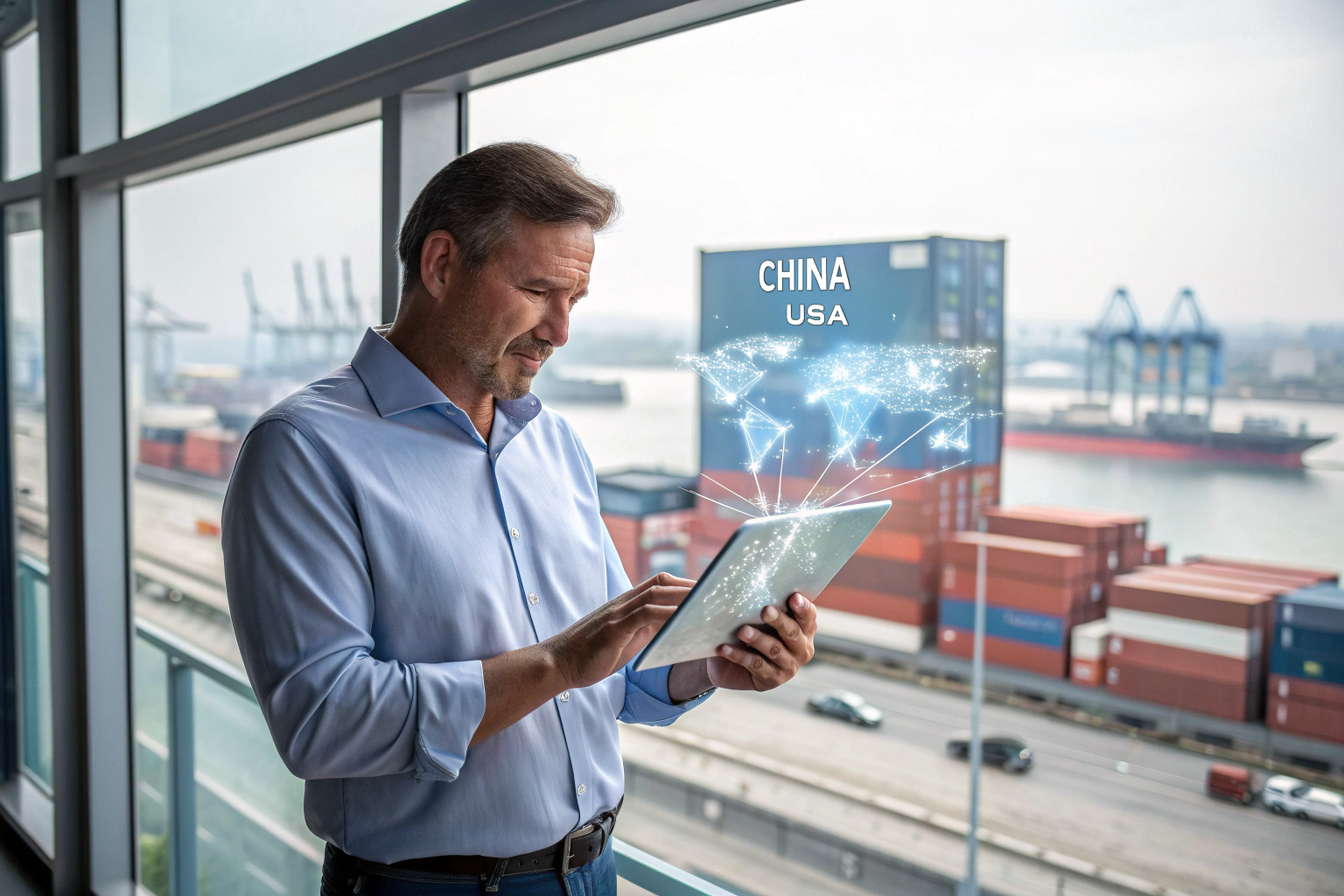
I remember a call from a new client in Miami last year. He had been importing ceramic giftware from China for three years using a small local broker. One morning, he received a bill from U.S. Customs for $47,000 in retroactive duties. His broker had been clearing his goods under the wrong tariff code, one that had a Section 301 exclusion attached to it. The exclusion had expired eighteen months earlier, but nobody told him. He paid the price, literally. This is the hidden danger of Section 301 tariffs. They don’t just add cost. They add risk that compounds silently over time.
Section 301 tariffs are additional duties imposed by the U.S. government on Chinese-origin goods, ranging from 7.5% to 100% on top of standard duty rates, and GeeseCargo helps you manage them through proactive classification, exclusion tracking, and strategic logistics planning.
If you source clothing, accessories, gifts, or almost any consumer product from China, these tariffs affect your bottom line every single day. The rates were imposed under the Trump administration and remain largely in place today. They are not a relic of the past. They are a fixed cost of doing business that requires active management. At GeeseCargo, we don’t just ship your boxes. We build a compliance and cost-containment strategy around these tariffs so you don’t get blindsided by a bill like my Miami client did. Let me explain exactly what these tariffs are and how we turn them from a threat into a manageable line item.
What Products from China Still Face Section 301 Tariffs in 2026?
You might think that after years of trade negotiations, these tariffs would have faded away. That is not what happened. I sit with clients every month who are shocked to discover their product still carries a 25% duty penalty. A distributor of Christmas decorations told me last November that he assumed "holiday items" were exempt. They are not. He learned this the hard way when his container arrived and the customs entry triggered a massive duty bill right before his peak sales season.
As of 2026, the vast majority of consumer goods imported from China, including clothing, accessories, footwear, electronics, furniture, toys, and gift items, remain subject to Section 301 tariffs under Lists 1, 2, 3, and 4A.
The tariff structure is not a single rate applied to everything. It is divided into four main lists, each with different rates and limited exclusion programs. List 1 and List 2 products, which include many industrial components and machinery parts, carry a 25% duty. List 3 products, covering a broad range of consumer goods including some textiles and electronics, also face 25%. List 4A is where most of the clothing and accessories fall, and the rate here is 7.5% for products that were not already covered by earlier lists. But here is the trap. If your product could be classified under both List 3 and List 4A, Customs will apply the higher rate. Classification is everything. At GeeseCargo, we don’t guess. We research the binding rulings database before your goods leave the factory to confirm the exact tariff liability.
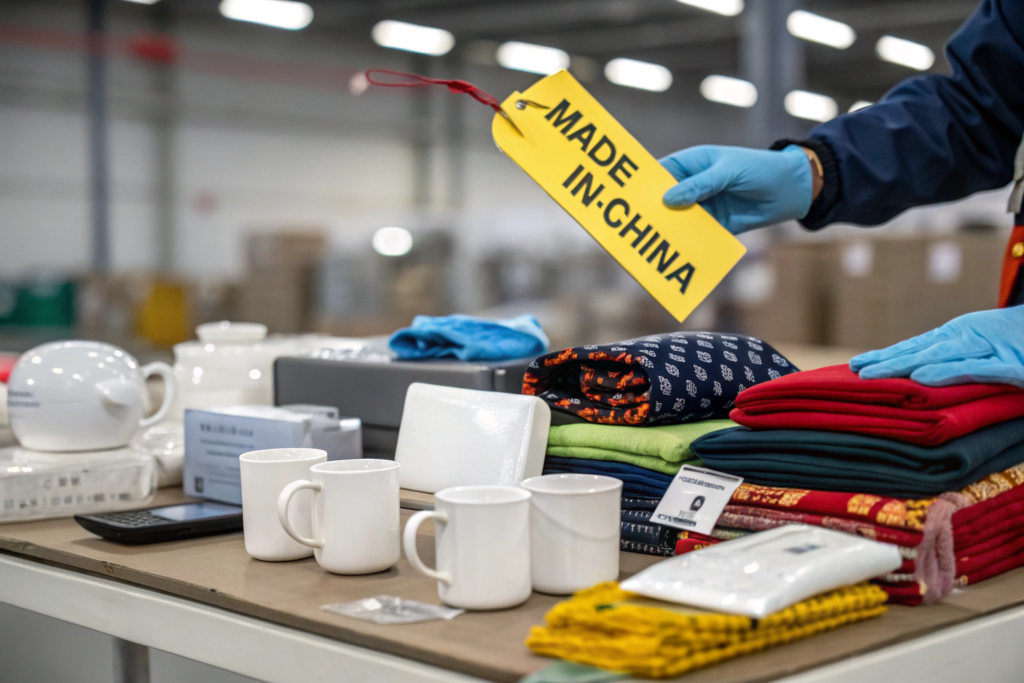
Which clothing and accessory categories trigger the highest duties?
Not all garments are treated equally under Section 301. A cotton t-shirt might face a different effective rate than a silk scarf, not because the 301 rate differs, but because the underlying standard duty rate varies wildly by material and construction.
Let me break down a practical example. Men’s knitted cotton shirts carry a base duty rate around 16.5% to 19.7% under the Harmonized Tariff Schedule. Add a 7.5% Section 301 duty on top if they fall under List 4A, or 25% if they hit List 3. Your total duty could reach 41.7% of the customs value. Compare that to a woven wool jacket, which might have a much lower base rate. The Section 301 layer magnifies the pain on products that already carried high protective tariffs. This is why we insist on seeing a pre-production sample. Our customs brokers need to physically inspect the knit, the fiber content, and the construction to assign the legally correct code. If you are a volume importer like Ron, a 1% difference in the duty rate on a $500,000 annual import volume is $5,000 in unnecessary cost. We stop that leak before it starts.
Are there any completely exempt gift and houseware categories left?
A few narrow categories have successfully lobbied for exclusions that got extended. Certain medical supplies, some electronic components, and specific industrial items have temporary relief. But for typical giftware, ceramic mugs, decorative glass, candles, and novelty items, the exclusions are scarce and usually short-lived.
The U.S. Trade Representative has shifted its focus. Instead of broad product exclusions, they now grant exclusions based on whether a specific U.S. manufacturer or retailer can demonstrate severe economic hardship. If you are a small or medium-sized importer buying off-the-shelf gift products from a trading company in Yiwu, you are not going to get a targeted exclusion. Your product is exactly the type they want to tax. The smart play is not to hunt for an exemption that probably doesn’t exist. The smart play is to accept the tariff cost and offset it by optimizing your freight and customs clearance process. We show our clients how a faster transit time and lower brokerage fees can neutralize the tariff hit better than an elusive exclusion ever could.
How Does GeeseCargo’s Customs Clearance Process Reduce Tariff Risks?
I once took over a file from a panicked client whose previous forwarder had been flagged by CBP for repeated misclassification. Every one of his containers was suddenly being pulled for intensive manual exams. Exams that cost $1,500 each in labor and storage. His business was grinding to a halt because his broker was on a watchlist. He came to us asking for a clean start. That’s when he realized that customs clearance is not an administrative afterthought. It is the valve that controls your entire cash flow.
GeeseCargo reduces tariff risks by using in-house licensed U.S. Customs Brokers who pre-classify your goods before shipment, file entries under our own bond, and actively manage the CF-28 and CF-29 notice process to prevent penalties and shipment holds.
The biggest misconception I hear from buyers is that all brokers are the same. They are not. A bad broker files what you tell them without question. A good broker pushes back and asks for specifications. When we receive a packing list that says "gift set," our team immediately requests the breakdown. Is it a candle and soap set? Is it a mug and socks set? The Harmonized System code for a mixed gift set depends on which component gives the set its "essential character." If you file wrong, CBP accuses you of negligence. We file most of our entries using our own continuous customs bond. This means the liability sits with us. We are legally motivated to get it right. For you, the importer, this transfers the risk. If our broker makes a classification error, we fix it at our cost, not yours.

What happens when CBP issues a CF-28 Request for Information?
A CF-28 is Customs asking, "Prove your entry is correct." It is not a fine yet, but it is a warning shot. Ignore it or answer poorly, and it becomes a CF-29 Notice of Action, which is a formal penalty and a bill.
When a client receives a CF-28, time freezes. The goods might be released, but the entry is unliquidated. That means the final duty is not settled. You cannot close your books for that fiscal period. Many brokers charge extra to handle a CF-28 response. We do not. It is part of our core customs clearance service. We gather the factory invoices, the payment records, the product spec sheets, and the marketing photos. We build a legal argument for why your classification is correct. We submit this digitally to the CBP Center of Excellence and Standards. In most cases, our response is accepted without further penalty because we have already classified the goods correctly from the start. This protects your importer record. A clean record means fewer exams, lower costs, and faster delivery. That is the hidden value of a professional freight forwarder.
How does continuous bond coverage protect your shipments?
You need a customs bond to import goods valued over $2,500. A single-entry bond covers one shipment. A continuous bond covers all your shipments for a year. But here is the key difference. A continuous bond also covers the duties you owe.
If you use a cheap forwarder who arranges a single bond, the bond company is not your friend. They pay the duty to CBP and then chase you aggressively for reimbursement plus interest. With our service, if you are on a DDP or comprehensive clearance program, we supply the bond and we manage the duty payment cycle. This means we don’t just file the entry. We pre-calculate the Section 301 tariff, we pay it via ACH, and we release the cargo immediately. There is no gap between arrival and release while you scramble to wire funds for an unexpected tariff. For a clothing importer moving multiple containers a month, this fluid capital management is worth more than a small freight discount. It keeps your goods moving and your retailer relationships intact.
What GeeseCargo Freight Solutions Counteract High U.S. Tariffs Best?
When tariffs eat 25% of your product cost, you have two choices. You can accept the lower margin and complain. Or you can redesign your logistics to shrink every other cost line. I sat down with Ron, my apparel client, and showed him a model. His freight spend was 8% of his landed cost, and his tariff was 22%. He was obsessed with finding a cheaper freight rate to save 0.5%. I told him, "You are looking at the wrong end of the invoice." The solution to a tariff problem is not always a lower freight rate. Sometimes it is a completely different logistics strategy.
GeeseCargo’s most effective tariff-counteracting solutions include strategic multi-port routing to reduce customs value basis, bonded warehouse storage to defer duty payments until sale, and air freight consolidation for high-value, high-tariff goods to slash inventory carrying costs and tax exposure.
The Section 301 tariff is calculated on the FOB value of your goods plus the freight and insurance. That means if you pay $20,000 in freight, you are also paying a 25% tariff on that $20,000. An extra $5,000 tax on the shipping service itself. This is why routing matters. If you ship from China to the U.S. via a Canadian port and then truck across the border, you don’t avoid the 301 tariff because CBP catches it at the border entry. But if you use a Foreign Trade Zone or bonded warehouse, you can defer paying the duty until the goods leave the warehouse for sale. This turns a sunk cost into a pay-as-you-sell model. For distributors carrying seasonal gifts, deferring a $60,000 duty bill from January to October is a cash flow life saver. We set these FTZ entries up for clients with just-in-time inventory models.
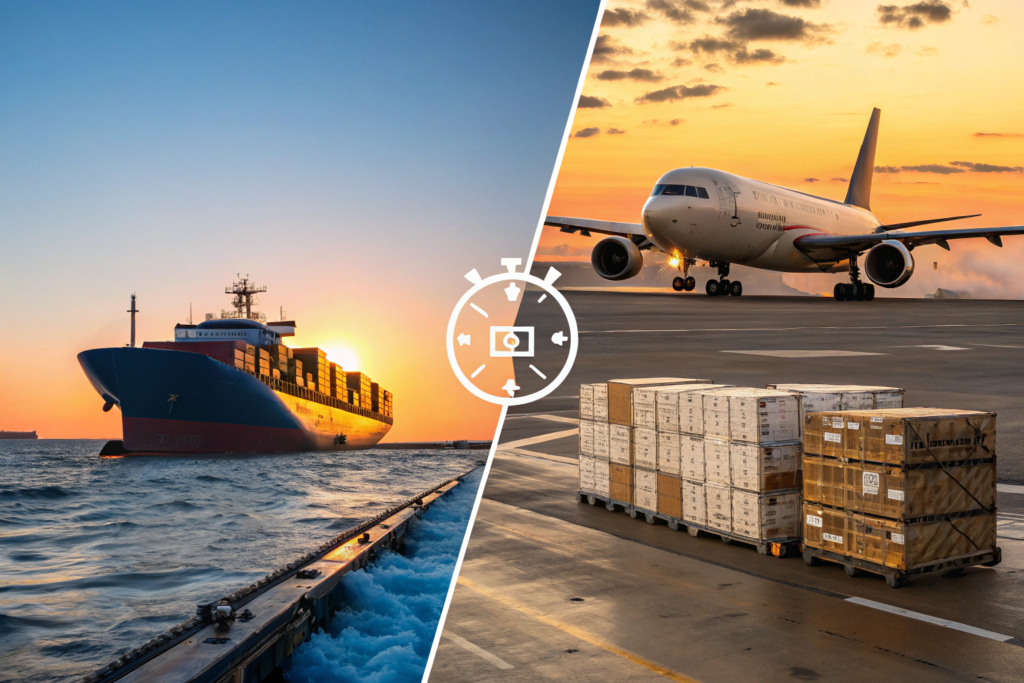
When does air freight become the cheaper option under high tariffs?
I have made this calculation so many times I can almost do it in my sleep. When the tariff rate is high, say 25%, and the product has a high value-to-weight ratio, air freight often wins on total landed cost plus working capital.
Consider a shipment of premium branded handbags weighing 500 kg but valued at $150,000. The sea freight cost is $1,000, but the tariff is $37,500. The air freight cost is $5,000, and the tariff is $38,750. The tariff difference is small because the FOB value is the same. But sea freight takes 35 days, tying up $150,000 in inventory that could be selling. Air freight takes 5 days. The 30 days of freed cash flow, at a conservative 10% annual cost of capital, saves you $1,250 in interest. Add in lower insurance premiums for the shorter transit and reduced risk of fashion obsolescence. The air freight premium of $4,000 is almost entirely offset by financial savings. And you get the goods to market a month earlier. We run this analysis for our clients because most freight forwarders just sell you the cheapest sea freight rate and ignore your treasury. We look at your entire balance sheet.
Can transloading and multi-port discharge lower your tariff basis?
Tariff cannot be avoided legally, but the dutiable value can be structured correctly. One common mistake is lumping non-dutiable services into the declared goods value. Design fees, tooling costs, and commissions paid separately to a Chinese agent should not always be included in the customs value if properly documented.
Beyond the value, the logistics routing strategy matters. We use a multi-port discharge model. If Southern California ports are congested, the demurrage and trucking costs inflate your total shipping cost, which then gets hit by the 25% tariff adder. By routing through less congested ports, the freight cost component is lower. More importantly, we often use transloading. We move the 40-foot ocean container to a bonded warehouse, strip it, and reload the cargo into a 53-foot domestic trailer. This separates the international move from the domestic move. The international freight cost is capped, and the domestic trucking invoice is a separate, non-dutiable domestic service. These small legal optimizations, executed consistently across twenty containers a year, compound into real savings that cushion the tariff blow.
How to Plan Your 2026 China-US Logistics Budget Around Tariff Uncertainty?
Every October, my clients start their budgeting season with a sense of dread. How do you set a price for a product that will ship in March when you don’t know what the tariff policy will be in February? You cannot just guess. If you guess wrong, you either lose the sale to a competitor who priced better or you win the sale and lose money on every unit. I have seen both outcomes destroy good businesses.
Budgeting effectively for China-US logistics in 2026 requires building a three-scenario landed cost model, locking in core carrier contracts with flexibility clauses, and treating tariff payments as a predictable financing cost rather than a variable surprise.
The first rule I give my clients is to stop treating the freight and tariff line as a single number. Split them into fixed and variable components. Ocean freight contracts, negotiated annually, are your fixed base. Tariff rates, while subject to political change, are more predictable than you think. Major changes require a USTR review process that takes months. They don’t happen overnight. So, build your budget with a base case tariff (current rate) and a worst-case buffer of 5% additional duty. If the buffer isn’t used, it becomes extra margin. If it is used, you are protected. At GeeseCargo, we provide our contracted clients with a monthly tariff and freight outlook. We flag upcoming exclusion sunset dates, carrier general rate increases, and port congestion forecasts. This turns your budget from a hopeful guess into a data-informed financial plan.

What should a three-scenario logistics budget look like for importers?
A three-scenario model means you budget for a Base Case, an Optimistic Case, and a Pessimistic Case. This is how major retailers manage their import programs, and it works just as well for a distributor or a brand owner.
Let me sketch out the framework we recommend. Your Base Case assumes current Section 301 tariffs remain unchanged, ocean freight rates stay within 10% of current contract levels, and port transit times are normal. Your Optimistic Case assumes one or two major consumer product exclusions get renewed, lowering your tariff by 5-7%, and freight rates soften by 15% as new vessel capacity comes online. Your Pessimistic Case assumes a new round of tariffs adds 10% more duty, a port strike occurs on the West Coast, and freight rates spike 50% for three months. You then assign a probability to each. Even a rough 60% Base, 20% Optimistic, 20% Pessimistic gives you a weighted average landed cost. Share this with your CFO or your bank. It shows you are managing the risk, not ignoring it. We help build these models using actual rate data from our Alibaba and trade lane partnerships, so the numbers are real, not hypothetical.
How can long-term carrier contracts stabilize your shipping costs?
A long-term carrier contract, often called a NAC (Named Account Contract), is an agreement with a shipping line for a fixed or capped rate over a specific volume commitment. It is the single most powerful tool to remove freight volatility from your budget.
We negotiate these contracts on behalf of our consolidated client base. Because we aggregate volume from many importers, we get better terms than any single company could. A typical contract fixes the base ocean freight rate for 12 months, with a defined formula for the Bunker Adjustment Factor. This means fuel surcharges become predictable. The key clause we insist on is a "no-blank-sailing" guarantee or, failing that, a priority rescheduling right. If the carrier cancels a sailing, they must roll your cargo onto the very next vessel without a rate increase. This prevents the spot market price gouging that happens during capacity squeezes. For a company shipping from China to the U.S. monthly, this contract alone can save $15,000 to $50,000 annually compared to buying spot rates in a volatile year. We lock these in during the tender season, typically April, for the following fiscal year.
Is there a benefit to prepaying tariff estimates through a DDP service?
Absolutely. Prepaying your tariff through a DDP service like GeeseCargo’s transforms a variable cash flow shock into a fixed unit cost. This is critical if you sell to retailers on a fixed-price contract.
When you ship under standard terms, the duty is assessed upon arrival. The exact dollar amount depends on the final classification and the exchange rate on the arrival date. You get the bill after the fact. Under DDP, we fix the duty cost in the quote. We assume the classification risk. If the duty is higher than we estimated, we pay the difference, not you. This gives you a guaranteed landed cost per unit. For an importer selling 10,000 units to a retail chain at $25 per unit, knowing your exact delivered cost is $18 versus an estimate of $17 to $19 is the difference between a signed purchase order and a hesitant buyer. Retailers hate cost uncertainty. A DDP quote eliminates that uncertainty. It also simplifies your accounting. One invoice covers freight, duty, and delivery. No separate broker bills, no storage invoices, no surprise exam fees. That is what we mean by a professional, reliable, and competitive service.
Conclusion
Section 301 tariffs are not going away. They have become embedded in the cost structure of importing from China to the United States. But that does not mean you have to passively accept the margin erosion they cause. I have shown you how my client in Miami lost $47,000 by trusting a careless broker, and how Ron, my apparel buyer, stabilized his business by switching to a proactive tariff management strategy. The lesson is clear. The forwarder you choose determines whether tariffs are a risk or just a line item.
At GeeseCargo, we manage Section 301 tariffs through three pillars. First, we get the classification right before anything ships, using in-house customs brokers who answer to us, not a third party. Second, we structure the logistics, whether by sea, air, rail, or DDP, to minimize the cascading costs that high tariffs amplify. Third, we lock your budget into predictable contracts so you can sell to your customers with confidence. You focus on finding great products at the trade shows and on Alibaba. You focus on quality control and building your brand. Leave the tariff research, the customs bonding, and the port congestion fights to us.
If you are tired of calculating tariff risk on the back of a napkin, let’s talk. I will personally review your top five product categories and show you exactly where we can reduce your total landed cost. That is my promise as the owner of a freight forwarding company that has been navigating these waters for years. Your goods deserve a safe, fast, and tariff-smart journey from China to your U.S. warehouse. We are ready to deliver that.