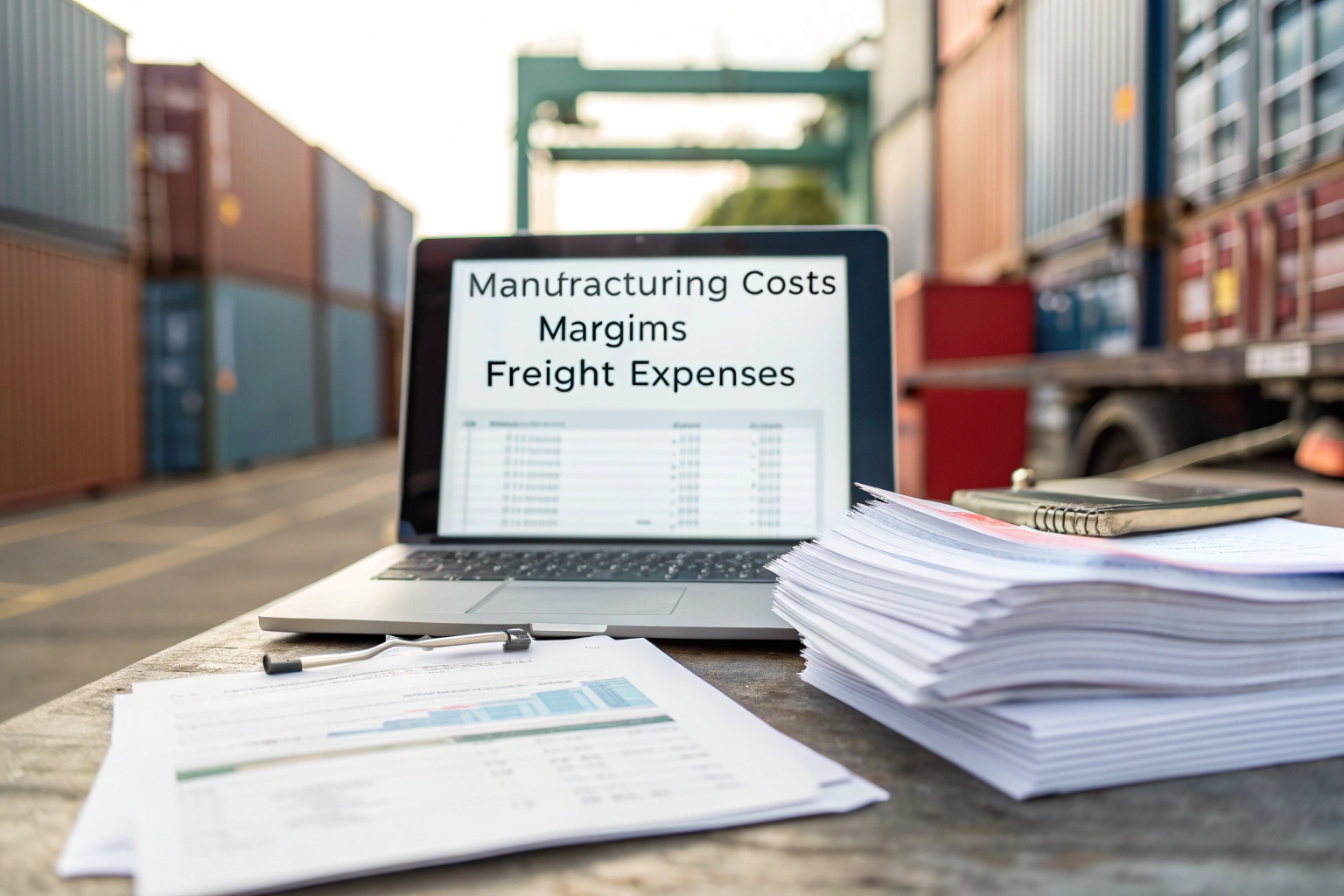
I cannot tell you how many times I have seen a profitable product line destroyed by bad freight math. A buyer finds a great item in Yiwu. They calculate the manufacturing cost, add 100% margin, and think they are rich. Then the container lands. The freight invoice is 40% higher than they planned. The budget breaks. The profit disappears. I talk to business owners daily who are confused and angry about this gap between their spreadsheet and reality. It does not have to be this way.
The five biggest freight budgeting mistakes are trusting the factory’s quote, ignoring accessorial charges, guessing customs duties, overlooking currency swings, and choosing the slowest transit time. These errors cost importers thousands of dollars per shipment.
I run a freight forwarding company with contracts across major Asian and American ports. I see the real invoices. The real costs. I know where the money hides. This article will walk you through each mistake. I will share stories from real clients who fixed their budgets and started sleeping better. You will finish this with a checklist you can use today to protect your cash flow.
How Can You Stop the Factory’s Freight Quote from Ruining Your Budget?
Factories make great products. They are not logistics experts. But they offer you a freight quote anyway. You see a cheap number. You plug it into your landed cost calculator. This is the first and most expensive mistake you can make. The factory quote is often a bait price. They leave out critical charges to make the sale look sweeter. Then you are stuck paying the difference.
The factory sends you an FOB price with a freight estimate. They might quote $3,500 for a 40-foot container. What they do not tell you is that this is a spot rate valid for one week only. They also do not include the peak season surcharge. They never mention the Alameda Corridor surcharge for rail cargo. They just want you to place the production order. Once the goods are ready, the real freight bill appears. And you have no choice but to pay it.

Why Do Factory Freight Estimates Always Miss the Real Total?
Factories work with local small forwarders. These forwarders give them a basic ocean freight rate. That is it. The rate covers the vessel slot and maybe the bunker fuel. It does not cover the terminal handling charge at the port of Ningbo. It does not cover the Bill of Lading fee. It does not cover the security filing. These are standard charges that appear on every single invoice. But the factory quote hides them.
I tell my clients to ask the factory for a "full breakdown of origin charges." Most cannot provide it. We can. When GeeseCargo gives you a quote, we list every line item. We include the port congestion surcharge even if it might disappear. I prefer you see a conservative number and get a pleasant surprise rather than a cheap number that becomes a disaster. This is the transparency that builds a real partnership.
How Can a Transparent GeeseCargo Quote Build Trust Before You Ship?
Trust starts before the container moves. I send a written proposal that locks in the rate for 30 days. We use our contract rates with the top steamship lines. We know the vessel schedule 60 days out. When I quote you $6,800 for door-to-door delivery, that price includes all the terminal fees, the export declaration, and the trucking at origin. The only variable I flag is the US duty and a small buffer for it.
A client in Texas once sent me a competitor’s quote. It was $400 cheaper. But it had ten asterisks. "Subject to GRI. Subject to PSS. Excludes chassis fee." I asked him to call the other forwarder and ask for the all-in price. He did. It was $900 higher than ours. He gave us the business. That is how trust is built. We give you the real number upfront. You can budget with confidence. Your product pricing becomes stable.
How Do Hidden Accessorial Charges Destroy a Solid Freight Budget?
You set a budget. You feel good about it. Then the final invoice arrives. There is a line for "Chassis Usage Fee." Another for "Pier Pass." Another for "Container Imbalance Fee." You have no idea what these are. But you have to pay them. These are accessorial charges. They are the silent killers of shipping budgets. And they are 100% avoidable if you know to look for them.
Accessorials are not random. They are predictable. Every port has them. Los Angeles has the Clean Truck Fee. New York has a congestion surcharge. Rail ramps have a fuel surcharge. If you do not budget for them, your margin shrinks with every shipment. I have seen a $10,000 budget turn into a $14,000 invoice just because no one planned for the destination charges at a major US port.

What Is a Chassis Fee and Why Should You Care?
Think of a container like a trailer. It needs wheels to move on the road. Those wheels are a chassis. When the trucker arrives at the port, they rent this chassis from a pool. That rental costs money. The chassis fee can be $50 to $150 per day. If your warehouse is slow unloading, you pay for multiple days. If the port is busy, the trucker might have to use a split chassis model, adding another fee.
Most FOB importers never see this coming. Their factory does not know what a chassis is. GeeseCargo operates our own trucking partners. We negotiate chassis pools. We include a standard chassis fee in our DDP quote. We even track the free time. I get an alert if a container sits at a trucker’s yard for more than two days. I call the client. "Do you need us to speed up delivery, or are you okay with a small additional cost?" This communication prevents bill shock.
How Do Terminal Handling Charges Vary Across Different US Ports?
Every port has a different price for moving your box from the ship to the gate. The Port of Los Angeles charges a certain rate. The Port of Savannah charges a different one. You cannot use the same budget for different destinations. A shipment to Oakland might have a wharfage fee that Savannah does not. A shipment to Houston might involve a heavy lift charge if your goods are dense.
I use a database of historical charges. When you ask me to budget for a new route, I pull the average terminal handling cost from the last ten containers we moved there. I do not guess. I add a 5% buffer for annual increases. This is the professional way to budget. You should never accept a quote that says "plus actual destination charges" without any estimate of what those charges are. That is an open checkbook.
Can Wrong Duty Assumptions Leave You with a Massive Tax Bill?
This is the mistake that causes the most panic. You classify your product wrong. Or you do not prepare for the US Customs duty bill. You think a pair of sneakers is just 6% duty. But you miss the Section 301 tariff on Chinese goods, which adds another 7.5% or 25%. The goods arrive. The broker sends you a bill for $15,000. You had budgeted $3,000. Your business takes a huge hit.
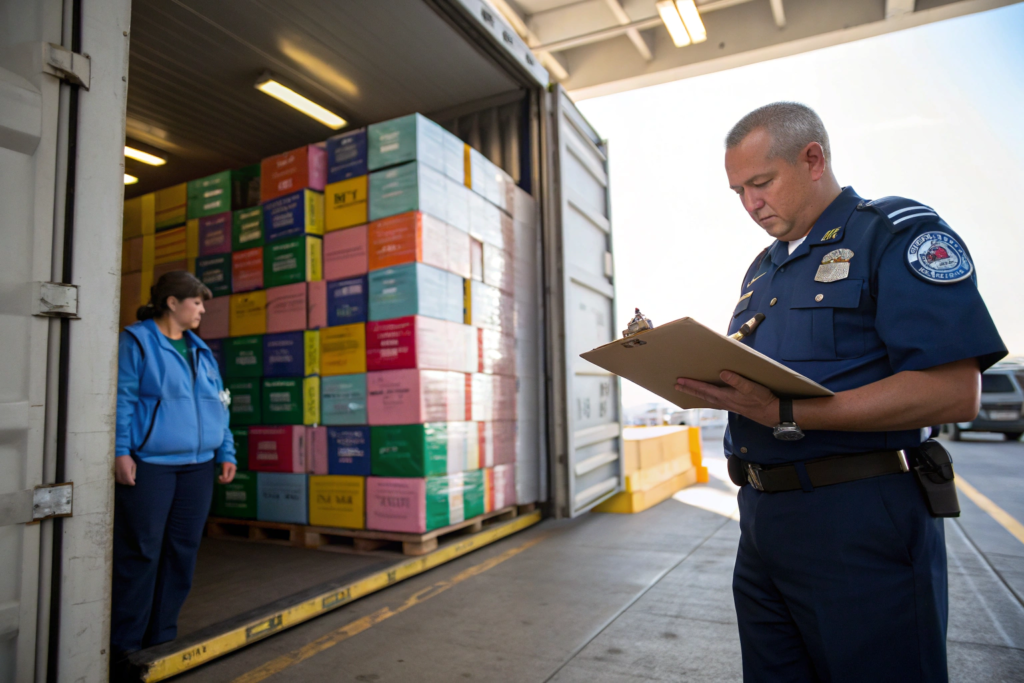
Duty is a fact of life for importers. But the amount you pay is not fixed. It depends on the Harmonized Tariff Schedule code. The wrong code can double your tax bill. The right code can save you thousands. This is not a game. Customs can audit you. If you underpay, they will come back years later and demand the difference plus penalties. You need a partner who treats customs compliance as a core function, not an afterthought.
How Do I Find the Correct HTS Code for Clothing and Accessories?
You must look at the fabric content and the function. Is it cotton or synthetic? Knitted or woven? Is it a shirt or a blouse? These distinctions matter. A cotton men’s shirt has a different code than a polyester men’s shirt. The duty rate can swing by 10% based on that single detail. You cannot just copy the code from an old shipment.
I ask my clients to send me a sample or a detailed fabric tag. My team uses the official USITC database to check the classification. We sometimes find a more specific subheading that carries a lower duty. For example, a rain jacket made of coated fabric might qualify for a lower rate than a standard windbreaker. This is legal tariff engineering. It lowers your tax bill. We do this work during the quoting phase. By the time the goods ship, we know the exact duty you will pay. No surprises.
What Happens When You Forget About Merchandise Processing Fees?
Many people focus only on the duty percentage. They forget the Merchandise Processing Fee. This is a fee charged by US Customs for the processing of your entry. It is 0.3464% of the product value. It has a minimum and a maximum cap. On a $50,000 shipment, that is $173.20. On a $500,000 shipment, it is over $1,500.
It sounds small. But in a tight budget, small things add up. The MPF is non-negotiable. The government takes it. But many factory FOB quotes ignore it because the factory never sees it. The US broker collects it. We include the MPF in our DDP landed cost calculation. Every single cent is accounted for. You will never open our invoice and find a fee for the first time.
Is Currency Fluctuation Eating Your Shipping Profits Without You Knowing?
You pay the factory in Chinese Yuan or US Dollars. You sell in US Dollars. You pay freight in US Dollars. Where is the risk? The risk is in the ocean freight contract. Most steamship lines and Chinese forwarders price the origin charges in Yuan. The vessel slot might be quoted in USD, but the trucking, the customs fees, the port charges in China are all local currency.
If the Yuan strengthens against the Dollar, those origin charges suddenly cost more. If you budgeted $500 for Chinese trucking, it might become $550 just because of a currency shift. Most importers never check this. They do not even realize the freight forwarder is exposed to this risk. They think a quote is a quote. But freight forwarders have to protect themselves. Some of them pass the currency risk onto you in the final invoice.
How Does GeeseCargo Protect Your Budget from RMB Volatility?
We price our service in US Dollars. We take the currency risk. I have a treasury team that buys Yuan in advance when we know your shipments are coming. We build a small hedging cost into our quote. It is invisible to you. You pay one USD price. You know what the cost is. You do not need to check the exchange rate every morning to see if your budget is still valid.
This matters a lot for buyers who place orders six months in advance. You price your products for a season based on a cost sheet. If the freight costs you 5% more because the Dollar dropped, you cannot go back and raise your wholesale price. The retailer will not accept it. We lock your costs. This is a level of financial sophistication that small forwarders cannot offer. It comes from our years of experience in large-volume trade.
Can Invoicing in Multi-Currencies Help You Save on Transaction Fees?
Yes, but only if you have a bank account in that currency. If you do not, your bank converts it. Banks give bad exchange rates. They add a spread. You pay a wire transfer fee. If you pay a Chinese invoice in USD, the Chinese bank also takes a cut. These international transaction costs eat 1-3% of the total value sometimes.
We encourage our large clients to use dedicated trade finance solutions. We accept secure payments through platforms that offer competitive exchange rates. We also offer the option to consolidate payments. Instead of paying the factory, the Chinese trucker, and the US broker separately, you pay GeeseCargo one invoice. One wire fee. One exchange conversion. This simplification reduces your banking costs significantly.
Why Does Choosing the Slowest Transit Time Cost More in the Long Run?
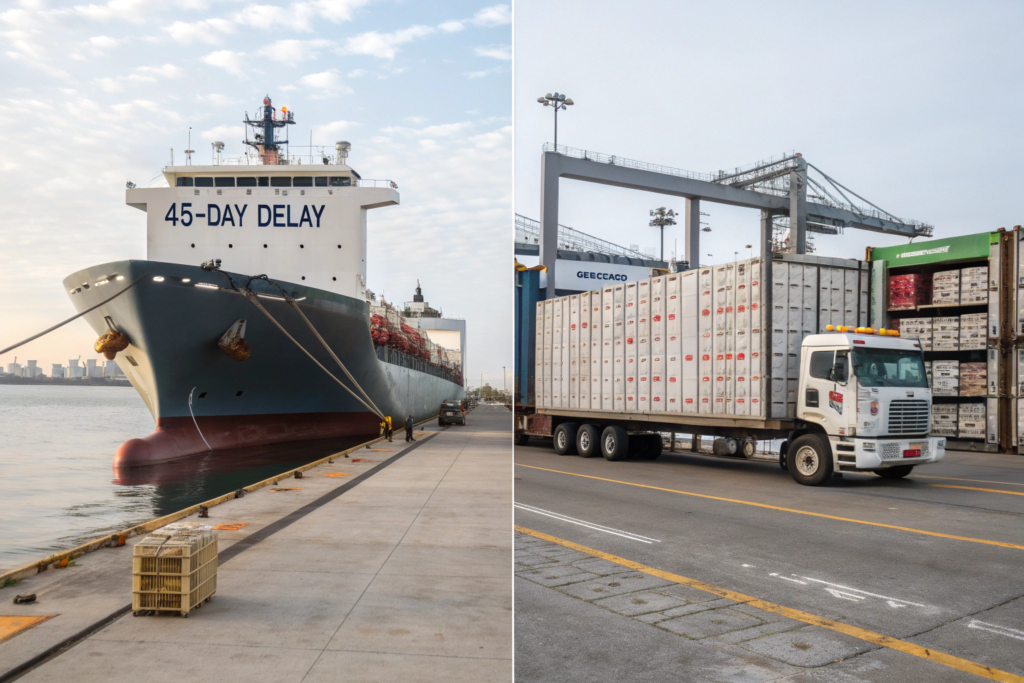
You see a rate sheet. Premium service is $5,000. Economy service is $4,000. You choose economy. You save $1,000. But the ship takes 45 days instead of 25. Your goods sit on the water. Your inventory is tied up. You run out of stock in your warehouse. You miss sales. The real cost of that cheap freight is the margin you lost on sales you could not make.
Cash flow is the lifeblood of your business. If your money is stuck in a container on a slow boat, you cannot use it to buy more inventory. You cannot use it for marketing. You lose agility. Retail buyers punish you. If you are late on a delivery window, they cancel the order and fine you. That $1,000 you saved on freight just cost you a $50,000 retailer relationship. This is the hidden cost of slow logistics.
How Do Stockouts Damage Your Brand More Than the Freight Bill?
When a customer walks into a store or visits your website and your product is out of stock, they buy a competitor’s product. You might lose that customer forever. They do not know your container is stuck in a transshipment hub in Korea. They just see an empty shelf. Your brand looks weak. Your retailer loses confidence in you.
I work with a fashion brand that switched to GeeseCargo’s expedited service. They pay about 15% more on freight. But their in-stock rate went from 85% to 98%. Their sales grew 25%. The freight cost was irrelevant compared to the revenue gain. We sat down and did the math together. The higher freight price was actually an investment in sales growth, not a cost. This is how smart business owners think about shipping.
What Is the True Cost of a Container at Sea for an Extra Two Weeks?
Let’s say your container has $80,000 worth of goods. You are paying interest on that inventory, either to a bank or by using your own capital. At a 10% cost of capital, an extra 14 days on the water costs you about $300 in pure interest. That seems small. But add in the lost sales from being out of stock. Add in the risk of a price markdown if you miss the season. The real cost is thousands.
We offer a "Time-Cost Calculator" to our key accounts. We plug in the product value, the daily sales rate, and the seasonality. The tool shows the break-even point. Most clients realize that if the premium service saves them more than seven days, it is always worth it. You should never choose a shipping service based only on the cost per container. You must consider the cost of the time that container spends traveling.
Conclusion
I have seen every trick in the book. I have seen budgets double because of a factory’s lowball quote. I have seen accessorial charges blindside a smart CEO. I have seen the panic on a client’s face when a customs bill arrives that they did not plan for. These mistakes are common, but they are not necessary. With the right partner and the right process, your freight budget can be a boring, predictable line item instead of a source of constant stress.
At GeeseCargo, we eliminate these budgeting mistakes by acting as your internal logistics department. We give you the real freight quote, not a bait price. We list every accessorial charge before you sign. We do the tariff engineering to minimize your duty legally. We absorb the currency fluctuation so your price stays fixed. And we counsel you on the true cost of slow shipping so you do not cut the wrong corner. You do not have to be a logistics expert. You just need to work with one.
My advice to Ron and every importer reading this is simple. Never accept a freight quote that is just one number in an email. Demand a full landed cost breakdown. Ask about chassis fees, terminal handling, and the MPF. Lock in a forwarder who works for you, not the factory. If you want to test our process, reach out to GeeseCargo. We will audit your current freight spend for free and show you exactly which of these five mistakes is currently costing you money.