You look at a rate sheet. You see a number. That number seems random. Last month it was 2,500 dollars. This month it’s 4,000. Nobody explains why. You feel like you are gambling. You cannot budget. You cannot forecast. You blame the shipping line. You blame your forwarder. You blame yourself for not understanding the game.
I am going to pull back the curtain. Ocean freight rates are not random. They are a machine with clear input levers. I have been inside that machine for years. I negotiate with the carriers daily. I know what they fear. I know what they need. At GeeseCargo, I do not just pass the cost to you. I manipulate the variables I can control to keep your rate low. My advantage is simple: I own the relationships at the major Asian and American ports. I consolidate volume. I block the hidden surcharges. This article is my attempt to show you exactly what moves the price needle so you never feel powerless again when you see an invoice.
What Global Factors Influence Ocean Freight Pricing Most?
You cannot control the world. But you must understand it. The ocean freight rate is a global commodity. Like oil. Like wheat. It reacts to fear. It reacts to greed. It reacts to war. When a container ship gets stuck in the Suez Canal, your rate from Shanghai to Los Angeles jumps, even though you are nowhere near Egypt. Why? Because the shipping network is a single organism.
The biggest driver is the balance of supply and demand. The supply is the number of ships and containers available. The demand is your need to move goods. When Americans buy more clothing and gifts, the demand spikes. If the shipping lines pulled capacity out of the market, the supply shrinks. The price explodes. I track these macroeconomic trends for you. I watch the global fleet capacity and the idle fleet index. This lets me advise you on when to lock in a rate and when to wait. You are not just shipping boxes. You are timing a market.
Let’s break down the four specific forces that push the price up or down.
How Do Fuel Prices and Bunker Surcharges Affect My Rate?
Oil is blood. Ships burn fuel. When crude oil rises, the cost of running a massive engine across the Pacific rises. This is the Bunker Adjustment Factor, or BAF. It is a surcharge on your invoice. It is supposed to float up and down with the market. Sometimes it just goes up and never comes down.
I watch the bunker fuel index closely. A fair forwarder ties the BAF to a transparent index, like the World Fuel Index. A greedy forwarder uses it as a secret margin builder. I give you a clear breakdown. Your base rate is one number. The BAF is a separate line. We agree on the formula at the start of the contract. If fuel drops, your BAF drops automatically. I refuse to let fuel surcharges become a profit center for us. Our profit comes from service, not from hiding behind a barrel of oil.
Why Does Vessel Capacity Scarcity Spike the Spot Market?
2021 and 2022 were brutal. You remember. A 40-foot box hit 20,000 dollars. The reason was simple math. The ships were full. The demand was 20% higher than the supply. In a commodity market, a small capacity shortage causes a massive price swing. If the ship is 99% full, the last box sets the price. That price can be ten times the normal rate.
I protect you from the spot market by refusing to play that game for regular shipments. We secure contractual allocations with the carriers. I guarantee them a certain volume of boxes every month. In return, they give us a guaranteed space and a fixed rate, even when the market goes wild. This is called a Named Account contract. It means your cargo rolls on our deal, not on the crazy daily price. This relationship-based buying eliminates the terrifying volatility that destroys small brands.
How Can Contract Rates Shield You from Market Volatility?
A spot rate is a gamble. You win sometimes. You lose mostly. You are betting that the ship has space. You are betting that there is no sudden crisis. As a professional buyer of clothing and gifts, you should not be a professional gambler in freight. You need a contract.
Contract rates are a partnership. I sit with you in October. We forecast your volume for the next year. You tell me how many containers of accessories you plan to move from Ningbo to the US East Coast. I take that volume to the shipping line. I aggregate it with my other clients. We negotiate a single, low rate for the entire year. This rate is fixed. It does not care about the Chinese New Year rush. It does not care about the port strike, unless a surcharge is strictly passthrough. This gives you the power to price your products for a 12-month period. Your biggest cost becomes predictable.
Here is how we construct these financial shields for your business.
What Is a Named Account Contract and Who Qualifies for It?
You think you are too small for a special deal. You are wrong. A Named Account contract is a rate filed by the carrier specifically for your company’s name. It used to be only for Fortune 500 companies. Not anymore.
Because GeeseCargo manages the volume of dozens of importers like you, I can negotiate a BCO contract on your behalf. The carrier sees our aggregated volume and treats us as a single large entity. You get a rate that matches the big box retailers. To qualify, I need a commitment from you. A rough monthly forecast. Not a rigid promise. A good-faith estimate. If your volume drops, we adjust. If your volume spikes, we protect the extra boxes. This contract puts your name on the allocation list. When space is tight, a Named Account gets priority over a faceless Freight Forwarder’s general cargo.
How Does Long-Term Booking Help You Avoid Peak Season Anxiety?
August arrives. You panic. You need a box immediately. You pay anything. We have all been there. The fix is to book in June. Long-term booking is not just a paperwork exercise. It is an emotional health strategy.
I start the booking process 45 days before the vessel sails. This early action locks in the equipment. It secures the empty container. During peak season, there is a shortage of boxes at the inland container depot. If you wait until the last minute, we pay a premium to pull a box from a distant yard. By booking long-term, we use the standard equipment interchange rate. I also use this lead time to negotiate the optimal routing. The slow panic booking leads to a transshipment mess. The calm, planned booking leads to a direct vessel at the base rate. We remove the hidden cost of last-minute chaos by simply respecting the calendar.
What Operational Tactics Does GeeseCargo Use to Cut Costs?
Rates are the headline. But operational execution is where the money leaks. You can sign a great contract and still pay a terrible total cost if the operations are sloppy. A truck waiting an extra day costs you. A container sitting in the wrong yard costs you.
My team in China and the US are trained to be cost-killers. We do not push paper. We move assets. We manage the free time on the container like a hawk. We choose the trucking companies that have chassis pools. We clear customs before the ship docks. These are boring, detailed tasks. But a single missed step creates a fat invoice. I pay my operational staff bonuses based on your compliance savings, not our revenue. If they save you a demurrage charge, they get rewarded. This aligns our entire operation with your budget.
Here are the specific tactical moves happening behind your invoice.
Why Does "Runner Service" Offer a Better Transpacific Transit?
A standard service stops at multiple ports. A Runner service is a direct, express line. It loads in Shanghai or Ningbo and steams straight to Long Beach. Less time on the water. Less chance of delay. Fewer port calls.
I default to Runner services for your time-sensitive fashion and seasonal gifts. The base rate might be 150 dollars higher. But the transit time is 5 days shorter. That eliminates the hidden cost of "floating inventory." Your goods hit the shelves faster. The money gets back into your bank account sooner. Furthermore, a Runner service usually berths at a more efficient terminal. The turnaround time is faster, reducing the risk of demurrage. I compare the all-in cost, not just the freight charge. In most cases, the lower inventory holding cost of a Runner service more than compensates for the slightly higher sticker price.
How Does Efficient Container Loading Prevent Unnecessary Charges?
You ship a full container. You think you are safe. But did you load it illegally? Did you exceed the weight limit? Did you secure the cargo? If the container is overweight, the terminal charges a heavy lift fee. If the cargo shifts during the voyage, you pay for the damage.
I send a loading supervisor to your factory if the order exceeds 15 cubic meters. This is a free service in our major hubs like Shenzhen and Yiwu. We check the Container Seal integrity. We check the weight distribution. We ensure the Verified Gross Mass matches the documents. We take photos of the blocking and bracing. This preemptive check eliminates the "overweight surcharge" on the backend. It also prevents the US Customs from flagging you for a weight mismatch. A clean load is a cheap load.
How Do GeeseCargo’s Port Relationships Eliminate Local Surcharges?
A rate is a number. A port is a place. The people at the place decide your final cost. If the terminal manager does not know your forwarder, you are just a faceless container. Your box sits in the back. It misses the crane. You pay storage.
I know the people. I have built relationships with the senior clerks, the terminal operators, and the customs exam teams in Shanghai, Los Angeles, and Hamburg. When your container arrives, it is not an anonymous unit. It is a GeeseCargo box. They know my operations manager. They know we pay our bills on time. They know we load safely. This reputation buys us priority service without the "priority fee." A port official sees a problem with your documents. They call me directly. We fix it in 20 minutes. They don’t just hold the cargo and let the demurrage tick. This is the oldest secret in shipping: relationships are a currency.
Let’s translate this human capital into your financial savings.
What Power Does a Trusted Forwarder Have During a Customs Hold?
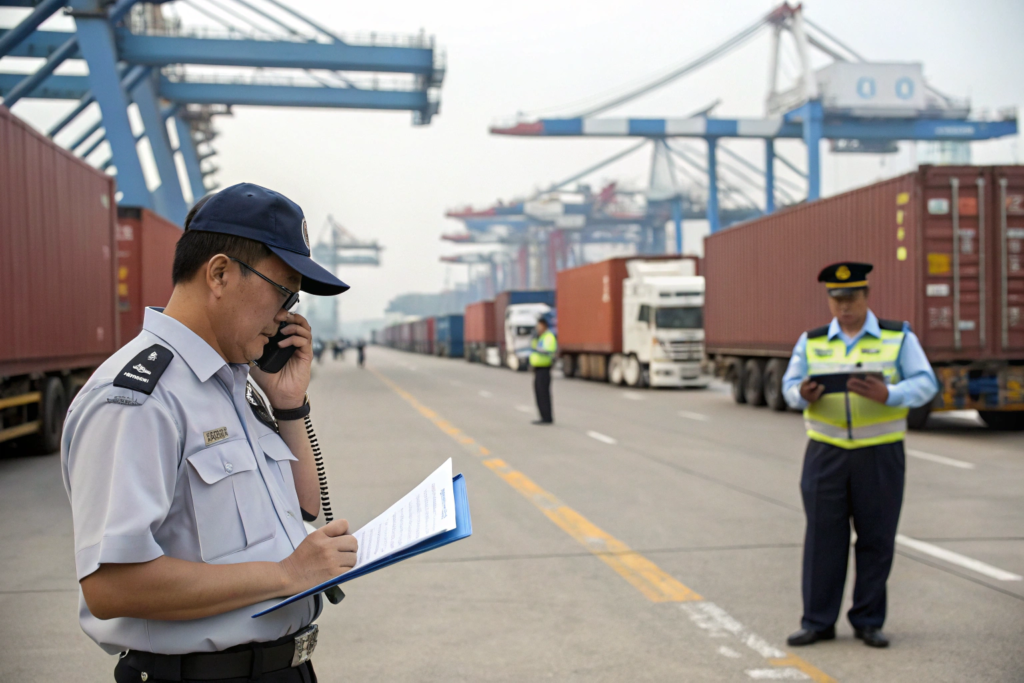
A hold notice. Your blood runs cold. A typical forwarder sits and waits for the government to do its job. Days pass. Fees accumulate. I pick up the phone. I call the Customs Brokerage team stationed on-site at the terminal.
Because of our long-standing presence, we know which officer to speak with. We know how to submit the revised Importer Security Filing immediately. We can arrange a physical exam slot in 24 hours instead of 72. This reduction in dwell time saves you the heavy Exam Site Charges that come from your cargo being moved to a Centralized Examination Station. Trust turns a crisis into a minor paperwork blip. I don’t charge for making that call. It’s part of the brand promise: professional and reliable. When we say we clear customs fast, we mean we clear the relationship hurdles, not just the data hurdles.
How Can Access to Private Chassis Pools Keep Your Freight Moving?
The ship arrives. The container is ready. But there is no truck chassis. This is the modern American port crisis. You wait. You pay per diem. Your forwarder says it is "outside their control." That is an excuse, not a solution.
I solved this by securing agreements with private chassis pool operators near major US ports. We do not rely solely on the steamship line’s equipment. If the line’s chassis is out, we dispatch our own. The cost is slightly different, but the elimination of waiting days saves you hundreds of dollars. This proactive equipment management is what I call the Flow Assurance Program. It is designed specifically for clients like you who ship large quantities of fashion and accessories. Your goods are high-value. They cannot sit on the concrete for a week. We keep them rolling by owning the chassis solution.
Conclusion
Ocean freight rates are not a mystery. They are a story. The story has chapters on global fuel, ship supply, seasonal greed, and local relationships. You started reading this article wanting to know what makes the price move. Now you know. The price moves on fear, on scarcity, and on inefficiency.
But you have a choice. You can accept the wild ride of the spot market. You can let the hidden surcharges surprise you. You can treat your logistics cost as a monthly gamble. Or you can step out of the casino. You can enter a partnership where the rate is built on a contract, the operations are checked by a supervisor, and the port fees are waived by a friend.
My promise at GeeseCargo is not that the global market will be calm. It will not be. My promise is that I will be between you and the volatility. I will contract the space. I will check the loading. I will call the terminal. I will put my reputation on the line so your invoice is fair.
Look at your last three ocean bills. Add up the surcharges you didn’t understand. Calculate the waiting time you paid for. Next time, let’s make those lines zero. You produce the goods. I produce the safe, cheap passage.
That’s how we keep your rates low. Not by magic. By control.