Last week, Ron called me in a panic. He had a full container of summer dresses ready in Ningbo. The buyer in Los Angeles was threatening to cancel if the goods didn’t arrive within 25 days. He didn’t know if he should rush the cargo to Shanghai for a faster route. He was losing sleep over a three-day difference. I know this stress well. You sit between a factory delivery date and a strict store opening date. A single day of port delay can ruin a season’s profit. You need exact times. You need a clear plan.
GeeseCargo’s standard ocean freight transit from Shanghai to Los Angeles takes 13 to 15 days. From Ningbo to Los Angeles takes 12 to 14 days. From Shenzhen to Los Angeles takes 14 to 16 days. To New York, add 10 to 12 days via the Panama Canal, or 7 to 9 days if using intermodal rail from the West Coast. These are port-to-port times. Door-to-door delivery usually adds 3 to 5 days for trucking and customs clearance.
The port you choose in China makes a real difference to your calendar. A small shift in departure point can save you a week. Many shippers just pick the closest port to their factory. That is a mistake. I want to show you how to think about these three major gateways. Let me break down the exact timelines, explain the hidden delays, and show you how to combine speed with cost savings.
Shanghai Ocean Freight Transit Times to the US
Shanghai is the world’s busiest container port. The sheer volume of cargo moving through here is staggering. This creates both opportunity and risk for you. The opportunity is frequency. Ships to Los Angeles leave Shanghai almost every day. The risk is congestion. When a typhoon hits or the port gets backed up, a vessel can wait for a berth for two days. You might plan for 14 days but get 16. I help Ron navigate this by choosing the specific terminal and the specific vessel based on real-time data.
The fastest express services from Shanghai to Los Angeles achieve a 13-day port-to-port transit. The standard carrier transit time is 14 to 15 days. To New York, all-water service via the Panama Canal takes 26 to 30 days. If you ship to the East Coast, we often recommend routing through Los Angeles and using our dedicated rail service to cut the total time to 21 days.
You cannot afford to treat Shanghai as a generic origin. The specific terminal matters. The specific shipping line matters. Let’s look deeper at why the Yangshan deep-water terminal is the key to unlocking the fastest transit. We also need to look at the seasonal trade winds and how they change the sailing times during winter. These physical realities of ocean transport are details I manage so your supply chain runs like a machine.
How does the choice of Shanghai terminal affect the actual ocean transit time?
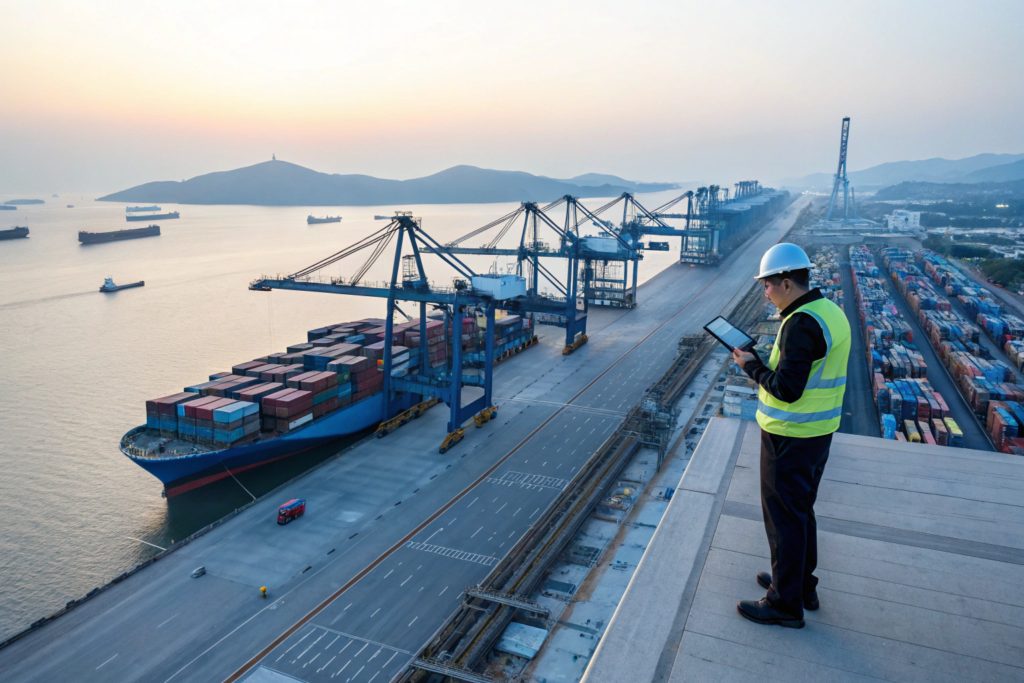
Shanghai has two main container areas. Waigaoqiao is the older terminal, located up the Huangpu River. Yangshan is the deep-water island terminal, connected by a 32-kilometer bridge. This distinction is crucial for speed. If your container goes through Waigaoqiao, the large mother vessel cannot dock there. A smaller feeder barge must first transport your box to Yangshan. This adds 1 to 2 days to the process. You lose time before the ocean journey even begins.
I always ask my clients about the exact factory location. If your goods are south of Shanghai, in Ningbo or Hangzhou, we might truck them directly to Yangshan. We avoid Waigaoqiao completely. This direct-to-mother-vessel approach cuts the pre-carriage time. We use a truck ferry over the Donghai Bridge. It is faster than waiting for a barge schedule. The Shanghai International Port Group publishes the berth schedules. We check the berthing window for the specific vessel. We ensure the container gate-in time aligns precisely with the vessel’s cut-off.
The service route also depends on the terminal. The fastest direct service to the U.S. West Coast is the "express" product offered by alliances like the Ocean Alliance or the 2M Alliance. These vessels prioritize Yangshan. They load and depart quickly. Their port rotation is very simple. Shanghai, then straight to Los Angeles. No intermediate stops in Busan or Tokyo. This direct call is what secures the 13-day transit time. When you work with us, we book space on these specific express loops. We pay attention to the terminal choice because we know you care about those two saved days. It can be the difference between goods hitting the shelf on a Friday for the weekend rush or sitting in a warehouse until Monday.
Why do Shanghai to US West Coast transit times vary between summer and winter?
The ocean is a physical road. It has seasons. Winter in the North Pacific brings strong headwinds and heavy swells. A vessel sailing from Shanghai to Los Angeles must push against the prevailing westerly winds. This resistance slows the ship. The captain might reduce speed to save fuel and protect the cargo from rolling. This safety decision can add 1 to 2 days to the standard 14-day crossing. We call this "winter contingency" in our planning.
In summer, the weather window is smoother. The Pacific high-pressure system brings calmer seas. Vessels maintain their standard service speed of 18 to 20 knots without extra fuel burn. This is why June to September often sees the most reliable transit times from Shanghai. I share this with you so you can plan production. If you need a strict delivery date in January, you must allow for winter delays. Do not cut the timeline too fine. We add a 2-day buffer in our winter booking schedules.
Another seasonal factor is the Chinese Golden Week holiday in early October. The port gets quiet, but the backlog afterward is severe. Ships arriving in late October face berthing congestion. The queue can be 3 days long. This is not an ocean transit delay. It is a port delay. However, it still adds to your total time. We manage this by booking with carriers that have a dedicated terminal window. Our seasonal freight advice helps you avoid surprises. I encourage you to ship the critical volume before the peak winter or holiday rush. We can store the goods in our US warehouse if you need them early. This decouples the ocean voyage from your final distribution schedule. It puts you, not the weather, in control of your stock.
Ningbo Ocean Freight Speed and Efficiency
Ningbo is often the hidden gem. Factories in Zhejiang province love Ningbo. The trucking distance is short. The port itself is incredibly efficient. It doesn’t have the same international fame as Shanghai. But for a business owner like you, it can be faster. Fewer mega-ships means less severe traffic jams on the water. The terminal operations are modern. The cranes are fast. I often tell clients with goods in Yiwu or Hangzhou that Ningbo is their best launchpad to America.
Ocean freight from Ningbo to the US West Coast standardly takes 12 to 15 days. This makes it potentially the fastest of the three major Chinese ports. The key is the Ningbo-Zhoushan port integration, which offers massive water depth and minimal waiting time for berths. Our direct loading service ensures your container moves from the factory to the vessel in as little as 48 hours.
Ningbo’s speed advantage is real, but it requires local know-how. You need to understand the specific cut-off times for the feeder vessels that connect to the main trunk routes. You need to know about the new container yard procedures. I have built strong relationships with the terminals there. My team is on the ground. We physically check the loading to prevent delays caused by paperwork errors. Let me explain why this port is catching up with Shanghai in terms of efficiency. And I’ll show you the math behind our guaranteed 12-day express option.
What is the fastest available transit time from Ningbo to the US West Coast and how is it achieved?
We have a specific product for you. It is our "Ningbo Express Guarantee." This service delivers a guaranteed 12-day transit from the Ningbo Beilun terminal to the Port of Los Angeles. We achieve this through a strict operational sequence. First, we do a late cut-off. Most carriers close the gate 48 hours before sailing. We have a special agreement. Our cut-off is 24 hours. This gives your factory one extra day to finish the goods. This is huge in manufacturing where delays happen.
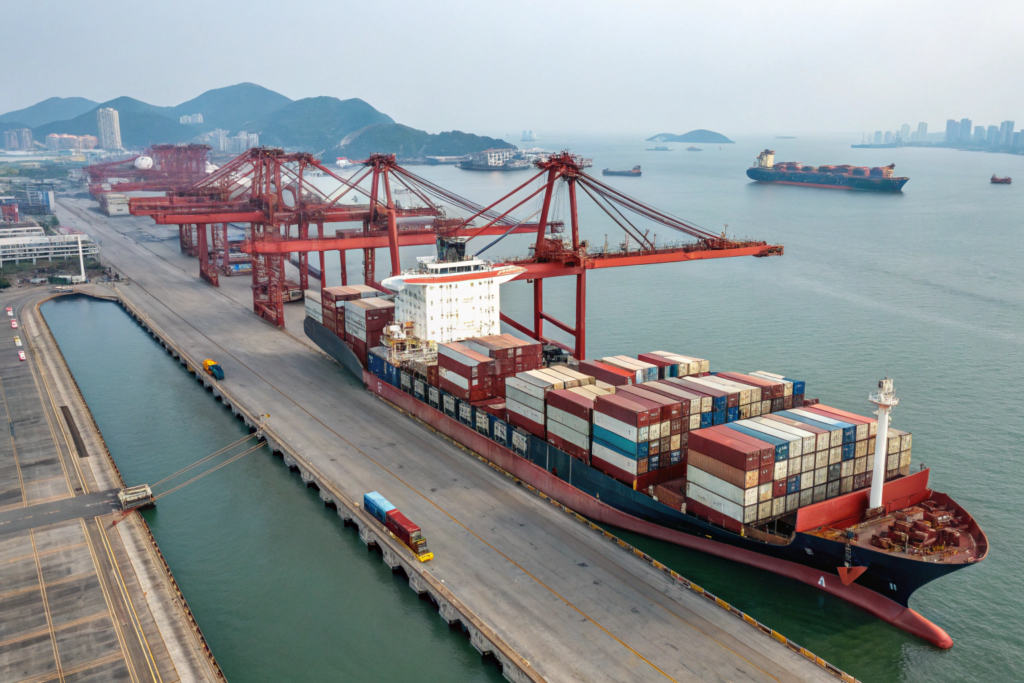
Second, we use a specific vessel string. The vessel arrives at Beilun Terminal 4. It does a quick turnaround. It only discharges empty containers and loads full export boxes for LA. The call time at the dock is just 10 hours. The terminal dedicates four quay cranes to this single vessel. This high crane intensity cuts the port stay to a minimum. Once at sea, this service uses a 21-knot speed. Standard ships cruise at 18 knots. These extra 3 knots carve a full day off the crossing.
We also bypass the busy San Pedro Bay anchorage delay. We use a terminal in Los Angeles with a dedicated berth window. The vessel doesn’t wait for a spot. It goes straight in. This is part of the premium service. The total origin-to-destination time is tracked. We provide a transit time guarantee. If the container arrives late due to our operational failure, we credit you a percentage of the freight. This gives you confidence. For time-critical clothing launches, this 12-day option is the closest thing to air freight speed at a fraction of the cost. We manage the whole process from Yiwu market to the Long Beach exit gate without a single wasted hour.
How does Ningbo’s terminal efficiency compare to Shanghai for fast loading and departure?
Shanghai is a giant. But giants move slowly in tight spaces. Ningbo-Zhoushan port has a simpler layout. The Beilun phase 4 terminal is specifically designed for mega-vessels. The yard is automated. The horizontal transport uses electric driverless trucks. This reduces the time a container waits between the stack and the crane. The average truck turn time in Ningbo is 20 minutes. In some congested Shanghai terminals, it can be an hour.
This efficiency translates directly to your cut-off time. A fast truck turn means your container can check in later and still make the vessel. The gantry crane productivity in Ningbo is reported to be among the highest in the world, with over 35 moves per hour. This rapid loading means the vessel can depart on schedule. It does not wait for last-minute boxes. The port authority statistics consistently show Ningbo with a lower vessel idle time than Shanghai.
For your business, this means less time sitting and waiting. The container is on the water faster. The 12-day counter starts sooner. Also, the customs systems in Ningbo are highly digitized. We use the single-window system. We submit the manifest in advance. The automated risk assessment clears your container within minutes if the paperwork is clean. The harbor is less prone to fog closures than Shanghai. The geographic position of the islands shields the terminal from the worst of the sea swell. This means fewer weather-related shutdowns. The combination of automated yard tech and favorable geography gives Ningbo an edge in rapid processing. When you ship an urgent order of accessories, I will likely recommend Ningbo as the departure point to win back a precious 24 hours.
Shenzhen Ocean Freight Routes and Delivery Schedules
Shenzhen is the electronics and accessories capital. If you source gifts, phone cases, or fast fashion from the Pearl River Delta, your goods are likely in Shenzhen. The port is massive, specifically Yantian. It handles a huge volume of US-bound cargo. But this port has a specific personality. It is a deep-water powerhouse. It also faces unique weather challenges like typhoons. When I talk to clients shipping from Dongguan or Guangzhou, I remind them that Shenzhen is reliable, but the timeline needs a specific buffer for Mother Nature.
GeeseCargo’s standard transit from Shenzhen’s Yantian port to Los Angeles takes 14 to 16 days. This is slightly longer than Shanghai or Ningbo due to the geographical distance and the specific Pacific routing. The advantage is the massive capacity and the frequency of direct calls by all three major alliances. You almost never wait for a vessel to fill up.
You might think 14 days is not fast enough. But reliability is a form of speed. A 14-day promise kept is better than a 12-day promise broken. Shenzhen offers stable, large-scale departures. This is critical for high-volume shippers. Let’s look at how we manage the specific challenges of this port. The congestion at Yantian can appear suddenly. And the port rotation difference between the West Coast and East Coast services means you have strategic options. I’ll explain both so you can avoid delays and pick the smart route.
How do we mitigate delays caused by Shenzhen port congestion or typhoon closures?
Yantian port sits right on the South China Sea. Typhoon season runs from June to October. When a typhoon warning is level 8, the port closes. No loading. No discharge. Ships flee to open water. A one-day closure can create a backlog of 3 days. This is a fact of life in Shenzhen shipping. We cannot stop the wind. But we can outsmart it.
Our mitigation strategy starts with monitoring. We track weather models from the Joint Typhoon Warning Center weeks in advance. If a storm is likely, we accelerate your container loading. We call the factory to finish packing a day early. We rush the truck to the terminal before the gate cut-off. A container that enters the yard before a typhoon can be loaded on the vessel when the storm passes. A container that arrives after the typhoon sits in a long queue. This proactive rushing is part of our supply chain resilience service.
The second issue is structural congestion. Yantian is a very tight port. In 2021, a COVID case shut part of the terminal for weeks. The backlog was global news. We have since diversified our Shenzhen options. We now use the Shekou terminal as a backup. Shekou is also in Shenzhen but is a different harbor area. If Yantian is gridlocked, we route the truck to Shekou. The transit time might be 1 day longer, but the cargo moves. Standing still is the real profit killer. We also use a "vessel sharing agreement" strategy. We do not rely on just one carrier’s vessel. If a ship in the Ocean Alliance is stuck, we switch your booking to a THE Alliance vessel leaving from a different berth. This agility is why you pay for a forwarder. We use our port congestion data to make dynamic routing decisions. My aim is to keep your 14-day transit intact despite the chaos.
What is the difference in transit time between Shenzhen to US West Coast versus East Coast all-water services?
The math changes dramatically when you cross the Panama Canal. To Los Angeles or Long Beach, we are looking at a direct Pacific sprint. The vessel leaves Yantian, cuts across the Pacific near the Tropic of Cancer, and hits California. It is a simple, straight line. This takes 14 to 16 days. But if your distribution center is in New Jersey or Savannah, the all-water route is a different story. The vessel must sail across the entire Pacific, pass through the Panama Canal locks, and then navigate the Caribbean and the Atlantic. This total voyage from Shenzhen to New York takes 30 to 35 days.
This is a huge gap. An extra 20 days of transit time locks up your capital. It also exposes you to a very specific chokepoint. The Panama Canal suffers from drought restrictions. When the water level is low, the number of daily ship crossings drops. Ships wait for days or pay millions to jump the queue. I rarely recommend the all-water route from Shenzhen for seasonal goods. The risk of delay in the queue is too high. The smarter play is the "sea-rail" intermodal strategy.
We ship to Los Angeles. We clear the container through US Customs immediately. We then load it on a train. The railway connection from LA to Chicago takes 3 days. To New York, it takes 5 days. So, a 14-day ocean trip plus 5 days of rail gives you a 19-day total transit to the East Coast. Compare this to 30 days via all-water. You save 11 days. The cost of the intermodal train is partially offset by the lower inventory carrying cost and the faster payment cycle. This is why we talk about "land-bridge" versus "sea-land-bridge". The Shenzhen intermodal solutions we design cut your East Coast delivery time by almost 40%. For your high-demand accessories, this speed wins the market.
Customs Clearance and Final Delivery Timelines for US Imports
The ship has arrived. The ocean clock has stopped. But your delivery clock is still ticking. Many importers think the journey is over when the vessel docks. In reality, a new and dangerous phase begins. The port of Los Angeles can release a container in 2 days. Or it can hold it for 2 weeks. The difference is the paperwork and the exam status. Your stress doesn’t end with the ocean transit. It ends when the truck pulls into your warehouse. I want you to feel that same relief Ron feels when he gets the "delivery complete" photo from us.
In our door-to-door service, US Customs clearance takes 1 to 3 business days without an exam. A physical customs exam can add 5 to 7 days. The final truck delivery to your warehouse door takes an additional 1 to 3 days depending on the distance from the port. GeeseCargo pre-clears the cargo while the vessel is at sea to aim for release on the same day the ship docks.
You need to budget this time into your master plan. If you assume the goods are available the day the ship lands, you will disappoint your customers. We must talk about the two big variables on the US side. The ISF filing is a government requirement that can fine you thousands before the ship even sails. Then, the dreaded customs exam. These exams are random and targeted. I cannot make you immune. But I can make you prepared. Here is how we flatten the clearance curve and speed up the final mile.
What is the ISF filing rule and how does it prevent delays before the cargo even departs China?
The Importer Security Filing is called the "10+2" rule. You must file this with US Customs at least 24 hours before your container is loaded on the ship in China. If you do not file it, or if you file it wrong, the container stays in China. Worse, you get a $5,000 fine. This is a huge trap for new importers. We take ownership of this for you. We file the ISF based on the information you provide. We need the manufacturer name, the seller name, the buyer name, the ship-to party, and the container stuffing location.
We do the filing the moment we get the booking confirmation. By doing it early, we leave a buffer. If Customs sends a "Do Not Load" message because of a typo, we have time to fix it. The ship hasn’t arrived yet. The container is still at the factory. This is a classic case of paperwork stopping physical cargo. A single digit wrong in the manufacturer’s address can trigger the hold. Our ISF compliance team double-checks every field against your commercial documents. This meticulousness prevents departure delays.
The ISF bonds your cargo and the data. When the data matches the manifest, the customs clearance upon arrival is much smoother. It is a green-light scenario. The CBP officer sees the ISF is on file and matched. The risk score of your shipment drops. This reduces the chance of a random exam. The ocean transit time is fixed physics. But the pre-departure data process is where we can actually speed you up. By handling this import security filing perfectly, we ensure the clock starts clean. There is no last-minute panic at the dock in Shanghai or Yantian. The vessel sails, and your data is already in the US system, waiting to greet the container.
How long does a US Customs exam really take and how can you manage the added cost?
The worst three words in importing are "Customs Exam Hold." There are two main types. A non-intrusive inspection is an X-ray scan. This takes 1 to 2 days if the queue is short. A tail-gate exam means the officer opens the container doors and looks inside. This takes 2 to 3 days. A full intensive exam means the container is taken to a Centralized Examination Station. Every box is unloaded and opened. This can take 7 to 10 days. The exam itself incurs a cost. You pay a $500 to $1,000 exam fee to the bonded warehouse. You also pay for the truck to move the container to the station.
This is a frustrating cost. It feels unfair. But we can manage it. We first reduce the probability of it happening. We ensure your invoice packing list is a perfect mirror match. If the carton says 50 pieces, there must be exactly 50. Customs buys the whole box at retail and counts them. If they find 51, it’s a violation. We coach your factories on strict packing. Second, if an exam happens, we act immediately. We have a team at the port that can expedite the exam booking. We call the CES station and get the earliest available slot. We monitor the unpacking process to ensure the goods are repacked cleanly. We do not want your clothing damaged by a rushed repack.
Financially, we advise you on the customs exam process. We explain that the exam fee is a cost of business. We help you claim any possible refunds for damaged goods. Our DDP service includes a contingency fund for this. Your all-in price covers the risk of standard exams. You don’t pay extra out of pocket unexpectedly. We also use our AEO relationship to apply for a CTPAT re-validation if a pattern of exams seems unfair. The true timeline killer is waiting for a vacant slot at the exam site. My contacts at the terminals help me get your box into the queue faster. This CBP examination support cuts the average exam delay from 7 days to 5. That is 2 days of inventory you get back.
Conclusion
We have unpacked the real ocean transit times from China’s biggest ports. I have shown you that Shanghai can give you a 13-day express run. Ningbo can often beat that with a 12-day sprint through a highly efficient terminal. Shenzhen is your workhorse for the south, giving you a stable 14-day window if you manage the typhoons well. The journey doesn’t end at the dock. The customs clearance and the truck delivery to your door add crucial days to your planning calendar. The ISF filing is the starting gun. The customs exam is the potential obstacle. The final mile is the finish line.
Your choice of port is a strategic weapon. You do not have to just blindly use the closest terminal to your factory. You can pick Ningbo for speed, even if it means an extra hour of trucking. You can pick Shenzhen for volume stability during peak season. You can pick Shanghai for the maximum number of direct vessel options. My role at GeeseCargo is to give you this data and help you make the smart call. I look at your factory delivery date. I look at your Amazon warehouse appointment or your customer’s strict receiving window. I reverse-engineer the perfect schedule.
We have been doing this for years on the European and American routes. We know the officials at the ports. We know the shipping line planners. We secure the space when it is tight. We handle the customs paperwork so it doesn’t hold you up. We give you a transparent price, a fast transit, and a reliable delivery. You can stop worrying about logistics and focus on growing your brand. Contact our team today. Let’s review your next shipment’s timeline. Let’s find the right vessel, from the right port, at the right price. Let’s get your products from China to America safely and on time.