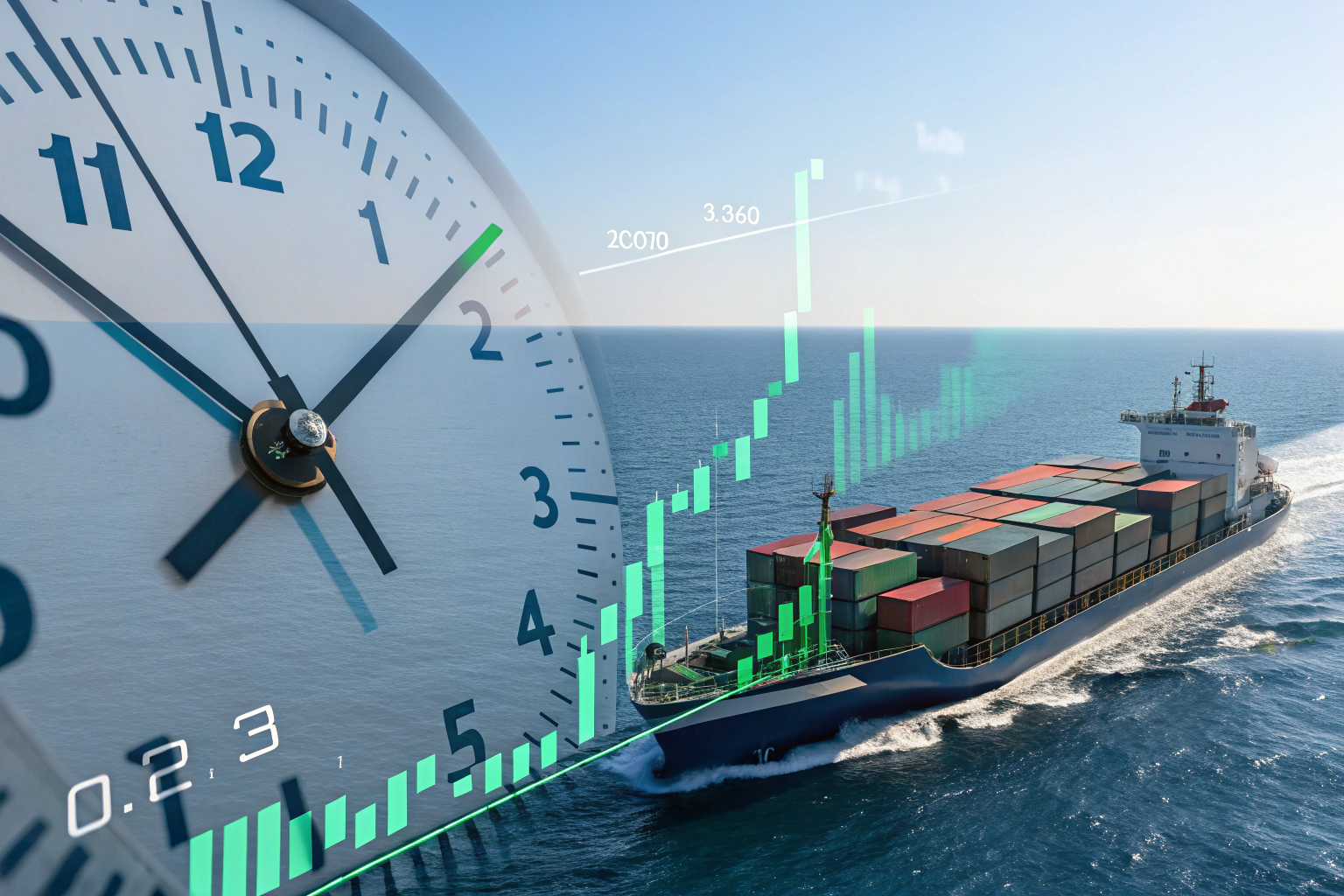
A new client once asked me a question that I hear in almost every first conversation. He had a purchase order for a seasonal gift line with a hard delivery deadline to a major retailer. His previous forwarder had quoted him "about 25 to 35 days" from Shanghai to his warehouse in Chicago. The shipment took 47 days. He missed the shelf date, his buyer was furious, and he lost the contract for the following season. When he sat down with me, he said, "I don’t want an estimate. I want the real number, with the real problems, so I can plan my business around reality, not hope." I respected that. I gave him the real numbers, and I am going to give them to you now.
GeeseCargo’s shipping from China to the USA in 2026 takes 12 to 18 days for port-to-port ocean transit, 28 to 38 days for complete door-to-door ocean freight including consolidation and final delivery, 3 to 7 days for door-to-door air freight, and 18 to 25 days for rail-sea multimodal service, with actual timelines varying based on the specific origin and destination ports, the chosen service level, and real-time port congestion conditions.
Shipping time is not a single number. It is a chain of linked activities, each with its own duration and its own vulnerability to delay. When you ask "how long does shipping take," you are really asking "when will my goods be on my warehouse floor, ready to sell." That is the only date that matters. Let me break down the real timelines for each mode, explain where time is lost, and show you how we at GeeseCargo manage the clock to deliver on our promises.
What Are the Current Ocean Freight Transit Times from Major Chinese Ports?
The clock starts ticking the moment the container is loaded onto the vessel and the ship departs the port. That is the port-to-port transit time. It is the most predictable part of the entire shipping journey because it is governed by physics and sailing schedules, not by trucker availability or customs exam queues. But even this segment has variability. Different Chinese ports have different distances to the U.S., and different carriers have different service speeds and routing.
Current ocean freight port-to-port transit times from major Chinese ports are approximately 12 to 15 days from Shanghai and Ningbo to Los Angeles or Long Beach, 14 to 18 days from Shenzhen and Yantian to the West Coast, and 28 to 35 days from any major Chinese port to the U.S. East Coast via the Panama Canal, with Seattle and Oakland adding approximately 1 to 2 days to the Southern California transit.
The West Coast is the fastest gateway from China. A vessel leaving Shanghai on Monday will typically arrive at the Port of Los Angeles or Long Beach on the Monday or Tuesday two weeks later. The route is direct, across the Pacific, with no canal transits. The Pacific Northwest ports, Seattle and Tacoma, add roughly a day or two of sailing time compared to Southern California, but they often offer faster truck turns once the container is on the ground. That time savings on the back end can more than offset the extra day on the water. The East Coast is a different calculation. A vessel leaving Shanghai for New York or Savannah must either transit the Panama Canal or use the Suez Canal. The Panama route takes about 28 to 32 days. The Suez route is longer and has been subject to disruption. We typically route East Coast cargo via the West Coast and transload to rail, which is faster and more reliable than the all-water route. I will explain that more in a moment.
Why do Shanghai and Ningbo offer the fastest West Coast transit?
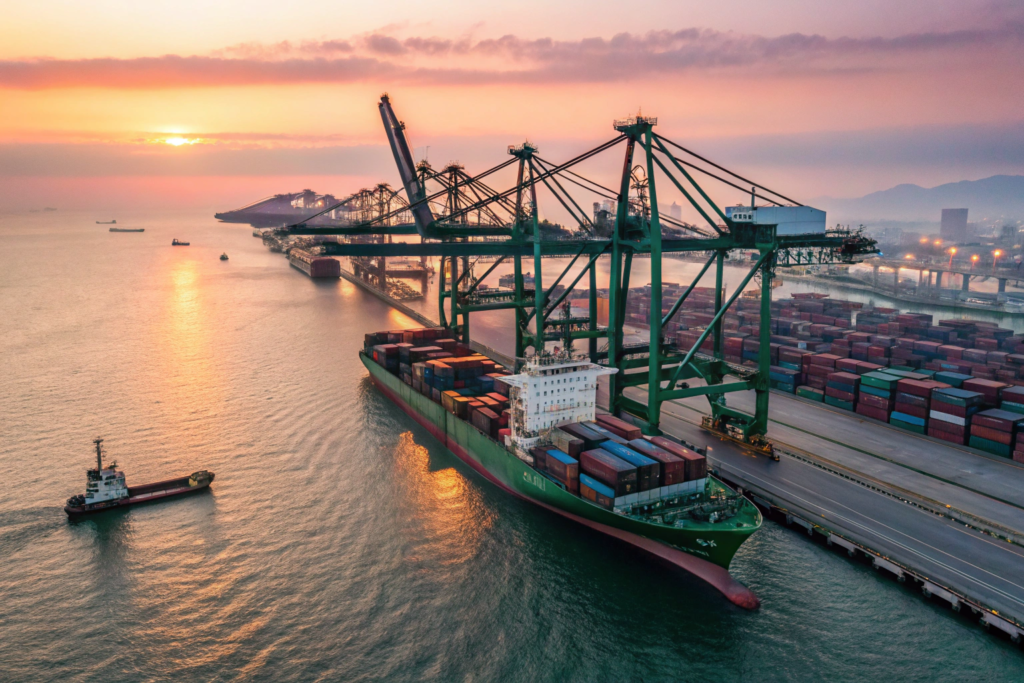
Shanghai and Ningbo are geographically the closest major Chinese container ports to the U.S. West Coast. The great circle route across the Pacific is shorter from these northern ports than from the southern ports of Shenzhen or Hong Kong.
Additionally, Shanghai and Ningbo have the highest concentration of direct, non-stop services to the U.S. West Coast. Carriers deploy their largest and fastest vessels on these trunk routes because the volume density is highest. A vessel might depart Shanghai, call Ningbo, and then steam directly to Los Angeles with no intermediate stops. A vessel loading in Shenzhen or Yantian may first call at several other South China or Southeast Asian ports before beginning the Pacific crossing. Each port call adds 12 to 24 hours. That is why we often recommend that our clients with factories in South China consolidate their cargo and truck it to Ningbo or Shanghai for loading. The trucking time from Guangdong to Ningbo is about 24 to 30 hours. That is often less than the cumulative port call delays a vessel experiences making its way up the coast. We do this routing analysis for every shipment to find the true fastest path, not just the shortest sailing schedule on paper.
How do carrier alliances and service strings affect transit time reliability?
The container shipping industry is dominated by three major alliances: Ocean Alliance, THE Alliance, and 2M. Each alliance operates multiple service strings, which are fixed rotations of vessels calling at specific ports on a weekly schedule.
The choice of alliance and service string directly impacts your transit time and its reliability. Some strings prioritize speed, with fast vessels and minimal port calls. Others prioritize coverage, with more port calls and slower overall transit. When we book your cargo, we do not just look for the lowest rate. We look at the historical on-time performance of the specific service string. A service that advertises a 14-day transit but has a 60% on-time record is worse for your business than a service that advertises 16 days and arrives on time 90% of the time. We track carrier performance data and use it to make routing recommendations. We also maintain relationships with multiple carriers across different alliances, so we are not locked into a single service string that may be underperforming. This flexibility allows us to switch carriers quickly if a particular service is experiencing chronic delays.
How Long Does GeeseCargo’s Door-to-Door Ocean Service Take End to End?
The port-to-port transit time is only the middle chapter of the story. The full door-to-door timeline starts when the truck leaves your factory in China and ends when the goods are unloaded at your warehouse in the United States. This is the number you actually need to plan your inventory and your sales. This is the number I gave my new client after his 47-day disaster.
GeeseCargo’s complete door-to-door ocean service from a Chinese factory to a U.S. warehouse takes a total of 28 to 38 days for West Coast destinations and 35 to 45 days for East Coast destinations, broken down into origin handling of 5 to 7 days, ocean transit of 12 to 18 days, and destination handling including customs clearance and final delivery of 7 to 10 days.
Let me break down the 28 to 38-day West Coast window. Origin handling takes 5 to 7 days. This includes trucking from the factory to our consolidation warehouse, cargo receipt and inspection, export customs declaration in China, container stuffing, and trucking to the port. If the factory is remote, add a day for the inland trucking. Ocean transit takes 12 to 18 days depending on the specific port pair. Destination handling takes 7 to 10 days. This includes vessel discharge at the U.S. port, customs clearance filing and release, container pickup from the terminal, transloading if needed, and final truck delivery to your warehouse. Each of these segments has a normal range and a risk range. Customs clearance normally takes 1 to 3 days, but an exam can add a week. Truck power is normally available within 2 days of release, but during peak season it can take 4 or 5 days. We manage these variables actively. We file the customs entry before the vessel arrives to eliminate clearance waiting time. We pre-book truck power to avoid the dispatch scramble. We do everything in our control to keep your shipment in the fast end of the normal range.
What happens during the origin handling phase that importers often underestimate?
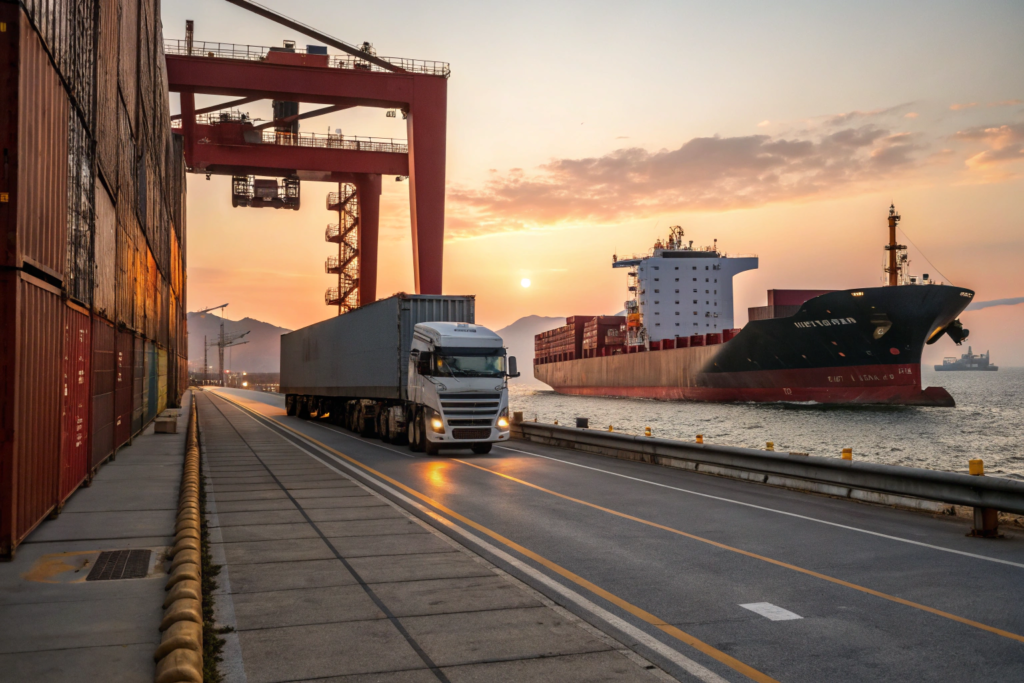
Origin handling is where many inexperienced forwarders lose time. They treat the period between factory completion and vessel departure as a black box, and days slip away without anyone noticing.
At GeeseCargo, we plan the origin timeline backward from the vessel cut-off date. The cut-off is the deadline for the container to be delivered to the terminal. We determine the cut-off for our target vessel. We work backward. Trucking from the warehouse to the terminal takes a day. Container stuffing takes a day. Consolidation and documentation take two days. Export customs clearance takes one day. Factory trucking to the warehouse takes one to three days depending on distance. The total origin timeline is five to seven days. We communicate this schedule to the factory and to you. We track progress against the milestones. If the factory is running late, we know immediately and can assess whether we need to push to the next vessel. There is no mystery. There is no "the forwarder is handling it." There is a clear schedule with clear accountability.
How does final mile delivery time vary by U.S. destination?
Final mile delivery time is highly dependent on the destination warehouse location relative to the port of entry. A warehouse in Southern California can receive a container within one day of customs release. A warehouse in the Midwest or on the East Coast needs additional transit time.
For a container arriving at Los Angeles, delivery to a warehouse in the Inland Empire or Los Angeles County takes one day after release. Delivery to the Bay Area takes two days. Delivery to Phoenix or Las Vegas takes two to three days. Delivery to Dallas or Chicago by transload and rail takes five to seven days. Delivery to the East Coast by transload and rail takes seven to ten days. If we use an all-water service to the East Coast, the ocean transit is longer, but the final mile is shorter because the port is close to the destination. We factor these delivery times into the total door-to-door estimate we give you. We do not just quote the port-to-port sailing schedule and let you figure out the rest. Your quote from GeeseCargo includes the complete timeline.
What Are the Realistic Air Freight and Express Delivery Timelines?
When time is the absolute priority, air freight is the answer. It is more expensive than ocean freight, often significantly, but it compresses weeks into days. I have clients who use air freight strategically, not for every shipment, but for specific scenarios. A fast-fashion item that must hit the shelves before a trend fades. A replacement order for a defective batch that arrived by ocean. A pre-season sample run that needs to be at a buyer meeting. Air freight is a time machine, and like a time machine, it costs more to operate.
GeeseCargo’s air freight door-to-door timeline from China to the USA is 3 to 5 days for express priority service using major integrator networks, 5 to 7 days for consolidated air freight with customs clearance and final delivery, and 5 to 8 days for economy air freight services, with all options including full door-to-door handling from factory pickup to warehouse delivery.
The express priority timeline is the fastest. This uses the networks of carriers like FedEx, UPS, or DHL. The factory ships the goods to our air freight hub. We process the shipment and hand it to the express carrier. The goods fly the same day or overnight. They clear U.S. customs upon arrival, often within hours, and are delivered to the destination the following business day. The total timeline from factory to warehouse is three to five days. This is the service you use when you absolutely need goods in hand by Friday. Consolidated air freight is slightly slower but more cost-effective. We combine multiple clients’ cargo into a single air waybill and book space with a wholesale carrier. The transit time is five to seven days door-to-door. The consolidation process adds a day at each end, and the wholesale carrier’s flight schedule may not be as tight as the express integrators. The cost savings can be 30% to 50% compared to express, making it a strong option for time-sensitive but not emergency shipments.
When does air freight actually make financial sense compared to ocean?
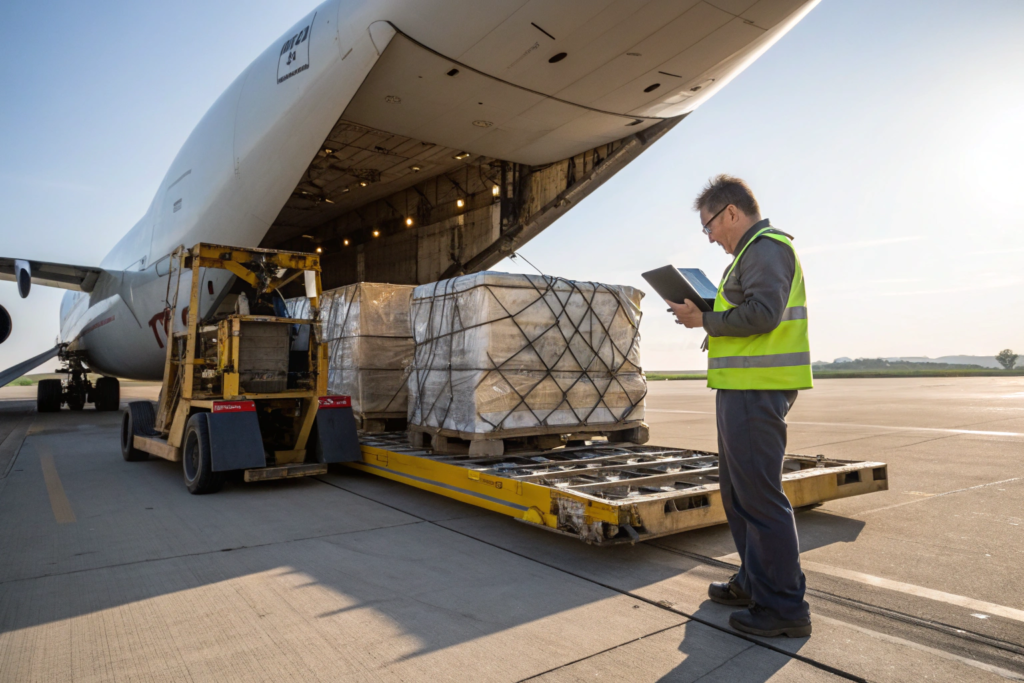
Air freight is not just a premium product for desperate situations. For certain product profiles, it is the rational economic choice. The calculation involves total landed cost, inventory carrying cost, and the cost of lost sales.
Consider a product with a high value-to-weight ratio, like premium accessories. A 500kg shipment valued at $100,000. Ocean freight and duty might cost $10,000 and take 35 days. Air freight might cost $4,000 more, but it arrives in 5 days. The 30 days of freed inventory capital, at an 8% annual cost of capital, saves $650. If the product is seasonal or trendy, getting it to market 30 days earlier can mean selling at full price instead of marking it down 40%. The air freight premium is dwarfed by the margin preservation. We run this analysis for our clients. We do not push air freight when it does not make sense. We present the numbers and let your profit and loss statement decide.
How does customs clearance time differ for air versus ocean freight?
Air freight customs clearance is generally faster than ocean clearance. The CBP processes for air cargo are streamlined because of the time-sensitive nature of the mode. Most air entries are cleared within hours of arrival.
The documentation requirements are the same. The HTS classification, the valuation, the PGA requirements apply equally to air and ocean. The difference is that CBP’s air cargo operations are designed for speed. The entry is often filed and released while the aircraft is in the air. Upon landing, the goods are moved to a bonded facility, the release is confirmed, and the carrier dispatches for delivery. An air customs exam is faster than an ocean exam simply because the shipment is smaller and can be X-rayed or inspected more quickly. We file the entry early and monitor the flight so that the release is secured by the time the wheels touch down.
What Are the Multimodal Options for Faster or More Cost-Effective Shipping?
Between the slow boat and the fast plane, there is a middle ground that combines modes to optimize both time and cost. This is multimodal logistics. It is not about one mode of transport. It is about stringing modes together intelligently to get the best balance of speed and cost. For our clients shipping from China to the U.S. East Coast or the Midwest, multimodal is often the sweet spot.
GeeseCargo’s multimodal options include Sea-Air service from China to the U.S. via intermediate hubs delivering in 12 to 18 days, and Ocean-Rail service using West Coast discharge with expedited rail transloading delivering to the Midwest in 22 to 28 days and the East Coast in 25 to 32 days, both offering significant time savings over all-water ocean service at a cost well below air freight.
Sea-Air is a hybrid solution. Goods travel by ocean from China to an intermediate hub, typically in South Korea, Vancouver, or Los Angeles. At the hub, the cargo is transferred from the ocean container to an air freight pallet and flown to the final U.S. destination. The ocean leg to the hub takes 8 to 12 days. The air leg and delivery take 3 to 5 days. Total transit is 12 to 18 days. The cost is roughly 40% to 60% less than full air freight. This is an excellent option when an all-water delivery will miss a deadline but the budget cannot support full air. Ocean-Rail is our standard solution for Midwest and East Coast destinations. The container discharges at Los Angeles or Long Beach. Instead of waiting for an all-water service to transit the Panama Canal, we transload the cargo to a domestic rail container and put it on an expedited intermodal train to Chicago, Dallas, or the East Coast. The rail transit from Los Angeles to Chicago is 4 to 5 days. The cost is higher than all-water but significantly lower than air, and the transit time is halved compared to an East Coast all-water routing.
How does the Sea-Air transshipment process work without losing cargo control?
The critical risk in Sea-Air is the transfer point. A cargo change from ocean to air requires a secure facility, proper documentation, and a clear chain of custody. We use established Sea-Air hubs where we have our own staff or long-term vetted partners.
At the hub, the ocean container is discharged and moved to a bonded Sea-Air processing facility. Our team receives the container, breaks the seal, and verifies the cargo against the packing list. We then build the air pallets, apply the air waybill, and transfer the cargo to the air carrier under bond. The U.S. customs entry is filed at this point, using the air waybill as the entry document. The goods are cleared while in transit on the air leg. This process requires tight coordination. The ocean vessel must arrive on schedule. The air capacity must be pre-booked and waiting. The documentation must be flawless. We have been running Sea-Air services for years, and our hub operations are smooth and reliable. The Sea-Air option is not for every shipment, but for the right shipment, it is a logistics masterpiece.
What is the advantage of IPI (Inland Point Intermodal) over all-water to the East Coast?
IPI means the container is discharged at a West Coast port and moved by rail to an inland destination or East Coast port, all under a single through bill of lading. The carrier manages the entire move, and the importer gets a single freight charge.
The time advantage is significant. An all-water service from Shanghai to New York takes 30 to 35 days. An IPI service from Shanghai to Los Angeles, then rail to New York, takes 22 to 28 days. That is a full week to ten days faster. The cost is usually slightly higher than all-water, but the inventory savings often cover the premium. We offer IPI routing for our clients who need East Coast delivery with a faster timeline than all-water but cannot afford air. We manage the transload and the rail booking so the container moves from vessel to train seamlessly. The rail portion is tracked just like the ocean portion. You get visibility the whole way.
Conclusion
My new client, the one who lost the retail contract because his previous forwarder told him "about 25 to 35 days" and delivered 47, now receives a weekly status update from our team for every active shipment. The update includes the planned milestones, the actual progress against them, and a revised delivery estimate if anything has changed. He has not missed a retail delivery date since he started working with us. He does not call me with panicked questions about where his container is. He knows where it is. He knows when it will arrive. And he knows that if something changes, we will tell him before he has to ask.
Shipping time from China to the USA in 2026 is a known quantity if you are working with a forwarder who measures and manages it. The ocean takes two weeks. The full door-to-door takes four to five weeks. Air takes under a week. Multimodal fills the gaps in between. The real value is not in knowing these generic numbers. It is in knowing the specific number for your specific shipment, and having a partner who hits that number consistently.
If your current forwarder gives you vague time estimates and hopes you will not notice when they slip, it is time to expect more. Reach out to GeeseCargo. Give me your origin city in China and your destination warehouse in the U.S., and I will give you a real, detailed door-to-door timeline you can plan your business around. And then we will deliver on it. That is the difference between shipping and reliable shipping. That is GeeseCargo.