I remember talking to Ron, a business owner from America, last month. He was importing clothes from China to the U.S. but his real headache was a new market he wanted to test in Germany. He told me that air freight was eating up his profit. Sea freight was too slow for his seasonal promotion. He needed a middle path. You might feel the same stress right now. You need your goods to move fast enough to catch the market window. But you also need the price to be low enough to keep your business healthy. That tight spot between speed and cost is where we step in.
At GeeseCargo, the standard rail freight timeline from major Chinese terminals like Xi’an or Chengdu to key European hubs in Germany or Poland takes 14 to 18 days. The cost is a very competitive middle option, sitting right between expensive air freight and slow sea freight. A 40-foot container usually costs between $5,000 and $8,000 depending on the final delivery point and customs needs.
If you are trading commodities or large shipments from China to Europe, this rail route is often the sweet spot you’ve been searching for. It gives you reliability that sea freight sometimes lacks. It gives you a cost structure that doesn’t hurt your bottom line like air freight does. I want to show you exactly how we manage this route. I will explain why our pricing model can protect your profit margins. Let’s look at how you can use this to scale your business.
China-Europe Rail Transit Time Explained
Time is money. This is especially true when your factory in China has just finished a batch of summer dresses. Every day of delay means missing the peak sales window in Paris or Berlin. I see many cargo owners like Ron worry about this gap. The question is not just about speed. The question is about predictability. You need a schedule you can set your watch to.
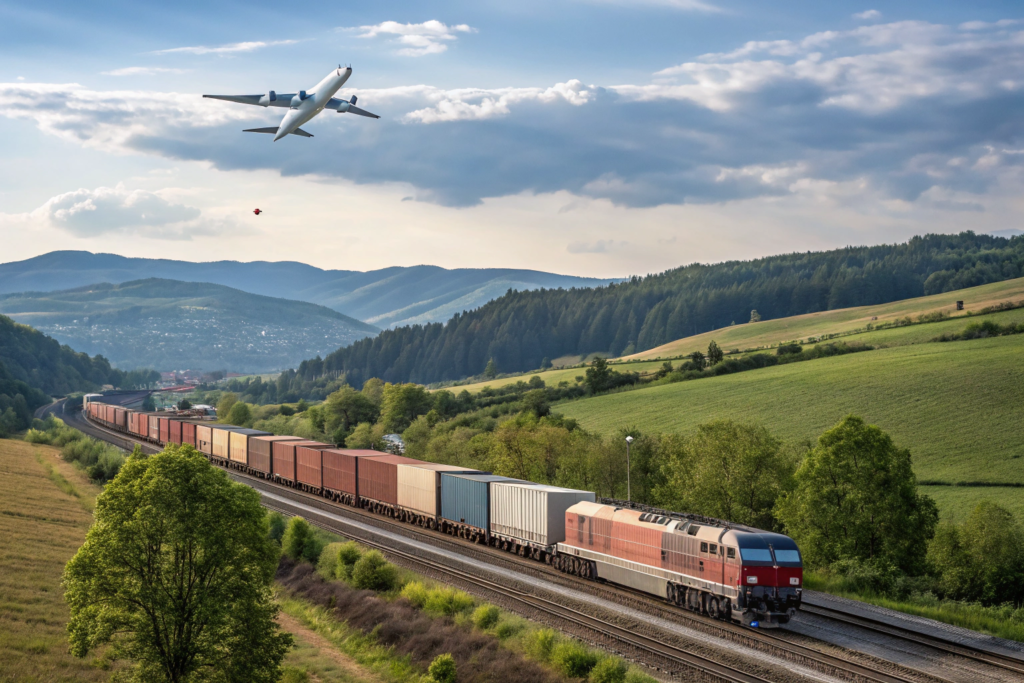
Rail freight from China to Europe generally takes 14 to 18 days for the main rail journey. This is from the departure terminal to the arrival terminal. The complete port-to-door timeline, including domestic transport and customs, is often around 22 to 26 days. This speed is a strategic advantage because it is nearly twice as fast as sea freight, which normally takes over 35 days.
Let me help you understand how we break down these 18 days. We must look at the physical distance and the operational steps. The route spans multiple countries. It passes through varied terrains. The train doesn’t just drive non-stop. It needs to change locomotives. It needs to pass border checks. Understanding this flow helps you plan your inventory better. Here is a detailed look at the transit time structure.
What makes the standard transit time for China-Europe rail freight so reliable today?
When you choose rail, you are betting on a fixed schedule. Unlike sea freight that can be delayed by port congestion for a week or more, rail freight has a strict timetable. The China-Europe Railway Express operates with fixed departure times. We book slots just like you book a flight. My team at GeeseCargo has contacts with the platform companies in Xi’an and Chengdu. We secure space even during the busy season.
The reliability comes from the infrastructure. The railway infrastructure is a dedicated, government-backed initiative. It does not share heavy traffic with passenger trains in most sections. This means your cargo train doesn’t need to stop for a commuter train to pass. The border crossings between China, Kazakhstan, Russia, and Belarus are also streamlined. A big change happened with the digitalization of customs. We pre-submit the documents using EDI systems. The physical train arrives, the staff checks the digital lock or container seal, and the train moves on. This is why the transit time is stable. We rarely see delays longer than 2 days unless there is extreme weather.
This fixed schedule helps your supply chain. You can tell your customers in London an exact arrival date. You can lower your warehouse storage needs because you know when the stock lands. You save money on safety stock. You also avoid the "blank sailing" risk that sea freight often has. Carriers do not cancel a train because it’s not full enough. The train departs as scheduled. This reliability makes us a trustworthy partner for your business.
How do the terminal locations and border crossings affect the total delivery timeline?
The starting point of the journey matters greatly. We usually suggest using main inland hubs like Xi’an or Chengdu. If your factory is in Guangzhou, you need trucking to the terminal. That adds 3 to 4 days. But if your factory is in Chongqing, the pre-transport is short. This decision impacts your total timeline. We help you choose the best departure terminal. I give you a comparison to show the difference.
| Terminal Location | Pre-carriage Time | Main Transit Time | Best European Destination |
|---|---|---|---|
| Xi’an (Inland) | 2-3 Days | 15-16 Days | Duisburg, Hamburg |
| Chengdu (Inland) | 2-3 Days | 14-15 Days | Lodz, Tilburg |
| Chongqing (Inland) | 1-2 Days | 15-16 Days | Duisburg |
The border crossings are the second big factor. The main gateway is Alashankou in China. Another is Manzhouli. Alashankou connects to Kazakhstan. The track gauge changes here. China uses standard gauge. Kazakhstan uses broad gauge. This means containers need to be lifted and placed on a different wagon. This is a physical process. It takes time. However, modern terminals do this very fast. We book trains that use the latest transshipment technology. This keeps the dwell time short. The European gauge change at the Poland-Belarus border also works smoothly. We monitor these specific points closely. If there is a backup at Malaszewicze, we reroute the cargo through Kaliningrad if possible. My team’s job is to make these geographical challenges invisible to you. You just see a reliable delivery date.
Detailed Pricing Structure for China-Europe Rail Freight
Many people think a shipping cost is just a fixed number. In reality, it moves like a stock price. I remember a client who got a cheap quote from a website. By the time his goods were ready, the rate was gone. He felt cheated. The real secret to a good partnership is understanding how that price is built. We offer transparency. We do not hide fees. We know your business fears unpredictable costs. A stable logistics budget helps you set a final price for your products and win buyers.
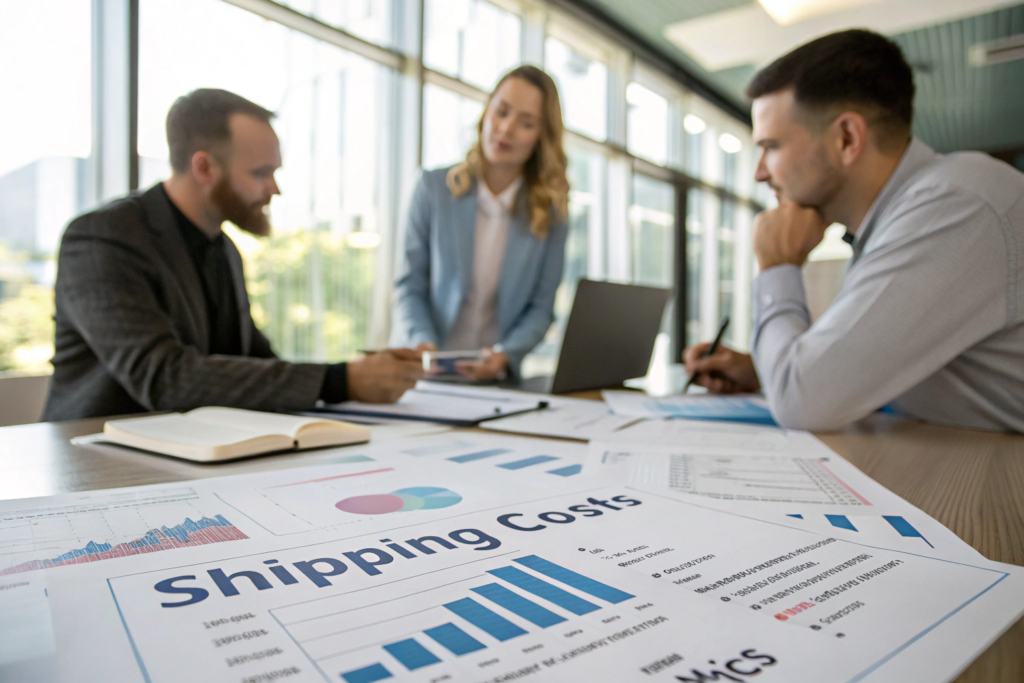
The cost for a 40-foot container on the China-Europe rail generally ranges from $5,500 to $8,500. This depends on the specific origin-destination pairing and the current market demand. This rate is typically 60% cheaper than air freight and about 30% more expensive than sea freight, but with a speed advantage that justifies the premium.
The baseline rate is only the start. We must talk about the final landed cost. This includes the terminal handling charges at both ends. It includes the customs clearance fee if you choose our DDP service. It also includes the trucking fee to your final warehouse. To really understand what you pay, we need to look at what drives these costs. Let’s dig into the unstable factors first. Then I will show you how our door-to-door service simplifies this into one fixed price.
Why do China-Europe rail freight spot rates fluctuate and how can we secure a stable price?
The rail freight market has seasons just like your clothing business. The biggest price spikes happen in Q3 and Q4. European buyers stock up for Christmas. Chinese factories push out goods before the New Year holiday. During these months, space is tight. The booking price goes up. Another factor is the balance of trade. Many trains go from China to Europe full. But they need cargo to bring back. If there is little European export, the cost of operating an empty return wagon gets added to your westbound shipment. This is the container imbalance surcharge.
We at GeeseCargo fight this fluctuation for you. We do this by buying a fixed amount of space from rail platform companies a year in advance. This is a long-term contract. We call it a block booking. Because we commit to volume, the operator gives us a stable rate. We pass this stability to you. We also suggest you ship during the "shoulder season" if possible. March to May usually has lower rates. If your inventory planning allows, we can move the cargo earlier. We store it in our bonded warehouse in Europe and release it when you need it.
The geopolitical situation also matters. The route avoids Russia if we use the Middle Corridor. But the standard route goes through the north. Sanctions do not directly block your commodities like clothes or gifts. They are humanitarian goods. But insurance costs can change. We always provide you a clear breakdown. We want you to see the base freight, the fuel surcharge, and the security surcharge as separate lines. This way, you know exactly where your money goes and you avoid any hidden service fees. We lock the price for you with a validity of 30 days. A handshake from me, John, means the price is fixed. No last-minute surprises.
What does GeeseCargo’s DDP door-to-door rail service include in the final price?
Many buyers think DDP is just a shipping term. For me, it’s a promise. It means I take the headache, and you just sign for the goods. Our DDP service covers the entire chain. First, we pick up the goods from your supplier’s factory in China. We do not just wait at the port. Second, we handle the export customs. We have a dedicated brokerage team in Shanghai, Yiwu, and Shenzhen. Third, we pay the rail freight. Fourth, we handle the destination customs in Europe. We use our own VAT deferment accounts. You don’t need to pay import VAT upfront and wait months for a refund. Finally, we truck the goods to your door.
| Cost Element | Covered by DDP? | Notes |
|---|---|---|
| Factory Pickup | Yes | Trucking from factory to rail terminal. |
| Export Clearance | Yes | Chinese customs formalities and fees. |
| Rail Main Freight | Yes | Base ocean/rail charge. |
| Destination Customs | Yes | Import duties and VAT handled by us. |
| Last-mile Delivery | Yes | Direct delivery to your fulfillment center. |
The beauty of this is the single invoice. You pay one price. You don’t get separate bills from a trucker, a customs broker, and a rail operator. This saves you bank charges on multiple wire transfers. It also saves you time on coordinating four different companies. Our process starts with a simple form. You tell us the HS code and the cargo value. We calculate the import duty rate. We add our service fee. That total is your price. The VAT on the import is handled by us. This is crucial for e-commerce sellers. You don’t have to deal with complex European tax authorities. Our DDP service is fully compliant. We provide you with a monthly tax report. This keeps your accounting clean. We ensure that your goods clear customs quickly because all duties are pre-paid by us.
Key Factors Impacting Rail Freight Service Quality
A low price means nothing if the goods arrive damaged. I recall a shipment of ceramic mugs for a client. The factory in Chaozhou did not pack them for rail. Rail transport has vibration. It is different from sea freight. The risk of breakage is higher if we do not supervise the loading. We care about your cargo as if it were our own money. Service quality depends on controlling the details that you might not see. The way a container is stuffed matters more than the train’s speed.
Service quality in rail freight is defined by three things: the safety of the cargo during the 14-day journey, the accuracy of the documentation, and the stability of the connection. GeeseCargo focuses on container loading supervision and customs document pre-checking to keep damage rates below 0.1% and customs hold times under 2 hours.
You might think a container is just a box. But a poorly loaded container is a liability. The weather extremes on the route are severe. It can be minus 20 degrees in Kazakhstan. Your goods need protection. Let me explain how we physically safeguard your products. We also need to talk about the paperwork. Customs stops are not always random. They usually happen because a document is inconsistent. We focus on these two pillars: physical security and data accuracy.
How does GeeseCargo ensure cargo safety during the 14-day rail journey from China to Europe?
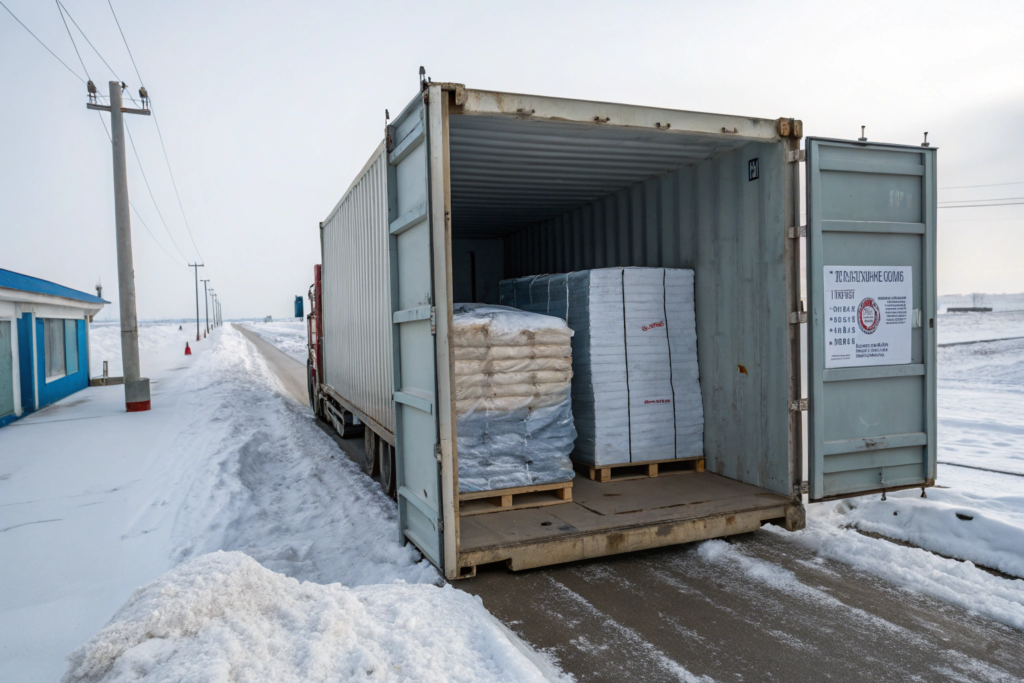
The Eurasian land route has big temperature swings. One day your container is in the heat of the Gobi Desert. The next week it is in the freezing cold of the Kazakh steppe. Condensation is a big enemy. We call it "container rain." To fight this, we use anti-condensation blankets on the ceiling of the container. We use desiccants. We also advise on packaging. If your goods are in paper boxes, we suggest a plastic wrap for extra safety. This keeps moisture out.
The second threat is vibration and impact. Train wheels hit rail joints. The containers shake. We instruct our loading teams to use airbags. These are inflatable bags placed between pallets. They lock the cargo in place. They prevent shifting. If a carton shifts, it crushes the one next to it. We also implement a strict lashing process. Every pallet is strapped to the anchor points. We take photos at the loading point. We send you these photos. You can see how your goods are braced before the doors close. This is part of our cargo insurance process. We don’t just buy a policy. We prevent the claim from happening in the first place.
The track condition is another factor. The Chinese and European sections are high-speed and smooth. The middle section requires careful driving. We work with operators who use GPS tracking and shock sensors. We can place a sensor inside your container. It records if the container took a hit. It records the temperature log. This data proves the safety of the journey. If a shunting locomotive bumps the train too hard, we have the evidence to claim the railway authority. We protect your interests with technology and a rigorous transport security protocol. We treat your box like a patient in an ambulance.
What role does digital document processing play in smooth customs clearance?
Paperwork is the silent killer of transit time. A physical document lost in the mail can stop a container worth $100,000. We operate a paperless workflow. The moment your goods leave the factory, the data enters our system. We check the HS code you provided. We cross-reference it with the European TARIC database. If your description is too vague, I will ask you to correct it. Saying "gift items" is not specific enough for Customs. I will ask you to say "Polyester Scarf" or "Stainless Steel Keychain." This accuracy stops the 24-hour query delay.
We use a centralized cloud platform. You upload the packing list and the commercial invoice once. Our AI document checker scans for mismatches. It compares the total carton count on the packing list with the invoice. It catches typing errors that a human might miss. This is critical for the manifest. When the train arrives at the border, the physical check rate is low if the digital manifest is perfect. The customs officer sees a green light. The train doesn’t stop. This is a "green lane" clearance.
For our DDP customers, the process is even smoother. We handle the ENS (Entry Summary Declaration) filing ourselves. We have a direct connection with European customs brokers. We transfer the data instantly. You do not need to send a hard copy of anything. This digital process also helps you with your tax. You have a clear digital record of every shipment for your accountants. This transparency is a core part of our digital logistics service. It reduces demurrage fees. It reduces storage costs. It helps us keep the 18-day promise.
GeeseCargo’s Rail Freight vs. Other Transport Modes
Choosing transport is like picking a tool. You do not use a hammer to screw in a bolt. For years, the choice was only air or sea. Both are extremes. Rail has emerged as the precise tool for the middle ground. I have worked with clients who ship luxury bags and others who ship cheap plastic toys. Their needs differ. But many miss the fact that the “middle path” offers a financial return that air freight cannot match. It’s not just about spending less cash. It’s about using cash flow smarter.
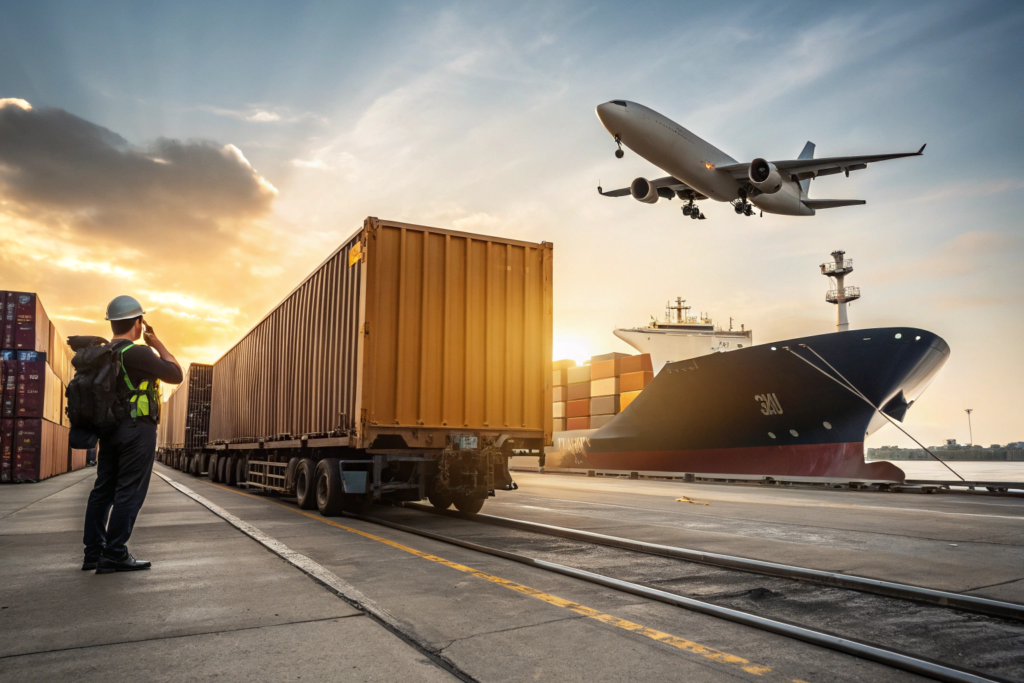
When you compare GeeseCargo’s rail freight with air and sea, it stands out. It is 50-60% cheaper than air freight. It is 14-20 days faster than sea freight. For goods valued between $20,000 and $100,000 per container, rail delivers the highest return on investment because the cost of capital tied up in transit is significantly reduced compared to ocean shipping.
Let’s make this concrete. You have $50,000 worth of electronic accessories. If you ship by sea, that money is frozen for 40 days while the ship crawls. If you ship by rail, you get your money back in 25 days. You can turn your inventory twice in the time it takes sea freight to turn once. This is the hidden profit of rail freight. The speed does more than just fill shelves. It protects you from market price drops and stock-outs.
How does the total logistics cost of rail compare with air freight for bulk commodities?
Air freight is an emergency tool. I tell clients to use it for samples or very small high-value goods. Once you hit 500 kilos, the air price hurts too much. Let’s look at air versus rail for a 1,000 kg shipment of accessories. The chargeable weight method for air freight is tricky. Clothes and accessories are voluminous. They take up space but do not weigh much. Airlines charge based on volume weight. This makes your actual air bill 30% higher than the posted rate.
For our standard consolidation service, we often use rail. The cost is based on the container or the cubic meter used. For 1,000 kg, using our LCL (Less than Container Load) rail service, the cost is around $1,000. Sending that same cargo by air courier would cost $3,500. This is a $2,500 saving per shipment. Over ten shipments a year, that’s a brand-new car. Furthermore, the packaging for air freight is different. Air cargo goes through more handling. You need better boxes. Rail cargo sits in a container and doesn’t move until it reaches our hub. The freight cost comparison heavily favors rail for anything that doesn’t perish within a week. By using rail, you are not paying the premium for a flight. You also avoid the high fuel surcharges that airlines pass on. You keep the cost structure predictable, which helps you maintain a good price for your clothing and gift products.
Why is the transit time advantage of rail over sea freight crucial for seasonal goods?
Seasonal goods are like fresh fruit. They have an expiration date. A Halloween costume that arrives on November 1st is worth zero. Sea freight is a gamble with seasonal goods. I recall a shipment of Christmas sweaters stuck on a vessel outside Long Beach. The port was congested. The ship waited 20 days to dock. The sweaters missed the entire season. The client lost the full margin and had to sell them at a discount the next year. Rail freight eliminates this "black swan" congestion risk.
The specific benefit is the 15-day buffer. If you choose sea freight, you must ship your Christmas stock in August. That means you are paying the factory for production much earlier. You are tying up capital. With rail, you can ship in October. You gain two months of cash flow. You also gain the ability to react to trends. If a certain color of a dress goes viral on TikTok in September, you have time to produce and ship it by rail for a November delivery. Sea freight is too slow for this trend surfing. Air freight is too expensive for bulk dresses.
The European holiday market is strict. Promotions start on specific dates. Our reliable rail schedule aligns with your promotional calendar. We reverse-engineer the deadline. If your launch date is December 1st, we back up 5 days for trucking, 16 days for transit, and 3 days for loading. I will tell you the exact date the cargo must be ready in Shenzhen. This precision helps you win the shelf space. You deliver on time when your competitor using sea freight is still showing "delayed" on the tracking screen. This reliability makes you the preferred supplier for big retailers.
How to Manage Tariff Costs and Supply Chain Security in Rail Transport
Unexpected tariffs can destroy a year’s profit. I have seen buyers cry when Customs demanded an extra 20% tariff because of a wrong classification. Security is just as vital. A lost container means a lost client. You worry about these things late at night. The uncertainty of international politics makes planning hard. But with the right partner, these fears become manageable risks. We deal with the officials at the ports. We handle the paperwork that decides how much tax you pay. We combine this with a security layer that gives you peace of mind.
Managing tariffs effectively requires accurate HS code classification and utilizing bonded warehouse breaks. GeeseCargo helps clients optimize tax by shipping to bonded warehouses in Europe and clearing only when a sale is made. For security, we use GPS tracking and strict seal integrity protocols to ensure the container is never opened during transit.
The situation with the European Union’s tax laws is changing. They are dropping the low-value relief. This impacts your gift and accessory business directly. You need a strategy that is legal and smart. You don’t want to evade tax. You want to defer it. You also want to know where your cargo is at 3 AM. Let me explain how we tackle the tax maze and keep thieves away from your goods. This is where our insider knowledge of port officials makes a real difference for you.
How can bonded warehousing help reduce upfront tariff and VAT payments?
Cash flow is the oxygen of your business. When a container arrives in Europe, you generally have to pay the import duty and VAT right away to take possession. This can be a massive cash hit. If you import a $60,000 container, the VAT alone might be $12,000. You do not get this refunded by the tax office for several months. Our solution is the bonded warehouse. A bonded warehouse is a secure place where the goods sit without paying taxes.
We move your rail container from the terminal directly to our bonded facility. The goods legally enter the country. But no tax is paid at that moment. You are now free to sell the goods. As you sell them online or to a store, you tell us to release a batch. Only on that batch do you pay the tax. This is called customs warehousing. It turns a big upfront bill into a small variable cost. This is perfect for you if you sell to multiple European countries. You might need 100 units for France and 200 for Italy. We can ship from the bonded warehouse and do the customs clearance in the destination country.
You avoid paying double tax. You also avoid the complex paperwork of a tax refund. Your bank account stays healthier. This strategy requires a partner who knows the systems. We have the AEO (Authorized Economic Operator) certification. This is a high-security standard. It tells customs we are trustworthy. Because of this, they allow us to hold the goods without a full guarantee for a time. This cuts your security deposit costs. We manage your inventory via our system. You can see your bonded stock. You can tell us to duty paid delivery only the fast-moving items. This is a game-changer for test marketing new gifts in Europe.
What security measures protect my goods from theft and tampering on the long rail journey?
A long supply chain has many touchpoints. Transshipment at borders creates a risk of theft. We use a simple, low-tech device to prevent this: the bolt seal. It is a single-use metal seal. It has a unique number. When we close your container at the factory, I put this seal on. I record the number and send it to you. If the seal is broken, you know it. But we go further. We use high-security GPS trackers. These devices are hidden in the container. They report the location every 30 minutes. They also have a light sensor. If the container door opens, the sensor detects the light change. I get an instant alert on my phone.
We share this tracking link with you. You see the train moving across Kazakhstan. This visibility is a guard dog. If the container stops in an unexpected place for too long, we call the railway authorities. We demand an inspection. Our relationship with the port officials helps here. We know who to call at the border points. This direct contact often solves problems faster than an email to a generic customer service address.
Our intermodal security strategy also includes choosing the right partners. We only use terminals with 24/7 camera surveillance and security patrols. We avoid trucking companies that park loaded trailers in unlit lots overnight. The goal is to keep the "chain of custody" intact. From the factory foreman to the European trucker, everyone signs for the intact seal. This creates legal liability. This discourages theft. Because we offer secure cargo transport, you can confidently ship high-value clothing. The risk of loss is reduced to near zero. Your insurance costs might even drop because the safety record improves. My promise to you is that the container we seal in China arrives with the exact same seal in Europe.
Conclusion
We have covered the full journey of rail freight from China to Europe. I have shown you the stable 14 to 18-day transit time. I have explained the pricing that sits perfectly between air and sea. We looked at the critical details like temperature changes and customs paperwork. I also showed you how we use bonded warehouses to improve your cash flow and how we seal your container to stop thieves. This route is not just a cheaper way to ship. It is a smarter way to manage your entire business cycle. It gives you speed without the air freight price tag. It gives you security without the sea freight headache.
For a business owner like you, who deals in clothing, accessories, and gifts, rail freight is the tool to beat your competition. You can bring in seasonal goods exactly when the market wants them. You do not need to freeze your capital in a slow boat for 40 days. You do not need to burn your profits on a plane. My team at GeeseCargo is here to make this process simple. We have the contacts at the ports. We know the officials at the borders. We buy the space in advance to give you a good price. We check the paperwork so you avoid tax penalties. We treat your cargo like it is our own investment.
I invite you to stop worrying about logistics. Let us provide a specific quote for your next shipment from China to Europe or the US. We will look at your specific commodity and your delivery deadline. We will design a route that hits your profit targets. Whether it is rail, sea, or air, we have the professional, reliable, and competitive solution. Visit our website and send us a message. Let’s get your goods moving safely and fast.