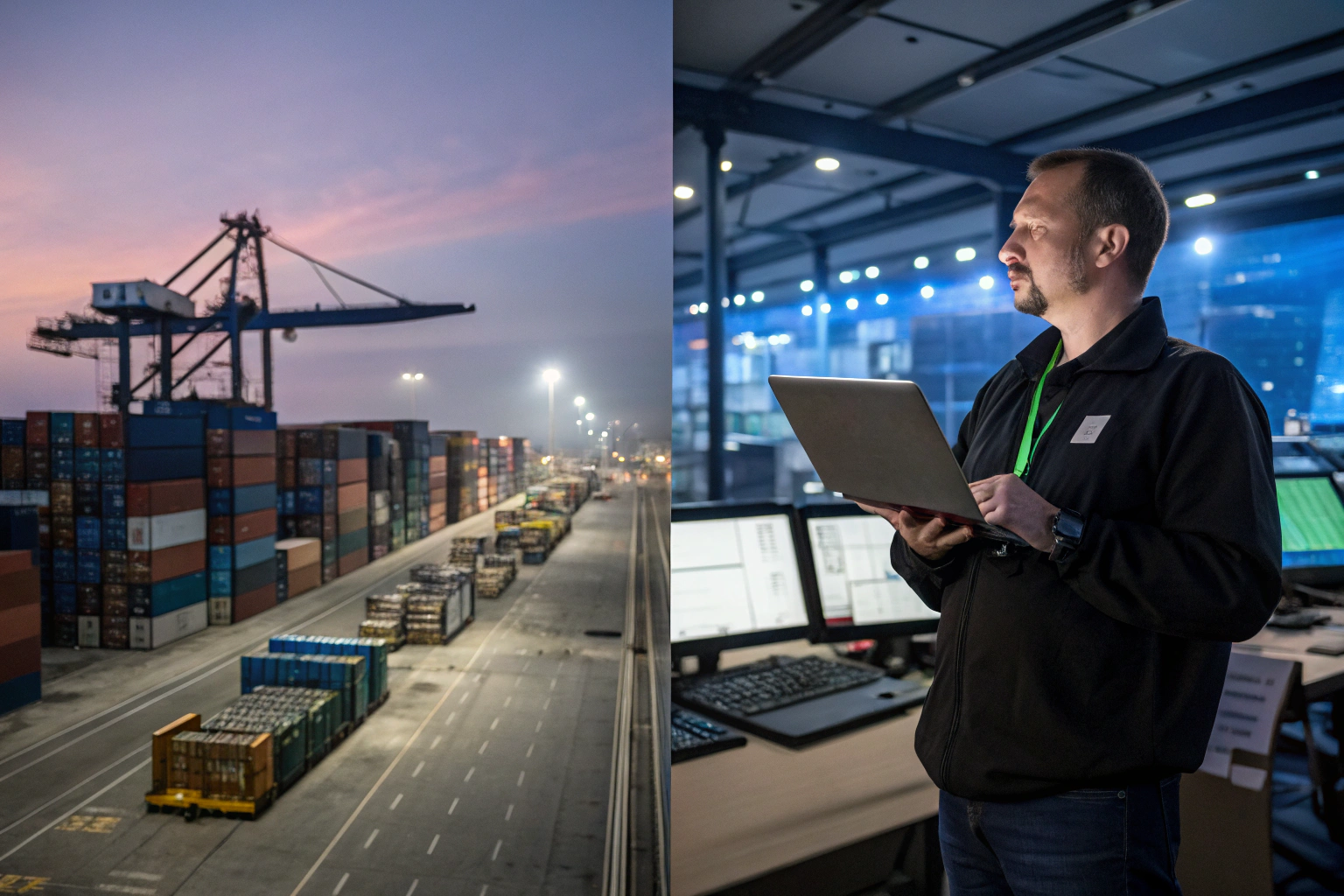
I lost a client once. Not because of a bad price. Not because of damaged goods. It was a delay. Three years ago, a container of Christmas decorations sat on a dock in Yantian for ten extra days. My client’s shelves stayed empty in December. He lost the whole season. I felt responsible even though the port closure wasn’t my personal fault. That day, I swore to build a system that stops delays before they start. You have felt that pit in your stomach, I know. Watching the tracking screen with no update, while your buyer sends angry emails. A delay is not just late cargo. It is a broken promise to your customer.
Shipping delays from China stem from five core causes. These are port congestion, severe weather events, customs document errors, vessel space shortages during peak season, and carrier schedule changes like blank sailings. GeeseCargo prevents these by using real-time data monitoring, securing space with long-term carrier contracts, implementing a strict digital document check, and maintaining backup routing plans for every major shipping lane.
A delay is rarely a single big explosion. It is usually a small domino that knocks over a bigger one. A typo on a form causes a customs hold. A customs hold misses the vessel cut-off. The missed vessel hits a blank sailing next week. Suddenly you are three weeks late. I want to walk you through every single domino. I will show you exactly where shipments break down. More importantly, I will show you the specific actions my team takes to catch those dominoes before they fall. This is the playbook we use to keep our promise to you.
Port Congestion Problems and Real-Time Solutions
Ports are the heart of global trade. Sometimes that heart gets clogged. When a port clogs, ships wait at anchor for a week. Trucks line up for hours. The whole rhythm breaks down. I remember when a major European port had a labor strike. Containers piled up at the yard for two weeks. Many forwarders just told their clients "there is nothing we can do." We did something different. We rerouted a shipment for Ron to a smaller secondary port and used a feeder vessel. It saved his promotion.
Port congestion happens when vessel arrivals exceed the terminal’s capacity to process them. This is triggered by labor shortages, equipment breakdowns, or post-holiday cargo surges. The direct result is a 3 to 14 day delay in container availability. GeeseCargo counters this by using a diversified port strategy and predictive congestion analytics to shift bookings to less congested gateways before the bottleneck hits.
You cannot control the longshoremen’s union. You cannot control a global pandemic. But you can control your routing decisions. The trick is not just reacting to a port closure. It is predicting it. We look at vessel arrival density, yard utilization rates, and labor shift availability. When the numbers flash red, we don’t wait. We move your cargo. Let me explain the technology behind this prediction. And I want to show you how a simple switch from the main port to a nearby alternative can save your entire delivery window.
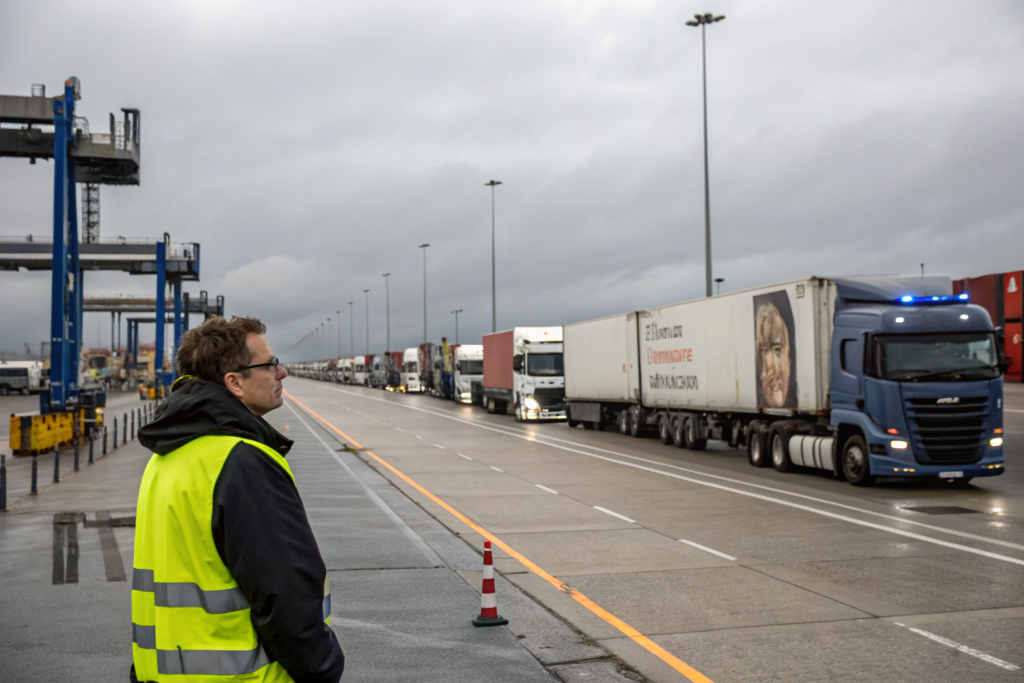
How can predictive analytics help avoid congested Chinese ports before departure?
The old way was to read about a port closure in the news. By then, your container is already stuck in the backlog. We use a different approach. We look at the flow of data. We monitor the automatic identification system data of ships. If we see a sudden cluster of vessels speeding up to arrive at Ningbo, we know a rush is coming. If the yard density at Yantian reaches 80%, we know the terminal will soon slow down gate processing. We get this data from port community systems and satellite tracking.
We apply this to your specific shipment. If we see a congestion spike predicted for Shanghai during your load week, we call you. We say, "Let’s truck the goods to Ningbo instead." The trucking distance might be slightly longer, but you skip a 4-day waiting line for the mother vessel. This is proactive routing. It relies on predictive logistics technology. Our system assigns a risk score to each departure. A score of 1 is smooth. A score of 5 is severe. If we see a 4, we do not book that vessel. We look for one leaving from a less crowded berth or a different terminal complex.
This analysis extends to the destination port, too. We check the anchorage count in Los Angeles/Long Beach. If 30 ships are waiting, we might suggest routing you through Oakland or a Pacific Northwest port and using intermodal rail from there. The ocean crossing takes a bit longer, but the total port-to-door time is shorter because you bypass the LA gridlock. We use real-time port congestion data to make these judgment calls. It turns a blind voyage into a calculated mission. You are no longer a victim of the port. You are navigating around the problem with a smart map. This is how we keep your 14-day ocean transit from becoming a 30-day ordeal.
What is a "secondary port strategy" and when do we use it to bypass main hub delays?
A main hub is like a giant shopping mall at Christmas. It attracts the biggest ships and the most cargo. Shanghai, Yantian, and Ningbo are main hubs. But China also has excellent secondary ports. Xiamen, Qingdao, and even Nansha are viable gateways. When a main hub gets hit by a typhoon or a COVID-related labor shortage, the secondary port is often operating normally. It might be a bit farther from your factory. But it is open for business.
I used this strategy during the Yantian crisis. Factories in Shenzhen were panicking. The port was shut. We immediately booked trucks to Nansha, which is a 2-hour drive. The transit time to the US is 1 day longer. But waiting for Yantian to reopen with a huge backlog would have taken 10 extra days. The math is simple. A 2-hour truck drive plus 1 extra day at sea equals 26 hours of total delay. Waiting for the backlog clearance equals 240 hours of delay. We saved the client over 200 hours. That is the power of a secondary port strategy.
We maintain relationships with the port authorities at these smaller gateways. We know the vessel schedules. We know the official customs procedures are just as efficient. The terminals are less crowded. The truck turn times are under 20 minutes. The vessel departure rates are high because the ships don’t sit waiting for a berth. We do not use secondary ports as a last resort. We pre-identify them for your cargo. If your factory is equidistant between a main port and a secondary port, we often book the secondary one during peak season. It gives you a quieter, faster loading process. This strategy relies on flexible supply chain management. We don’t get stuck. We keep the cargo flowing by using the entire coastline of China as our resource, not just the single port closest to the factory.
Weather and Environmental Disruption Management
The ocean is a wild place. A typhoon can shut down a port for three days. Heavy snow in the Rocky Mountains can derail a train schedule. We respect nature. We do not fight it. We work around it. I was shipping a container of delicate electronics once. The Pacific forecast looked brutal. The shipping line planned the standard northern great circle route. I requested a southerly routing. It added half a day to the trip, but the vessel avoided the 10-meter swell. The cargo arrived dry and unshaken.
Weather delays manifest as port closures, vessel speed reductions, and intermodal disruptions. A direct hit by a typhoon can stop crane operations for 48 hours. GeeseCargo mitigates weather risk through a dual action plan: pre-seasonal advisory scheduling and real-time vessel re-routing, combined with comprehensive cargo insurance that covers weather-related general average claims.
You cannot schedule a typhoon. But you can schedule around the typhoon season. We build a weather calendar into your annual freight plan. We know that August to October is risky in the South China Sea. We also know that winter in the North Atlantic brings howling gales. Our job is to plan the departure date so the vessel passes through the dangerous zone during a calm window. When a sudden storm pops up, we have the technology and the relationships to change the ship’s course or hold the truck back. Let’s look at the specific dangers and the specific shields we use to protect your goods.
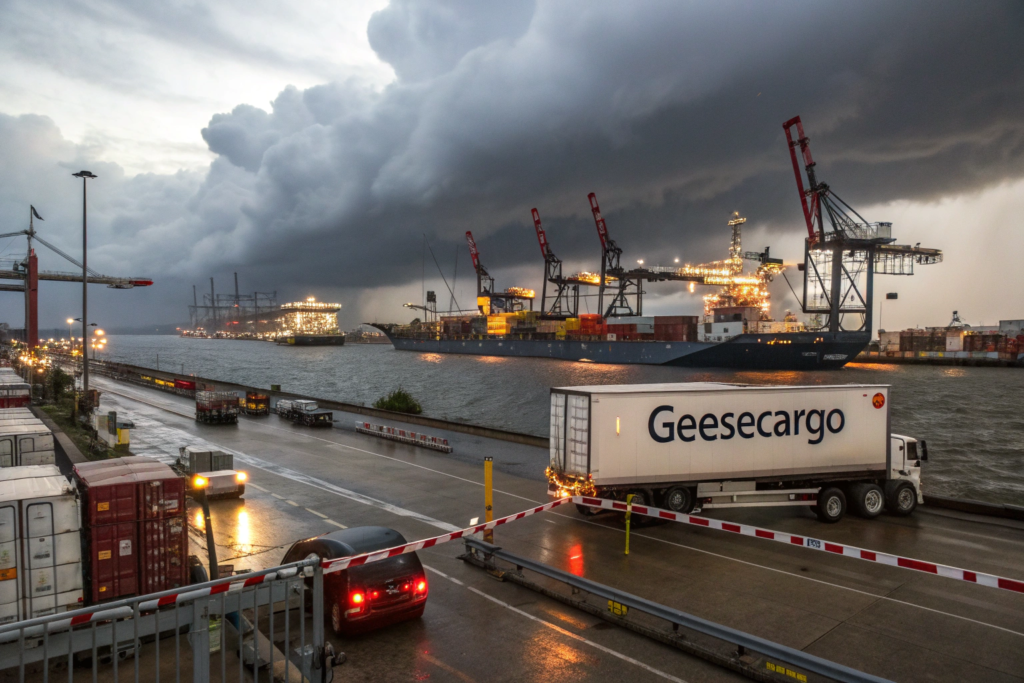
How do typhoon seasons in the South China Sea impact vessel schedules and how do we plan around them?
Typhoon season is a fact of life between May and November. The peak is August, September, and October. A strong typhoon near Hong Kong or Shenzhen forces the port authority to stop all gantry crane operations. Once the wind hits a sustained speed, the cranes lock down. The port closes. The ships that are docked must undock and head to open sea to ride out the storm. When the port reopens 48 hours later, there is a mad rush. The waiting queue of ships can be a dozen deep.
Our planning begins months before. For a shipment of clothing needed for a Black Friday sale, we book the vessel to depart Shenzhen in July or early August. We push the factory to finish before the typhoon peak. We store the goods in our warehouse if necessary. This is our pre-typhoon season booking strategy. We avoid the last two weeks of August and the first two weeks of September for critical time-sensitive cargo from the south. If the cargo simply must ship during the peak, we move the loading port from Yantian to a more sheltered port or one less frequently in the storm track, like Xiamen.
During an active typhoon, we track the projected path cone. We use data from the Joint Typhoon Warning Center. If a storm is heading for Shanghai, we tell the truck to wait at the factory. We do not let the container sit in a low-lying container yard that might flood. We delay the gate-in until the storm passes. This prevents the cargo from being exposed to water damage on the terminal. We also work with the carrier to get a "protected status" for the booking. This means the shipping line agrees to load the container on the first available vessel after the port reopens without a penalty. Our storm disruption protocol keeps the cargo safe and the booking alive. You just see a small window of delay, but no physical damage to your products.
What measures protect cargo from extreme temperatures and rough seas during the ocean transit?
It’s not just the port. It’s the journey itself. A winter crossing of the North Pacific sees temperatures drop below freezing. A summer crossing of the equatorial waters can see container interiors hit 60 degrees Celsius. Condensation is a huge enemy. The "container rain" effect happens when warm, moist air inside the box cools against the cold steel roof at night. Water drips down onto your cardboard cartons. This ruins clothing, causes mold on leather goods, and rusts metal accessories.
We stop this at the stuffing point. We instruct the factory to place silica gel desiccants inside the container. We use hanging dehumidifier blankets on the ceiling rods. These absorb the moisture before it can condense. We also ensure adequate ventilation. We do not stuff the cargo flush against the walls. We leave an airflow channel. This helps stabilize the internal container climate control. For electronics or very sensitive gifts, we use insulated container liners. This adds a small cost, but it is far cheaper than losing the entire shipment to mildew.
Rough seas are a mechanical threat. Vessels roll heavily in storms. If the cargo inside the container is not properly secured, the shifting weight can tear the lashings. Boxes crush each other. We use dunnage air bags to fill the voids between pallets. We strap the cargo to the anchor rings. Our loading supervisors take timestamped photos of the inside of the container before the doors close. We send these to you. This is your visual guarantee of a secure load. We also work with carriers who use anti-roll stabilization technology on their vessels. These stabilizers reduce the side-to-side motion. We select these specific vessels for fragile cargo. The combination of good packing, chemical protection against moisture, and physical bracing ensures the goods survive any weather Neptune throws at the ship.
Documentation Errors and Customs Clearance Holds
A single digit can stop a million dollars. I watched a container sit for a week at the Port of Felixstowe because the packing list said "360 cartons" but the invoice said "350." The customs officer flagged it as a discrepancy. The goods were exactly 350 cartons. The factory typist had just hit the 6 key instead of the 5. That simple error cost the importer $1,200 in storage fees and a week of lost sales. This pain is so unnecessary. And it is 100% preventable. Documentation is the unsexy part of freight. It is also the most dangerous failure point.
Documentation errors are the number one cause of avoidable delays. They include HS code misclassification, value declaration discrepancies, and mismatched carton counts between the packing list and invoice. GeeseCargo operates a three-step digital verification process to catch errors before submission, combined with a direct link to customs brokers to resolve any queries instantly without the typical email back-and-forth.
I want you to understand that customs officers are not your enemy. They are doing a job. They need the data to match exactly. When we submit the manifest, the invoice, and the packing list, these three documents must tell the same story. If they don’t, the officer’s system throws a red flag. The container goes to the exam line. The clock stops. I have built a document firewall at GeeseCargo. We don’t just pass your papers to the broker. We challenge them. We double-check them. Here is how we catch the typos and the classification traps before they become a customs hold.
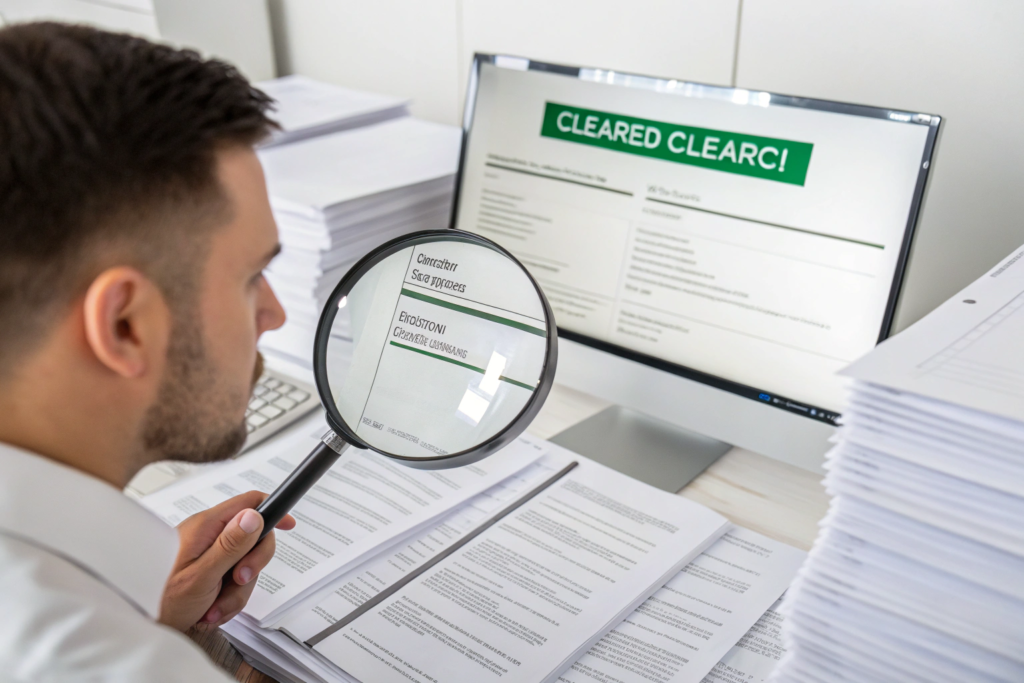
How does GeeseCargo verify commercial documents to prevent customs declaration errors?
The standard industry practice is to take the documents from the shipper and forward them to the customs broker. We do not do that. We insert a verification layer. When you send us the documents, our system scans them. We use optical character recognition to extract all the numbers. The system instantly compares the total carton count on the packing list against the total quantity on the invoice. If they don’t match, the system locks the file. A human specialist then calls you or the factory to resolve it. This takes five minutes now, instead of a week later at the border.
We also do a Harmonized System code review. This is the six to ten-digit code that decides your tariff rate. If your factory gives you a wrong code, you might underpay duty and get hit with a penalty. Or you might overpay and lose profit. Our team knows the codes for clothing, accessories, and gifts intimately. We check the material composition. Is it a cotton shirt or a polyester blend? The code differs. We do not just take the factory’s claim. We ask for the fabric breakdown. This precision prevents a customs officer from reclassifying the goods upon arrival. Reclassification is a major source of customs clearance delays. We stop it at the source.
The value declaration is also a sensitive spot. Some factories try to understate the invoice value to help you save tax. This is illegal and dangerous. We insist on the true transaction value. We will not file a false invoice. If the customs authority finds the value too low, they will hold the cargo and demand proof of payment, bank transfer records, and the original purchase order. This investigation takes weeks. Our strict compliance policy protects you from that risk. We verify the commercial invoice against the actual payment terms. A clean, honest, and perfectly matched data set gets through the automatic selectivity system without a blink. Our document accuracy protocol is your fast pass through the port.
What is the role of a continuous customs bond and how does it expedite US release?
A customs bond is an insurance policy between your business and US Customs. It guarantees that the duties and taxes will be paid. There are two types. A single entry bond covers just one shipment. A continuous bond covers all your shipments for a year. If you ship regularly, a continuous bond is a powerful tool for speed. Without it, the customs broker must obtain a single bond for every single container. This extra administrative step can take a few hours or, if something goes wrong, a full day.
We always advise our regular clients to get a continuous customs bond. We help you set it up. The bond is active in the US Customs system. When your vessel arrives, the entry is filed. The system instantly checks for a valid bond. The validation is automatic. It is a green light. The paperwork moves to the next step without a human officer having to pause and check the bond status. This shaves a critical 4 to 8 hours off the clearance time. For a container arriving Friday afternoon, those 8 hours are the difference between a Monday delivery and a Tuesday delivery.
The continuous bond also helps during exams. If your container is selected for a physical exam, a continuous bond streamlines the financial guarantee for the exam process. You avoid a separate exam fee bond. Everything is already in place. Furthermore, a continuous bond with a high enough limit shows Customs you are a serious, compliant importer. It contributes to a positive trade compliance record. This can lower your risk score in the Automated Targeting System. A lower risk score means fewer exams. Fewer exams mean faster delivery. It is a small yearly premium that pays for itself by eliminating the friction of single transaction approvals. We manage your bond activity to ensure it never lapses, preventing a lapse in entry filing capability. It’s one of the simplest ways to build speed into the back end of your ocean transit.
Peak Season Booking and Capacity Management
Space is not a right. It is a commodity. During peak season, that commodity becomes scarce and expensive. I remember a panicked call from a toy distributor in September. His factory had finished production late. He needed his goods on the water immediately for Christmas. Every carrier told him "no space." He was looking at a dead season. This is a terrible position to be in. The best time to secure peak season space is in the off-peak.
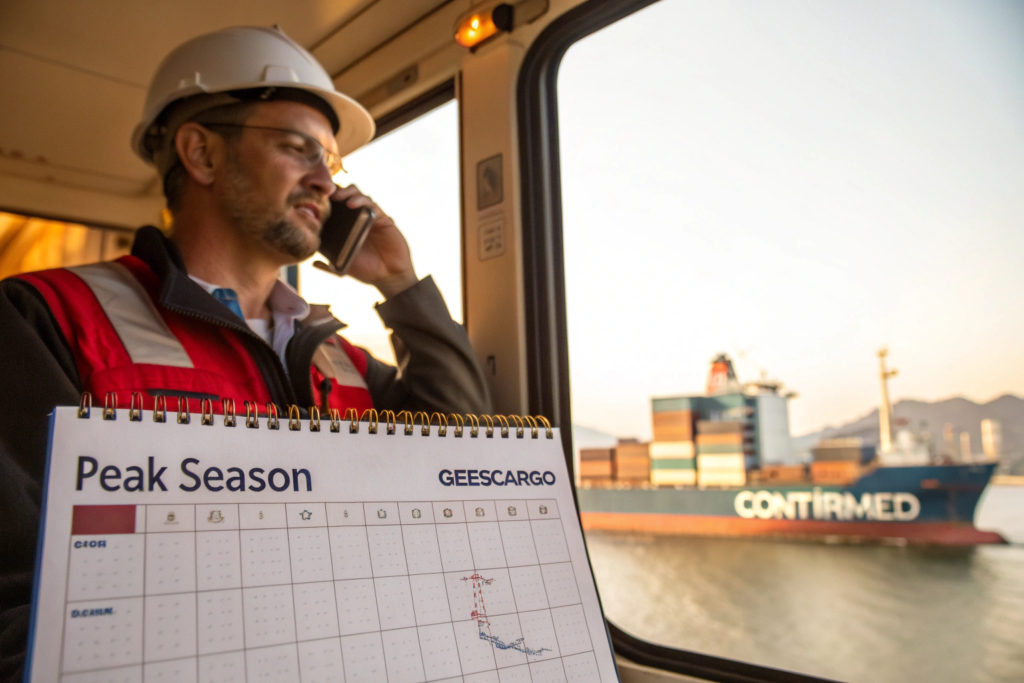
Peak season runs from August to October, driven by the holiday retail rush. During this period, carrier capacity tightens and spot rates spike. Vessel utilization hits 100%. The main risk is your container being "rolled" to a later vessel. GeeseCargo uses a block-space agreement model. We pre-purchase guaranteed slots with multiple carriers, converting variable capacity into fixed, guaranteed space for our clients.
A "roll" is a dirty word in our office. It means a carrier bumped your loaded container from the scheduled ship because a higher-paying cargo came along. You watch the ship sail without your box. You lose a week. This is a symptom of the spot market chaos. To protect you from this, we don’t just be a passenger on the carrier’s ship. We are a partner. We buy a "seat" for the whole season. I’m going to break down the mechanics of a block space agreement for you. And I want to show you the alternative express services that exist outside the standard congested loops.
What are block space agreements and how do they guarantee my container won’t be rolled?
A block space agreement is a long-term contract. GeeseCargo commits to buying, for example, 20 forty-foot container slots per sailing from a shipping line on the Shanghai to LA route for 12 months. This is a serious commitment. We pay for these slots whether we fill them or not. The carrier gives us a fixed, reasonable rate. More importantly, the carrier gives us a written guarantee of space. Our allocation is ring-fenced. When the vessel is overbooked with spot cargo, the carrier rolls the spot customer first. Our clients are protected by this allocation.
This is a significant investment on our part. We do it because we know you need certainty. When you sign a contract with us, we immediately book you into our blocked space. You are not at the mercy of the weekly spot rate fluctuation. You have a guaranteed container loading window. This is especially critical for large-volume shippers. If you have 5 containers leaving in September, we don’t sweat. We have the allocation. The vessel manager knows our booking well in advance. The roll probability drops to near zero.
The secondary benefit is priority in contingency. If the specific vessel in our agreement has a technical problem and cancels a sailing, the carrier is contractually obligated to protect our allocation on the very next available vessel. They cannot treat us like walk-in spot cargo. They must find the space in our block on the next ship. We enforce this through our service level agreement with the carrier. Our ocean freight procurement strategy turns a chaotic spot market into a planned inventory flow. For your business, this means your production schedule stays linked to a firm ship date. You avoid the cascading delay of a roll. You maintain your delivery promise to your customers.
When is the "express ocean service" a viable alternative to standard peak season sailings?
Sometimes, even the best planning can’t stop a delay if the whole supply chain is jammed. In that case, we offer an alternative product. Express ocean services are premium loops. They are designed for speed. They have a smaller vessel. They have a shorter port rotation. Usually, the route is a direct shot from China to LA with no intermediate Asian stops. The terminal window is dedicated. The crane intensity is higher, meaning they unload and load faster.
The transit time on an express service is often 2 to 3 days faster than a standard service. But the real value during peak season is the immunity to congestion. These services often use a different terminal, away from the main congested berths. They have a rigid cut-off and a no-roll policy because they charge a premium. If you are shipping a high-value, urgent new product line that simply must arrive on time, we present this option. It costs roughly 20 to 30 percent more than our standard blocked space rate. But it buys you a cast-iron guarantee.
We analyze your cargo profile. If your goods have a high enough margin, the extra freight cost is microscopic compared to the profit you would lose from a late delivery. A dress selling for $100 that arrives late and goes to the clearance rack might only sell for $30. That $70 loss per unit justifies any premium for speed. We use express freight solutions as a strategic tool. We do not push it for every shipment. We recommend it when the standard schedule forecast shows heavy saturation or when your deadline is absolutely inflexible. It is a lever we can pull because we have partnerships with these premium operators. It ensures that even when the world’s ships are full, you have an escape hatch. Your goods move. Your season is saved.
Conclusion
Delays come from five main sources. The port gets too crowded. The weather turns violent. The documents have a typo. The ship is full and your container gets rolled. Or the vessel just does not show up. These are the facts of international logistics. But facts are not fates. I have shown you how we use predictive data to dodge congestion. I explained our typhoon avoidance booking calendar and our moisture control techniques for the ocean crossing. I walked you through our document checking process that catches the one wrong digit. I revealed our block space agreements that keep your cargo on the ship even when spot cargo is dumped.
You are not helpless against these delays. You just need the right partner and the right systems. At GeeseCargo, we have built a company that views delays as a personal failure. We take your timeline seriously. The 14-day transit we promised is the timeline we deliver. We don’t make excuses about the weather or the port. We make plans. We buy the insurance. We secure the space. We check the paperwork three times.
The result for you is a stable, reliable supply chain. You get your clothing, accessories, and gifts when you need them. You keep your promise to your customer. You protect your profit margins from the hidden costs of storage fees, lost sales, and discount clearance. Our service is professional, reliable, and competitive. Let us take over the headache of logistics. Contact us today to build a shipping plan that locks in space and takes away the anxiety of the unknown. We will get your cargo moving, keep it moving, and deliver it on time.


