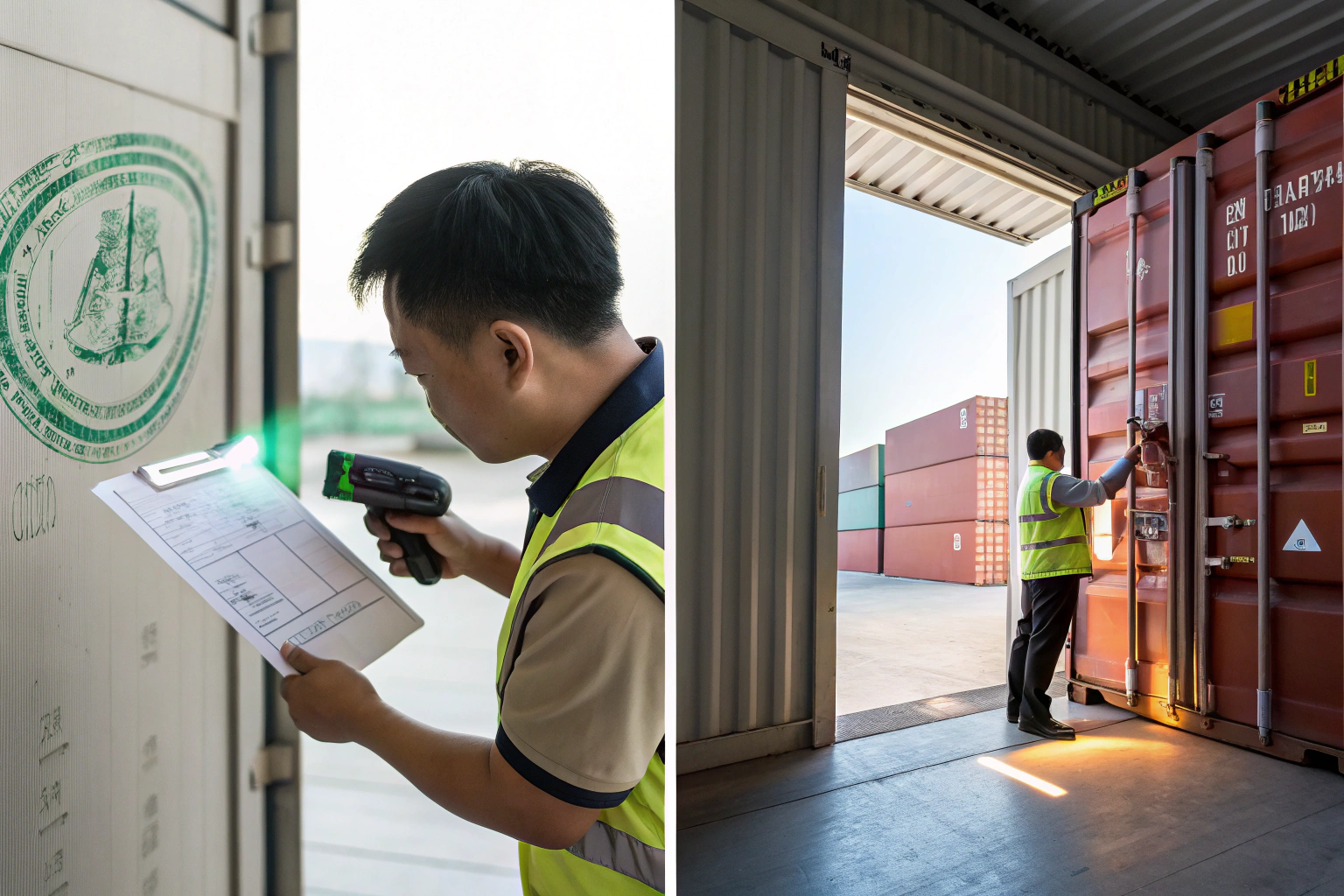
Three years ago, a new client called me in a panic. His container of promotional gift items had been sitting at the Port of Long Beach for eleven days. His previous forwarder kept telling him "customs is slow." When I checked the entry status, the real problem was clear. The broker had filed the Importer Security Filing late and with a vague cargo description. CBP had placed a hold and ordered a tail exam. The forwarder never told him. They just waited and hoped it would resolve. It didn’t. He lost a $20,000 retail contract because the goods missed the in-store date. That day, he learned what I have known for years. Customs clearance is not a passive waiting game. It is an active, step-by-step process that rewards preparation and punishes sloppiness.
GeeseCargo handles customs clearance from China to the US through a proactive, fully documented process that begins before the cargo leaves the factory, continues with pre-filing of electronic data, and ends with a guaranteed customs release backed by our own continuous bond and in-house brokerage team.
You cannot afford to treat customs clearance as a black box. If you do, you will eventually pay demurrage, storage, and lost sales just like my Long Beach client. At GeeseCargo, we break the process down into clear, manageable steps. We own each step. We don’t outsource the critical parts to third parties we cannot control. Let me walk you through exactly how we move your clothing, accessories, gifts, or any cargo from a factory in China to your U.S. warehouse door with customs compliance that protects your business and your timeline.
What Pre-Shipment Documents Must You Prepare for Smooth US Customs Clearance?
The single biggest cause of customs delays is not a tariff dispute. It is incomplete or inconsistent paperwork. I review new client files regularly, and I am still shocked by what I see. Packing lists with no weights. Commercial invoices with no currency listed. Product descriptions that say "gift items" instead of "100% cotton knitted children’s t-shirts." These are not minor clerical issues. They are red flags that trigger manual document reviews, exams, and costly holds.
The essential pre-shipment documents for smooth US customs clearance include a detailed commercial invoice with proper HTS codes, an accurate packing list with piece counts and weights, the manufacturer’s certification of origin, and any applicable licenses or permits depending on the product type.
At GeeseCargo, we don’t wait for you to send us whatever paperwork your factory gives you. We send you a document checklist tailored to your product category before the cargo is even packed. For clothing, we require the fiber content breakdown and the knit or woven construction on the invoice. For gifts, we require the material composition of each component in a set. We review every document before the container leaves the factory. If the factory wrote "assorted accessories," we push back and demand a line-item breakdown. This sounds tedious, but it saves three weeks of port storage fees later. Once the documents pass our review in China, we digitize them into our system. Our U.S. customs brokerage team, sitting on the other side of the ocean, immediately begins the electronic pre-filing process. The paper never waits for the ship. The data arrives before the cargo does.

Why is the packing list just as important as the commercial invoice for CBP?
The packing list tells CBP exactly how the cargo is configured inside the container. It lists carton numbers, dimensions, weights, and contents per carton. If the packing list doesn’t match the physical load, CBP will find the discrepancy during an exam.
Imagine CBP selects your container for a tail exam. They open the doors and pull five cartons. The first carton should contain 24 units of Style A according to the packing list. It actually contains 36 units of Style B mixed with Style C. At that moment, your entire entry is flagged as unreliable. The exam goes from a simple tail exam to an intensive exam. The cost jumps from a few hundred dollars to several thousand. And the clock ticks. We insist that our clients’ factories build the pallets exactly to the packing list we file. We even recommend that the cartons be numbered and labeled in sequence. Our China-based warehouse team can do a pre-load inspection where we open a statistical sample of cartons to verify the count and product match the documents. This pre-shipment verification costs a small fee, but it prevents a catastrophic exam failure at the destination. A clean packing list is your cheapest insurance policy against customs delays.
What additional documents do clothing and textile imports require?
Clothing imports face additional regulatory scrutiny beyond just the tariff classification. The U.S. has strict requirements for fiber content labeling, country of origin marking, and flammability standards.
For every textile shipment, you need a detailed fiber content breakdown, by percentage, of every component. This goes on the commercial invoice and the care label. You also need to confirm that the country of origin is clearly marked on the garment label. CBP enforces this strictly. A missing or incorrect "Made in China" label can get your goods detained. Certain children’s sleepwear requires flammability testing certification from a CPSC-accredited lab. If you import children’s pajamas without this certificate, CBP will seize the goods. We work with our clients to ensure these certificates are in our file before shipment. We don’t file the entry until the compliance package is complete. This is a hard rule at GeeseCargo. A fast clearance is a fully documented clearance. We would rather delay the vessel booking by two days than push cargo onto the water with incomplete compliance paperwork.
How Does GeeseCargo Pre-File Customs Entries to Avoid Arrival Delays?
The ocean transit from Shanghai to Los Angeles takes about fourteen days. Most freight forwarders use those fourteen days to do nothing. They wait until the vessel is two days from port, then scramble to file the customs entry. If the system rejects the filing, there is no buffer time. The container arrives, sits on the terminal, and starts clocking storage fees immediately. I refuse to run my business that way.
GeeseCargo pre-files U.S. customs entries electronically within 24 hours of vessel departure from China, using the verified document package to submit the Importer Security Filing, the entry summary, and the duty payment, securing conditional release status before the ship crosses the Pacific.
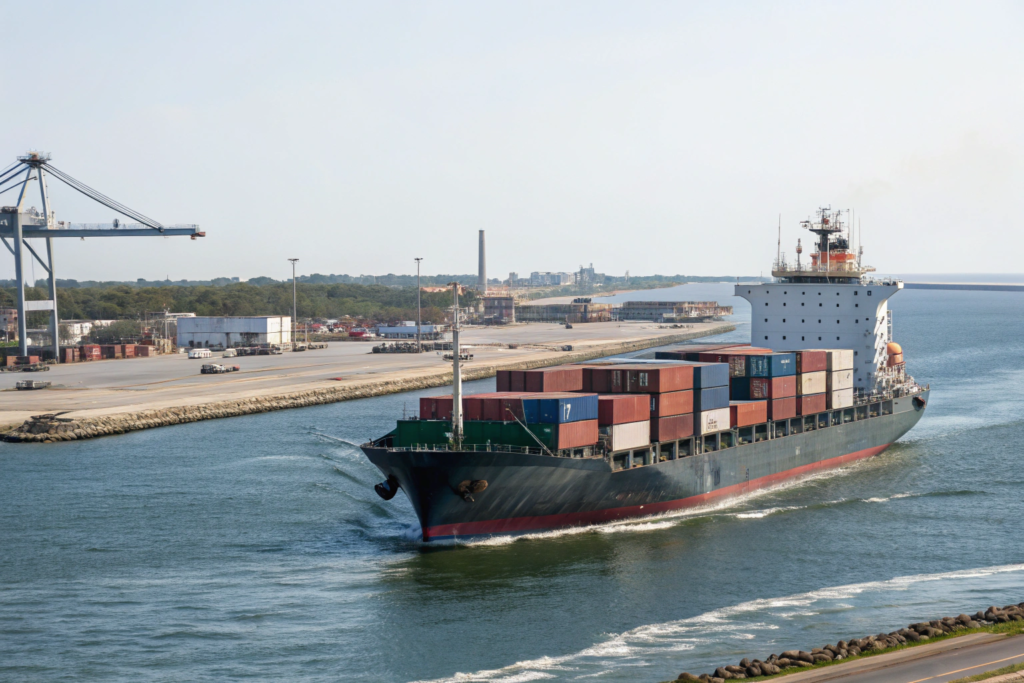
The moment the vessel departs, our system triggers the filing sequence. The Importer Security Filing, known as ISF-10, is submitted first. This tells CBP exactly what is on the water, who is shipping it, and where it is going. Filing the ISF late or with bad data triggers a $5,000 fine per violation. We file it correctly and on time, every time. Immediately after the ISF is accepted, we file the CBP Form 3461, the entry summary. This includes the HTS codes, the declared value, the country of origin, and the estimated duty. Because we already reviewed and validated all this data during the document collection stage, there are no surprises. The system processes the entry and issues a preliminary release or a hold notice within hours. If there is a hold, we have fourteen days to resolve it before the vessel docks. This is the fundamental advantage of pre-filing. We fix problems in the air, not on the ground, where every hour costs money.
What exactly is the ISF-10 filing and what happens if it’s filed late?
The Importer Security Filing, often called "10+2," requires ten data elements from the importer and two from the carrier. It must be filed at least 24 hours before the vessel departs from the last foreign port. Miss that deadline, and the penalty is automatic.
The ten importer data elements include the manufacturer’s name and address, the seller’s name and address, the buyer’s name and address, the ship-to party, the container stuffing location, the consolidator, the importer of record number, the consignee number, the country of origin, and the commodity HTSUS number. That is a lot of data, and it must be precise. CBP uses the ISF to conduct risk assessments. If your ISF data triggers a risk flag, CBP will issue a "Do Not Load" order to the carrier at the origin port. Your container never even leaves China. We have staff whose primary job is ISF accuracy. We use a direct electronic data interchange with CBP’s Automated Manifest System. The filing goes through instantly. We don’t use intermediary third-party portals that introduce delays. Our direct connection to CBP systems is a key part of our reliable, professional service.
How does pre-filing the entry summary speed up container release at the port?
The entry summary, CBP Form 7501, is the official request to enter goods into U.S. commerce and the declaration of the duty owed. Filing it early allows CBP to process the entry and issue a release order before the ship ties up at the dock.
When the entry summary is accepted and the duties are paid via ACH, the entry status changes to "released." This means that as soon as the container is discharged from the vessel and the terminal updates its system, the container is available for pickup. No hold. No waiting for a broker to push paperwork. Our trucker receives an automated notification and dispatches immediately. This sequence can shave three to five days off the total transit time compared to forwarders who file upon arrival. Three to five days is the difference between free storage and $2,000 in demurrage. It is the difference between making your retail delivery window and having the load refused. We don’t promise miracles. We just use the rules of the system more efficiently than our competitors. That efficiency translates directly into savings and reliability for your supply chain.
What Happens During a CBP Examination and How Does GeeseCargo Manage It?
Every importer dreads the words "Customs exam." I understand why. Exams feel random, punitive, and expensive. But they don’t have to be chaotic. The outcome of an exam depends heavily on who is managing the process on the ground at the port. If nobody is there to represent your interests, the CBP officers do their job, but your container gets moved, opened, and held at the terminal’s pace, not yours.
GeeseCargo manages CBP examinations by maintaining immediate communication with the assigned CBP officer, providing all requested documentation instantly, coordinating the exam logistics with the terminal and exam site, and resolving any discrepancies before they escalate into cargo holds or penalties.
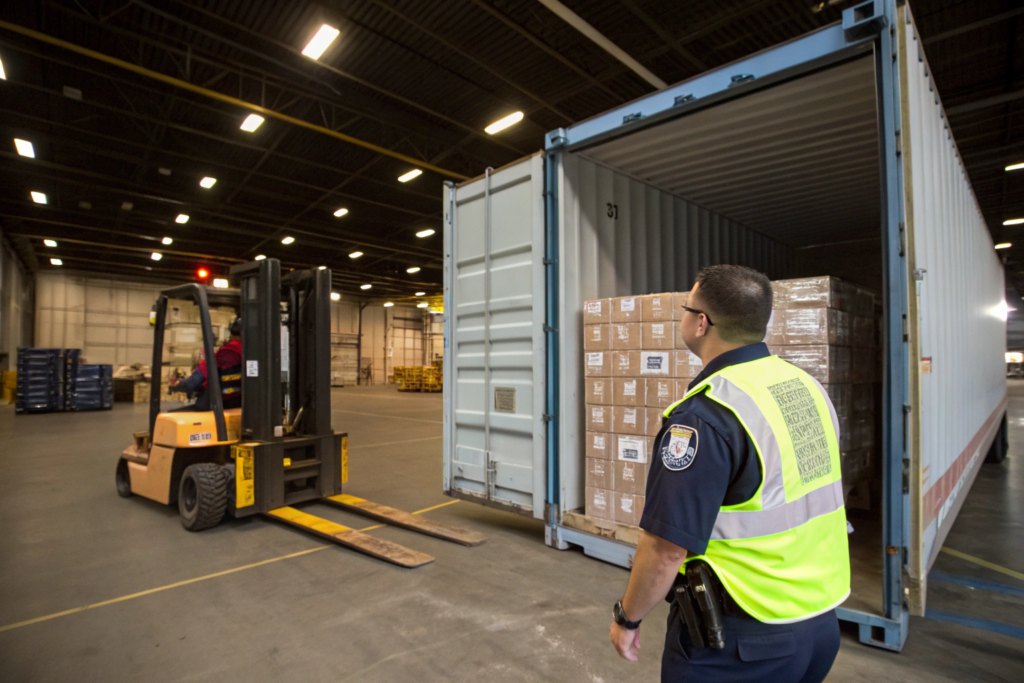
When a client’s container is flagged for an exam, our system alerts our U.S. port operations team within minutes. The type of exam matters. A Non-Intrusive Inspection, or NII, is an X-ray scan. The container passes through a drive-through portal and is scanned for anomalies. If the scan is clear, the container is released, often within 24 hours. A tail exam is a physical inspection of the first few cartons at the rear of the container. An intensive exam is a full unpacking of the entire container, piece by piece. We have managed hundreds of each type. Our first action is always the same. We immediately call the CBP officer assigned to the case. We identify ourselves, confirm the entry number, and ask exactly what they need to see. This phone call alone often shortens the process because it shows we are responsive and professional. We then dispatch a local agent to be physically present during the exam. This person brings the complete document file, helps the CBP officer locate the specific cartons requested, and answers questions about the product in real time. If CBP notes a labeling issue or a carton count discrepancy, we resolve it on the spot, providing photos, factory letters, or corrected paperwork.
What is the cost of a customs exam and who pays it?
An exam is not a penalty. It is a compliance verification. However, it does incur logistics costs that the importer is responsible for. These include the terminal’s handling fee to move the container to the exam site, the CBP officer’s time (in some cases), and the labor to unload and reload the cargo.
A VACIS or NII X-ray exam might cost $200 to $400. A tail exam can run $500 to $1,500 depending on the amount of labor required. An intensive exam, where the entire container is stripped, can cost $3,000 to $8,000 or more. These costs are billed by the terminal and the exam site operator, not by CBP directly. Under our DDP service, we include exam fee coverage up to a defined limit, so our client never sees a surprise bill. Under our standard freight service, we pay the fees upfront to keep the cargo moving and invoice the client afterward with full transparency. We always push back on terminal fees that seem inflated. Our presence on the ground allows us to verify the actual labor hours billed. This is another reason why a hands-on forwarder protects your wallet better than a remote agent who just forwards invoices.
How do you challenge a CBP tariff classification decision made during an exam?
Sometimes a CBP officer at the port will look at a product and decide it fits a different HTS code than the one on the entry. If that different code carries a higher duty rate, CBP will demand additional duties before releasing the cargo.
You have the right to disagree. We have the procedure. The process is called a "protest." If our customs broker believes the officer’s reclassification is incorrect based on the legal tariff schedule and binding rulings, we first request a meeting with the port’s import specialist. We present our legal argument, with samples and documentation. Often, this resolves the issue at the port level. If the specialist upholds the higher rate, we advise the client to pay the additional duty under protest to get the cargo released immediately. We then file a formal protest with CBP Headquarters within 180 days. This requires a detailed legal memo and supporting evidence. We manage this entire process. A protest can take months or even years to resolve, but if you win, CBP refunds the duties with interest. The key is to not abandon the cargo or accept a wrong classification just because it is the path of least resistance. We fight for the correct classification because it sets a precedent for all your future shipments. That is what a professional, reliable partner does.
What Happens After Customs Release to Get Your Goods to the Final Warehouse?
A common misunderstanding among new importers is that customs release means the goods are in your warehouse. It does not. Customs release means the government has approved the entry. The container is still sitting on the terminal, and now the physical work of moving it begins. This step, the final mile delivery, is where many forwarders lose their focus. They hand the file to a random trucking dispatcher and call their job done. We do not.
After customs release, GeeseCargo executes the final mile delivery by coordinating bonded and domestic trucking, transloading from ocean containers to 53-foot trailers when necessary, managing delivery appointments, and tracking the shipment until it is physically signed for at your warehouse door.
The moment we receive the electronic customs release message, our logistics coordinators trigger the delivery workflow. If the client’s shipment is a Full Container Load and the destination warehouse has a dock and is within a reasonable distance from the port, we dispatch a motor carrier directly to pick up the ocean container. We use a network of vetted, C-TPAT-certified trucking companies. We send the delivery order and the customs release to the trucker immediately. We also call the warehouse to confirm the receiving hours and schedule the delivery appointment. This sounds simple, but timing is everything. If the trucker arrives at the terminal without an appointment, they get turned away. If they arrive at the warehouse outside receiving hours, they incur a layover fee. We manage these details. For Less than Container Load shipments, we coordinate the transfer of the cargo to our Container Freight Station, where it is devanned, sorted, and loaded onto pallets for final delivery via a domestic Less than Truckload carrier. The client receives a single delivery, with all costs bundled into the initial quote.
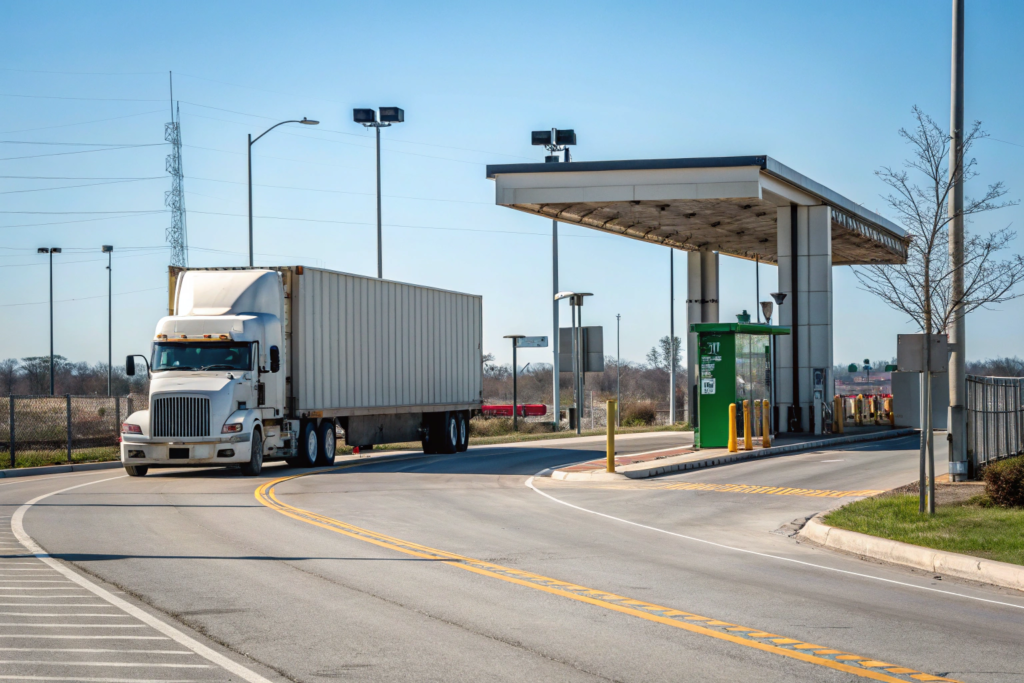
When is transloading from an ocean container to a domestic trailer necessary?
Transloading is the process of unloading cargo from a 40-foot ocean container and reloading it into a 53-foot domestic dry van trailer. It is a critical step for many importers, especially those with warehouses far from the port or with strict delivery windows.
There are several reasons we recommend transloading. First, it reduces shipping cost. A 53-foot trailer can hold the contents of roughly one and a half 40-foot containers, so if you have multiple containers arriving, transloading can reduce the number of truck trips. Second, it avoids chassis shortages at the port. Domestic trailers have their own wheels. You don’t need a separate chassis to move them. Third, many large retail distribution centers simply refuse to accept ocean containers. They require deliveries on standard domestic trucks. We operate a bonded container freight station near major ports where we perform transloading under our supervision. We restack and repalletize the cargo to ensure it is secure for the longer over-the-road journey. The cost is offset by the lower per-mile domestic trucking rate and the elimination of detention risk at the port.
How do you handle missed delivery appointments and warehouse refusals?
It happens. A truck gets caught in traffic. A warehouse receiving team breaks down. A carton gets crushed during transit and the receiver wants to refuse the entire shipment. These moments test whether your forwarder has real operational control.
When our driver calls in to report they are running 20 minutes late for a strict appointment window, our operations team immediately calls the warehouse. We explain the situation and request a grace period. More often than not, a professional, polite phone call from a known logistics provider gets the appointment extended. If the receiver refuses a damaged carton, we have a local agent inspect the damage on the spot. We document it with photos and note the condition on the delivery receipt. We then arrange the return of the damaged goods to our facility for examination and insurance claim processing. The remaining clean cargo is delivered. The client does not have to coordinate any of this. We are the single point of contact from the factory in China to the final pallet position in the U.S. warehouse. This door-to-door commitment, with real-time intervention when problems occur, is what makes GeeseCargo a truly professional, reliable freight forwarding partner.
Conclusion
I began this article with the story of a client whose container sat at Long Beach for eleven days because his previous forwarder treated customs clearance as an afterthought. That experience cost him a retail contract and a great deal of stress. When he moved his business to GeeseCargo, he learned that customs clearance does not have to be a source of anxiety. It can be a smooth, predictable, and manageable step in a well-designed logistics chain.
We handle your customs clearance from China to the US by starting early, documenting thoroughly, filing electronically before the vessel docks, managing any examination with boots on the ground, and executing the final delivery with the same rigor we apply at origin. We own the process end-to-end with our own customs brokers, our own port teams, and our own network of trusted truckers. You get a single point of accountability. You get proactive communication at every step. You get customs clearance that protects your import bond, your compliance record, and your relationship with your U.S. buyers.
If you are currently dealing with a forwarder who disappears when a customs exam hits, or who files your entry two days before arrival and hopes for the best, it is time to expect more. Reach out to GeeseCargo. Tell us about your current import volumes and your pain points. I will personally review your clearance process and show you exactly how we can make it faster, safer, and more reliable. Your goods deserve a clear path from China to your warehouse, and we are the team to deliver it.