
When the Suez Canal blockage in 2021 paralyzed global shipping, our clients with robust disruption plans recovered 3-4 weeks faster than those without. As founder of GeeseCargo with extensive crisis management experience, I’ve learned that supply chain disruptions aren’t hypothetical scenarios—they’re inevitable events that separate resilient companies from vulnerable ones. A well-crafted disruption plan transforms chaos into manageable challenges.
Creating a major supply chain disruption plan involves risk assessment, mitigation strategies, response protocols, and recovery frameworks. Effective plans typically reduce disruption impact by 40-70% and accelerate recovery by 50-80%. The most resilient companies treat disruption planning as an ongoing process rather than a one-time project, continuously updating based on new threats and lessons learned.
Disruption planning requires balancing preparation investment against potential impact, focusing resources on highest-probability, highest-consequence scenarios while maintaining flexibility for unexpected events. The most successful plans combine detailed protocols for known risks with adaptable frameworks for unforeseen challenges.
What Are the Key Components of a Disruption Plan?
A comprehensive disruption plan contains multiple interconnected elements that work together to maintain operations during crises.
How Should You Structure Risk Assessment and Prioritization?
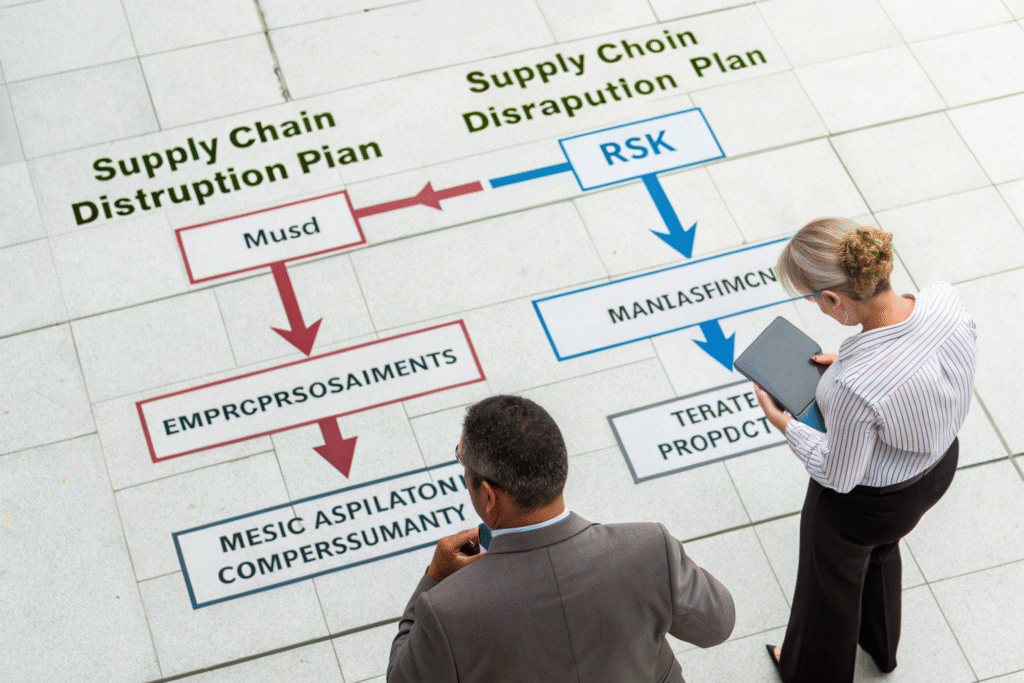
Supply chain mapping identifies single points of failure. Documenting your complete supply network—including suppliers, logistics providers, manufacturing locations, and distribution channels—reveals vulnerabilities that might otherwise remain hidden.
Risk probability and impact analysis focuses resources effectively. Using a risk matrix to evaluate both likelihood and potential business impact helps prioritize preparation for the most significant threats.
Scenario planning prepares for specific disruption types. Developing detailed responses for scenarios like port closures, supplier failures, transportation breakdowns, and demand spikes ensures readiness for common disruption patterns.
What Elements Belong in Response Protocols?
Activation criteria define when the plan triggers. Clear, measurable thresholds (e.g., "when 30% of inventory is unavailable" or "when transit times increase by 100%") prevent delayed response or unnecessary activation.
Communication trees ensure rapid information sharing. Pre-defined contact lists, escalation paths, and notification templates enable coordinated response across the organization and with external partners.
Decision authority matrices prevent response paralysis. Clearly identifying who can authorize alternative sourcing, expedited shipping, inventory allocation, and other critical decisions accelerates response during time-sensitive situations.
How Can You Identify and Mitigate Key Vulnerabilities?
Proactive vulnerability reduction transforms potential catastrophes into manageable incidents.
What Are the Most Critical Vulnerabilities to Address?
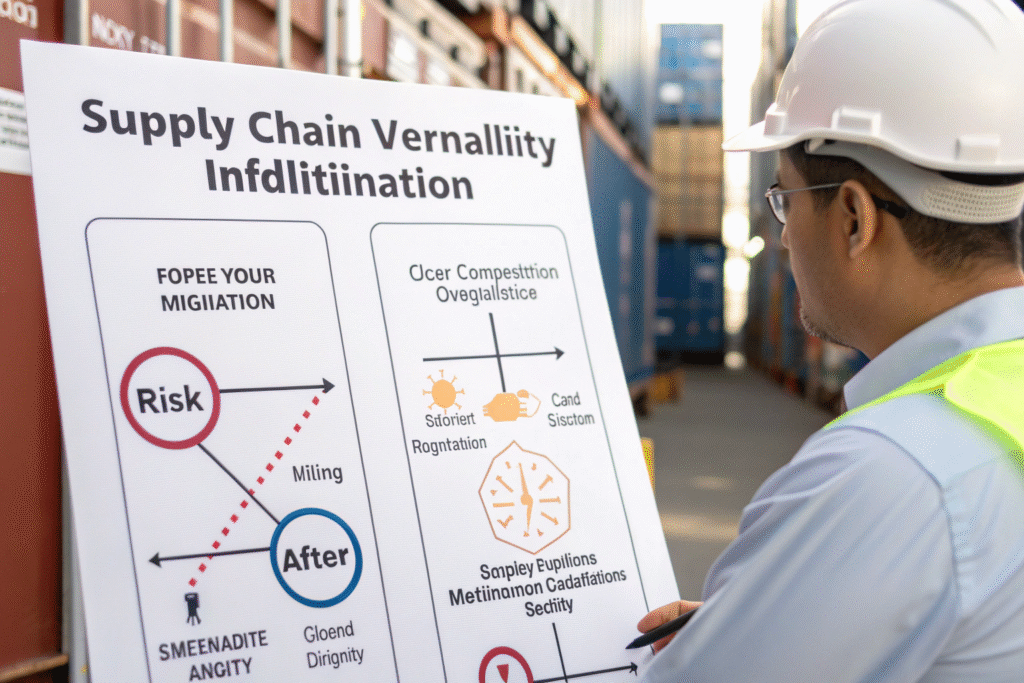
Single-source dependencies create catastrophic failure risks. Relying on one supplier, one transportation lane, or one manufacturing location for critical components represents the most common and dangerous vulnerability.
Geographic concentration amplifies regional disruptions. Concentrating suppliers, manufacturing, or distribution in single regions creates vulnerability to natural disasters, political instability, or infrastructure failures.
Inventory optimization without resilience consideration increases disruption sensitivity. Lean inventory strategies that minimize working capital often eliminate the buffer stock needed to survive supply interruptions.
How Can You Systematically Reduce These Vulnerabilities?
Supplier diversification builds supply chain redundancy. Developing qualified alternative suppliers for critical components, even if they’re not used during normal operations, provides crucial backup during disruptions.
Inventory strategy balancing considers disruption risk. Maintaining strategic buffer stock for critical components or finished goods, despite higher carrying costs, provides breathing room during supply interruptions.
Transportation flexibility enables route adaptation. Maintaining relationships with multiple carriers across different modes (air, ocean, rail, truck) allows rapid rerouting when primary options become unavailable.
What Communication Strategies Ensure Coordinated Response?
Effective communication during disruptions often determines the difference between controlled response and chaotic reaction.

How Should Internal Communication Be Structured?
Crisis team activation triggers immediate communication protocols. Pre-defined team members with specific responsibilities should receive immediate notification when disruption thresholds are met.
Status reporting frequency and format standardize information flow. Regular updates (initially hourly, then daily) using consistent templates prevent information gaps and ensure decision-makers have current situational awareness.
Cross-functional coordination prevents siloed responses. Regular coordination meetings between procurement, logistics, manufacturing, sales, and finance ensure aligned response strategies.
What External Communication Protocols Are Essential?
Supplier communication maintains collaboration during stress. Transparent communication with key suppliers about disruption impacts and response plans often yields creative solutions and priority treatment.
Customer communication manages expectations and preserves relationships. Proactive, honest communication about potential delays and alternative options typically maintains customer loyalty despite service interruptions.
Logistics provider coordination enables creative solutions. Close communication with carriers, warehouses, and brokers often identifies alternative routing, expedited options, or capacity that wouldn’t emerge through standard processes.
How Can You Develop Effective Contingency Strategies?
Practical contingency plans provide actionable alternatives when normal operations become impossible.
What Sourcing Contingencies Provide Supply Assurance?
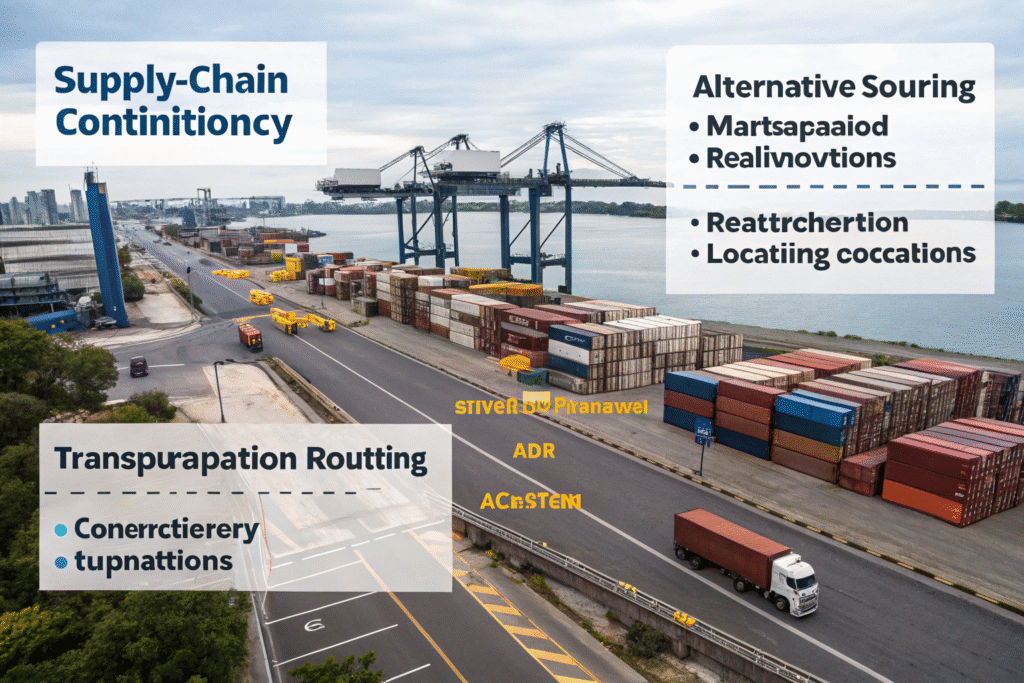
Pre-qualified alternative suppliers enable rapid sourcing shifts. Maintaining vetted backup suppliers with current qualifications and minimal order quantities allows quick transitions during primary supplier failures.
Safety stock calculations include disruption scenarios. Buffer inventory levels should consider not just normal demand variability but also potential supply interruptions of specific durations.
Component standardization reduces alternative sourcing complexity. Using common components across multiple products simplifies finding alternatives when preferred components become unavailable.
What Logistics Contingencies Maintain Product Movement?
Multi-modal transportation agreements provide routing flexibility. Contracts with carriers across different transportation modes (air, ocean, rail, truck) enable mode shifting when specific options become constrained.
Port and routing diversification prevents single-point failures. Using multiple ports of entry, transportation corridors, and distribution networks provides alternatives when specific infrastructure fails.
Expedited shipping protocols balance cost and urgency. Pre-negotiated expedited shipping options with understanding of cost premiums enable rapid decisions during time-sensitive situations.
How Should You Test and Refine Your Disruption Plan?
Regular testing and updating ensure plans remain effective as business conditions and threats evolve.

What Testing Methods Validate Plan Effectiveness?
Tabletop exercises simulate disruption scenarios in controlled environments. Walking through specific disruption scenarios with the crisis team identifies gaps, confusion, and improvement opportunities without operational risk.
Component testing validates individual plan elements. Testing specific aspects like alternative transportation routing, backup supplier activation, or communication systems ensures they work as intended when needed.
Full-scale simulations provide the most realistic validation. Occasionally conducting comprehensive simulations that activate the full plan (often during slower business periods) provides the most thorough preparation.
How Should You Incorporate Lessons Learned?
Post-disruption analysis captures improvement opportunities. After any disruption (even minor ones), conducting thorough reviews of what worked, what didn’t, and why identifies specific plan improvements.
Regular plan reviews ensure ongoing relevance. Quarterly reviews of the disruption plan, even without recent disruptions, account for supply chain changes, new threats, and organizational evolution.
Industry learning incorporates external best practices. Monitoring how other companies handle disruptions and adopting effective strategies improves your own preparedness over time.
What Resources and Tools Support Effective Disruption Planning?
The right tools and resources transform theoretical plans into operational capabilities.
What Technology Solutions Enhance Disruption Management?
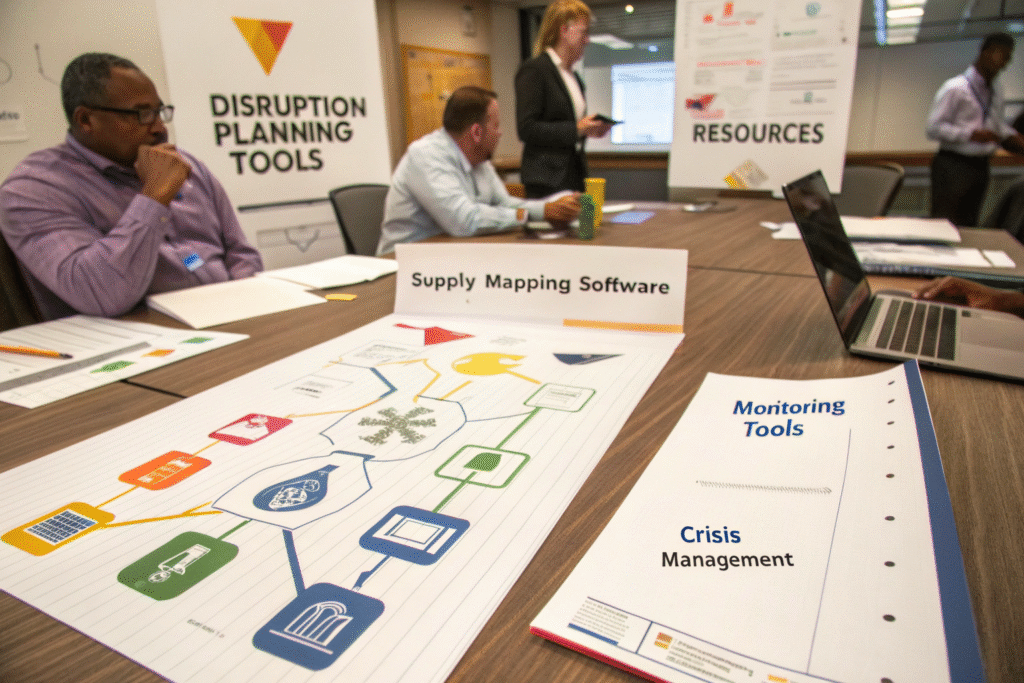
Supply chain visibility platforms provide early warning. Systems that monitor supplier status, transportation movements, and inventory levels across the supply network enable early detection of developing disruptions.
Risk monitoring services alert to emerging threats. Services that track weather, geopolitical, regulatory, and economic developments provide advance warning of potential disruptions.
Collaboration tools enable coordinated response. Platforms that support real-time communication, document sharing, and decision tracking maintain coordination during fast-moving disruption responses.
What Organizational Structures Support Effective Response?
Dedicated crisis management roles ensure focused leadership. Identifying specific individuals (often with backups) to lead disruption response prevents confusion and delayed action during crises.
Cross-functional teams bring diverse perspectives. Involving representatives from procurement, logistics, manufacturing, sales, finance, and IT ensures comprehensive response strategies that consider all business impacts.
Clear authority delegation enables rapid decision-making. Pre-approved spending limits, decision parameters, and escalation paths prevent bureaucratic delays during time-sensitive situations.
Conclusion
Creating an effective supply chain disruption plan requires systematic assessment of vulnerabilities, development of practical contingencies, establishment of clear protocols, and commitment to continuous improvement. The most resilient companies treat disruption planning as an integral business function rather than a compliance exercise, recognizing that supply chain resilience provides competitive advantage during both normal operations and crises.
At GeeseCargo, we’ve helped clients develop disruption plans that reduced recovery time by 60-80% and financial impact by 40-70% during actual disruptions. The most successful approaches balance detailed preparation for known risks with flexible frameworks for unexpected events, combining specific protocols with adaptable response capabilities.
Begin your disruption planning by conducting a thorough vulnerability assessment of your supply chain, then develop graduated response strategies that match preparation intensity to potential impact. Remember that in disruption management, the goal isn’t eliminating all risk—it’s building the capability to respond effectively when inevitable disruptions occur, minimizing impact and accelerating recovery.