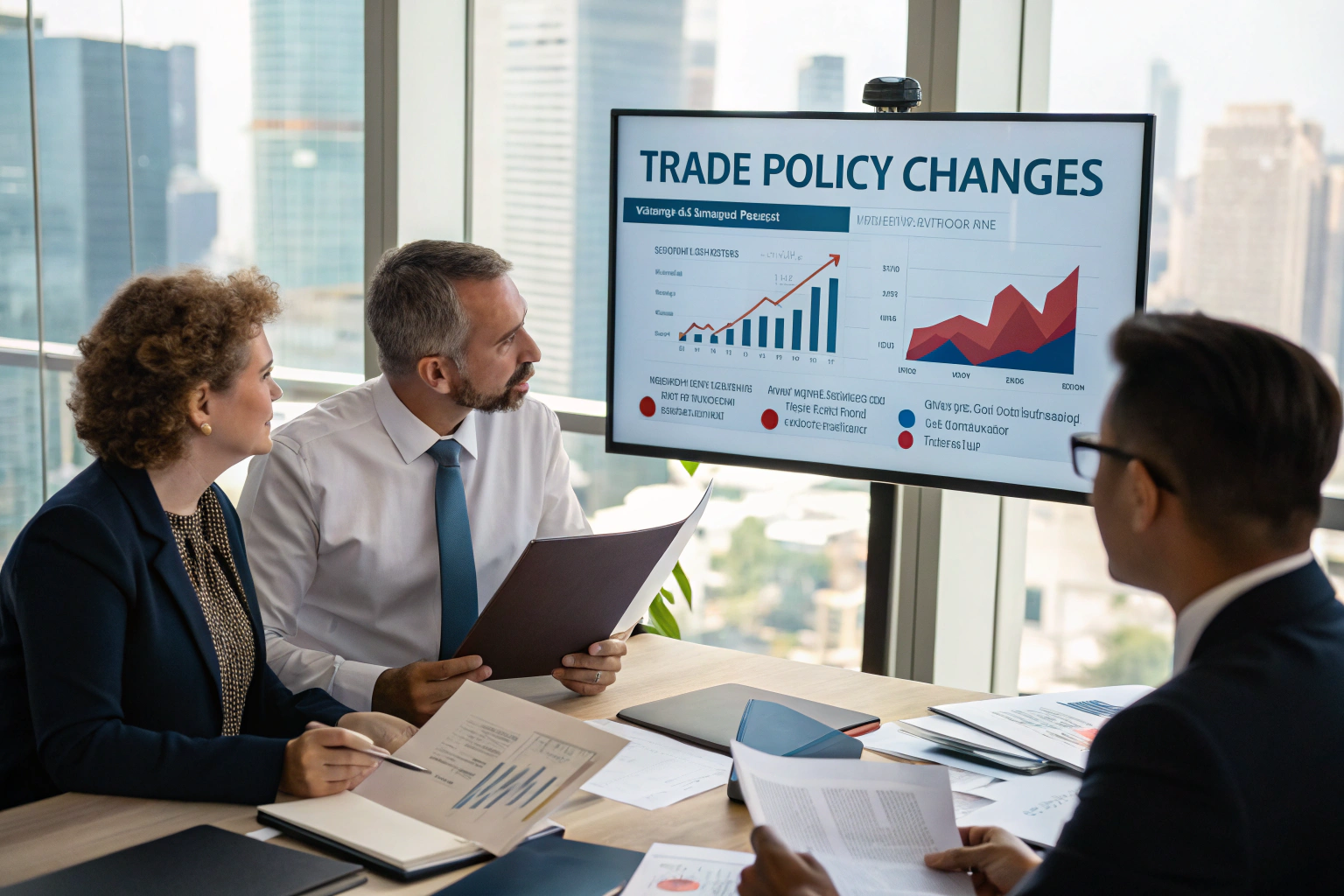
I was sitting in my office late one Thursday evening when the news broke. A new executive order had just been signed, imposing additional tariffs on a wide range of Chinese goods, effective in 48 hours. My phone lit up like a Christmas tree. Ron, my apparel client, was the first to call. "Geese, I have three containers on the water right now. They won’t arrive before the deadline. What does this mean for my duty bill?" Another client, a gift distributor in Chicago, sent a text message consisting of only five words: "Am I about to lose money?" That night, my team and I worked until 2 a.m., pulling entry data, calculating exposure, and drafting individualized impact assessments for every client with cargo in transit. By sunrise, every one of them had a clear answer and a contingency plan. That night was not an exception. It was a Tuesday. In this business, trade policy does not change politely. It changes suddenly, and it changes everything.
Trade policy changes can disrupt your supply chain through sudden tariff increases, exclusion expirations, sanctions on specific entities, or shifts in de minimis rules, and GeeseCargo prepares by maintaining a real-time regulatory monitoring system, building flexible routing options, and establishing bonded warehouse and Foreign Trade Zone strategies to buffer our clients from political shocks.
You cannot control what a government decides to do at 3 p.m. on a Friday. But you can control how prepared you are to respond by 3:01 p.m. At GeeseCargo, preparation is not a passive state of awareness. It is an active, structured system of monitoring, analysis, and pre-positioned logistics options that turn a potential crisis into a managed adjustment. Let me explain exactly what types of trade policy shifts threaten your supply chain, and how our approach ensures that when the political ground shifts, your cargo keeps moving and your costs stay predictable.
Which Recent U.S. Trade Policy Changes Should Importers Worry About Most?
The trade policy landscape between China and the United States has not stabilized. It has simply evolved into a different kind of instability. The blanket tariff announcements of 2018 and 2019 have been replaced by a more surgical, but equally disruptive, set of policy mechanisms. Section 301 exclusions now expire on rolling schedules. New tariff proposals target specific sectors like electric vehicles, solar panels, and semiconductors. The Uyghur Forced Labor Prevention Act has introduced an entirely new compliance burden, where goods from certain regions face a rebuttable presumption of forced labor and are detained unless proven otherwise. De minimis rules that allowed duty-free entry for shipments under $800 are under active legislative review. This is not a static environment. It is a constantly shifting regulatory battlefield.
Importers should be most worried about the expiration of active Section 301 tariff exclusions, the expansion of UFLPA entity lists and region-based detentions, new sector-specific tariff proposals that can appear with little warning, and proposed legislation to tighten the de minimis threshold that many e-commerce and small-parcel importers rely on.
Each of these changes carries a different type of disruption risk. A tariff exclusion expiring means your product goes from a 0% Section 301 rate to a 25% rate overnight. Your landed cost just jumped by a quarter of the product’s value. A UFLPA detention means your container is held at the port indefinitely while you attempt to prove a negative, that your cotton shirts were not made with forced labor, a documentation challenge that can take months. New sector-specific tariffs can strand goods that were ordered months ago under a completely different cost model. The de minimis changes threaten the entire direct-to-consumer business model for small-value goods. At GeeseCargo, we track every one of these policy streams. We have a dedicated trade compliance officer whose primary job is to monitor the Federal Register, USTR announcements, CBP CSMS messages, and congressional committee schedules. We do not rely on news articles. We go to the source documents. This allows us to give our clients early warning, often weeks before a change is widely reported in the trade press.

How do Section 301 exclusion expirations create hidden cost time bombs?
A Section 301 exclusion is temporary by design. It has a specific expiration date, often buried in a Federal Register notice that runs dozens of pages. If that date passes and no extension is granted, the full tariff rate snaps back into effect on all entries filed after the expiration.
The trap is that exclusions apply based on the date of entry, not the date of shipment. Your goods may have sailed when the exclusion was active, but if they arrive and the entry is filed after the expiration date, the higher rate applies. This is a cash flow bomb with a timer. We maintain a master calendar of every exclusion expiration that affects our clients’ product lines. We set internal alerts at 90 days, 60 days, and 30 days before expiration. At the 90-day mark, we notify the client and begin assessing whether an extension is likely based on USTR’s published priorities. At 60 days, we discuss contingency plans. Should we accelerate shipments to arrive before the deadline? Should we explore bonded warehouse storage to defer entry until an extension is confirmed? At 30 days, if no extension has been announced, we assume the worst and execute the contingency plan. This discipline prevents the panicked phone calls that happen when an exclusion expires and the importer is caught off guard.
What is the UFLPA and why should apparel and textile importers pay attention?
The Uyghur Forced Labor Prevention Act, or UFLPA, establishes a rebuttable presumption that any goods wholly or partly produced in the Xinjiang Uyghur Autonomous Region, or produced by entities on a specific government list, are made with forced labor and are therefore prohibited from entering the United States.
This is not a tariff issue. It is an admissibility issue. If CBP flags your shipment under the UFLPA, the goods are detained. They do not get released upon payment of a higher duty. They sit in a bonded warehouse or a CBP facility while you try to prove the supply chain is clean. For apparel importers, this is especially dangerous because Xinjiang is a major cotton-producing region. Even if your finished garment was sewn in Guangdong, CBP may demand traceability documentation back to the cotton fiber’s origin. We have built a UFLPA compliance support package for our clients. We help them map their supply chain beyond the immediate factory, identify the source of raw materials, and prepare the detailed documentation that CBP requires for a successful detention response. This includes supply chain flowcharts, factory audit reports, purchase orders, and shipping records at every tier. Preparation is everything. An importer who has this package ready when a detention hits can get goods released in weeks. An importer who has to build it from scratch will wait months.
How Do Tariff Fluctuations Impact Your Cash Flow and What Can You Do?
When a tariff jumps from 7.5% to 25% on a product category, the financial impact is not just the 17.5 percentage point difference. The real impact is the timing mismatch. You paid the factory for the goods months ago. You may have already priced and sold those goods to a retail buyer based on the lower tariff. Now, upon arrival, CBP demands an additional $17,500 on a $100,000 shipment before the container is released. You have to find that cash immediately, or your goods sit on the terminal accruing storage fees that compound the loss. This is the cash flow crisis that trade policy changes create, and it kills importers who are profitable on paper but illiquid in practice.
Tariff fluctuations impact cash flow by creating unplanned, immediate duty payment demands that can exceed the importer’s available working capital, but this risk can be managed through duty deferral programs, tariff hedging via DDP contracts, and the strategic use of Foreign Trade Zones.
At GeeseCargo, we address this problem at two levels. First, we help clients avoid the cash crunch entirely through our DDP service, where we assume the tariff payment obligation. When a tariff jumps mid-transit, we pay the higher duty to CBP from our own capital. The client pays us the agreed-upon DDP rate, which we have already priced with a risk buffer. There is no surprise demand for $17,500. The cash flow impact is zero. Second, for clients not on DDP, we pre-structure entry timing to minimize exposure. If a tariff increase is announced with an effective date, we file the entry before the deadline whenever legally possible. This means accelerating document processing and pre-paying estimated duties early. We also use bonded warehouses strategically. Goods can be admitted into a bonded warehouse under an FTZ entry, deferring the duty payment until the goods are actually withdrawn for sale. This buys time to arrange financing, negotiate with the buyer, or wait for a political resolution. Cash flow management is part of our logistics service because a shipment is not a success if it arrives at the port but the client cannot afford to get it out.

How does a DDP contract protect you from mid-transit tariff hikes?
Under a DDP contract, the freight forwarder takes ownership of the duty liability. The price quoted to you is the price you pay. If the U.S. government raises the tariff rate after your goods have left the factory but before they clear customs, the forwarder absorbs the additional cost.
This is a risk transfer mechanism. You pay a small premium in the DDP rate for the certainty of a fixed landed cost. In a stable tariff environment, that premium is an insurance cost. In a volatile tariff environment, it is a bargain. We underwrite our DDP contracts based on our continuous monitoring of the policy landscape. We build a tariff risk buffer into the quote based on our assessment of the probability and magnitude of a near-term policy change. If no change occurs, we earn a small margin on the buffer. If a change occurs, we eat the loss and honor the contract. This is what a professional, reliable freight forwarder brings to the table. We do not just haul boxes. We manage financial risk. For a company owner like Ron, who operates on fixed wholesale contracts with U.S. retailers, the DDP contract is not a luxury. It is a requirement for doing business without gambling.
What is the role of Foreign Trade Zones in buffering tariff volatility?
A Foreign Trade Zone is a designated area within the United States that is legally considered outside of U.S. customs territory. Goods can enter an FTZ without a formal customs entry and without payment of duties. Duties are only paid when the goods leave the FTZ and enter U.S. commerce.
This creates a powerful timing option. If a tariff increase is announced but you believe it may be temporary, or if you are awaiting a ruling on an exclusion extension, you can move your goods into an FTZ and pause the duty clock. The goods sit safely in a bonded facility. No duty is owed. If the tariff situation improves, you withdraw the goods and pay the lower rate. If the situation worsens, you at least deferred the payment and preserved cash. You can also process, repackage, or even manufacture in the FTZ, potentially changing the tariff classification before entry. We operate FTZ admission programs for clients with seasonal inventory and those exposed to policy-driven rate volatility. The cost of FTZ storage is a fraction of the cost of paying a temporary tariff spike. This is how strategic logistics planning turns a passive cost center into an active risk management tool.
What Alternative Sourcing and Routing Strategies Does GeeseCargo Recommend?
When trade policy makes one path too expensive or too risky, the logical response is to find another path. This does not necessarily mean abandoning China as a sourcing origin. China’s manufacturing ecosystem, speed, and scale cannot be replicated overnight. But it does mean building flexibility into your supply chain so that you are not trapped by a single country, a single port, or a single regulatory framework. I have advised clients to think of their supply chain not as a fixed pipeline but as a switchable network. The ability to route around a problem is more valuable than any single low-cost route.
GeeseCargo recommends a portfolio approach to sourcing and routing, including evaluating "China Plus One" manufacturing strategies for tariff-sensitive products, utilizing alternative transshipment and first-port-of-entry options to avoid congested or high-scrutiny gateways, and structuring multi-modal Sea-Air solutions that bypass tariff exposure by changing the legal entry point.
The "China Plus One" strategy involves maintaining your primary Chinese suppliers while developing secondary supplier relationships in countries like Vietnam, India, Bangladesh, or Mexico. These secondary sources are not meant to replace China entirely. They are meant to give you options. If a new punitive tariff targets your Chinese-made product specifically, you can shift a portion of your volume to the alternative source, keeping your supply line open while you assess the long-term impact. From a logistics perspective, we support this strategy by providing competitive freight rates from these alternative origins. Our network extends beyond China. We have relationships with carriers and agents in Southeast Asia and South Asia. We also offer multi-country consolidation, where goods from different origins are combined at a hub and shipped as a single container to the U.S., optimizing freight cost. On the routing side, we constantly evaluate alternative U.S. ports of entry. If CBP scrutiny intensifies at a specific port for certain product categories, we can route your cargo through a different port with a different risk profile. These are not exotic strategies. They are standard operating procedure for a forwarder that takes supply chain resilience seriously.

How does a China Plus One strategy work for small and medium importers?
You do not need to be a Fortune 500 company to diversify sourcing. A China Plus One strategy for a mid-sized importer means identifying one or two alternative suppliers in a different country for your top-selling, most tariff-sensitive products.
Start with a small trial order. Do not shift your entire volume. Send a purchase order for 10% of your usual quantity to a factory in Vietnam or India. Use the trial to test quality, communication, and lead times. From our side, we can provide comparative landed cost analyses that include the duty differential, the freight cost differential, and the transit time impact. A product made in Vietnam might have a higher factory price but a 0% Section 301 tariff, making the total landed cost lower than the Chinese equivalent. This is the analysis we run for our clients. It is not about flag-waving or politics. It is about arithmetic. If the numbers work, we help structure the logistics for the new origin. If they do not, we tell you honestly and look for other solutions. The goal is to have a qualified alternative ready so that the next time a trade policy shock hits, you are not starting your supplier search from zero in a panic.
What are the benefits of alternative U.S. ports of entry during policy disruptions?
Not all U.S. ports are equal in terms of CBP scrutiny, congestion, or available exam facilities. When a new trade policy targets a specific commodity, CBP often concentrates enforcement resources at the major gateway ports.
Routing through a smaller, less congested port can reduce the probability of an intensive examination and speed up the clearance process. It can also lower the port storage and trucking costs that compound during a delay. We maintain a matrix of port performance metrics, including average exam rates, truck turn times, and chassis availability. When we anticipate a policy-driven enforcement surge, we proactively reroute eligible cargo to alternative ports. For West Coast imports, this might mean using Oakland or Seattle instead of Los Angeles or Long Beach. For East Coast imports, it might mean using Savannah or Norfolk instead of New York. The ocean transit may be slightly longer, but the port dwell time is often significantly shorter, and the net delivery time is a wash or a gain. The real benefit is the reduced risk of a prolonged hold. In a policy disruption, speed of clearance is the most valuable logistics metric.
How Does GeeseCargo’s Proactive Monitoring System Keep Your Supply Chain Safe?
Everything I have described, the tariff analysis, the exclusion tracking, the UFLPA preparation, the port routing decisions, depends on one thing: knowing about the problem before it arrives at your dock. In logistics, information that arrives late is worthless. A warning about a tariff increase that arrives after your entry is filed is not a warning. It is a postmortem. This is why we have invested heavily in a proactive monitoring and client alert system that turns regulatory intelligence into operational action before the deadline.
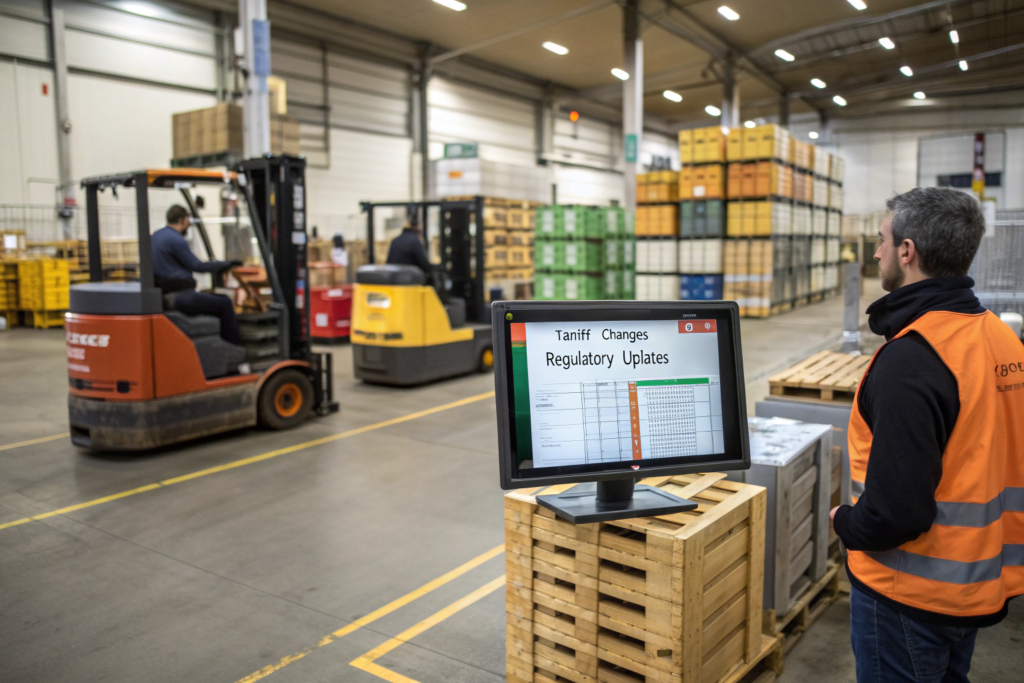
GeeseCargo’s proactive monitoring system combines automated regulatory data feeds from CBP, USTR, and other agencies with human expert analysis, generating client-specific alerts, pre-shipment advisory memos, and tactical recommendations that prevent regulatory surprises from becoming supply chain interruptions.
The system works on three layers. Layer one is automated data capture. We subscribe to direct data feeds from the Federal Register, the USTR exclusion portal, CBP’s CSMS messaging system, and the ACE portal. Our system parses these feeds for keywords linked to our clients’ product categories and HTS codes. When a relevant notice is published, the system flags it instantly. Layer two is human expert analysis. Our trade compliance officer reviews every flagged notice. They assess the operational impact, determine which clients are affected, and draft a plain-English summary of what the change means and what actions are required. Layer three is client communication. The affected clients receive an email advisory within 24 hours of the regulatory change, often within the same business day. For critical changes with immediate financial impact, we pick up the phone. The advisory includes a clear recommendation: accelerate shipments, pause shipments, reroute, file early, prepare documentation, or do nothing. The client never has to wonder what a policy change means for their business because we tell them, specifically and concretely.
How do you turn a regulatory announcement into a client action plan?
When a regulatory change is announced, the clock starts immediately. Our process for turning that announcement into a client action plan has been refined through dozens of real-world disruptions.
Within hours of a significant USTR or CBP announcement, our compliance officer drafts an internal impact assessment. This memo identifies the specific HTS codes affected, the effective date, the rate change or rule change, and the list of GeeseCargo clients with open purchase orders or in-transit shipments covered by those codes. We then segment the clients by urgency. Tier 1 clients have cargo on the water that will arrive after the effective date and face an immediate financial hit. We call them directly. We discuss the option of filing the entry summary before arrival to lock in the current rate, if legally permissible. Tier 2 clients have purchase orders issued but goods not yet shipped. We email them with a recommendation to either accelerate production and shipping to beat the deadline, or to pause and reassess the landed cost. Tier 3 clients have the affected product in their catalog but no active orders. We send a notification so they can update their pricing models. This tiered response ensures that resources are focused where the risk is highest and that every client gets the information they need in time to act.
What should an importer do right now to prepare for the next trade policy shock?
Preparation is not a one-time project. It is a set of habits and systems that you build and maintain during calm periods so they are ready when the storm hits. I tell my clients that the worst time to buy an umbrella is when it is already raining.
Right now, I recommend four steps. First, have us conduct a tariff exposure audit of your current product line. We will list every HTS code you use, the current Section 301 rate, and the status of any applicable exclusions. This gives you a clear map of your vulnerability. Second, ensure your product documentation is audit-ready. For every product, have a current material breakdown, a factory specification sheet, and a fiber content test report if it is a textile. This documentation is your defense against reclassification and UFLPA holds. Third, have a conversation with us about your tolerance for tariff risk. If a 10% duty increase would make your business unprofitable, you should be on a DDP or FTZ program. If you can absorb some volatility, standard clearance may be fine. We will tailor the logistics structure to your risk appetite. Fourth, bookmark our compliance advisory page and join our client alert email list. Information is the cheapest insurance in this business, and we provide it freely to our partners. When the next trade policy change comes, and it will come, you will be prepared, not panicked.
Conclusion
The night the tariff executive order was announced, my team did not sleep. But by morning, every client knew their exposure, their options, and their next step. Not a single container missed its delivery window. Not a single client paid a surprise duty bill they were not prepared for. That night was a success, not because we prevented a policy change, we cannot do that, but because we had a system that turned chaos into a checklist. That is the GeeseCargo difference.
Trade policy changes are a permanent feature of importing from China to the United States. They are not going to stop. The question is not whether the next tariff list, the next exclusion expiration, or the next forced labor regulation will affect you. The question is whether your freight forwarder sees it coming and has a plan. At GeeseCargo, we see these changes as an operational challenge to be managed, not a force of nature to be endured. We have built the monitoring systems, the financial products like DDP and FTZ entry, the alternative routing strategies, and the compliance documentation frameworks that absorb political shocks and keep your goods moving.
If your current approach to trade policy is to hope for the best and react when the bad news hits, I invite you to take a more professional path. Reach out to me. Let us do a no-cost supply chain vulnerability assessment for your top three product lines. We will map your exposure to the current policy risks and give you a concrete preparedness plan. You cannot control Washington. But you can control your response. With GeeseCargo as your partner, your response will be fast, informed, and effective. That is our commitment to you as a professional, reliable, and competitive freight forwarding service provider.