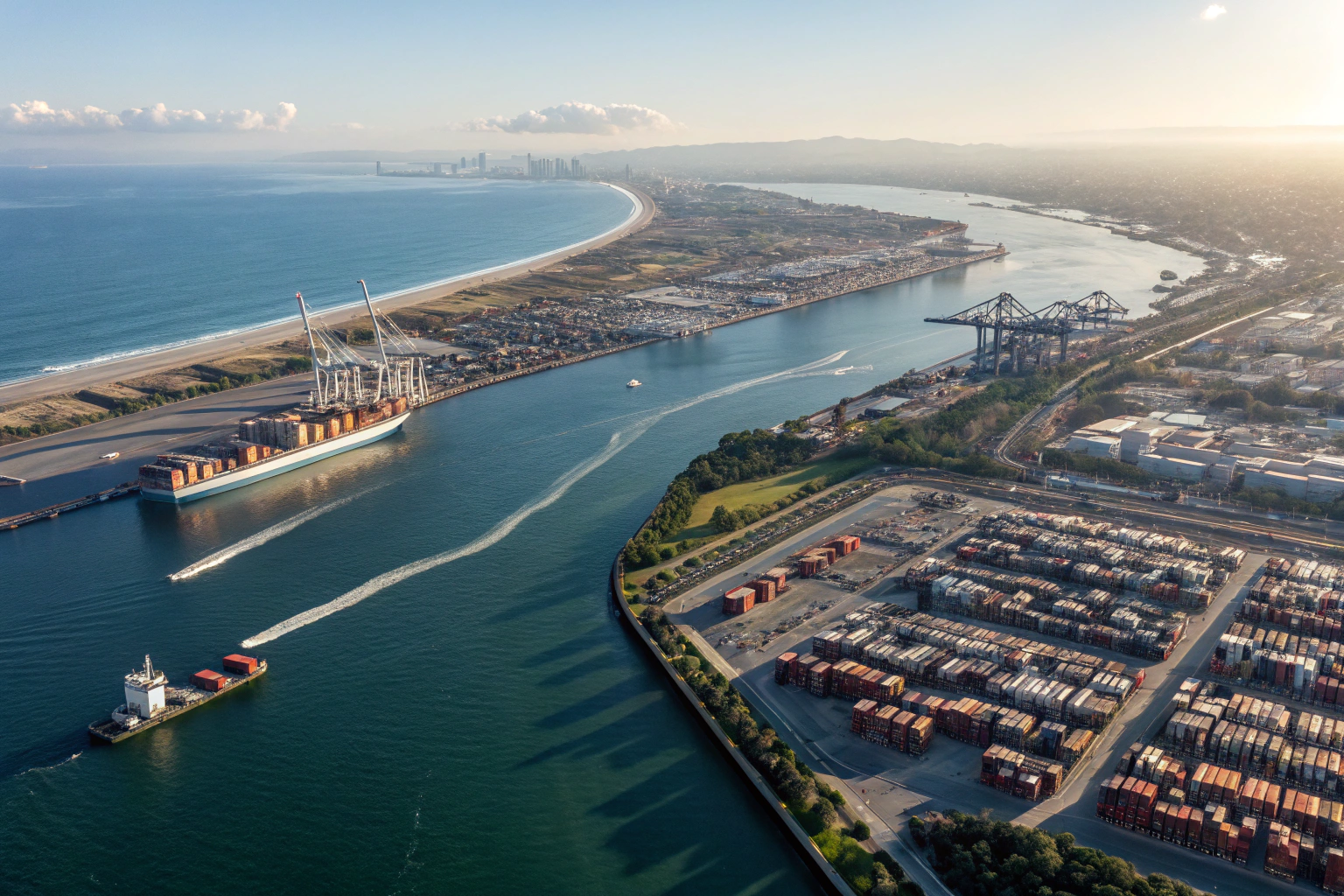
I had a long conversation with Ron a few months back that perfectly captures the port choice dilemma. He had always shipped to Los Angeles. It was what he knew. His forwarder had a standard routing, and Ron had a standard warehousing arrangement in Southern California. But his business had shifted. His largest retail buyer now had a distribution center in Atlanta, Georgia. The trucking bill from Los Angeles to Atlanta was eating into his margins, and the transit time was adding five to six days after the container was already off the ship. He asked me, "Geese, should I just keep doing what I am doing, or is there a smarter way?" I pulled up a total landed cost model and a transit time comparison on my screen. The answer was clear. He needed to start routing some of his volume to the East Coast. Not all of it. But the Atlanta-bound product was costing him time and money by crossing the Pacific instead of the Panama Canal.
GeeseCargo recommends the West Coast for shipments destined to the Western and Central United States due to the fastest ocean transit and lowest base freight costs, and the East Coast for shipments destined to the Eastern United States when the total landed cost including inland trucking is lower and the delivery deadline can accommodate a longer ocean voyage or an expedited rail-landbridge solution.
There is no universal best port. There is a best port for your specific shipment, based on your destination, your timeline, and your cost structure. At GeeseCargo, we do not lock clients into a single routing. We analyze every shipment and recommend the port of entry that optimizes your total landed cost and your delivery schedule. Let me walk you through the tradeoffs, the costs, the transit times, and the real-world operational factors that should drive your West Coast versus East Coast decision.
What Are the Transit Time and Cost Differences Between West Coast and East Coast Ports?
The numbers are the starting point for any port decision. Ocean transit time from Shanghai to Los Angeles is about 12 to 15 days. Ocean transit from Shanghai to Savannah or New York, via the Panama Canal, is about 28 to 35 days. That is a difference of roughly two weeks on the water. The base ocean freight cost to the East Coast is also higher, typically by $1,500 to $3,000 per 40-foot container, reflecting the longer distance and the canal transit fees. These numbers alone lead many importers to default to the West Coast. But stopping the analysis here is a mistake.
West Coast ocean transit is 12 to 18 days with lower base freight costs, while East Coast all-water transit is 28 to 35 days with freight costs $1,500 to $3,000 higher per container, but the true cost comparison must include the inland delivery cost and the value of transit time to the final destination.
The missing piece in the simple comparison is the inland freight. If your warehouse is in Atlanta, the trucking cost from Los Angeles is approximately $2,500 to $3,500 for a full container. The trucking cost from the Port of Savannah is $500 to $800. That is a $2,000 to $2,700 savings on the inland leg. When you add the inland savings to the equation, the total landed cost for East Coast all-water routing is often within a few hundred dollars of the West Coast total. And you get the goods to the warehouse a few days faster on the East Coast routing because you avoided the cross-country truck or rail journey. The analysis gets more nuanced for destinations like Chicago or Dallas. These are in the middle of the country. West Coast entry with expedited rail intermodal is highly competitive on both time and cost. The right answer depends on the specific destination zip code. We run a total landed cost model for every client with multiple destination warehouses. The model includes ocean freight, port charges, customs brokerage, duty, inland trucking or rail, and insurance. The lowest total cost wins the routing recommendation.
How do canal transit fees and carrier surcharges affect East Coast freight costs?
The Panama Canal Authority charges a toll based on vessel size and cargo volume. These tolls are passed through to shippers in the ocean freight rate. Additionally, low water levels in the Panama Canal in recent years have led to draft restrictions and additional surcharges.
The canal situation adds both cost and uncertainty to East Coast all-water services. During periods of canal congestion or drought restrictions, vessels may wait days for a transit slot, adding to the transit time and triggering carrier surcharges. We monitor the Panama Canal conditions continuously. When canal delays are projected, we proactively shift eligible East Coast cargo to a West Coast landbridge routing, using the Los Angeles or Long Beach discharge with expedited rail to the East Coast. This avoids the canal risk entirely and often matches or beats the all-water transit time, though at a slightly higher freight cost. The landbridge option gives us a reliable alternative when the all-water route becomes unreliable. We present both options to the client with the current cost and time data, and we make a joint decision.
What is the real transit time from a Chinese factory to a U.S. East Coast warehouse?
The port-to-port transit time is only the middle chapter. The full door-to-door timeline for an East Coast delivery includes origin handling, ocean transit, port discharge, customs clearance, and final delivery.
For an all-water service to Savannah, the complete door-to-door timeline from a factory in Shanghai to a warehouse in Atlanta is 38 to 45 days. The breakdown is approximately 5 to 7 days for origin handling in China, 28 to 32 days for ocean transit to Savannah, and 5 to 6 days for destination handling including customs clearance and trucking to Atlanta. For a West Coast landbridge service to the same Atlanta warehouse, the complete timeline is 28 to 35 days. The breakdown is 5 to 7 days for origin handling, 12 to 15 days for ocean transit to Los Angeles, and 11 to 13 days for rail to Atlanta and final delivery. The landbridge is faster by about a week to ten days. The cost is slightly higher. The client chooses based on whether speed or cost is the higher priority for that particular shipment. We provide both timelines and both costs. The client makes the informed choice.
How Do West Coast Port Congestion and Labor Issues Impact Your Decision?
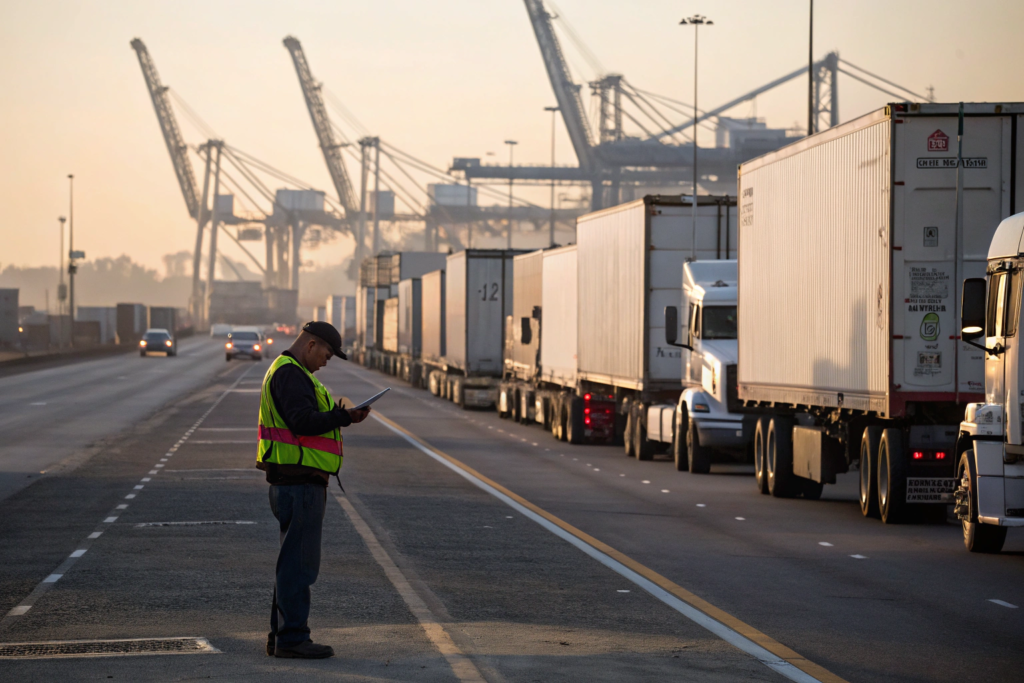
The biggest operational argument against the West Coast is congestion and labor disruption risk. The ports of Los Angeles and Long Beach handle a massive share of U.S. imports from Asia. When volume surges, the system strains. Truck turn times slow. Chassis become scarce. Container dwell times increase. And the dockworker labor contract negotiations, which occur every few years, introduce a periodic risk of slowdowns or work stoppages. East Coast and Gulf Coast ports have their own labor dynamics, but they are generally less prone to the extreme congestion spikes that have characterized the West Coast during peak periods.
West Coast ports are more vulnerable to peak season congestion and periodic labor contract disruptions, adding 5 to 15 days of delay risk to the baseline transit time, while East Coast and Gulf Coast ports have shown more consistent truck turn times and lower dwell times in recent years, though no port is immune to disruption.
At GeeseCargo, we factor congestion risk into our routing recommendations. During the peak shipping season, typically August through October, we proactively divert a portion of our clients’ cargo to East Coast all-water or landbridge services, even for some Midwest destinations. The slightly longer baseline transit time is often more reliable than the West Coast baseline plus a congestion delay that is impossible to predict precisely. We also use our relationships with terminal operators and trucking companies to secure priority gate access and chassis reservations during congested periods. But there is no magic wand for a systemic congestion event. The best strategy is to route around it when possible. The East Coast offers that flexibility.
How do labor negotiations at West Coast ports create risk?
The International Longshore and Warehouse Union, which represents dockworkers at West Coast ports, negotiates a master contract with the Pacific Maritime Association every several years. These negotiations have historically involved work slowdowns or brief stoppages.
Even when a full strike does not occur, the uncertainty during the negotiation period causes importers to divert cargo, which congests alternative ports and disrupts supply chains. We prepare for these periods by pre-booking East Coast capacity for our clients who normally ship exclusively to the West Coast. We brief the clients on the negotiation status and our contingency plans. If a disruption appears likely, we execute the contingency routing before the panic rush, when capacity is still available and rates are reasonable. This is another example of proactive supply chain management. We do not react to labor news. We anticipate it and have the plan ready.
Are East Coast ports expanding capacity to handle more Asia cargo?
Yes. The Port of Savannah, the Port of Charleston, and the Port of Norfolk have all invested heavily in dredging, crane infrastructure, and terminal expansion to accommodate the larger vessels that transit the expanded Panama Canal.
This capacity expansion has made East Coast ports more competitive for Asia cargo. The transit time differential is what it is, geography cannot be changed, but the operational reliability of these ports has improved. The truck turn times are generally faster than the West Coast during peak periods. The rail connections to the Midwest and the Southeast are well-developed. For importers whose destination is east of the Mississippi River, the East Coast ports are a strong and improving option. We have increased our East Coast port usage significantly over the past five years as the infrastructure and service reliability have improved.
What Are the Best West Coast Ports for Different U.S. Destinations?
If the West Coast is the right gateway for your shipment, the next question is which West Coast port. Los Angeles and Long Beach are the default, and they handle the lion’s share of volume. But they are not the only option, and for certain destinations, they are not the best option. The Pacific Northwest ports of Seattle and Tacoma, collectively operated as the Northwest Seaport Alliance, offer an alternative gateway for the Upper Midwest and the Pacific Northwest. Oakland offers a direct gateway for Northern California.
The best West Coast port depends on the final destination: Los Angeles/Long Beach is optimal for Southern California, Arizona, Nevada, and as a rail gateway to Texas and the Midwest; Seattle/Tacoma is optimal for the Pacific Northwest and Upper Midwest via expedited rail; and Oakland is optimal for Northern California and the Bay Area, avoiding the trucking cost and time from Southern California.
The Los Angeles and Long Beach complex is the freight hub of the Western United States. It has the most vessel calls, the most trucking capacity, and the most extensive rail intermodal network. For destinations in the Southwest, the Mountain states, Texas, and the central Midwest, LA/LB is the optimal gateway. The cargo discharges and is either trucked directly or transloaded to rail for the inland journey. The density of services means rates are competitive and sailing frequency is high. Seattle and Tacoma are a strategic alternative. The ocean transit from China to the Pacific Northwest is only slightly longer than to Southern California, about one to two days. The rail transit from Seattle to Chicago is comparable to the rail transit from Los Angeles to Chicago because the northern rail route is shorter. For importers with warehouses in the Upper Midwest, the Pacific Northwest gateway can be cost-competitive and avoids the Southern California congestion risk. We analyze this routing quarterly for our clients with Midwest destinations.
When should you consider Oakland as your port of entry?
Oakland is the primary container port for Northern California. If your warehouse is in the Bay Area, Sacramento, or the Central Valley, Oakland is almost always the right choice.
The trucking cost from Los Angeles to the Bay Area adds $800 to $1,200 to a container delivery. The transit time adds two to three days. Using Oakland as the port of entry eliminates this cost and time. The ocean transit to Oakland is roughly the same as to LA/LB, with some services stopping in Oakland after a Southern California call. We use Oakland regularly for our clients with Northern California distribution centers. The port is less congested than LA/LB, and truck turn times are faster. It is an underutilized advantage for importers whose geography aligns with it.
What are the benefits of using smaller West Coast ports like Portland or San Diego?
Smaller ports offer niche advantages for specific supply chain configurations. They generally have less congestion, faster truck turns, and more personalized service. The tradeoff is less frequent vessel calls and fewer direct services from Asia.
Portland has container service from Asia, though less frequently than the major gateways. For an importer with a warehouse in Oregon or Southern Washington, Portland can be a strong option that avoids the trucking cost from Seattle. San Diego has limited container service but can be useful for specific Southern California border-region distribution. We evaluate these smaller ports when a client’s warehouse location and volume profile make them viable. The analysis is always the same. We compare the total landed cost and the total transit time against the major gateway alternative. If the smaller port wins, we use it.
What Are the Best East Coast Ports for Importers Serving the Eastern U.S.?
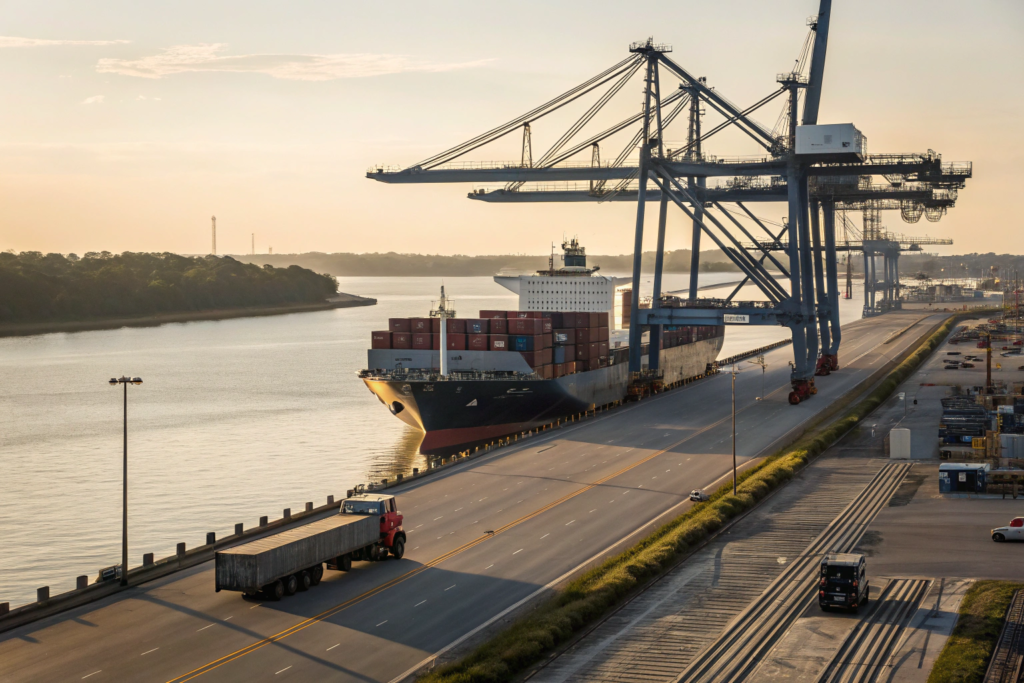
The U.S. East Coast has a string of excellent container ports, each with its own hinterland and its own strengths. The Port of Savannah is the fourth busiest container port in the United States and a powerhouse for Southeast distribution. The Port of New York and New Jersey is the gateway to the largest consumer market in the country. Norfolk, Charleston, and Jacksonville each serve regional niches with efficiency and growing capacity.
The best East Coast port for your shipment depends on your final destination: Savannah is optimal for the Southeast including Georgia, Florida, Alabama, and the Carolinas; New York/New Jersey is optimal for the Northeast and Mid-Atlantic; and Norfolk serves the Mid-Atlantic and parts of the Midwest with strong rail connections.
Savannah has become our most frequently used East Coast gateway for clients with Southeast distribution. The port has invested heavily in container yard capacity and on-dock rail. The trucking radius covers a huge swath of the South. The port is well-managed, and our experience with clearance and delivery times there is excellent. New York/New Jersey is the indispensable gateway for the Northeast. The local delivery market is massive. The port does experience congestion due to the sheer density of the region, but the infrastructure is robust. We use Norfolk for clients in the Mid-Atlantic, including Virginia, Maryland, and the DC area. Norfolk has excellent rail connections to the Midwest, making it a viable East Coast alternative to LA/LB rail for some Chicago-bound cargo.
How does the Port of Savannah compare to the Port of New York for transit time and cost?
Savannah is geographically further south and further from the open ocean than New York. A vessel from China typically reaches Savannah a day or two after it would reach New York on an East Coast all-water service. The difference is marginal.
The cost difference is more pronounced. Port charges and trucking costs from Savannah to Southeast destinations are lower than from New York. For a warehouse in Atlanta, Savannah is the clear winner. For a warehouse in Boston, New York is the better choice. We do not arbitrarily assign a port. We map the final destination and select the port that minimizes the inland leg cost and time. This is basic freight optimization, but it requires a forwarder who is comfortable and experienced with multiple East Coast gateways. We are.
When should you consider Gulf Coast ports like Houston or Mobile?
The Gulf Coast ports serve a specific geography. Houston is the primary gateway for Texas and the surrounding region. For an importer with a warehouse in Dallas, Houston is an excellent choice. The all-water transit from China to Houston is comparable to the East Coast, and the inland trucking or rail to Dallas is short and cost-effective.
Mobile is a growing container port serving the central Gulf Coast and providing an alternative to congested East Coast gateways for some inland destinations. We evaluate Gulf Coast ports when the final destination is in Texas, Louisiana, or the lower Midwest. The port options are there, and we use them when the data supports it. The key is to have a logistics partner who does not just default to Los Angeles for everything. GeeseCargo does not default. We analyze and we optimize.
Conclusion
Ron, my apparel client with the new Atlanta retail buyer, took my recommendation and split his volume. His West Coast and Midwest-bound goods still flow through Los Angeles and Long Beach. His Atlanta-bound goods now sail through the Panama Canal and into Savannah. His average total landed cost per container has dropped by $1,200 on the Atlanta-bound shipments, and his delivery time to that buyer’s distribution center has improved by three days. He did not have to change factories. He did not have to change his product. He simply made a smarter port choice, and his logistics partner, us, had the capability to execute it.
The West Coast versus East Coast port decision is not a one-time choice that you set and forget. It is a recurring optimization that should be revisited as your customer base shifts, as port conditions change, and as freight rates fluctuate. At GeeseCargo, we make this optimization part of our standard service. We do not lock you into a single routing because it is convenient for us. We route your cargo through the port that delivers the best combination of time and cost for that specific shipment to that specific destination.
If you are importing from China and your freight forwarder has never discussed port routing strategy with you, or if you have always defaulted to Los Angeles without knowing why, I invite you to send me your current destination addresses. I will prepare a total landed cost and transit time comparison for West Coast, East Coast, and Gulf Coast routing options. You will see exactly what each option costs and how long it takes. Then you will choose, with data, not with habit. That is the professional way to manage your supply chain. That is GeeseCargo.