You are shipping from China to Europe. You have two choices. Air freight is fast but incredibly expensive. Ocean freight is cheap but painfully slow. You feel stuck. You cannot afford the air price, but your customers will not wait for the ocean transit. You need a middle option. You have heard about the China-Europe rail freight, but you are not sure if it actually works. You worry about reliability. You worry about cost. You worry that it is just a gimmick.
Yes, GeeseCargo’s rail freight service from China to Europe can cut your total logistics costs nearly in half compared to air freight. It delivers in about 18 to 22 days, which is twice as fast as ocean freight and about 40% cheaper than air freight. It is the perfect balance for mid-weight, high-value goods.
I have been running rail freight shipments since the Belt and Road routes became stable. I know the terminals in Xi’an, Duisburg, and Hamburg. I know where the bottlenecks are and how to avoid them. In this article, I will walk you through the real math of rail versus air versus ocean. I will explain exactly what types of cargo fit this mode. And I will give you a transparent look at what we charge and why it might be the smartest logistics decision you make this year.
What Makes China-Europe Rail Freight a True Middle Option?
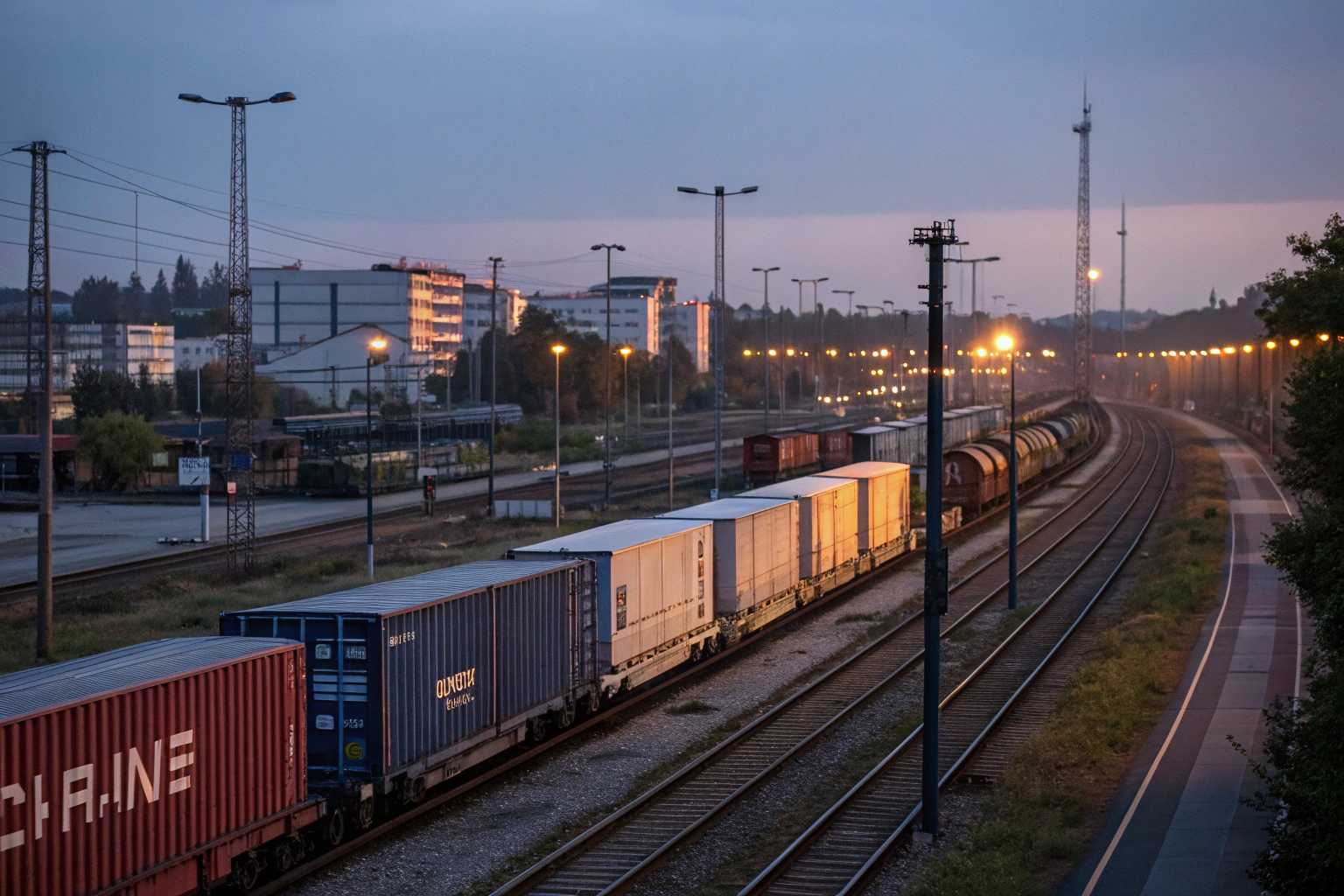
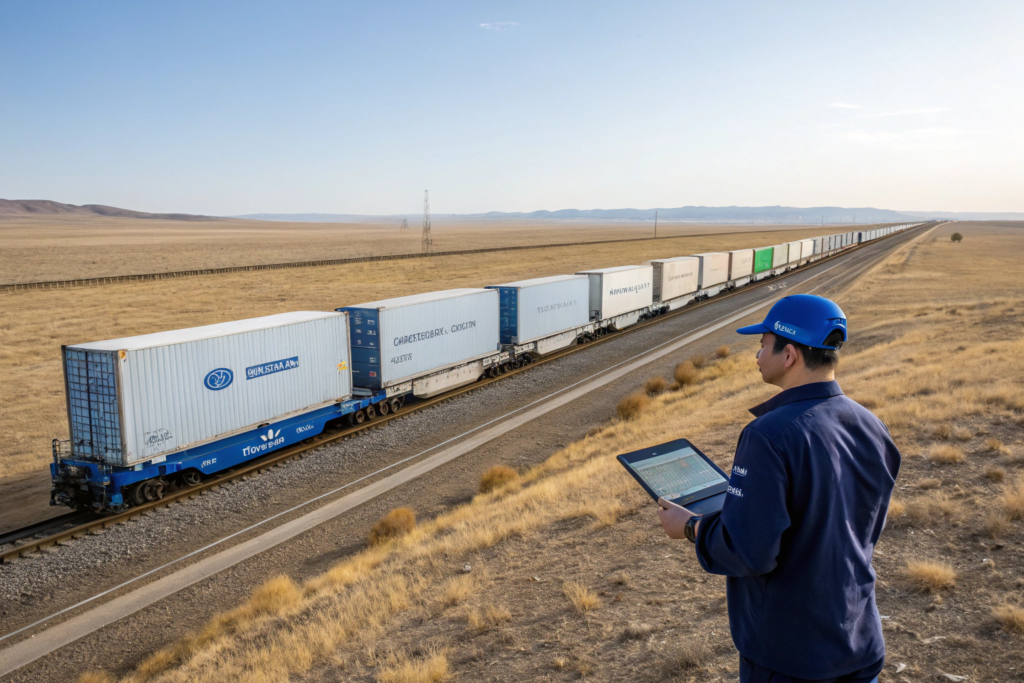
For years, logistics was binary. You flew it or you floated it. Rail freight has changed that equation permanently. It sits in the sweet spot where cost and speed intersect. A train from Xi’an to Duisburg takes about two weeks. It covers 10,000 kilometers. It crosses Kazakhstan, Russia, Belarus, and Poland before entering the European Union. It is not a theoretical concept. It is a daily reality that thousands of containers use every week.
Ocean freight from Shanghai to Hamburg takes about 35 to 42 days. Air freight takes 5 to 7 days. Rail freight takes 18 to 22 days door-to-door. The time savings versus ocean is enormous. You cut three weeks out of your supply chain. That means you can react to market demand faster. You can hold less inventory in your European warehouse. You can ship seasonal goods closer to the sales window.
How Does the Rail Transit Time Compare to Express Ocean Services?
Some ocean carriers offer "express" services that promise 28 days from China to Europe. They transship at fewer hubs and run faster vessels. But these services still have to go around the Cape of Good Hope or through the Suez Canal. They are subject to canal disruptions and weather delays. A vessel arriving two days late to the transshipment port can add a week to the schedule.
Rail freight runs on a fixed timetable. The trains depart on a schedule, just like passenger trains. The departure time from Xi’an is fixed. The border crossings in Kazakhstan and Belarus happen on schedule. We know the exact arrival time at the European terminal within a one-day window. This reliability allows you to plan your trucking and warehouse labor precisely. The China-Europe Railway Express service has matured significantly. It is not an experiment anymore.
What Types of Cargo Are Perfect for the Rail Corridor?
Rail works best for goods that have a high value relative to their weight but are not time-critical enough to justify air freight. Think about electronics, automotive parts, machinery, clothing accessories, and high-end gifts. If your product fits in a standard container and is worth more than $50 per kilogram, rail starts to look very attractive.
Liquid products, dangerous goods, and extremely heavy industrial equipment are not suitable. The train moves and shakes. The temperature varies across the route. We use temperature-controlled containers for sensitive items. We avoid rail for fragile products that cannot handle vibration. But for a container of branded fashion accessories or consumer electronics, the rail corridor is a dream.
How Does the Cost of Rail Freight Actually Compare to Air Freight?
This is the question that gets my clients to switch. Air freight is astronomical, especially during peak seasons. Rail freight offers a significant discount. The savings are not marginal. They are transformational for your product margin. You go from losing money on logistics to making a healthy profit.
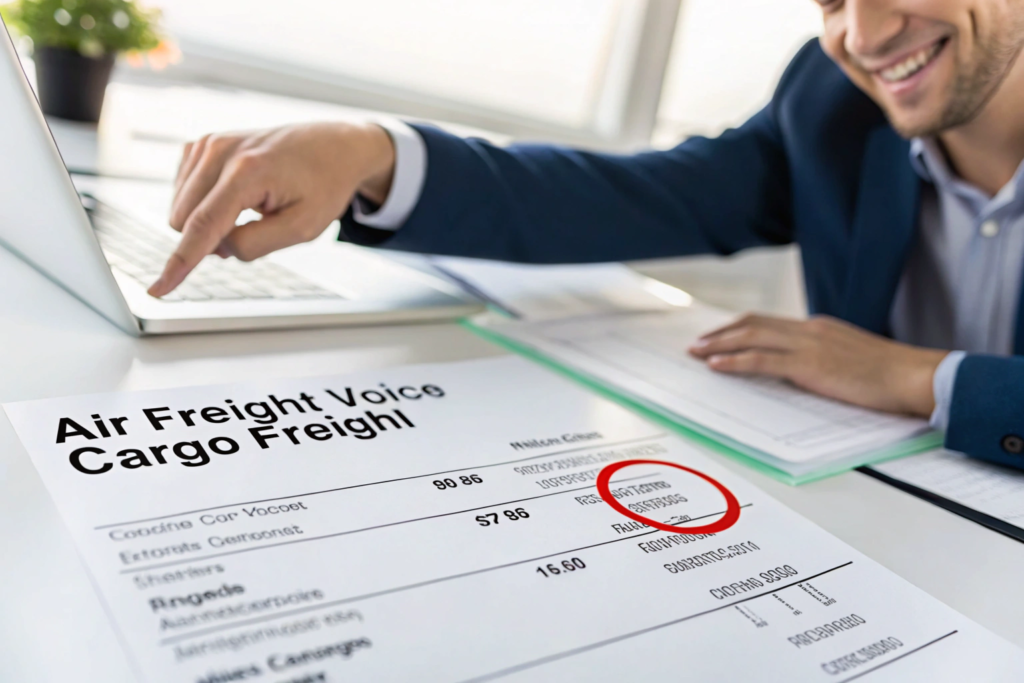
A typical air freight shipment from Shanghai to Frankfurt costs around $4.00 to $6.00 per kilogram. A rail freight shipment for the same route costs around $1.80 to $2.50 per kilogram. On a 500-kilogram shipment, air freight might cost $2,500. Rail freight costs $1,100. You save $1,400. Multiply that by ten shipments a year, and you have saved $14,000. That is real money back in your business.
Can Rail Really Be 50% Cheaper Than Air Freight for Your Product?
Yes, but the exact percentage depends on the weight and volume of your cargo. Air freight charges based on the greater of actual weight or volumetric weight. Rail freight is more forgiving. It follows standard container logic. You are paying for the space in a container, not the kilogram rate. If your goods are light but bulky, air freight kills you with volumetric charges.
For a shipment of puffer jackets, the volumetric weight is high. Air freight would charge for a much heavier shipment than the actual weight. Rail freight just counts the container space. The savings on bulky fashion items can exceed 60% compared to air. I run this calculation for my clients during the quoting process. I show you the air quote, the rail quote, and the ocean quote side by side. You see the full picture and make an informed decision.
What Are the Hidden Costs in Air Freight That Rail Avoids?
Air freight has high security screening fees. It has fuel surcharges that fluctuate wildly. It has terminal handling charges at crowded airports like Frankfurt and Amsterdam that can exceed $300 per shipment. Then there is the trucking from the airport to your final destination, which is often far from the air hub.
Rail freight terminals in Duisburg and Hamburg are connected directly to the European road and barge network. The trucking distance from a rail terminal to a distribution center in Germany is often shorter than from an airport. The handling fees are lower. The security requirements are less stringent. The overall landed cost advantage of rail is not just the freight rate. It is the entire door-to-door package. At GeeseCargo, our DDP rail quotes include everything. No hidden air terminal fees.
How Does Rail Freight Compare to Ocean Freight in 2024?
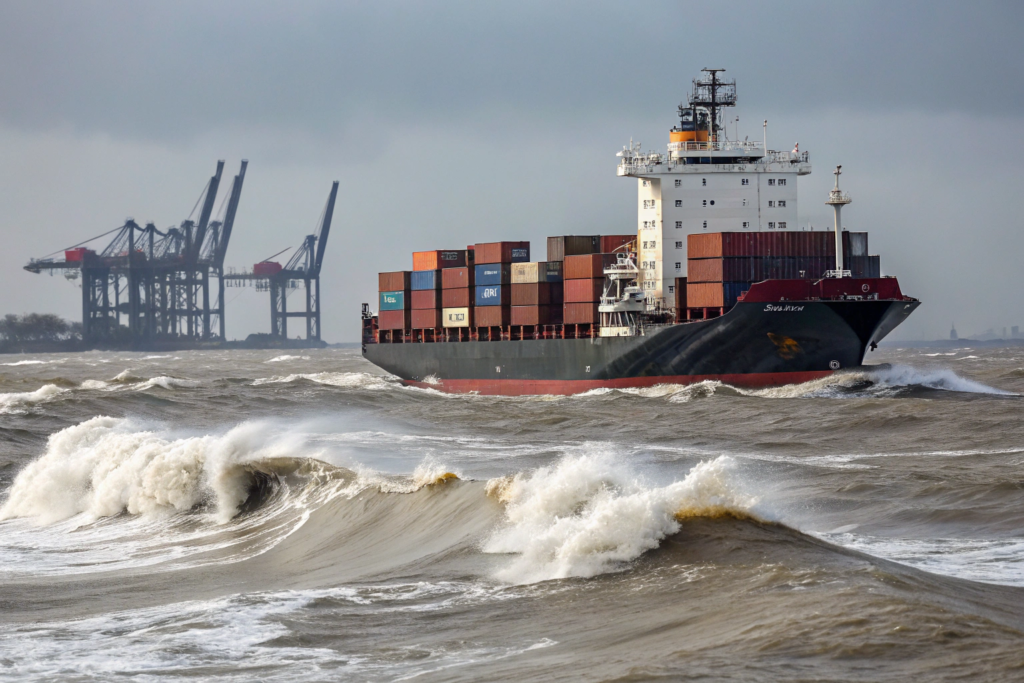
Ocean freight is still the king of low cost per unit. You cannot beat a 40-foot container from Shanghai to Rotterdam for a few thousand dollars. But that cheap price comes with a massive time penalty. In 2024, ocean reliability is still suffering. The Red Sea situation has forced vessels around Africa. Transit times are longer and less predictable.
Ocean freight from China to Europe now regularly takes over 45 days door-to-door. That is seven weeks of your cash tied up in a container on a vessel. If you are a growing brand, you cannot afford to have your capital locked up for that long. Rail freight frees your cash flow. You receive the goods, sell them, and reinvest the money while the ocean container is still floating past Morocco.
How Much Inventory Holding Cost Can Rail Freight Save You?
Let us do the math with a real example. You have a shipment valued at $60,000. Your annual cost of capital is 10%. Every day the goods are in transit, they cost you about $16.44 in interest. If ocean takes 45 days and rail takes 20 days, rail saves you 25 days of transit time. Twenty-five days multiplied by $16.44 is $411 in pure interest savings.
But the bigger saving is inventory availability. If your product sells for a 100% markup, being in stock 25 days earlier means you generate sales 25 days earlier. You capture revenue you would have missed completely. The opportunity cost of lost sales almost always dwarfs the difference in freight rates. I consult with my clients on this specifically. We look at your sales velocity. We calculate the true cost of a stockout during those 25 days. Rail almost always wins.
What Happens When Ocean Transit Time Becomes Unpredictable?
Ocean carriers have blanked sailings. They cancel vessels at the last minute to manage capacity. Your container gets rolled to the next sailing. A 35-day promise becomes a 50-day reality. Retailers do not accept unpredictability as an excuse. They demand the goods on the shelf.
Rail schedules are managed by state-owned railway companies in China and Europe. They do not cancel trains to increase prices. The schedule is the schedule. If we book space on a train, the container departs on that train. This operational certainty is priceless when you have committed delivery dates to customers. I sleep better knowing my clients’ goods are on a train, not sitting at a congested port waiting for a vessel that might not come.
What Are the Different Rail Routes and Which One Should You Choose?
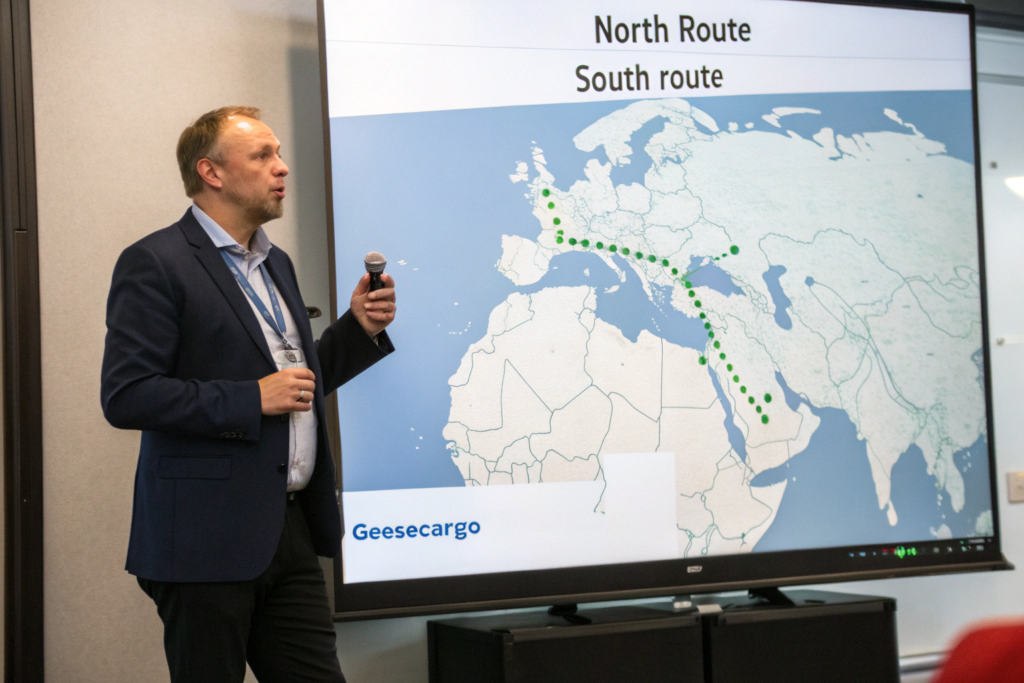
There are several corridors from China to Europe. The Northern route goes through Russia. The Southern route goes through Kazakhstan and the Caspian Sea. Each has different transit times, costs, and risk profiles. You need to understand the options before you choose.
The primary route for most of our clients is the main corridor from Xi’an, through the Khorgos gateway on the China-Kazakhstan border, then across Kazakhstan, Russia, Belarus, and into Poland at Malaszewicze. From there, the containers move into the European rail network to Duisburg, Hamburg, or Tilburg. This route is the most mature and has the highest frequency of departures.
What Is the Trans-Caspian Route and When Does It Make Sense?
The Trans-Caspian route avoids Russia entirely. It goes through Kazakhstan to the port of Aktau, crosses the Caspian Sea by ferry to Baku in Azerbaijan, then continues by rail through Georgia and Turkey into Europe. This route is politically safer for some clients but is slower and more complex.
The ferry crossing adds unpredictability. The Caspian Sea has rough weather in winter. The infrastructure in the Caucasus is still developing. We only recommend this route if you have specific compliance requirements that prohibit transit through Russia. For most commercial cargo, the main northern corridor is faster and more reliable.
How Does GeeseCargo Manage the Russia Sanctions Compliance?
This is the most critical question for European importers. Our rail shipments transit Russia, but the goods are in transit to the European Union. Transit is permitted under current sanctions regulations. We provide full documentation proving the goods entered the EU and were not diverted to Russia. We file the necessary transit declarations. We work with European customs authorities to ensure full compliance.
We screen every buyer and every consignee. We check the product descriptions against the restricted dual-use goods list. We do not ship anything that could have a military application. We reject cargo where the ownership is unclear. This compliance work is built into our service. You do not need to become a sanctions expert. We do that for you.
How Does GeeseCargo Handle the First and Last Mile for Rail Freight?
The train moves between rail terminals. But your factory is not at the Xi’an terminal, and your customer is not at Duisburg station. The first mile and the last mile make or break the rail freight experience. Trucking, consolidation, and terminal coordination are where inexperience shows.
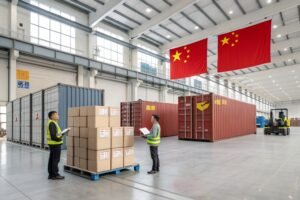
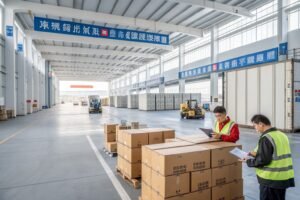
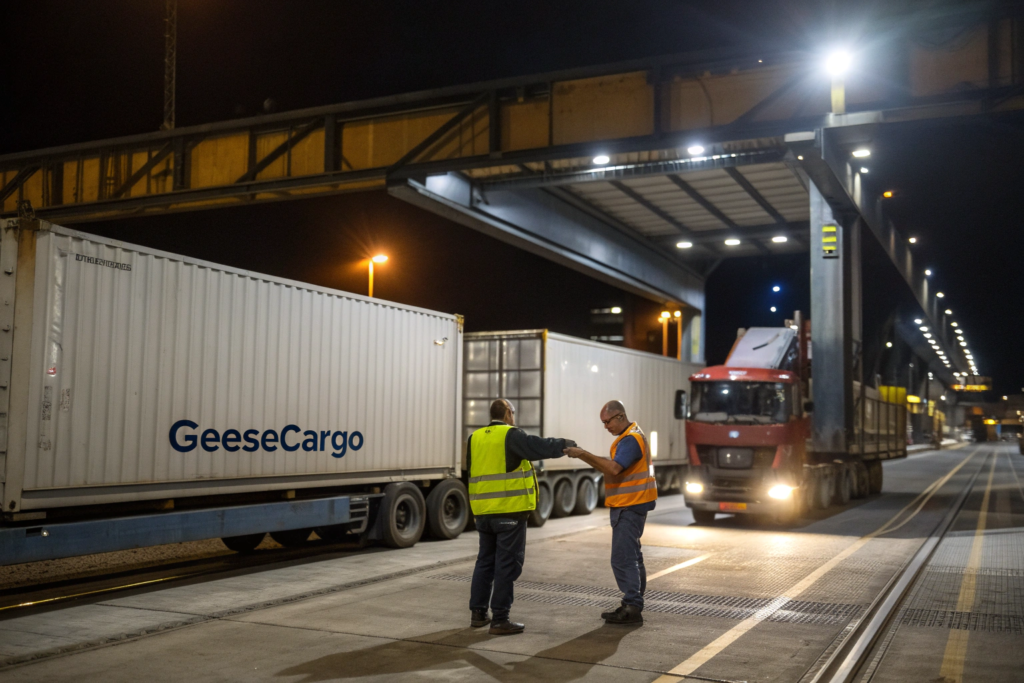
We operate consolidation warehouses in Xi’an and other major Chinese rail hubs. Your factory delivers the goods to our warehouse. We check the packing, consolidate with other shipments if needed, and load the container under our supervision. We handle the export customs clearance at the rail terminal. In Europe, our partners meet the train. They unload the container. They clear import customs using our pre-filed documents. Then a truck delivers the goods to your final address.
Can GeeseCargo Provide a True Door-to-Door DDP Rail Service?
Yes, and this is what makes us different. Many rail freight providers only sell station-to-station. They hand you a container in Duisburg and say "good luck." You are left to find your own customs broker and trucker. You lose all the cost certainty you wanted.
Our DDP rail service covers everything. Factory pickup in China. Export clearance. Rail freight. Import customs clearance in the EU. Payment of duties and VAT. Final mile trucking. You get one invoice with one price. You know your landed cost before the container leaves China. This turns rail freight from a complex project into a simple shipping option.
How Does Customs Clearance Work at the EU Rail Border?
The train enters the EU at Malaszewicze in Poland or directly at Duisburg. Customs clearance happens electronically while the train is moving. We transmit the entry documents to the country of destination. If your goods are going to a warehouse in France, the customs entry is filed in France. The container moves under a transit procedure from Poland to France.
This is called T1 transit. It allows the container to cross EU borders without stopping for inspection at each one. The bond is secured. The duties are paid at the final destination. We manage this process end-to-end. If customs wants to inspect the container, they typically do it at the destination terminal. We handle the inspection coordination. You are never alone with a customs problem.
Conclusion
Rail freight from China to Europe is no longer a novelty. It is a core logistics strategy for smart importers who need speed but cannot afford air freight. It cuts your costs nearly in half compared to flying. It doubles your speed compared to shipping by ocean. It sits in the middle, but it is not a compromise. It is often the optimal solution for medium-weight, high-value products like electronics, branded clothing, and seasonal gifts.
At GeeseCargo, we have the experience and the network to make rail freight as simple as any other mode. We give you a DDP door-to-door price. We manage the complex border crossings and sanctions compliance. We track your container across Kazakhstan and Russia. We clear your goods into the EU while the train is still rolling. You receive the goods at your warehouse door 20 days after they leave China, with no surprises and no stress.
If you are currently air-freighting goods that could travel by rail, you are leaving money on the table. If you are ocean-freighting goods and losing sales due to long lead times, rail can unlock new revenue. I invite you to test the math. Reach out to GeeseCargo with the details of your next shipment from China to Europe. We will provide a comparison quote for air, ocean, and rail. You will see the savings clearly. And you will finally have a logistics solution that fits perfectly between fast and cheap.