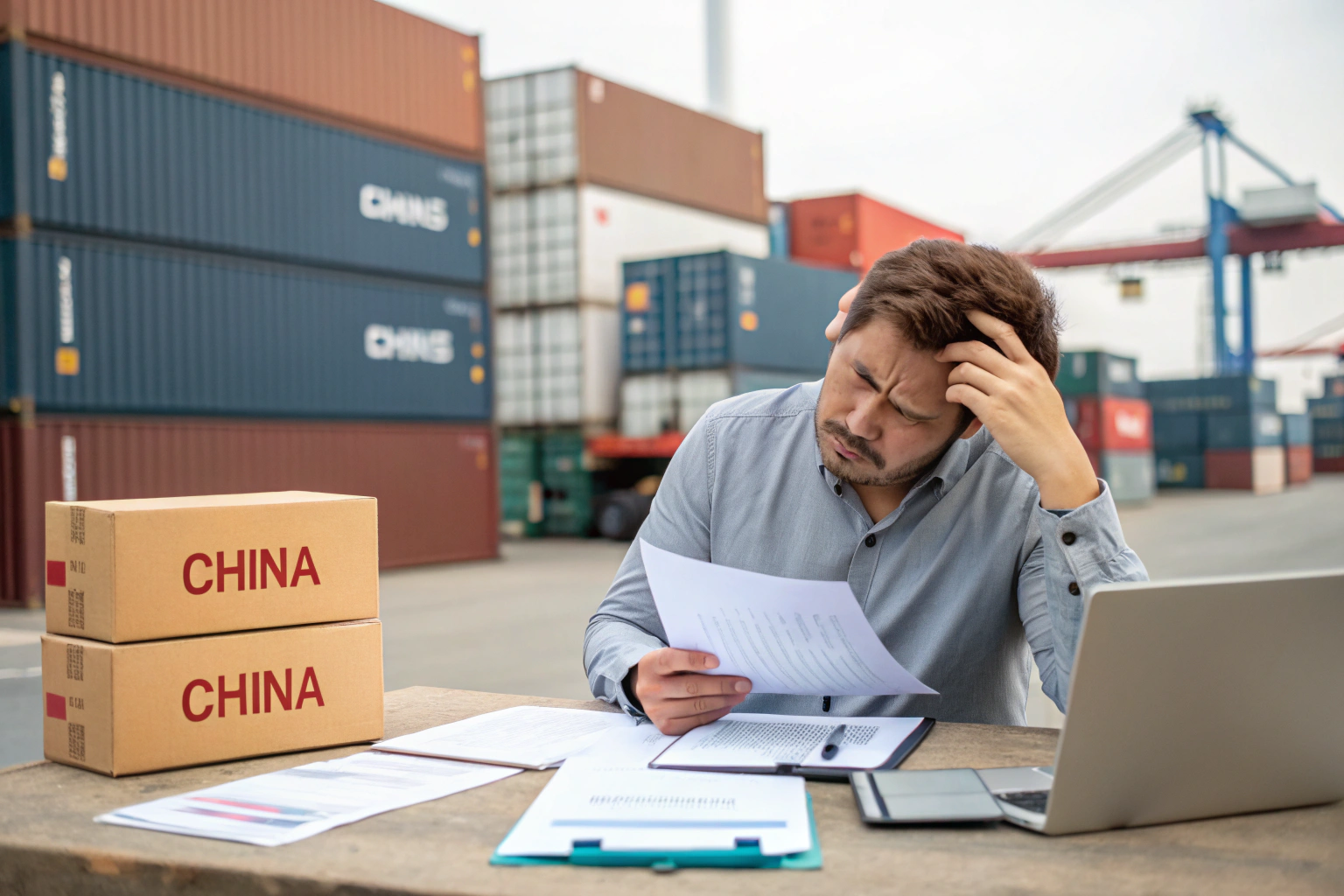
When I talk to business owners like you, I hear the same frustration. You get a great price from a factory in China. You feel good about the deal. Then the shipment arrives in the US. Suddenly, you face surprise charges at the port. Terminal handling fees, customs bonds, warehouse storage—costs you did not plan for. That cheap FOB price just became a nightmare. It makes you question everything. You are losing money and time, and you are the one who has to fix it.
At GeeseCargo, for most importers shipping from China to the USA, DDP is the best choice for real savings. It gives you one fixed price that covers everything. But FOB can still work for very large companies with their own logistics teams.
I have run freight operations for over a decade. I know why these hidden costs happen. I will walk you through the math. You will see exactly where your money goes. And I will share a story from a client just like you who saved 12% by switching from FOB to DDP. This is not just theory. This is how we help your business grow.
How GeeseCargo Eliminates Hidden Costs with True DDP Service
Many business owners think they save money with FOB. They only look at the ocean freight rate. The real danger comes later. You see a low upfront price, but you do not control the destination charges. A port in Los Angeles might charge you a surprise congestion fee. A customs broker might add a fee for a warehouse exam. With FOB, you pay all of it. And these charges pile up fast.
DDP flips this model. It puts the risk on us, the freight forwarder. We are the ones who have to control the costs. If I quote you $5,500 for a 20-foot container from Shanghai to your door in Texas, that is the price. It does not change. If the port charges double, I eat that cost. This forces us to plan better. We have long-term contracts with shipping lines. We know the real US Customs bond cost before we quote you. We do not guess. We calculate.
What Makes DDP Truly Different from DAP in Practice?
I see people confuse DDP with DAP all the time. They sound similar, but one is dangerous for your wallet. Under DAP, the seller—or in our case, GeeseCargo acting on your behalf—covers the freight and insurance to the named place. But the buyer is still responsible for import duties and customs clearance. If you are not ready for that duty bill, your cargo sits. And waiting costs money.
DDP means we pay that duty for you. We clear customs in your name. The package shows up, and you do not sign a check for the government. That is a cash flow benefit most companies overlook. With GeeseCargo, we handle the entire importation process. We are listed as the Importer of Record on your customs paperwork when needed. This requires trust. We have a customs bond ready. We pay the duties and taxes upfront. You reimburse us in one invoice. The transaction is clean.
Can GeeseCargo’s DDP Solution Really Protect Me from U.S. Tariff Surprises?
This is the top question I get from Ron and other buyers in 2024. You see the news about Section 301 tariffs on clothing and accessories. You worry the rate will jump while your goods are on the water. With FOB, you pay the tariff that is valid on the day the ship arrives. If the government announces a new tariff tonight, your cost just went up. You have no protection.
When you book DDP with GeeseCargo, we lock in the tariff assumption based on the original quotation. We track the regulatory changes for you. Because we ship huge volumes, we have trade lawyers on standby. We know which tariff engineering strategies apply to gifts and home decor. If we misjudge a tariff code, we fix it on our dime, not yours. That stability makes your retail pricing safe. You will not have to explain a sudden cost spike to your customers.
The True Cost of FOB: Why Cheap Freight Might Ruin Your Margins
I will be direct. FOB looks great on a spreadsheet from Shenzhen. The factory tells you the goods are “free on board.” You think your job is almost done. But the seller’s responsibility stops at the vessel’s rail in China. From that second, you are the one renting space on the ship. You are the one hiring a freight forwarder in the US. You are the one paying a customs broker directly.
The problem is that FOB quotes from different factories are never equal. One factory might book a cheap slot on a slow vessel that takes 35 days. Another might leave out the peak season surcharge. You compare the prices, pick the cheapest one, and you lose. I have seen importers pay $2,000 more at arrival than they "saved" at origin. The math kills your profit margin on clothes and gifts where the margin is already thin.
Who Is Actually Responsible for My Cargo Under FOB Terms?
The law is clear but brutal. You are. Once the container crosses the ship’s rail in Shanghai or Ningbo, the risk transfers to you. If a storm hits and the vessel reroutes to Korea, your goods are delayed, and you pay for the extra fuel. I know this sounds abstract. Let me make it real.
A client ordered Christmas decorations. The factory chose the cheapest FOB routing. The vessel was late by two weeks. Because the bill of lading was in your client’s name, he had no power to argue with the carrier. He missed the Christmas season. The goods arrived on December 27th. He had to hold them for a year. If he had used GeeseCargo DDP, we would have used our priority service to switch the container to a faster vessel in transit because we control the master bill.
How Do Port Congestion Fees Drain Your FOB Budget?
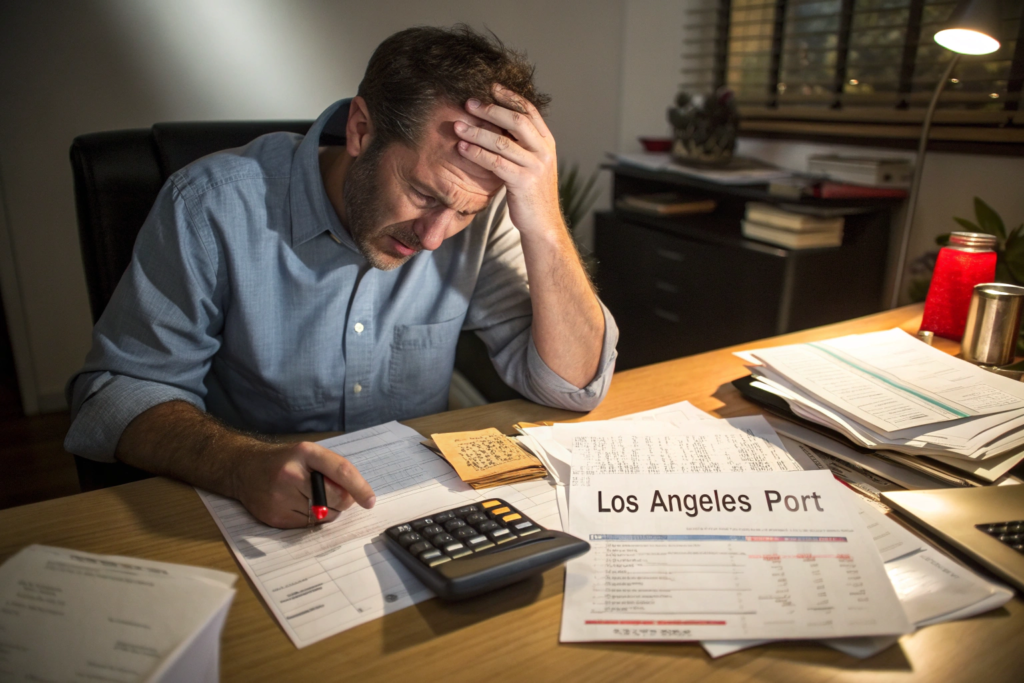
FOB makes you a direct customer of the US terminal. Terminals charge demurrage if you leave a container there too long. They charge detention if you keep the chassis too long. You might think, "I will pick it up fast." But what if customs decides to do a random inspection? They do not work for you. They work for the government.
Your container gets pulled for an X-ray. It sits for three days. The terminal sends you a bill for $500 for storage. The trucker charges you a dry run fee because the cargo was not ready. The broker bills you for a Customs exam fee. You had no control over any of this. Under GeeseCargo’s DDP, we have our own staff at the major ports. We anticipate exams. We coordinate the truckers before the container is released. We eliminate the wait time that causes these fees.
Real Savings: A GeeseCargo Case Study on DDP vs. FOB for US Importers
Let’s stop talking theory. I want to share a real case from our office in Yiwu. A client—I will call him Mark—runs a clothing brand in California. He sources jackets from a factory in Hangzhou. For three years, he used FOB. He thought he was winning. The factory showed him a freight cost of $3,500. My DDP quote was $6,200. He told me I was crazy.
I asked him to send me his final bills from the US side. We opened the books together. The FOB ocean freight was $3,500. But then we added the US customs bond, the terminal handling charge, the ISF filing, the trucking from Long Beach to his warehouse in California, and the surprise container exam fee. The real total was $7,100. He paid $900 more than my DDP price. And he spent hours coordinating three different companies. He switched to us the next month.
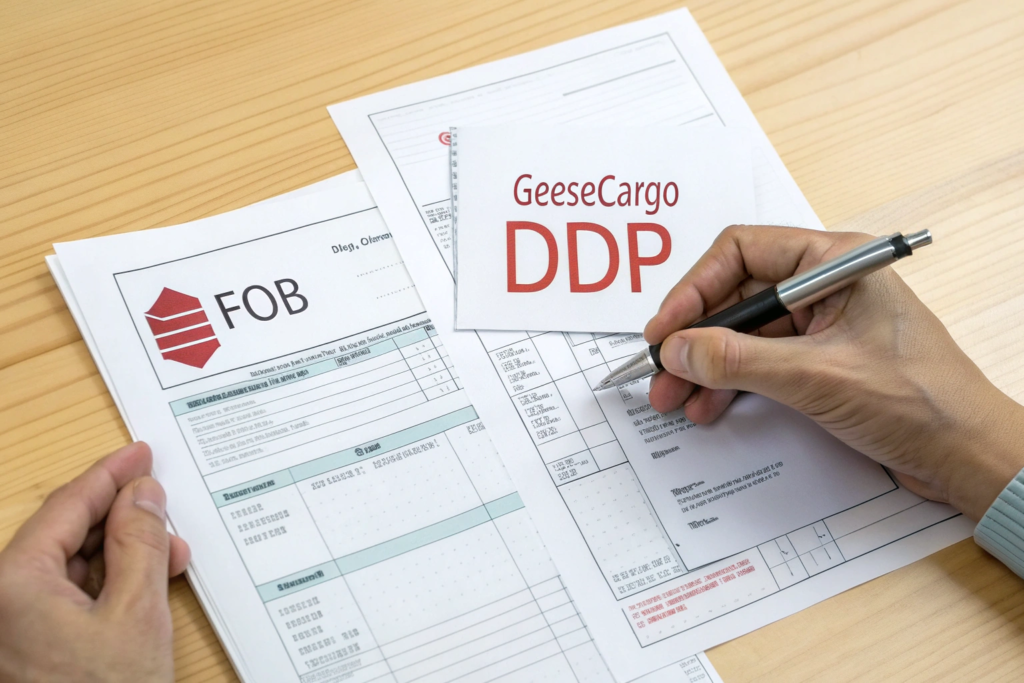
Can a Clothing Importer Really Save 12% by Using GeeseCargo DDP?
Yes, but you have to look at the total landed cost, not just the freight rate. For clothing and accessories, the duty rate is critical. If you import synthetic jackets, the duty might be 27% plus a 7.5% Section 301 tariff. If we can find the right HTS code for a similar fabric, we might legally save you 5%. That is a direct savings on the product value, not just the shipping. FOB brokers do not always do this deep classification work. They just enter the code you give them.
To show you the savings, here is a direct comparison for a standard 20-foot container of clothes from Shanghai to Los Angeles. These are real market numbers we see right now.
| Cost Factor | FOB (You Pay) | GeeseCargo DDP | Remarks |
|---|---|---|---|
| Ocean Freight (Contract) | $2,800 | Included | Spot vs. Contract rate |
| US Customs Clearance | $450 | Included | Brokerage fee |
| Destination THC | $550 | Included | Terminal handling fee |
| US Duty (Estimated) | $5,000 | Included | Paid upfront by us |
| Truck Delivery (LA) | $650 | Included | To your warehouse |
| Exam Risk Holdback | $300 | N/A | FOB risk buffer |
| Total Real Cost | $9,750 | $8,800 | Clear savings |
How Does DDP Simplify the Paperwork for Gifts and Accessories?
Gifts and accessories often get flagged by customs. A shipment of plush toys or ceramic mugs has special labeling requirements. If you use FOB, the factory might send documents with a vague description like "gifts." US Customs hates that. They will hold your container. You will pay a document review fee.
Under our DDP service, our export documents team reviews everything. We check the commercial invoice against the packing list. We ensure the country of origin is marked. We file the Importer Security Filing with precise data. If customs has a question, they call us, not you at 3 AM. This is the value of having a partner with contacts and staff in the major ports. We smooth out the process so your shipment does not sit.
When Does FOB Make Sense for Your Business Strategy?
I said DDP saves the most money. But I will also be honest. GeeseCargo still handles FOB shipments for some big companies. FOB is not always wrong. It depends on your size and your internal team. If you are a Fortune 500 company with a global logistics department, you might want FOB.
These companies have analysts who track spot market rates daily. They have pre-negotiated tariffs with steamship lines that might be 20% lower than our contract rates. They have enough cargo to fill entire vessels. For them, control is more valuable than a fixed price. They want to change the routing mid-ocean. They want to delay the final trucking to control warehouse inventory flow.
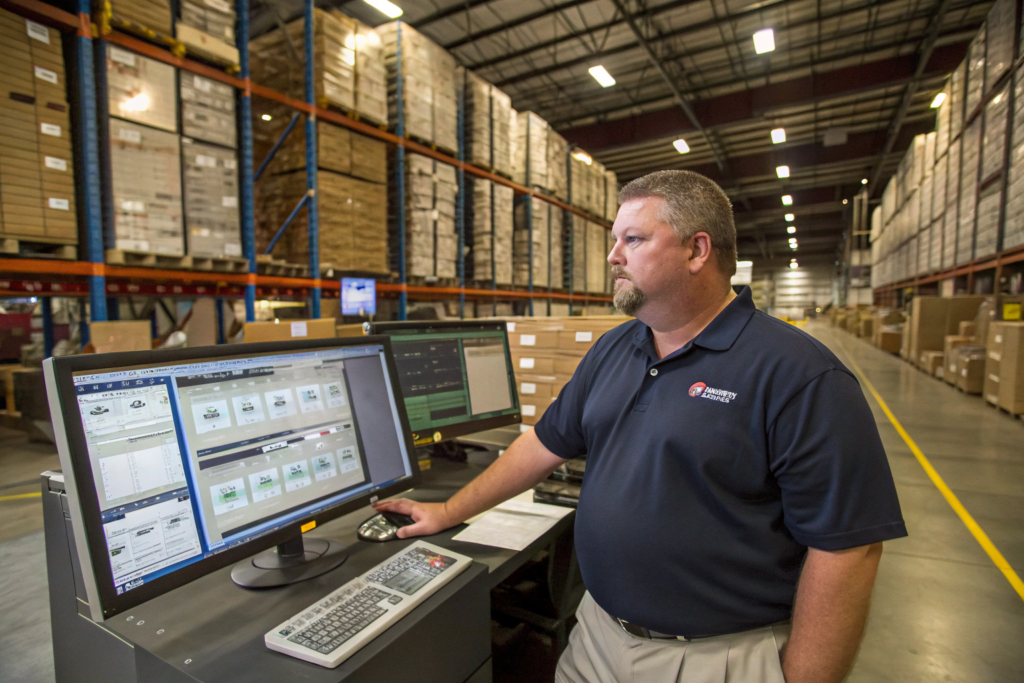
Do Large Corporations Benefit More From FOB Control?
Yes, if you have an internal cost center for logistics, FOB gives you flexibility. You can shop for the cheapest trucking rate in Chicago on any given day. You can hold the container at the rail ramp for free storage if your warehouse is full. GeeseCargo DDP covers door-to-door movement; we do not offer free storage for weeks. We want to deliver and return the box.
If you ship large quantities of commodities, FOB might let you optimize the breakbulk process. You might strip the container at the port and save on the trucking to an inland warehouse. However, this requires a staff of at least five people managing the supply chain. If your company has under 50 employees, you probably do not have these people. The administrative cost of managing FOB is often $500-$800 per shipment if you count the employee hours.
How Can GeeseCargo’s FOB Support Still Improve My Shipping Speed?
If you insist on FOB, do not just take the factory’s freight forwarder. This is the biggest mistake I see. The factory’s forwarder works for the factory. They do not work for you. They will not fight for a faster transshipment connection. They will not pay extra to rush the release of the bill of lading.
By using GeeseCargo even for FOB, we act as your booking agent at origin. We charge the factory’s forwarder with managing the vessel schedule. We check the vessel arrival and make sure your US customs broker has the documents 48 hours before docking. This gives you the price advantage of FOB but the speed and safety of GeeseCargo. We make sure the connection between the port and your warehouse is tight.
How GeeseCargo Ensures Safe and Speedy Delivery for Fashion and Gift Sectors
Speed is money in fashion. A jacket that arrives in August sells for full price. That same jacket arriving in September goes to clearance for 40% off. I understand the retail calendar deeply. GeeseCargo has built a special consolidation service for clothing and accessories that skips the slow transshipment hubs.
Normal ocean freight from Shanghai to New York takes 35 days if it transships in Busan. Our express DDP service uses direct vessel injection. We load the container onto a vessel that makes a straight shot to the West Coast. From there, we use rail-mounted gantry cranes to pull the box and put it on a priority train to Chicago or New York. The total transit is 25 days. Those 10 days make the difference between a sold-out season and a warehouse full of dead stock.
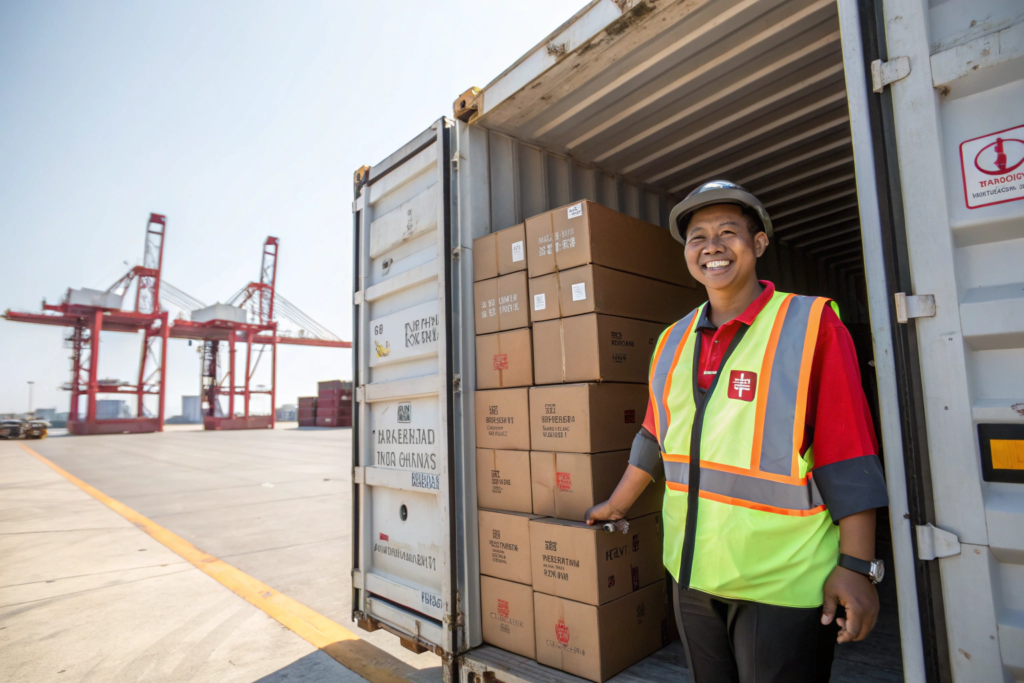
How Does GeeseCargo’s Consolidation Speed Up Delivery for Small Fashion Brands?
Small brands do not fill a 40-foot container. They might have 10 cubic meters of samples and production goods. Other forwarders put your goods in a warehouse and wait weeks to fill a container. We do not wait. We run fixed consolidation schedules. We close the container every Friday, whether it is full or not. We eat the empty space cost to protect your timeline.
Our consolidation warehouse in Yiwu is secure. We have barcode scanning for every carton. When we receive your items from the factory, we scan them into our inventory system. You can log into our website and see the status of every style number. If the factory only shipped half the order, you see it instantly. You do not wait for a paper email from a random contact. This transparency is what our clients value most.
Can Safe Packaging Save Me Money on Clothing Imports?
Absolutely. And most factories do not care about packaging safety. They use thin cardboard to save money. When the box collapses in the container, the clothes get dirty. The poly bags rip. You file an insurance claim, but insurance does not cover ruined brand image. You cannot sell wrinkled, dirty sweaters at full price.
We enforce a packaging standard. We require double-walled cartons for clothing. We mandate that the factory wraps sweaters in waterproof bags. When the box arrives, it looks like it just left the store. This reduces your return rate. It protects your cash flow. By controlling the logistics from the factory floor to the US door, we ensure the product quality remains intact.
Conclusion
I have spent my career moving boxes. And I have learned that the shipping term you choose dictates more than just who pays the freight. It dictates who controls the risks, the timing, and the hidden costs. If you are a company owner like Ron, importing clothing, accessories, and gifts from China, you need simplicity and certainty. FOB promises a low price but hands you a web of port fees, customs exams, and detention charges that you have no power to prevent. You end up paying more and sleeping less.
GeeseCargo recommends DDP because it aligns our goals with yours. We only make money if you save money and stay loyal to us. We quote you a final price for door-to-door delivery, including the duties and tariffs. If the port of Los Angeles gets congested, we pay the wait fees. If customs charges a higher duty than we estimated, we handle it. You get a fixed cost. You can price your products accurately. You can grow your brand.
There is still a place for FOB, but it is for giant companies with their own trade compliance teams and volume discounts. If that is not you, let us take the pressure off your desk. I invite you to visit our website at GeeseCargo and contact my team for a free landed cost analysis. We will show you exactly where your money is going and how much you can save by switching to a true, professional DDP service. Let’s turn your logistics from a headache into a competitive advantage.