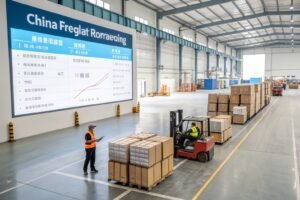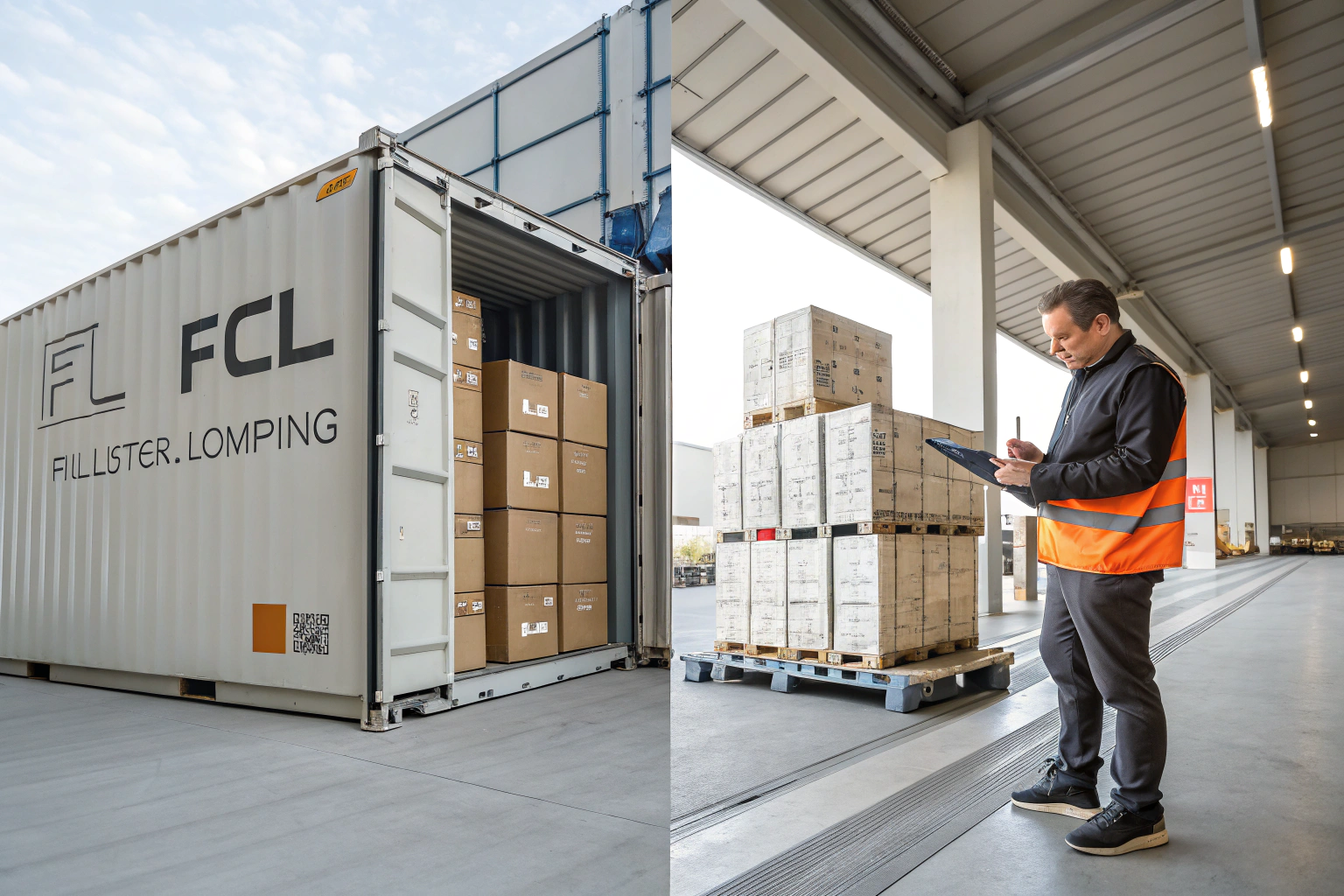
A distributor in Atlanta emailed me last Tuesday with a question I hear constantly. He was shipping 18 cubic meters of giftware from Guangzhou to Savannah and had been quoted both FCL and LCL rates. The LCL quote looked cheaper on paper—$1,850 versus $3,400 for a full container. He was about to book the LCL when I stopped him and asked five questions about his timeline, his product fragility, and his destination handling costs. By the time we finished the math, the "cheaper" LCL option was actually $900 more expensive.
The choice between FCL and LCL is not a simple comparison of two freight quotes. The genuinely cheaper option depends on your cargo volume, your tolerance for transit delays, your product’s fragility, and the destination fees that most forwarders conveniently leave out of their initial estimate. A misleading LCL quote can be a Trojan horse for hidden costs.
At GeeseCargo, I never let my clients make this decision blind. I have managed both FCL and LCL shipments for American importers of clothing, accessories, and gifts for many years, and I know exactly where the hidden costs hide. In this article, I will show you how to calculate the true break-even point between FCL and LCL, expose the fees that make LCL surprisingly expensive, and share the real-world scenarios where each option wins. Let us cut through the sales pitches and look at the numbers.
What Is the True Break-Even Volume Between FCL and LCL Shipping?
Every importer wants a simple rule. "If my shipment is more than X cubic meters, I should book FCL. Below that, LCL is cheaper." I wish it were that simple. The break-even point shifts based on origin city, destination port, commodity type, and the specific fee structures of the consolidation warehouses on both ends.
The true break-even volume for choosing FCL over LCL typically falls between 12 and 18 cubic meters, but this threshold moves dramatically based on destination handling charges, delivery distance from the port, and whether your goods can safely share container space with other commodities. A one-size-fits-all rule will cost you money.
I have developed a calculation method that I use with every client facing this decision. It factors in not just the ocean freight, but the complete door-to-door cost picture. Let me walk you through the two variables that most dramatically swing the break-even point.
How Does Destination Port Location Affect the FCL-LCL Decision?
The destination port is the single biggest factor that distorts the FCL-versus-LCL equation. If your warehouse is in Los Angeles and your LCL shipment deconsolidates at a warehouse near the port, the final delivery cost might be reasonable. But if your goods arrive at a smaller port with fewer consolidation services, LCL costs can explode.
I once analyzed a shipment destined for Kansas City. The LCL quote from Shanghai was attractively low, but the goods had to deconsolidate in Long Beach, then get reloaded onto a domestic LTL truck for the 1,600-mile journey inland. The destination terminal handling, the deconsolidation fee, and the long-haul trucking added so much cost that a direct FCL container railed from Long Beach to a Kansas City intermodal terminal was cheaper, even though the ocean freight component was higher. We always map the full inland journey before recommending a mode, and we reference inland transportation cost benchmarks to ensure our calculations reflect current market rates.
What Hidden Costs Make LCL More Expensive Than It Appears?
This is the trap that frustrates importers the most. The LCL quote looks clean. A per-cubic-meter rate that seems reasonable. But LCL shipments attract a swarm of additional fees that FCL shipments avoid or absorb differently.
At the origin consolidation warehouse, there is a Container Freight Station charge for receiving and loading your pallets. At the destination, there is a deconsolidation fee, a terminal handling charge, a documentation fee, and often a pallet exchange fee if the warehouse requires your goods to be on specific pallet types. If your shipment is small, there may be a minimum charge that far exceeds the per-unit rate. And if customs inspects one pallet in a shared container, the entire container gets held, and the resulting storage charges get distributed among all the LCL shippers. These fees, documented in standard terminal tariff schedules, can easily add 30% to 40% to your initial LCL quote.
Why FCL Shipping Wins for High-Volume Clothing and Accessories Importers
When I onboard a new clothing importer who moves 20 or 30 containers a year, I almost always steer them toward FCL. The math is not even close. But the advantages go beyond simple cost-per-unit calculations. FCL offers control, consistency, and protection that LCL simply cannot match for certain product categories.
Full Container Load shipping delivers lower per-unit costs, faster transit times, and dramatically reduced damage rates for high-volume clothing and accessories importers who prioritize speed to market and product integrity. The container becomes your private, secure corridor from factory to warehouse.
I have seen the difference firsthand. A client shipping delicate garments in LCL had a 6% damage rate from other shippers’ heavy cargo shifting during transit. When we switched them to FCL, the damage rate dropped below 1%. The freight savings alone did not justify FCL; the elimination of lost inventory and customer returns made it essential.
How Does Exclusive Container Use Protect Your Products?
Clothing and accessories are vulnerable. Crushed gift boxes, wrinkled garments, and broken zippers from compression damage are common in shared containers. In LCL, your pallets of soft apparel might share space with someone else’s heavy machinery parts or dense industrial components. The cargo securing is only as good as the weakest pallet in the container.
With FCL, we control the loading entirely. Our team at the factory supervises the stuffing, ensuring that cartons are stacked to prevent shifting and that weight is distributed evenly throughout the container. We apply proper dunnage and strapping techniques that meet cargo securing guidelines for ocean transport. The container is sealed at your supplier’s loading dock and not opened again until it reaches our customs examination site or your warehouse. This unbroken chain of custody eliminates the handling damage that occurs every time LCL cargo is unloaded and reloaded at consolidation points.
Can FCL Actually Be Faster Than LCL Despite the Higher Cost?
The speed advantage of FCL surprises many importers. They assume a container ship moves at the same speed regardless of what is inside. The difference lies not on the water, but in the handling on both ends.
An FCL container goes directly from the factory to the port, through export clearance, onto the vessel, off the vessel, through import clearance, and onto a truck or train. An LCL shipment must first travel to a consolidation warehouse, wait for enough cargo to fill a container, get loaded, and then reverse the process at destination. Each consolidation and deconsolidation stop can add three to seven days to your total transit time. For seasonal clothing with strict delivery windows, this delay can be catastrophic. We track port-to-port transit schedules and consistently see FCL beating LCL on door-to-door timelines by a week or more.
When LCL Shipping Makes More Financial Sense for Smaller Importers
Not every importer needs a full container. If you are a growing brand testing new products, a distributor with limited warehouse space, or a company with a lean just-in-time inventory model, LCL can be the smarter financial choice. The key is knowing when LCL is genuinely cost-effective versus when it is a false economy.
LCL shipping delivers financial advantages when your shipment volume is consistently below 10 cubic meters, when you lack warehouse capacity to receive full containers, and when you prioritize cash flow flexibility over absolute lowest per-unit cost. Used strategically, LCL is a precision tool, not a compromise.
I have clients who thrive on LCL. They ship small batches of high-value accessories every two weeks, keeping their inventory lean and their cash flow fluid. For them, tying up capital in a full container of goods that will take three months to sell is a bigger risk than paying a slightly higher per-unit freight rate.
How Does LCL Support Just-in-Time Inventory Strategies?
Holding inventory is expensive. Warehousing, insurance, and the risk of obsolescence all add carrying costs that can exceed 20% of the inventory value annually. For importers of trendy fashion accessories or seasonal gifts, overstocking is a genuine threat to profitability.
LCL allows you to ship smaller quantities more frequently. Instead of ordering a full container of a single product that might go out of style, you can ship 8 cubic meters of mixed goods every three weeks. This keeps your warehouse lean and your product assortment fresh. The higher freight cost per unit is often offset by lower warehousing costs and reduced markdown losses on unsold inventory. This aligns with modern inventory management principles that prioritize flow efficiency over batch efficiency.
What Questions Should You Ask Before Choosing an LCL Consolidator?
Not all LCL services are equal. The quality of the consolidator determines whether your goods arrive intact and on time, or whether they get delayed, damaged, or hit with surprise fees. Asking the right questions before booking can save you thousands.
I recommend asking your forwarder three specific questions. First, do you operate your own consolidation warehouses or subcontract them? Subcontracted facilities add cost and reduce accountability. Second, what is the minimum chargeable volume for my origin-destination pair? Some consolidators apply a minimum of 3 cubic meters even if your shipment is smaller. Third, what are the exact destination charges, including deconsolidation, pallet exchange, and waiting time? Request the destination terminal’s public tariff schedule and verify it against the forwarder’s estimate. These questions, guided by freight forwarder best practices, will expose whether you are dealing with a transparent partner or one who profits from hidden fees.
How GeeseCargo Helps You Choose the Optimal Shipping Mode
I do not believe in pushing every client toward FCL or LCL. The right choice depends on your specific business model, your cash flow requirements, and your growth trajectory. My role is to provide the data, the analysis, and the transparency you need to make an informed decision—and then to execute that decision flawlessly regardless of which mode you choose.
At GeeseCargo, we analyze your shipment profile across multiple variables—volume, frequency, product type, destination, and urgency—to recommend the mode that minimizes your total landed cost while meeting your delivery timeline. We do not sell containers; we solve supply chain problems.
The process we use with every new client is methodical and transparent. We look at your last six months of shipping data, identify patterns, and build a customized recommendation that often includes a mix of both FCL and LCL depending on the shipment. Here is how we approach that analysis.

What Data Does GeeseCargo Analyze to Make Mode Recommendations?
We start with your shipment history. How many cubic meters per booking? How many bookings per month? What are the seasonal peaks and valleys? We map your origin cities against your destination warehouses and calculate the trucking distances on both ends. We review your product characteristics—fragility, stackability, value per kilogram, and shelf-life sensitivity.
Then we build a comparative cost model. For each shipment size in your typical range, we calculate the complete FCL cost and the complete LCL cost, including every terminal fee, trucking charge, and customs brokerage cost. We overlay transit time data so you can see the speed-versus-cost trade-off clearly. We also factor in your inventory carrying costs and your cost of capital, borrowing from total landed cost methodology principles. This comprehensive analysis often reveals that the optimal mode changes at different points in your seasonal cycle—FCL during peak season when volumes are high, LCL during the slow months when orders are smaller.
How Does GeeseCargo’s Direct Carrier Relationships Benefit Both FCL and LCL Clients?
Our direct contracts with shipping lines benefit every client, regardless of mode. For FCL clients, direct carrier relationships mean guaranteed space allocation during peak season and rates that are insulated from spot-market volatility. We book directly with the carrier’s allocation team, bypassing intermediaries who add cost and reduce accountability.
For LCL clients, our strong carrier relationships translate into priority loading at consolidation points. Because we ship significant aggregate volume, our consolidated containers get loaded onto vessels even when space is tight. We operate our own consolidation programs on major China-to-USA routes, which means we control the schedule rather than depending on a third-party consolidator’s timeline. We also maintain direct communication channels with port authority operations at major U.S. gateways, allowing us to resolve issues quickly when they arise.
Conclusion
The choice between FCL and LCL is one of the most consequential decisions you will make for your import business. Get it right, and you will enjoy predictable costs, reliable transit times, and healthy profit margins. Get it wrong, and you will bleed money through hidden fees, damaged goods, and missed delivery windows.
The break-even point is not a fixed number. It shifts based on your destination, your product type, and your tolerance for transit variability. FCL generally wins for shipments above 15 cubic meters, for fragile or high-value goods, and for time-sensitive deliveries where delays are unacceptable. LCL makes sense for shipments below 10 cubic meters, for businesses that prioritize inventory liquidity, and for those who lack the warehouse infrastructure to receive full containers.
At GeeseCargo, I do not force you into one box or the other. I give you the analysis, the transparent cost breakdown, and the professional execution that ensures your chosen mode performs exactly as promised. Whether you need FCL, LCL, air freight, rail, or our comprehensive DDP door-to-door service, we have the experience, the carrier relationships, and the on-the-ground presence in major Asian and American ports to deliver.
Stop guessing which mode is cheaper. Let us run the numbers together. Visit our website at https://geesecargo.com/ and share your shipment details. We will provide a side-by-side cost analysis that shows you exactly where your money goes and how to save more of it.