When one of our clients discovered 40% of their furniture shipment had structural defects during a pre-shipment inspection, they saved $86,000 in potential returns and customer complaints. As founder of GeeseCargo with extensive quality control experience, I've learned that proper inspections aren't just about catching defects—they're strategic tools that protect your brand reputation and bottom line. Knowing what to expect transforms inspections from cost centers to value generators.
A professional quality control inspection in China should include sample selection based on ANSI/ASQ Z1.4 standards, comprehensive checks for defects and specifications compliance, functional testing, packaging verification, and detailed reporting with photographic evidence. Typical inspections identify 3-8% defect rates in average Chinese manufacturing, with serious issues found in approximately 15% of inspections.
Quality control inspections follow standardized processes but should be customized to your specific product requirements and risk tolerance. The most effective inspections balance thoroughness with practicality, providing actionable insights rather than just problem identification.
What Are the Standard Inspection Types and When to Use Them?
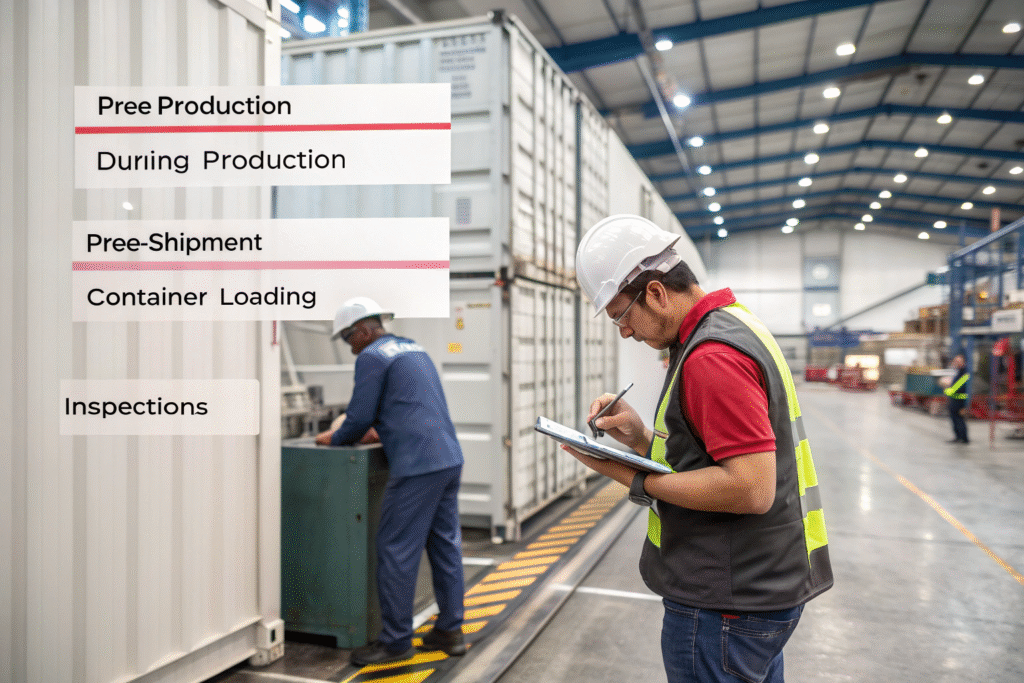
Different inspection types serve various purposes throughout the production timeline, from pre-production through final shipment.
When Should You Conduct Pre-Production Inspections?
Raw material verification ensures component quality before manufacturing begins. This inspection checks materials, components, and sub-assemblies against specifications before production commences, preventing issues before they're built into finished products.
Production readiness assessment confirms factory preparation. The inspection verifies that manufacturing processes, equipment, and staff training are adequate for producing to your specifications.
First Article Inspection validates initial production samples. When the first products come off the line, this inspection confirms that manufacturing processes can consistently produce compliant products.
What's the Value of During-Production Inspections?
Early problem detection allows correction before complete production. Catching issues after 10-20% of production is complete enables process adjustments that prevent widespread defects.
Process verification ensures consistent manufacturing quality. Instead of just checking products, during-production inspections assess whether manufacturing processes remain under control and compliant with requirements.
Corrective action implementation can be verified immediately. When issues are identified, inspectors can verify that corrective actions are effective before additional production occurs.
What Does the Actual Inspection Process Involve?
The on-site inspection follows a structured methodology that ensures comprehensive assessment while maintaining statistical validity.
How Are Samples Selected and Evaluated?
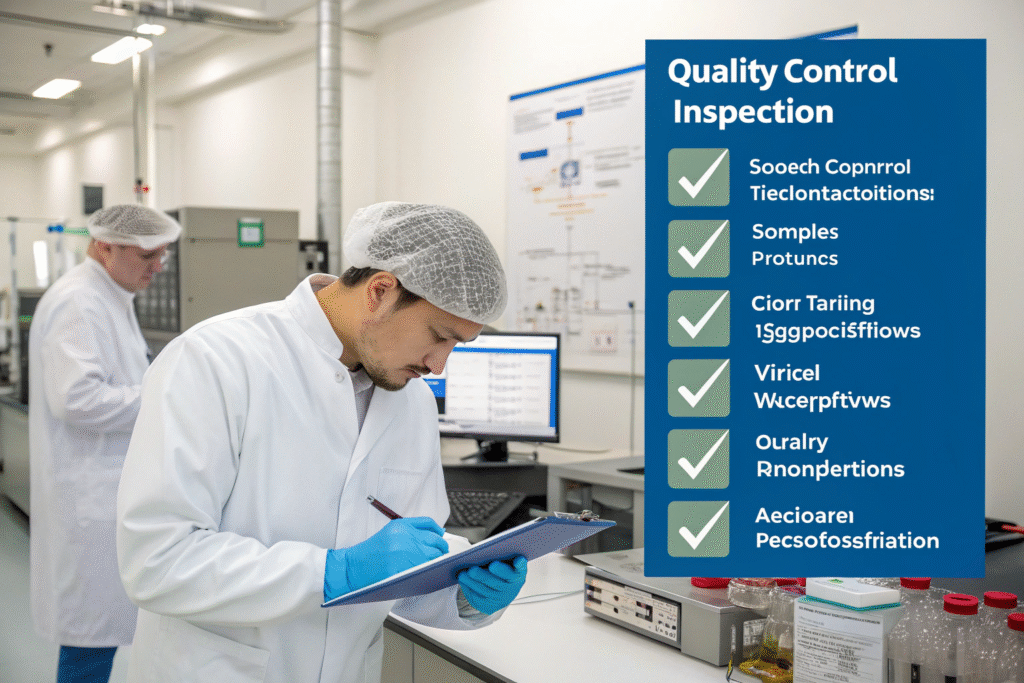
Statistical sampling follows internationally recognized standards. Most inspections use ANSI/ASQ Z1.4 (formerly MIL-STD-105E), which determines sample size based on lot size and Acceptable Quality Limit (AQL).
Defect classification uses critical, major, and minor categories. Critical defects affect safety or function, major defects affect usability, and minor defects affect appearance but not function.
AQL determination sets pass/fail criteria based on defect tolerance. Typical AQL levels are 0 for critical, 2.5 for major, and 4.0 for minor defects, though these should be customized to your product requirements.
What Specific Checks Do Inspectors Perform?
Visual inspection covers appearance, workmanship, and cosmetic issues. Inspectors check for scratches, discoloration, misalignment, and other visible defects against approved samples and specifications.
Measurement verification ensures dimensional accuracy. Using calipers, micrometers, gauges, and other tools, inspectors verify critical dimensions against technical drawings.
Function testing confirms operational performance. Depending on the product, this may include power-on tests, operational checks, safety verification, and performance validation.
What Documentation and Reporting Should You Receive?
Comprehensive reporting transforms inspection observations into actionable business intelligence.
What Essential Elements Should the Inspection Report Include?
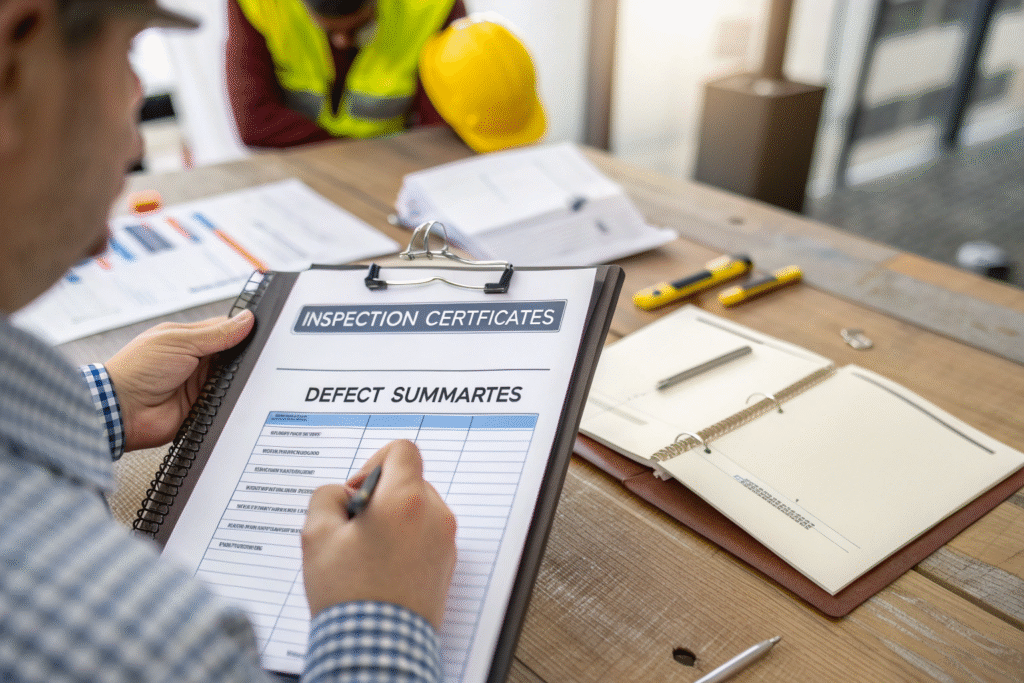
Defect summary with statistical analysis provides quick overview. The report should clearly state the inspection result (pass/fail), defect percentages by category, and comparison to AQL limits.
Detailed defect listing with photographs offers evidence and clarity. Each defect should be documented with photos, description, classification, and quantity found in the sample.
Inspection data and conditions establish context. The report should include inspection date, location, inspector details, sample size, and any special conditions affecting the inspection.
How Should Supporting Documentation Be Presented?
Photographic evidence should be comprehensive and clearly labeled. Photos should show overall production status, specific defects, measurement verification, and packaging conditions.
Checklist completion shows thoroughness of inspection. The report should include completed checklists showing all verification points, not just the problems identified.
Inspection certificate provides formal summary. A signed certificate from the inspection company validates the results for customs, insurance, or business purposes.
What Are Realistic Expectations for Defect Rates?
Understanding typical quality levels in Chinese manufacturing helps set appropriate expectations and inspection criteria.
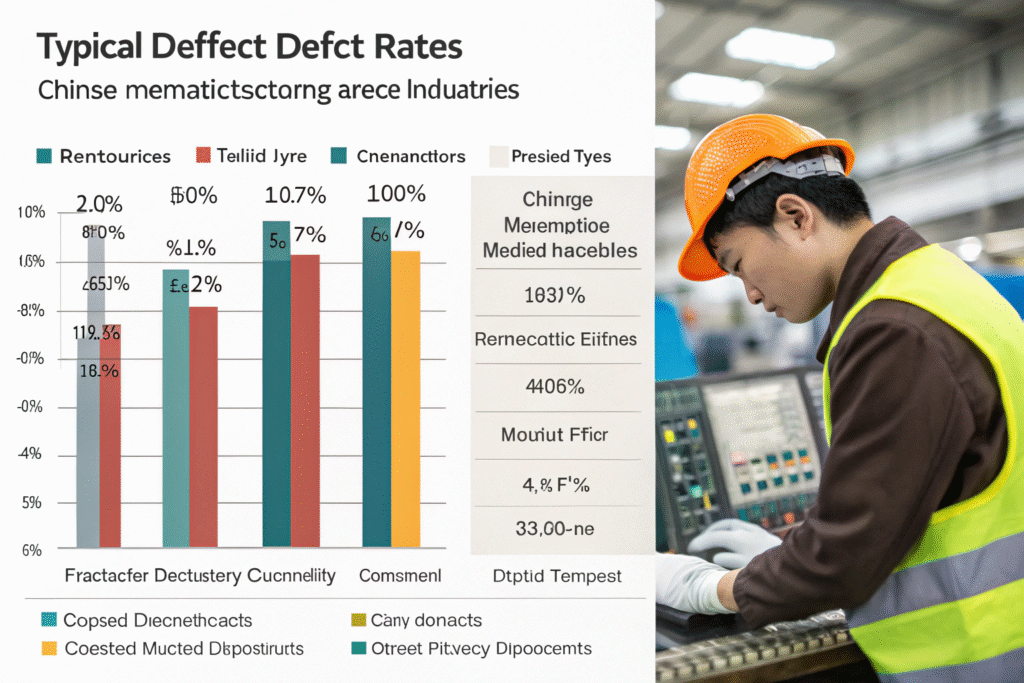
What Defect Rates Are Common in Chinese Manufacturing?
Electronics typically show 2-4% defect rates for major issues. Common problems include soldering defects, component failures, and functional issues, with higher rates for complex products.
Textiles and garments often have 4-8% defect rates. Typical issues include stitching problems, color variations, sizing inconsistencies, and fabric defects.
Hardware and industrial products usually range 1-3% defect rates. Manufacturing consistency is generally higher for metal and mechanical products, though precision components may have tighter tolerances.
How Should You Respond to Different Defect Levels?
Critical defects (safety issues) typically require 100% sorting or production hold. Even a single critical defect usually justifies stopping shipment until the root cause is identified and resolved.
Major defects exceeding AQL levels often necessitate rework or sorting. When major defects exceed agreed limits, options include factory rework, third-party sorting, price negotiation, or in severe cases, order cancellation.
Minor defects within reasonable levels may be acceptable. For non-functional cosmetic issues, businesses often accept minor defects within AQL limits or negotiate minor price adjustments.
How Can You Maximize Inspection Value?
Strategic approaches to quality control transform inspections from simple checkpoints to continuous improvement tools.
What Preparation Enhances Inspection Effectiveness?
Clear technical specifications prevent interpretation disputes. Detailed specifications, approved samples, and clear acceptance criteria ensure inspectors and factories share understanding of requirements.
Pre-inspection communication aligns expectations. Discussing inspection scope, timing, and criteria with both factory and inspection company prevents surprises and conflicts.
Risk-based focus prioritizes critical inspection elements. Identifying high-risk components, processes, or features ensures inspection resources focus where problems are most likely or consequential.
How Can Inspection Results Drive Continuous Improvement?
Root cause analysis transforms defect data into prevention strategies. Working with factories to understand why defects occur enables process improvements that prevent recurrence.
Supplier performance tracking identifies trends and capabilities. Documenting inspection results over time reveals quality trends, seasonal variations, and supplier capability development.
Design feedback loops improve future products. Sharing common defect patterns with product designers enables design modifications that improve manufacturability and reduce defect likelihood.
What Are Common Inspection Challenges and Solutions?
Even well-planned inspections face challenges that require proactive management and practical solutions.

How Can You Handle Factory Resistance or Interference?
Advanced notification and relationship building reduce resistance. When factories understand inspections as collaborative improvement tools rather than punitive measures, cooperation typically improves.
Clear authority documentation establishes inspector rights. The purchase order or supplier agreement should explicitly state your right to conduct inspections and the factory's obligation to cooperate.
Alternative sampling methods address production hiding. When factories attempt to present only good products, random sampling from the complete production lot or surprise inspections can maintain integrity.
What Technical Challenges Might Arise During Inspection?
Specialized testing equipment requirements may exceed standard capabilities. For complex products, arranging specialized testing equipment or laboratory analysis may be necessary.
Environmental condition simulation may be needed for certain tests. Some products require specific temperature, humidity, or other environmental conditions for proper testing.
Technical expertise requirements vary by product complexity. Highly technical products may require inspectors with specific engineering backgrounds or specialized training.
Conclusion
A professional quality control inspection in China should provide comprehensive visibility into your product quality, actionable data for decision-making, and documentation for business protection. The most successful importers treat inspections as integral components of their supply chain management rather than isolated checkpoints, using inspection data to drive continuous improvement and supplier development.
At GeeseCargo, we've helped clients reduce quality issues by an average of 65% through strategic inspection programs that combine proper timing, clear standards, and data-driven supplier management. The key is recognizing that inspections serve multiple purposes—they're simultaneously verification tools, risk mitigation strategies, and improvement mechanisms.
Begin your quality control planning by identifying your highest-risk products and components, then develop a graduated inspection approach that matches verification intensity to product criticality. Remember that in quality management, prevention is always more valuable than detection—but strategic detection provides the insights needed for effective prevention.