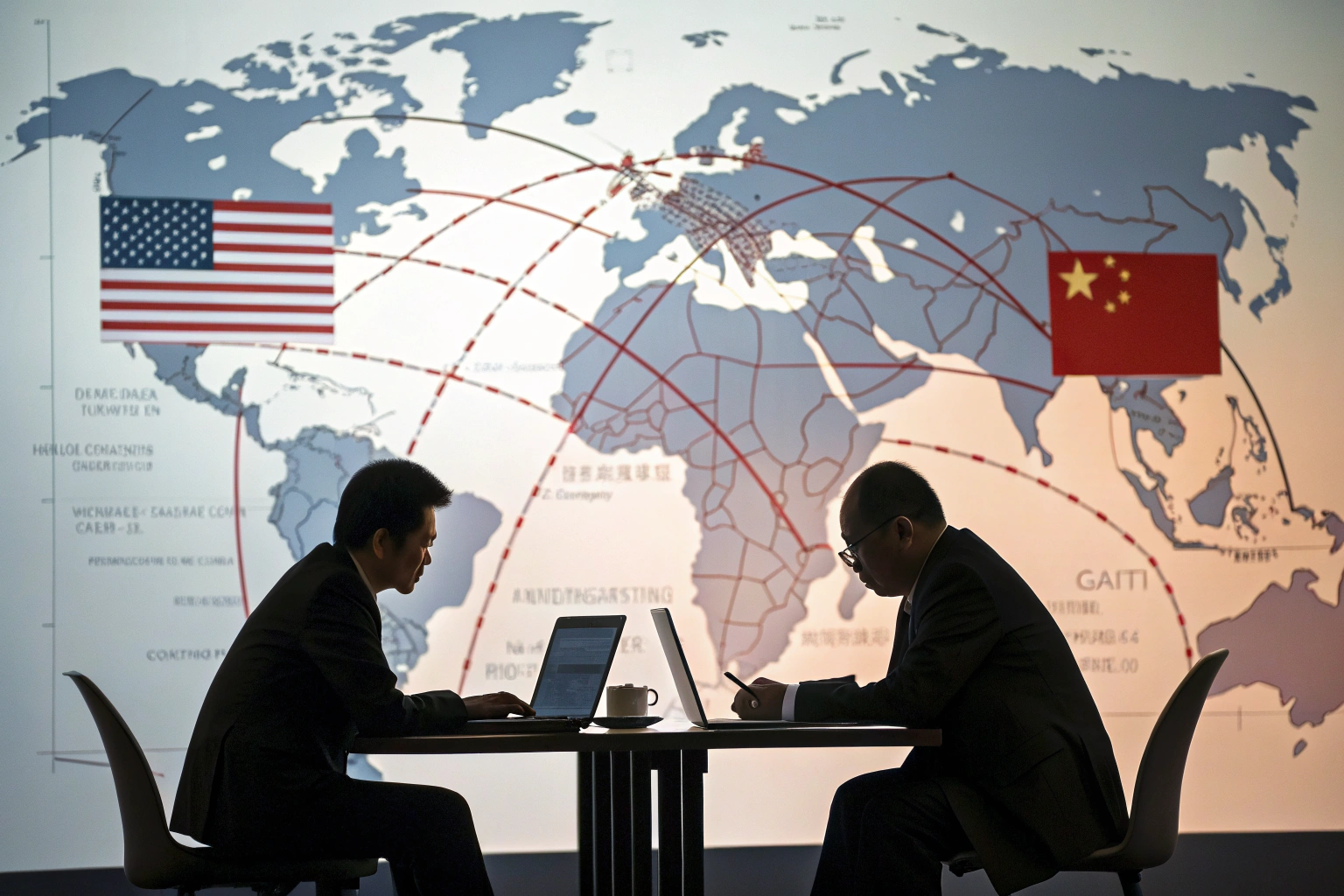
When the US imposed 25% tariffs on $34 billion of Chinese goods in 2018 and China immediately responded with equivalent tariffs, both countries filed WTO complaints that began a complex legal process still unfolding today. As founder of GeeseCargo with extensive experience navigating trade disputes, I've witnessed how WTO mechanisms both resolve and sometimes exacerbate tensions in the world's most significant trade relationship.
The WTO serves as the primary legal forum for adjudicating China-US trade disputes through its dispute settlement mechanism, while simultaneously providing the negotiation platform where both countries attempt to resolve differences. However, the system faces significant challenges addressing non-market economy concerns and national security-based trade measures that characterize modern US-China trade tensions.
The WTO's role has evolved from neutral arbiter to contested battlefield in China-US relations, with both countries strategically using WTO processes while also operating outside them through unilateral actions and bilateral negotiations. Understanding this complex dynamic is essential for businesses navigating the resulting trade uncertainty.
How Does the WTO Dispute Settlement Process Work for US-China Cases?
The WTO's established legal procedures provide a structured approach to resolving trade disagreements, though recent cases have tested the system's effectiveness.
What Are the Key Stages in WTO Dispute Resolution?
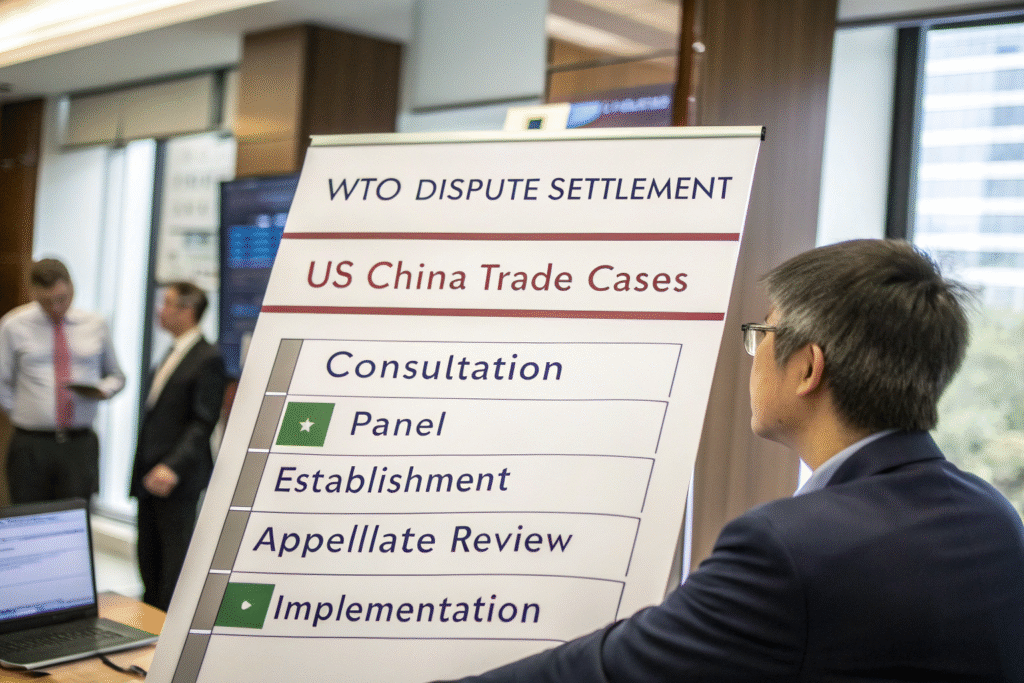
Mandatory consultations require parties to attempt direct resolution. Before formal litigation, disputing countries must hold consultations for at least 60 days, though US-China cases often proceed directly to panels given the depth of disagreements.
Panel proceedings involve neutral examination of legal claims. Three trade experts typically take 6-9 months to examine evidence and issue rulings on whether measures violate WTO agreements.
Appellate review provides final legal determination. Until recently, a seven-member Appellate Body heard appeals of panel decisions, but the US blocking of appointments has crippled this function since 2019.
How Have Specific US-China Cases Progressed Through This System?
The US Section 301 tariffs case (DS543) demonstrated process limitations. China challenged US tariffs before a WTO panel, but the case remains in legal limbo with no functioning Appellate Body to hear potential appeals.
Chinese intellectual property practices case (DS542) showed successful litigation. The US challenged China's IP regime and largely prevailed at the panel stage, though implementation remains partial.
US countervailing duties cases revealed systematic tensions. Multiple cases addressing US methodology for calculating Chinese subsidies have resulted in mixed outcomes and ongoing compliance disputes.
What Are the WTO's Limitations in Handling US-China Conflicts?
Structural and political constraints significantly impact the WTO's effectiveness in managing the world's most complex trade relationship.
How Does the Appellate Body Crisis Affect Dispute Resolution?
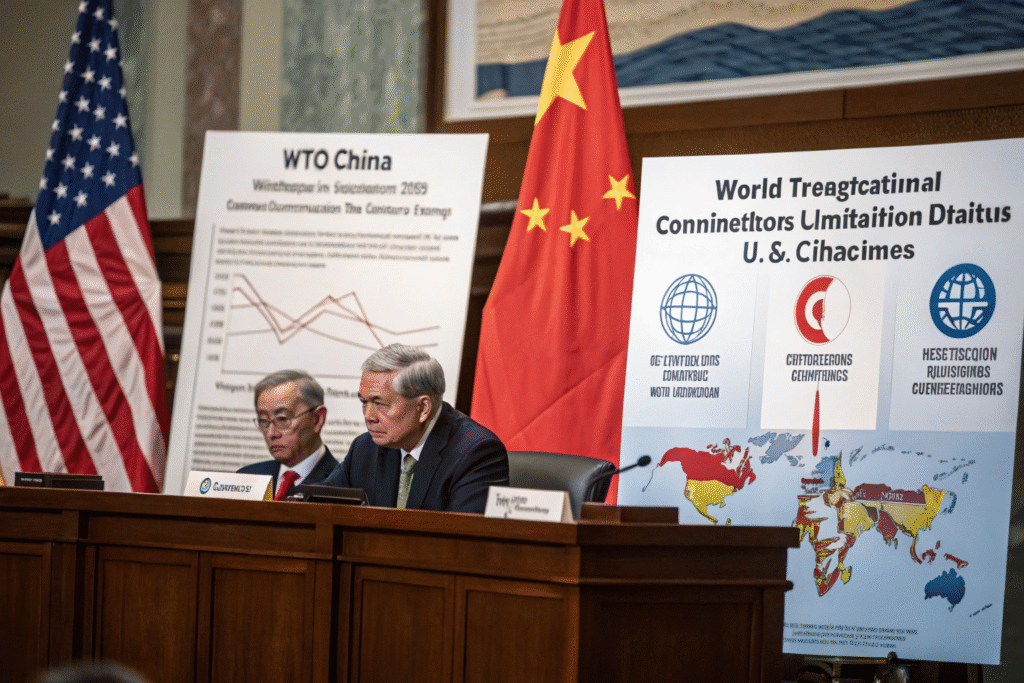
The US blocking of Appellate Body appointments since 2017 has created institutional paralysis. Without a functioning appeals mechanism, panel rulings can be effectively vetoed through appeal into legal void, undermining the entire dispute system.
Alternative arbitration arrangements provide partial solutions. The Multi-Party Interim Appeal Arbitration Arrangement (MPIA) offers an alternative, but neither the US nor China has joined, leaving their disputes in institutional limbo.
Increased unilateral action results from system weakness. With the dispute system compromised, both countries have increasingly resorted to unilateral measures outside WTO frameworks.
What Structural Issues Limit WTO Effectiveness?
Non-market economy concerns aren't adequately addressed in WTO rules. US complaints about Chinese state capitalism and industrial subsidies target behaviors that existing rules don't clearly prohibit, creating legal ambiguity.
Consensus-based decision making prevents rule updates. The requirement for all 164 members to agree on new rules makes updating the rulebook to address modern trade distortions nearly impossible.
National security exceptions provide wide latitude for tariffs. Article XXI national security provisions allow broad discretion that limits WTO review of measures like US Section 232 steel tariffs.
How Do US and China Strategically Use the WTO System?
Both countries approach WTO dispute settlement strategically, using litigation as one tool among many in their broader trade relationship.
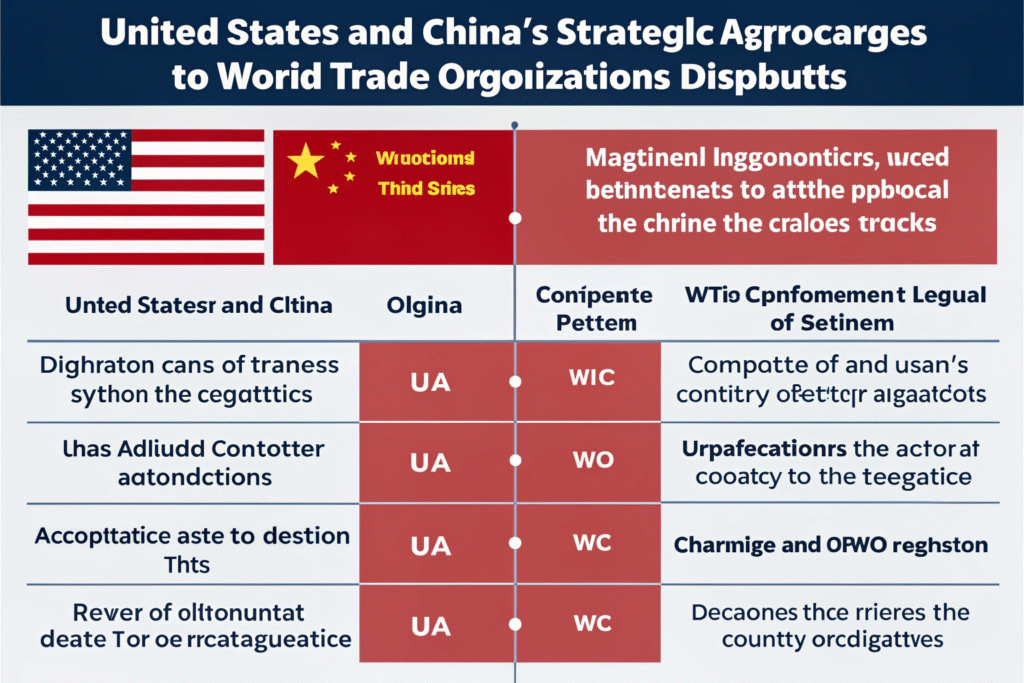
What Characterizes China's Approach to WTO Dispute Settlement?
Frequent defendant role reflects trading pattern asymmetry. As the world's largest exporter, China more often defends against complaints than initiates them, though this is changing as Chinese companies globalize.
Systemic reform advocacy through gradual rule interpretation. China increasingly uses disputes to push for interpretations that accommodate its economic model rather than seeking explicit rule changes.
Selective compliance with adverse rulings balances sovereignty and integration. China typically implements WTO losses partially or slowly, balancing international obligations with domestic policy space.
How Does the US Approach WTO Litigation With China?
Aggressive complainant strategy on intellectual property and market access. The US has filed multiple cases targeting Chinese technology transfer practices, subsidies, and market barriers.
Strategic avoidance of certain disputes to preserve policy flexibility. The US has declined to challenge some Chinese practices to maintain leverage for bilateral negotiations or avoid establishing unfavorable precedents.
Rule-shaping through litigation rather than negotiation. With multilateral negotiations stalled, the US uses disputes to advance its interpretation of existing rules rather than seeking new agreements.
What Alternative Dispute Resolution Mechanisms Exist?
With WTO dispute settlement weakened, both countries have developed alternative approaches to managing trade conflicts.
How Do Bilateral Negotiations Supplement WTO Processes?
Phase One Trade Agreement created alternative enforcement mechanisms. The 2020 agreement established bilateral consultation processes outside WTO frameworks, though many commitments remain unfulfilled.
Working groups and dialogues address specific sectoral issues. Regular meetings on agriculture, intellectual property, and other topics provide ongoing consultation channels separate from formal disputes.
Senior leadership summits enable political resolution of legal impasses. When legal processes stall, presidential and ministerial meetings can break logjams through political agreements.
What Regional and Plurilateral Approaches Offer Alternatives?
CPTPP and other trade agreements provide alternative rule frameworks. Although neither country currently belongs to the same major trade agreements, these frameworks offer potential future dispute resolution options.
Sectoral arrangements target specific trade barriers. Agreements covering areas like financial services or information technology provide specialized dispute resolution outside comprehensive WTO coverage.
Coalition-based approaches build multilateral pressure. Both countries increasingly work through coalitions of like-minded nations to advance their trade policy objectives.
How Do WTO Disputes Impact Business Operations and Planning?
Understanding the practical business implications of WTO disputes helps companies manage uncertainty and optimize supply chain strategies.

What Operational Challenges Result From Trade Disputes?
Tariff uncertainty complicates cost forecasting and pricing. The threat of additional tariffs during dispute resolution periods makes long-term cost calculations and customer pricing increasingly difficult.
Supply chain disruption requires contingency planning. Companies must develop alternative sourcing strategies and inventory buffers to manage potential trade disruption during contentious disputes.
Compliance complexity increases with multiple trade regimes. Navigating both WTO-consistent measures and disputed unilateral actions requires sophisticated trade compliance capabilities.
How Can Businesses Mitigate WTO Dispute Risks?
Supply chain diversification reduces concentration risk. Sourcing from multiple countries and developing flexible manufacturing footprints minimizes vulnerability to any single trade relationship disruption.
Political risk insurance provides financial protection. Specialized insurance products can hedge against potential tariff increases or trade disruption resulting from disputes.
Active government relations shapes policy development. Engaging with trade officials during dispute consultations and implementation phases helps ensure business concerns inform government positions.
What Is the Future of WTO Dispute Settlement for US-China Issues?
The WTO's role continues evolving amid fundamental disagreements about the organization's purpose and function.
What WTO Reform Efforts Might Restore Effectiveness?
Appellate Body compromise could revive the dispute system. Potential compromises involving term limits, judicial overreach concerns, or alternative review mechanisms might break the appointment impasse.
Rule updates could address modern trade distortions. Efforts to develop new rules on industrial subsidies, digital trade, and state-owned enterprises could reduce contentious disputes.
Plurilateral agreements might advance among willing members. Groups of countries pursuing deeper integration on specific issues could create more effective dispute resolution within smaller frameworks.
How Might Bilateral Mechanisms Evolve?
Structured bilateral consultation processes could institutionalize conflict management. Regularized meetings, clear escalation procedures, and technical working groups could provide more predictable dispute management.
Binding arbitration arrangements might supplement WTO processes. The US and China could establish their own arbitration procedures for bilateral disputes, similar to US-EU arrangements.
Sectoral agreements could narrow contentious issues. Focusing on specific sectors where agreement is possible could build trust and establish templates for broader cooperation.
Conclusion
The WTO plays a crucial but increasingly contested role in managing US-China trade disputes, providing essential legal frameworks and dispute resolution mechanisms while struggling with structural limitations and political challenges. The most successful businesses understand both the WTO's processes and its limitations, developing strategies that account for both legal outcomes and the political realities that often supersede them.
At GeeseCargo, we've helped clients navigate the uncertainty created by US-China trade disputes by combining legal analysis, political risk assessment, and supply chain flexibility. The key is recognizing that WTO disputes represent just one aspect of a complex relationship that also involves bilateral negotiations, unilateral actions, and broader strategic competition.
Begin your trade dispute preparedness by conducting a comprehensive vulnerability assessment of your supply chain, then develop contingency plans for various dispute scenarios. Remember that in US-China trade relations, legal outcomes and practical business impacts often diverge—success requires planning for both the dispute process and the commercial reality that follows.