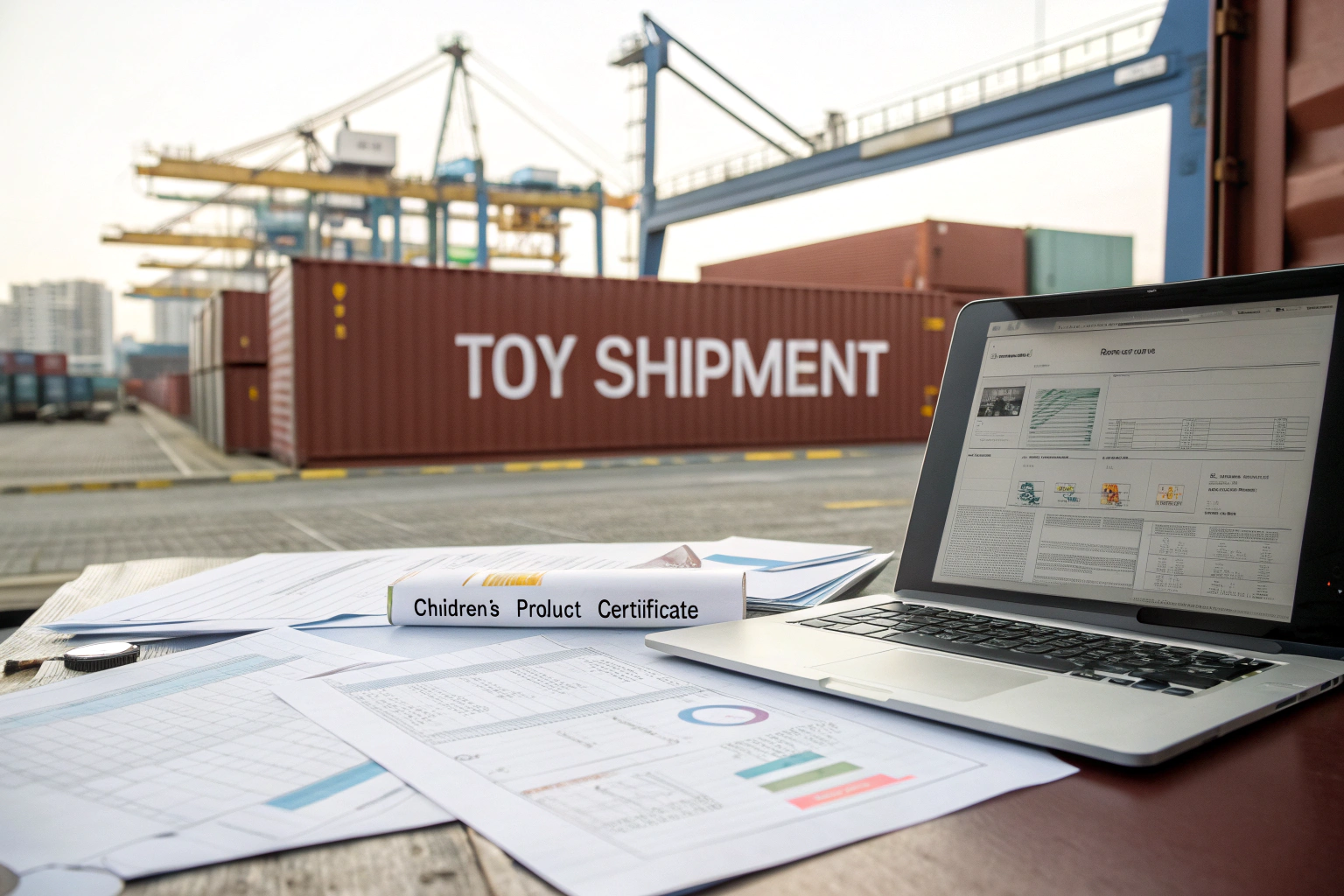
When one of our clients had a $120,000 toy shipment detained at the port due to missing CPSC certifications, they learned the hard way that children's product compliance isn't optional. As founder of GeeseCargo with extensive experience in regulated imports, I've witnessed how CPSC enforcement has intensified, with penalties now reaching $100,000 per violation and potential criminal charges for willful violations.
The CPSC requires children's toys to undergo third-party testing for lead content, phthalates, mechanical hazards, and other safety risks, with proper certification (Children's Product Certificate), tracking labels, and compliance documentation. Importers must maintain testing records for five years and face strict liability for violations, regardless of manufacturer assurances or previous shipments.
Navigating CPSC requirements involves understanding multiple layers of regulation that go beyond simple product safety to include documentation, labeling, and ongoing compliance obligations. The most successful importers integrate compliance into their product development process rather than treating it as a last-minute checklist.
What Are the Mandatory Safety Standards for Children's Toys?
The CPSC enforces multiple safety standards that vary by product type, age grading, and potential hazards.
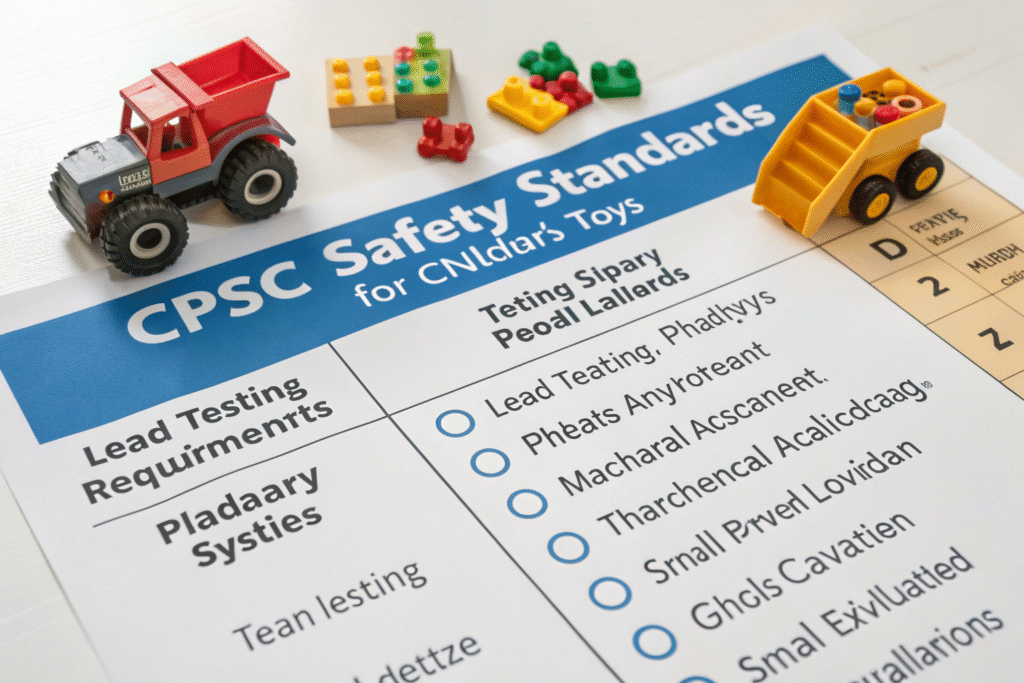
How Do Lead Content and Surface Coating Requirements Work?
Total lead content must not exceed 100 ppm in any accessible component. This applies to all children's products, not just those with surface coatings, and requires testing of each accessible component.
Surface coating limit remains at 90 ppm lead. Any paint, coating, or similar surface material must meet this stricter standard, requiring separate verification from substrate testing.
Accessible component definition includes any part that can be contacted during normal use. This includes parts that might become accessible through reasonable foreseeable damage or use, expanding testing requirements beyond initial appearance.
What Are the Phthalate Restrictions in Children's Toys?
Eight specific phthalates are permanently banned in concentrations above 0.1%. These include DEHP, DBP, BBP, DIBP, DINP, DIDP, DPENP, and DHEXP, requiring comprehensive testing for all plasticized components.
Testing applies to any component containing plastic that may contain phthalates. The broad definition requires testing of all plastic components unless specifically certified as phthalate-free through supply chain documentation.
Age determination affects phthalate testing requirements. While all children's toys are subject to phthalate limits, childcare articles and toys specifically intended for children under 3 have additional scrutiny.
What Testing and Certification Processes Are Required?
The CPSC's testing and certification framework creates specific obligations that importers must fulfill before products enter US commerce.
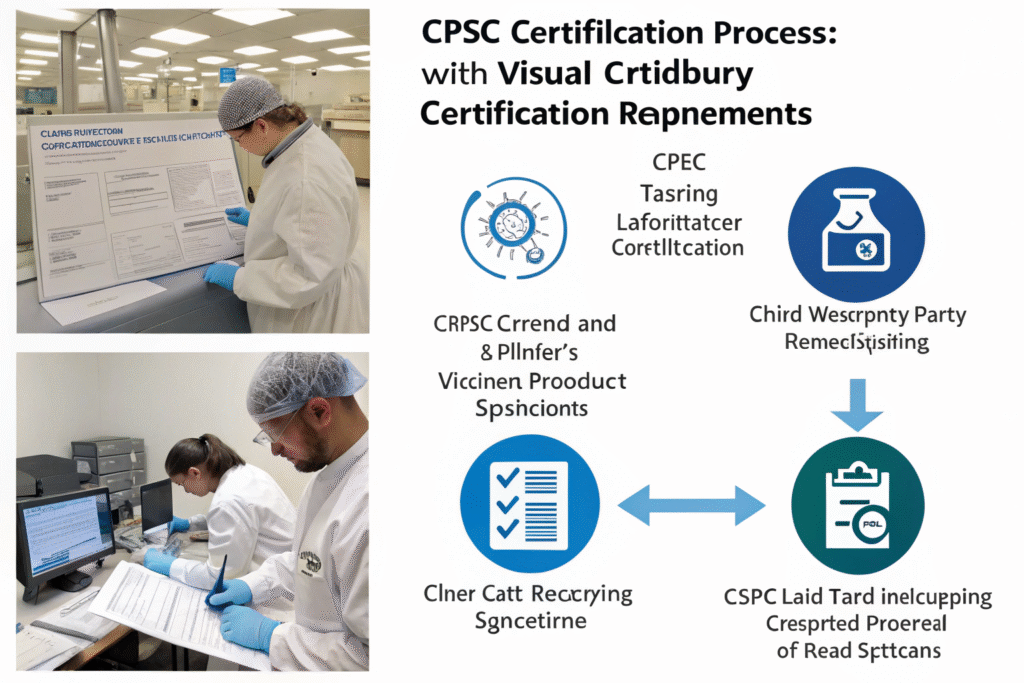
How Does Third-Party Testing Work for Children's Toys?
CPSC-accepted laboratories must conduct compliance testing. Laboratories must be accredited to ISO/IEC 17025 and specifically accepted by the CPSC for each applicable test method and standard.
Testing must be conducted on production samples, not prototypes. The units tested must represent actual production items, requiring testing after manufacturing begins but before importation.
Component testing versus composite testing depends on the standard. Some requirements allow composite testing while others require individual component testing, significantly impacting testing costs and complexity.
What Must the Children's Product Certificate Include?
The CPC must identify the product, manufacturer, and importer. Specific identifying information includes product description, manufacturing date and location, and importer contact information.
Applicable safety rules and standards must be listed. The CPC must enumerate every CPSC regulation and voluntary standard that applies to the product.
Testing laboratory and date information provides traceability. The CPC must identify the third-party laboratory and date range when testing was conducted.
Supporting test reports must be maintained and available. While not part of the CPC itself, complete test reports must be available to the CPSC upon request within 48 hours.
What Labeling and Tracking Requirements Apply?
Proper labeling represents a critical compliance element that goes beyond simple safety warnings to include traceability and consumer information.
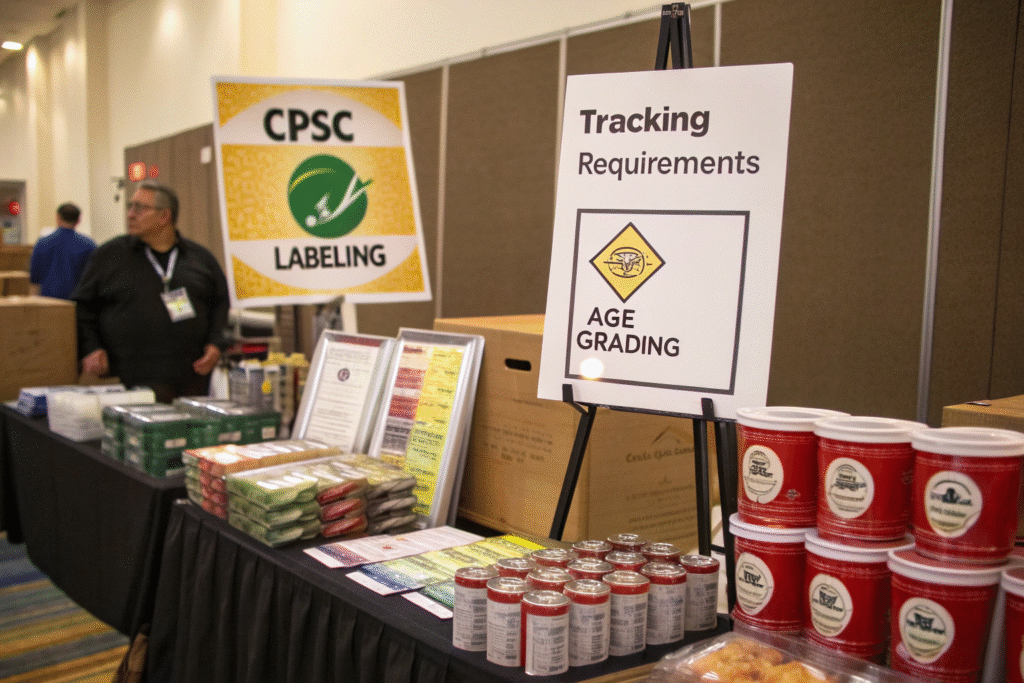
What Tracking Label Information Is Mandatory?
Permanent tracking labels must appear on the product and packaging. The label must be durable, legible, and accessible to consumers before purchase.
Source identification includes manufacturer or private labeler. The tracking label must enable identification of the party responsible for production or specification.
Production date and cohort information facilitates recalls. Specific manufacturing dates, batch numbers, or other identifying information must enable specific lot identification.
Contact information must enable consumer communication. While not necessarily a physical address, the label must provide means for consumers to contact the responsible party.
What Safety Warning Requirements Apply to Toys?
Small parts warnings for toys intended for children 3-6 years. The specific choking hazard warning must appear in format and location specified by CPSC regulations.
Age grading must be appropriate for developmental characteristics. Toys must be labeled with accurate age recommendations based on safety considerations, not just marketing preferences.
Other hazard warnings depend on toy features. Magnets, marbles, balloons, and other specific hazards have prescribed warning language and formatting requirements.
How Does Toy Category Affect Compliance Requirements?
Different toy types face additional specialized standards beyond the general requirements for all children's products.
What Additional Standards Apply to Specific Toy Types?
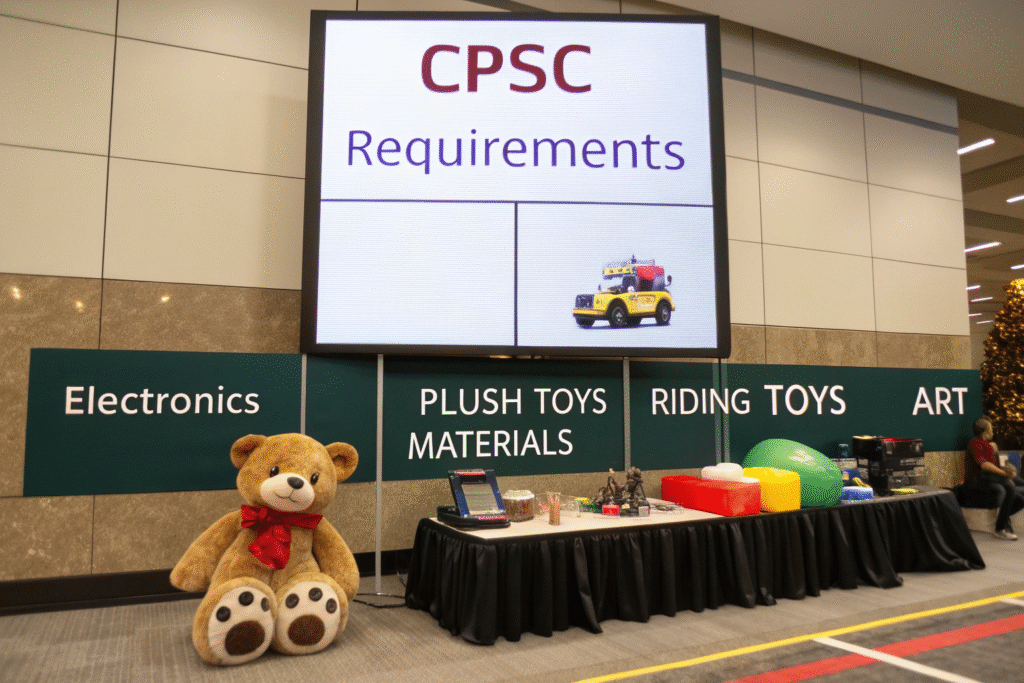
ASTM F963-17 includes requirements for specific hazards. The mandatory toy safety standard covers mechanical hazards, sound levels, heavy elements in substrates, and other specific risks.
Art materials require LHAMA compliance and labeling. The Labeling of Hazardous Art Materials Act requires specific chronic hazard evaluation and warning labeling.
Electronics toys face additional electrical safety standards. Toys with electrical components must comply with applicable electrical safety standards beyond basic toy requirements.
Riding toys have structural integrity and stability requirements. Toys designed to support children's weight have additional testing for strength, stability, and structural integrity.
How Does Age Grading Impact Testing Requirements?
Age determination drives applicable safety standards. Toys for different age groups have different small parts, mechanical hazard, and other requirements based on developmental stages.
Intended use versus foreseeable use both influence compliance. The CPSC considers both how the product is marketed and how children might reasonably use it, potentially expanding requirements.
Consumer expectations and product appearance affect age grading. Products that look like toys for younger children may be subject to stricter requirements regardless of marketing claims.
What Are the Importer's Specific Responsibilities?
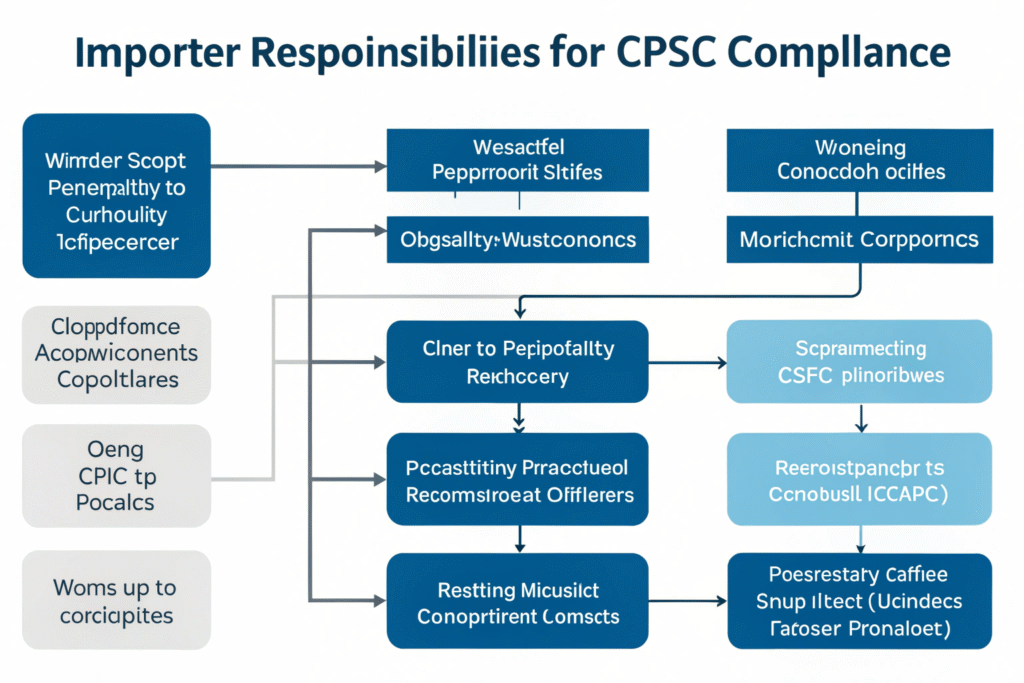
The CPSC places primary compliance responsibility on importers, creating specific obligations that cannot be delegated to manufacturers or suppliers.
What Due Diligence Is Required for Importers?
Component and material verification extends beyond finished product testing. Importers must obtain and verify material certifications, component test reports, and manufacturing process controls.
Factory auditing and quality system assessment may be necessary. For higher-risk products or new suppliers, importers should verify manufacturing consistency and quality control processes.
Supply chain transparency enables component tracing. Importers must maintain documentation identifying component sources, especially for safety-critical materials.
What Recordkeeping and Documentation Must Be Maintained?
Test reports and supporting documentation for five years. Complete testing documentation must be maintained and available to CPSC within 48 hours of request.
Material certifications and supplier documentation. Certificates of compliance for materials, components, and subassemblies help demonstrate comprehensive due diligence.
Production records and quality control documentation. Evidence of manufacturing consistency and process control supports the validity of initial testing.
What Are the Consequences of Non-Compliance?
CPSC enforcement has become increasingly aggressive, with significant consequences for compliance failures.
What Immediate Operational Impacts Occur from Non-Compliance?
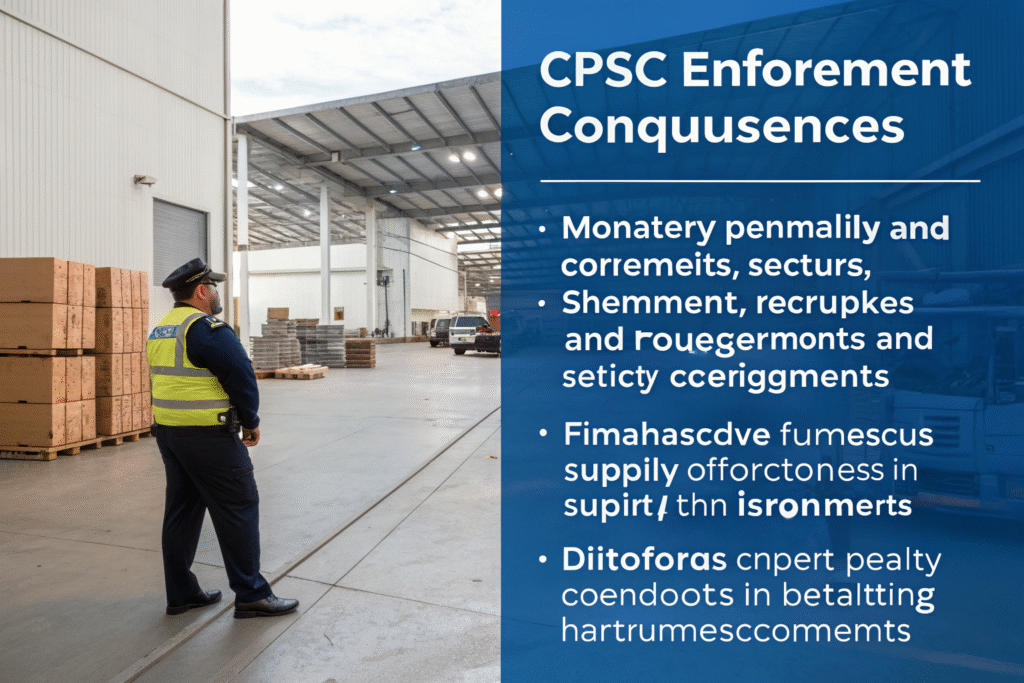
Port detention and refusal of admission for non-compliant shipments. CPSC staff routinely review imports and can detain shipments immediately upon finding compliance issues.
Forced export or destruction of non-compliant products. Detained shipments may be required to be exported or destroyed at importer expense, resulting in total loss.
Recall requirements for products already in distribution. Non-compliant products that reach market typically require costly recalls and consumer notification.
What Financial and Legal Penalties Can Result?
Civil penalties up to $100,000 per violation, with maximums of $15 million for related series of violations. Penalties have increased significantly in recent years, making compliance economically essential.
Criminal penalties for knowing violations include imprisonment. Willful violations or false certifications can result in criminal charges against company officers.
Seizure and forfeiture actions prevent distribution. The CPSC can work with US Marshals to seize non-compliant products from warehouses and stores.
Conclusion
CPSC requirements for children's toys represent one of the most comprehensive and strictly enforced regulatory frameworks in US imports. The most successful toy importers integrate compliance considerations from initial product design through manufacturing and distribution, recognizing that safety cannot be tested into products but must be designed and manufactured into them.
At GeeseCargo, we've helped clients achieve 100% CPSC compliance through systematic approaches that address both regulatory requirements and practical implementation challenges. The key is treating CPSC compliance as an integral business process rather than a regulatory hurdle, building systems that ensure ongoing compliance as products, standards, and manufacturing processes evolve.
Begin your CPSC compliance journey during product development, not after production begins. Engage CPSC-accepted laboratories early, maintain meticulous documentation, and build relationships with suppliers who understand and respect US safety requirements. Remember that in children's product imports, compliance isn't just about avoiding penalties—it's about ensuring the safety of your youngest customers and building a reputable, sustainable business.