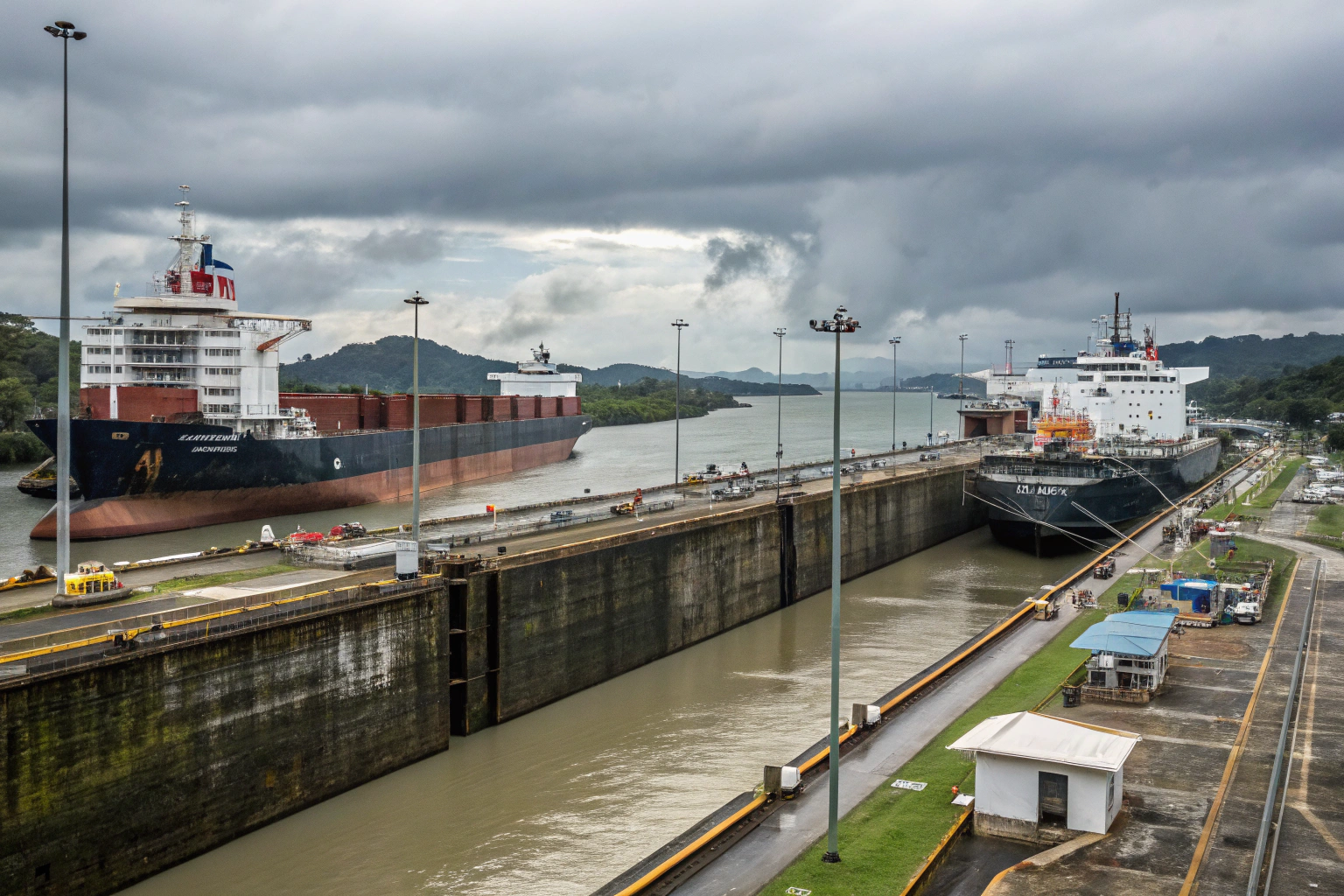
When one of our clients faced a 15-day delay and a $32,000 surcharge due to Panama Canal restrictions, the reality of how water levels impact global shipping became painfully clear. As founder of GeeseCargo with extensive canal shipping experience, I've witnessed firsthand how this engineering marvel's vulnerability to climate change is transforming global logistics. The Panama Canal isn't just a shortcut—it's a climate-sensitive chokepoint that can disrupt your supply chain without warning.
The Panama Canal's water level directly impacts shipping through draft restrictions, transit slot reductions, and surcharges that can increase costs by 15-40% and extend transit times by 7-21 days. During severe droughts, the canal authority reduces daily transits from the normal 36-38 ships to as low as 18-24 ships and imposes draft restrictions that force large vessels to lighten their loads.
The canal's operation depends entirely on freshwater from Gatun Lake, which has experienced significant water level declines due to prolonged droughts and changing rainfall patterns. Understanding these impacts helps businesses develop contingency plans that maintain supply chain reliability despite canal vulnerabilities.
What Are the Operational Impacts of Water Level Restrictions?
Water level declines trigger specific operational changes that cascade through global shipping networks.
How Do Draft Restrictions Affect Vessel Operations?
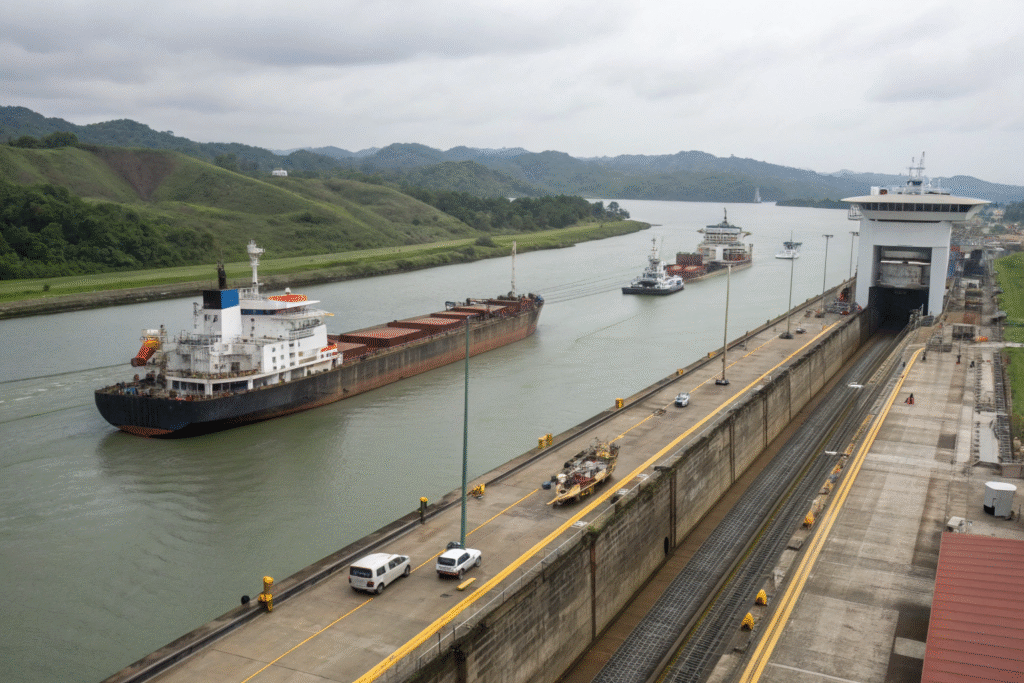
Draft limitations reduce cargo capacity for large vessels. When the canal imposes a 44-foot draft restriction instead of the normal 50-foot draft, Neopanamax vessels can lose 40-50% of their container capacity—equivalent to 1,500-2,000 TEUs per ship.
Light-loading requirements force cargo redistribution. Ships must either leave containers behind at origin ports or transfer them to other vessels, creating complex logistics and additional handling that increases costs and contamination risk.
Vessel type restrictions affect different shipping segments differently. Container ships face capacity reductions while bulk carriers and tankers may be completely excluded from transit during severe restrictions.
How Do Transit Slot Reductions Impact Scheduling?
Daily transit cuts create booking backlogs and delays. Reducing daily transits from 36 to 24 ships creates an immediate 12-ship daily backlog, with waiting times extending from hours to 10-15 days during peak periods.
Auction systems for priority transit increase costs dramatically. During severe restrictions, the canal implements auction systems where shipping lines bid up to $600,000 for priority slots—costs ultimately passed to shippers through surcharges.
Vessel scheduling becomes unpredictable and unreliable. The combination of draft restrictions, transit reductions, and waiting times makes arrival and departure predictions highly uncertain, complicating supply chain planning.
What Are the Financial Implications for Shippers?
The canal's water challenges translate directly to increased shipping costs and operational expenses.
What Additional Charges Do Shippers Face?
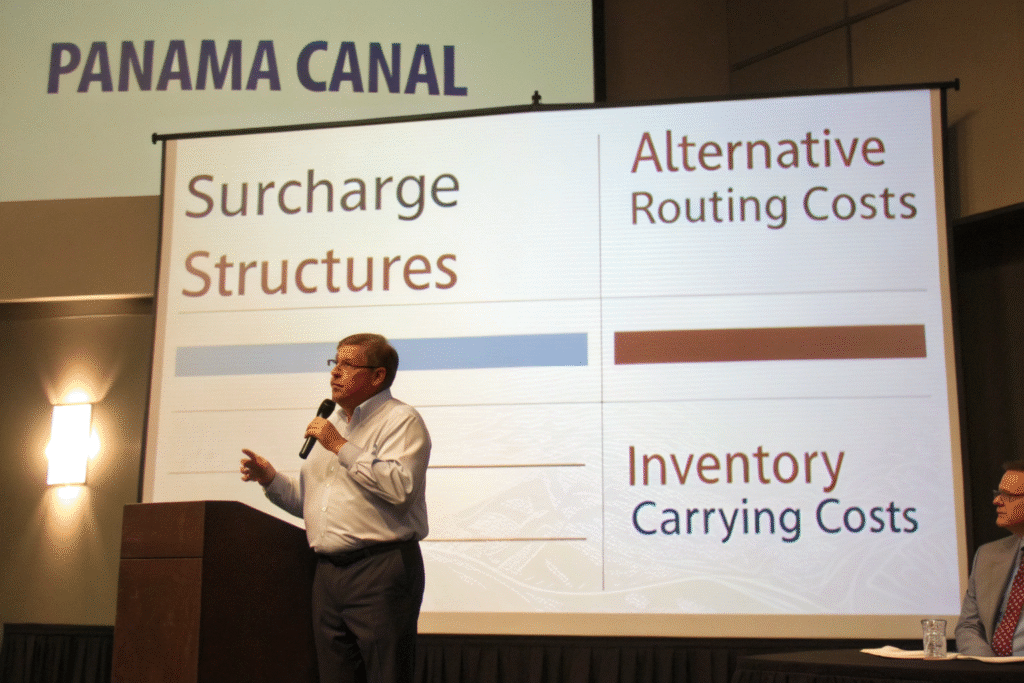
Panama Canal surcharges directly increase freight rates. Shipping lines typically implement Panama Canal Surcharges (PCS) ranging from $300-$800 per container during restrictions, with higher amounts for larger vessels and priority transit.
Bunker adjustment factors increase due to longer routes and waiting times. Vessels waiting for transit or taking longer routes consume additional fuel, with costs passed through BAF increases of 15-30%.
Equipment imbalance charges may apply when containers are offloaded. Light-loading containers for draft compliance can trigger equipment repositioning charges and container detention fees.
How Do Alternative Routes Affect Costs?
Cape of Good Hope rerouting adds significant distance and time. The Africa route adds 3,500-4,500 nautical miles and 10-14 days transit time, increasing fuel consumption by 30-40% and adding $1,500-$2,500 per container in additional costs.
Suez Canal routing creates different cost structures. While faster than the Africa route, Suez Canal transit fees and potential Red Sea security risks create their own cost and reliability challenges.
US intermodal options involve different cost calculations. Shipping to US West Coast ports then using rail or truck to East Coast destinations involves port handling, drayage, and domestic transportation costs that must be calculated against all-water alternatives.
How Can You Mitigate Panama Canal Disruption Risks?
Proactive strategies can reduce vulnerability to canal disruptions while maintaining cost efficiency.
What Routing Strategies Provide Flexibility?
Multi-route sourcing maintains options when canal transit becomes unreliable. Developing relationships with carriers using different routing options (all-water via Suez, US West Coast intermodal) provides alternatives when Panama routing faces challenges.
Port diversification reduces dependency on specific gateways. Using both East Coast and West Coast US ports, or multiple European discharge ports, creates natural rerouting options during canal disruptions.
Carrier diversification ensures access to different routing strategies. Different shipping alliances have varying canal dependencies and alternative route preferences, providing natural hedging against canal issues.
What Inventory and Planning Strategies Help?
Strategic inventory buffers protect against transit time variability. Increasing safety stock levels by 7-14 days during peak canal restriction periods prevents stockouts caused by extended transit times.
Lead time adjustment in planning systems accounts for potential delays. Building potential canal delays into MRP and inventory planning systems prevents production disruptions and missed customer commitments.
Seasonal planning around historical low-water periods. The canal typically faces the most severe restrictions during February-May dry season, enabling proactive planning for this predictable seasonality.
How Should You Adjust Your Shipping Strategy?
Adapting your overall shipping approach to account for canal vulnerability transforms risk management from reactive to strategic.

When Should You Consider Alternative Routing?
Cost-benefit analysis determines optimal routing decisions. When Panama Canal surcharges exceed alternative routing costs by 15-20%, switching routes typically makes economic sense despite longer transit times.
Time-sensitive shipments justify premium routing during disruptions. Products with short shelf lives, seasonal demand patterns, or critical production components may warrant higher-cost routing to maintain schedule reliability.
Volume commitments influence routing flexibility. Large-volume shippers can negotiate preferential canal access or alternative routing terms that smaller shippers cannot secure.
How Can Contracting Strategies Mitigate Risk?
Canal contingency clauses provide cost certainty. Contracts specifying maximum Panama Canal surcharges or automatic routing switches at certain restriction levels prevent cost surprises.
Multi-modal options in contracts create built-in flexibility. Agreements that include both all-water and intermodal options at predetermined rates enable seamless transitions during disruptions.
Capacity protection provisions ensure space availability. During canal restrictions, vessel space becomes scarce, making capacity guarantees particularly valuable for consistent shippers.
What Are the Long-Term Implications for Global Shipping?
The Panama Canal's water challenges reflect broader climate impacts that are reshaping global logistics patterns.

How Is Climate Change Reshaping Global Shipping Routes?
Arctic route development offers future alternatives. While currently limited by ice and infrastructure, Northern Sea Route development could eventually provide Asia-Europe alternatives that bypass both Panama and Suez canals.
Port infrastructure investments are adapting to new routing patterns. US Gulf and East Coast ports are investing in larger cranes and deeper channels to accommodate vessels that may use alternative routes during canal restrictions.
Carrier vessel deployment is evolving for flexibility. Shipping lines are increasingly deploying vessels that can transit multiple routes rather than being optimized for specific canals.
What Infrastructure Solutions Might Address Water Challenges?
Canal water management projects aim to increase resilience. The Panama Canal Authority is exploring new water sources, conservation measures, and operational changes to reduce freshwater consumption.
Alternative canal routes are gaining attention. While massive investments, proposals for new Central American canals or significant Panama Canal expansions could eventually reduce current vulnerabilities.
Water-saving technologies are being implemented. The canal has introduced water-saving basins and modified locking procedures to reduce each transit's water consumption by millions of gallons.
Conclusion
The Panama Canal's water level issues represent a permanent feature of global shipping that requires strategic adaptation rather than temporary workarounds. The most successful shippers are those who integrate canal vulnerability into their core logistics planning, developing flexible strategies that maintain reliability despite the canal's increasing unpredictability.
At GeeseCargo, we've helped clients reduce canal-related disruptions by 65% through proactive routing strategies, contractual protections, and inventory planning that accounts for canal variability. The key is recognizing that the Panama Canal has transitioned from a reliable maritime highway to a climate-vulnerable infrastructure that demands contingency planning and flexibility.
Begin your canal risk assessment by analyzing your exposure to Panama routing, then develop graduated response plans that trigger at specific restriction levels. Remember that in today's shipping environment, resilience comes not from depending on any single route but from maintaining multiple validated options and the capability to shift between them seamlessly as conditions change.