
An effective supply chain emergency plan is no longer a luxury but a fundamental business necessity in today's volatile global trade environment. As a freight forwarder who has helped clients navigate everything from port strikes and natural disasters to pandemics and geopolitical conflicts, I've witnessed how companies with robust emergency plans recover in days while those without struggle for weeks or months. The difference isn't luck—it's systematic preparation and strategic planning.
You can create an effective supply chain emergency plan by developing a comprehensive risk assessment, establishing clear activation protocols, building redundancy into critical components, creating communication frameworks, and implementing regular testing and refinement processes. The most successful plans balance detailed preparation with flexibility to address unforeseen scenarios, focusing on maintaining business continuity rather than just reacting to disruptions.
An emergency plan is only as good as its execution capability and the organization's familiarity with it. Let's examine the specific components and development processes that create truly effective supply chain resilience.
What Are the Critical Components of an Effective Emergency Plan?
A robust emergency plan requires multiple interconnected elements that work together during disruptions.

How Should Risk Assessment Structure Your Plan?
Prioritized risk identification focuses resources on highest-impact scenarios. Conduct detailed analysis of your specific supply chain vulnerabilities, ranking risks by both probability and potential business impact, with particular attention to single points of failure and extended recovery time scenarios.
Scenario-specific preparation addresses your most likely disruptions. Develop tailored responses for your highest-probability risk scenarios—whether port closures, supplier failures, transportation interruptions, or customs delays—rather than generic responses that may prove inadequate for specific situations.
What Activation Protocols Ensure Timely Response?
Clear activation criteria prevent delayed responses. Establish specific, measurable triggers for plan activation (e.g., "activate when port closure exceeds 48 hours" or "when alternative transportation costs exceed 150% of normal rates") rather than subjective judgments that might delay critical decisions.
Escalation procedures match response intensity to disruption severity. Create tiered response levels with corresponding authority delegations, resource allocations, and communication requirements that scale appropriately with the emergency's magnitude.
How Can You Build Practical Redundancy and Alternatives?
Strategic redundancy provides the operational flexibility needed to maintain continuity during disruptions.

What Supplier Strategies Provide Optimal Protection?
Tiered supplier relationships balance cost with resilience. Develop primary, approved-alternative, and qualified-backup suppliers for critical components, with regular testing of alternative supplier capabilities through small-volume orders or quality audits.
Geographic diversification reduces regional risk concentration. Source critical materials from suppliers in different geographic regions less likely to be affected simultaneously by regional disruptions like natural disasters, political unrest, or infrastructure failures.
How Should Transportation Redundancy Be Structured?
Multi-modal capabilities provide immediate alternatives. Develop relationships and operational capabilities across ocean, air, rail, and trucking modes, with pre-negotiated contingency rates and capacity commitments for emergency situations.
Route and port diversification prevents single-point failures. Establish capabilities at multiple ports and transportation corridors, with documented processes for shifting between them when primary options become unavailable.
What Communication Frameworks Are Most Effective?
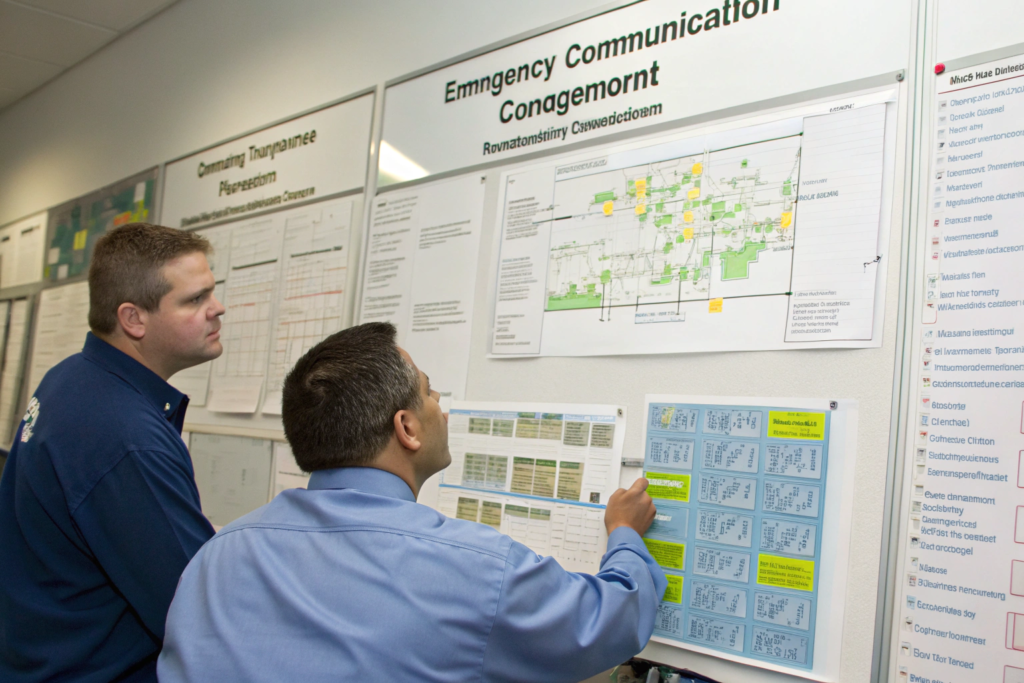
Clear, timely communication is often the difference between controlled response and chaotic reaction during emergencies.
How Should Internal Communication Be Structured?
Designated emergency response teams with clear roles and responsibilities. Establish cross-functional teams with predefined authority levels, decision-making protocols, and communication channels that bypass normal organizational hierarchies during emergencies.
Prepared communication templates save critical time. Develop draft messages, status reports, and decision documents for likely scenarios that can be quickly customized rather than created from scratch during time-pressured situations.
What External Communication Protocols Work Best?
Supplier and carrier notification procedures ensure coordinated response. Establish clear protocols for notifying key partners about disruptions and coordinating alternative arrangements, including predefined communication channels and decision authorities.
Customer communication strategies manage expectations and preserve relationships. Develop transparent but controlled communication approaches that provide necessary information without creating unnecessary alarm or revealing competitive information.
How Can You Implement Effective Testing and Refinement?
Regular testing transforms theoretical plans into practical capabilities.

What Testing Approaches Build Real Capability?
Tabletop exercises develop decision-making skills without operational disruption. Regular scenario-based discussions with your emergency response team identify planning gaps, clarify roles, and improve team coordination before actual emergencies occur.
Limited-scale operational tests validate practical capabilities. Periodically test specific plan components—like activating an alternative supplier or rerouting through a secondary port—with small-volume shipments to ensure procedures work as intended in real-world conditions.
How Should You Incorporate Lessons Learned?
Post-disruption analysis processes capture improvement opportunities. After any actual disruption or test exercise, conduct formal reviews that document what worked, what didn't, and specific improvements needed in plans, processes, or capabilities.
Continuous improvement integration keeps plans current. Establish regular review cycles (at least quarterly) to update plans based on changing business conditions, new risks, supplier changes, or lessons from recent tests or actual events.
What Technology and Resources Support Effective Planning?
The right tools and resources significantly enhance emergency plan effectiveness and execution capability.

What Monitoring Systems Provide Early Warning?
Real-time visibility platforms detect disruptions early. Implement systems that monitor shipment status, port operations, weather events, and geopolitical developments to provide early warning of potential disruptions before they fully impact your operations.
Supplier risk monitoring tools identify vulnerabilities proactively. Use specialized services that track supplier financial health, operational issues, and geographic risks to identify potential problems before they cause disruptions.
How Should You Resource Your Emergency Capabilities?
Pre-negotiated contingency agreements provide immediate access to alternatives. Establish standing agreements with alternative carriers, warehousing providers, and service companies that guarantee capacity and pricing during declared emergencies.
Financial preparedness measures ensure response capability. Maintain contingency budgets, emergency purchasing authorities, and insurance arrangements that provide financial flexibility needed to implement emergency responses without delay.
Conclusion
Creating an effective supply chain emergency plan requires systematic development of risk assessment, response protocols, redundancy strategies, communication frameworks, and testing processes tailored to your specific operations and vulnerabilities. The most successful plans balance detailed preparation for likely scenarios with flexible frameworks for addressing unforeseen events, while maintaining organizational familiarity through regular testing and refinement.
At GeeseCargo, we've helped clients develop emergency plans that typically reduce disruption recovery times by 60-80% and limit financial impacts by 40-70% compared to unplanned responses. Our experience shows that companies investing systematically in emergency preparedness typically achieve returns of 3-5 times their investment through avoided losses and maintained operations during disruptions. Remember that an emergency plan is a living capability that requires continuous attention and investment—the organizations that treat resilience as an ongoing priority rather than a periodic project achieve the best outcomes when disruptions inevitably occur.