When one of our clients lost a $650,000 shipment of electronics to a container fire and discovered their insurance covered only 20% of the actual value, I witnessed how devastating inadequate coverage can be. As founder of GeeseCargo with extensive experience in cargo claims, I've learned that choosing the right insurance level isn't about finding the cheapest option—it's about matching coverage to your specific risk exposure and financial vulnerability.
The right level of cargo insurance depends on your shipment value, risk exposure, product characteristics, and financial risk tolerance. Most businesses should insure for 110% of CIF value (cost, insurance, and freight) to cover potential cost increases and additional expenses. High-value, fragile, or time-sensitive shipments often warrant additional coverage beyond standard policies.
Choosing appropriate insurance involves balancing premium costs against potential losses, with the most successful companies treating insurance as strategic risk management rather than compliance paperwork. Proper coverage typically costs 0.1-0.8% of insured value but can prevent catastrophic financial losses that threaten business continuity.
What Factors Determine Your Optimal Coverage Level?
Multiple variables influence how much coverage you need, with different products and shipping methods requiring tailored approaches.
How Does Shipment Value Influence Coverage Decisions?
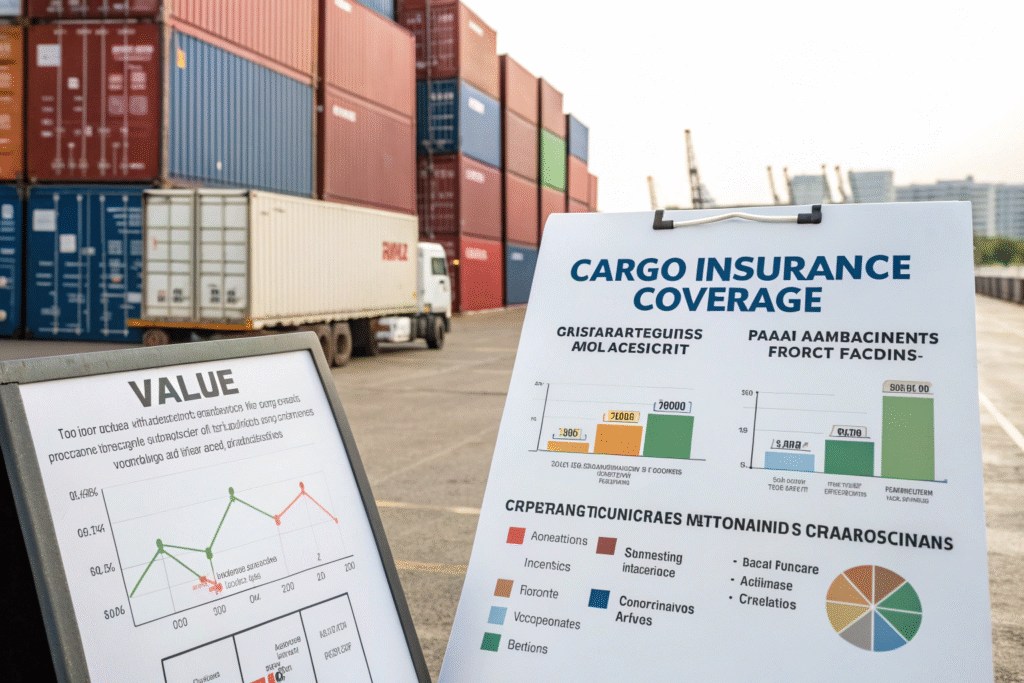
Actual commercial value forms your coverage baseline. This includes product cost, manufacturing expenses, and intellectual property value—not just the wholesale price.
Additional insured interests often get overlooked. Freight charges, import duties, and potential profit margins should be included in your insured value calculation.
Potential cost increases during transit justify extra coverage. Currency fluctuations, price increases, or special handling requirements may increase your potential loss beyond initial calculations.
What Risk Factors Should Guide Your Coverage Amount?
Transportation mode significantly impacts risk exposure. Air cargo generally has lower physical damage risk but higher theft potential, while ocean freight faces weather and handling risks.
Route characteristics influence likelihood of incidents. Shipments passing through high-risk areas, conflict zones, or regions with extreme weather need enhanced coverage.
Product characteristics determine vulnerability. Fragile, perishable, high-theft-attractive, or temperature-sensitive goods require specialized coverage beyond standard policies.
What Types of Coverage Are Available?
Understanding different insurance products helps you select appropriate protection levels for your specific needs.
What Does "All-Risk" Coverage Actually Cover?
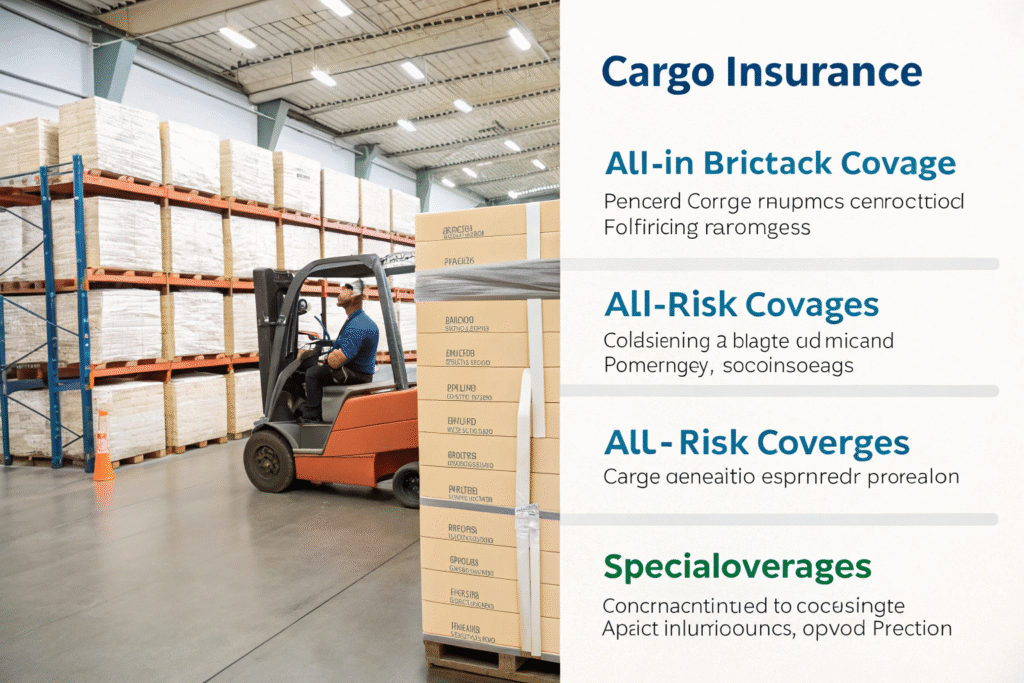
All-risk policies provide the broadest protection available. These policies cover all physical loss or damage except for specifically excluded perils, typically offering the most comprehensive protection.
Standard exclusions in all-risk policies include inherent vice, improper packaging, and delay. War, strikes, and nuclear risks are also typically excluded unless specifically endorsed.
Advantages include automatic coverage for new and unforeseen risks. As transportation risks evolve, all-risk policies automatically cover emerging threats without requiring policy amendments.
When Do Named Perils Policies Make Sense?
Named perils policies cover only specifically listed risks. These might include fire, sinking, collision, and theft—but exclude anything not explicitly mentioned in the policy.
Cost savings can be significant for low-risk shipments. If your products face limited, well-understood risks, named perils policies may provide adequate coverage at lower premiums.
Complementary use with all-risk policies creates layered protection. Some companies use named perils for routine shipments and all-risk for high-value or high-risk consignments.
How Should You Calculate the Right Coverage Amount?
Systematic calculation methods ensure adequate coverage without overpaying for unnecessary protection.

What Standard Calculation Formulas Should You Use?
CIF value plus 10% is the industry standard minimum. This covers cost, insurance, and freight plus a buffer for unexpected expenses and minor value fluctuations.
Commercial invoice value plus 20% often provides better protection. This accounts for profit margins, potential price increases, and additional costs not reflected in the invoice.
Replacement cost calculation protects against current market values. For products with fluctuating values, insuring replacement cost rather than purchase price prevents underinsurance.
What Additional Values Should You Include?
Anticipated profit margins represent real financial exposure. If you've sold goods at markup before shipment, the profit represents actual financial loss if goods are damaged or lost.
Duty and tax payments add significant value to shipments. For imports, duties paid on lost shipments represent unrecoverable expenses without proper insurance coverage.
Special handling and transportation costs increase potential loss. Expedited shipping, temperature control, or specialized equipment costs should be included in insured values.
What Specialized Coverages Might You Need?
Beyond standard coverage, specialized endorsements address unique risks for specific products or situations.
When Do You Need Temperature-Controlled Coverage?
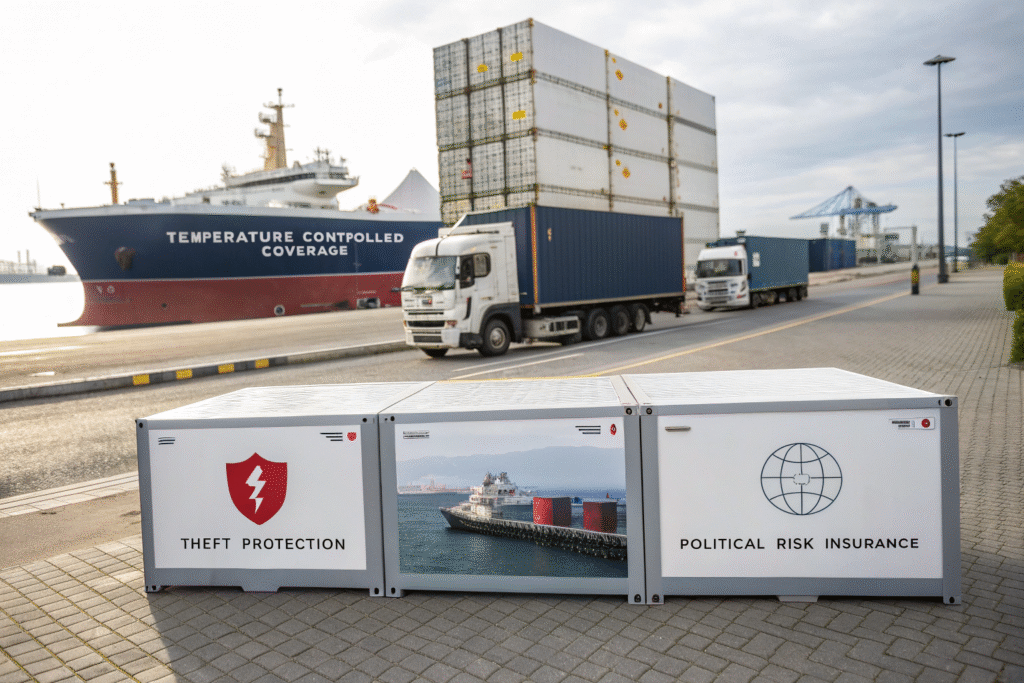
Reefer breakdown protection covers mechanical failures. This specialized coverage protects against losses when refrigeration units fail during transit.
Temperature excursion coverage addresses threshold violations. Even brief temperature deviations can destroy sensitive products, requiring specific coverage for these risks.
Defrost insurance protects during planned defrost cycles. Some refrigerated shipments require periodic defrosting that standard policies might exclude without specific endorsement.
What Theft and Security Coverages Are Available?
Theft extension endorsements enhance standard protection. Many standard policies limit theft coverage or exclude certain types of theft without specific endorsements.
Pilferage coverage addresses partial theft situations. Standard policies often exclude small-scale theft unless specifically endorsed for pilferage protection.
Mysterious disappearance coverage fills investigation gaps. When goods disappear without evidence of theft, specific coverage is needed since standard policies often exclude these losses.
How Can You Balance Cost and Coverage?
Premium optimization involves strategic decisions that maintain adequate protection while controlling insurance expenses.
What Deductible Strategies Optimize Costs?
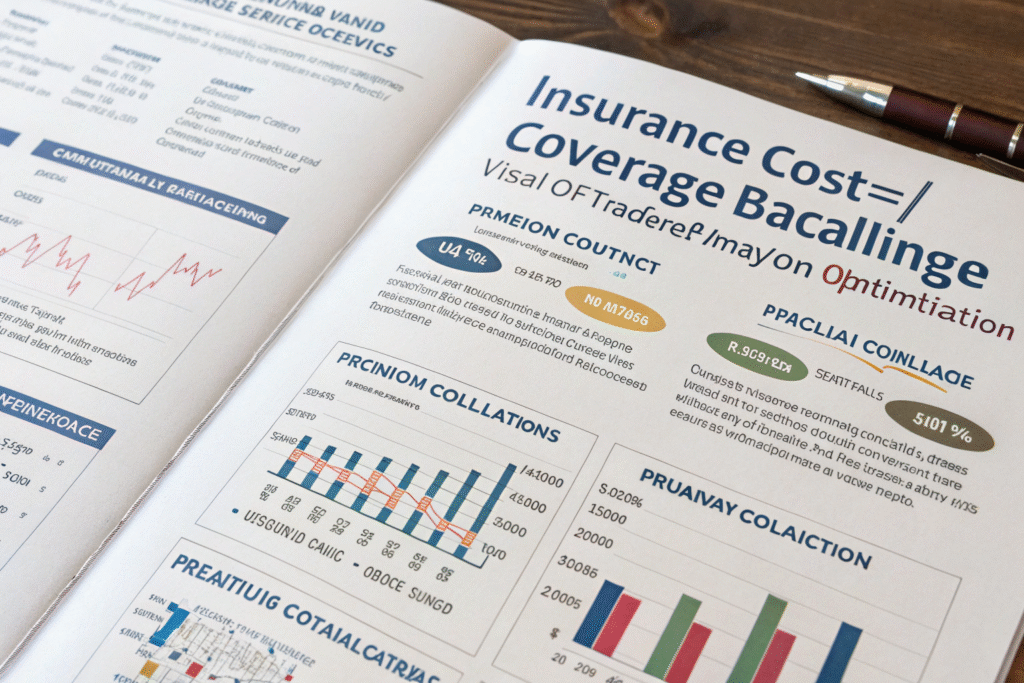
Higher deductibles significantly reduce premiums. Increasing deductibles from $500 to $5,000 can reduce premiums 20-40% while maintaining catastrophic loss protection.
Deductible matching to risk tolerance ensures affordability. Choose deductibles that represent acceptable loss levels rather than automatically selecting the lowest option.
Sliding scale deductibles adjust to shipment values. Percentage-based deductibles (0.5-1% of value) maintain proportionality across different shipment values.
How Can Policy Structure Reduce Costs?
Annual policies versus shipment-by-shipment coverage. High-volume shippers typically save 15-30% with annual open policies rather than individual shipment coverage.
Blanket coverage for predictable shipping patterns. Companies with consistent shipment values and routes can use blanket policies that automatically cover all shipments.
Co-insurance clauses prevent premium overpayment. Proper valuation prevents co-insurance penalties that reduce recovery for underinsured shipments.
What Common Insurance Mistakes Should You Avoid?
Understanding frequent errors helps businesses secure appropriate coverage while avoiding unnecessary costs.
What Valuation Errors Cause the Most Problems?
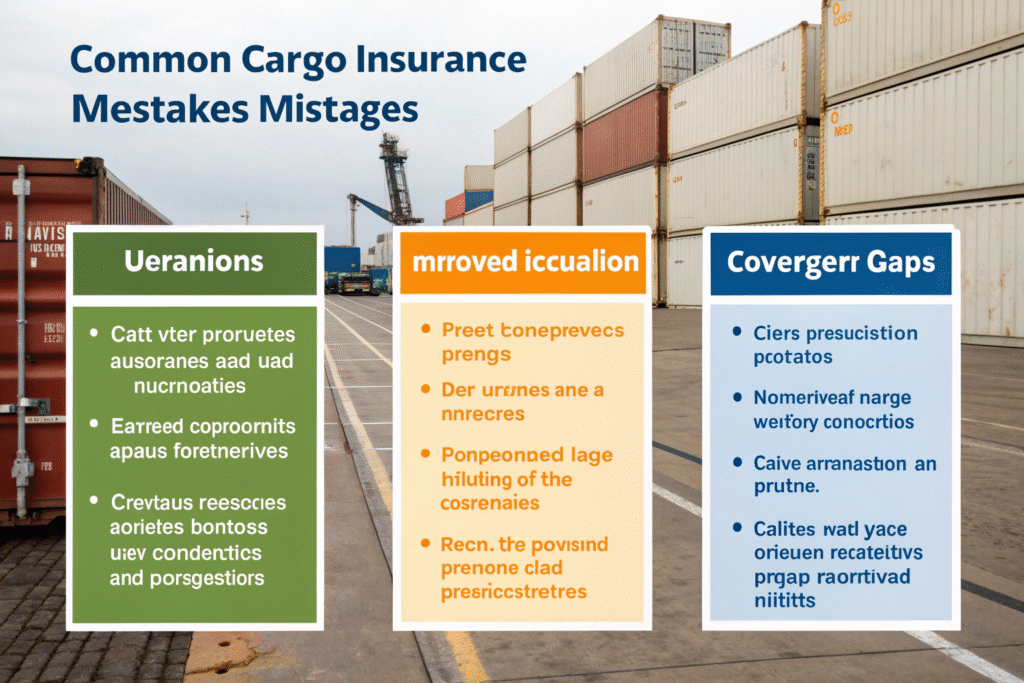
Underinsurance leaves businesses exposed to catastrophic losses. The average business carries 20-40% less coverage than needed, creating significant financial vulnerability.
Incorrect valuation methods trigger co-insurance penalties. Using wrong valuation methods can reduce claim payments even for partially covered losses.
Failure to update values for market changes. Product value fluctuations, currency changes, and cost increases can quickly make adequate coverage insufficient.
What Coverage Misunderstandings Create Gaps?
Assuming carrier liability provides adequate protection. Carrier liability typically covers only $500 per package, representing a small fraction of actual loss for most shipments.
Misunderstanding policy exclusions and limitations. Many businesses discover coverage gaps only when filing claims, after losses have already occurred.
Inadequate documentation for specialized products. Failure to properly declare special characteristics or values can void coverage for certain types of claims.
How Should You Manage Ongoing Insurance Review?
Insurance needs evolve with business changes, requiring regular review and adjustment.
What Triggers Should Prompt Coverage Reassessment?
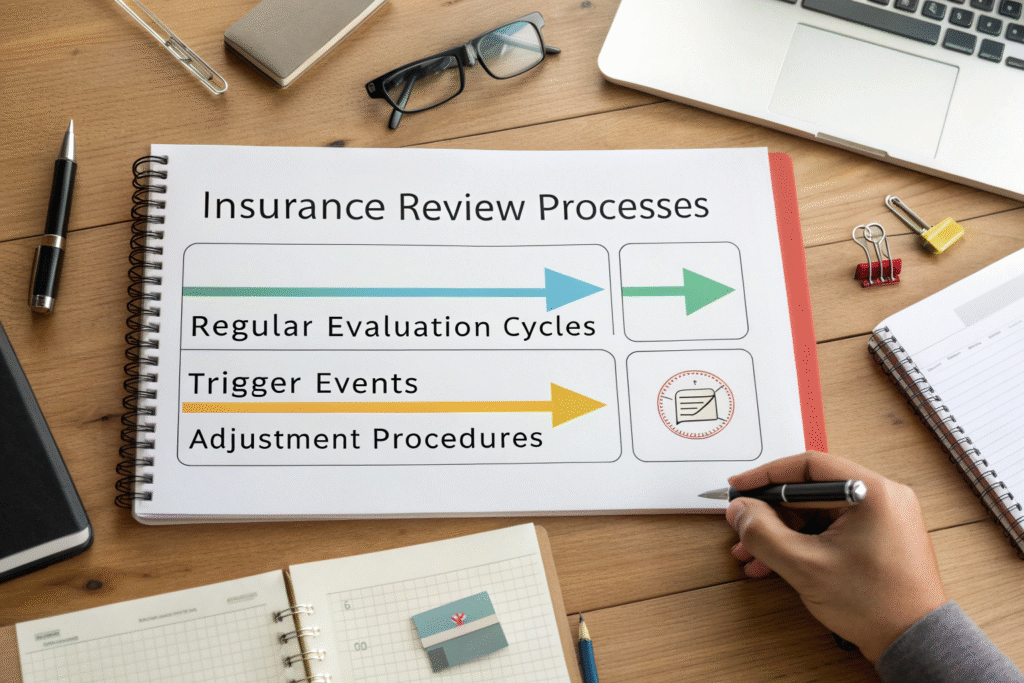
Business growth or contraction changes risk exposure. Significant revenue changes, new markets, or product line expansions should trigger insurance reviews.
Supply chain changes alter risk profiles. New routes, transportation modes, or suppliers introduce different risks requiring coverage adjustments.
Claim experience reveals coverage adequacy patterns. Frequent claims or unexpected coverage denials indicate needed policy adjustments.
What Performance Metrics Guide Insurance Optimization?
Loss ratio analysis evaluates cost-effectiveness. Comparing premiums paid to claims recovered helps assess whether coverage levels are appropriate.
Claim settlement experience indicates insurer reliability. Slow payments, frequent disputes, or low settlement amounts may signal need for different insurance partners.
Coverage gap identification through regular reviews. Systematic assessment of new risks and changing exposures prevents gradual coverage erosion.
Conclusion
Choosing the right cargo insurance level requires careful analysis of your specific products, shipping methods, and financial tolerance. The most successful companies treat insurance as strategic risk management rather than administrative overhead, recognizing that proper coverage represents minor costs compared to potential uncovered losses.
At GeeseCargo, we've helped clients optimize insurance programs that reduced premiums by 15-25% while improving coverage adequacy by 40-60%. The most effective approaches involve regular risk assessment, strategic policy structuring, and proactive relationship management with insurance providers.
Begin your insurance optimization by conducting a thorough risk assessment of your shipping activities, then work with experienced insurance professionals to structure coverage that matches your specific exposure. Remember that in cargo insurance, the goal isn't eliminating risk entirely—it's transferring appropriate risks at reasonable costs while maintaining business continuity through predictable loss recovery.