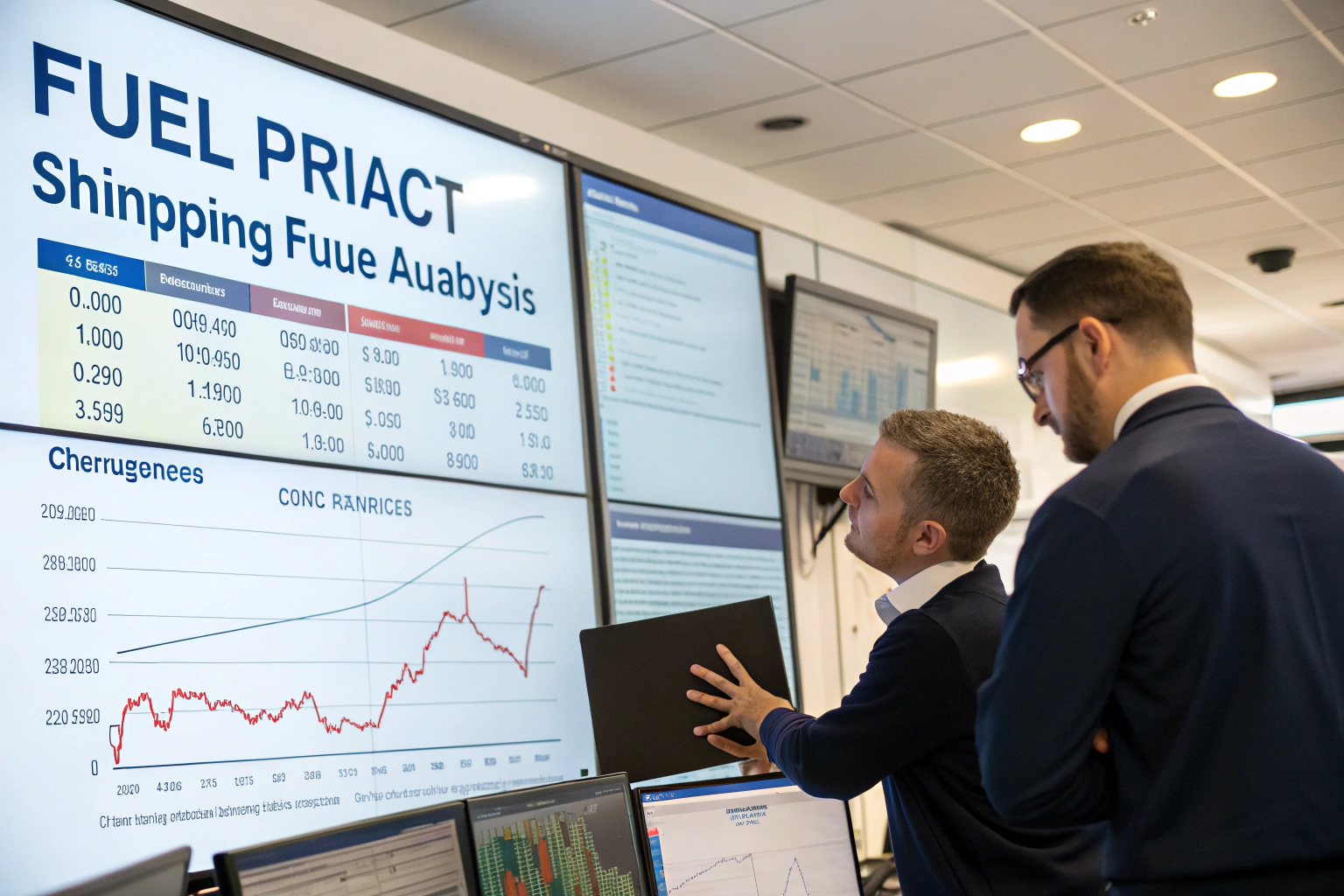
Fuel price volatility represents one of the most significant and unpredictable cost factors in international shipping. Many importers receive shipping quotes that seem reasonable initially, only to face substantial surcharges by the time their cargo actually moves. Understanding how fuel costs integrate into shipping pricing helps businesses budget accurately and negotiate better terms.
Fluctuating fuel prices directly impact your shipping quotes through bunker adjustment factors (BAF) for ocean freight and fuel surcharges (FSC) for air freight. These surcharges typically represent 20-40% of your total ocean freight costs and 25-50% of air freight costs, with adjustments occurring monthly or quarterly based on specific fuel price indices.
Let's examine the specific mechanisms, calculation methods, and strategic approaches to manage fuel cost volatility in your shipping budget.
What are the specific fuel surcharge mechanisms?
Fuel costs incorporate into shipping quotes through standardized surcharge mechanisms that vary by transportation mode but follow similar principles of tracking fuel prices and applying predetermined formulas.
For ocean freight, the Bunker Adjustment Factor (BAF) compensates carriers for marine fuel (bunker) price fluctuations. This surcharge is typically calculated per container or per ton of cargo and adjusted monthly based on specific fuel price indexes. For air freight, the Fuel Surcharge (FSC) addresses aviation fuel costs, usually calculated as a percentage of base freight or per kilogram. Trucking operations use similar surcharges, often based on diesel price indexes. These mechanisms ensure carriers can maintain service despite fuel price volatility while providing some predictability through published calculation methods.
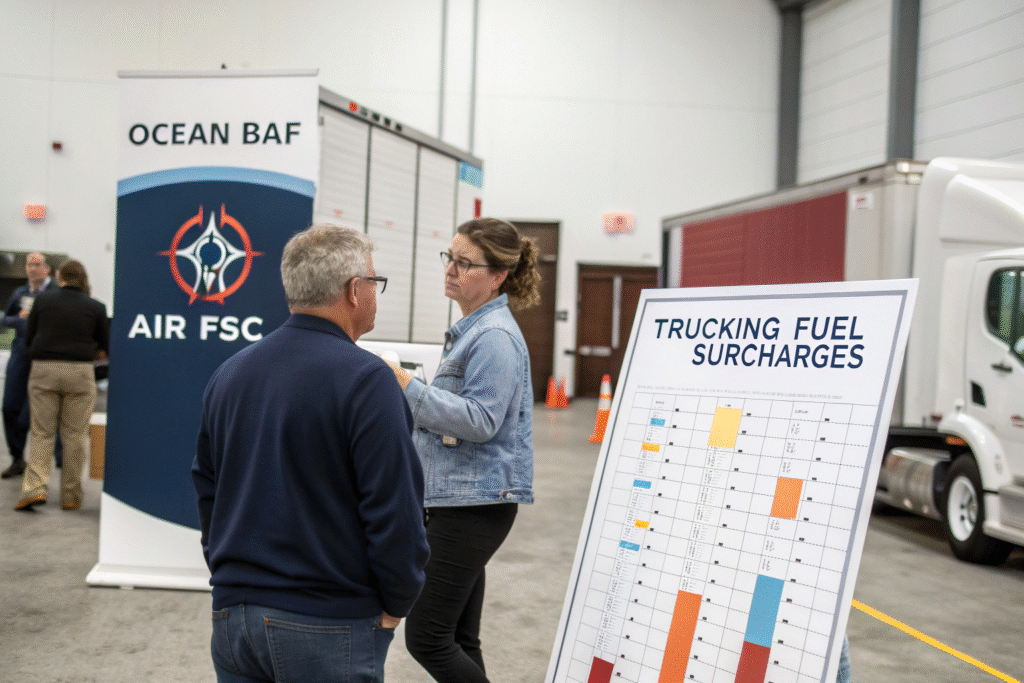
How do carriers calculate ocean freight BAF?
Ocean BAF calculation typically involves:
- Base fuel price reference using specific bunker price indexes like Rotterdam, Singapore, or Houston
- Fuel consumption assumptions based on vessel size, speed, and route efficiency
- Trade lane factors accounting for different distances and sailing patterns
- Currency adjustments since bunker purchases often occur in different currencies
- Recovery mechanisms ensuring carriers recover actual fuel cost increases
Most major carriers publish their BAF formulas, though complexity varies significantly between providers.
What determines air freight fuel surcharges?
Air FSC calculation factors include:
- Jet fuel price benchmarks from specific global trading hubs
- Aircraft efficiency considerations for different aircraft types and ages
- Route-specific factors accounting for different flight distances and patterns
- Carrier cost structures with some airlines having more efficient fleets
- Market competition influencing how much cost increase carriers absorb versus pass through
Air surcharges typically update more frequently than ocean BAF, sometimes weekly.
How much can fuel prices impact your total shipping costs?
Fuel cost fluctuations can dramatically alter your total landed costs, with surcharges sometimes exceeding base freight rates during periods of extreme price volatility. Understanding the magnitude of potential impact helps realistic budgeting.
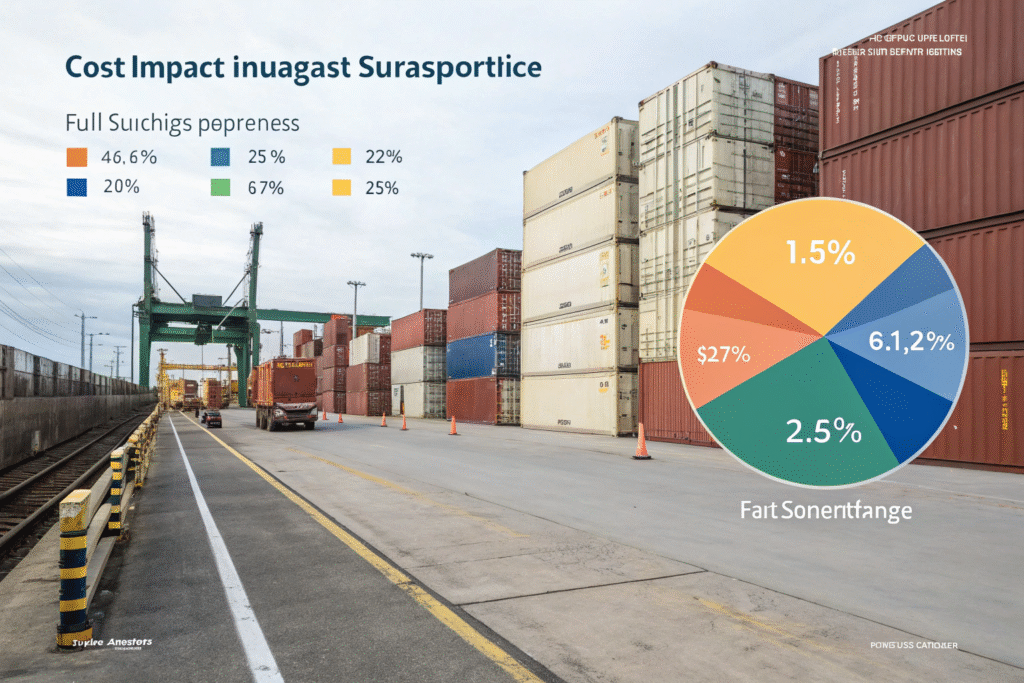
During normal market conditions, fuel surcharges typically represent 25-35% of total ocean freight costs and 30-45% of air freight costs. However, during periods of significant price spikes, these percentages can increase to 40-60% of total costs. For example, a standard 40-foot container from China to US West Coast might have a base freight rate of $2,000 with a $800 BAF during stable markets, but the same container could see BAF increase to $1,600 during fuel price spikes while base rates remain relatively stable. This variability makes fuel costs the most unpredictable component of shipping pricing.
What historical examples demonstrate extreme fuel impacts?
Notable fuel cost events:
- 2008 fuel crisis where BAF surcharges exceeded base ocean freight rates
- 2011-2014 high period with sustained elevated surcharges
- 2020 pandemic volatility with dramatic drops followed by rapid increases
- 2022 Ukraine conflict impacts causing the highest bunker prices in history
- Seasonal patterns showing regular winter increases and summer decreases
Understanding these patterns helps contextualize current price levels.
How do fuel costs compare to other shipping cost components?
Typical ocean freight cost breakdown:
- Base ocean freight: 40-50% of total cost
- Fuel surcharges (BAF): 25-35% of total cost
- Terminal handling charges: 10-15% of total cost
- Security and documentation: 5-10% of total cost
- Other accessorial charges: 5-10% of total cost
This breakdown highlights why fuel costs deserve particular attention in cost management.
What strategies can mitigate fuel price volatility?
While you cannot control global fuel prices, several strategic approaches can reduce your vulnerability to fuel cost fluctuations and create more predictable shipping expenses.
Contract structures with all-inclusive rates provide short-term predictability but often come with risk premiums. Surcharge caps limit your exposure to extreme price movements. Multi-carrier strategies allow shifting volume to carriers with more favorable surcharge policies. Transportation mode optimization balances air and ocean based on both time and cost considerations. Fuel hedging programs, while complex, can provide direct protection against price spikes. These approaches collectively can reduce fuel cost volatility impact by 30-50%.

How can contract structures address fuel uncertainty?
Effective contract approaches:
- All-inclusive rates locking in both base and fuel costs for contract periods
- Surcharge caps setting maximum BAF/FSC levels regardless of market prices
- Fixed-plus-variable structures with predictable base rates and transparent surcharges
- Price adjustment mechanisms with clear formulas and advance notice
- Volume commitments in exchange for more favorable surcharge terms
The right structure depends on your risk tolerance and budgeting needs.
What operational strategies reduce fuel cost impact?
Operational approaches:
- Consolidation strategies reducing per-unit fuel costs through better utilization
- Route optimization selecting more fuel-efficient shipping routes
- Seasonal planning avoiding peak surcharge periods when possible
- Carrier selection prioritizing operators with newer, more efficient vessels
- Modal balance shifting between air and ocean based on total cost calculations
These operational tactics can significantly reduce fuel cost per unit shipped.
How can you budget accurately despite fuel volatility?
Accurate budgeting requires understanding fuel cost drivers, monitoring price trends, and building appropriate contingencies into your financial planning. Sophisticated importers treat fuel costs as a separate budget line item requiring active management.
Develop fuel price scenarios based on historical patterns and current market forecasts. Maintain separate budget lines for base freight and fuel surcharges to track volatility independently. Build contingency reserves of 10-20% for fuel costs above baseline projections. Implement regular price monitoring using published fuel indexes. Establish relationships with carriers who provide transparent surcharge forecasting. These practices transform fuel costs from unpredictable surprises into managed variables.

What forecasting approaches improve budget accuracy?
Effective forecasting methods:
- Historical pattern analysis identifying seasonal and cyclical trends
- Market intelligence monitoring tracking geopolitical and economic fuel drivers
- Carrier communication understanding upcoming surcharge changes
- Scenario planning developing best-case, expected, and worst-case budgets
- Regular reassessment adjusting forecasts based on actual market movements
Combining these approaches creates more reliable fuel cost projections.
How much contingency should you budget for fuel volatility?
Appropriate contingency levels:
- Stable market conditions: 10-15% above current surcharge levels
- Moderate volatility: 15-25% above current surcharge levels
- High volatility periods: 25-40% above current surcharge levels
- Crisis situations: 40-60% above current surcharge levels
- Contract negotiations: Based specifically on contract terms and surcharge caps
These contingencies prevent budget shortfalls during unexpected price movements.
What should you look for in carrier fuel surcharge policies?
Carrier surcharge policies vary significantly in transparency, adjustment frequency, and calculation methodology. Understanding these differences helps select carriers that align with your risk management preferences.
Transparent carriers publish their surcharge formulas and adjustment schedules. Reasonable carriers provide advance notice of surcharge changes, typically 15-30 days. Competitive carriers sometimes absorb a portion of fuel cost increases rather than passing through 100%. Consistent carriers apply surcharges uniformly across customers rather than negotiating individually. Responsible carriers use accurate consumption data rather than inflated assumptions. These policy characteristics significantly impact your total costs and budget reliability.
What questions should you ask carriers about fuel surcharges?
Essential surcharge questions:
- What specific index do you use for surcharge calculations?
- How frequently do you adjust surcharge levels?
- What notice period do you provide for surcharge changes?
- Do you offer any surcharge caps or all-inclusive options?
- What consumption factors are built into your calculations?
- How do you handle currency exchange in surcharge calculations?
These questions reveal important policy differences between carriers.
How can you negotiate better fuel surcharge terms?
Negotiation strategies:
- Volume commitments in exchange for surcharge caps
- Longer contract terms for more predictable surcharge treatment
- Multi-modal agreements that balance air and ocean fuel impacts
- Benchmarking data showing how your rates compare to market
- Early payment incentives that might offset surcharge costs
- Efficiency partnerships where you help reduce carrier fuel consumption
Strategic negotiation can significantly improve your fuel cost terms.
Conclusion
Fuel price fluctuations directly impact your shipping costs through structured surcharge mechanisms that can represent 25-50% of total shipping expenses. While you cannot control global fuel markets, you can manage this volatility through strategic carrier selection, thoughtful contract structures, operational optimizations, and disciplined budgeting practices. The most successful importers treat fuel cost management as an ongoing strategic activity rather than a passive cost acceptance, developing expertise in surcharge mechanisms and maintaining flexibility in their transportation approaches. By understanding and actively managing fuel cost impacts, you can create more predictable shipping expenses despite underlying market volatility.