
I received a forwarded email from a new client last year that made my stomach turn. It was a CBP Notice of Action, a CF-29, assessing $127,000 in additional duties, penalties, and interest on two years of entries of women’s knitted tops. His previous customs broker had classified the garments under a generic heading with an 8% duty rate. CBP reviewed the entries and determined the correct classification carried a 28% rate. The 20 percentage point difference, multiplied by two years of import volume, plus a negligence penalty, plus interest, came to $127,000. The broker’s response to the client was a one-line email: "You should hire a trade attorney." No explanation. No ownership. No help. When the client called me, his voice was shaking. He was not a smuggler. He was not trying to cheat. He simply trusted the wrong broker to get the most basic part of customs clearance correct.
A wrong HS code classification can cost you massive retroactive duty bills, CBP penalties of up to 20% of the underpaid duty, shipment delays with accumulating port storage fees, and a damaged compliance record that triggers increased exam rates on all future shipments, while GeeseCargo gets it right through pre-shipment classification audits, in-house licensed customs brokers, and binding ruling applications when necessary.
The ten-digit HTSUS code you put on your entry is not a suggestion. It is a legal declaration. It determines your duty rate, your Section 301 tariff exposure, your PGA requirements, and your eligibility for free trade agreement benefits. Get it wrong, and you are not just looking at a corrected invoice. You are looking at a liability that compounds silently over years and detonates when CBP’s audit catches up. At GeeseCargo, we treat HS code classification as the single most important compliance step in the import process. Let me explain exactly how classification errors happen, what they cost, and how our process ensures they do not happen to you.
What Is an HS Code and Why Does Getting It Wrong Trigger Penalties?
The Harmonized System code is an internationally standardized numerical method of classifying traded products. It is used by customs authorities around the world to identify what is being shipped and to apply the correct duty rate. The United States version is called the Harmonized Tariff Schedule of the United States, or HTSUS. It has over 17,000 ten-digit codes. Each code represents a specific product description, and each carries a specific duty rate. The difference between one code and the code right next to it can be 15 percentage points in duty. A single digit is the difference between compliance and a penalty.
The HS code is a ten-digit legal identifier for your product under the U.S. tariff system, and getting it wrong triggers penalties because Customs and Border Protection treats incorrect classification as a failure of the importer’s legal duty to exercise reasonable care, which can result in fines of 20% of the underpaid duties for negligence or 40% for gross negligence, plus interest on the unpaid amounts.
I explain the penalty structure to clients because fear of the unknown is worse than fear of a known number. The legal standard is "reasonable care." You, as the importer of record, are required to use reasonable care in entering your goods. If you fail to do so and underpay duties, CBP can issue a penalty under 19 U.S.C. 1592. The penalty levels are defined. Negligence is a failure to exercise reasonable care. The penalty is two times the lost duties or 20% of the dutiable value, whichever is less. Gross negligence is a knowing disregard of the law. The penalty is four times the lost duties or 40% of the dutiable value. Fraud is an intentional material false statement. The penalty is the domestic value of the merchandise. For the client with the $127,000 bill, CBP assessed negligence-level penalties. The duty underpayment was about $90,000. The penalty was around $20,000. The rest was interest, which accrues from the date the original duty should have been paid. Interest never stops. It compounds. A two-year-old error is a growing debt.

What is the "reasonable care" standard and how do importers fail it?
Reasonable care is a legal standard defined by CBP in the Customs Modernization Act. It requires importers to take active steps to ensure their entries are correct. Passively accepting what a factory or a broker tells you is not reasonable care.
CBP publishes a Reasonable Care Checklist. It includes questions like: Have you consulted the HTSUS to determine the correct classification? Have you reviewed CBP rulings on similar products? Have you obtained a lab analysis of the material composition? Have you provided your broker with complete and accurate information? If you answer no to these questions and your entry is wrong, CBP will find that you failed to exercise reasonable care. Many importers fail because they delegate everything to a broker and never ask a question. The law does not allow you to delegate your reasonable care duty. The importer of record is ultimately responsible. At GeeseCargo, we help our clients satisfy the reasonable care standard by documenting our classification process. We create a classification file for each product that includes the HTSUS analysis, any CBP rulings consulted, and the factual basis for the code selected. If CBP ever questions the entry, we produce this file as evidence of reasonable care.
How does CBP actually catch misclassification errors?
CBP catches misclassification through several mechanisms. The most common is a focused assessment, which is a targeted audit of a specific importer’s entries. Other triggers include a referral from a CBP officer during a physical exam, a trade complaint from a competitor, or an algorithmic flag from CBP’s data analytics systems.
CBP’s Centers of Excellence and Expertise, the CEEs, employ import specialists who are experts in specific industries. These specialists review entries for classification accuracy. They compare the entered HTS code against the product description, the invoice value, and known patterns for similar goods. If something looks off, they issue a CF-28 Request for Information, asking the importer to justify the classification. If the response is inadequate, they issue a CF-29 Notice of Action proposing a rate advance and a penalty. The key point is that CBP does not need to physically inspect your goods to catch an error. They can do it from their desk by analyzing your entry data. This is why a vague product description on the invoice is so dangerous. It invites the specialist to assume the worst and reclassify upward. We prevent this by ensuring the product description on every entry is specific enough to support the classification we filed. We leave no room for guesswork.
What Are the Most Common HS Code Mistakes We See in Clothing and Gifts?
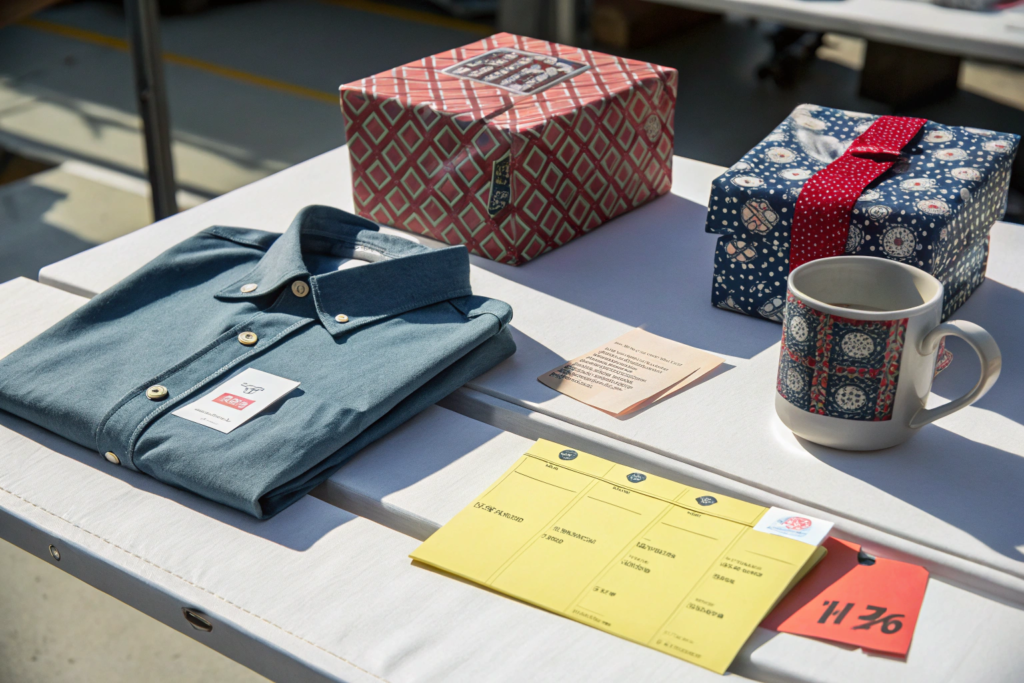
Clothing and gift items are, in my experience, the most frequently misclassified consumer goods. The reasons are structural. The textile tariff schedule is incredibly complex, with different rates for different fibers, different construction methods, and even different genders of the intended wearer. Gift items often come in sets, which have their own classification rules under GRI 3. And many importers simply accept the HTS code their Chinese factory prints on the commercial invoice, which is often wrong and optimized for Chinese export formalities, not U.S. import compliance.
The most common HS code mistakes in clothing and gifts include misclassifying blended fabrics under the wrong fiber heading, treating gift sets as a single product without applying the essential character rule, confusing the material composition of decorative versus functional items, and failing to differentiate between men’s and women’s apparel, each of which can carry drastically different duty rates.
I will give you specific examples from our case files. A client imported a jacket that was 52% cotton and 48% polyester. His previous broker classified it under the cotton heading, which had a 15% base duty rate plus 25% Section 301. The correct classification, because polyester was over 50% by weight, was under the synthetic fiber heading, with a 7% base rate and 7.5% Section 301. The previous broker had cost the client an extra 25 percentage points in total duty, not because he was dishonest, but because he did not ask for the fiber content breakdown. Another client imported a gift set containing a ceramic mug, a package of hot chocolate mix, and a small plush toy. His broker classified the set under the ceramic heading. CBP correctly reclassified it under the food heading because the hot chocolate gave the set its essential character. The food heading had a completely different regulatory regime, and the client had not filed FDA prior notice. The shipment was held, the food component was refused, and the entire set had to be re-exported. These errors are entirely preventable.
Why are blended fabric garments a classification trap?
Blended fabrics are a trap because the tariff code classifies textiles based on the predominant fiber by weight. A 1% difference in fiber content can flip the classification from one chapter to another with a completely different duty rate.
The rule is simple in theory but difficult in practice. You must know the exact fiber content by weight of each component of the garment. The shell, the lining, the trim. You cannot guess. The factory’s verbal assurance is not evidence. You need a lab test or a detailed mill specification sheet. We require our apparel clients to provide a fiber content test report from an accredited lab for any blended fabric garment. We use this report to determine the correct classification. We also watch for production variability. A fabric specification may say 50% cotton, 50% polyester, but batch-to-batch variation can push one fiber over 50%. We advise clients to target a safe margin, such as 52% of the desired predominant fiber, to ensure consistency. This is the level of detail that a professional customs broker applies. It is not enough to read the label. You must verify what is inside.
How does the "essential character" rule create risk for gift set importers?
When you import a set of different items packaged together for retail sale, the entire set is classified under the single HTS code of the component that gives the set its "essential character." Determining essential character is a legal analysis, not an obvious fact.
The GRI 3(b) analysis considers the nature of the material, the bulk, quantity, weight, value, and the role of each component. There is no mechanical formula. Reasonable people can disagree. CBP has published hundreds of rulings on gift set classifications, and we study them. A candle and holder set might have the essential character of the holder if the holder is the more valuable and decorative component. A mug and candy set might have the essential character of the candy if the candy is the main selling point. If you classify the set under the wrong component, you are misclassifying the entire entry. We perform a written GRI 3 analysis for every gift set our clients import. We document the rationale and keep it in the classification file. If CBP challenges, we are ready with a reasoned legal argument, not a panicked guess.
How Does GeeseCargo’s Classification Process Prevent Costly Errors?
The $127,000 penalty my new client received was not inevitable. It was the predictable result of a broker who treated classification as a data entry task rather than a legal analysis. My team and I have built a classification process that treats every product as a small legal case. We gather evidence. We research the law. We apply the rules. We document our reasoning. Then we file the entry. This process takes more time upfront than simply copying the factory’s HTS code, but it saves hundreds of thousands of dollars on the back end.
GeeseCargo’s classification process prevents errors through a four-stage methodology: physical product and documentation review to gather facts, HTSUS legal analysis including chapter notes and CBP rulings research, written classification justification for the file, and ongoing re-validation when products, materials, or tariff rules change.
Stage one is fact-gathering. We do not assume anything. For a new client product, we request a physical sample, a detailed material breakdown, a fiber content test report for textiles, and the intended use and marketing description. We want to know what the product actually is, not what the invoice says it is. Stage two is legal analysis. Our in-house licensed customs broker reads the relevant HTSUS chapter notes, the section notes, and the Explanatory Notes from the World Customs Organization. We search CBP’s CROSS database for binding rulings on similar products. We look at the Court of International Trade case law for any disputes. Stage three is the written justification. We document our classification decision in a memo that cites the specific HTSUS headings and rulings we relied on. This memo goes into the client’s permanent customs file. Stage four is ongoing validation. We re-review classifications if the product design changes, if the tariff schedule is amended, or if a new CBP ruling changes the interpretation. Classification is not a one-time event. It is an ongoing discipline.
Why is a physical product sample so critical to getting the code right?
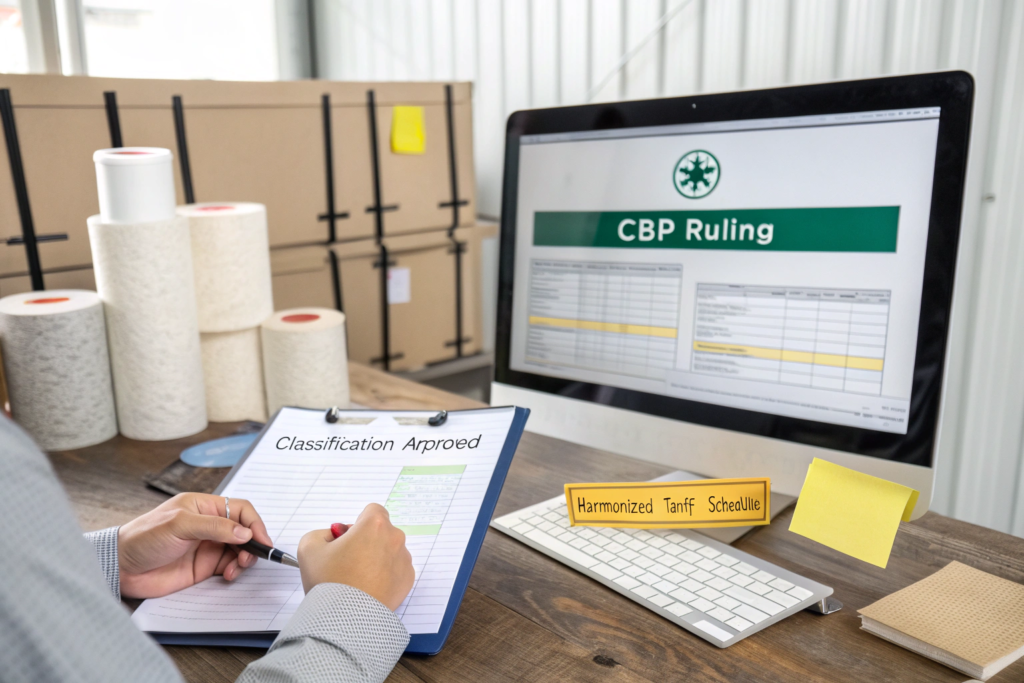
A commercial invoice description is often useless for classification. "Ladies fashion top" tells you nothing about the fiber, the knit, or the construction. A physical sample tells you everything. You can feel the fabric. You can see the stitching. You can test the material.
We use the sample to verify every detail. Is the fabric woven or knitted? This is one of the most fundamental distinctions in the textile tariff schedule, and it cannot be determined from a written description. What is the fiber composition? We can send a swatch to a lab for testing if the client does not have a test report. Are there any trims or accessories, like buttons or zippers, that might affect classification? Is the garment clearly men’s or women’s based on the cut? These are the questions that a physical sample answers definitively. The sample also serves as evidence. If CBP ever challenges the classification, we can send them the sample and say, "This is exactly what we classified. Here is why our code is correct." This is far more persuasive than a stack of paper. We maintain a sample library for our regular clients.
How do CBP binding rulings fit into the classification strategy?
A CBP binding ruling is the gold standard of classification certainty. It is an official written decision from CBP Headquarters that states definitively how your specific product is classified. Once issued, no CBP officer at any port can apply a different classification to future entries of that identical product.
We recommend binding rulings for high-volume products with ambiguous classifications or for products where the duty savings justify the legal investment. The ruling process takes several months and requires a formal submission with a detailed product description, samples, a legal argument, and proposed classification. We prepare the ruling request in-house with our brokerage team. The cost is the time and legal effort to prepare the submission. The benefit is absolute certainty. The client knows the duty rate. The retail buyer knows the landed cost. CBP cannot issue a CF-29 for that product because the ruling binds both the importer and the government. For a product that will be imported regularly for years, a binding ruling is cheap insurance. It also demonstrates reasonable care at the highest level. An importer who has obtained a binding ruling is effectively audit-proof on that classification.
What Should You Do If You Suspect Your Current HS Codes Are Wrong?
The client with the $127,000 penalty asked me a question during our first call that I hear often. "Should I just go back and fix the old entries, or should I leave them alone and hope CBP doesn’t find them?" My answer was immediate and firm. You must fix them. Voluntarily. Before CBP finds them on their own. The mechanism for this is called a prior disclosure. It is the single most important damage-control tool available to an importer who discovers a compliance error.
If you suspect your current HS codes are wrong, you should immediately halt new entries under the questionable code, request a classification review from a qualified customs broker, and if an error is confirmed, file a prior disclosure with CBP to voluntarily correct past entries, which legally limits your penalty exposure to the interest on the underpaid duties and eliminates the risk of fraud or gross negligence penalties.
A prior disclosure is a formal notification to CBP that you have discovered an error in a past entry and you are voluntarily disclosing it before CBP has initiated an investigation. The legal benefit is massive. If your prior disclosure is valid and accepted, CBP will assess the underpaid duties and interest, but the penalty is limited to interest only. There are no multiple-of-duty penalties. There is no seizure. You pay what you would have paid if the entry had been correct originally, plus the time value of money. The alternative is that CBP discovers the error first. Then you face the full penalty structure I described earlier. The choice is between paying interest and paying interest plus 20% to 40% penalties. The smart importer files the prior disclosure. We manage prior disclosures for clients who come to us with classification problems. We review the past entries, calculate the duty differential, prepare the disclosure letter with the legal argument and the corrected classifications, and submit it to CBP’s appropriate Center of Excellence. We represent the client through the process, responding to any follow-up inquiries and negotiating the final duty bill. A prior disclosure is not an admission of guilt. It is an assertion of good faith.

How does the prior disclosure process work step by step?
The prior disclosure process requires a detailed written submission identifying the specific entries to be corrected, the error that occurred, the correct information, and the additional duties owed. It must be filed with the CBP Center of Excellence that has jurisdiction over the importer.
First, we conduct a forensic review of the past entries. We pull all entry summaries for the affected product over the past five years, which is the standard lookback period. We calculate the correct duty for each entry and the differential owed. Second, we draft the prior disclosure letter. The letter explains the nature of the error, how it occurred, the steps taken to correct it, and the total additional duties and interest tendered. Third, we tender the duties and interest electronically via ACH. Tender means we pay the money at the time of filing. This is required for a valid prior disclosure. Fourth, we follow up with the CBP import specialist assigned to the case. We answer questions, provide the supporting classification analysis, and negotiate any disputes over the amount. The process typically takes several months. The outcome, assuming the disclosure is complete and the corrected classification is legally sound, is a closure letter from CBP accepting the disclosure and confirming no further penalties.
What immediate steps should you take with ongoing shipments?
While you are addressing the past entries, you must also stop the bleeding on current and future shipments. You cannot continue filing entries under a code you now know is incorrect. That would transform an honest mistake into a knowing violation.
The immediate step is to halt all in-process shipments using the incorrect code. We can file an entry amendment for any shipments that have been filed but not yet liquidated. Liquidation is the final legal closure of an entry, and it typically occurs 314 days after entry. Before liquidation, an amendment is relatively straightforward. We file the corrected entry summary and pay any additional duties. After liquidation, you must use the prior disclosure process. For shipments not yet departed from China, we pause the booking and update the commercial invoice and the entry filing with the correct HTS code. We brief the client on the new duty rate so they can adjust their pricing and their cash flow planning. The process of correcting a systemic classification error is not fun. It requires money, time, and uncomfortable conversations with accountants and business partners. But it is infinitely better than the alternative. The cost of correction is bounded and knowable. The cost of hiding and waiting is unbounded and potentially business-ending.
Conclusion
The client who received the $127,000 penalty is still importing today. We filed a valid prior disclosure on the entries that had not yet been flagged by CBP, which limited his exposure on those. We reclassified his entire product line, trained his team on proper invoice documentation, and set up his ongoing entries under the correct HTS codes. His compliance record is now clean. His exam rate has dropped. His broker, which is now us, answers the phone. The $127,000 was a hard lesson, but it was not a fatal one because he acted. He did not bury his head. He reached out, and we fixed it.
Wrong HS code classification is a silent business killer. It looks like a small clerical detail until it detonates into a six-figure penalty and a disrupted supply chain. At GeeseCargo, we treat every classification decision as what it is: a legal filing with binding consequences. We put in the work upfront. We review the sample, research the code, document the analysis, and file with confidence. This is what a professional, reliable customs clearance service delivers. Not just data entry, but legal compliance with a human brain behind it.
If you have even a small doubt about the HTS codes on your current entries, do not wait. Send me your top five product SKUs and the codes you are currently using. My team will do a complimentary preliminary classification review. If the codes are correct, you will sleep better knowing it. If they are wrong, we will tell you exactly what needs to change and help you fix it properly. That is my promise as a freight forwarder who puts your compliance and your financial safety first.