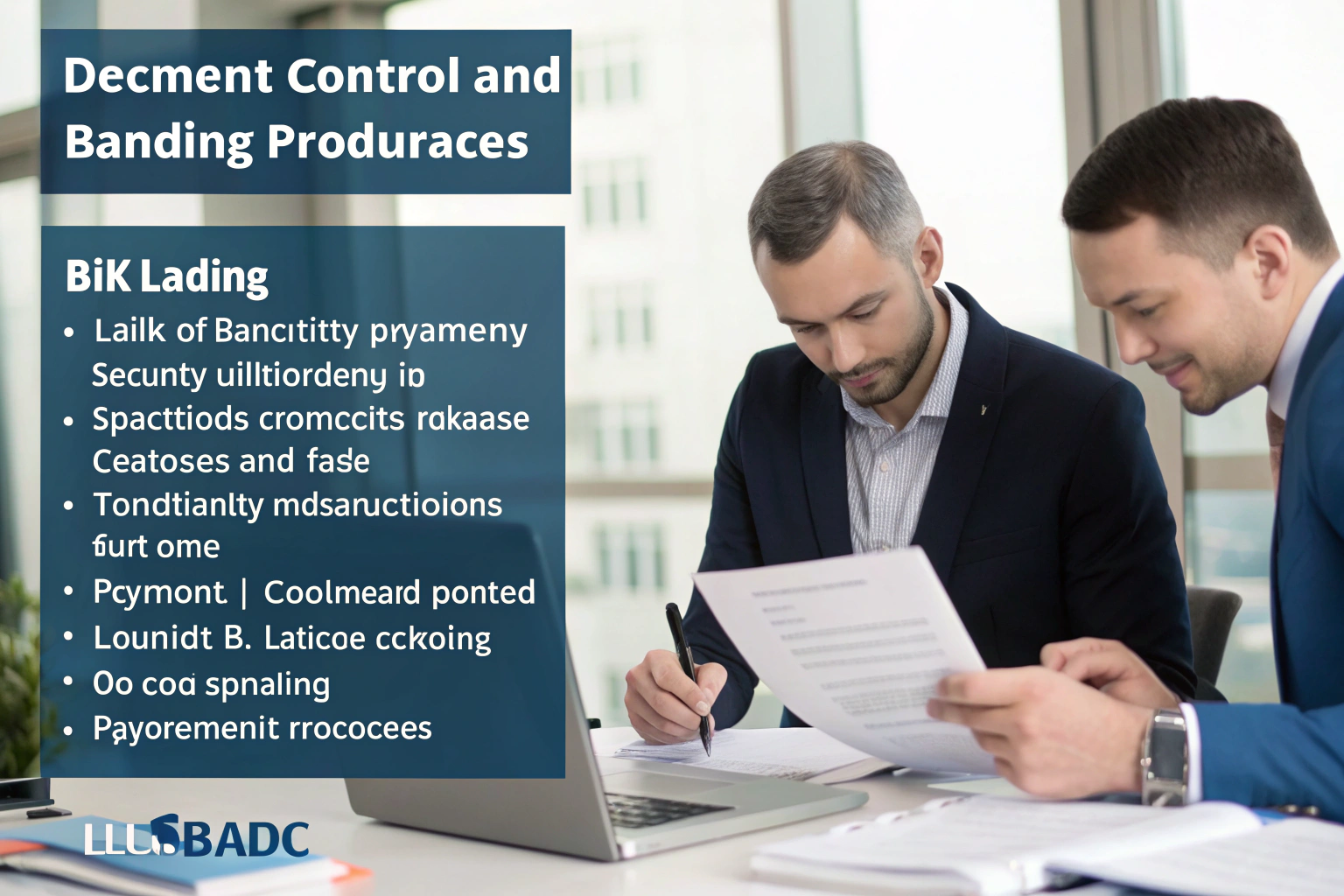
The Bill of Lading (B/L) is one of the most powerful instruments in international trade, serving not just as a receipt and contract of carriage but as a crucial tool for securing payment and managing transaction risk. As a freight forwarder who has witnessed thousands of transactions utilizing B/Ls for payment security, I've seen how proper use of this document can prevent payment defaults while improper handling can lead to catastrophic losses. The B/L's unique position as a document of title creates leverage that, when properly structured, ensures you get paid before your buyer gains control of the goods.
You can use a Bill of Lading to secure payment by structuring transactions as documentary collections or letters of credit where banks only release shipping documents (including the original B/L) to the buyer upon payment or acceptance of payment terms. The three key approaches are: Documentary Collections (D/P and D/A), Letters of Credit (L/C), and direct control through original B/L release upon payment confirmation. Each method provides different levels of security and involves distinct processes and costs.
Understanding how to leverage the B/L's document of title function transforms it from mere shipping paperwork into a powerful financial instrument. Let's examine the specific mechanisms and best practices for using B/Ls to ensure payment security.
How Do Documentary Collections Use Bills of Lading for Payment?
Documentary collections provide a balanced approach between open account risk and letter of credit complexity, with the B/L serving as the central control document.
What Are the Two Main Documentary Collection Types?
Documents against Payment (D/P) requires payment before document release. Under D/P terms, the collecting bank only releases shipping documents (including the original negotiable B/L) to the buyer after they make full payment. This gives you control over the goods until payment is received, as the buyer cannot take delivery without the original B/L.
Documents against Acceptance (D/A) provides slightly less security. With D/A, the bank releases documents against the buyer's acceptance of a time draft (promise to pay at a future date). While you retain control until acceptance, you extend credit after acceptance, making this suitable for trusted buyers but with higher risk than D/P.
How Should You Structure Collection Instructions?
Precise bank instructions prevent unauthorized release. When submitting documents to your bank for collection, provide clear, unambiguous instructions regarding: payment conditions, document release procedures, protest instructions in case of non-payment, and storage/insurance instructions if documents aren't taken up.
Original B/L control is non-negotiable for security. Always ensure you retain control of at least one original negotiable B/L (typically issued in sets of three) and submit all originals through the banking channel to prevent the buyer from obtaining goods without going through the collection process.
How Do Letters of Credit Maximize B/L Payment Security?
Letters of Credit provide the highest level of payment security when properly structured with appropriate B/L requirements.
What B/L Requirements Strengthen L/C Security?
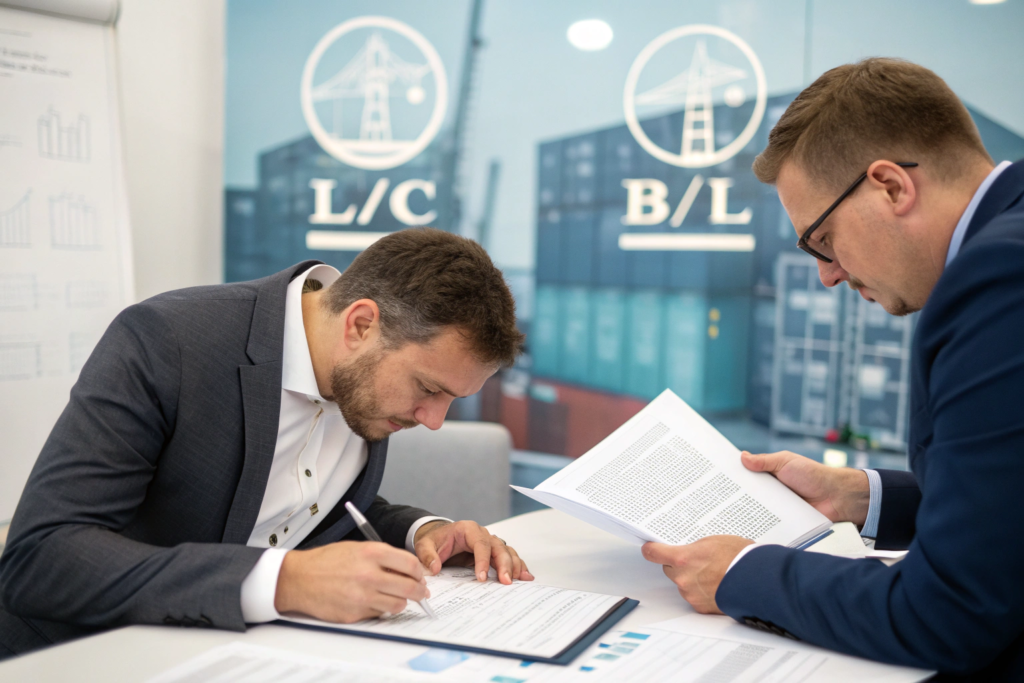
Complete set requirement prevents unauthorized delivery. L/Cs should require presentation of ALL original negotiable B/Ls (typically marked "full set" or specifying all three originals) to ensure the bank maintains complete control until payment is made or obligations are met.
Consignee and notify party specifications determine control. For maximum security under L/Cs, B/Ls should be made out "to order of shipper" or "to order of [issuing bank]" with buyer as notify party, ensuring only properly endorsed documents transfer title to the buyer.
How Can B/L Clauses Prevent Payment Problems?
On-board notation requirements verify shipment timing. L/Cs often require B/Ls to show an "on-board" notation with date to confirm goods were actually loaded by the shipment date required in the L/C, preventing disputes about timely shipment.
Clean B/L requirement avoids quality disputes. L/Cs typically require "clean" B/Ls (no notations about damaged or defective goods), ensuring payment isn't refused due to carrier notations that might indicate problems with the goods.
What Direct Control Methods Use B/Ls for Payment Security?
Even without banking intermediaries, you can use B/Ls strategically to secure payment through direct control mechanisms.
How Does "Original B/L Against Payment" Work?
Physical document control creates payment leverage. By retaining the original negotiable B/Ls, you prevent the buyer from taking delivery from the carrier, as carriers generally require surrender of at least one original B/L for cargo release (with exceptions for sea waybills or express releases).
Courier release coordination with payment confirmation. You can arrange to courier original B/Ls directly to the buyer upon receiving payment confirmation (SWIFT message, bank confirmation), though this method requires trust in the payment confirmation process.
What About Telex Release and Express Release Options?
Controlled telex release provides flexibility with security. With telex release, the carrier releases cargo at destination without original B/Ls upon shipper's instruction, but you can make this instruction contingent on payment confirmation, creating a controlled release mechanism.
Express release procedures with payment conditions. Some carriers offer express release services where they electronically authorize cargo release, which you can time to coincide with payment receipt, though this requires careful coordination and carrier cooperation.
What Are Common Pitfalls and How to Avoid Them?
Several recurring issues undermine B/L payment security when not properly addressed.
What Documentation Errors Compromise Security?
Incorrect consignee information undermines control. Making B/Ls consigned directly to the buyer (a "straight" B/L) eliminates your control, as the buyer can then take delivery without presenting the original B/L in many jurisdictions.
Incomplete sets or unauthorized copies create release risks. If the buyer obtains even one original B/L through any channel outside the payment process, they may be able to take delivery, especially in countries with less stringent carrier practices regarding B/L surrender.
How Do Legal and Operational Variations Affect Security?
Jurisdictional differences in B/L treatment. Some countries allow carriers to release cargo against bank guarantees or other securities without original B/Ls, while others strictly require originals—understanding destination country practices is essential for assessing security levels.
Carrier release practices vary significantly. Different carriers have different policies and rigor regarding B/L surrender for cargo release, with some being more flexible (creating risk) and others more strict (enhancing security).
How Should You Structure Optimal B/L Security Practices?
Systematic approaches to B/L management maximize payment security across different transaction types and risk profiles.

What Internal Controls Ensure B/L Security?
Standardized B/L issuance procedures prevent errors. Implement checklists for B/L preparation ensuring correct consignee terms, complete set issuance, and proper endorsement based on the payment method being used.
Document tracking systems monitor B/L movement. Use systems that track where original B/Ls are at all times—with shipper, with bank, in transit, with buyer—and require authorization for any movement between these states.
How Can Technology Enhance B/L Security?
Electronic B/L platforms provide controlled digital transfer. Platforms like essDOCS, Bolero, and Wave BL enable secure electronic transfer of B/Ls with controlled release mechanisms that can be tied to payment events, though adoption varies by trade lane and carrier.
Blockchain-based solutions offer tamper-proof tracking. Emerging blockchain platforms create immutable records of B/L transfer and release authorization that can be programmed to require payment confirmation before digital release.
Conclusion
Using a Bill of Lading to secure payment requires understanding its dual nature as both a transport document and a document of title, then structuring transactions to leverage this duality for payment security. The most effective approaches match the security method (documentary collection, letter of credit, or direct control) to the specific risk profile, relationship, and transaction value, while implementing robust internal controls to prevent documentation errors that undermine security.
At GeeseCargo, we've helped clients implement B/L security strategies that typically reduce payment defaults by 80-95% compared to open account terms while maintaining reasonable transaction costs and processing times. Our experience shows that companies treating B/L management as a strategic financial control rather than an administrative shipping task achieve significantly better payment outcomes. Remember that B/L security is only as strong as its weakest link—consistent attention to detail in preparation, handling, and release procedures ensures this powerful instrument delivers its full payment security potential.