When one of our clients nearly faced a $15,000 cost overrun due to using outdated Incoterms in their contracts last quarter, it highlighted how crucial staying current with these international standards really is. As founder of GeeseCargo with extensive international trade experience, I've witnessed firsthand how Incoterms evolution can significantly impact supply chain costs and risk allocation.
The International Chamber of Commerce (ICC) has not announced any official updates to Incoterms rules for 2025. The current Incoterms 2020 rules remain in effect, with the next expected revision likely in 2030 based on the ICC's typical 10-year revision cycle. However, businesses should monitor ICC announcements for any unexpected changes and ensure they're using current 2020 rules rather than outdated 2010 versions.
While no major structural changes are anticipated for 2025, understanding the current Incoterms 2020 framework and preparing for potential interpretive updates is essential for effective international trade management. The most successful companies treat Incoterms as living documents that require continuous education rather than one-time implementation.
What Are the Current Incoterms 2020 Rules and Their Proper Usage?
The Incoterms 2020 rules continue to govern international trade transactions, with specific applications for different transportation scenarios.
How Are the 11 Current Incoterms Rules Categorized?
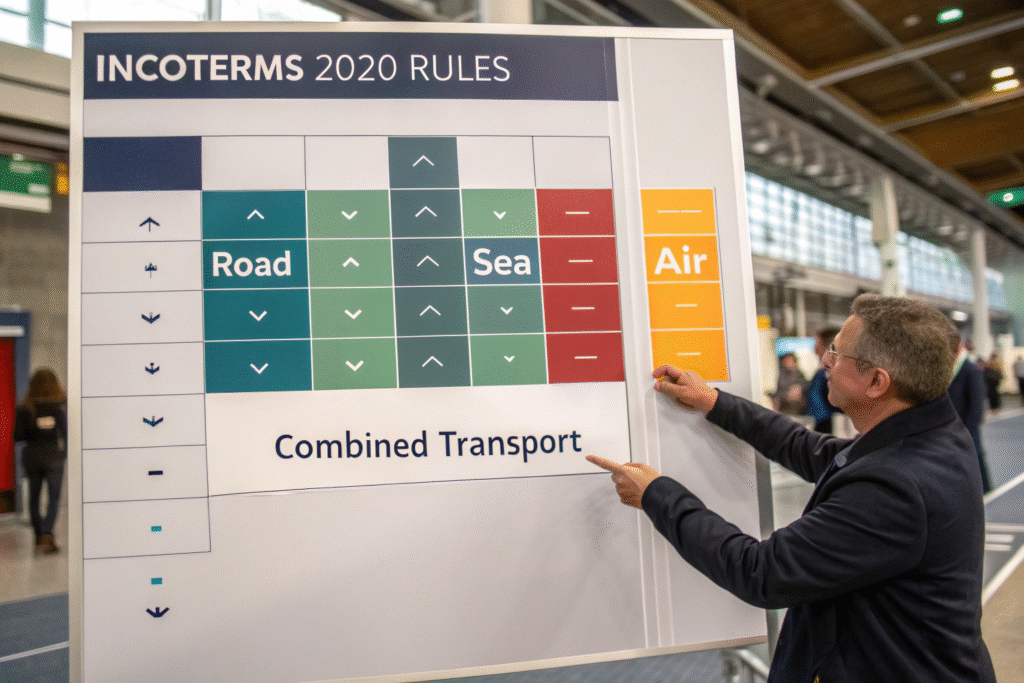
The two main categories remain based on transportation mode suitability. Group 1 includes seven rules for any mode of transport (EXW, FCA, CPT, CIP, DPU, DAP, DDP), while Group 2 contains four rules specifically for sea and inland waterway transport (FAS, FOB, CFR, CIF).
DPU replaced DAT from previous versions with expanded placement options. The Delivered at Place Unloaded term now allows delivery at any named place, not just terminals, providing more flexibility for various logistics scenarios.
FCA (Free Carrier) enhancements address bill of lading issues. The 2020 rules added an option for buyers to instruct carriers to issue onboard bills of lading to sellers using FCA terms, resolving a longstanding documentary challenge.
What Common Misapplications Should Businesses Avoid in 2025?
FOB remains frequently misused for non-maritime shipments. Despite clear categorization, many businesses still incorrectly apply FOB to air, rail, or truck shipments instead of using FCA.
Insurance requirement misunderstandings persist with CIF and CIP. Many importers don't realize CIP now requires higher insurance coverage (Institute Cargo Clauses A) compared to CIF's minimum coverage (Institute Cargo Clauses C).
DPU unloading responsibility confusion causes cost disputes. Sellers bear unloading costs under DPU, unlike DAP where buyers handle unloading—a distinction many companies still misunderstand.
What Practical Interpretations Have Evolved Since 2020?
While the rules themselves haven't changed, market practices and legal interpretations continue to evolve, affecting how Incoterms function in real-world transactions.
How Has Digitalization Impacted Incoterms Application?
Electronic document provisions have gained importance post-2020. While Incoterms 2020 acknowledged electronic records, the massive shift toward digital documentation during and after COVID-19 has made this aspect increasingly critical.
Blockchain and smart contracts are creating new interpretive questions. Automated contract execution based on Incoterms triggers raises questions about dispute resolution and exception handling not fully addressed in the current rules.
Real-time tracking integration affects risk management. The ability to monitor shipments continuously has changed how companies perceive and manage risk transfer points defined by Incoterms.
What Supply Chain Disruptions Have Changed Incoterms Practices?
Port congestion and carrier capacity issues have forced Incoterms reassessment. The recent global shipping crises have highlighted the cost implications of terminal storage charges and demurrage under different Incoterms.
Geopolitical tensions have emphasized customs responsibility importance. Trade disputes and sanctions have made proper allocation of export and import customs responsibilities more critical than ever.
Sustainability considerations are influencing term selection. Environmental concerns and carbon footprint calculations are beginning to influence which Incoterms companies choose based on control over transportation mode selection.
How Should Businesses Prepare for Future Incoterms Revisions?
While 2025 won't bring new rules, proactive preparation ensures smooth transition when the next revision eventually arrives.

What Documentation and Process Reviews Should Companies Conduct?
Current contract audit identifies outdated Incoterms usage. Review all active supplier and customer contracts to ensure they reference Incoterms 2020 rather than previous versions.
Process mapping reveals operational misalignments. Document how Incoterms are actually implemented versus how they're specified in contracts to identify discrepancies needing correction.
Training gap assessment ensures organizational competency. Evaluate whether procurement, sales, and logistics teams fully understand current Incoterms applications and implications.
What System Updates Might Future Revisions Require?
ERP and accounting system configuration may need adjustments. Current systems often have hardcoded Incoterms interpretations that might not align with future rule changes.
Contract template repositories require version control. Maintaining clear Incoterms version references in all contract templates prevents accidental use of outdated terms.
Supplier and customer education materials need periodic updates. Training resources, specification sheets, and procurement guidelines should clearly reference the current Incoterms version.
What Are the Most Costly Incoterms Misunderstandings to Avoid?
Certain persistent misunderstandings continue to create significant financial impacts despite the current rules being several years old.
Where Do Risk Transfer Misunderstandings Create Major Exposures?
Loading responsibility confusion under FCA versus FOB continues. Many businesses still don't realize that FCA requires the buyer to arrange main carriage loading, while FOB places this responsibility on the seller.
Insurance coverage gaps under CIF cause uncovered losses. Importers often assume CIF provides comprehensive insurance coverage when it actually only requires minimum coverage, leaving them underinsured for many loss types.
Terminal handling charge allocations create unexpected costs. The distinction between DPU (seller pays unloading) and DAP (buyer pays unloading) remains frequently misunderstood until invoices arrive.
How Can Documentation Errors Invalidate Incoterms Protections?
Incorrect bill of lading terms undermine FCA arrangements. When sellers obtain onboard bills of lading under FCA terms without the proper buyer authorization, they may inadvertently assume risks intended for the buyer.
Export packaging specifications missing from contracts create disputes. Incoterms define packaging requirements generally, but specific packaging standards needed for certain commodities often require additional contractual clarity.
Customs documentation responsibility confusion causes clearance delays. While Incoterms specify who arranges and pays for customs formalities, the actual preparation of required documents often requires clearer assignment.
How Are Emerging Trends Likely to Influence Future Incoterms?
While 2025 won't bring changes, understanding developing trends helps businesses anticipate future evolution.

What Sustainability Considerations Might Future Revisions Address?
Carbon emission accountability may become explicitly allocated. Future revisions might more clearly define responsibility for emission reporting and reduction initiatives within transportation chains.
Circular economy and reverse logistics requirements could be incorporated. As product returns and recycling become more regulated, future Incoterms might address reverse supply chain responsibilities.
Sustainable packaging standards might receive more detailed treatment. Environmental packaging requirements could evolve from general statements to more specific obligations.
How Might Digital Transformation Impact Future Rules?
Smart contract integration could become formally recognized. Future revisions might provide standard language for linking Incoterms with blockchain-based smart contracts for automated execution.
Digital document standards may be more explicitly defined. As paperless trade advances, future rules might specify acceptable electronic document formats and authentication methods.
Real-time data sharing responsibilities could be allocated. The obligation to provide shipment visibility and tracking data might be formally assigned to specific parties under different terms.
Conclusion
While 2025 will not bring updates to the Incoterms rules, businesses should use this period of stability to ensure they're fully leveraging the current Incoterms 2020 framework and preparing for eventual future changes. The most successful companies treat Incoterms mastery as an ongoing competency rather than a one-time training exercise, recognizing that proper application directly impacts profitability and risk management.
At GeeseCargo, we've helped clients reduce shipping disputes by over 60% through systematic Incoterms education and contract alignment. The most effective approaches combine comprehensive training with practical implementation support and regular compliance audits to ensure consistent application across all international transactions.
Begin your Incoterms optimization by conducting a thorough review of your current usage across all departments and contracts, then implement targeted education addressing your specific gap areas. Remember that in international trade, Incoterms proficiency isn't just about legal compliance—it's a strategic capability that directly impacts your cost structure, risk exposure, and operational efficiency.