
When one of our clients had a $750,000 shipment delayed because the original paper bill of lading took 12 days to arrive by courier during a storm, the answer became clear: digital bills of lading have evolved from experimental to essential. As founder of GeeseCargo with extensive experience in both traditional and digital shipping documentation, I’ve witnessed the digital B/L transformation from risky novelty to reliable standard.
Digital bills of lading are now safe and reliable when using established platforms like Bolero, essDOCS, or TradeLens. These systems provide cryptographic security, instant transfer, and eliminate document fraud risks that plague paper processes. Major carriers including Maersk, MSC, and CMA CGM now accept electronic bills, with adoption accelerating since the COVID-19 pandemic revealed paper documentation vulnerabilities.
The transition to digital bills represents the most significant documentation evolution in centuries, offering substantial benefits while requiring understanding of both the technology and legal frameworks that make them viable. Companies using digital bills typically reduce documentation errors by 65-85% and cut processing time from weeks to hours.
What Makes Digital Bills of Lading Secure?
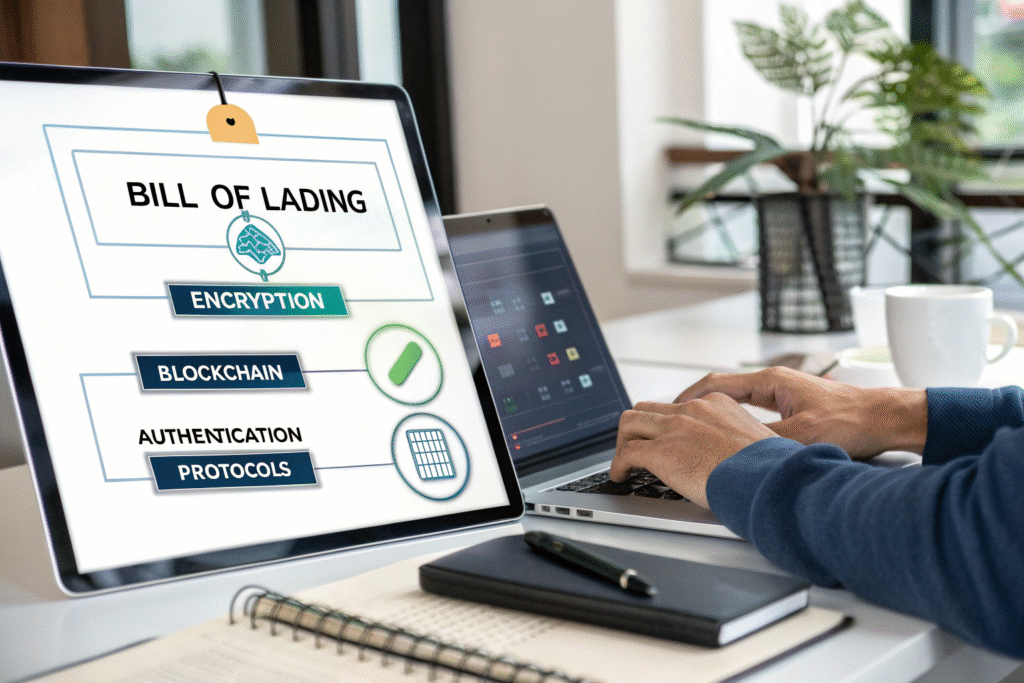
Modern digital bill of lading platforms employ multiple security layers that often exceed paper document protection.
How Does Cryptographic Security Protect Digital Bills?
Public Key Infrastructure (PKI) ensures document integrity and authentication. Each party receives unique digital certificates that verify identity and create legally binding signatures, preventing unauthorized alterations or forgeries.
Blockchain and distributed ledger technology create immutable records. Platforms using blockchain timestamp each transaction and create permanent, unchangeable records of ownership transfers and document history.
Multi-factor authentication prevents unauthorized access. Digital platforms typically require multiple verification methods beyond simple passwords, including biometric verification or hardware tokens for high-value transactions.
What Legal Frameworks Support Digital Bill Enforcement?
The UNCITRAL Model Law on Electronic Transferable Records provides international standards. Adopted by many countries, this framework gives electronic transferable records the same legal status as paper documents.
The English Law Commission has confirmed electronic trade documents’ legal validity. Their 2022 report explicitly confirmed that electronic documents can possess the same legal characteristics as paper documents when meeting specific criteria.
Carrier terms and conditions now incorporate digital bill provisions. Major shipping lines have updated their carriage contracts to explicitly recognize and govern electronic bill of lading usage.
How Reliable Are Digital Bill Platforms in Practice?
Operational reliability depends on both technical infrastructure and industry adoption levels.
What Uptime and Performance Standards Do Platforms Maintain?
Enterprise-grade platforms offer 99.5%+ uptime guarantees. Major digital bill platforms maintain redundant data centers and disaster recovery systems that exceed typical corporate IT reliability standards.
Transaction processing typically occurs in seconds rather than days. Digital bill transfers complete nearly instantly compared to courier delays that can stretch to weeks for paper documents.
System scalability handles peak volumes without degradation. Established platforms have demonstrated capacity to handle thousands of transactions daily during global shipping peaks.
How Widespread Is Carrier and Bank Acceptance?
Top 20 container carriers now accept electronic bills. While adoption varies by carrier, all major shipping lines now participate in at least one electronic bill platform, with many offering their own solutions.
Major trade finance banks increasingly accept digital documentation. Over 60 global banks now accept electronic bills for letter of credit transactions, though some smaller institutions remain hesitant.
Port and terminal acceptance is becoming standard. Most major ports worldwide now accept electronic documentation, though some smaller facilities in developing markets may still require paper presentation.
What Are the Practical Benefits Beyond Security?
Digital bills of lading offer operational advantages that extend far beyond basic document security.
How Do Digital Bills Reduce Costs and Delays?
Elimination of courier costs saves $50-$150 per shipment. Overnight courier charges for paper document delivery represent significant recurring expenses that digital processes eliminate.
Faster document processing reduces cargo delays at destination. Digital bills arrive instantly, preventing the common 3-10 day delays while paper documents travel by courier, which often cause demurrage and detention charges.
Reduced fraud losses protect against document manipulation. Digital bills eliminate risks of forged signatures, altered details, or multiple original bills being presented—problems that cost the industry billions annually.
What Operational Efficiencies Do Digital Bills Create?
Instant transferability enables rapid supply chain financing. Banks can review and finance shipments within hours rather than days, improving cash flow throughout the supply chain.
Automated compliance checking reduces customs delays. Digital systems can pre-validate documentation against customs requirements, preventing clearance delays from simple errors.
Seamless integration with other digital systems creates end-to-end visibility. Electronic bills connect naturally with booking platforms, tracking systems, and customs declaration software.
What Challenges and Limitations Remain?
Despite significant progress, digital bill adoption still faces some hurdles that require consideration.
What Technical and Interoperability Issues Exist?
Platform fragmentation creates compatibility challenges. Multiple competing platforms (Bolero, essDOCS, Wave, CargoX, TradeLens) don’t always interoperate seamlessly, requiring participants to join multiple systems.
Legacy system integration requires technical effort. Connecting digital bill platforms with older ERP and logistics systems often requires custom development and middleware.
Connectivity requirements challenge some emerging markets. Areas with unreliable internet access or technology restrictions may struggle with purely digital processes.
What Adoption and Mindset Hurdles Persist?
Traditional industry practices resist change. Many logistics professionals remain comfortable with paper processes and hesitate to trust digital alternatives despite proven security.
Legal uncertainty in some jurisdictions creates hesitation. While major trading nations have adopted supportive legislation, some countries’ laws remain ambiguous about electronic negotiable instruments.
Education gaps prevent widespread understanding. Many supply chain participants don’t fully understand how digital bills work or what protections they offer, creating adoption resistance.
How Can You Implement Digital Bills Safely?
A structured implementation approach maximizes benefits while managing transition risks.
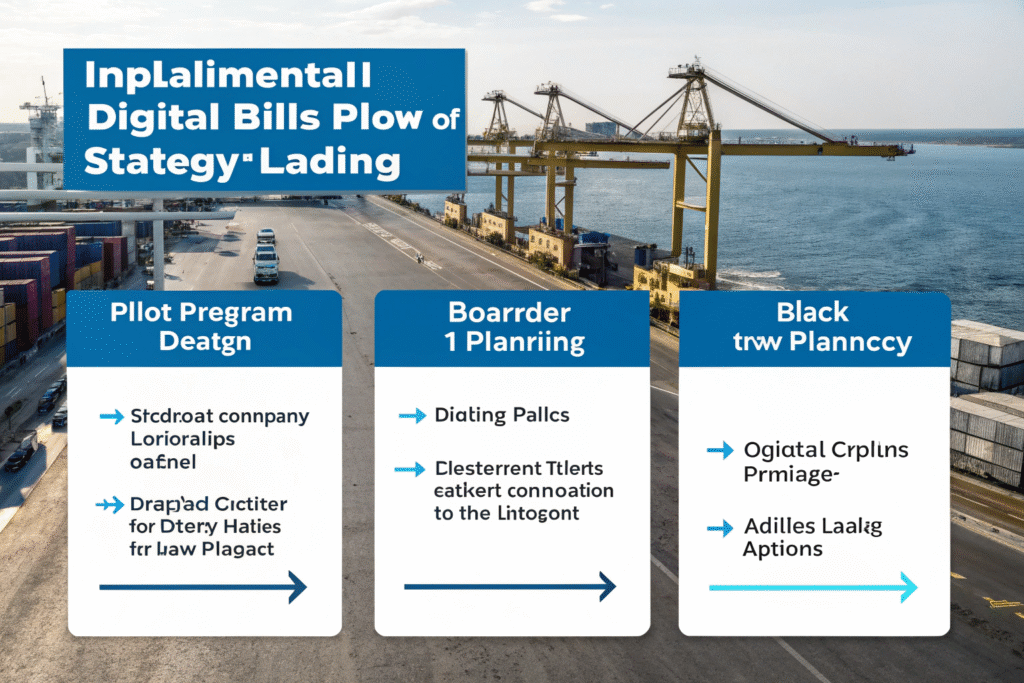
What Phased Approach Minimizes Implementation Risk?
Start with simple trade lanes and trusted partners. Initial implementation on straightforward shipments with cooperative partners builds confidence and processes before expanding to complex transactions.
Maintain paper parallel processing during transition. Running digital and paper processes simultaneously during initial phases provides fallback options while validating digital reliability.
Gradually expand based on success and comfort. As digital processes prove reliable and users become comfortable, systematically increase digital bill usage across additional trade lanes and partners.
What Technical and Process Preparations Are Essential?
Platform selection based on partner ecosystems. Choose platforms already used by your frequent carriers, banks, and customers to minimize onboarding friction.
Staff training ensures proper understanding and usage. Comprehensive training on digital bill processes, security protocols, and problem resolution prevents user errors.
Contingency planning addresses potential system failures. Establish clear procedures for handling platform outages, including alternative documentation methods and communication protocols.
What Does the Future Hold for Digital Bills?
The digital bill evolution continues with emerging technologies and expanding adoption.

How Will Technology Continue to Enhance Digital Bills?
Artificial intelligence will automate compliance and anomaly detection. AI systems will increasingly verify document accuracy, flag potential issues, and suggest corrections before submission.
Enhanced interoperability will connect disparate platforms. Industry initiatives are developing standards that will enable seamless document exchange across different digital bill platforms.
Integration with IoT devices will create automated documentation. Connected containers and vessels will automatically generate and update shipping documentation based on actual events.
What Adoption Trends Suggest About Future Reliability?
Accelerating carrier adoption indicates growing reliability. With major carriers committing to digital documentation, the infrastructure and acceptance will continue improving rapidly.
Regulatory support is expanding globally. More countries are adopting electronic transaction laws specifically addressing trade documents, reducing legal uncertainty.
Insurance industry acceptance confirms risk assessment. Leading marine insurers now recognize and often prefer digital bills, indicating their risk assessment confirms digital security and reliability.
Conclusion
Digital bills of lading have matured from experimental concepts to reliable, secure alternatives that often surpass paper document safety and efficiency. The technology, legal frameworks, and industry acceptance have reached critical mass, making digital bills not just viable but preferable for many shipping scenarios.
At GeeseCargo, we’ve helped clients transition to digital bills, achieving 85% reduction in documentation delays and 70% decrease in document-related errors. The most successful implementations combine careful platform selection, phased adoption, and comprehensive training—recognizing that the human and process elements are as important as the technology itself.
Begin your digital bill exploration by assessing which trade lanes and partners are most digitally ready, then initiate pilot programs that demonstrate benefits while managing risk. Remember that in documentation evolution, perfect shouldn’t be the enemy of better—even partial digital adoption typically delivers substantial improvements over purely paper-based processes.