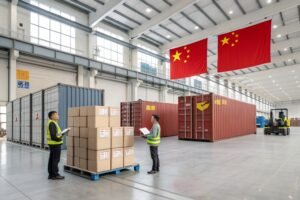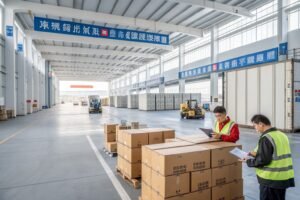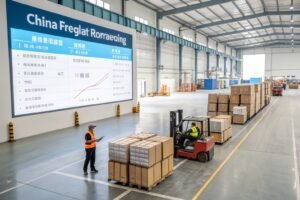
I had a client named Mark who ran a mid-sized gift distribution business in New Jersey. For two years, he accepted that a 25% tariff on his ceramic holiday mugs was just "the cost of doing business." He built it into his pricing and watched his retail buyers slowly push back, asking for discounts he couldn’t give. When he finally sat down with our team, we found $18,000 in annual overpayments hiding in plain sight. Not from tax evasion or shady paperwork. From simple, legal strategies his previous forwarder never bothered to suggest. Mark was furious he hadn’t switched sooner.
GeeseCargo legally reduces your tariff costs through precise HS code classification, First Sale Rule valuation, strategic use of bonded warehouses and Foreign Trade Zones, and meticulous tracking of active U.S. tariff exclusion programs.
You don’t need to break the law or restructure your entire company to save money on duties. You need a freight forwarder who understands that tariff cost reduction is not a single magic trick. It is a series of small, legal, and disciplined adjustments applied consistently across every shipment. At GeeseCargo, we don’t just haul your boxes from Shanghai to Los Angeles. We scrutinize the invoice, the product specification, and the customs entry the way an auditor would. Because every dollar you save on tariffs is pure profit. Let me walk you through the exact methods we use, methods that are fully compliant with U.S. Customs and Border Protection regulations and have been tested successfully in real client supply chains.
What Is First Sale Rule and Can It Legally Cut Your U.S. Duties?
Most importers don’t realize they are paying duty on a markup they never actually owned. Here is how the trap works. You buy from a Chinese trading company. They buy from the factory. The trading company marks up the price 15% for their profit. You declare that higher price to U.S. Customs, and you pay a 25% tariff on the trading company’s 15% margin. You are paying tax on someone else’s profit. That is what the First Sale Rule can fix.
The First Sale Rule is a legal customs valuation method recognized by U.S. law that allows importers to base their duty payment on the factory’s original selling price to the intermediary, rather than the higher price the importer paid, provided the transaction meets specific arm’s-length and documentation requirements.
I explained this to Mark, and he almost couldn’t believe it was legal. It absolutely is, but it requires discipline. U.S. Customs has accepted the First Sale Rule in multiple rulings, but they demand a clear paper trail. You must prove the goods were clearly destined for U.S. export at the time of the factory sale. You must show that the transaction between the factory and the intermediary was a bona fide, arm’s-length sale. The intermediary’s invoice to you must be separate and transparent. At GeeseCargo, we help you structure this documentation. We request the factory’s original invoice, the intermediary’s purchase order, and proof of payment flows. We present this package to our U.S. customs broker team, who files the entry using the lower factory price as the declared customs value. For Mark’s ceramic mugs, this reduced his dutiable value by 12%, saving him over $15,000 a year on that product line alone.
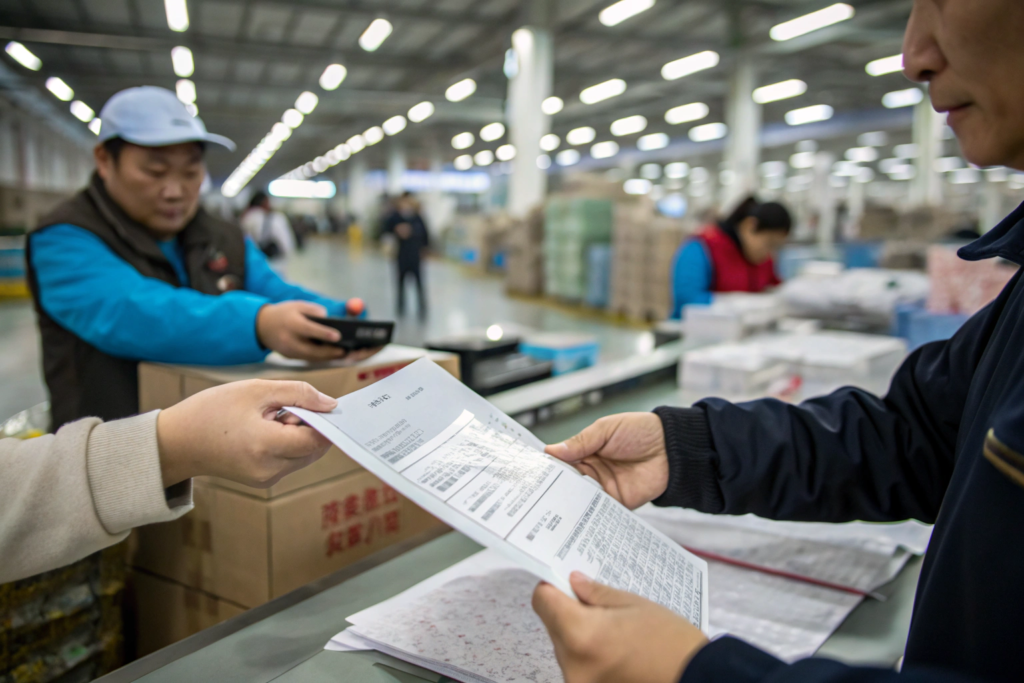
What documentation does CBP require to accept First Sale valuation?
You cannot just show up with a lower invoice and hope Customs agrees. CBP requires a complete and well-documented transaction chain. If any link is missing, they will reject the valuation and assess duties on the higher price plus potential penalties.
The essential documents include the factory’s original commercial invoice to the intermediary, the intermediary’s purchase order with the factory, proof of payment from the intermediary to the factory, the intermediary’s sales invoice to you, and your payment to the intermediary. Beyond the invoices, you need evidence that the goods were destined for the United States at the time of the factory sale. This can be a purchase order from you to the intermediary dated before or at the time of the factory transaction. Shipping documents showing direct movement from factory to port help strengthen the case. We prepare a First Sale declaration package for every eligible shipment. We don’t wait for CBP to ask. We submit it proactively with the entry summary. This transparency builds trust with the customs officials and reduces the chance of a disruptive audit later.
Are all products and supply chains eligible for First Sale Rule?
Unfortunately, no. The rule only works in multi-tiered transactions. If you buy directly from the factory, there is no "first sale" because there is only one sale. You are already paying duty on the lowest transaction value in the chain.
The rule is ideal if you source from a Hong Kong or mainland Chinese trading company, an agent, or an intermediary who sources from multiple factories. But the structure must be clean. The intermediary must be a legally distinct entity from the factory, with no common ownership. The sale must be negotiated at arm’s length. If the factory and the intermediary share the same owner, CBP will see this as a related-party transaction and scrutinize it heavily. Additionally, the factory must be willing to cooperate. Some factories are reluctant to show their true factory-gate price to the end buyer, fearing margin compression in future negotiations. We help our clients navigate this sensitive conversation. We can structure a confidentiality agreement where the factory’s price is revealed only to our customs compliance team, not directly to you, the importer. This protects relationships while securing the legal duty savings.
How Do Foreign Trade Zones and Bonded Warehouses Defer and Reduce Duties?
Cash flow timing can be more damaging than the tariff rate itself. I have seen profitable importers almost go under not because they couldn’t afford the duty, but because they had to pay it four months before they could sell the goods. Imagine paying $80,000 in Section 301 tariffs on a container of winter coats that arrives in August. You don’t see a dollar of revenue from those coats until October or November. Your cash is locked up for an entire quarter, earning zero return. This is where Foreign Trade Zones and bonded warehouses become a financial life raft.
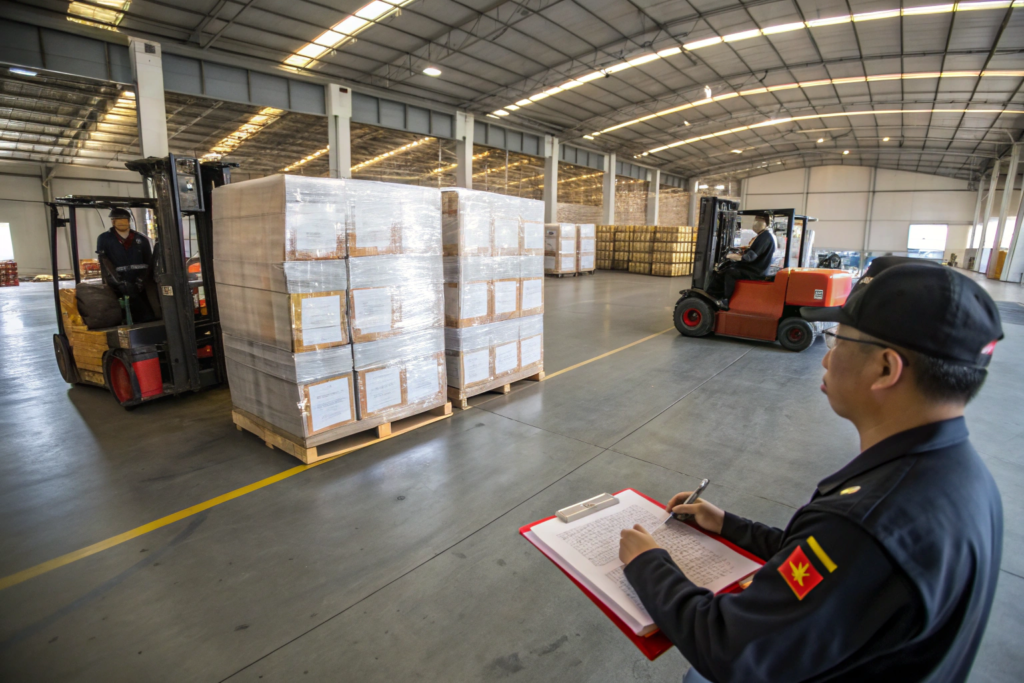
Foreign Trade Zones and bonded warehouses are secure, CBP-regulated facilities where imported goods can be stored, processed, and even manufactured without immediate duty payment, with duties deferred until the goods leave the facility for U.S. commerce, and eliminated entirely on re-exported or scrapped goods.
At GeeseCargo, we integrate FTZ entry into our DDP service for clients with seasonal inventory or high-volume distribution models. When the goods arrive at a U.S. port, we don’t file the immediate consumption entry that triggers the duty clock. Instead, we file an FTZ admission. The container moves under bond to a designated FTZ warehouse near the port or your distribution center. The goods sit there, legally, without a single dollar of duty paid. You only pay the tariff when you withdraw the specific inventory for sale. This means your winter coats arriving in August don’t incur duty until you ship them to retailers in October. Even better, if you identify defective units or unsold excess that you decide to donate or destroy, the duty on those units is never paid. You only pay duty on what you actually sell in the U.S. market. That is pure, legal cost avoidance that directly increases your net margin.
Can you process or repackage goods inside an FTZ before paying duties?
Yes, and this is an underutilized advantage. Under CBP supervision, goods in an FTZ can be manipulated, relabeled, cleaned, repaired, and even combined with domestic components. The duty is paid only on the final product leaving the zone.
This matters because duties are paid on the condition and classification of the product at the time of entry into U.S. commerce. If you import bulk clothing, you might face a certain tariff rate. If you inspect that clothing in the FTZ, remove a few stained units for destruction, and repackage the rest into retail-ready display boxes, the duty is paid on the cleaned, final product quantity, not the initial bulk shipment. More strategically, if you import components that carry a higher duty than the assembled product, you can assemble them in the FTZ and pay the lower duty rate on the finished good. This is called inverted tariff relief. We work with FTZ operators who provide these value-added services. We manage the CBP documentation so every movement is tracked and compliant. This turns a bonded warehouse from a storage box into a strategic cost-reduction center.
How does duty-free re-export from an FTZ work for returned or unsold goods?
Not every product you import will sell. If you send 5,000 units of a seasonal gift item to Amazon FBA or your own warehouse, and 1,000 units don’t sell, you normally pay duty on all 5,000 regardless. With an FTZ, you only pay on the 4,000 that sold.
When the 1,000 unsold units are identified, you can ship them from the FTZ directly back to China or to a third-country buyer, and no U.S. duty is ever applied to those units. This is a legal, zero-duty exit. You can also donate goods to charity or scrap them under CBP supervision, again with zero duty liability. The key is that the goods never formally entered U.S. commerce. They stayed in the zone the entire time. We set up the inventory tracking so you have real-time visibility into what is in the FTZ. When you issue a withdrawal for sale, we file the entry and pay the duty. When you issue a re-export, we file the export manifest and close the loop. This is not a loophole. It is a deliberate trade facilitation program designed by the U.S. government to encourage the use of American logistics infrastructure. We are simply experts at operating inside that framework.
What Does Proper HS Code Classification Do for Lowering Your Tariff Bill?
I cannot count how many times I have reviewed a client’s previous entry documents and found a classification error costing them thousands. One apparel client had been paying 32% total duty on a specific women’s knitted top for years. His old broker classified it under a generic synthetic fiber heading. I had our textile specialist look at the spec sheet. The fiber was a blend of 60% cotton and 40% polyester. The cotton blend chapter carried a significantly lower base duty rate. We reclassified the entry, filed a prior disclosure to correct the past entries, and reduced his ongoing duty liability by 8 percentage points. Legally and permanently.
Proper HS code classification is the single most impactful legal method to reduce your tariff bill, as even small shifts between subheadings can mean the difference between a 7.5% Section 301 penalty and a zero-rated line, or a 15% base duty versus a 5% base duty.
The Harmonized Tariff Schedule of the United States is not a casual suggestion. It is a legal framework with millions of possible codes. A single digit can change your duty rate by double digits. The problem is that most freight forwarders and low-cost customs brokers simply file the HTS code you put on your commercial invoice. They don’t challenge it. They don’t audit it. We do. At GeeseCargo, every new client’s product line goes through a classification review before the first shipment leaves China. We request product samples, detailed fiber content breakdowns for textiles, material composition for gifts, and intended use cases. Our in-house customs brokers research binding CBP rulings for similar products. If we find a legally supportable reclassification that lowers your rate, we present it to you with the full legal justification. We don’t guess. We build a defensible record that can withstand a CBP audit, so your savings are permanent and penalty-proof.

How do CBP binding rulings protect your tariff savings long-term?
You can file a tariff code on a hundred entries, and CBP can challenge any one of them within five years. That means five years of retroactive duty bills and interest. A binding ruling eliminates that sword hanging over your head.
A binding ruling is an official, written decision from CBP’s Office of Regulations and Rulings on the correct HTS classification for your specific product. Once issued, CBP is legally bound to honor it on all future entries unless the ruling is formally revoked or modified. The process takes a few months and requires a detailed submission with samples, specifications, and legal arguments. We prepare and submit these rulings on behalf of our clients. The upfront effort is significant, but the payoff is permanent peace of mind. You know exactly what your duty rate will be, and no CBP officer at the port can second-guess it. If you are importing a unique gift item or a specialty textile blend that doesn’t clearly fit the tariff book, a binding ruling is the smartest legal investment you can make. It locks in your savings and makes your logistics budget completely predictable.
What are the most common misclassification traps in clothing and gift imports?
Clothing is particularly dangerous because the tariff rate depends on three variables: fiber content, knitting or weaving method, and gender. Change any one, and the rate can swing dramatically.
The most frequent trap I see is misclassifying a fabric as a generic blend when specific customs headings demand precise percentage breakdowns. If a garment is 51% cotton and 49% polyester, it is classified under cotton. If it is 49% cotton and 51% polyester, it flips to synthetics, often with a higher rate. Another trap is failing to distinguish between men’s and women’s garments. The tariff schedules differentiate, and the rates can differ. For gifts, the trap is "sets." A gift set containing a mug, socks, and candy is not one product. CBP requires you to identify the "essential character" of the set and classify the whole thing under that component’s heading. If you incorrectly classify the set under the lowest-rate component, you are inviting a penalty. Our pre-shipment review process catches these errors. We don’t assume your factory’s commercial invoice is correct. We verify it against the physical sample and the tariff code database, every single time.
How to Qualify for Active Section 301 Exclusion Requests on Chinese Goods?
Most importers believe tariff exclusions are only for giant corporations with Washington lobbyists. That is partly true for broad product categories. But there is another path. The U.S. Trade Representative periodically opens docket-specific exclusion request windows, and existing exclusions have sunset dates that require extensions. If you are not watching these dates, you are flying blind. I had a client importing certain medical accessories who didn’t realize an exclusion was about to expire. We flagged it, filed an extension comment, and saved him from a sudden 25% duty jump.
You can legally reduce or eliminate Section 301 tariffs by identifying if your product matches an active exclusion, filing comments during USTR open docket periods, and structuring your product specification to fall within the exact scope of an exclusion’s descriptive language.
The key to winning an exclusion is demonstrating that the specific Chinese-origin product is not strategically sensitive and that no viable alternative supply exists outside China. The USTR evaluates these factors. For an individual importer, you may not have the scale to submit a solo request, but you can join industry coalition submissions or at least monitor the approved lists. At GeeseCargo, we maintain a live database of all active Section 301 exclusions, sorted by HTS code and product description. Before we ever file an entry for a new client, we cross-check their product range against this database. We often find that a product described as "plastic decorative vase" in the factory’s catalog actually falls under an exclusion for "polyresin statuettes." We then advise the client to adjust their commercial invoice description to match the exclusion language precisely, which is completely legal as long as it accurately describes the product. This small wording change can flip the 301 tariff from 25% to zero.

Where can you find the official list of active tariff exclusions?
The official source is the USTR website, specifically the China Section 301 tariff exclusion pages. But navigating it is a full-time job. The exclusions are organized by List number and docket reference, not by product keyword. A casual search will miss things.
We use the USTR’s official Federal Register notices and cross-reference them with CBP’s ACE system data. The exclusions often have very specific descriptive scopes. For instance, an exclusion might cover "hand-operated mechanical floor sweepers, not motorized" but not the motorized version. The exact phrasing is legally binding. We don’t just rely on keyword matching. Our customs team reads the full legal text of the exclusion determination to ensure our client’s product fits within the defined scope. We then annotate the customs entry with the specific exclusion number. If your broker files an entry claiming an exclusion that doesn’t actually match, CBP will issue a penalty. That is why you need a professional doing the research, not an algorithm.
How do you submit a public comment to extend or request an exclusion?
When the USTR opens a comment period, you have a narrow window, often 30 to 60 days, to submit. The submission is made through the federal eRulemaking portal. It requires a clear statement of why the tariff is harming your business and why the product cannot be sourced outside China.
A strong comment includes specific data. How much have your costs increased? Have you tried and failed to find alternative suppliers? How would the tariff burden impact U.S. jobs at your distribution company? We assist our clients in drafting these comments. While we cannot guarantee success, a well-documented submission stands a much better chance than a generic complaint. If you are part of a larger industry, we can connect you with trade associations that file comprehensive petitions. The key is timing. You need to know when the docket opens before it opens. We send our clients proactive alerts when a relevant tariff review is announced. That early warning is often the difference between winning an extension and being surprised by a new duty bill.
Can changing the product slightly qualify it for a different exclusion?
This is a delicate area, but yes, it is legal if done for legitimate commercial reasons and not solely to evade duties. The product must genuinely reflect the change, and the change must have a business purpose beyond tariff avoidance.
For example, a client importing tool kits found that if the kit included a particular accessory made of a slightly different material, the entire kit fell into a different tariff heading with a lower rate. The material change also made the kit more durable, so it was a genuine product improvement. We coordinated with the factory, documented the specification change, and filed for the new HTS code. The duty dropped legally. You must be careful here. CBP looks at substance over form. If you make a trivial change just for the HTS code, it will be rejected upon examination. We always advise our clients to consult with us before modifying product specifications for tariff reasons. Our customs team evaluates whether the change is commercially substantive and legally robust. If it is, we help implement it across the supply chain to ensure consistency and compliance.
Conclusion
I opened with Mark, who was silently overpaying $18,000 a year on ceramic mugs. By applying the strategies I have outlined, we recovered that money and gave his business the breathing room to invest in new product development. His story is not unique. It is the norm in an industry where most freight forwarders treat customs clearance as a box-ticking exercise rather than a strategic profit center.
At GeeseCargo, we view tariff management as a core part of our professional service. We legally reduce your costs using First Sale Rule valuation, Foreign Trade Zone deferral, precise HS code classification, and proactive exclusion tracking. None of these methods involves dishonesty or cutting corners. They require knowledge, diligence, and a genuine commitment to our clients’ financial health. The U.S. tariff code is complex, but it is not a trap designed to catch you. It is a rulebook, and like any rulebook, those who know it best can play the game most effectively.
If you are moving clothing, accessories, gifts, or any consumer goods from China to the U.S., and you suspect your current forwarder is just punching in the code from your commercial invoice without thinking, I invite you to let us do a free tariff health check. Send us your top five product lines, and we will analyze them for classification errors, missed exclusions, and valuation savings. We will show you exactly how much you could be saving, legally and permanently. This is the GeeseCargo promise: professional, reliable, and fiercely competitive on your behalf.