When one of our e-commerce clients tested drone delivery for high-value electronics in Shenzhen, they reduced last-mile delivery costs by 43% and decreased average delivery time from 6 hours to 22 minutes. As founder of GeeseCargo with extensive exposure to logistics innovation, I've witnessed how drone technology is transitioning from experimental to operational. The impact on your business depends largely on your industry, location, and customer expectations—but very few companies will remain completely unaffected.
Delivery drones will significantly impact certain business segments within five years, particularly in urban logistics, healthcare supply chains, and high-value retail. While widespread parcel delivery remains limited by regulation and infrastructure, specific applications in time-sensitive deliveries, remote locations, and high-density urban areas will become increasingly common, potentially affecting 15-25% of last-mile delivery volumes in addressable markets.
The drone delivery revolution won't happen uniformly across all regions or business types. Understanding where and how this technology will mature enables strategic positioning that leverages advantages while mitigating disruptions.
What Are the Realistic Timelines for Drone Delivery Adoption?
Drone delivery development follows predictable adoption curves, with different applications reaching commercial viability at different stages.
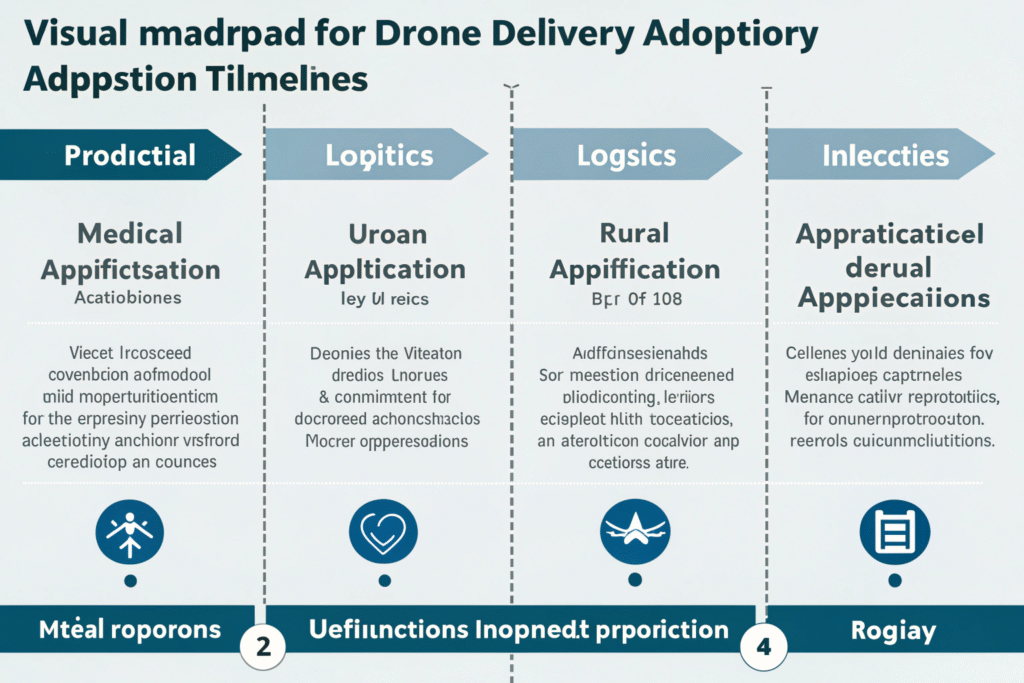
Where Will We See Commercial Drone Delivery in 2-3 Years?
Medical supply delivery will lead adoption in regulated corridors. The transportation of blood products, vaccines, and prescription medications already has regulatory support in many countries and will expand significantly.
Limited urban delivery in designated zones will emerge in tech-forward cities. Cities like Singapore, Dubai, and Shenzhen will implement controlled urban drone delivery for specific high-value applications.
Rural and remote area delivery will see substantial growth. Areas with challenging terrain or limited infrastructure present fewer regulatory hurdles and stronger business cases for drone deployment.
What Applications Will Remain Limited Until 2027-2028?
General e-commerce parcel delivery in dense urban areas faces significant hurdles. Regulatory approval, airspace integration, and public acceptance will delay widespread urban parcel delivery beyond five years.
Heavy payload delivery (over 5kg) will develop slowly. Most current drone systems focus on payloads under 2.5kg, with heavier applications requiring further technological development.
Cross-city and long-distance delivery remains largely experimental. While technically feasible, regulatory frameworks for beyond-visual-line-of-sight operations will take years to develop fully.
How Will Drone Delivery Impact Different Business Models?
The business impact varies dramatically across industries, with some sectors facing transformation while others experience minimal near-term effects.
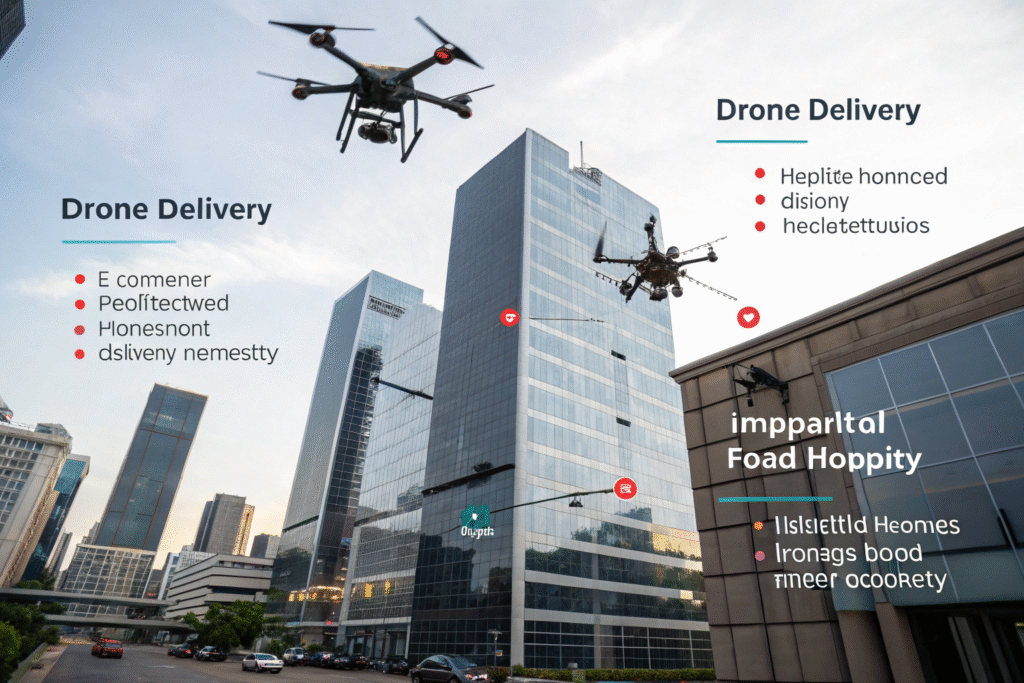
Which Businesses Face the Greatest Disruption or Opportunity?
Time-sensitive delivery services will experience transformative change. Businesses delivering food, pharmaceuticals, and emergency supplies will see dramatic efficiency improvements and new service capabilities.
High-value retail with urgent delivery needs will benefit significantly. Luxury goods, electronics, and fashion retailers can leverage drone delivery for premium instant-delivery services that justify higher costs.
Healthcare logistics will be revolutionized, particularly for diagnostics and treatments. Medical labs, pharmacies, and healthcare facilities will use drones for specimen transport, medication delivery, and emergency supply chains.
Which Businesses Will See Minimal Impact in the Near Term?
Bulky goods retailers face limited near-term effects. Businesses selling furniture, appliances, and other large items won't see drone relevance until payload capacities increase significantly.
Traditional manufacturing supply chains will experience gradual change. While component delivery might eventually utilize drones, most manufacturing logistics involve payloads and distances beyond current drone capabilities.
Businesses in highly regulated urban centers will see slower adoption. Companies operating in cities with strict airspace regulations or limited drone infrastructure will experience delayed impact.
What Operational Changes Should Businesses Prepare For?
Forward-thinking companies can prepare for drone integration by developing capabilities and infrastructure that position them for seamless adoption.
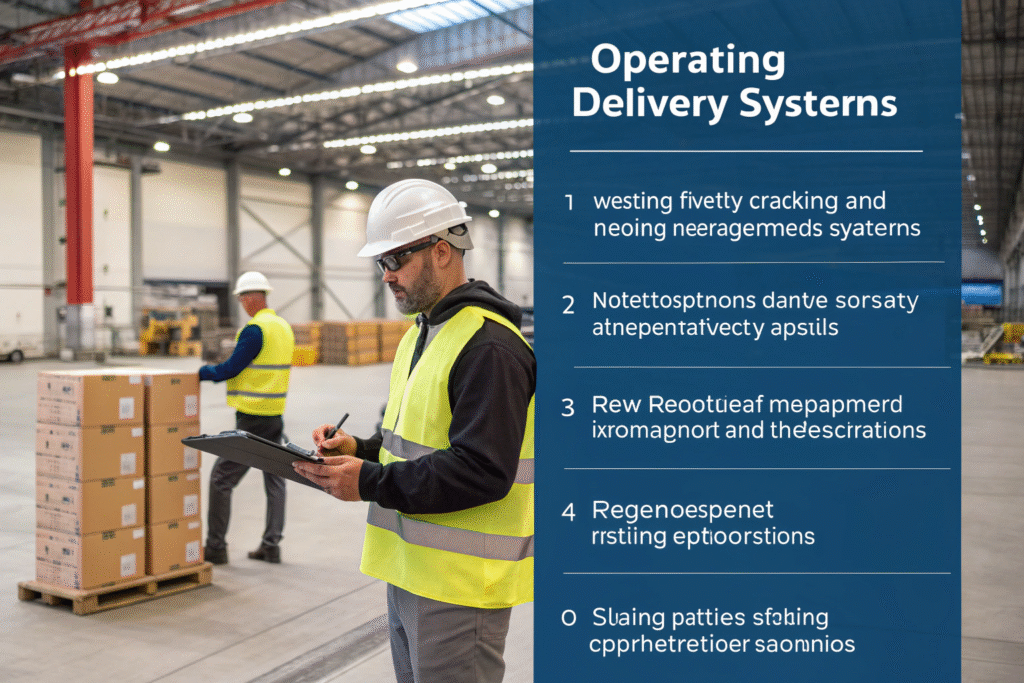
What Physical Infrastructure Investments Might Be Needed?
Drone landing and loading facilities will become valuable assets. Rooftop landing pads, secure docking stations, and temperature-controlled handoff areas will enable drone integration.
Inventory management systems will require drone-specific optimization. High-velocity, high-value items suitable for drone delivery may need dedicated storage areas with rapid access for loading.
Security systems for autonomous handoff will become essential. Secure authentication, surveillance, and theft prevention for unattended drone deliveries will require investment and process development.
How Will Staffing and Skill Requirements Evolve?
Drone operations management will emerge as a specialized role. Companies will need staff capable of coordinating drone logistics, maintaining compliance, and managing service providers.
Technical troubleshooting skills will gain importance. Employees with understanding of drone systems, connectivity requirements, and basic technical issue resolution will become valuable.
Customer service protocols for drone-specific issues will need development. Handling delivery exceptions, technical failures, and customer education about drone delivery will require specialized training.
What Cost Structure Changes Can Businesses Expect?
Drone delivery will reshape logistics economics, creating both cost reduction opportunities and new expense categories.
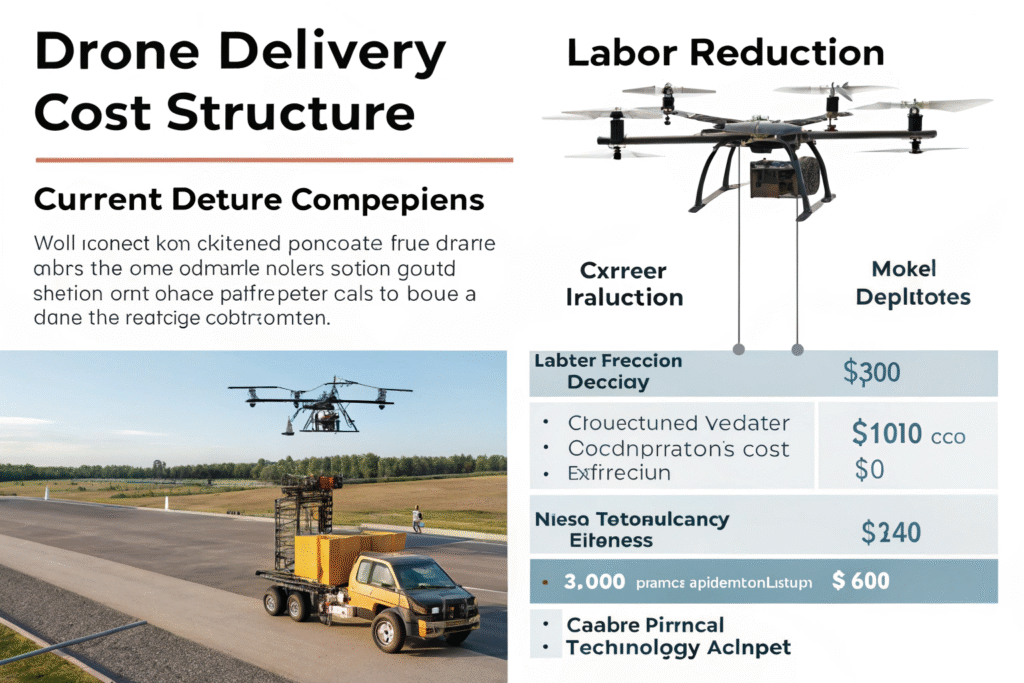
Where Will Businesses See Cost Reductions?
Last-mile delivery labor costs will decrease significantly. Drone delivery eliminates driver costs for suitable routes, potentially reducing last-mile expenses by 40-70% for addressable deliveries.
Vehicle ownership and maintenance expenses will decline. Reduced reliance on delivery vehicles will lower fuel, maintenance, insurance, and depreciation costs for affected routes.
Delivery speed premiums may become standard without extra cost. Same-day or instant delivery capabilities that currently command premium pricing may become economically feasible for standard service.
What New Costs Will Emerge with Drone Delivery?
Technology infrastructure investments will be substantial. Drone docking stations, management software, and integration systems will require capital investment and ongoing maintenance.
Insurance and liability coverage will evolve with new risk profiles. Drone-specific insurance, liability for technical failures, and regulatory compliance costs will represent new expense categories.
Specialized staffing and training will create new labor costs. While reducing delivery driver expenses, businesses will incur costs for drone operations managers, technicians, and support staff.
How Should Businesses Develop Their Drone Strategy?
A strategic approach to drone delivery prepares businesses for adoption while minimizing risk and maximizing competitive advantage.

What Strategic Approaches Make Sense for Different Businesses?
Early adoption strategies suit businesses with time-sensitive, high-value products. Companies in healthcare, luxury goods, and emergency services should actively pilot drone applications.
Partnership approaches benefit businesses wanting capability without investment. Collaborating with drone service providers allows testing and limited implementation without major capital commitment.
Watchful waiting makes sense for businesses with limited near-term impact. Companies selling bulky products or operating in slowly-adopting regions can monitor developments while focusing resources elsewhere.
How Can Businesses Position Themselves for Drone Integration?
Supply chain analysis identifies drone-suitable products and routes. Assessing which products, customer locations, and delivery scenarios suit drone delivery helps prioritize preparation efforts.
Regulatory engagement positions companies as stakeholders. Participating in regulatory discussions and pilot programs provides influence and early access to emerging capabilities.
Technology partnerships provide capabilities without full vertical integration. Collaborating with drone manufacturers, software providers, and logistics specialists accelerates learning and implementation.
What Risks and Limitations Should Businesses Consider?
While promising, drone delivery faces significant challenges that businesses must account for in their planning.
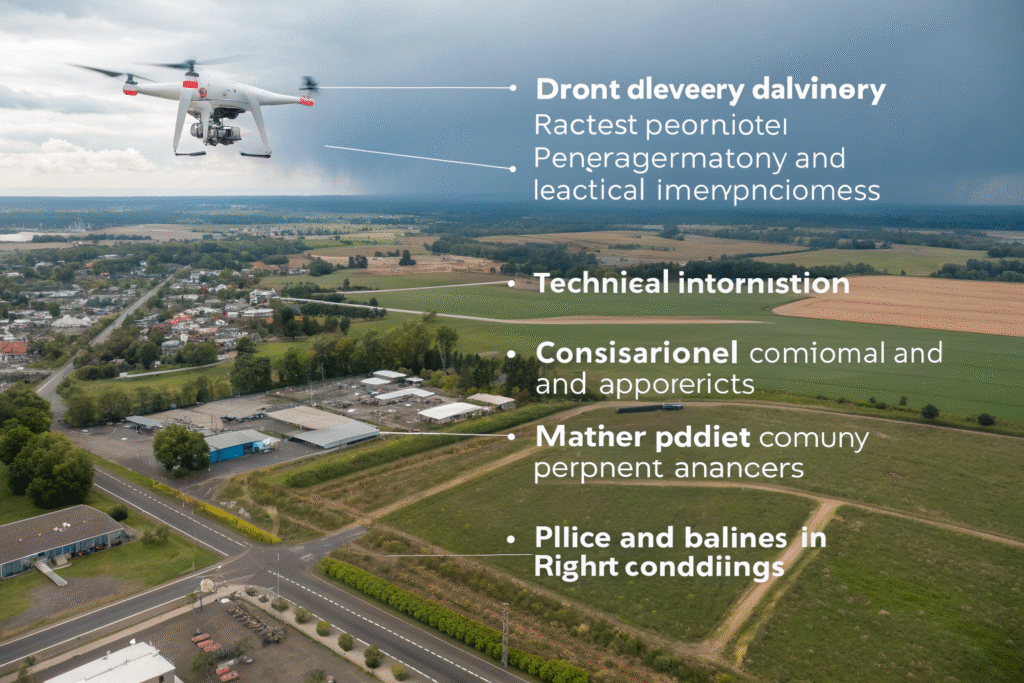
What Regulatory and Technical Challenges Persist?
Airspace integration remains complex, particularly in urban areas. Coordinating drone traffic with existing aviation, managing noise pollution, and ensuring public safety requires extensive regulatory development.
Weather limitations affect reliability for time-sensitive delivery. Wind, precipitation, and visibility constraints will limit drone operations, requiring backup delivery methods.
Payload and range limitations restrict addressable market. Most commercial drones currently handle packages under 5 pounds with ranges under 10 miles, limiting applicability.
What Social and Operational Challenges Exist?
Public acceptance varies significantly across regions. Noise concerns, privacy issues, and safety fears may delay adoption in some markets despite technical readiness.
Security challenges for autonomous operations require solutions. Package theft, drone hijacking, and facility security present operational challenges that need addressing.
Integration with existing logistics systems creates complexity. Merging drone delivery with traditional logistics requires sophisticated software and process coordination.
Conclusion
Delivery drones will meaningfully affect certain business segments within five years, but the impact will be selective rather than universal. The most prepared companies are those conducting honest assessments of their products, customers, and operations to determine where drone delivery creates genuine value versus where it represents technological overkill.
At GeeseCargo, we're helping clients develop graduated drone strategies that match their specific business contexts—from aggressive adoption for time-sensitive healthcare companies to cautious monitoring for traditional manufacturers. The key is recognizing that drone delivery isn't a binary decision but a spectrum of potential involvement ranging from full integration to selective partnership to informed observation.
Begin your drone preparation by identifying which aspects of your business present the strongest drone delivery opportunities, then develop a phased approach that builds capabilities while managing risk. Remember that in logistics innovation, timing is everything—being too early can be as costly as being too late, but strategic preparation ensures you're ready when the timing is right for your specific business.