You’re comparing freight quotes. One forwarder comes in at $2,800. Another at $3,500. The choice seems obvious. You take the cheap one. The container sails. Then the invoices start arriving. A peak season surcharge. A container detention fee because the box wasn’t returned on time. A customs exam fee that wasn’t disclosed. A trucking wait time charge at the destination. Your $2,800 container costs you $5,200 by the time it reaches your warehouse. You didn’t save $700. You lost $1,700 and weeks of your sanity.
The cheapest freight forwarder is usually the most expensive because low-ball quotes hide essential costs in fine print, rely on unreliable routings that cause delays and chargebacks, and vanish when problems occur, leaving you to pay emergency rates to fix their failures. GeeseCargo delivers value through transparent all-in pricing, reliable carrier allocations, and proactive problem resolution that prevents the expensive disasters cheap forwarders cause.
I’ve rescued dozens of importers from the wreckage of cheap freight quotes. They came to me stressed, over budget, and behind schedule. They learned the hard way that freight is a service, not a commodity. The price you see is never the price you pay with a bad forwarder. Let me show you exactly how cheap quotes burn through your money and how genuine value pricing builds your business instead.
What Hidden Costs Do Cheap Freight Forwarders Bury in Their Initial Quotes?
The freight industry has a toxic pricing tactic. Quote a low base ocean rate to win the booking, then layer on surcharges after the cargo is in motion. At that point, you can’t switch forwarders. Your goods are on the water. You pay whatever they demand. This isn’t an accident. It’s a business model designed to exploit your inability to walk away once the shipment is committed.
We quote all-inclusive prices from the start. Our quotes include the ocean freight, the bunker surcharge, the terminal handling charges at both ends, the documentation fee, the customs brokerage, the trucking, and the insurance if requested. When we say a container costs $3,500, the final invoice says $3,500. Not a dollar more unless you change the scope.
A clothing importer showed me an invoice from his previous forwarder. The quoted rate was $2,600. The final bill had twelve additional line items totaling $2,900. He paid $5,500 for a container quoted at $2,600. The worst part? Half those surcharges were avoidable if the forwarder had planned properly. They didn’t plan. They just collected fees. We don’t operate that way. Our DDP service pricing is comprehensive because our integrity is worth more than a quick margin grab.
What Are the Most Common Post-Booking Surcharges to Watch For?
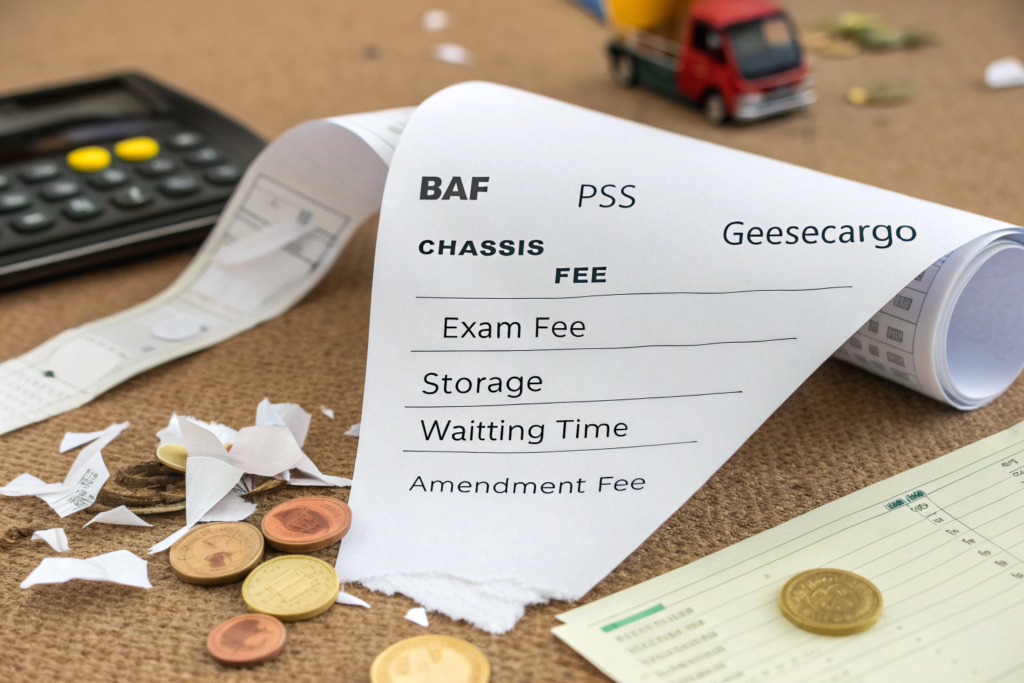
The peak season surcharge is a favorite. It appears when space is tight. The forwarder claims the carrier imposed it. Sometimes true. Sometimes invented. The chassis split fee. The container cleaning fee. The bill of lading amendment fee for a minor correction. The destination port security fee.
Ask your forwarder to list every possible surcharge before you book. In writing. If they can’t or won’t, expect a list after sailing. We provide a comprehensive surcharge schedule with our quote. If a charge isn’t on that list, we don’t bill it. If a legitimate carrier surcharge appears, we absorb it within our fixed price. This logistics pricing transparency is the difference between a budget and a fantasy.
How Do Low-Rate Quotes Mask Inferior Routing and Longer Transit Times?
A cheap rate often buys a cheap routing. The vessel takes an indirect path with multiple transshipments. Each transshipment adds risk and days. Your 20-day transit becomes 35 days. Your holiday inventory misses the season. The forwarder didn’t tell you about the transshipment because you didn’t ask. The quoted transit was an estimate, not a promise.
We quote realistic transit times based on the specific vessel and routing. If a routing takes longer, we explain why and let you decide. We don’t mask a slow service behind a low price. Your delivery timeline matters as much as your freight cost. A late shipment costs far more than an honest freight rate.
How Do Unreliable Carriers and Routing Decisions Wreck Your Delivery Promises?
Not all vessels are equal. Not all routings are direct. A cheap forwarder books the absolute lowest cost carrier on the absolute slowest routing. They don’t care about your delivery date. They care about maximizing their margin on the buy-sell spread. The carrier might be a secondary line with older vessels, more frequent mechanical issues, and a higher rate of blank sailings. Your promised arrival date is a hope, not a plan.
We book your cargo on reliable, direct routings with top-tier carriers. We prioritize schedule integrity over squeezing the last dollar out of the freight rate. Your goods arrive when we say they will because we build our schedules on carrier track records, not just carrier prices.
A client who sold seasonal gift baskets lost a full season with his previous forwarder. The cheap routing transshipped through a congested hub. The connection was missed. The cargo sat for two weeks. The season ended. He lost the revenue, not just the freight cost difference. The "savings" on the cheap quote destroyed his annual profit. With us, he pays a fair rate for a direct sailing. His goods arrive on schedule. He makes his revenue. That’s value.
Why Do Secondary Carriers and Slow Steaming Increase Your Inventory Risk?
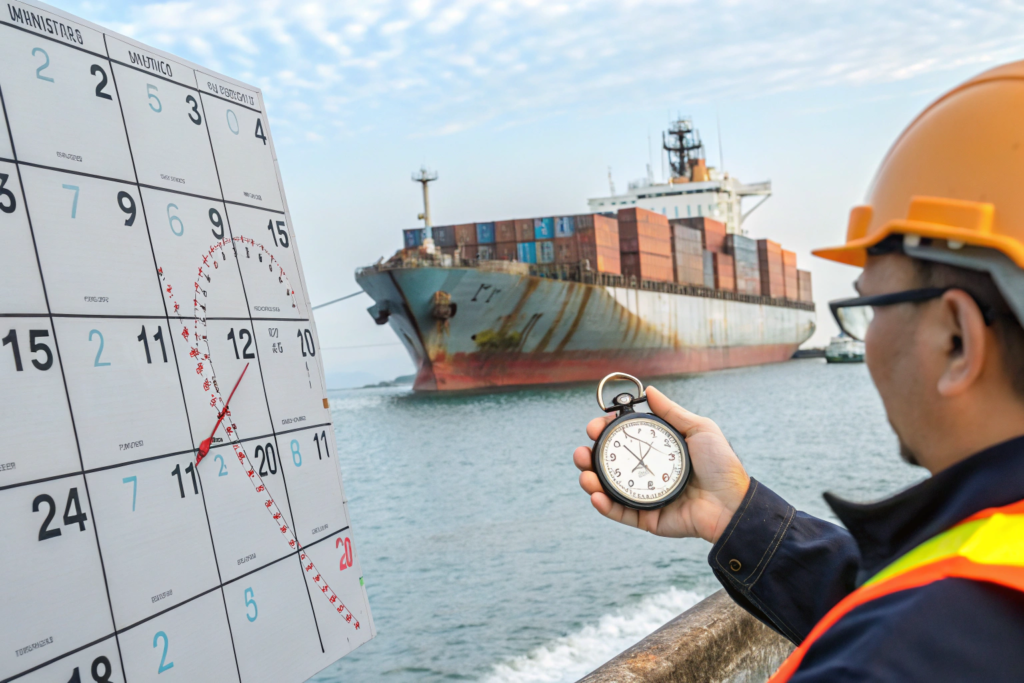
Slow steaming saves fuel for the carrier but adds days to your transit. Secondary carriers often operate older fleets with less schedule discipline. They cancel sailings more frequently when demand drops. Your container gets rolled.
We use primary carriers with modern fleets and proven schedule reliability. We track carrier on-time performance data and route our clients’ cargo accordingly. The slightly higher base rate buys significantly lower delay risk. In freight, time truly is money. Your working capital is tied up in inventory on the water. Every extra day costs you.
How Does a Forwarder’s Relationship with Carriers Affect Problem Resolution?
When a cheap forwarder’s booking gets rolled, they have no leverage. They’re a small spot buyer. The carrier doesn’t care about their complaint. When our booking faces an issue, we call our dedicated carrier account manager. We have a relationship and a volume commitment. They listen. They solve.
This relationship capital is invisible on a quote sheet. But when your container is about to be left on the dock because the vessel is overbooked, that relationship is the difference between your goods sailing or waiting. Our ocean freight direct carrier access protects your schedule in ways no discount broker can match.
What Happens When a Low-Cost Forwarder Cannot Solve a Customs or Port Problem?
Customs clearance is where cheap forwarders evaporate. They outsourced the brokerage to the lowest bidder. That broker doesn’t know your product. They can’t answer a CBP officer’s questions. When your container is flagged for exam, the forwarder sends you an email telling you to "contact customs directly." You are alone with a government agency, facing fines and storage fees.
Our in-house customs team handles exams, holds, and queries directly. We know your product classification. We have the documentation ready. We respond to customs inquiries within hours, not days. When a problem arises, you don’t handle it. We do.
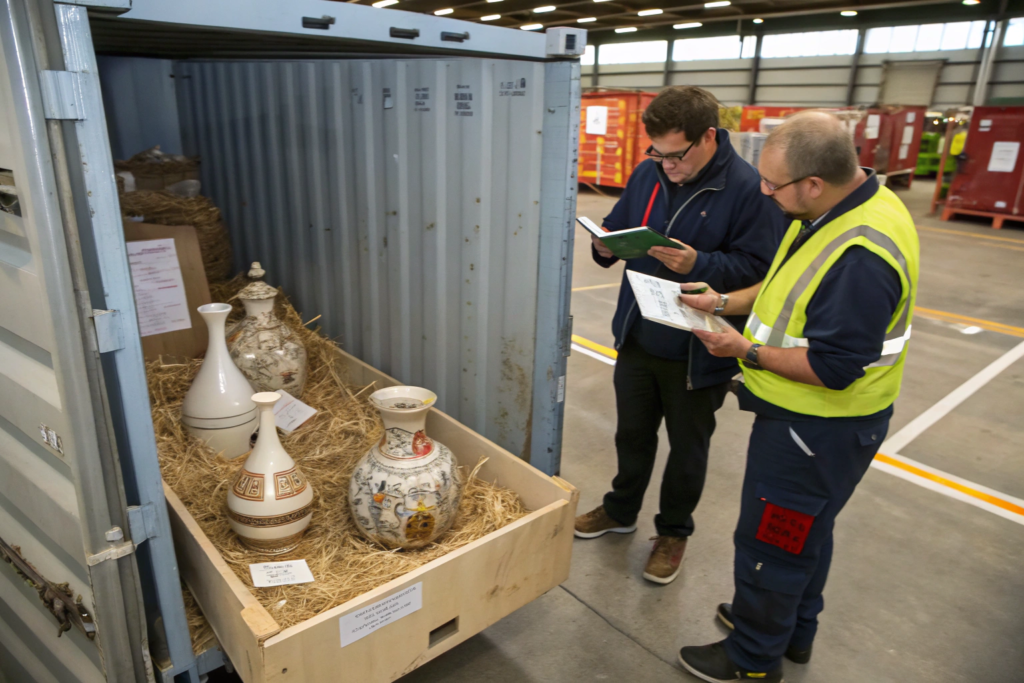
I remember a giftware container flagged for an intensive exam because the X-ray showed dense organic shapes that looked suspicious. It was ceramic figurines in wood shavings. Our team contacted the exam site. We explained the commodity. We provided the product specification sheet within the hour. The exam was expedited. The container cleared. A cheap forwarder would have let that container sit in the queue for ten days, racking up storage fees.
How Do Demurrage and Detention Fees Spike When Problems Go Unresolved?
Demurrage is charged when your container sits at the terminal beyond the free days. Detention is charged when the empty container isn’t returned on time. When a customs problem isn’t resolved quickly, these fees accumulate daily. A cheap forwarder has no incentive to resolve the problem fast. They might even earn a margin on the storage fees.
We manage your free time aggressively. We track the clock from discharge. We push for fast resolution of any hold. We pre-clear documentation to reduce exam likelihood. These customs clearance disciplines are invisible in a quote but save thousands when a problem hits.
What Role Does Local Port Presence Play in Unsticking Delayed Cargo?
When your container is stuck at LA or Long Beach, a forwarder with only a desk in Shenzhen is useless. They send emails into the void. You need someone who can walk into the terminal office and talk to a human.
We maintain relationships with terminal operators and exam site supervisors at major US ports. Our local partners can physically check on your container, clarify issues with terminal staff, and expedite processes that a remote forwarder can’t touch. This local presence is a hidden value driver that cheap, remote-only forwarders simply don’t have.
How Can DDP Pricing Reveal the True Cost of a Freight Forwarder’s Service?
DDP pricing is the ultimate honesty test for a freight forwarder. A forwarder who can quote a true all-in DDP price is a forwarder who knows their costs, controls their supply chain, and is willing to put their margin at risk on their operational competence. A forwarder who refuses to quote DDP or gives a DDP price full of caveats is revealing that they don’t control their own costs.
Our DDP pricing is fixed, all-inclusive, and guaranteed. We quote a single unit cost that covers every step from your factory to your warehouse. This forces us to be excellent at what we do. If we underestimate a cost, we absorb it. Our DDP price is our promise, and we back it with our margin.
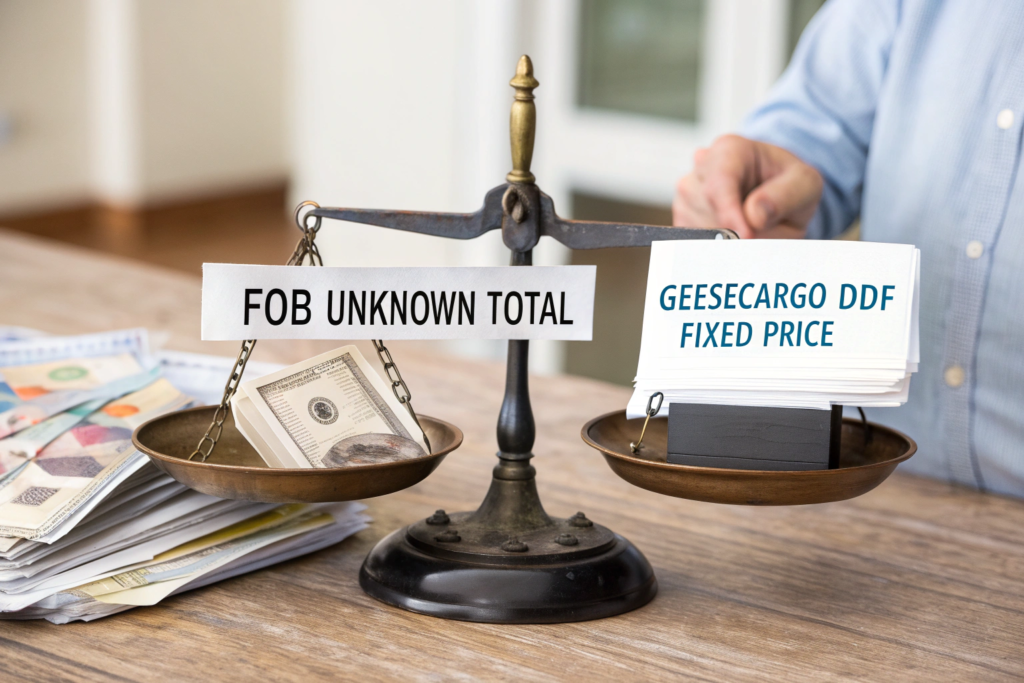
A furniture importer once challenged us. He had a cheap FOB ocean quote and thought our DDP price looked expensive by comparison. We broke down his FOB quote with him. We added the destination charges, the customs broker fee, the exam risk, the trucking, the insurance. His "cheap" FOB price, fully loaded, was 18% higher than our DDP price. He had been comparing a partial price to a complete one. DDP reveals the truth.
Why Is the Ability to Quote an Honest DDP Price a Sign of a Mature Forwarder?
Quoting DDP requires the forwarder to know the destination charges, the duty rates, the brokerage fees, and the delivery costs in a foreign country. An immature forwarder doesn’t have this knowledge. They only know the ocean leg. They quote FOB and leave you to discover the rest of the costs yourself.
Our DDP capability reflects years of operational experience in both China and the US. We know the full cost chain because we manage it daily. We quote it confidently because we control it. This DDP service maturity is a filter. If a forwarder can’t quote DDP, they don’t have the infrastructure to serve you completely.
How Does a Fixed DDP Price Force the Forwarder to Be Efficient?
When our price is fixed, our profit depends on our efficiency. If we book a slow routing that causes storage fees, we pay them. If we misclassify a product and trigger a higher duty, we absorb the difference. The fixed price aligns our incentives with yours. We both want the shipment to move smoothly, quickly, and without surprises.
A forwarder on a cost-plus model has the opposite incentive. Problems generate extra charges. Extra charges generate extra margin. Choose a pricing model that aligns your forwarder’s interests with your own.
How Does GeeseCargo’s Service Model Prevent the Expensive Failures of Cheap Providers?
Prevention is cheaper than repair. A cheap forwarder makes money when things go wrong. We make money when things go right. This fundamental difference in business models explains everything about how we operate. We invest in prevention because our profitability depends on your smooth experience. We staff properly. We train properly. We communicate proactively. We fix problems before they become invoices.
Our service model invests in prevention. We review documents before sailing. We monitor vessel schedules actively. We pre-alert destination teams. We track every milestone. When a potential problem appears, we address it immediately, not after it has become an expensive crisis. You pay for competence. You save on disaster recovery.
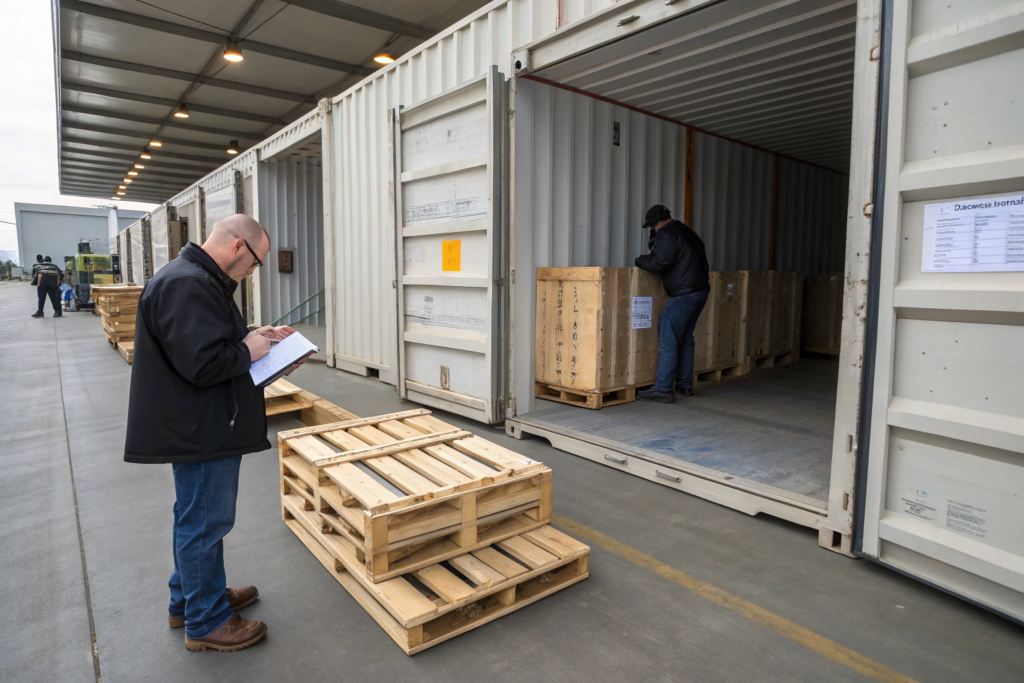
I once caught a wood packaging material violation during our document review. The supplier used non-compliant pallets. We stopped the container at the factory. We replaced the pallets before loading. The cost was $200 for new pallets. If that container had sailed, the violation would have triggered a customs hold, re-export costs, and a month of delays. The $200 prevention saved $8,000 in recovery costs.
What Does Proactive Communication Cost Versus Reactive Silence?
Cheap forwarders are silent. They don’t have enough staff to communicate proactively. You chase them. You wait. You worry. The cost of that silence is your time, your stress, and your delayed decisions that compound problems.
We communicate proactively because we staff adequately. Your account manager updates you at key milestones. If a vessel is delayed, you know within hours. This communication allows you to adjust your warehouse schedule, inform your customers, and manage expectations. The value of this visibility is measured in avoided rush shipping costs and preserved customer relationships.
How Do Direct Relationships with All Stakeholders Eliminate Middleman Delays?
Every middleman in the chain adds cost and delay. Cheap forwarders outsource everything. Trucking to a broker. Customs to a broker. Destination services to a broker. Each layer slows communication and adds markup.
We manage core functions directly. Our China team handles origin trucking and customs. Our contracted US partners handle destination clearance and delivery under our direct instruction. There is one chain of command. One point of accountability. No passing the buck. This integrated supply chain model is how we deliver value that a cheap, fragmented provider cannot replicate.
Conclusion
The cheapest freight quote is an illusion. It’s a partial price designed to win a booking, not to move your cargo. We’ve exposed how hidden surcharges, unreliable routings, and absent problem resolution transform that cheap quote into an expensive disaster. We’ve seen how DDP pricing reveals the true, fully loaded cost of logistics and separates honest forwarders from those who profit from your confusion.
Value in freight forwarding is not the lowest quote. It’s the final invoice matching the quote. It’s the delivery arriving on the promised date. It’s the customs clearance happening without drama. It’s the problem being solved by your forwarder before you even know it existed. That’s the value GeeseCargo delivers.
Don’t learn this lesson the expensive way. The next time you’re tempted by a quote that seems too good to be true, call us instead. We’ll review it with you. We’ll show you what’s missing. We’ll give you an honest, all-in price that you can actually budget on. Contact GeeseCargo today. Let’s build a logistics partnership that values your business as much as you do.