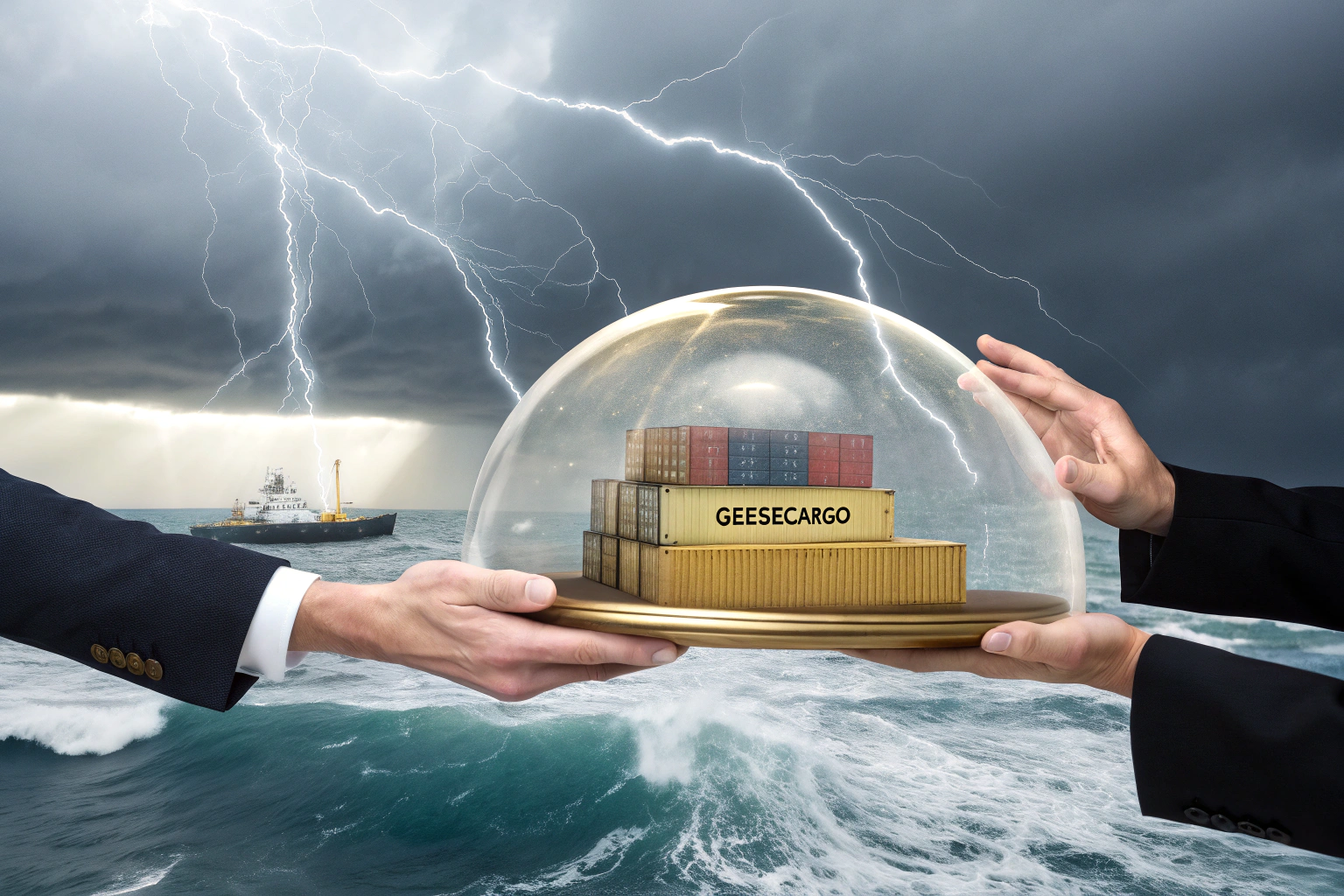
You spend months designing your product. You negotiate hard with the factory. You inspect every piece before it leaves. Then you hand your entire season’s inventory to a ship. A ship that faces storms, fires, rough handling, and theft. Your business rides on that vessel, and you don’t have a safety net. If the container falls overboard, if the ship catches fire, if the cargo gets damaged in transit, you eat the loss. Every unit. Every dollar. The factory already got paid. The freight forwarder got paid. Only you are left holding nothing.
You need cargo insurance because ocean and air freight are inherently risky environments where carrier liability is severely limited by law. GeeseCargo’s coverage includes all-risk protection from factory door to your warehouse, covering physical loss, damage, theft, and general average events, with claims managed directly by our in-house team so you never fight an insurer alone.
I learned the hard way that "the carrier is responsible" is a dangerous myth. Carriers have limited liability by international convention. They can legally pay you pennies per kilo for a lost container of high-value clothing or electronics. I made it my mission to ensure no GeeseCargo client ever faces that devastating surprise. Let me show you why insurance isn’t an optional extra. It’s the foundation of a secure supply chain.
What Are the Real Risks Your Cargo Faces Between China and the US?
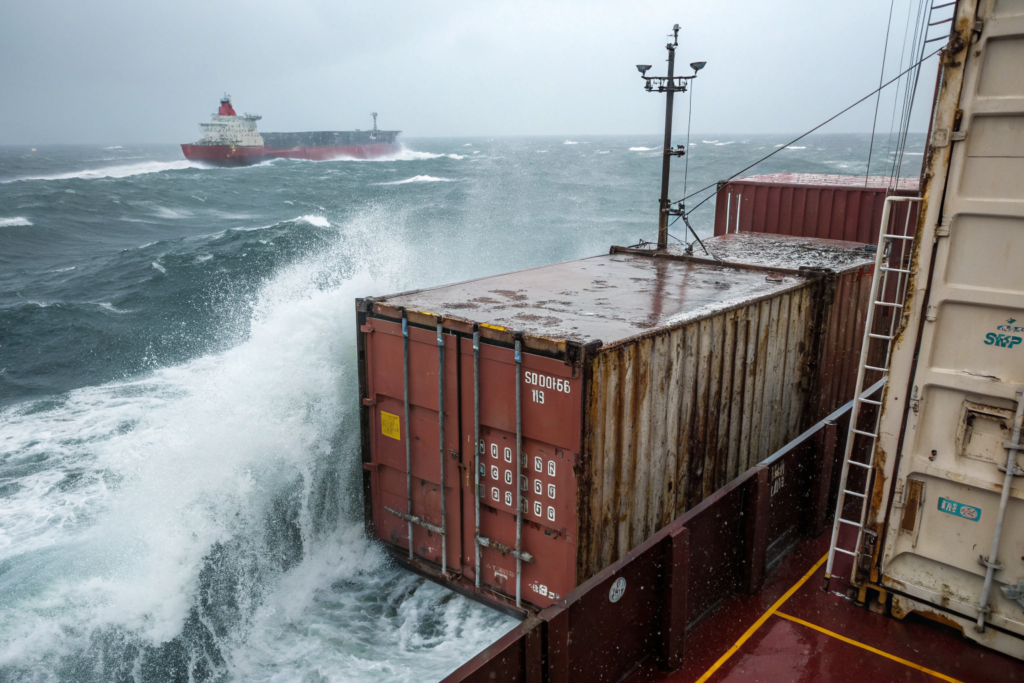
The ocean is a hostile environment. Your container faces storms that can wash boxes overboard. It faces temperature extremes that can warp and mold goods. At port, it faces rough crane handling that drops boxes from height. On the road, it faces accidents and theft. These aren’t rare events. The industry loses thousands of containers annually. And when a ship faces a disaster, the financial principle of "general average" can force you to pay a share of the ship’s rescue costs just to get your surviving cargo released.
We don’t just insure against the headline disasters. Our coverage addresses the daily risks: rough handling at transshipment hubs, container sweat damage from temperature changes, petty theft during inland trucking, and the complex legal traps of general average declarations.
I’ve seen a container of leather handbags ruined by condensation because a vent was blocked. The carrier blamed the packer. The packer blamed the carrier. The importer had no cargo insurance and absorbed a $40,000 loss. I’ve seen a container fall off a ship in a storm. The shipping line paid $500 under the limitation clause. The cargo was worth $80,000. These stories don’t make the news, but they happen every month. Insurance is the only thing that makes you whole.
How Does General Average Work and Why Can It Blindside Importers?
You’ve never heard of general average until it’s declared. Then you can’t forget it. When a ship faces a major peril, the captain can sacrifice cargo or incur rescue costs to save the vessel. The cost is shared among all cargo owners. You could lose nothing physically, but still receive a bill for tens of thousands of dollars.
The carrier holds your cargo until you pay your share or post a bond. This is legal under maritime law. Cargo insurance covers your general average contribution. Without it, you pay out of pocket to release your goods. For a small to medium importer, this unexpected bill can be a cash flow crisis. Our ocean freight insurance policies include general average coverage as standard. You never face that bill alone.
Why Is Carrier Liability So Severely Limited by International Law?
The carrier is not your insurer. Under the Hague-Visby Rules and other maritime conventions, carrier liability is capped at a laughably low amount per kilo or per package. For high-value goods like electronics, branded clothing, or premium gifts, the statutory compensation is a fraction of the true value.
You cannot sue your way to fair compensation. The law limits it. Only a separate cargo insurance policy bridges the gap between the carrier’s token payment and your actual loss. We educate every client on this legal reality. Relying on carrier liability is not a strategy. It’s a gamble with your balance sheet. Real supply chain protection requires dedicated insurance.
What Does "All-Risk" Coverage Actually Protect Against for Importers?
The term "all-risk" sounds absolute, but it has a specific meaning in marine insurance. It covers all physical loss or damage from external causes during transit. It does not cover inherent vice, like goods that spoil on their own, or war risks unless added. But within those boundaries, the protection is broad. Theft, rough handling, dropping, water damage, fire, collision, sinking. If it happens during the journey, you’re covered.
Our all-risk cargo insurance protects your shipment against accidental damage, theft, non-delivery, water ingress, fire, vessel collision, and container loss overboard. We also include coverage for general average contributions and salvage charges, so your financial exposure is eliminated.
A client shipped a container of ceramic giftware. The vessel encountered heavy weather. The container shifted. The ceramics shattered. The carrier disclaimed liability due to "perils of the sea." Our all-risk policy paid the full commercial value within 14 days. The client reordered immediately. No cash flow gap. No angry retailers. That’s the difference between a business that survives a loss and one that doesn’t.

Does All-Risk Cover Theft and Pilferage During Inland Trucking?
Yes, but the coverage terms matter. Theft of an entire container is one thing. Pilferage, where a few cartons go missing during a truck stop, is another. Some cheap policies exclude partial theft or impose high deductibles.
Our inland trucking coverage includes theft and pilferage without excessive deductibles. We also require our trucking partners to use GPS-tracked vehicles and secure parking. Prevention and protection work together. If a loss occurs despite these measures, your logistics insurance claim is handled without dispute.
How Are Temperature Damage and Condensation Handled Under Marine Insurance?
Condensation, called "container sweat," is a frequent problem. As a container travels from warm to cold climates, moisture forms inside. This damages clothing, electronics, and paper packaging. Standard policies sometimes exclude moisture damage.
We include it. We also advise on prevention, like using desiccant packs and ventilated containers, but we make sure the insurance policy doesn’t abandon you if prevention fails. Your freight forwarder should connect you with a policy that matches the real risks your commodity faces.
How Does GeeseCargo Simplify the Claims Process After a Loss?
The moment of loss is stressful enough. You shouldn’t then face a bureaucratic nightmare. Many importers who buy insurance through third parties find themselves stuck between a carrier who denies fault and an insurer who demands impossible documentation. The claim drags on. Cash is trapped. The business suffers.
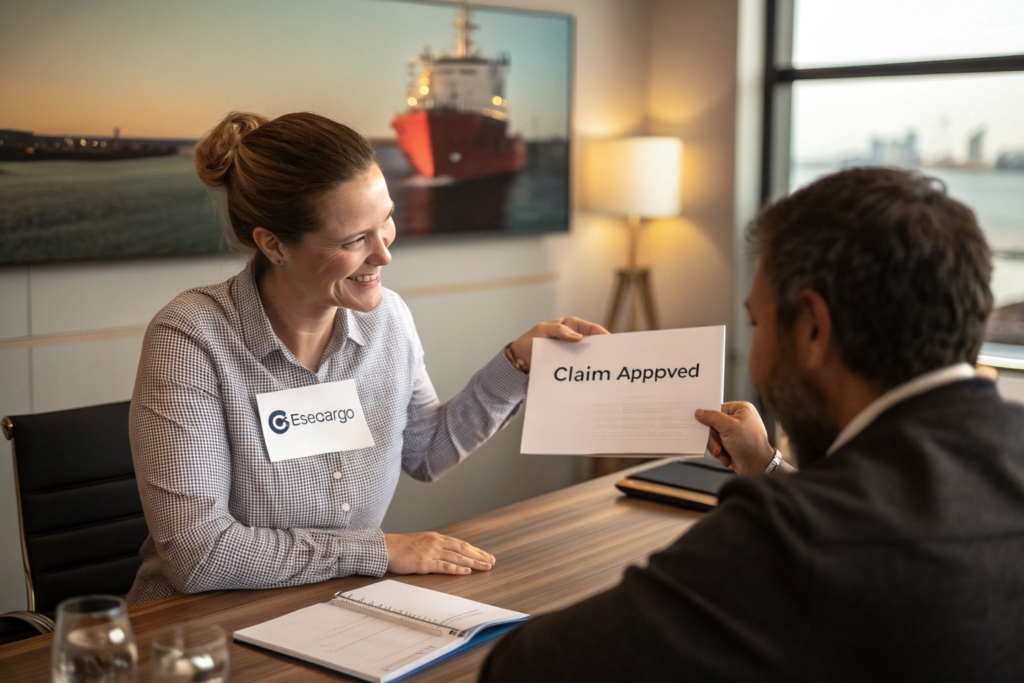
GeeseCargo integrates the claims process directly into our service. You report the loss to us, not to a call center. We gather the required documentation from the carrier and the port. We file the claim. We chase the settlement. You receive updates, and then you receive payment.
I once helped a client with a partial loss claim that his previous forwarder had abandoned as "too hard." We reconstructed the container loading plan. We secured the stevedore’s tally reports. We proved the shortage occurred during unloading. The insurer paid within 30 days. The client couldn’t believe it. He had accepted losses as a cost of doing business. We showed him it doesn’t have to be that way.
What Documentation Do You Need to File a Successful Cargo Claim?
The basic documents are the bill of lading, the commercial invoice, the packing list, and the survey report. The survey report is critical. It’s an independent inspection of the damage conducted at the destination. You need it quickly, before the container is unstuffed.
We arrange the surveyor for you. We coordinate access to the container at the warehouse. We ensure the surveyor’s report captures the full extent of damage. We submit the package to the insurer with a clear narrative of the loss. This cargo insurance claims advocacy is what turns a denied claim into a paid one.
How Quickly Can an In-House Claims Team Resolve a Disputed Loss?
External insurers love to delay. They request more documents. They question the packing. They argue the carrier is liable. An in-house claims team, like ours, cuts through this. We have pre-existing relationships with our underwriters. We know exactly what evidence triggers a settlement.
Most straightforward claims are resolved within 14 to 30 days. Complex claims involving general average or subrogation take longer, but we manage the timeline aggressively. You know the status weekly. You aren’t left wondering if anyone is working on your case. Our DDP service clients particularly benefit because we are fully invested in the outcome. It’s our goods under our care, so we pursue the claim with urgency.
How Does DDP Service Include and Enhance Cargo Insurance Protection?
Under standard shipping terms, you arrange your own insurance. You find a broker. You pay a separate premium. You manage the claim if something goes wrong. Under our DDP service, insurance is not an add-on. It’s built into the all-inclusive price. We carry the insurance policy. We are the beneficiary. And we are obligated to deliver your goods in perfect condition or make you whole.
Our DDP service wraps cargo insurance into the total landed cost. You don’t shop for policies. You don’t pay separate premiums. You don’t file claims. We insure your cargo under our master policy, and if a loss occurs, we compensate you directly from our own resources while we pursue the insurer.
This is the simplest risk transfer model in freight. You buy the goods, we move them, and we guarantee they arrive in saleable condition. A clothing importer using our DDP service had a container damaged by a forklift at the destination warehouse. He sent us photos. We credited his next invoice for the damaged units. No claim form. No adjuster visit. No delay. His business didn’t miss a beat.
How Does Being the Insured Party Under DDP Streamline Your Recovery?
When you are the insured party under your own policy, you bear the burden of proof. When GeeseCargo is the insured party under our DDP model, we carry that burden. We have the direct relationship with the underwriter.
A loss becomes an inter-company accounting matter between us, the insurer, and the carrier. You are the customer receiving a delivery. If the delivery is short or damaged, we credit you. We sort out the recovery behind the scenes. This separation of duties lets you focus entirely on your business.
Can DDP Insurance Coverage Simplify Compliance with Retailer Vendor Manuals?
Major retailers have strict vendor compliance manuals. They often require specific insurance coverage levels and proof of coverage. If you arrange your own insurance, you must provide certificates and update them annually.
Our DDP coverage meets or exceeds standard retailer requirements. We can provide insurance certificates naming the retailer as an interested party if required. This simplifies your vendor onboarding process. You present us as your integrated supply chain and logistics provider, and the insurance box is automatically checked.
Conclusion
Cargo moves through a dangerous world. Ships sink. Containers fall. Fires spread. Thieves steal. The legal system caps what you can recover from the people who caused the loss. Without your own insurance, you are self-insuring against catastrophic financial damage. We’ve seen why general average can blindside you with a bill for a disaster you didn’t cause. We’ve explored how all-risk coverage creates a financial safety net that catches every accidental loss from factory to warehouse.
We’ve also shown how the claims process, which is a nightmare with disconnected insurers, becomes a seamless service when managed by the same team that moved your cargo. And through our DDP integrated model, insurance becomes invisible to you. It’s simply a promise that your goods arrive as expected, or you don’t pay for the ones that don’t.
Don’t let a single container loss erase a year of hard work. Cargo insurance isn’t a cost. It’s an investment in business continuity. Contact GeeseCargo today. We’ll review your current shipping terms, identify your insurance gaps, and build a protection package that lets you sleep soundly while your goods cross the ocean.