You have 3 cubic meters of kitchen gadgets packed and ready at a factory in Yiwu. You call a forwarder and ask for a quote. They come back with two numbers: $650 for LCL and $2,800 for a full 20-foot container. Your instinct says "cheaper is better," and you pick LCL. But then the transit time is 35 days, and you watch your stock run out in week four. You start wondering if you made a mistake. There is no single right answer. LCL is the smart choice in specific situations. FCL is the smart choice in others. Knowing when to use LCL is the difference between saving money and losing sales.
LCL makes sense when your shipment volume is below the economic breakpoint, typically 15 cubic meters, and your inventory timeline can absorb the extra 5 to 10 days of transit time. It is the ideal mode for small to medium shipments, new product tests, seasonal filler orders, and multi-supplier collections that are not yet large enough to fill a container. At GeeseCargo, we do not just book your LCL and move on. We consolidate intelligently, track your cartons individually with barcodes, and give you a realistic door-to-door timeline so you can plan your inventory with confidence.
LCL is not a lesser service. It is a different tool for a different job. You would not use a sledgehammer to hang a picture frame. You would not use a full container to ship three pallets if the economics and the timeline do not justify it. Let me walk you through the specific scenarios where LCL is the right choice, how we make it reliable, and where the FCL line is drawn so you can make the decision with clear eyes.
What Is LCL Shipping, and How Does It Work with GeeseCargo?
You have heard the term LCL. You know it stands for Less than Container Load. You imagine your goods being tossed into a container with a bunch of other random stuff, and you have no idea how they are kept separate or how you track them. The process seems messier and riskier than having your own container.
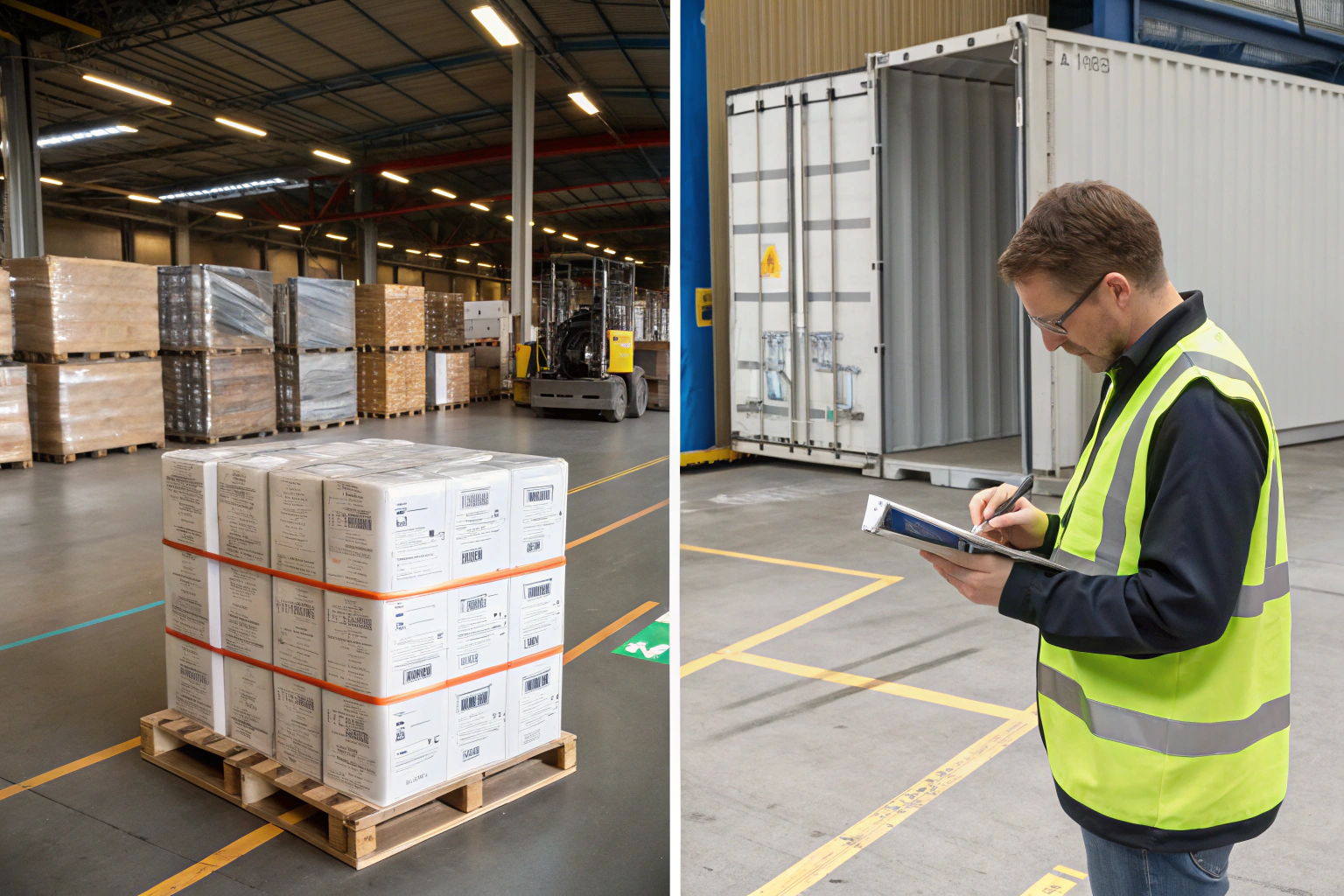
LCL means you share container space with other importers and pay only for the cubic meters your goods occupy. The process has four distinct stages. First, we pick up your goods from the factory and bring them to our Shenzhen consolidation warehouse. Second, we combine your cartons with other compatible shipments into a shared container. Third, the container travels as a single FCL unit on the vessel, which means it is not handled as loose cargo at transshipment ports. Fourth, at the destination port, the container is taken to a Container Freight Station where it is deconsolidated, and each importer’s goods are separated for individual delivery. You pay for the space you use, not the space you do not.
The key to understanding LCL is the consolidation and deconsolidation process. At our origin warehouse, we do not just throw cartons from different clients into a container. Each client’s goods are physically grouped together. We use floor-to-ceiling divider sheets or marked zones. Each carton has a barcode label linked to the shipment ID. The container is loaded so that each client’s block is stable and protected. The load plan is documented with photos. You can see exactly where your goods are inside the container.
At the destination CFS, the container is unloaded by warehouse workers who scan each carton as it comes out. The scanner tells them which client the carton belongs to and which outbound pallet it should be placed on. Your cartons are grouped together and staged for your delivery truck. This scan-in and scan-out process is the backbone of LCL integrity. It prevents the mixing of goods and gives you a digital record of your carton’s movement. You track your LCL shipment in our portal by your House Bill of Lading number. The status updates include "Arrived at Origin CFS," "Loaded into Container," "Vessel Departed," "Arrived at Destination CFS," "Deconsolidated," and "Out for Delivery." The visibility is the same as an FCL shipment.
What Is the Difference Between LCL and a Full Container Load?
You hear "LCL" and "FCL" and think they are just acronyms for different price points. The difference is deeper than price. It affects the transit time, the handling risk, and the delivery flexibility.
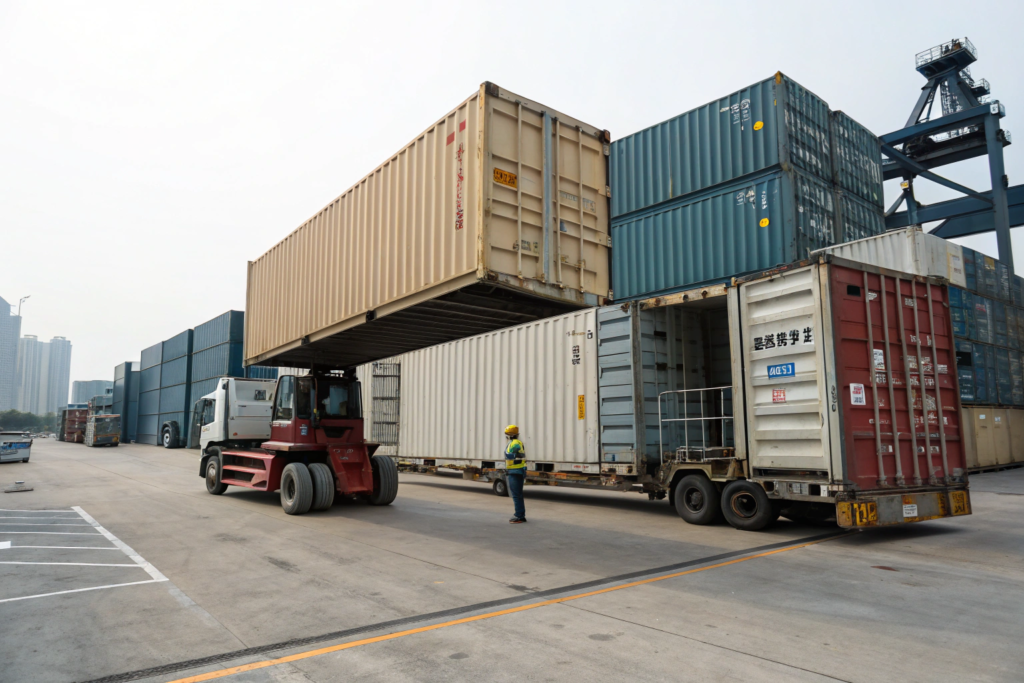
FCL means the entire container is yours. It is loaded at our warehouse and sealed. The seal is not broken until the container reaches your warehouse or a transload facility. No one else’s goods are inside. No one handles your cartons between origin and destination. This reduces the handling risk and speeds up the destination process because there is no CFS deconsolidation step. LCL means your goods share the container. The destination CFS deconsolidation adds 2 to 4 days to the transit time. Your cartons are handled individually at the CFS, which introduces a small additional handling risk. The advantage is cost. You pay for 3 cubic meters, not 33. The breakpoint where FCL becomes cheaper per unit is around 15 cubic meters. Below that, LCL is more economical. Above that, FCL is more economical and faster. We calculate this breakpoint for every shipment.
How Does Our LCL Consolidation Reduce Your Risk?
You have heard horror stories about LCL. Goods lost in a chaotic CFS. Cartons delivered to the wrong importer. A container delayed because another importer’s goods were flagged by customs.
Our LCL program is designed to minimize these risks. We consolidate only with known, vetted cargo. We do not mix your consumer goods with industrial chemicals or food products that could cause a customs or contamination issue. Our barcode system creates a chain of custody at the carton level. If a carton is misplaced, the system flags it. We use the same carrier alliances for our LCL containers as we do for our FCL containers, so the vessel reliability is the same. The destination CFS we use are audited and approved by us. We have a physical presence at the major CFS locations to oversee the deconsolidation of our shipments. LCL risk is real, but it is manageable with the right processes. Our processes have been refined over years of moving thousands of LCL shipments.
When Is LCL the Right Financial Choice for Your Shipment?
You are looking at a shipment of 8 cubic meters. The LCL quote is $1,200. The FCL quote for a 20-foot container is $2,800. You see a $1,600 difference and think LCL is the obvious winner. But you need to run the full numbers, including the destination costs and the inventory carrying cost.
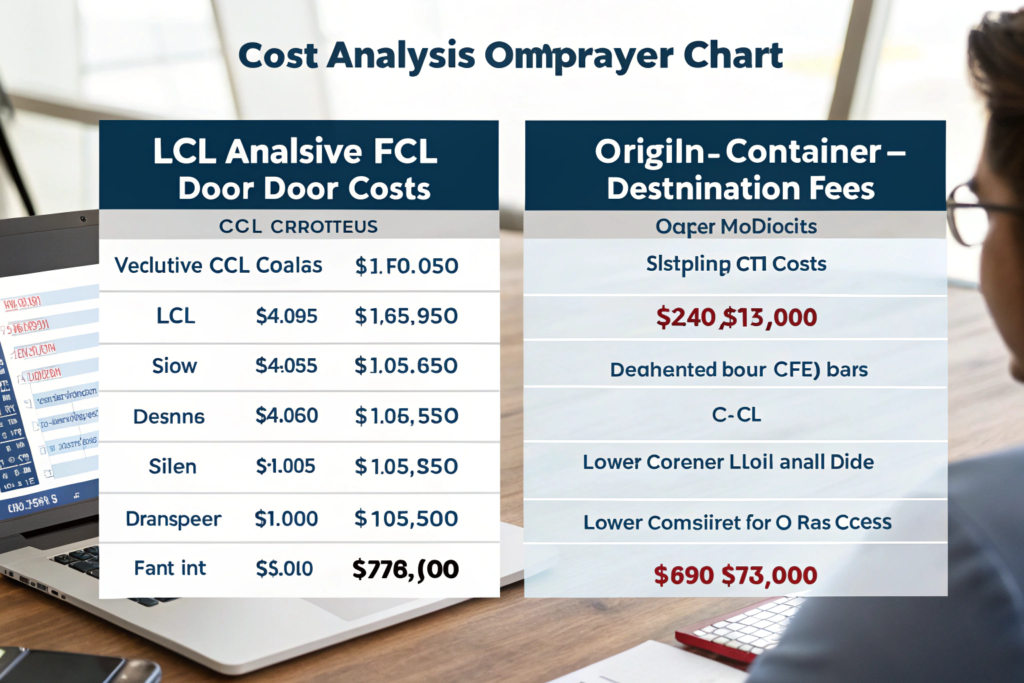
LCL is the right financial choice when your total shipment volume is below 15 cubic meters and the per-unit landed cost is lower than the FCL alternative. You must compare the all-in LCL door-to-door cost against the all-in FCL door-to-door cost, not just the ocean freight portion. LCL has origin and destination CFS fees that FCL does not. FCL has a flat container rate that covers the entire box, which means the per-unit cost drops as the container fills. We run this comparison for every shipment and show you the break-even volume where FCL becomes cheaper per unit.
Let me walk through a real example. A client shipped 10 cubic meters of pet toys. The LCL door-to-door cost was $1,450. The FCL 20-foot door-to-door cost was $2,900. The LCL saved $1,450 in cash outlay. The per-unit cost was $0.29 for LCL and $0.58 for FCL. LCL was the clear winner on cost.
Now consider a client shipping 16 cubic meters of yoga mats. The LCL door-to-door cost was $2,100. The FCL door-to-door cost was $2,800. The LCL saved $700. But the per-unit cost was $0.42 for LCL and $0.35 for FCL because the FCL rate covered up to 33 cubic meters, and at 16 cubic meters, the per-unit cost was already lower. Plus, the FCL transit was 22 days, while the LCL was 32 days. The inventory carrying cost of the extra 10 days of transit was an additional hidden cost. The client chose FCL. The cash outlay was higher, but the per-unit economics and the faster delivery made FCL the better overall decision.
We do this math for you. We show you the total door-to-door cost, the cost per unit, and the transit time for both modes. We also factor in the inventory carrying cost if the timeline difference is significant. You make the decision with full information.
How Does the LCL Cost Structure Break Down?
Your forwarder quotes you "$85 per cubic meter" for LCL. You multiply by your 8 cubic meters and budget $680. The final invoice is $1,250. You missed the origin CFS fee, the destination CFS fee, the documentation fee, the customs clearance, and the delivery.
LCL pricing has more line items than FCL because of the consolidation and deconsolidation handling. The components are: origin trucking from factory to CFS, origin CFS receiving and handling, export documentation, ocean freight per cubic meter, BAF and CAF surcharges, destination CFS handling and deconsolidation, customs clearance, customs bond, duty and tax (if DDP), and destination trucking to final address. We quote LCL as a door-to-door price that includes all of these components. You see a single number. We also provide a line-item breakdown if you want to see the cost structure. The $85 per cubic meter ocean freight rate is only the ocean leg. It is not the total cost. Our all-inclusive quoting eliminates the surprise of the additional CFS and handling charges that make LCL seem cheap upfront and expensive on the final invoice.
What Is the LCL Minimum Charge, and How Does It Affect Small Shipments?
You have 0.3 cubic meters of samples. The LCL quote has a minimum charge of 1 cubic meter. You are paying for space you are not using. It feels unfair, but it is the industry standard.
LCL carriers and consolidators have a minimum charge, usually one cubic meter. This covers the fixed costs of handling a shipment, regardless of how small it is. The documentation, the security filing, and the CFS handling have a base cost that does not scale down to zero. If your shipment is under 1 cubic meter, the LCL cost per unit will be high because the minimum charge is spread over very few units. For shipments under 0.5 cubic meters and 100 kg, air freight or express courier is often cheaper and faster than LCL. We compare the air freight cost against the LCL minimum charge for very small shipments. We do not automatically book LCL if air freight is the more economical choice. The minimum charge is a threshold, not a trap. We help you navigate it.
When Does LCL Make Sense for Your Business Timeline?
You are launching a new product. You ordered 500 units as a test batch. You need them in your warehouse in 20 days. The LCL transit time is 30 to 35 days. The air freight transit time is 7 days. The LCL is cheaper, but it misses your launch date. Cheap freight that delivers late inventory is not cheap. It is a sales loss disguised as a cost saving.
LCL makes sense when your inventory timeline can absorb the additional transit days. The standard LCL door-to-door time from a major Chinese port to a US West Coast destination is 28 to 35 days. This includes pickup, consolidation waiting time, ocean transit, deconsolidation, and delivery. If you have 45 days of inventory cover, LCL fits comfortably within your buffer. If you have 20 days of cover, LCL will cause a stock-out. You need a faster mode. We map your shipping timeline against your inventory forecast and recommend the mode that keeps your stock available without overspending on freight.
The extra time in LCL comes from the consolidation and deconsolidation steps. At the origin, your goods might wait 2 to 3 days for a full container to build. At the destination, the deconsolidation at the CFS takes 2 to 4 days. These are fixed steps that FCL skips. The total LCL transit is typically 5 to 10 days longer than FCL for the same port pair. This time difference is the operational trade-off for the cost saving. You need to know if your business can tolerate the extra week. We tell you the realistic door-to-door time for both modes, not the best-case scenario. We base the estimate on the actual consolidation schedule for your specific origin and destination.
How Does LCL Fit into a Seasonal Inventory Strategy?
You are stocking up for the holiday season. You need 500 units of your best-selling item as baseline stock and 200 units of a new seasonal design as a test. The baseline stock order is 15 cubic meters, right at the FCL breakpoint. The seasonal test order is 3 cubic meters.
LCL is perfect for the seasonal test order. You are not committing to a full container of a new design that might not sell. You ship the 3 cubic meters by LCL, pay the lower cost, and accept the slightly longer transit because you planned the order with enough lead time. The baseline stock goes FCL for the lower per-unit cost and faster delivery. This is a tiered inventory strategy. LCL handles the smaller, less time-sensitive, or test-batch components of your seasonal buy. FCL handles the high-volume, core assortment items. We help you segment your purchase orders by volume and urgency and assign the appropriate freight mode to each segment.
Can You Use LCL for Amazon FBA Shipments?
You have 2 cubic meters of goods for Amazon FBA. You think LCL is the natural choice. But Amazon has strict delivery appointment requirements, and LCL deconsolidation at a CFS adds a layer of handling that can complicate the FBA label and pallet compliance.
LCL can be used for FBA, but it requires additional coordination. The goods must arrive at the destination CFS, be deconsolidated, and then be re-palletized to Amazon’s specifications before delivery to the fulfillment center. The CFS must be equipped to handle FBA labeling and palletizing. We offer an LCL-to-FBA service that includes the deconsolidation and the FBA prep at our partner facility near the destination port. Your cartons are unloaded from the shared container, checked against FBA requirements, labeled with FBA carton IDs, palletized, and delivered to the assigned fulfillment center. This service bridges the gap between the LCL mode and the strict FBA receiving requirements. It is not automatic. You must tell us the shipment is FBA so we can route it through the FBA-compliant channel.
When Should You Move from LCL to FCL?
You have been shipping 8 cubic meters by LCL for six months. Your business is growing. Your next order is 14 cubic meters. You are still requesting LCL quotes out of habit. You are leaving money and time on the table.
You should move from LCL to FCL when your shipment volume consistently exceeds 12 to 15 cubic meters. At this volume, the FCL door-to-door cost per unit becomes equal to or lower than the LCL cost per unit. The FCL transit is also 5 to 10 days faster. The move to FCL is a milestone in a growing import business. It signals that your volume has reached a level where you can unlock better freight economics and faster inventory turns. We track your shipment history and proactively tell you when you are approaching the FCL threshold.
The transition from LCL to FCL is not just a cost decision. It is a logistics capability upgrade. With FCL, you control the entire container loading. You can optimize the pallet configuration for your warehouse receiving process. You can load the container to maximize cube utilization. You avoid the destination CFS entirely, which removes the deconsolidation delay and the handling risk. The container goes directly from the port to your warehouse or transload facility. The supply chain becomes simpler and faster. We celebrate this transition with our clients. It is a tangible sign of business growth.
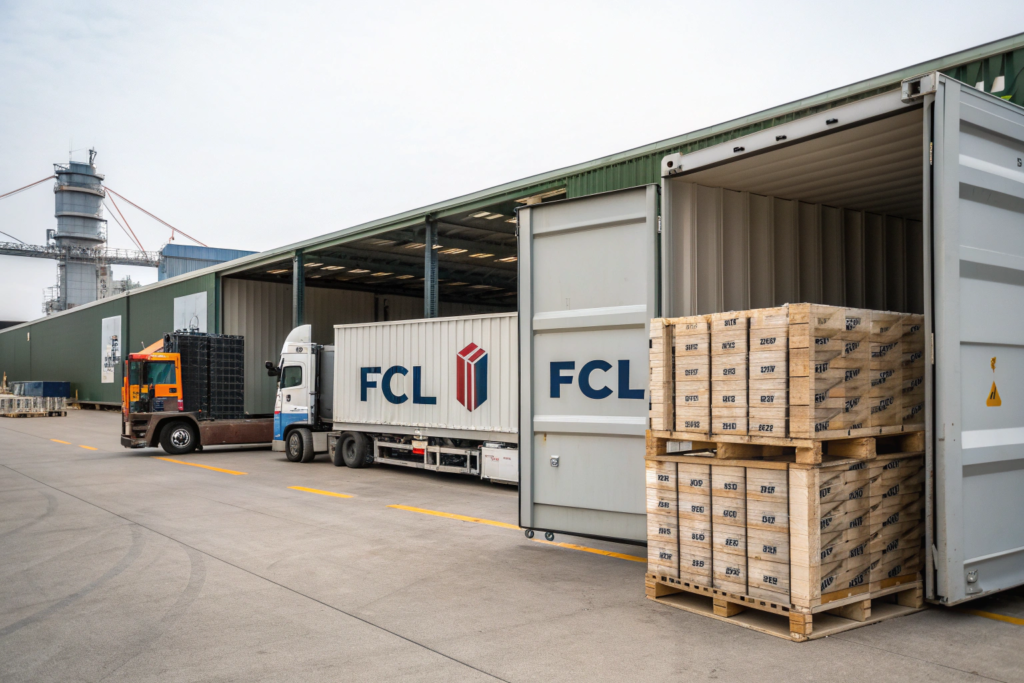
How Do We Help You Transition from LCL to FCL Smoothly?
Your first FCL order is 18 cubic meters. You are used to the LCL process. You are not sure how FCL loading works, or how the delivery differs. You are nervous about making the switch.
We walk you through the differences. For FCL, we send you a load plan diagram showing how your cartons will be arranged inside the container. We photograph the loaded container before closing the doors. We explain the direct delivery process: the container arrives at your warehouse, and you unload it at your pace within the free detention days. We coordinate with your receiving team to ensure they have a dock and a forklift ready. The transition from LCL to FCL is a step up in logistics control. We make sure you are ready for it. After your first FCL shipment, you will not want to go back to LCL unless the shipment size genuinely warrants it.
What If Your Shipment Volume Fluctuates Month to Month?
Some months you have 20 cubic meters. Other months you have 6 cubic meters. You cannot commit to FCL every month. You feel stuck between the two modes, never quite fitting either one perfectly.
Fluctuating volume is normal for many importers, especially those with seasonal products or promotional spikes. We manage this with a flexible approach. You are not locked into one mode. We quote both LCL and FCL for every shipment and let the volume dictate the mode. In the months with 20 cubic meters, you ship FCL. In the months with 6 cubic meters, you ship LCL. Your account manager knows your preferences and your warehouse requirements, so the service is consistent regardless of the mode. The mode is just a variable in the shipment plan. The relationship, the quality of communication, and the transparency of the pricing remain constant.
Conclusion
LCL shipping is not the "cheap alternative" to a full container. It is the correct logistics tool for a specific set of conditions. When your shipment is under 15 cubic meters, your inventory timeline allows 28 to 35 days, and you are testing new products or filling smaller orders, LCL is the financially and operationally sound choice. It gives you access to global container shipping without paying for empty space you do not need.
The difference between a good LCL experience and a bad one is the forwarder running the consolidation. A forwarder that treats LCL as an afterthought, throws cartons into a shared container without tracking, and uses the cheapest, slowest CFS, will give you delays, damaged goods, and lost cartons. At GeeseCargo, LCL is a core service, not a secondary one. We track every carton with barcodes from origin to destination. We consolidate intelligently with compatible cargo. We use audited, high-performance CFS facilities. We give you the same level of communication and visibility on an LCL shipment as we do on an FCL shipment.
Your shipment volume determines the mode. Your business needs determine the timeline. Our job is to match the two and execute the shipment with precision, regardless of whether it fills an entire container or just a corner of one.
If you have a shipment that you think might be right for LCL, go to GeeseCargo.com and send me the packing list. Tell me the carton count, the dimensions, the weight, and your required delivery date. I will run the LCL and FCL comparison and show you the cost per unit and the door-to-door transit time for both options. Let’s pick the right tool for the job together.