When one of our clients attempted to clear a $180,000 shipment in Canada without a Certificate of Origin, they faced a 14% duty rate instead of the NAFTA-eligible 0% rate, costing them over $25,000. As founder of GeeseCargo with extensive documentation experience, I've learned that Certificates of Origin aren't just paperwork—they're powerful financial tools that can dramatically impact your landed costs and market competitiveness.
A Certificate of Origin is required when importing goods that qualify for preferential tariff treatment under free trade agreements, when the importing country mandates origin documentation for specific products, or when the buyer requires proof of origin. Approximately 35% of global trade utilizes preferential certificates that reduce duties by 3-15% on average.
Understanding when and why you need this document transforms it from bureaucratic paperwork to a strategic financial tool. Proper origin documentation typically reduces import costs by 5-20% while ensuring customs compliance and preventing shipment delays.
What Are the Different Types of Certificates of Origin?
Certificates of Origin come in several forms, each serving different purposes and requiring specific issuance procedures.
What's the Difference Between Preferential and Non-Preferential Certificates?
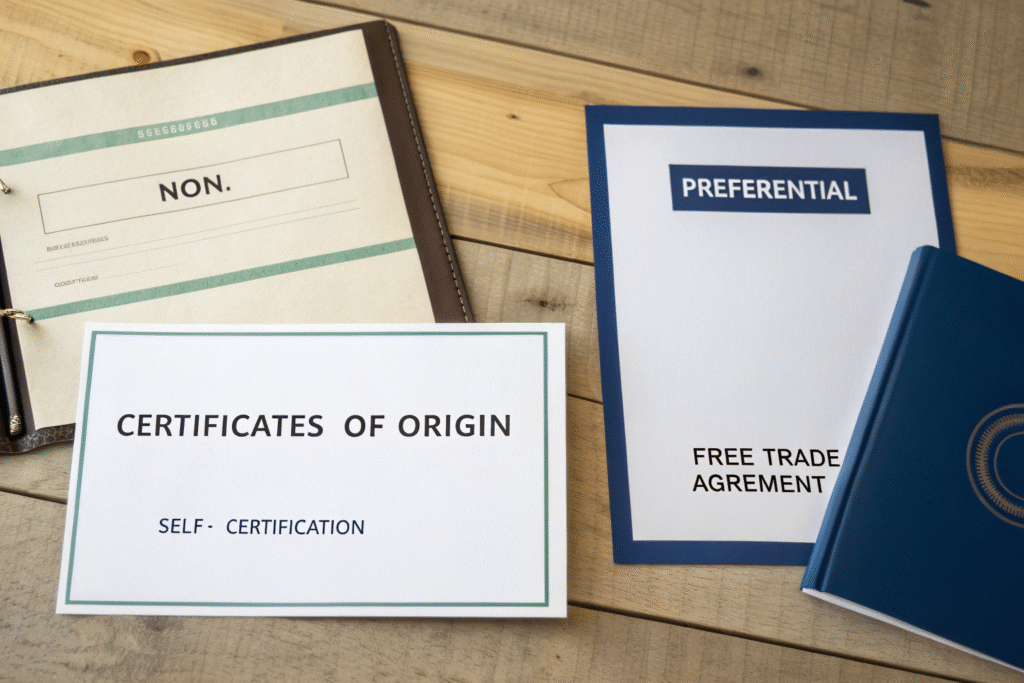
Preferential Certificates of Origin enable reduced or zero duty rates under trade agreements. These include specific forms like the USMCA Certificate of Origin, ASEAN-China FTA Form E, or EU Generalized System of Preferences Form A that provide tariff advantages.
Non-preferential Certificates of Origin simply declare country of origin without tariff benefits. These are used for statistical purposes, trade sanctions compliance, or when importing countries require origin documentation but no trade agreement exists.
Self-certification versus authorized certification varies by agreement. Some trade agreements allow importers or exporters to self-certify origin, while others require chamber of commerce or government agency validation.
Which Free Trade Agreements Require Specific Certificates?
USMCA (United States-Mexico-Canada Agreement) requires specific certification format. While allowing importer, exporter, or producer certification, the document must contain specific data elements proving originating status.
ASEAN-related agreements use Form series for different partners. Form D for ASEAN Trade in Goods Agreement, Form E for ASEAN-China FTA, and other letter-designated forms for various Asian trade partnerships.
EU agreements typically use EUR.1 movement certificates or invoice declarations. The specific form depends on the agreement with the exporting country and the value of the shipment.
When Is a Certificate of Origin Mandatory?
Understanding the triggering events for origin documentation prevents costly delays and maximizes potential duty savings.

When Do Free Trade Agreements Require Certification?
Shipments between FTA partner countries typically require certification. For example, goods shipped from China to Australia under China-Australia FTA need Certificate of Origin Form F to claim preferential rates.
Specific rules of origin must be met for each product. Even between FTA partners, each product has specific origin rules (tariff shift, regional value content) that must be documented.
Claiming preferential treatment at customs requires valid documentation. Without the proper Certificate of Origin, customs will apply Most-Favored-Nation rates instead of preferential FTA rates.
When Do Import Regulations Mandate Origin Documentation?
Trade remedy measures often require origin verification. Anti-dumping duties, countervailing duties, and safeguard measures frequently target specific countries, making origin documentation essential.
Import licensing and quota systems use origin for allocation. Products subject to tariff-rate quotas or absolute quotas often require origin documentation to determine eligibility and allocation.
Product-specific regulations may mandate origin disclosure. Certain agricultural products, textiles, and strategic goods often have origin documentation requirements regardless of trade agreements.
How Do You Determine If Your Shipment Needs a Certificate?
Systematic analysis of your shipment characteristics and trade lane requirements determines whether origin documentation is necessary or beneficial.
What Product and Trade Lane Factors Influence the Decision?
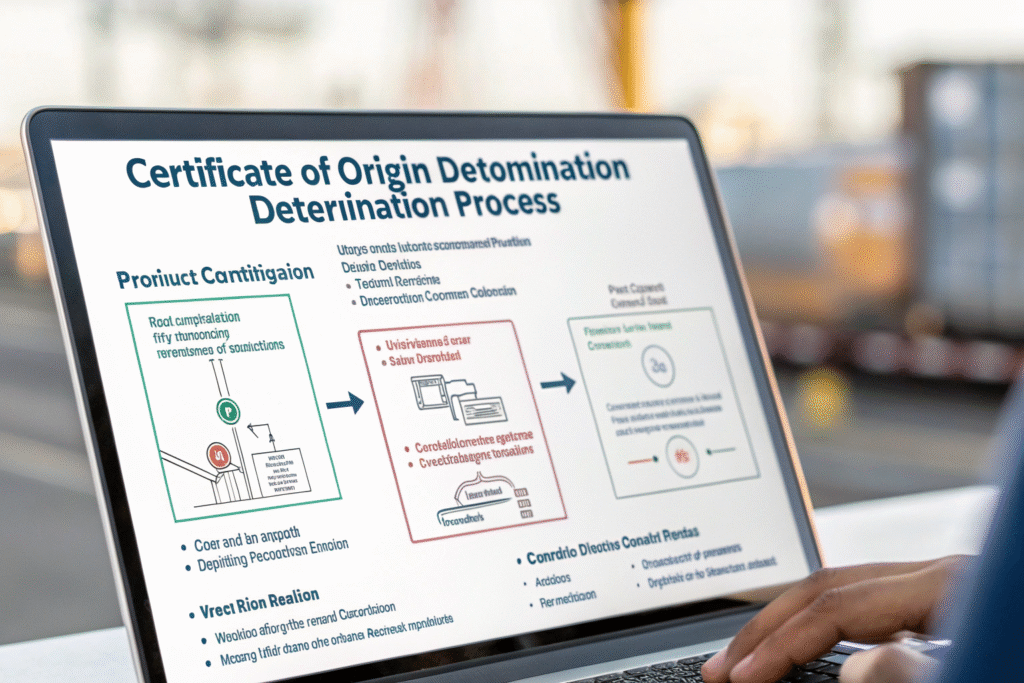
Product classification under Harmonized System codes determines eligibility. The HS code determines whether your product qualifies for preferential treatment under specific trade agreements.
Trade lane between specific countries triggers agreement applicability. Each free trade agreement applies only between signatory countries, making the origin and destination critical factors.
Product value affects the cost-benefit analysis. The potential duty savings must justify the cost and effort of obtaining certification, typically making certificates more valuable for higher-value shipments.
How Can You Verify Free Trade Agreement Eligibility?
Consult the specific agreement's rules of origin for your product. Each FTA has detailed product-specific rules that determine whether goods qualify as originating.
Review tariff schedules for both origin and destination countries. Comparing MFN rates with preferential rates indicates potential savings from proper origin certification.
Consider cumulation and regional content provisions. Some agreements allow materials from certain other countries to be considered originating, expanding potential eligibility.
What Are the Consequences of Not Having a Required Certificate?
The impacts of missing or incorrect origin documentation extend beyond simple duty overpayment to include compliance penalties and operational disruptions.

What Financial Impacts Result from Missing Certificates?
Duty overpayment at Most-Favored-Nation rates instead of preferential rates. This typically represents 3-15% of product value, creating significant unnecessary costs that directly impact profitability.
Penalties for incorrect origin claims or false documentation. Customs authorities may assess substantial penalties for incorrect origin declarations, particularly if perceived as intentional misrepresentation.
Lost opportunity costs from unclaimed duty savings. Beyond immediate overpayment, companies lose competitive pricing advantages in destination markets without preferential duty rates.
What Operational Disruptions Occur Without Proper Documentation?
Customs clearance delays while origin is verified. Shipments without proper documentation often face extended customs examinations and requests for additional evidence of origin.
Storage and demurrage charges during resolution periods. While origin issues are resolved, containers accumulate port storage fees and detention charges that can exceed hundreds of dollars daily.
Supply chain disruptions from missed production or delivery timelines. Customs delays create ripple effects throughout the supply chain, potentially causing stockouts or production stoppages.
How Can You Obtain and Manage Certificates of Origin?
Efficient certificate management requires understanding issuance processes, documentation requirements, and compliance obligations.
What Are the Main Issuance Methods and Authorities?
Chamber of Commerce certification remains common for non-preferential certificates. Local chambers typically verify origin information and stamp certificates, though requirements vary by country.
Government authorities issue certain preferential certificates. Some countries require specific government agencies to validate origin for certain trade agreements or products.
Self-certification under specific trade agreements is increasingly common. USMCA, ASEAN, and other modern agreements allow exporters or producers to self-certify without third-party validation.
What Documentation Supports Origin Claims?
Manufacturing cost statements verify regional value content. When origin depends on value calculations, detailed cost breakdowns from manufacturers support origin claims.
Bill of materials with supplier origins demonstrates substantial transformation. Documentation showing inputs from various countries and the manufacturing process helps prove origin criteria are met.
Supplier declarations support origin claims for materials. Statements from component suppliers about their materials' origins help demonstrate compliance with origin rules.
What Are Common Certificate of Origin Mistakes?
Understanding frequent errors helps prevent compliance issues and maximize the benefits of origin documentation.

What Content Errors Invalidate Certificates?
Incorrect origin criteria application misunderstands agreement rules. Claiming origin based on wrong criteria (tariff shift versus value content) creates invalid certificates even with accurate information.
Insufficient supporting documentation fails to prove origin claims. Without proper manufacturing information or supplier declarations, certificates may be rejected during verification.
Expired certificates or incorrect formats violate requirements. Using outdated forms or formats not accepted by the importing country renders certificates invalid despite accurate content.
What Procedural Errors Cause Problems?
Improper issuance authority selection invalidates certification. Using a chamber of commerce when government agency approval is required, or vice versa, creates unacceptable documentation.
Incorrect timing of certificate issuance causes clearance delays. Certificates obtained after shipment or with incorrect dates may be rejected by customs authorities.
Poor recordkeeping hampers audit defense and renewal. Inadequate documentation retention makes responding to customs inquiries or renewing certificates difficult.
Conclusion
Certificates of Origin represent one of the most impactful yet misunderstood documents in international trade. When used strategically, they transform from bureaucratic requirements into powerful financial tools that reduce costs, ensure compliance, and enhance competitive positioning. The most successful importers and exporters integrate origin management into their overall trade strategy rather than treating it as an afterthought.
At GeeseCargo, we've helped clients achieve an average of 12% duty reduction through strategic origin management, with the best results coming from companies that approach certificates as ongoing compliance requirements rather than transaction-specific paperwork. The key is understanding that origin documentation requires continuous attention as products, supply chains, and trade agreements evolve.
Begin your origin management improvement by conducting a comprehensive review of your products and trade lanes to identify certificate opportunities, then implement systematic processes for obtaining, verifying, and maintaining proper documentation. Remember that in international trade, proper origin documentation isn't just about compliance—it's about capturing available cost savings and building resilient, efficient supply chains.