When one of our clients tried to book directly with a carrier to save money but ended up paying 40% more due to unexpected accessorial charges and demurrage fees, they learned the hard way that forwarders and carriers serve fundamentally different roles. As founder of GeeseCargo with experience on both sides of the industry, I've witnessed how understanding this distinction transforms how businesses approach their shipping strategy.
A freight forwarder acts as an intermediary that arranges and coordinates shipping on behalf of shippers, while a carrier is the company that physically transports goods using its own vessels, aircraft, or trucks. Forwarders provide logistics services and manage multiple carriers, while carriers provide transportation capacity and operate the actual equipment moving your cargo.
This distinction creates different value propositions, cost structures, and service approaches. The most successful shippers understand when to use each type of provider—and often use both in coordinated strategies that leverage their respective strengths.
What Exactly Does a Freight Forwarder Do?
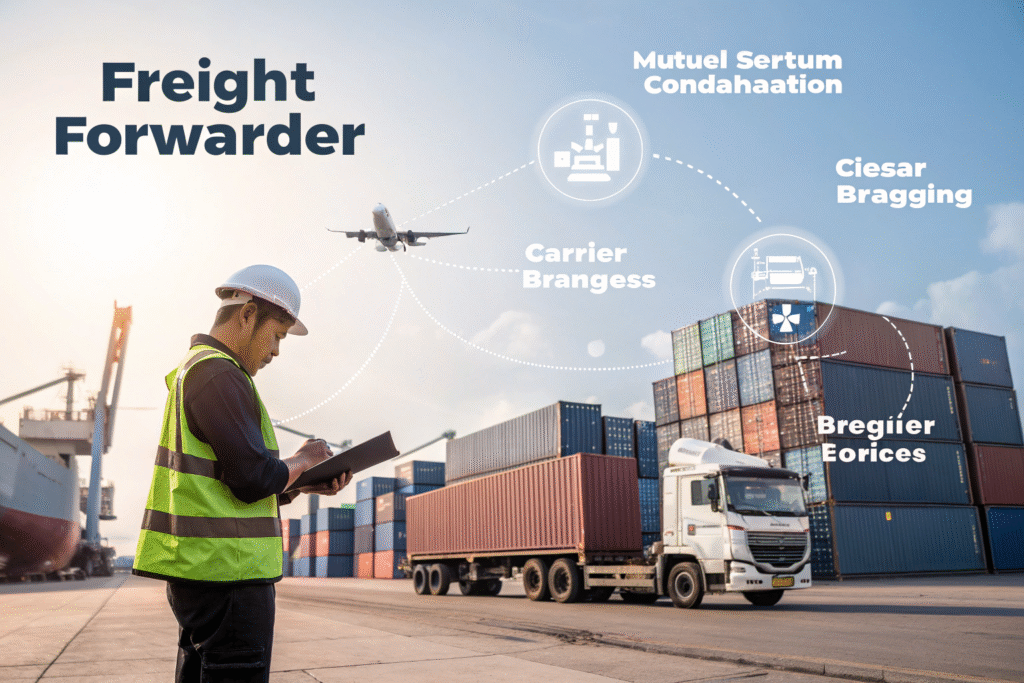
Freight forwarders function as logistics architects, designing and managing the complete shipping process through their network of carrier relationships and service providers.
What Core Services Do Forwarders Provide?
Transportation management involves carrier selection, booking, and documentation. Forwarders analyze multiple carrier options to find the optimal balance of cost, speed, and reliability for each shipment, then handle all booking and documentation requirements.
Consolidation services combine multiple shippers' cargo for better rates. By grouping smaller shipments into full container loads (FCL) or consolidated air freight, forwarders secure volume discounts that individual shippers cannot access independently.
Customs brokerage and regulatory compliance ensure smooth border crossings. Forwarders prepare required documentation, submit customs declarations, and ensure compliance with import/export regulations across all relevant jurisdictions.
What Value-Added Services Differentiate Forwarders?
Supply chain visibility and tracking provide shipment monitoring. Advanced forwarders offer real-time tracking, exception alerts, and performance analytics that give shippers unprecedented visibility into their shipments.
Cargo insurance and risk management protect against losses. Forwarders arrange appropriate insurance coverage and implement risk mitigation strategies that individual shippers would find difficult to coordinate independently.
Warehousing and distribution services create integrated solutions. Many forwarders offer storage, cross-docking, and final-mile delivery services that extend beyond simple transportation.
What Specifically Does a Carrier Provide?
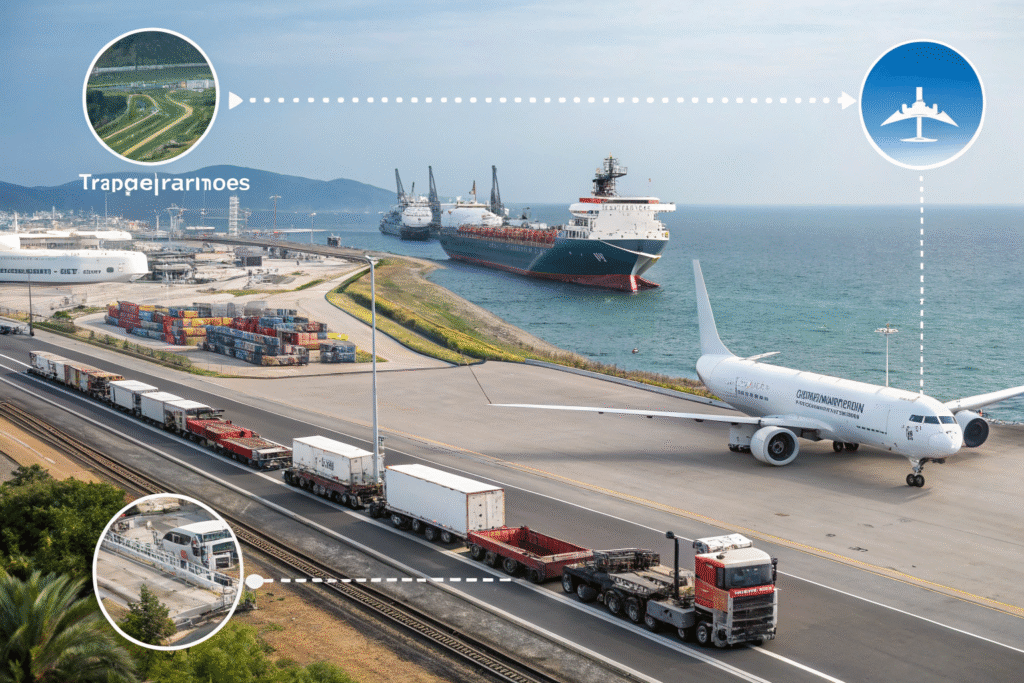
Carriers focus on the physical movement of goods, operating the actual transportation assets that move cargo between locations.
What Transportation Assets Do Carriers Operate?
Ocean carriers operate container ships and vessel networks. These companies own or charter vessels and determine sailing schedules, port rotations, and equipment positioning to optimize their fleet utilization.
Air carriers operate aircraft and air cargo capacity. Airlines dedicate specific aircraft or belly space to cargo transport, managing flight schedules, hub operations, and ground handling services.
Trucking carriers operate local and long-distance truck fleets. These companies provide drayage (port to warehouse), regional distribution, and cross-country trucking services using company-owned or contracted equipment.
What Are Carriers' Primary Operational Responsibilities?
Equipment management ensures container and trailer availability. Carriers maintain pools of containers, chassis, and other equipment, positioning them strategically to meet customer demand across their network.
Vessel and vehicle operations focus on transportation efficiency. Carriers optimize routes, schedules, and equipment utilization to maximize their operational efficiency and asset productivity.
Terminal and port operations manage cargo handling. Many carriers operate or contract dedicated terminal operations for loading/unloading vessels and managing yard operations.
How Do Their Business Models and Revenue Structures Differ?
The fundamental economic models of forwarders versus carriers create different incentives, pricing approaches, and service priorities.

How Do Forwarders Generate Revenue?
Service fees and profit margins on carrier rates represent primary revenue. Forwarders typically charge shippers more than they pay carriers, with the difference covering their services and generating profit.
Volume-based carrier discounts create competitive advantages. As forwarders aggregate shipping volume, they secure preferential rates from carriers that individual shippers cannot access.
Value-added service fees generate additional revenue streams. Services like customs brokerage, warehousing, and cargo insurance provide revenue beyond basic transportation arrangements.
How Do Carriers Generate Revenue?
Freight charges based on space utilization drive primary revenue. Carriers charge for the space or weight capacity used by shippers' cargo, with rates fluctuating based on supply and demand dynamics.
Equipment-related fees contribute significantly to revenue. Demurrage, detention, per diem, and other equipment charges represent substantial revenue sources, particularly during equipment shortages.
Fuel and regulatory surcharges adjust for cost variations. Carriers implement various surcharges to account for fluctuating fuel costs, currency changes, and regulatory requirements.
When Should You Use a Forwarder vs. a Carrier Directly?
The optimal choice depends on your shipping volume, complexity, internal expertise, and strategic priorities.
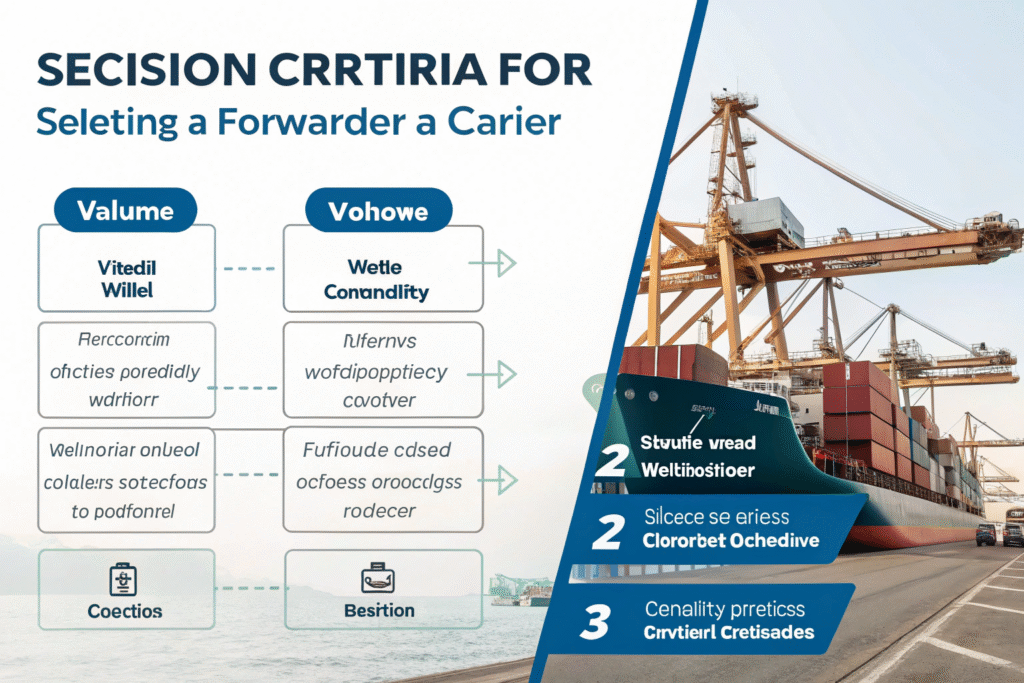
When Does Working With a Forwarder Make Most Sense?
Complex shipping requirements benefit from forwarder expertise. Multi-modal shipments, specialized equipment needs, or complicated routing requirements typically justify forwarder involvement.
Limited internal logistics resources necessitate forwarder support. Companies without dedicated logistics teams benefit from forwarders' expertise and resource network.
Variable shipping volumes create efficiency through forwarder consolidation. Businesses with fluctuating or smaller shipment volumes achieve better rates and service through forwarder consolidation.
When Might Working Directly With Carriers Be Advantageous?
Extremely high, consistent volume justifies direct carrier relationships. Companies shipping hundreds of containers monthly may secure better rates and priority treatment through direct carrier contracts.
Specialized commodity requirements may need direct carrier management. Unique products with specific handling requirements sometimes benefit from direct carrier relationships and specialized equipment access.
Simplified, repetitive shipping patterns suit direct carrier arrangements. Point-to-point shipments with consistent volumes and simple requirements may not justify forwarder involvement.
How Do Their Liability and Legal Responsibilities Differ?
The legal frameworks governing forwarders and carriers create different liability structures and legal obligations.

What Legal Frameworks Govern Carrier Liability?
International conventions define ocean carrier liability limits. The Hague-Visby Rules typically limit carrier liability to approximately $500 per package or $1.52 per kilogram unless higher value is declared and paid for.
Air carrier liability follows Montreal Convention standards. Airlines typically face liability limits of approximately $22 per kilogram unless higher value is declared.
Carmack Amendment governs domestic US trucking liability. Motor carriers face different liability standards than international ocean or air carriers, with specific claims procedures and time limits.
How Is Forwarder Liability Typically Structured?
Contractual agreements define forwarder liability and responsibilities. Unlike carriers governed by international conventions, forwarder liability is primarily determined by service contracts and terms of service.
Errors and omissions coverage addresses service failures. Forwarders typically carry insurance protecting against mistakes in documentation, instructions, or other service errors.
Carrier selection responsibility creates indirect liability. Forwarders may face liability for negligent carrier selection if they choose unreliable or financially unstable carriers.
What Are the Strategic Implications of Each Choice?
The forwarder versus carrier decision impacts broader business strategy beyond individual shipment execution.
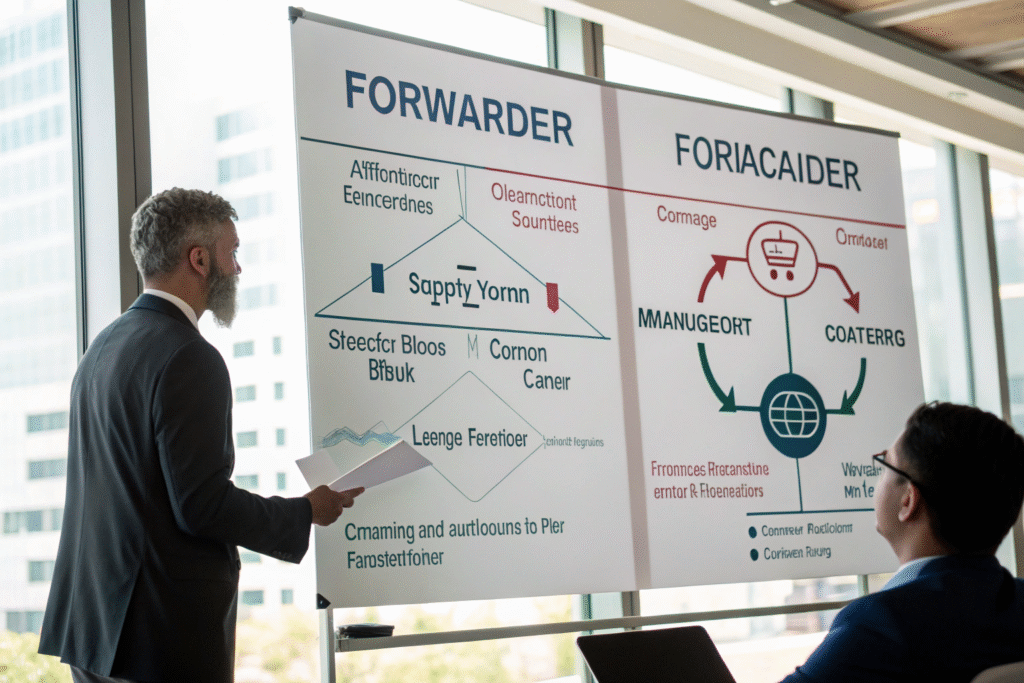
How Does Each Option Impact Supply Chain Flexibility?
Forwarders provide built-in redundancy and alternative options. Their multi-carrier networks automatically provide alternatives when disruptions occur with specific carriers.
Direct carrier relationships can secure priority treatment during constraints. During capacity crunches, shippers with direct carrier relationships often receive preferential equipment and space allocation.
Forwarder relationships enable easier scaling and market expansion. As businesses enter new markets or scale operations, forwarders can quickly adapt services without renegotiating multiple carrier contracts.
How Does Risk Management Differ Between Approaches?
Forwarders provide single-point accountability for complex shipments. With multi-modal or multi-carrier shipments, forwarders assume coordination responsibility and problem resolution.
Direct relationships offer clearer visibility into operational issues. Working directly with carriers provides more transparent information about equipment availability, operational challenges, and recovery timelines.
Forwarder expertise helps navigate regulatory complexities. International shipping involves constantly changing regulations that forwarders monitor and manage on behalf of their clients.
Conclusion
The choice between freight forwarders and carriers isn't about which is universally better, but about which better serves your specific shipping needs, capabilities, and strategic objectives. The most successful shippers often use both in complementary ways—leveraging forwarders for complex, variable, or resource-intensive shipping while maintaining direct carrier relationships for high-volume, simple routings where they can achieve optimal economics.
At GeeseCargo, we've helped clients develop hybrid approaches that reduce total shipping costs by 15-25% while improving service reliability by 30-40%. The key is recognizing that forwarders and carriers play different but complementary roles in the supply chain, and the optimal mix depends on your specific business context.
Begin your evaluation by honestly assessing your internal logistics capabilities, shipping patterns, and strategic priorities. Then develop a graduated approach that matches provider selection to specific shipment characteristics rather than applying a one-size-fits-all strategy. Remember that in global logistics, flexibility and expertise often provide more value than marginal rate differences—and the right partner combination delivers both.