
You hired a freight forwarder to solve problems, not create them. But somewhere along the way, you lowered your expectations. You accepted that invoices will have surprise charges. You accepted that you’ll have to chase updates. You accepted that when something goes wrong, you’ll be the one figuring out the solution. The industry trained you to expect mediocrity. You forgot what good service actually looks like.
Your freight forwarder should be providing fixed all-in pricing with zero surprise charges, proactive communication at every milestone, direct carrier relationships that protect your space, in-house customs expertise that prevents border delays, and contingency plans that activate before a crisis hits your inventory. GeeseCargo already does all of this. This isn’t premium service. It’s the baseline of what you should demand.
I built GeeseCargo to be the forwarder I wished existed when I was on the other side of the table. The industry standard is broken. Silence is not acceptable. Hidden fees are not acceptable. Blame-shifting is not acceptable. Let me show you what a competent freight forwarder actually does, and how we deliver it every day.
Should Your Forwarder Offer Fixed All-In Pricing with Zero Surprise Invoices?
The industry’s dirtiest secret is the bait-and-switch quote. A low base rate wins your business. The surcharges come later, after your cargo is on the water and you can’t walk away. Peak season surcharge. Bunker adjustment factor. Chassis fee. Port congestion fee. Documentation amendment fee. Each one small on its own. Together, they turn your $3,000 quote into a $5,000 invoice. This is not an accident. It’s a business model.
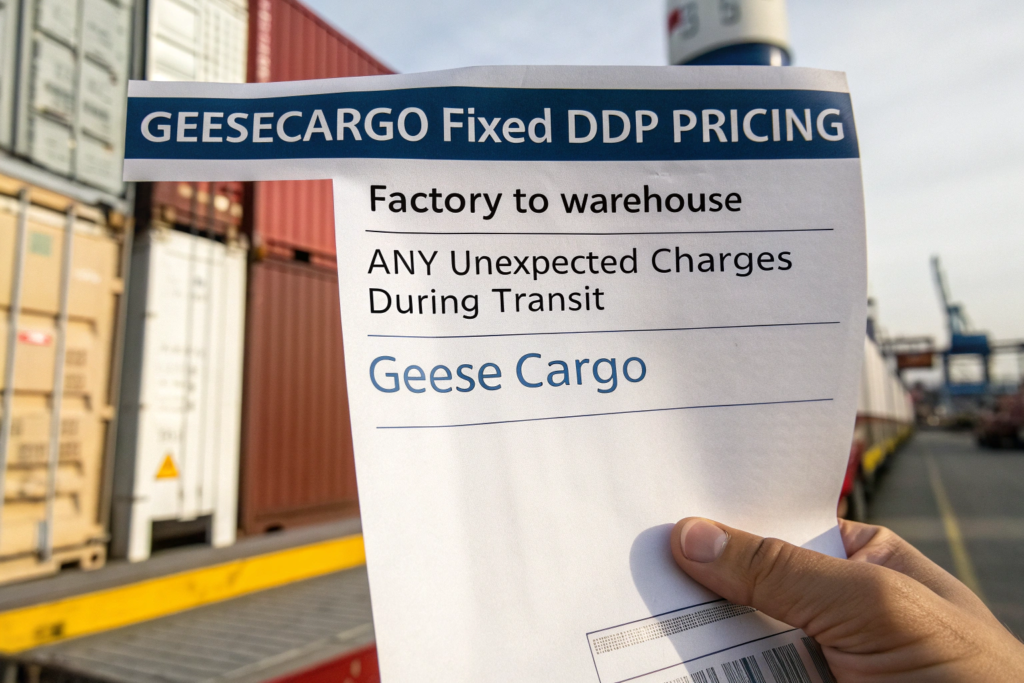
Your forwarder should quote an all-in price and bill an all-in price. GeeseCargo provides fixed DDP pricing that covers every cost from factory to warehouse. If a surcharge appears during transit, we pay it. Your invoice matches your quote. Every time. No exceptions. No excuses.
A client brought me his previous forwarder’s quote and final invoice. The quote was $2,800. The invoice was $4,900. Twelve additional line items had materialized. He paid them because his goods were in transit. This is not a rare story. It’s the standard operating procedure for too many forwarders. Our fixed pricing eliminates this entirely. You budget a number. You pay that number. The trust that builds is worth more than any surcharge margin.
What Does a Truly "All-In" Quote Include and What Should It Exclude?
An all-in quote includes ocean freight, bunker surcharge, terminal handling at origin and destination, documentation fees, customs brokerage, duties and taxes, insurance, and final delivery to your door. It excludes nothing that is a normal, foreseeable cost of shipping.
If a forwarder’s quote has a footnote saying "subject to carrier surcharges" or "destination charges as incurred," it is not all-in. It is a partial quote designed to look competitive. Your forwarder should be able to list every cost component and guarantee the total.
How Does Fixed Pricing Free You to Focus on Your Business Instead of Freight Audits?
When your invoices vary, you audit. You compare. You question. You email back and forth. This process consumes hours every month. Hours you could spend on product development, sales, or customer relationships.
Fixed pricing eliminates the audit. You see the agreed number. You pay it. The mental load of freight billing disappears. Our DDP service clients spend their energy on growing their brands, not investigating their logistics bills.
Should Your Forwarder Communicate Proactively Instead of Waiting for You to Ask?
The most common complaint about freight forwarders is the silence. You hand over your cargo. You hear nothing. You wait. You email. You wait more. You call. Voicemail. Finally, a terse reply with no useful information. You feel like you’re begging for basic service. You’re not needy. You’re paying for logistics management, and management requires communication.
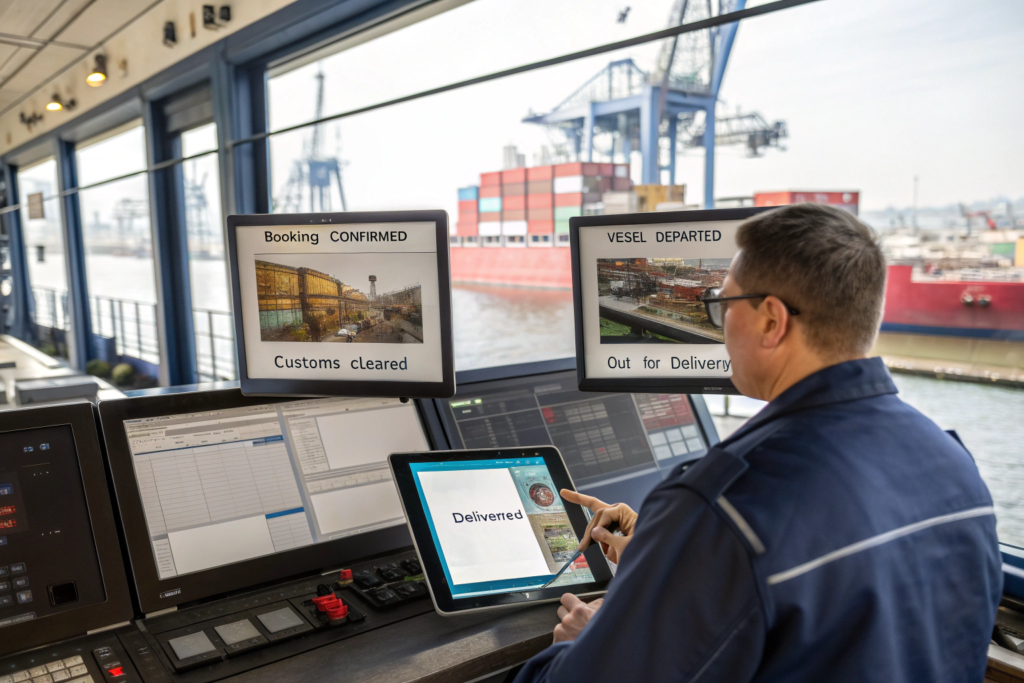
Your forwarder should push information to you, not wait for you to pull it. GeeseCargo sends proactive notifications at every milestone: booking confirmed, vessel departed, customs cleared, out for delivery, delivered. When a problem occurs, you hear from us before you even knew there was a problem, along with the solution we’ve already initiated.
I once asked a group of importers what their number one frustration was. The unanimous answer was "the silence." They could tolerate delays if they knew about them. They couldn’t tolerate the black hole of no information. We built our communication system around that insight. You never chase us. We update you. The psychological difference between chasing and being informed is enormous.
What Milestone Updates Should Your Forwarder Provide Automatically?
Booking confirmation with vessel name and sailing date. Container pickup from factory. Export customs clearance. Vessel departure. Transshipment connection if applicable. Vessel arrival at destination port. Import customs clearance status. Container availability for pickup. Out for delivery. Delivered.
Each milestone triggers an automatic notification. You see the progress in real-time. You don’t need to ask "has it sailed?" or "has it cleared?" The information arrives in your inbox or on your dashboard as it happens.
How Should a Forwarder Handle Bad News Differently from Routine Updates?
Bad news requires speed, not silence. A vessel delay. A customs hold. A missed transshipment connection. The forwarder should tell you immediately, explain the impact on your delivery timeline, and present the action plan to resolve it.
When we have bad news, we call or message within the hour. We don’t wait hoping the problem resolves itself. We don’t let you discover it on your own. We deliver the news, the impact assessment, and the fix. That’s what accountability looks like. Our freight forwarder communication protocol treats bad news as an urgent priority, not something to bury.
Should Your Forwarder Have Direct Carrier Contracts Instead of Brokering Space?
Many forwarders are resellers. They don’t have their own carrier contracts. They buy space from a larger forwarder or consolidator. Your booking passes through multiple companies before reaching the vessel. Each layer adds cost. Each layer adds communication lag. Each layer reduces priority. When space tightens, reseller bookings get rolled first. Your cargo sits while contracted cargo sails.
Your forwarder should hold direct service contracts with the major ocean carriers. GeeseCargo contracts directly with COSCO, Maersk, CMA CGM, ONE, and others. We book your cargo on our own allocation. No intermediaries. No priority dilution. When capacity is tight, your cargo is protected because it sits on a direct contract.
During the post-pandemic capacity crunch, I watched reseller forwarders lose all their space overnight. Their consolidators pulled allocations. Their clients’ cargo sat for weeks. Our clients sailed on schedule because our contracts are direct and our volume commitments are real. Direct carrier relationships are not a marketing point. They are the structural foundation of reliable ocean freight.

What Questions Reveal Whether a Forwarder Is Booking Direct or Reselling?
Ask to see a sample bill of lading. Look at the shipper field. If it shows the forwarder’s name, they booked directly or consolidated under their own NVOCC license. If it shows another forwarder’s name, they are a reseller.
Ask the forwarder to name their carrier representatives. A direct contract holder can name their Maersk or COSCO account manager. A reseller cannot. Ask about peak season space guarantees. A direct contract holder can explain their allocation commitment. A reseller will give vague reassurances.
How Does Direct Access Change the Outcome When Your Booking Gets Rolled?
When a reseller’s booking is rolled, they send an email to their consolidator and wait. The consolidator might respond. They might not. The reseller has no leverage.
When our booking faces a potential roll, our account manager calls the carrier directly. We discuss the situation. We negotiate for the next available sailing, often on a partner vessel. The issue is resolved in hours, not days. This logistics direct access is invisible in a quote comparison but invaluable when your cargo is on the line.
Should Your Forwarder Manage Customs In-House Instead of Outsourcing It?
Customs clearance is where shipments go to die. The average forwarder outsources brokerage to the cheapest provider they can find. That broker processes hundreds of files daily. They don’t know your product. They don’t care about your timeline. When CBP flags your container, the broker sends a form email to the forwarder, who forwards it to you. You’re supposed to answer customs questions you don’t understand. The delay clock ticks. The storage fees mount.
Your forwarder should manage customs clearance with in-house expertise or directly managed, long-term broker partners who know your products. GeeseCargo reviews your documentation before sailing, files entries proactively, and answers CBP queries directly. We don’t outsource your compliance to strangers.
A client’s previous forwarder outsourced brokerage to a different company in each port. No one broker knew his full product line. Each shipment was a learning exercise. Clearance took days. With us, one dedicated customs team handles his account. They know his classifications. They know his documentation history. Clearance is fast and consistent because the team is familiar, not starting from zero every time.
What Pre-Sailing Document Review Should Your Forwarder Perform?
Before the vessel sails, your forwarder should review the commercial invoice, packing list, and any required certificates against the actual shipment. HS codes should be verified. Country of origin markings should be confirmed. Fumigation certificates for wood packaging should be checked.
We perform this review as standard procedure. Errors caught at origin can be fixed in hours. Errors caught at the destination border can take weeks and thousands of dollars to resolve. Proactive document review is the single highest-return investment a forwarder can make in your supply chain.
How Should Your Forwarder Handle a Customs Exam or Hold?
Your forwarder should notify you immediately when an exam is flagged. They should explain what type of exam it is and the likely timeline. They should provide the required documentation to customs within hours. They should track the exam progress and update you regularly.
If your forwarder tells you to "contact customs directly," they have failed at their job. You hired them to handle logistics. Customs is part of logistics. We manage exams from start to finish. You receive updates. You do not receive homework assignments.
Should Your Forwarder Have Contingency Plans for Port Strikes and Route Disruptions?
Disruptions are not rare. Port strikes. Typhoons. Canal blockages. Vessel breakdowns. These events happen every year. A forwarder without written contingency plans is planning to fail. When the disruption hits, they scramble. They book whatever space is available at panic prices. Your cargo is delayed for weeks while they improvise.
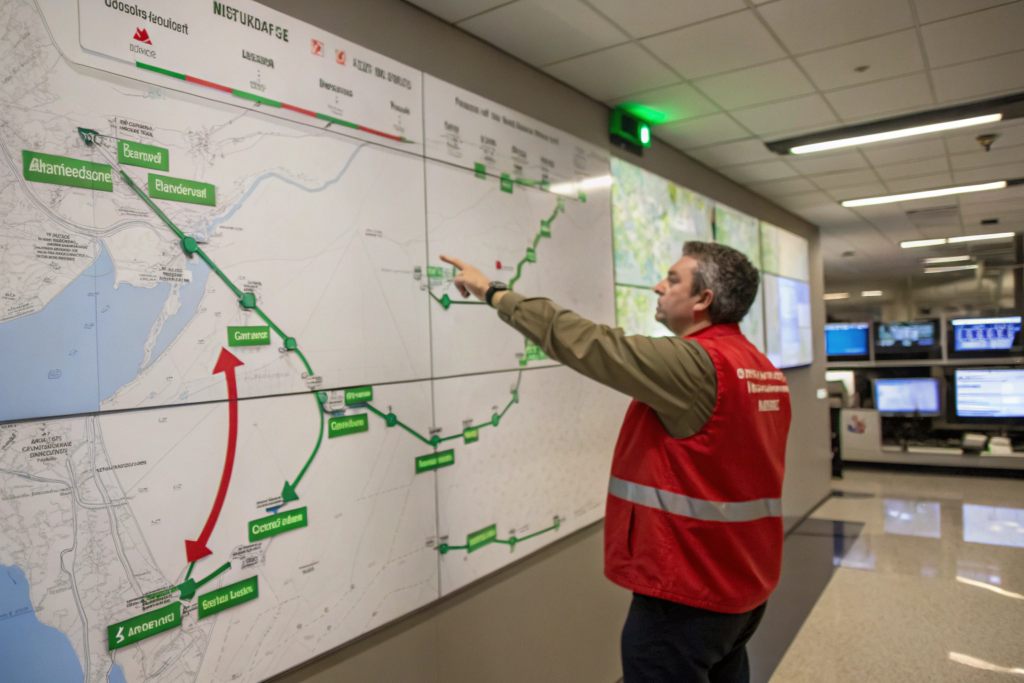
Your forwarder should have pre-built contingency plans for the most common disruptions. GeeseCargo maintains pre-designated alternative ports, pre-contracted diversion capacity, and a documented activation protocol. When a disruption occurs, we don’t brainstorm. We execute a plan that was built and paid for in calm conditions.
During a recent labor uncertainty on the West Coast, we activated our contingency protocol for over forty clients. We diverted vessels to alternative ports. We activated pre-booked rail contracts. Our clients’ goods arrived within a week of their original schedule. Competitors’ goods sat at anchor. The difference was not luck. It was planning that happened months before the strike threat materialized.
What Specific Disruptions Should Your Forwarder Have a Plan For?
West Coast port labor disruption. Gulf or East Coast port labor disruption. Major typhoon closing a Chinese port. Canal blockage affecting global capacity. Carrier bankruptcy or service suspension. Customs system outage.
Each scenario should have a documented response procedure. The plan should specify alternative ports, alternative carriers, communication protocols, and cost responsibilities. Ask your forwarder to share their contingency plans. If the response is "we’ll handle it when it happens," they don’t have plans.
How Quickly Should a Forwarder Activate a Diversion When a Port Closes?
Immediately. The window to divert a vessel is narrow. Once the ship is anchored outside the closed port with a queue of other vessels, diversion becomes complicated and slow.
We monitor threat indicators continuously. When a port closure looks likely, we pre-position alternatives. The formal diversion instruction goes out within hours of a confirmed closure or strike action. Speed of decision is the difference between a minor delay and a major stockout.
Should Your Forwarder Act as a Strategic Advisor, Not Just a Booking Clerk?
A booking clerk processes your order. A strategic advisor improves your supply chain. The difference is massive over time. A clerk quotes the same route, same carrier, same mode, year after year. An advisor analyzes your changing business needs, identifies optimization opportunities, and proposes changes that reduce costs, improve speed, or lower risk.
Your forwarder should bring you ideas, not just invoices. GeeseCargo conducts quarterly supply chain reviews with every client. We analyze your shipping patterns. We identify consolidation opportunities, mode shift candidates, and routing improvements. We earn our partnership by making your logistics smarter over time.
A clothing importer had shipped everything through LA for five years with his previous forwarder. No one ever suggested an alternative. In our first quarterly review, we analyzed his destination distribution and proposed a Gulf Coast routing for his Midwest-bound volume. The total landed cost dropped. The delivery time to his Chicago warehouse improved. His previous forwarder wasn’t bad at booking. They were just never looking for ways to make him better.

What Kind of Proactive Suggestions Should Your Forwarder Be Making?
Consolidation of LCL shipments into FCL when volume justifies it. Mode shift recommendations when air or rail becomes cost-competitive with ocean for specific products. Port diversification to reduce single-point-of-failure risk. Tariff classification reviews that could reduce duty exposure. Packaging optimization that reduces dimensional weight charges.
These suggestions should be specific to your business, supported by data, and presented with a cost-benefit analysis. Generic advice is noise. Tailored recommendations are value.
How Often Should Your Forwarder Review Your Supply Chain Performance with You?
Quarterly, at minimum. Monthly for high-volume importers. The review should be structured, data-driven, and documented. It should cover performance against agreed metrics, any issues from the previous quarter, and proposed improvements for the next quarter.
A forwarder who never schedules a review is a forwarder who doesn’t want to be measured. Our quarterly business reviews are standard for every client. They are not optional. They are how we hold ourselves accountable and how we find opportunities to serve you better.
Conclusion
The freight forwarding industry has a low bar. Silence is accepted. Surprise charges are expected. Blame-shifting is normal. But acceptance of mediocrity is a choice, not a requirement. You can demand better. You should demand better.
We’ve walked through the six things your forwarder should be doing. Fixed all-in pricing that matches the final invoice. Proactive communication that pushes information to you before you ask. Direct carrier contracts that protect your space when capacity tightens. In-house customs management that clears your goods fast. Pre-built contingency plans that activate instantly when disruption strikes. And strategic advisory that improves your supply chain over time.
GeeseCargo already does all of this. Not as premium add-ons. Not as aspirational goals. As standard operating procedure. This is the baseline of competent freight forwarding. If your current provider falls short on any of these dimensions, you deserve better.
Contact GeeseCargo today. Tell us what your current forwarder isn’t doing. We’ll show you how we do it differently. More importantly, we’ll show you how much easier importing becomes when your freight forwarder actually does its job.