Most freight forwarders look the same from the outside. They all have websites. They all promise reliable service. They all quote competitive rates. But after you sign, the differences explode. The average forwarder goes quiet. They outsource your shipment to unknown agents. They bill you for surcharges that weren’t in the quote. They treat your cargo as a transaction to be processed, not a business to be protected. You realize too late that you chose a vendor, not a partner.
GeeseCargo separates from the average freight forwarder through direct carrier control instead of multi-layer brokering, fixed all-in DDP pricing instead of bait-and-switch quotes, in-house customs expertise instead of outsourced brokerage, proactive senior-level communication instead of reactive junior support, and a genuine partnership model that aligns our success with yours.
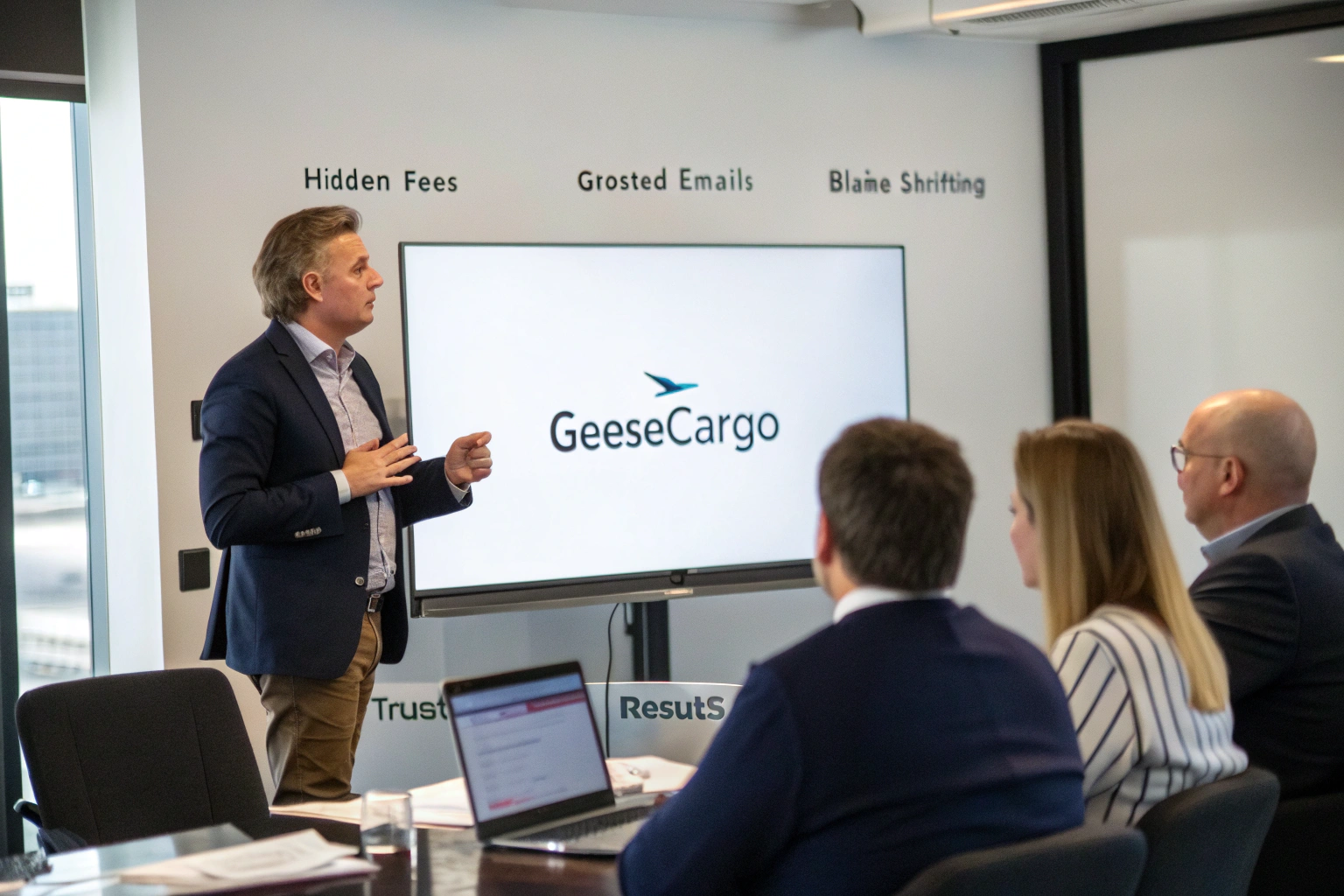
I didn’t build GeeseCargo to be average. I built it to solve the problems I saw importers suffering from repeatedly. Hidden fees. Ghosted emails. Blame-shifting when things went wrong. The average forwarder operates on volume and margin. We operate on trust and results. Let me walk you through the five fundamental differences that make GeeseCargo the partner you keep for decades, not the vendor you fire after three shipments.
How Does Direct Carrier Control Versus Multi-Layer Brokering Impact Your Shipment?
The average forwarder is a reseller. They don’t have their own carrier contracts. They buy space from a larger forwarder, who buys from a consolidator, who buys from the carrier. Your booking passes through three or four companies before it reaches the vessel. Each layer adds cost. Each layer adds communication delay. When space gets tight, your booking is the first to get rolled because you’re at the bottom of the priority chain.
GeeseCargo holds direct service contracts with COSCO, Maersk, CMA CGM, ONE, and other top-tier carriers. We don’t buy through intermediaries. We book your cargo directly onto the vessel under our own contract allocation. This direct control means guaranteed space, priority loading during peak season, and immediate problem resolution through our dedicated carrier account managers.
I recall a peak season when a client’s previous forwarder rolled his booking three times. Three weeks of delays. The forwarder kept blaming "carrier decisions." The truth was that the forwarder was a fourth-tier reseller with zero leverage. We took over the account. We booked his next container directly on a COSCO vessel under our contract. It sailed on schedule. Direct control isn’t a marketing phrase. It’s the difference between your goods moving or sitting.
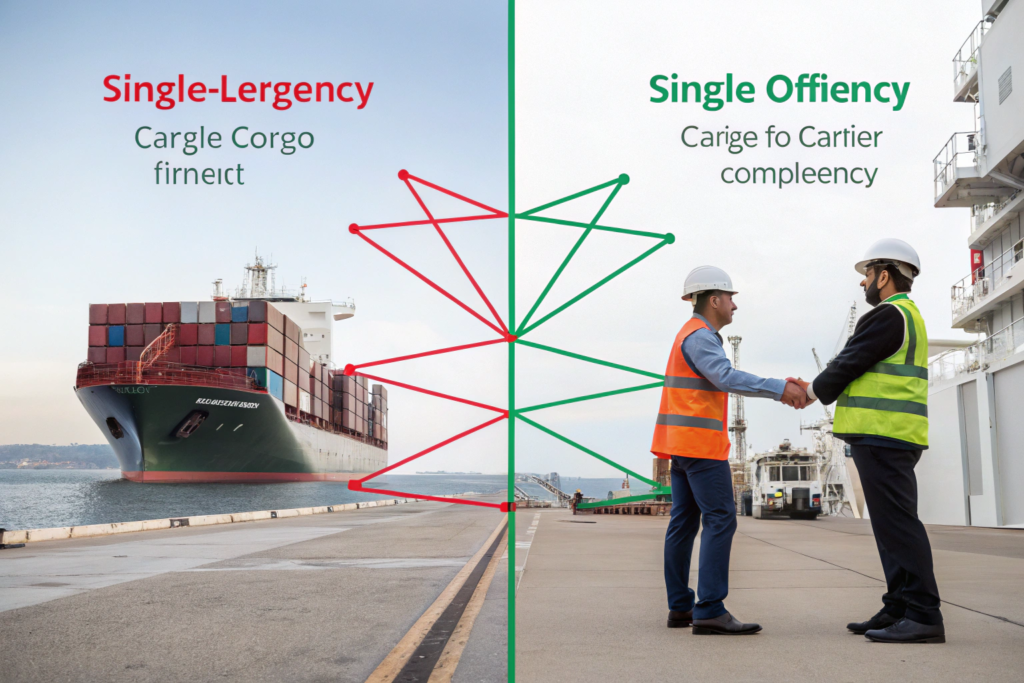
What Happens to Your Booking When a Reseller’s Allocation Evaporates?
When capacity tightens, carriers protect their direct contract holders first. Resellers, who buy through consolidators, lose their allocation. The consolidator tells the reseller there’s no space. The reseller tells you there’s a "carrier issue." Your cargo sits.
Our allocated space is contractual, not discretionary. We commit annual volume. The carrier commits the space. This mutual commitment survives market squeezes. Your booking is protected because it sits on a direct contract, not a brokered spot buy.
How Does Direct Access Speed Up Problem Resolution During Transit?
If your container is on a vessel brokered through three layers, a simple question takes days to answer. You ask your forwarder. They ask their forwarder. That forwarder asks the consolidator. The consolidator asks the carrier. The answer trickles back slowly.
When you ask us a question, we call our carrier account manager directly. We get an answer in hours, sometimes minutes. This ocean freight direct access means problems get solved before they become disasters.
Why Does Fixed All-In DDP Pricing Reflect a Fundamentally Different Business Ethic?
The average forwarder’s pricing model is built on deception. Quote low. Win the booking. Bill high. Profit on the gap between the quote and the reality. They treat surcharges as a revenue stream. Every unexpected fee is margin for them. This model requires you to be an expert in freight invoicing just to avoid being overcharged.
Our fixed all-in DDP pricing reflects a different business ethic. We quote the real price, including every cost we can foresee. If an unforeseeable cost arises, we absorb it. We don’t profit from surcharges. We profit from providing excellent service that earns your repeat business over years.
A prospective client once showed me three quotes. Two were $400 cheaper than ours. I asked him to request the full destination charge breakdown from the cheaper forwarders. One couldn’t provide it. The other provided a list that, when added to the base rate, was $600 higher than our all-in quote. They weren’t cheaper. They were just hiding the cost. Our DDP service pricing is honest up front because we want your business for the long term, not for one overcharged shipment.
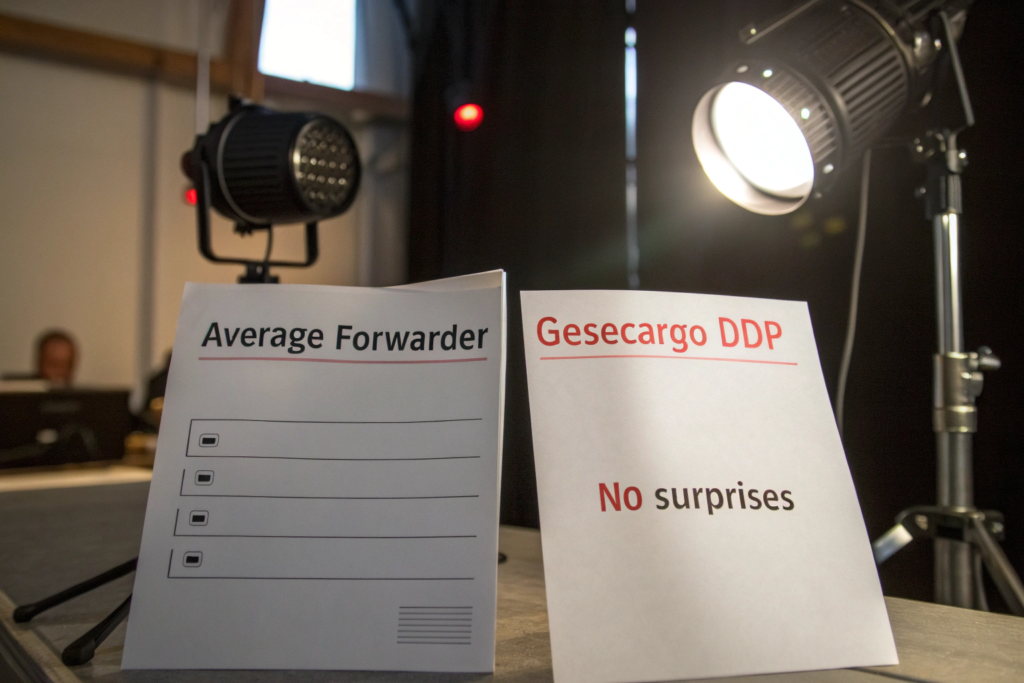
How Does "No Surprise" Pricing Change the Client-Forwarder Relationship?
When your invoice matches your quote every time, you stop dreading the bill. You stop auditing line items. You stop feeling like you need to be a detective to protect your margin. The relationship shifts from adversarial to collaborative.
Trust replaces suspicion. You focus on growing your business. We focus on moving your cargo efficiently. The energy that was wasted on invoice disputes is redirected to supply chain optimization. That’s the relationship we build with every client.
Why Do Average Forwarders Rely on Hidden Fees Instead of Transparent Margins?
Hidden fees are easier to sell than honest prices. A low quote wins the business. The forwarder knows the true cost, but they also know you’re comparing quotes. They gamble that once your cargo is in motion, you’ll pay the extra fees rather than switch providers mid-shipment.
We don’t gamble with your trust. Our quotes reflect the true cost plus a transparent service margin. We explain our pricing. We educate you on the cost components. An informed client is a long-term client. This logistics transparency is rare because it requires confidence in the value you deliver. We have that confidence.
How Does In-House Customs Expertise Differ from Outsourced Brokerage?
The average forwarder outsources customs clearance to the cheapest broker they can find. That broker doesn’t know your products. They process hundreds of files a day. They don’t care if your shipment clears in one day or ten. If CBP raises a question, the broker emails the forwarder, who emails you. You’re supposed to answer a customs question you don’t understand. The delay clock ticks. The storage fees accumulate.
Our in-house customs team manages your clearance directly. We know your product classifications. We review your documents for errors before the vessel sails. If CBP raises a question, our team answers it immediately with the correct documentation. We don’t outsource your compliance to the lowest bidder.
A clothing importer came to us after his previous forwarder’s outsourced broker misclassified his knitwear. The wrong HS code triggered a 32% duty rate instead of 8%. He paid thousands in overcharges for months before we caught the error. Our team reclassified the goods correctly, filed for retroactive refunds, and recovered a significant portion of the overpaid duties. An outsourced broker never would have noticed or cared.
How Does Pre-Sailing Document Review Prevent Destination Delays?
The time to catch a documentation error is before the vessel sails, not after it arrives. An outsourced broker sees your documents for the first time when the container is already at the destination port. If there’s a problem, it’s too late to fix it easily.
Our team reviews your commercial invoice, packing list, and certificates before departure. We catch HS code errors, missing fumigation certificates, and incorrect country of origin markings at origin. The fixes are made in hours, not weeks. The container arrives with clean paperwork. This customs clearance proactive review is standard operating procedure for us.
What Happens When Customs Raises a Question on Your Shipment?
With an outsourced broker, the question bounces through a chain of communication. The clock ticks. Storage fees mount. Your cargo sits. With our in-house team, the question lands directly with someone who knows the file.
We answer customs inquiries within hours, not days. We provide the supporting documentation immediately. We track the query until it’s resolved. We don’t just hope it clears. We manage it actively until it does.
How Does Proactive Senior-Level Communication Differ from Reactive Junior Support?
The average forwarder’s communication model is reactive and junior. You call a general support line. You speak to someone who started last month. They read from a script. They promise to "check and get back to you." You wait. You follow up. You wait more. When a real problem hits, the junior support person has no authority to solve it. They escalate. You wait longer.
You get direct access to a senior account manager who knows your business and has the authority to make decisions. When you call, you reach someone who can solve your problem immediately. When a disruption occurs, you hear from us before you even knew there was an issue.
A client once called me at 8 PM on a Friday with a customs emergency. His container was held, and he needed it released for a Monday morning retail delivery. I called our destination broker directly. We resolved the documentation issue by 9 PM. The container delivered Monday morning. An average forwarder’s junior team would have waited until Monday to even read the email. Senior access means problems get solved at the speed of business.

Why Does Decision-Making Authority Matter When Problems Arise?
Junior staff escalate. Senior staff decide. When a container needs to be diverted, a rate needs to be approved, or a customs issue needs immediate resolution, you need to speak to someone who can say "yes" without asking three levels of management.
Our account managers have the authority to make operational and financial decisions to resolve client problems. They don’t need committee approval to book an alternative vessel or approve a storage fee waiver. This authority speeds resolution and reduces your stress.
How Does Proactive Alerting Prevent Issues from Becoming Emergencies?
An average forwarder waits for you to notice a problem. A partner alerts you before the problem matures. Vessel delayed by weather. We tell you immediately and provide the new ETA. Customs exam flagged. We tell you and explain our action plan.
This proactive communication allows you to adjust your downstream operations early. You reschedule warehouse labor before overtime is incurred. You inform your retail buyer before they chase you. The issue is managed as a routine adjustment, not a panic-inducing surprise.
How Does a Partnership Model Align Interests Differently Than a Transactional One?
The average forwarder measures success in bookings per month. You are a transaction. Once your container sails, their attention shifts to the next booking. They are motivated to win new business, not to serve existing clients well. This transactional mindset explains why service degrades after the first shipment.
We measure success in client retention years. Our business model depends on your satisfaction over the long term. We invest in your success because our success follows yours. This partnership alignment means we act in your best interest, even when it costs us in the short term.
I once advised a client to delay a shipment by two weeks to avoid a peak season surcharge. He wasn’t on a fixed contract, so I could have booked it and passed the surcharge along. But delaying saved him $1,800. I lost short-term revenue. I gained a client who trusts that I prioritize his wallet over mine. That trust has generated far more value over the years than that single surcharge ever would.
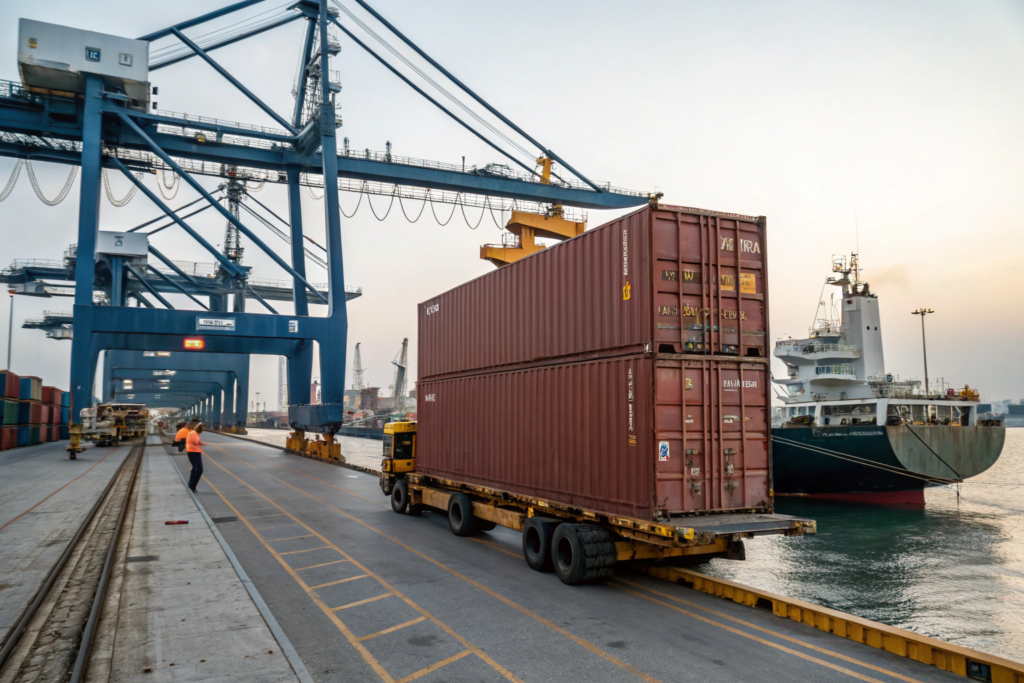
How Does a Retention-Focused Business Model Change Day-to-Day Decisions?
A booking-focused forwarder optimizes for today’s margin. A retention-focused forwarder optimizes for the client’s long-term outcome. These two approaches lead to different daily decisions.
When a cost-saving opportunity arises, we present it to you even if it reduces our invoice. When a problem occurs, we spend our resources to fix it even if the contract doesn’t strictly require it. We make these choices because we value the relationship, not just the transaction.
Why Does Aligned Incentive Matter More Than a Contractual Guarantee?
A contract can be disputed. An aligned incentive cannot. When our financial interest aligns with your operational success, you don’t need to enforce the contract. We are naturally motivated to do the right thing.
Our DDP model is the ultimate alignment. If your shipment is delayed, we pay the storage. If your duties are miscalculated, we pay the difference. Our margin depends on efficiency and accuracy. This alignment means you can trust our actions, not just our words. A freight forwarder with aligned incentives is a partner you don’t need to police.
Conclusion
The differences between GeeseCargo and an average freight forwarder are not subtle. They are fundamental. We’ve explored how direct carrier control protects your space and speeds problem resolution, while multi-layer brokering leaves you vulnerable when capacity tightens. We’ve exposed how fixed all-in DDP pricing reflects an honest business ethic, while bait-and-switch quotes profit from your confusion.
We’ve compared in-house customs expertise, which catches errors before they become border delays, to outsourced brokerage that processes your file without care. We’ve shown how proactive senior-level communication puts decision-makers on your side, while reactive junior support leaves you waiting. And we’ve revealed how a partnership model aligns our financial interests with your operational success, while a transactional model incentivizes neglect after the booking.
Average forwarders process shipments. We build supply chains. Average forwarders compete on price. We compete on value. Average forwarders win transactions. We earn partnerships. If you’re ready to experience the difference that separates a true logistics partner from a commodity vendor, contact GeeseCargo today. Let’s move your cargo and build your business together.