You have a vision of how importing should work. You find a product, you place an order, you click a few buttons, and the goods arrive at your warehouse. Then reality hits. You are emailing PDFs to a forwarder. You are typing container numbers into three different carrier websites. You are filling out a customs form with codes you found on a Google search. You are tracking a vessel on a public website that updates every 48 hours. The gap between how importing should feel and how it actually feels is filled with friction. That friction is not a necessary part of global trade. It is a technology gap.
GeeseCargo’s freight technology simplifies China-to-USA shipping by replacing the fragmented, manual, multi-tool workflow with a single integrated digital platform. Our technology stack has four layers. A quoting engine that generates accurate door-to-door prices in under two minutes. A shipment management system that provides real-time tracking and automated milestone updates. A customs documentation engine that reduces manual data entry and catches errors before filing. And an AI-powered analytics layer that predicts disruptions and optimizes routes. You do not interact with ten different systems. You interact with one platform that connects to everything behind the scenes.
Technology in freight forwarding is not about having a flashy app. It is about removing the repetitive, error-prone tasks that consume your time and introduce risk. Every minute you spend manually entering data is a minute you could spend on product development, marketing, or sales. Every error you make in that manual entry is a potential customs delay or unexpected fee. Our technology is designed to eliminate those minutes and those errors. Let me walk you through each layer of our tech stack and show you exactly how it simplifies your importing experience.
How Does Our Instant Quoting Engine Remove the Pricing Bottleneck?
You need a freight quote. You email three forwarders. You wait. One replies in six hours with a partial quote. One replies the next day with questions about your product. One never replies. Two days later, you finally have two comparable quotes. The market rate has changed. The quote you want to accept is no longer valid. The quoting process has delayed your purchase order by a week.
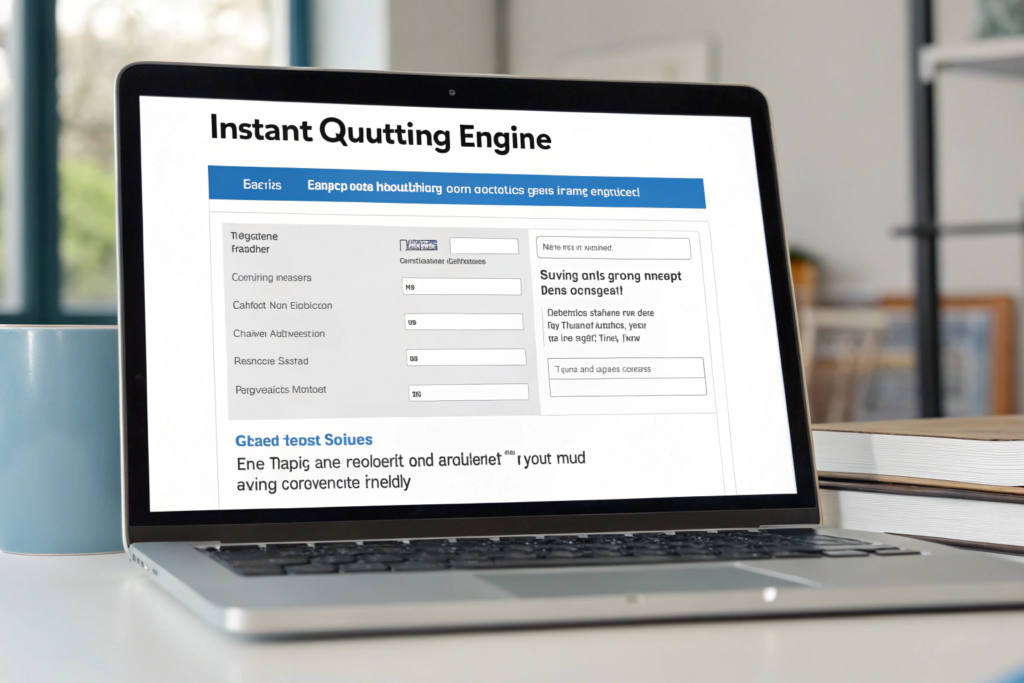
Our instant quoting engine is available on our website 24 hours a day. You enter six pieces of information: the origin address, the destination address, the carton count, the carton dimensions, the gross weight, and the product type. The engine retrieves live rates from our carrier contracts, calculates all surcharges and handling fees, and generates a detailed door-to-door quote in under two minutes. The quote is binding and bookable immediately. You do not wait for a human to build a spreadsheet. You get the pricing you need, when you need it, and you can place your purchase order with confidence in your landed cost.
The quoting engine is not a simple calculator that multiplies a rate by a volume. It is a sophisticated pricing system connected to our carrier rate databases, our surcharge tables, and our historical cost data. When you input your shipment details, the engine runs multiple calculations simultaneously. It checks the spot market rate against our contract allocations for that lane. It calculates the BAF, CAF, and any applicable peak season surcharges. It determines the correct origin and destination terminal handling charges based on the specific ports. It calculates the customs clearance fee, the bond usage fee, and the estimated duty based on the product type you selected. It calculates the trucking cost based on the distance from the port to your delivery address. It presents all of this in a single, transparent line-item quote.
Before we built this engine, the quoting process was entirely manual. A sales representative would receive your email, look up rates in a carrier rate sheet, manually calculate the surcharges in a spreadsheet, estimate the trucking cost, and email you a PDF. The process took hours per quote. Errors were common. The manual process limited how many quotes we could produce and how quickly we could respond. The quoting engine automates all of that calculation. It produces faster, more accurate quotes. And because it is connected to live data, the quote reflects the current market, not last week’s rate sheet.
How Does the Quoting Engine Handle Different Incoterms and Service Levels?
You want to compare the cost of FOB with our freight against the cost of our DDP service. You want to see ocean LCL, ocean FCL, and air freight options side by side. You do not want to request three separate quotes.
The quoting engine presents multiple options in a single response. You select your desired Incoterm and your preferred mode, or you select "Show All Options." The engine returns a comparison table showing the door-to-door cost, the transit time, and the cost per unit for each viable option. You see FOB plus our freight, CIF equivalent, and our DDP service. You see ocean LCL, ocean FCL, and air freight if all are viable for your shipment dimensions. The comparison is generated in under two minutes. You make a fully informed mode and term decision without multiple email chains.
Can You Save Quotes and Compare Them Later?
You are shopping for a product. You have quotes from three different suppliers with different Incoterms and different factory locations. You need to compare the total landed cost of each option before you choose a supplier.
The quoting engine saves every quote to your account. You can name each quote with the supplier or product name. You can return to your saved quotes and compare them side by side. When you are ready to proceed, you select the quote and click "Book Now." The quote becomes a booking request that flows directly into our operations system. Your account manager is notified and begins the pickup coordination. The quote-to-booking transition is seamless. You do not re-enter any information.
How Does Our Shipment Management Platform Create End-to-End Visibility?
You have a tracking number. It is a Bill of Lading number on a PDF attachment in an email from three weeks ago. You search your inbox to find it. You copy the number. You paste it into the carrier’s tracking website. The website shows the container was discharged three days ago. There is no further information. You do not know if customs is cleared. You do not know when delivery is scheduled. You call your forwarder.
Our shipment management platform is your single source of truth for every shipment. Log into your portal, and you see a dashboard with every active shipment. Each shipment shows its current status, the last completed milestone, the next expected milestone with the estimated date, and the full milestone timeline. You click into a shipment to see the detailed tracking map, the document package, and the cost breakdown. The platform pulls data from carrier EDI feeds, port terminal systems, our GPS trackers, and our internal operations system. You do not search for information. It is presented to you.
The platform is designed around a principle we call "proactive visibility." You should not have to ask for an update. The update should be pushed to you. When the vessel departs, you receive a notification. When customs is cleared, you receive a notification. When the trucker is dispatched, you receive a notification with the delivery window. The platform sends these notifications via email and push notification. You can also view them in the portal. The status of every shipment is always current, even if you have not checked in a week.
This visibility changes the rhythm of your work. Instead of starting your day by emailing your forwarder for status updates, you start your day by glancing at your dashboard. You see that Shipment A is on schedule, Shipment B has a two-day delay due to port congestion, and Shipment C cleared customs this morning. You spend two minutes reviewing statuses instead of thirty minutes chasing them. The time you reclaim goes to higher-value work. The anxiety you eliminate goes without saying.

How Does the Platform Handle Exceptions and Delays?
Your shipment is delayed. In a traditional workflow, you discover the delay when you ask for an update, which might be days after the delay occurred. The delay has already eaten into your buffer. Your options are limited.
Our platform detects exceptions automatically. If a vessel is delayed, the carrier updates the schedule in their system. Our platform ingests that update and recalculates your ETA. The delay is displayed on your dashboard immediately. You also receive a notification. Your account manager is simultaneously alerted and begins working on mitigation. You know about the delay within hours of it occurring, not days later when you ask. This early warning gives you time to adjust your plans, communicate to your customers, or work with us to find an alternative routing.
Can You Access the Platform on Your Phone?
You are at a trade show. A supplier asks when the last shipment will arrive so they can time the next production run. You do not have your laptop. You try to remember the ETA from the email you read three days ago. You guess. The guess is wrong.
Our platform is fully responsive and works on any mobile browser. You log into your portal from your phone. Your dashboard is optimized for the smaller screen. You see the ETA for the shipment in question. You give the supplier an accurate answer. The mobile access means your supply chain visibility is always in your pocket, not just when you are at your desk.
How Does Our Customs Documentation Engine Reduce Errors and Delays?
You fill out a customs information form. You type the product description as "gifts." You enter the HTS code from a Google search. You estimate the value. You submit the form. CBP flags the entry. The product description is too vague. The HTS code is incorrect for the material composition. The value is inconsistent with the commercial invoice. The clearance is delayed by four days while the broker amends the entry. Your container accrues storage charges at the port.
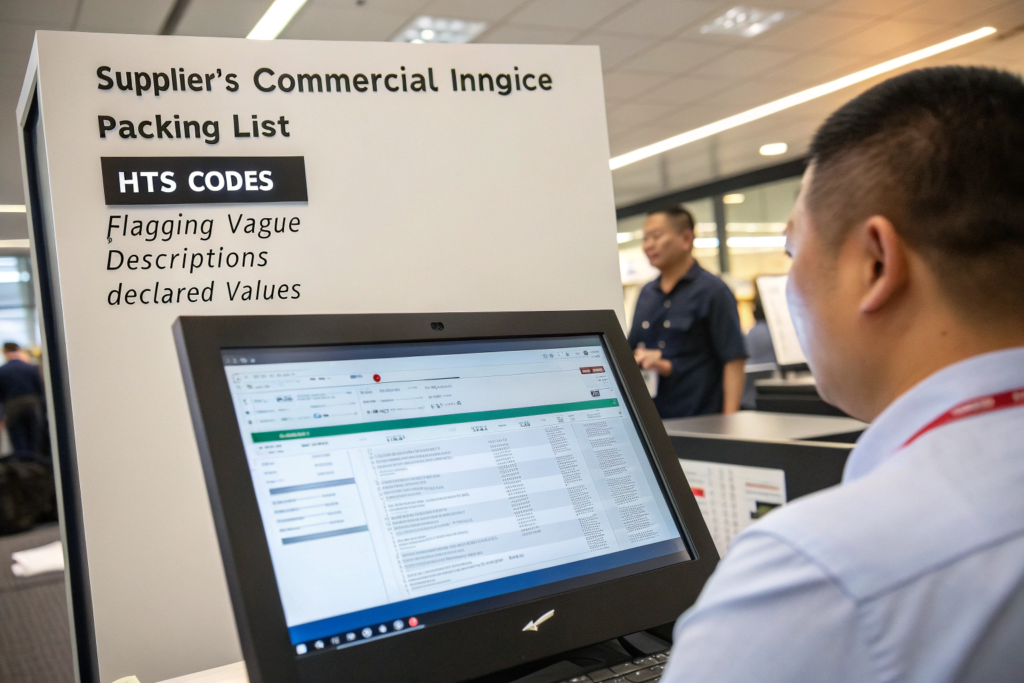
Our customs documentation engine eliminates these errors by automating data extraction and validation. You upload the supplier’s commercial invoice and packing list. The engine uses optical character recognition and natural language processing to read the documents and extract the relevant data. It suggests the correct HTS code based on the product description and our classification database. It flags vague descriptions and prompts you for specificity. It cross-references the declared value against typical values for the product category. It checks for missing partner government agency requirements. The human customs broker reviews the engine-prepared entry and files it. The error rate drops by over 90% compared to manual data entry.
The customs documentation process is where technology delivers the most measurable risk reduction. A customs entry contains dozens of data fields. Each field is an opportunity for a manual error. Each error is a potential clearance delay. Clearance delays cost money in storage, demurrage, and missed delivery windows. The documentation engine acts as a safety net. It catches the typos, the misclassifications, and the missing requirements before the entry is filed.
The engine is trained on our historical entry data and the CBP binding rulings database. It knows that "wooden cutting board" triggers FDA requirements. It knows that "children’s pajamas" triggers CPSC flammability standards. It knows that "ceramic mug" is classified under 6912, not 9403. This knowledge is applied automatically. You do not need to know the regulatory requirements or the classification rules. The engine prompts you for the specific information needed, and the broker verifies the output.
How Does the HTS Classification Engine Work?
You type your product description: "bamboo fiber travel mug with stainless steel inner liner and silicone lid." The engine analyzes the description. It identifies the materials. It recognizes that the stainless steel inner liner provides the essential character of a thermal vessel. It suggests HTS code 9617.00.6000 with a confidence score of 92%. It provides links to relevant CBP binding rulings for similar products. The broker reviews the suggestion, confirms it, and files the entry.
The engine is not making decisions independently. It is providing research-backed recommendations to the human broker. The broker applies judgment and experience to the recommendation. The combination of AI research and human judgment produces faster, more accurate classifications than either could achieve alone.
How Does the Engine Handle Partner Government Agency Requirements?
You import a shipment of wooden toys. The engine identifies "wood" and "toy" and "children’s product." It cross-references these attributes against the PGA database. It flags the requirement for CPSC certification and a tracking label. It prompts you to upload the Children’s Product Certificate before the entry can be filed. The entry is filed with the PGA information included. The clearance proceeds without a PGA hold.
This automated compliance check prevents the most common cause of unexpected customs delays. A human broker processing dozens of entries a day might miss a PGA trigger, especially for a product that is not obviously regulated. The engine never misses a trigger. It systematically checks every attribute against the requirements database. The result is faster clearance and fewer post-entry surprises.
How Does Our AI Analytics Layer Optimize Your Long-Term Shipping Strategy?
You ship ten containers a month. You use the same port, the same carrier, and the same mode out of habit. You do not know if there is a faster route. You do not know if there is a cheaper consolidation option. You do not have the data to optimize, so you do not optimize.
Our AI analytics layer processes your shipment history and the broader market data to generate actionable optimization recommendations. It analyzes your shipping patterns, identifies cost trends, and suggests specific changes. It might recommend consolidating two LCL shipments into one FCL to reduce per-unit cost. It might recommend shifting from a congested origin port to a less congested alternative. It might recommend adjusting your shipment timing to avoid peak season surcharges. These recommendations are presented to your account manager, who reviews them with you during quarterly business reviews.
The analytics layer is the strategic brain of our technology stack. The quoting engine handles the transaction. The shipment platform handles the visibility. The documentation engine handles the compliance. The analytics layer handles the long-term optimization. It looks at your shipping data over months and years and identifies patterns that are invisible in the day-to-day flow.
For one client shipping consumer electronics accessories, the analytics layer identified that 60% of their LCL shipments were between 12 and 14 cubic meters, just below the FCL breakpoint. By consolidating two of these LCL shipments into one monthly FCL, they reduced their per-unit freight cost by 18% and their transit time by 8 days. The recommendation came from the data. The client had not noticed the pattern because they were managing shipments one at a time in a spreadsheet. The analytics layer sees the forest, not just the trees.

How Does the Analytics Layer Identify Cost-Saving Opportunities?
The system analyzes your average cost per cubic meter or per kilogram over time. It compares your costs against the market benchmarks for your lanes. It identifies shipments where the cost was significantly above the benchmark and investigates the cause. Was it an air freight emergency? A peak season surcharge? A poorly consolidated LCL? The findings are summarized in a quarterly report with specific, actionable recommendations.
You do not need to run the analysis yourself. You do not need to build pivot tables in your spreadsheet. The analytics layer does the data processing and surfaces the insights. Your account manager translates the insights into a conversation about your shipping strategy. You decide which recommendations to implement.
Can the Analytics Layer Predict Future Disruptions?
You read about a potential port labor strike on the US East Coast. You do not know if it will affect your shipments. You do not know if you should reroute to the West Coast. You wait and hope.
Our analytics layer monitors news feeds, labor negotiation updates, weather forecasts, and port congestion data. It correlates these signals with your active shipments and your upcoming bookings. If a labor strike is likely to disrupt East Coast ports in October, the system flags this risk and recommends booking West Coast routings for shipments during the affected period. The prediction is not a guarantee, but it is a data-driven early warning that allows you to plan contingencies.
Conclusion
Freight technology is not about replacing the human expertise that moves your goods. It is about removing the friction that makes moving goods harder than it needs to be. The friction of waiting two days for a quote. The friction of searching your inbox for a tracking number. The friction of manually typing customs data that could be extracted automatically. The friction of managing shipments in a spreadsheet that grows more fragile with every new row.
Our technology stack at GeeseCargo removes this friction at every stage of the import journey. The instant quoting engine gives you pricing in minutes, not days. The shipment management platform gives you proactive visibility instead of reactive searching. The customs documentation engine catches errors before they become delays. The AI analytics layer finds optimization opportunities you would never spot in a manual spreadsheet.
The result is a shipping experience that feels closer to the vision you had when you started importing: place your order, click a few buttons, track your goods in real time, and receive them at your warehouse. The complexity of global logistics still exists behind the scenes, but you do not need to touch it. The technology handles the complexity. You handle your business.
If you want to experience what simplified freight forwarding feels like, go to GeeseCargo.com and try the instant quote tool. Enter your shipment details and see a binding door-to-door price in under two minutes. Then explore the platform demo. See the dashboard, the tracking, the documents, and the analytics. Technology should make your life easier, not add another tool to manage. That is what we built.