You found the perfect ceramic diffuser set at a trade show in Yiwu. The sample was beautiful, the price was right, and your buyer loved it. Then the first container arrived. One out of every eight pieces was cracked. The inner gift boxes were scuffed, the ribbon handles were flattened, and the whole shipment looked like a clearance bin instead of a boutique shelf. Your freight forwarder said, "That is just normal transit damage." I am here to tell you it is not. It is a packaging failure that is costing you money.
At GeeseCargo, we save you money on gift and home decor shipping by engineering the packaging from the inside out. We reduce dimensional weight with smart nesting, we cut filler material costs by using precision-cut inserts, and we eliminate damage claims by stress-testing the master carton before a single box leaves the factory. The packaging is not just a shield for your products; it is a profit lever that controls your freight bill and your return rate.
Gifts and home decor are some of the most difficult products to ship profitably. They are bulky, they are often fragile, and they have retail packaging that must arrive in perfect condition. If the gift box is crushed, the end customer rejects the product, even if the item inside is fine. You need a packaging strategy that balances protection with freight efficiency. Let me show you exactly how we do it, from the foam insert to the container floor.
How Do You Pack Fragile Home Decor Items to Prevent Breakage?
You wrap a ceramic vase in three layers of bubble wrap, stuff it in a box with crumpled Kraft paper, and hope for the best. The box travels 12,000 kilometers. It gets vibrated on a truck, shaken on a ship, and bumped on a conveyor belt. The crumpled paper settles and compresses. The vase shifts to the edge of the box. When the forklift driver nudges the pallet, the vase hits the cardboard wall and cracks. The "hope" method just failed.
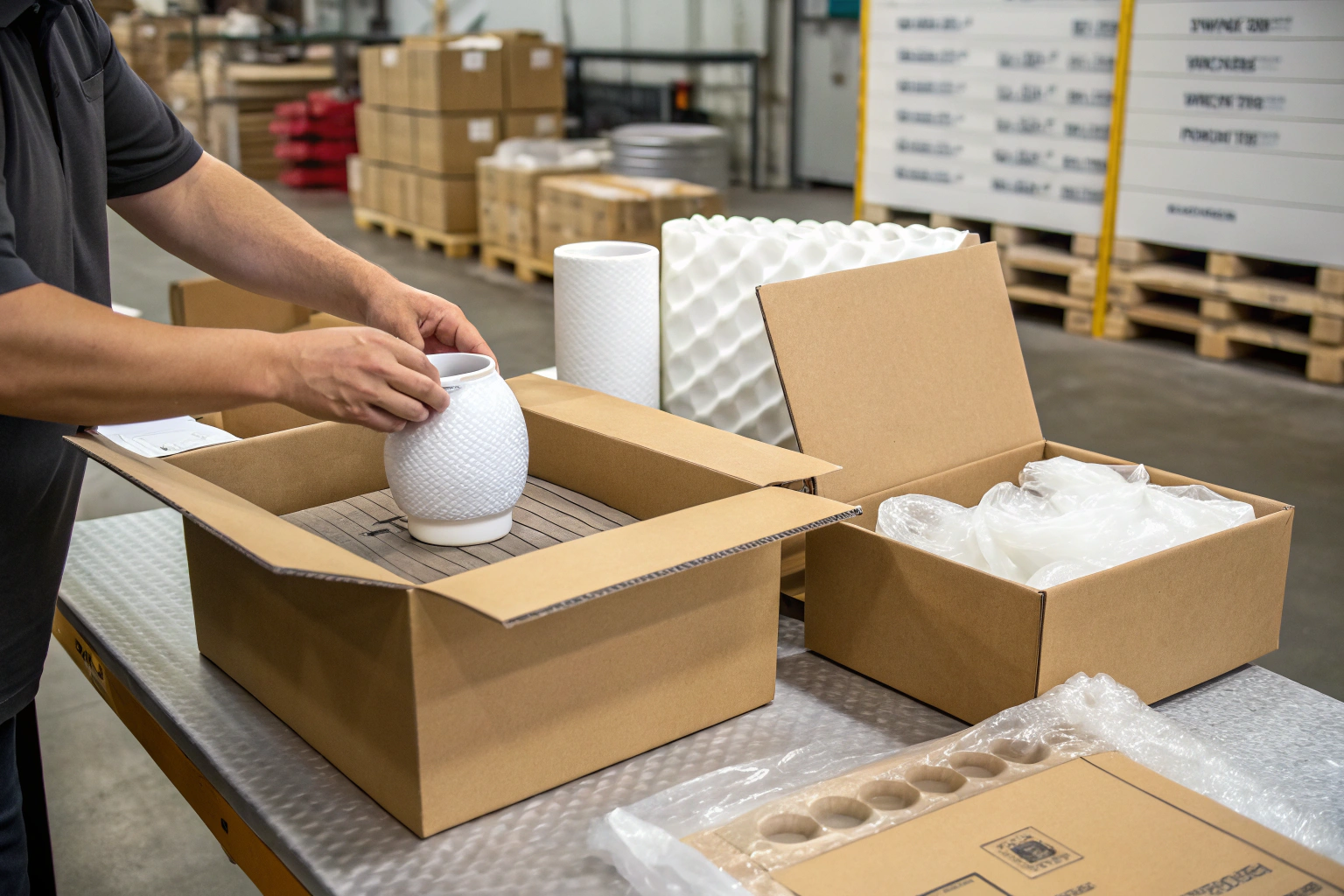
We pack fragile decor using a suspension system. The item does not touch the outer carton walls. We use custom-cut polyethylene foam or molded pulp inserts that grip the product at its strongest structural points. The box can take a hit, and the shock transfers to the foam, not to the ceramic or glass. We also do a drop test in our warehouse before we approve any new packaging for export.
I want you to think about the physics of a container journey. Your box is not just sitting on a shelf. It is on the bottom of a stack of six other boxes, all vibrating at a low frequency for 14 days straight. The continuous vibration is worse than a single drop. A loose-packed item rubs against its own inner gift box. The paint on a ceramic figurine’s nose gets scuffed. The gold foil on a gift box gets scratched. These are small damages that make the product unsellable at full price.
We start by looking at the item itself. Where are its weak points? A vase is strong at the base but fragile at the lip. A candle holder is heavy at the base with a delicate glass top. We design the foam insert to cradle these specific zones. We use a combination of materials. The outer layer is a firm foam that holds the shape. The inner layer, directly touching the product, is a softer foam or a velvet flocking that protects the surface finish. We also tape the insert closed so it does not pop open during vibration. For very delicate items like porcelain figurines, we use the box-in-box method. The item is packed in a small gift box with its own foam. That gift box is then placed inside a larger shipping box with cushioning material in the gap between the two boxes. This double-wall of protection isolates the item from direct impacts. We learned this from shipping museum artifacts. It adds a small cost to the packaging, but it eliminates the much larger cost of replacements and lost customer trust.
What Is the Right Cushioning Material for Your Specific Product?
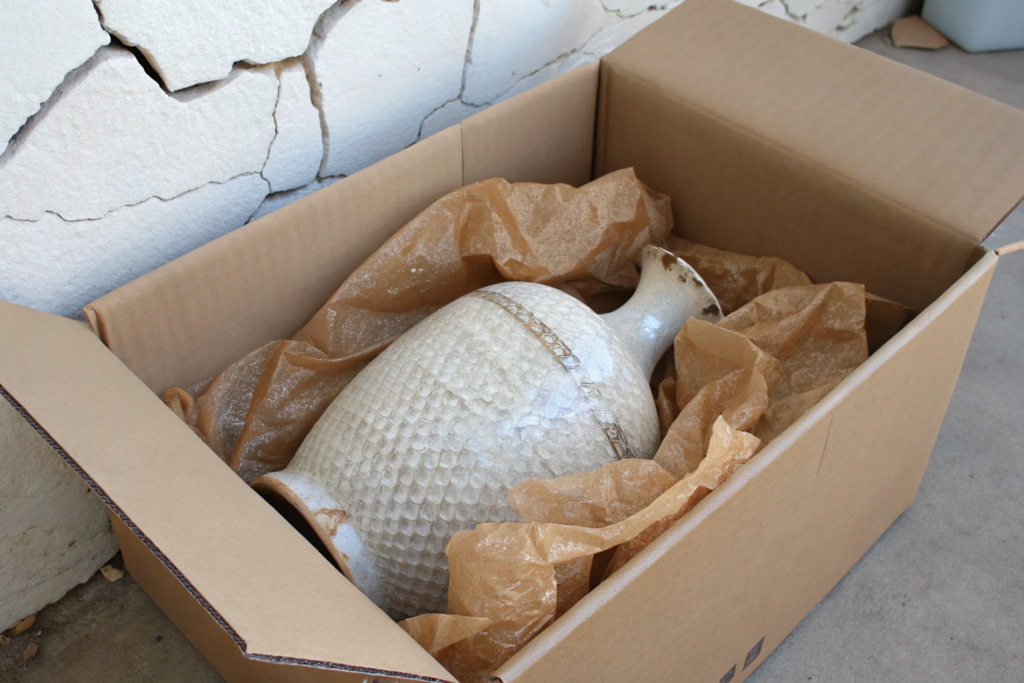
You walk into a packaging supply store and see rolls of bubble wrap, sheets of foam, air pillows, and loose fill peanuts. They all look like they do the same job. They do not. Loose fill peanuts shift and leave empty spaces. Air pillows pop under sustained weight. Bubble wrap can lose its air slowly during a long sea voyage.
For heavy items like stone coasters or marble candle holders, we use closed-cell polyethylene foam. It does not compress permanently under weight. A 5kg marble base will not crush it flat. For lightweight, irregularly shaped items like a set of dried floral wreaths, we use air pillows made from thick 3-mil polyethylene, not the thin 1-mil variety. We also use molded pulp inserts for items that need a rigid, eco-friendly cradle. Molded pulp is made from recycled paper and is formed exactly to the shape of your product. It works well for medium-weight ceramics and glassware. We always test the cushioning by putting the packed box on a vibration table that simulates 50 hours of truck transport. We then open the box and check for any surface abrasion. If the product rubbed against the gift box, the cushioning design fails the test and we go back to the drawing board. This test costs a small amount upfront but saves you from discovering the problem through customer complaints.
How Does a Drop Test Validate Your Packaging Design?
You are standing in your warehouse, holding a beautifully packaged gift set. You drop it from waist height onto a concrete floor. You are afraid to open it. That fear is a sign that you do not trust your own packaging. You should be able to drop it and know it will survive.
We perform a standardized drop test based on the ISTA 1A protocol. We drop the packaged product from a specific height onto each corner, each edge, and each face. For a box weighing under 10kg, the drop height is 76 centimeters. We do ten drops total. Then we open the box and inspect the product and its gift packaging. No breakage, no scuffing, no deformation is allowed. We film the whole test and send you the video. If the packaging passes, you have documented proof that your packaging is transit-ready. If a damage claim arises later, we present the test footage to the insurance adjuster. It is powerful evidence that the damage was caused by gross mishandling, not by inadequate packaging. This testing protocol is standard for us on any new gift or decor product line. We do not ship a single unit until the packaging earns its pass certificate on video.
How Can You Reduce Dimensional Weight Charges on Bulky Decor?
You ship a set of three decorative throw pillows. They weigh almost nothing. You pay the ocean freight based on volume, and the air freight dimensional weight calculation charges you for the equivalent of a box of bricks. The freight bill is double what you budgeted because the pillows are mostly air. You are literally shipping empty space and paying for it.
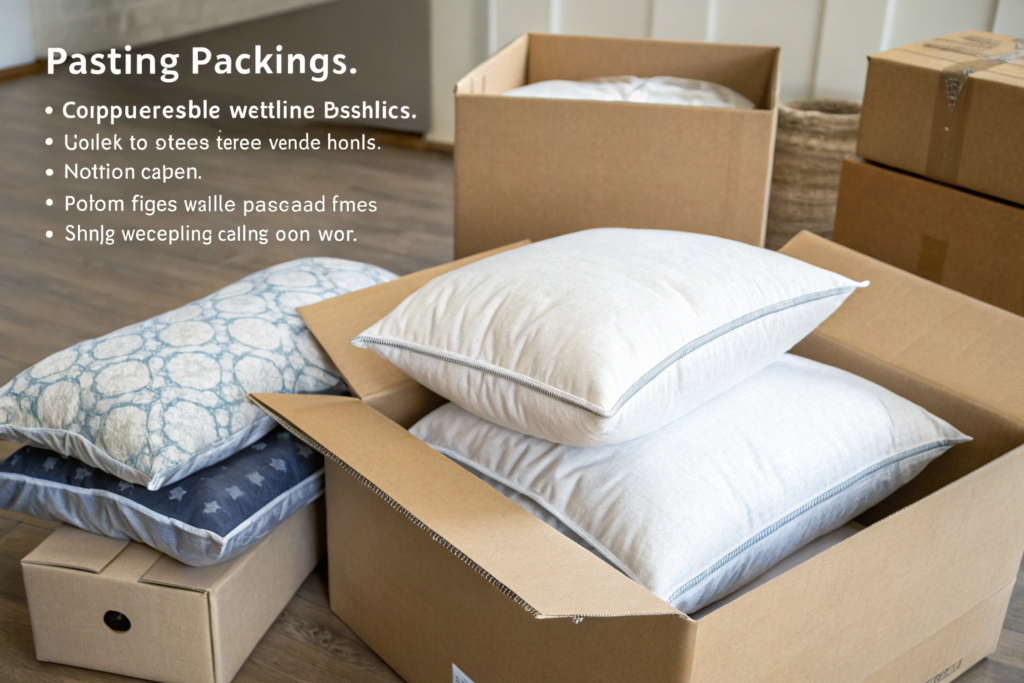
We reduce dimensional weight by vacuum-packing compressible textiles and by nesting hollow items. A set of three pillows can be compressed to one-third of their original volume. A set of nesting decorative boxes can be shipped inside each other, taking up the space of a single box. We also design the master carton to be exactly the right size for the compressed product, eliminating void space that increases the chargeable volume.
I once worked with a client who imported large, round decorative floor cushions from a factory in Hangzhou. The factory packed each cushion in its own huge square box. The boxes were 80% empty air. The ocean freight cost per cushion was $12. We looked at the design and saw that the cushion filler was a polyester fiberfill that could compress and recover fully. We asked the factory to use a vacuum-sealing machine. The cushion was folded in half, placed in a thick polybag, and the air was sucked out. The flat package was now only 8 centimeters thick. We packed ten flat cushions in a box that previously held two. The freight cost per cushion dropped to $3. The customer opened the polybag at their US warehouse, fluffed the cushion by hand, and it regained its full shape within 30 minutes. The product was identical. The savings on that one change paid for the vacuum machine in the first container load.
For non-compressible items like ceramic vases or candle jars, we look at nesting and stacking. If you ship a set of three vases in graduated sizes, we instruct the factory to place the small vase inside the medium vase, and the medium inside the large. We use a thin foam sheet or a soft fabric sleeve to separate them so they do not scratch. This nesting cuts the total shipping volume by more than half. We also look at the gift box design itself. A gift box that is 10% too large for the product adds 10% to your freight bill on every single unit. We work with the factory to right-size the gift box. This is a one-time design change that pays a permanent dividend on every future shipment. The dimensional weight formula rewards efficiency mercilessly. We make sure your packaging is efficient.
How Does Vacuum Packing Work for Textile Home Decor?
You might worry that vacuum packing will ruin the product. Will the velvet cushion cover get permanent creases? Will the down filling lose its loft? These are valid concerns for high-end home decor. The last thing you want is a customer opening a flat, wrinkled pillow that looks used.
The answer is in the technique. We vacuum-pack only to about 60% compression, not 100%. This removes the bulk of the air without crushing the fibers to the point of permanent deformation. We also use a steam-recovery protocol. When the flat-packed cushion arrives at the destination warehouse, the staff removes it from the polybag and places it in a steam tunnel or uses a handheld garment steamer. The steam relaxes the fibers and removes any minor fold creases within seconds. For velvet items, we place a sheet of acid-free tissue on the face of the fabric before folding, so the velvet pile does not get pressed flat against itself. For down-filled items, we include a handling instruction sheet that tells the receiver to tumble the cushion in a cool dryer with two clean tennis balls for five minutes. This mechanical fluffing restores the loft completely. We test this with a sample before committing to the method. The savings on freight are so substantial that the extra five minutes of recovery labor is a trivial cost. The math works for any compressible textile decor item: cushion covers, throws, table runners, and fabric wreaths.
How Can Right-Sizing the Master Carton Cut Your Freight Bill?
Your factory ships your vases in a carton that is 60cm x 50cm x 50cm. Inside, there is 15 centimeters of wasted space at the top, filled with loose paper. You pay for that 15 centimeters on every box. On a pallet of 40 cartons, you are paying for 15 centimeters of air multiplied by 40. That is a volume of empty space that could have held another ten vases.
We measure the actual product and gift box dimensions and calculate the optimum master carton size. We give the factory a precise carton specification. We reduce the height to eliminate the void. We also check the pallet utilization. A standard pallet is 120cm x 100cm. If your master carton is 55cm long, you get two boxes side-by-side with 10cm of wasted space. If we adjust the carton to 60cm, it still fits two, and we use the full width. If we adjust it to 40cm, we can fit three across and suddenly the pallet carries 30 cartons instead of 20. The container holds more product, and the cost per unit drops. This is pallet optimization engineering. We use software to test different carton footprints against the standard pallet dimensions. We present the factory with the one perfect size that maximizes the container load. The factory often resists changing their standard carton sizes because they stock them in bulk. We negotiate with them and sometimes subsidize the cost of a new die-cut mold for the carton. The mold costs a few hundred dollars and saves thousands on freight by the third shipment.
What Master Carton Specifications Prevent Damage During Ocean Transit?
You think a carton is a carton. The factory uses a cheap single-wall brown box with a thin layer of tape. It arrives in the USA with crushed corners, torn flaps, and a hole in the side where a forklift fork speared it. The gift boxes inside are smashed. The outer carton is the first and most important physical shield for your brand.
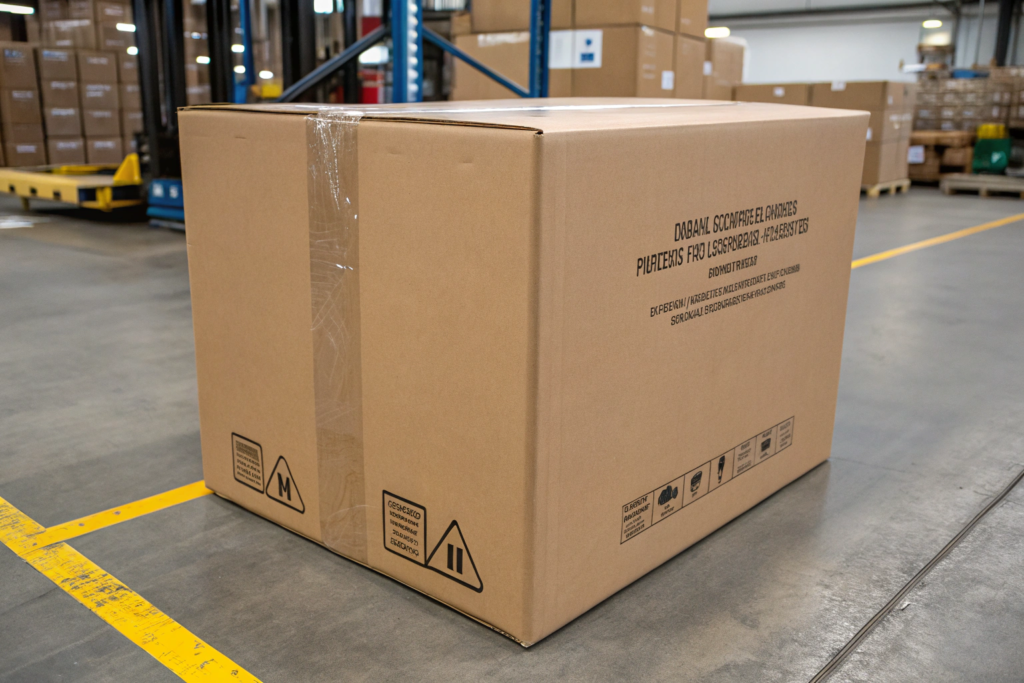
We mandate a minimum carton strength for ocean freight: double-wall corrugated board with a burst strength of at least 200 PSI and an edge crush test rating of 44 ECT or higher. We also require water-resistant adhesive between the flutes so the box does not soften in high humidity. The carton flaps are fully taped with a heavy-duty water-activated Kraft tape, not standard clear packing tape. This carton can survive a tropical storm on the deck and a cross-country truck ride.
The ocean environment is brutal on cardboard. The humidity inside a container can reach 95%. Standard single-wall boxes absorb moisture from the air, lose their structural integrity, and collapse. When the bottom box in a stack collapses, it starts a cascade of damage. I have seen entire pallets where the bottom cartons were crushed into accordions, and the gift products inside were destroyed. The shipping line’s insurance often rejects these claims because they argue the packaging was "insufficient for the intended voyage." They are right.
We specify the exact board grade. Double-wall means two layers of fluted medium with a flat linerboard between them. This acts like an I-beam in construction. It resists bending and top-load compression. The Edge Crush Test (ECT) rating tells you how much weight a stack of boxes can bear before the edges buckle. For a stack of six boxes on a pallet, the bottom box must hold the weight of the five boxes above it, multiplied by the dynamic force of truck vibration, which can triple the effective load. A 44 ECT box is our minimum. For heavy decor items like large ceramic planters, we go up to 55 ECT. We also mandate the use of water-activated Kraft tape. This tape has a starch-based adhesive that chemically bonds to the cardboard fibers. It becomes one piece with the box. Standard clear plastic packing tape uses a pressure-sensitive adhesive that loses grip in cold or humid conditions. We also tape every seam: the center seam and the two edge seams. This creates a sealed envelope that also acts as a moisture barrier for the gap between the flaps.
Why Is the Mullen Burst Test Rating Critical for Fragile Gifts?
You see a label on a box that says "32 ECT." You think it is a strong box. But ECT only measures stacking strength. It does not measure the box’s resistance to a sudden puncture, like a forklift fork hitting the side panel. A box can have a high ECT and still burst open when something sharp hits the wall.
The Mullen Burst Test measures the force required to puncture the corrugated board. We require a minimum of 200 PSI Mullen rating for any box carrying fragile decor. This ensures the box can take a side impact without bursting. This matters because in a container, boxes shift. A corner of one box can press into the side wall of another. If the wall bursts, the corner goes into your gift box. We choose boxes that are dual-rated: high ECT for stacking and high Mullen for puncture resistance. These boxes cost slightly more than standard stock boxes, but the cost difference is measured in cents per unit, while the cost of a damaged product is measured in dollars per unit. We source these boxes from certified suppliers and we randomly test boxes from each batch at our consolidation warehouse. We have a small burst tester on-site. If a batch fails, we reject the cartons before they are ever packed.
How Do You Properly Seal a Carton for a 30-Day Sea Voyage?
You watch a factory worker put a single strip of tape down the center seam. The tape is loose, with bubbles and wrinkles. It covers the gap but has no grip. When the humidity hits in the South China Sea, the tape peels off, the flaps pop open, and the contents spill out inside the container.
Our sealing method is specific and enforced. We use a three-strip tape pattern. One strip covers the center gap. Two strips cover the edge gaps where the outer flaps meet the box sidewalls. The tape must extend at least 6 centimeters down the side panels, not just stop at the edge. We also require the tape to be burnished. This means the packer must rub the tape down firmly with a plastic squeegee to activate the full adhesive bond. A hand-slap is not enough. For heavy cartons over 15kg, we add two strips of polypropylene strapping around the girth of the box, perpendicular to the tape seams. These straps prevent the box from bulging and the flaps from peeling open under the weight of the contents. We also apply an edge board under the straps so the straps do not cut into the cardboard. This entire sealing process takes an extra two minutes per carton. We train the factory packing team on video and we inspect the first ten cartons of every production run live via video call. If the sealing does not meet our spec, the container loading stops until it is corrected.
How Do You Package Luxury Gift Sets to Maintain Brand Image?
Your product is a premium candle in a glass jar, nestled in a satin-lined, magnetic-closure gift box with a ribbon pull. It looks stunning on the retail shelf. But during transit, the ribbon gets flattened, the magnetic closure pops open, and the glass jar rattles inside the box, scuffing the satin fabric. The customer receives a premium gift that looks like it came from a garage sale.
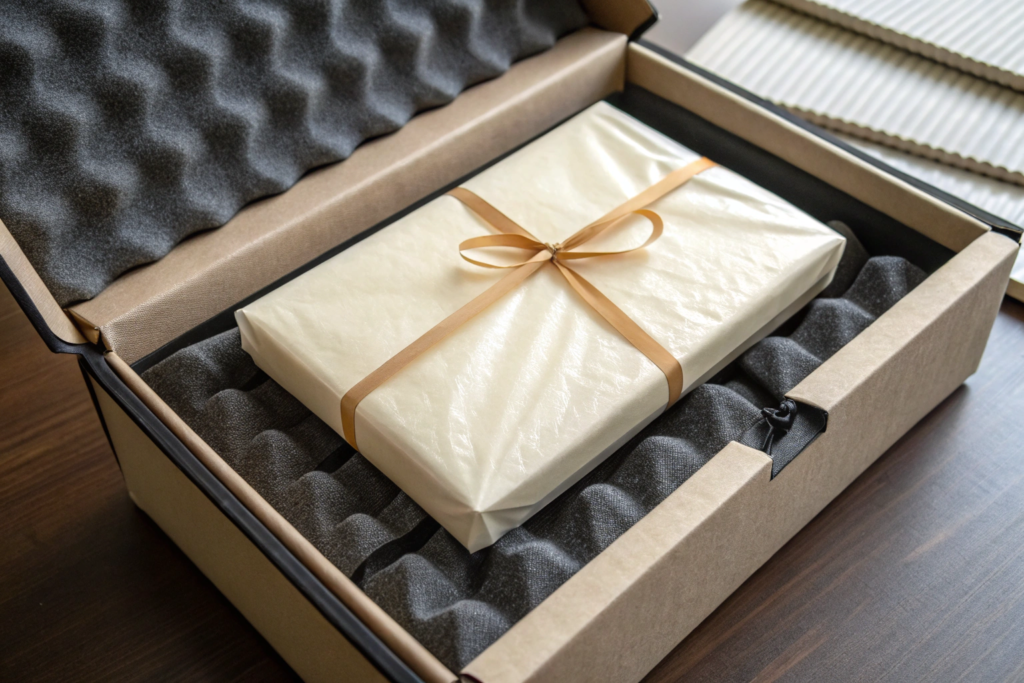
We protect luxury gift packaging by treating the gift box itself as a fragile product. We wrap the gift box in a layer of acid-free tissue, then place it inside a snug, custom-cut foam cavity. The cavity is designed to hold the gift box closed, so the magnetic closure is not stressed during vibration. We also use a soft elastic band or a removable belly band around the gift box to keep the lid tightly shut. The outer shipping carton is then sized so the foam insert fits perfectly with no movement.
I learned this lesson the hard way with a client who sold high-end desk globes in a glossy black gift box. The first shipment arrived with the gift boxes scuffed and the globe stands bent. The client was furious. We went back to the drawing board. We realized the problem was that the globe was heavy and shifted inside the gift box during vibration. The gift box interior was designed for retail presentation, not for transit. It had a loose satin nest that looked beautiful but provided zero lateral support. We designed a simple fix: we asked the factory to place a thin, clear, molded PET plastic insert over the globe inside the gift box. This insert was invisible when the box was open but locked the globe in place during transit. The scuffing problem was solved by wrapping each gift box in a soft polybag before placing it in the master carton. The polybag acted as a lubricant between the gift box and the carton wall, preventing friction scuffs. These two changes cost less than $0.15 per unit. The damage rate went from 8% to near zero. The brand’s image was saved.
How Can You Prevent Scuffing on Glossy and Foil-Stamped Gift Boxes?
You run your finger over a brand new gift box. The surface is a perfect, smooth, high-gloss black. You pack 20 of them in a shipping carton. During the ocean voyage, the boxes vibrate against each other 24 hours a day. The micro-movement creates friction. The black gloss gets dull patches and white scuff marks. The box looks old before it is even sold.
We separate every glossy box with a sheet of soft tissue paper or a thin foam interleaf. This interleaf acts as a sacrificial layer. It takes the friction, not the gift box surface. For boxes with raised foil stamping or embossing, we use a slightly thicker foam sheet to prevent the raised letters from pressing into the adjacent box. We also ensure the master carton is packed tight, with no empty space. If the boxes cannot move, they cannot rub. We achieve this tight pack by using exactly sized foam end-caps or by filling the remaining void with a corrugated spacer panel. We then do a shake test. We pick up the sealed carton and shake it hard. If we hear or feel any movement inside, the pack has failed. We open it and add more cushioning until the shake test is silent. A silent box is a safe box.
Why Is a Friction-Free Interior Critical for Decor with Delicate Finishes?
Your product is a set of hand-painted ceramic coasters with a glossy lacquer finish. The factory places them directly into the gift box without any separation. They stack them. During transit, the glossy surfaces rub against each other. The lacquer gets fine scratches that catch the light. The set looks used.
We never allow finished surfaces to touch each other. We mandate that every painted or lacquered piece is separated by a sheet of soft, non-abrasive material. For coasters, we use thin foam discs cut to the exact diameter of the coaster, placed between each piece. For items like decorative trays or mirrored photo frames, we use a peel-away protective film on the surface. This film is clear and clings to the surface without adhesive residue. It can be peeled off by the end customer and leaves a perfect, scratch-free finish underneath. For very delicate items, we go a step further and use a soft cotton glove protocol. The factory packers wear white cotton gloves when handling the final finished product. This prevents fingerprints and skin oils from etching into the lacquer over the long transit time. We have a specific packing instruction sheet that we attach to every purchase order. It includes photos of the correct packing method and a list of forbidden materials. No newsprint paper touching the product. No rubber bands that can melt and stain. No staples near the gift box. These details are what keep your brand premium.
Conclusion
The packaging is not an afterthought. It is the physical interface between your beautiful product and the brutal reality of a 12,000-kilometer supply chain. When you get the packaging right, you stop paying for air, you stop paying for broken glass, and you stop paying for scuffed gift boxes that a customer will reject. Every dollar you invest in smart packaging engineering returns five dollars in saved freight, avoided damages, and preserved brand image.
At GeeseCargo, we have seen every packaging failure you can imagine, and we have fixed most of them. The fixes are often surprisingly simple: a foam insert, a vacuum bag, a stronger carton, a tissue interleaf. They are not expensive. They are just specific. We do not leave these decisions to the factory. We write the packaging spec, we test the sample, and we train the packing line. We are not just moving boxes; we are protecting the products you worked so hard to design and sell.
If you are shipping gifts, home decor, or any product where the presentation is part of the value, let us audit your current packaging. Go to GeeseCargo.com and send me a photo of your product and your current shipping carton. I will personally review it and send you a list of specific, money-saving improvements. You focus on creating beautiful things. We will make sure they arrive that way.