When one of our clients had a $250,000 shipment stranded at the destination port because their freight forwarder listed themselves as both consignee and notify party, I witnessed firsthand how this seemingly minor field can create major operational disruptions. As founder of GeeseCargo with over a decade of international shipping experience, I've learned that the notify party field is among the most misunderstood yet critically important elements on the bill of lading.
The notify party is the contact person or company that the carrier alerts when shipments arrive at destination ports. This party receives arrival notices, coordinates customs clearance, and arranges cargo pickup—but does not have ownership rights to the goods. The consignee retains cargo ownership while the notify party handles logistical coordination, making accurate designation essential for smooth operations.
Understanding the distinction between consignee and notify party prevents cargo delays, communication breakdowns, and operational inefficiencies. While the field appears straightforward, its strategic use significantly impacts supply chain visibility and responsiveness.
What Are the Specific Responsibilities of the Notify Party?
The notify party serves as the operational contact point throughout the arrival and discharge process, performing specific functions that facilitate cargo release and movement.
How Does the Notify Party Facilitate Cargo Release?
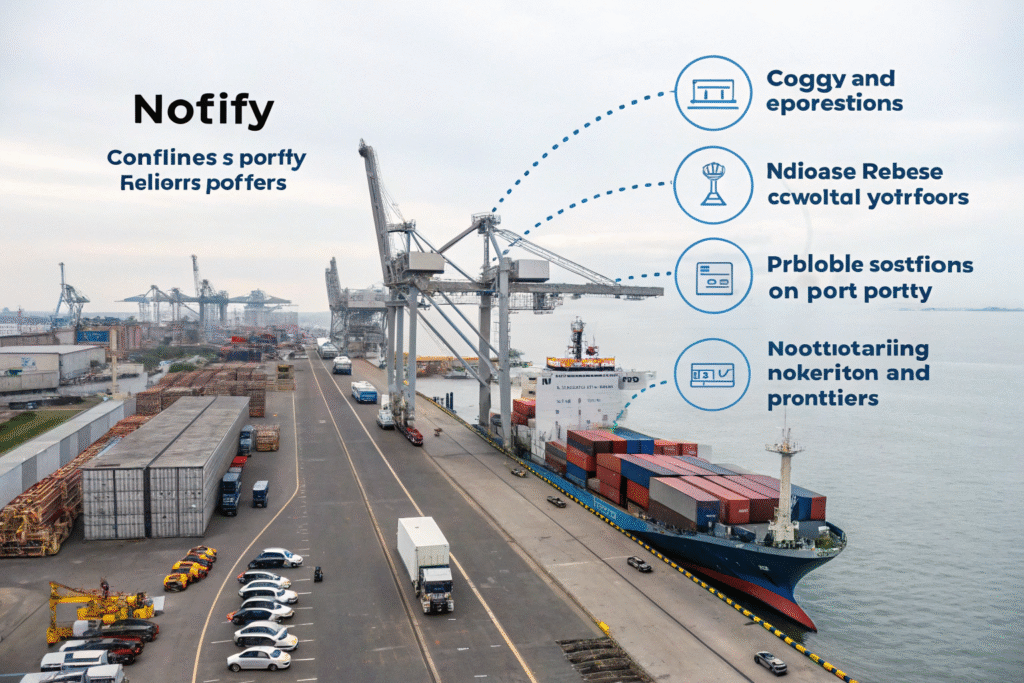
Arrival notifications from carriers trigger the notify party's activation. Shipping lines or their agents typically send pre-arrival notices 3-5 days before estimated arrival, followed by confirmed arrival notices once vessels berth, enabling the notify party to initiate clearance procedures.
Documentation coordination ensures all release documents reach appropriate parties. The notify party typically works with customs brokers to submit necessary paperwork, coordinates delivery orders with the carrier, and ensures the consignee receives required documents for cargo claim.
Cargo pickup arrangements involve scheduling with terminals and transportation providers. The notify party coordinates trucker appointments, ensures equipment availability, and manages the sequence of container movement from terminal to final destination.
What Distinctions Separate Notify Party from Consignee?
Legal ownership remains with the consignee regardless of notify party designation. The consignee holds title to the goods and must authorize any cargo release, while the notify party merely facilitates the operational process.
Financial responsibility for duties, taxes, and charges rests with the consignee. Although the notify party may coordinate payment through brokers or forwarders, ultimate financial obligation remains with the consignee of record.
Cargo claim authority requires consignee endorsement. If cargo damage occurs, the consignee must file claims, though the notify party often assists with documentation gathering and claim preparation.
When Should You Designate Different Parties as Notify?
Strategic notify party assignment depends on your supply chain structure, operational capabilities, and relationship dynamics with various service providers.

When Is a Freight Forwarder the Optimal Notify Party?
Consolidated shipments with multiple consignees typically list the forwarder as notify party. When a forwarder combines cargo from multiple shippers, they coordinate overall container release then handle individual cargo breakdown and distribution.
First-time importers or those with limited destination resources benefit from forwarder notification. The forwarder's expertise ensures proper arrival procedures and prevents inexperienced mistakes that could delay cargo release.
Complex logistics involving intermodal transitions often warrant forwarder notification. When shipments move from vessel to rail or truck, forwarders manage the handoff complexity more effectively than individual consignees.
When Should the Consignee Be Listed as Notify Party?
Direct relationships between shipper and consignee with simple logistics work well with consignee notification. When the consignee handles their own customs clearance and transportation, direct notification streamlines communication.
Established import operations with in-house logistics teams typically self-manage notification. Companies with dedicated logistics departments have the expertise to coordinate their own cargo release efficiently.
High-value or sensitive shipments often warrant direct consignee control. When close oversight is crucial, direct notification ensures the consignee maintains complete visibility and control.
What Problems Arise from Incorrect Notify Party Designation?
Inaccurate notify party information creates operational disruptions that delay cargo release, increase costs, and strain business relationships.
How Does Incorrect Notification Impact Cargo Release?
Communication failures occur when carriers cannot reach the designated notify party. If contact information is outdated, inaccurate, or the party is unaware of their designation, arrival notices go unheeded, and cargo remains at terminal.
Demurrage and detention charges accumulate when notification failures delay pickup. Ports and carriers charge escalating fees for containers that remain at terminals beyond free time allowances, with costs often reaching hundreds of dollars daily.
Customs clearance delays happen when brokers don't receive timely arrival notices. Without proper notification, customs documentation may not be submitted promptly, creating additional regulatory delays beyond simple operational issues.
What Legal and Financial Risks Emerge from Notification Errors?
Cargo abandonment procedures may initiate if no party claims the shipment. After extended periods without release activity, terminals may declare cargo abandoned, triggering complex and costly redemption processes or eventual auction.
Storage fee liability becomes ambiguous with unclear notify party designation. When multiple parties might be responsible, disputes over storage fee payment can further delay release while liability is determined.
Relationship damage occurs between supply chain partners when notification failures cause disruptions. Consignees blame shippers for improper documentation, while shippers blame forwarders for poor coordination, damaging business relationships.
How Can You Optimize Notify Party Strategy?
Strategic notify party management enhances supply chain visibility, reduces delays, and improves operational efficiency through deliberate planning and communication.
What Information Should Accompany Notify Party Designation?
Complete contact details must include specific individual names, email addresses, and multiple phone numbers. Listing only company names without specific contacts often causes communication failures when general mailboxes go unchecked.
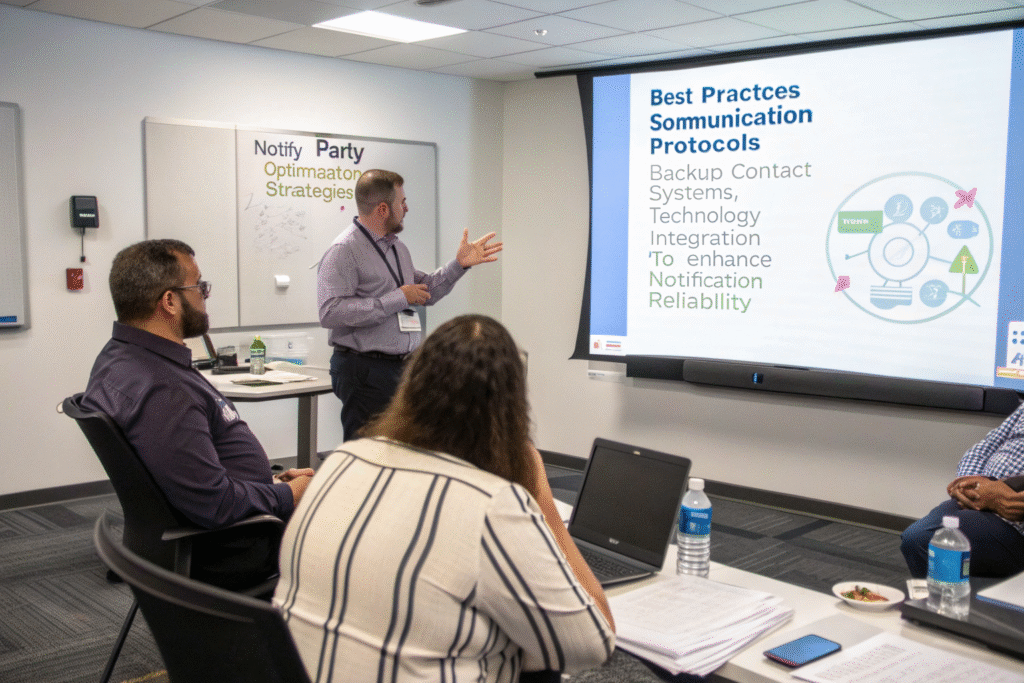
Backup contact information provides redundancy when primary contacts are unavailable. Including secondary names, mobile numbers, and alternative email addresses ensures arrival notices reach responsible parties despite vacations, illnesses, or staff changes.
Special instructions should specify notification timing preferences and required actions. Some parties want immediate notification upon vessel departure, others only upon arrival, and specific instructions help carriers meet these expectations.
How Does Technology Improve Notify Party Effectiveness?
Automated notification systems provide real-time alerts directly from carrier platforms. Many shipping lines offer digital portals where notify parties can track shipments and receive automatic status updates without manual carrier intervention.
API integrations between carrier systems and notify party platforms enable seamless data flow. When forwarders or brokers serve as notify parties, system integrations prevent manual data entry errors and ensure prompt action upon arrival.
Mobile applications allow notify party representatives to receive alerts and take action remotely. Cloud-based platforms enable coordination from any location, particularly valuable for time-sensitive shipments requiring immediate response.
What Special Considerations Apply to Different Incoterms?
The notify party's role and appropriate designation vary significantly based on Incoterms, which determine risk transfer points and operational responsibilities.

How Do FOB and CIF Shipments Affect Notify Party Roles?
FOB shipments (Free On Board) typically designate the buyer or their agent as notify party. Since risk transfers at the origin port, the buyer assumes responsibility for destination coordination, making them or their representative the logical notify party.
CIF shipments (Cost, Insurance, and Freight) often list the seller's agent as notify party initially. The seller arranges main carriage, but the notify party may change upon arrival based on the buyer's instructions and operational setup.
CFR terms (Cost and Freight) resemble CIF for notify party purposes. The seller arranges transportation but risk transfers at origin port, creating similar notify party considerations as CIF shipments.
What Notify Party Strategies Work Best for DDP and EXW?
DDP shipments (Delivered Duty Paid) almost always designate the seller's agent as notify party. Since the seller bears all costs and risks through destination delivery, their representative must manage arrival coordination.
EXW terms (Ex Works) naturally designate the buyer or their agent as notify party. With the buyer responsible for all transportation and costs from origin factory, they logically control destination coordination as notify party.
DAP terms (Delivered At Place) create shared interest in notification. The seller delivers to named place but doesn't clear goods for import, making both parties potentially interested in arrival notifications.
Conclusion
The notify party field represents a critical coordination point in international shipping that significantly impacts operational efficiency. While legally distinct from cargo ownership, the notify party serves as the operational nerve center for arrival coordination, making strategic designation essential for supply chain performance.
At GeeseCargo, we've optimized notify party strategies that have reduced destination delays by up to 70% for our clients. The most effective approaches combine clear understanding of the notify party's role, strategic designation based on operational capabilities, and robust communication protocols that ensure seamless coordination.
Begin your notify party optimization by analyzing your current designation practices, identifying communication gaps, and establishing clear protocols for each shipment scenario. Remember that the notify party isn't just another field to complete—it's the linchpin connecting vessel arrival to cargo release, making its proper management fundamental to international shipping success.