You launch a new product on your Shopify store. The orders start rolling in. You celebrate. Then you open your freight forwarder’s rate sheet and stare at a wall of options: express courier, air freight consolidation, sea freight LCL, rail to Europe, DDP to Amazon FBA, direct line to a 3PL warehouse. Each option has a different cost, a different timeline, and a different set of customer experience implications. Pick the wrong one, and your five-star reviews turn into "Where is my order?" complaints. Pick the right one, and your shipping cost becomes a competitive advantage that lets you offer free 7-day delivery while your competitors charge for 14-day delivery. The best shipping method for e-commerce is not a single mode—it is a strategy that matches the shipping mode to the product type, the customer expectation, and the sales channel.
The best shipping method for e-commerce from China depends on the sales channel, order volume, and product value. For Amazon FBA sellers, the optimal method is a hybrid of fast sea freight LCL or FCL for bulk restocking combined with express air freight for emergency stockout prevention. For direct-to-consumer Shopify and brand websites, the winning strategy is a combination of prepaid DDP air freight lines for orders over a certain value threshold and local 3PL fulfillment from a US or European warehouse stocked via sea freight for the fastest possible delivery. For small parcels under 2 kilograms, express courier services like DHL, FedEx, and UPS offer 3-5 day door-to-door delivery with full tracking. The key is to match the shipping speed to the customer promise and the shipping cost to the product margin.
You do not need to be a logistics director to build a profitable e-commerce shipping strategy. You need to understand the four main shipping modes, what they cost, how fast they are, and which sales channel they serve best. At GeeseCargo, I help e-commerce brands design their shipping mix so that every order arrives on time, within budget, and with a customer experience that drives repeat purchases. Let me walk you through the options and the decision framework.
What Is the Fastest Shipping Method for Small E-Commerce Parcels?
A customer in New York orders a phone case from your online store. They chose your brand over a competitor because your website said "Fast Shipping." If that package takes 14 days to arrive, the customer files a chargeback and never returns. For small e-commerce parcels under 2 kilograms, the speed of delivery is the primary driver of customer satisfaction. You need a method that gets the package from the factory floor in Shenzhen to the customer’s doorstep in under a week, with full tracking visibility the entire way. The good news is that express courier services are built exactly for this use case, and they are more affordable than most e-commerce sellers realize when you negotiate volume rates.
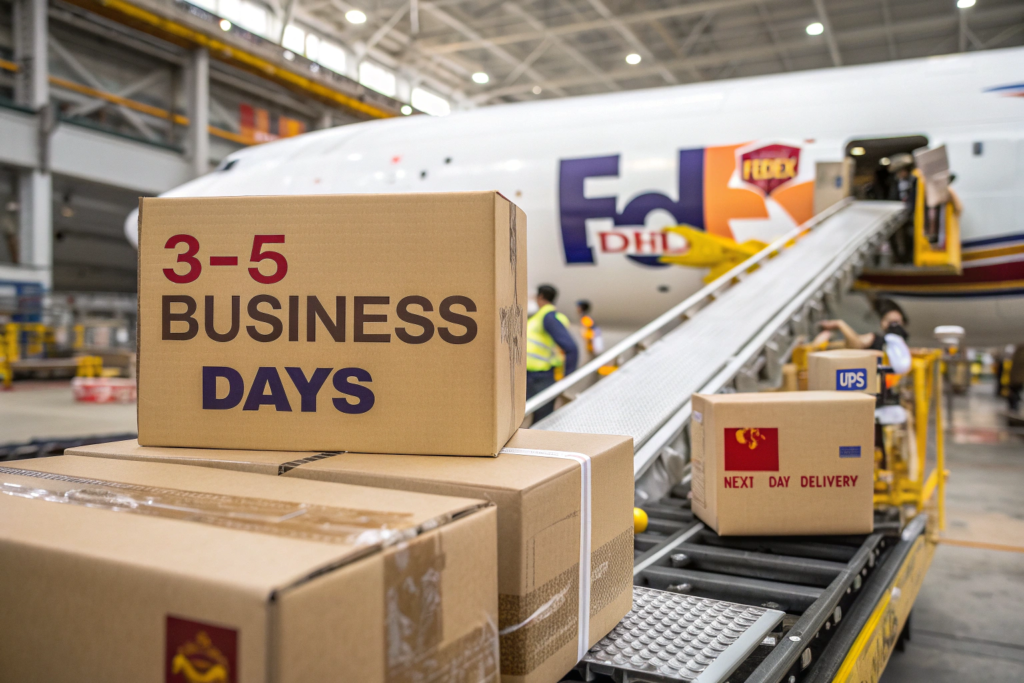
The fastest shipping method for small e-commerce parcels under 2 kilograms from China is express courier service via DHL, FedEx, or UPS, which delivers door-to-door from Chinese factories to US customers in 3 to 5 business days. These integrators operate their own aircraft fleets and ground networks, providing end-to-end tracking, pre-clearance of customs, and a signature-on-delivery option. For ultra-urgent shipments, DHL Express Worldwide offers next-day delivery to major US cities from Hong Kong and Shanghai. The cost per parcel drops significantly when you ship in batch volumes and negotiate an account rate with your freight forwarder.
I use express courier services for my e-commerce clients who sell high-value accessories, electronics, and premium gifts where the shipping cost represents a small fraction of the order value. A $80 watch can absorb a $12 shipping cost easily. A $10 phone case cannot. Let me break down exactly how express courier pricing works and how you can access volume discounts that make the service affordable for your higher-margin products.
How does express courier dimensional weight pricing affect your shipping cost?
Express couriers do not charge based on the actual weight of your package alone. They charge based on the dimensional weight, or DIM weight, which is a calculation of the package’s volume. The formula is Length x Width x Height in centimeters, divided by 5,000 for DHL and FedEx international shipments. The resulting number is the dimensional weight in kilograms. The courier then charges for whichever is greater: the actual weight or the dimensional weight. This means a large, lightweight box of plush toys costs far more to ship than a small, dense box of metal tools, even if both weigh exactly 2 kilos. For e-commerce sellers, this pricing model dictates packaging design. You must minimize the box size. Every centimeter of unnecessary air inside the box increases the DIM weight and increases the shipping cost. I work with my clients’ factories to design packaging that fits the product snugly, eliminating the oversized box that looks impressive but destroys the shipping margin. The DHL Dimensional Weight Guide provides the exact calculation formula and examples. I also advise e-commerce sellers to batch their express shipments. Instead of shipping each day’s orders individually, you can batch all the orders from a single day or two days at the factory, pack them into master cartons, and ship them as a consolidated express freight shipment to a US sorting center. This reduces the per-unit shipping cost because the master carton has a more favorable DIM-to-weight ratio than individual small boxes. Once the master carton clears US customs, it is broken down and the individual parcels are injected into the domestic courier network for final delivery.
When should you use an express freight line instead of the post office?
China Post and ePacket are cheap, but they are slow and unreliable for building a brand. An ePacket shipment from China to the US takes 7 to 20 days, the tracking often goes dark at the US border, and the customer experience is inconsistent. For an e-commerce brand that competes on quality and customer service, the post office is a liability. Express courier lines are the premium alternative, but there is a middle ground: express freight lines operated by specialist e-commerce logistics providers. These lines use a hybrid model. The provider picks up your parcels from the factory, consolidates them into a bulk air freight shipment, clears US customs using a dedicated broker, and then hands the individual parcels to USPS for last-mile delivery under a negotiated commercial rate. The transit time is 7 to 10 days, the tracking is end-to-end, and the cost is roughly 40-50% less than DHL Express. This is the optimal method for e-commerce orders with a value between $20 and $80, where pure express courier is too expensive but the post office is too slow. I help my clients set up accounts with these express line providers and integrate the tracking into their Shopify or WooCommerce backend. The Shopify Shipping Carrier Guide provides the API integration points for connecting carrier tracking to your store’s order management system. The tracking number is automatically emailed to the customer when the label is generated, which reduces the "Where is my order?" support tickets to near zero.
How Do You Ship Bulk Inventory to Amazon FBA from China Cost-Effectively?
Your Amazon product research identified a winning item. You ordered 2,000 units from a factory in Yiwu. Now you need those units inside Amazon’s fulfillment centers, labeled, palletized, and ready for Prime delivery. You check the air freight cost for 2,000 units and your profit margin evaporates. You check the ocean freight transit time and your launch window slams shut. Amazon FBA shipping is a unique beast because Amazon imposes strict delivery requirements—pallet specifications, box-level labeling, carton weight limits—and penalizes you with refused deliveries if you get them wrong. The cost-effective solution is not the cheapest freight rate; it is the method that delivers compliant, sellable inventory to the correct FC on time.
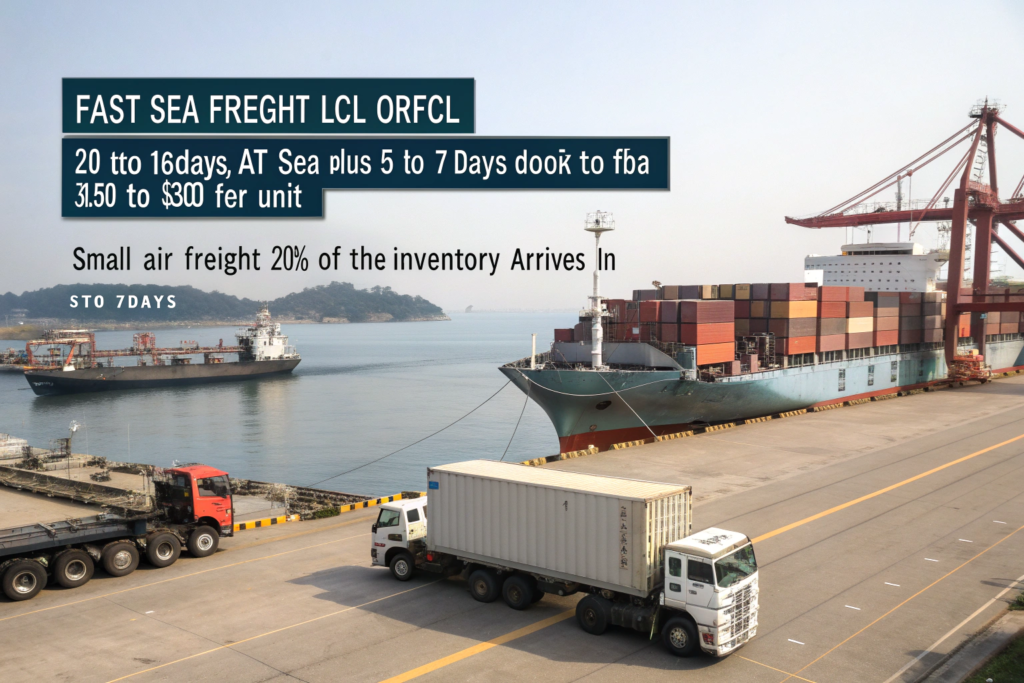
The most cost-effective method to ship bulk inventory to Amazon FBA from China is a combination of fast sea freight LCL or FCL for the main inventory shipment and a small air freight top-up for the initial launch stock. Sea freight from Shanghai to Los Angeles takes 14 to 16 days on the water plus 5 to 7 days for destination trucking and Amazon check-in, totaling 20 to 23 days door-to-FBA, at a cost of approximately $1.50 to $3.00 per unit for typical consumer goods. A small air freight shipment of 20% of the inventory arrives in 5 to 7 days, covers the sales during the ocean transit, and prevents a stockout that would kill the product’s ranking momentum.
At GeeseCargo, I manage the FBA inbound shipping for dozens of Amazon sellers. The ones who succeed are the ones who plan the shipment before the factory finishes production. They have the FBA shipment plan created in Seller Central, the FNSKU labels generated, and the pallet configuration mapped out while the goods are still being manufactured. Let me walk you through the sea freight versus air freight math and the critical palletization steps that determine whether Amazon accepts or refuses your delivery.
How do you split your inventory between air freight and sea freight for an FBA launch?
The launch of a new Amazon product is a fragile moment. You need inventory in stock on day one to capture the initial sales velocity that drives organic ranking. But you cannot air-freight 2,000 units of a $15 product because the freight cost per unit would exceed the profit margin. The solution is a split shipment. You air-freight 300 to 400 units via express air consolidation directly to the Amazon FC. This stock arrives in 5 to 7 days and covers the first two to three weeks of sales. Meanwhile, the remaining 1,600 units move via fast sea freight LCL or a 20-foot FCL container. The sea freight stock arrives in 20 to 23 days, just as the air freight stock is depleting. The total freight cost is a weighted average of the expensive air leg and the cheap ocean leg. For a product with a $15 sales price and a $4 landed cost from the factory, the blended freight cost using this split method might be $1.20 per unit, which preserves a healthy margin. The air freight portion costs $3.50 per unit, but it protects the sales velocity during the critical launch window when the Amazon algorithm is determining the product’s rank. You can use the Amazon FBA Revenue Calculator to model the revenue impact of a stockout versus the cost of the air freight investment. I help my clients set the air-sea split ratio based on the product’s projected daily sales velocity, the factory’s lead time for the next production run, and the ocean transit time from the factory to the assigned FC.
What are the mandatory pallet and label requirements for Amazon FBA delivery?
Amazon does not negotiate on delivery requirements. Your shipment must arrive on 40×48-inch GMA-standard four-way access pallets, with a total height not exceeding 72 inches including the pallet. The cartons must not overhang the pallet edge by more than one inch. The pallet must be wrapped in clear stretch wrap with the "Do Not Break Down" instruction visible. Each pallet must have four FBA pallet labels, one on each side, positioned in the center of the stretch wrap. Each individual carton must carry the FBA box ID label with a scannable barcode. A single missing label or a pallet that is too tall triggers a refusal at the Amazon receiving dock. The trucker is turned away, and you pay the return trucking fee, the re-palletization fee at a third-party warehouse, and the cost of a new delivery appointment. I send every FBA client a "Pallet Compliance Checklist" with photos of correct and incorrect pallet builds. My team at the origin warehouse in China builds the pallets to the exact Amazon FBA Pallet Requirements specification, photographs each completed pallet from all four sides, and sends the photos to the client for approval before the container is sealed. This pre-shipment photo verification eliminates the refused delivery risk. I also verify that the cartons do not exceed the 50-pound weight limit unless they are labeled "Team Lift," and that no carton contains mixed SKUs unless the shipment plan specifically authorizes mixed-SKU boxes. These details are the difference between a shipment that checks in within 24 hours and one that sits in "Problem Solve" for two weeks.
When Should E-Commerce Brands Use a 3PL Warehouse Instead of Direct Shipping?
Your e-commerce brand is growing. You are getting orders from the US, the UK, and Australia. You are shipping each order individually from China via express courier, and the cost is eating your margin on international orders. The delivery time to a customer in London is 8 days, and your competitor with a UK warehouse delivers in 2 days. You are losing sales to a competitor whose shipping experience is simply faster. The scaling moment for an e-commerce brand is when the volume of orders in a single region justifies positioning inventory in that region ahead of the orders. This is where a third-party logistics warehouse, or 3PL, enters the picture.
An e-commerce brand should use a 3PL warehouse instead of direct shipping from China when the monthly order volume in a single region exceeds 300 to 500 orders, or when the customer expectation in that market requires delivery in 2 to 3 days. You ship a bulk inventory shipment via sea freight or rail freight from China to the 3PL warehouse in the US or Europe. The 3PL receives the inventory, stores it, picks and packs each customer order, and ships it using domestic carrier services that deliver in 1 to 3 days at a fraction of the cost of international express shipping. The per-order shipping cost drops by 50-70%, and the delivery time drops from 7-14 days to 1-3 days.
I help my e-commerce clients make the transition from direct shipping to 3PL fulfillment when their order data shows the volume threshold is crossed. The switch transforms the customer experience from "shipped from China, arrive eventually" to "shipped locally, arrive tomorrow." Let me show you how to compare the total fulfillment cost of the two models and how to set up a seamless inventory flow from your factory in China to the 3PL warehouse.
How does the total fulfillment cost compare between direct shipping and 3PL?
Direct shipping from China via express courier costs $8 to $12 per parcel for a 0.5kg package to the US. The customer waits 5 to 8 days. The 3PL model has two cost components: the bulk freight cost to move the inventory from China to the US 3PL warehouse, and the 3PL pick-and-pack fee per order. The bulk sea freight cost for a 0.5kg unit inside a consolidated container shipment is approximately $0.30. The 3PL pick-and-pack fee, including the domestic US shipping label, is $4 to $6 for a lightweight parcel shipped via USPS First Class or UPS Ground. The total per-order cost is $4.30 to $6.30. The customer waits 2 to 3 days. The savings per order is 30-50%, and the delivery time is 50-70% faster. For a brand shipping 500 orders per month to the US, the monthly savings is $1,850 to $2,850. The 3PL also charges a monthly storage fee, typically $0.50 to $1.00 per cubic foot, and an inbound receiving fee for processing the bulk container shipment. These fixed costs must be factored into the comparison. I build a Total Fulfillment Cost Model spreadsheet for my clients that compares the two models side by side using their actual order volume, product weight, and average order value. When the model shows the 3PL is cheaper by more than 20%, we make the switch. The breakeven point for most e-commerce brands is around 300 orders per month in a single region.
How do you set up a seamless inventory pipeline from the factory to the 3PL?
The risk of the 3PL model is inventory management. You ship 5,000 units to a warehouse in Dallas, and the inventory sits there for six months while you pay storage fees. Or you under-ship, the 3PL runs out of stock, and your US orders revert to expensive direct shipping from China. The solution is a reorder point system. You establish a minimum inventory level at the 3PL that triggers a new bulk shipment from the factory. For example, the 3PL ships 50 units per day on average. You want a 30-day buffer of inventory at all times, so your minimum stock level is 1,500 units. When the 3PL inventory drops to 2,500 units, you place a new production order with the factory. The factory lead time is 30 days. The sea freight transit time to the 3PL is 25 days. The total replenishment pipeline is 55 days. At 50 units per day, you need 2,750 units in the pipeline to cover the 55 days. Your reorder point is when the 3PL inventory hits 4,250 units (2,750 pipeline cover plus 1,500 safety buffer). This is the standard Inventory Reorder Point Formula adapted for international supply chains. I help my clients set up a weekly inventory report from the 3PL that feeds into a shared spreadsheet. The spreadsheet calculates the days-of-cover remaining and highlights when the reorder point is approaching. This system ensures the factory order is placed before the stockout becomes an emergency, which means the replenishment ships via sea freight instead of expensive emergency air freight.
How Do DDP and DDU Shipping Methods Affect E-Commerce Customer Experience?
A customer in France orders a $60 jacket from your online store. The checkout page shows the product price plus a small shipping fee. The package arrives in France, and the customer receives a text message from the courier: "Duties and taxes due: €22. Pay now to release your package." The customer is furious. They feel tricked. They refuse the package, file a chargeback, and leave a one-star review about hidden fees. This is the DDU, or Delivered Duty Unpaid, experience. It transfers the import duty and tax burden to the customer at the doorstep. DDP, or Delivered Duty Paid, absorbs those costs into the product price and delivers a frictionless delivery experience. For e-commerce brands selling into the US and Europe, the choice between DDP and DDU is a choice about your brand promise.
DDP shipping methods dramatically improve the e-commerce customer experience by eliminating the surprise duties and taxes that customers face when their international order arrives. Under DDP, you prepay the import duties and VAT through your freight forwarder, and the package is delivered to the customer’s door with no additional charges. Under DDU, the customer is billed for the duties and taxes by the courier before delivery, which causes frustration, package refusals, and chargebacks. DDP costs you an additional 10-25% of the product value in duties and taxes depending on the destination country, but the improvement in customer satisfaction and the reduction in refused deliveries typically generates a positive return on that investment.
I implemented a DDP shipping program for an e-commerce clothing brand last year, and their international order refusal rate dropped from 12% to under 1%. Their customer service tickets related to customs fees dropped to zero. The DDP cost was built into the product price, and the sales conversion rate on international orders increased because the total price at checkout was transparent. Let me show you how DDP works for the key e-commerce markets and how to calculate the landed DDP cost accurately.

How does DDP shipping work for e-commerce orders to the United States?
The United States has a high de minimis threshold of $800 per day per person. This means that e-commerce orders with a declared value under $800 enter the US duty-free and with a simplified customs clearance. For the vast majority of direct-to-consumer e-commerce shipments from China to the US, the DDP process is straightforward because no duties are actually owed. The shipment clears US customs under the Section 321 de minimis entry, which is a simplified electronic filing with no duty payment and no formal entry. The DDP cost is essentially the freight cost plus a small customs clearance fee. This is a massive advantage for US e-commerce sellers compared to sellers shipping to Europe, where the de minimis threshold is much lower. The CBP Section 321 De Minimis Entry guidelines explain the exact requirements. I route all my clients’ US-bound e-commerce parcels under $800 through the Section 321 clearance lane, which eliminates the duty cost entirely. For orders over $800, the formal entry process applies, duties are calculated based on the HTS code, and the DDP price must include the estimated duty payment. I use a customs broker integrated with the express courier’s system to file the entry and pay the duties on the client’s behalf, so the customer never sees a customs bill.
How do you calculate the true DDP landed cost for European e-commerce orders?
Europe is a different story from the US. The European Union abolished the €22 de minimis threshold in 2021. Now, every e-commerce order imported into the EU is subject to VAT, regardless of the order value. The VAT rate varies by country, typically 19-25%, and is charged on the product value plus the shipping cost. For orders under €150, the Import One-Stop Shop, or IOSS, system allows you to charge the VAT at the point of sale and remit it to a single EU tax portal. The package clears customs with the VAT pre-paid, and the customer receives the order with no additional charges. For orders over €150, import duties apply in addition to VAT, and the formal customs clearance process requires a fiscal representative in the destination country. The total DDP cost for a European e-commerce order is the product cost plus the freight cost plus the VAT percentage plus any applicable duty percentage. A €50 jacket shipped to Germany with a freight cost of €8 incurs 19% VAT, or €11.02, for a total landed cost of €69.02. I help my e-commerce clients set up the IOSS registration through an intermediary and integrate the VAT collection into their Shopify or WooCommerce checkout. The EU IOSS Portal provides the registration and filing process. The key is that the VAT must be charged to the customer at the time of purchase and displayed transparently on the checkout page. The customer sees "Price: €50, Shipping: €8, VAT: €11.02, Total: €69.02." There is no surprise at the door. This transparency builds trust, and trust builds repeat purchases.
Conclusion
The best shipping method for e-commerce from China is not a single button you press. It is a strategy that evolves with your sales volume, your product value, and your customer geography. For small parcels under 2 kilograms going to customers who expect fast delivery, express courier services from DHL, FedEx, and UPS deliver in 3 to 5 days and justify their cost on higher-value products. For Amazon FBA sellers, the hybrid air-sea split shipment is the financially optimal launch strategy: a small air freight stock covers the initial sales velocity while a cost-effective sea freight bulk shipment arrives three weeks later to sustain the ranking. For brands scaling beyond 300 orders per month in a single region, a 3PL warehouse transforms the customer experience from an 8-day international wait to a 2-day domestic delivery while slashing the per-order shipping cost by 30-50%.
The shipping method you choose also shapes your brand. DDP shipping tells your customer, "We respect your experience enough to handle the customs complexity for you." DDU shipping tells them, "The customs bill is your problem." The difference in customer lifetime value between these two messages is measurable in chargeback rates, repeat purchase rates, and product reviews. The US market’s $800 de minimis threshold makes DDP cheap and simple. The European market requires IOSS registration and VAT collection at checkout, but the investment in compliance pays for itself in customer trust.
At GeeseCargo, I help e-commerce brands build a shipping strategy that is as deliberate as their product strategy. We map the shipping method to the sales channel, the product margin, and the delivery promise on the website. The result is a logistics operation that is invisible to the customer when it works perfectly and a cost structure that leaves room for profit. Your shipping strategy should be a competitive advantage, not an afterthought.