You spot the perfect product at a trade show in Guangzhou. The design is sharp. The price per unit leaves you a healthy margin. You shake hands with the supplier, and you feel great. Then the conversation turns to shipping. The factory says, "We do FOB. You handle the rest." Suddenly, you are the one responsible for getting the goods from a foreign country to your warehouse. You need a trucker in China. You need an ocean booking. You need a customs broker in the US. You need to pay duties. And you need all these strangers to work together without a mistake. That stress is real. It keeps business owners up at night. They fear the unknown costs and the chaotic coordination. That is exactly why DDP shipping exists, and why we have made it our flagship service at GeeseCargo.
DDP shipping stands for Delivered Duty Paid. Under Incoterms 2020, it is the term that places the maximum responsibility on the seller. The seller handles everything: export clearance, main carriage, import customs, duty payment, and final delivery to your door. Importers are choosing GeeseCargo for this because we execute a genuine DDP. We act as the Importer of Record using our own continuous customs bond. We absorb the tariff costs upfront. We physically manage the cargo from the factory floor in China to the final mile in the US. You receive your clothing, gifts, and accessories without ever touching a customs form or paying a surprise surcharge.
I want to break this down for you fully. DDP is not just a shipping term. It is a strategy to de-risk your entire supply chain. More and more American business owners are abandoning the old model of booking freight on their own. They are tired of being the project manager for 4 different logistics companies. I will walk you through how DDP actually works on the ground, why it has become so popular, and why our version of it at GeeseCargo is growing faster than any other service we offer.
How Does the DDP Shipping Process Actually Work Step by Step?
DDP sounds simple. You pay. You receive. But the chain of events behind that simplicity is long and fragile. If one link breaks, the promise breaks. Many buyers do not see the physical journey their goods take. They hand over money and hope for the best. At GeeseCargo, we map out every single handshake in the DDP process so you can see exactly where your money goes. This transparency is what turns a risky import venture into a predictable business expense. The process has four critical stages. We execute all of them under one roof.
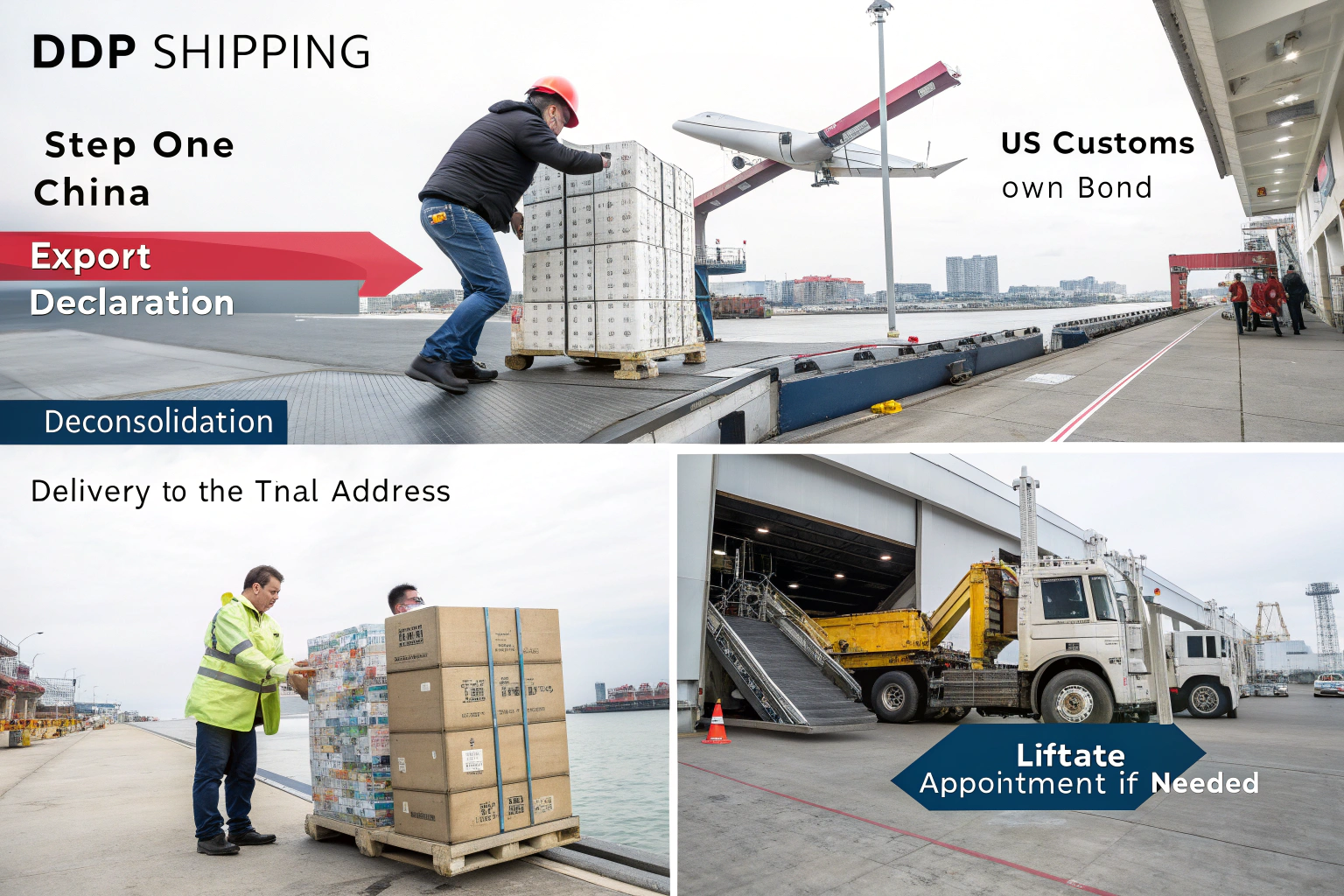
The DDP shipping process works in four steps. First, we pick up the cargo from your supplier in China and handle the export declaration. Second, we consolidate and load the goods onto a vessel or aircraft, managing the main carriage. Third, we clear the goods through US Customs under our own bond, paying all applicable duties and tariffs immediately. Fourth, we deconsolidate and deliver the freight to your final address, including a liftgate appointment if needed. No third-party brokers are involved. We control the string of events from start to finish.
I remember a conversation with a client who was switching from EXW terms. He told me his previous setup felt like a relay race where each runner was blindfolded. The factory handed the goods to a trucker. The trucker handed them to a warehouse. No one talked to each other. The buyer was the only one running back and forth trying to connect the runners. That is the opposite of DDP. In our DDP model, we are the only runner. We carry the baton the whole way. You just wait at the finish line with a cup of coffee.
What Happens at the Chinese Factory Before the Container Moves?
The DDP journey starts long before the ship sails. Your supplier finishes production. They issue a commercial invoice and a packing list. But we do not just accept those documents and run. We send our own team or a trusted inspector to the factory. We count the cartons. We check the product quality randomly. We verify that the "Made in China" origin label is affixed correctly. If the goods are branded clothing, we confirm the trademark authorization exists. Only then do we book the truck. We generate the Chinese export declaration using the exact HS codes. We submit it to China Customs. If they flag it for inspection, we have staff at the port to escort the officers to the container. The cargo does not move until the export clearance is officially green-lit. This step is completely invisible to you, but it is where DDP either succeeds or fails silently.
How Are US Import Duties Actually Paid Without Your Involvement?
This is the magic that makes importers choose true DDP. When the ship leaves China, we transmit the Importer Security Filing to US Customs. We list ourselves, GeeseCargo, as the Importer of Record. When the vessel arrives at the Port of Los Angeles, our customs brokerage team files the entry summary. They calculate the exact duty based on the product classification. Then, we pay those duties directly from our own account using our continuous customs bond. You do not send us a wire for the duty payment. You do not provide a credit card. The money flows out of our operating capital first. Then, we invoice you the single, pre-agreed DDP price. This separation between the customs transaction and your payment is what protects you. If there is a dispute over the tariff rate, we fight it. You are not holding the bag, waiting for a refund from the government. We handle the entire customs clearance financial flow.
What Are the Hidden Risks of Trying to Manage Import Logistics Yourself?
Many experienced business owners still try to manage importing under FOB or EXW terms. They believe keeping control means keeping costs down. In reality, self-managing international logistics often means absorbing risks you never priced into the product. You become the insurer of last resort for every delay, every damage, and every regulatory fine. I have seen companies lose their entire holiday season sales because they tried to save a few hundred dollars on the freight leg. The hidden risks are not in the freight quote. They are in the gaps between the quotes.
The hidden risks of self-managing import logistics include the lack of a continuous customs bond, exposure to demurrage and detention fees, and the absence of a dedicated incident response team. If your container gets selected for an X-ray exam at the port, you cannot negotiate with the terminal. If the trucker you found on a load board damages the cargo, you are suing a small business with limited insurance. At GeeseCargo, we absorb these operational shocks as part of our DDP commitment. We have the staff, the insurance, and the financial buffer to contain these problems without sending you a surprise bill.
I recall a situation where an importer of ceramic gifts chose to control the trucking himself. He found a cheap drayage carrier near Savannah. The carrier tipped the container over on a turn. The freight was destroyed. The steamship line charged him for the container damage. The trucker’s insurance capped at $50,000. The loss was $80,000. He had to write a check for $30,000 to cover the gap. He had no one to fight the claim for him. That $300 he saved on the trucking cost him a fortune. DDP transfers that entire catastrophic risk to us. If we roll the truck, you still get your goods or a full settlement, because we carry enough insurance to cover the actual value of the cargo.
Why Is Demurrage the Silent Profit Killer for Self-Managed Freight?
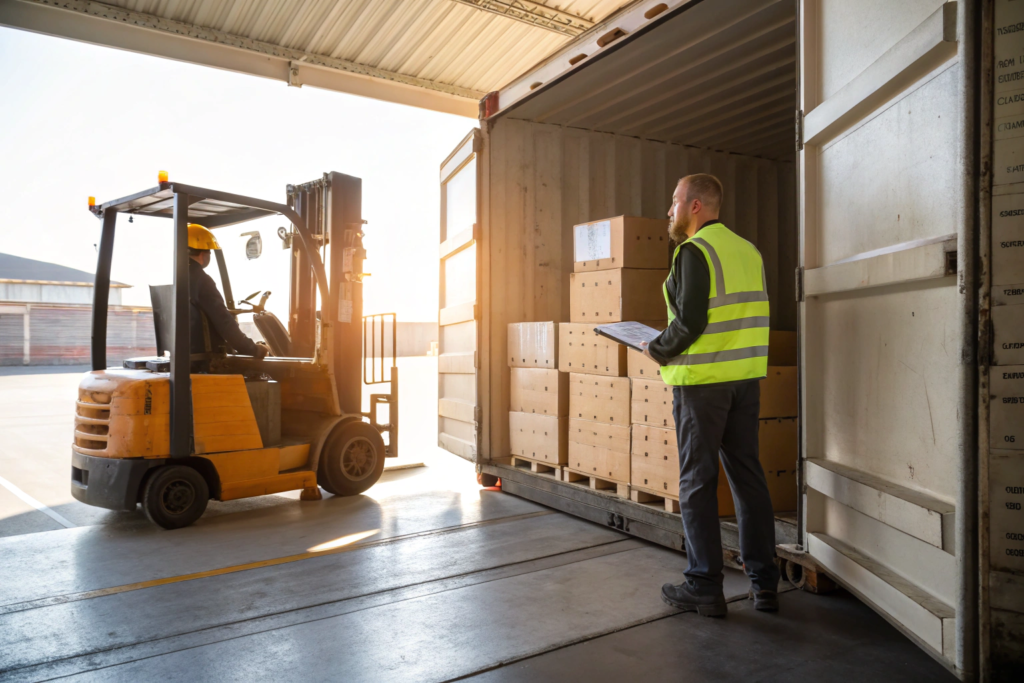
Demurrage is the charge for holding a container inside the terminal beyond the free days. Detention is the charge for keeping the container outside the terminal too long. These fees explode fast. A standard port might give 4 free days. After that, it is $150 per day, then $300, then $500. If you self-manage and your customs broker is slow to file, you rack up a $2,000 bill before you even know there is a problem. No one calls you. The clock just runs. In our DDP model, the demurrage risk sits on our books. We track the "last free day" obsessively. If a customs hold occurs, we pay to move the container to a bonded warehouse to stop the clock. We have the working capital to advance these charges and the expertise to mitigate them. A self-managing importer often does not even know what "last free day" means until the port charges invoice lands.
Can You Really Afford a Single-Entry Customs Bond Every Time?
Small importers often buy a single-entry customs bond for each shipment. It seems cheaper upfront, maybe $150 to $300 per entry. But the administrative hassle is immense. You have to fill out forms for each shipment. You have to disclose your personal or business financials to the surety company. You also have a low coverage limit. If your shipment value exceeds the bond limit, customs stops the entry. A continuous bond like the one we hold costs more upfront annually but covers unlimited entries with a high aggregate limit. For a regular importer of clothing and accessories, relying on single-entry bonds is a game of chicken with the CBP. Eventually, a shipment will be too large or a tariff will be too high, and the bond will fail. We remove that variable completely. You operate under our robust bond, giving you the flexibility to scale your shipment sizes without worrying about bond capacity.
How Does GeeseCargo’s DDP Service Protect Your Brand’s Reputation?
Your brand is not just the logo on the product. It is the unboxing experience. It is the shelf-ready condition of the goods. It is the reliability of your stock availability. When your supply chain hiccups, your retail buyers do not call the shipping line. They call you. They deduct chargebacks from your invoice. They cancel purchase orders. Protecting your brand means ensuring the freight service is invisible to your customer. They should never have to think about how the product got there. DDP with GeeseCargo builds a firewall around your brand. We take the hits so your image stays clean.
Our DDP service protects your brand by enforcing strict packing standards, providing predictable delivery windows, and resolving claims internally without involving your retail buyer. We understand that a crushed gift box or a late delivery for a seasonal launch can damage a vendor relationship permanently. We use high-quality pallets. We shrink-wrap securely. We build load plans that prevent shifting. If a carrier damages a pallet, we cut you a credit note and deal with the carrier ourselves. Your customer sees only the perfect product.
I once handled a shipment of premium accessories going to a major retailer in Dallas. The truck hit a massive storm in Oklahoma. Some boxes on the tail got damp. The retailer refused 12 cartons. The old way of doing things would have been a mess. The client would have to argue with the trucker’s insurance. The retailer would just debit the vendor. Instead, because we ran this as a DDP contract, I immediately authorized a re-shipment of those 12 cartons by air from our backup stock. We dealt with the insurance claim later. The client never had to have a hard conversation with the buyer. The shelf stayed full. That is brand protection. That is what the premium in a DDP service actually buys.
Why Does Packaging Integrity Matter More Than Freight Speed?
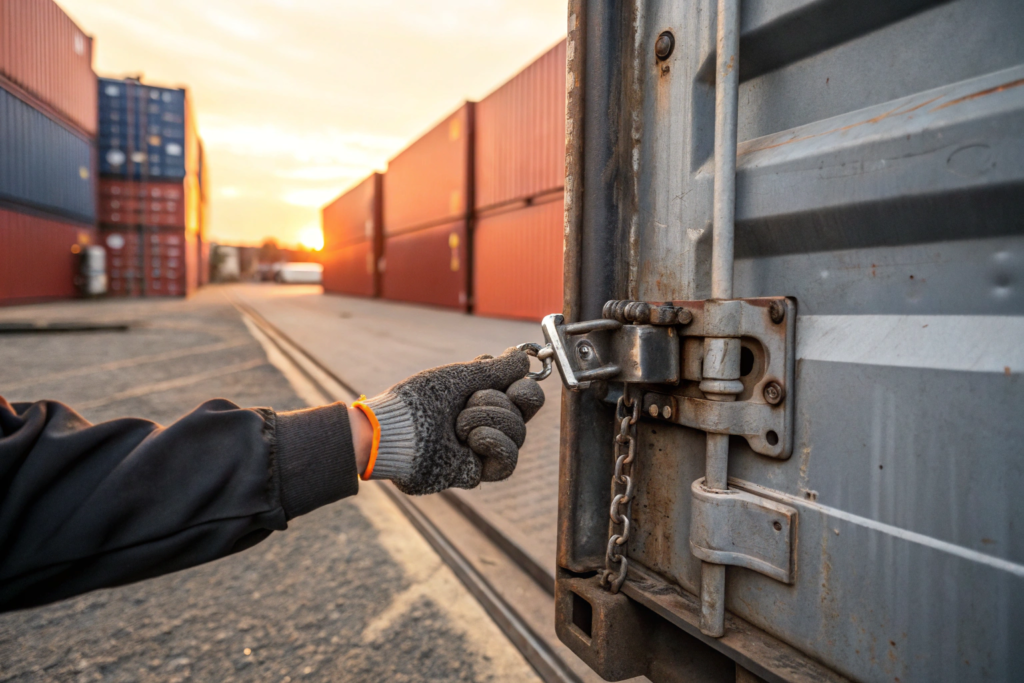
Fast shipping means nothing if the box looks like it went through a war. Especially for gifts and apparel, presentation is currency. If a box of sweaters gets punctured, the retailer puts them on the clearance rack. You lose margin. At our consolidation center, we don’t just push pallets into a container. We look at the carton strength. If the supplier uses thin boxes, we request they be reinforced or we repack them into master cartons. We load heavy boxes on the bottom and light boxes on top. We use airbags to fill the void. This is basic physics, but many cheap forwarders skip it to save 15 minutes of labor. We include this cargo protection step as standard in our DDP. Your goods travel securely. They arrive looking ready to sell. Your brand becomes associated with quality, not with damaged inventory.
How Do Consistent Delivery Windows Build Retailer Trust?
Retailers, especially large ones, work on strict appointment slots. If your truck misses the warehouse slot by an hour, it may wait 3 days for the next opening. The retailer charges you a non-compliance fee. A freight forwarder who just hands the container to a random drayage driver has no control over the final appointment. We do. We dispatch our trusted last-mile carriers. We track the driver’s GPS. We call the warehouse receiving office to confirm the door is ready. We maintain a 98% on-time delivery rate for DDP shipments. This reliability makes our clients the preferred vendors for their buyers. When a buyer sees that your shipments always arrive within the window, they trust you with more purchase orders. The supply chain becomes a sales asset, not just a cost center.
Why Is Now the Right Time to Switch Your China Imports to DDP?
The global trade environment is not getting simpler. Tariff policies shift with the political wind. Ocean freight schedules face disruption from canal blockages and labor negotiations. Port congestion still flares up. In this environment, trying to stitch together a cheap transport chain is a gamble with higher stakes than ever. The cost of a mistake, such as a Section 301 tariff miscalculation or a container rolled for 3 weeks, now outweighs the savings of buying FOB. The smart money is moving to risk transfer. Smart importers are moving the risk to the forwarder through DDP.
Right now, the trade landscape demands simplification. The cost of money tied up in delayed inventory, the complexity of tariff engineering, and the shortage of reliable drayage capacity make self-management too expensive. More importers are choosing GeeseCargo’s DDP because it converts a volatile variable cost into a stable, predictable fixed cost. It allows you to price your goods into the US market with complete confidence. You don’t need to monitor the news for the next tariff tweet. You buy the goods, you pay us one price, and you plan your sales.
I talk to business owners at trade shows every month. The mood has changed. Three years ago, everyone asked for the cheapest ocean freight rate. Now they ask for the safest. They want to know, "Can you guarantee the landed cost?" They are tired of explaining margin erosion to their investors. They want to look at a Profit and Loss statement and see a steady logistics cost percentage. DDP gives them that. Our DDP gives them that with a human team behind it, not just an algorithm.

How Does DDP Turn Freight into a Competitive Advantage?
Most small and medium importers treat freight as a tax. Something they must pay. But when you lock in a fixed DDP cost with us, you can actually use it to beat your competitors. You can offer your buyers a guaranteed "Landed Price" without hedging. While your competitors are adding a 15% logistics buffer to their quotes to protect against rate spikes, your buffer is 0% because your rate is fixed. Your wholesale price looks better. You win the contract. We have clients in the clothing sector who have grown their market share by 30% simply because their pricing was more transparent and stable to the retailer. The freight strategy became their business growth tool. They stopped worrying about the container and started focusing on the product.
Is There Any Real Downside to Giving Up Freight Control?
Some owners feel anxious about handing over control. I understand that instinct. You built your business by controlling the details. But control of the outcome is different from doing the work yourself. You do not control your electricity supply. You pay the utility company to do it. You plug into the wall, and the power is just there. DDP is the same utility model for logistics. You plug into GeeseCargo, and the goods appear. The real downside only appears if you choose a weak DDP partner who lacks the bond, the insurance, or the warehousing muscle. That is why so many importers are switching to us. We show them our balance sheet. We give them our port contacts. We welcome audits of our process. We prove we can handle the control better than they can, and we free them up to do the work that actually builds their brand. Letting go of the operational headache is not a weakness. It is the most profitable delegation you will ever make.
Conclusion
DDP shipping is a promise. It is the promise that a product will move from a factory in China to a doorstep in America without the buyer ever feeling the weight of the transportation chain. I have spent this article breaking down what that promise really involves. It involves the physical pickup and inspection. It involves the legal assumption of Importer of Record status. It involves absorbing the financial shock of tariffs and demurrage. And it involves protecting your brand’s reputation when things go sideways. A cheap broker cannot keep that promise. A transactional forwarder who hides surcharges cannot keep it either.
GeeseCargo keeps it because we built our company to keep it. We have the staff physically present at the major ports in China to control the origin. We have the continuous bond to smooth the import process. We have the capital to pay duties upfront. We have the on-the-ground relationships to fix problems that a faceless 1-800 number can never solve. Importers are choosing us in growing numbers because they want a logistics partner, not a logistics transaction. They want to sleep at night knowing their clothing, gifts, and accessories are in the hands of people who care. Ready to turn your freight into a fixed line item instead of a recurring nightmare? Visit us at geesecargo.com and let us quote your next shipment under our true DDP terms. You focus on the product. I will handle the rest.