You just calculated the landed cost of your new winter coat line and smiled at the healthy 45% margin. Then your customs broker sends you the final entry summary, and you see a 27% duty rate instead of the 12% you planned for. That single wrong tariff code just erased your entire season’s profit. I have had business owners walk into my office holding an invoice like that, shaking with anger. The anger is justified, but it was preventable.
In 2026, GeeseCargo navigates clothing import duties by locking in the correct HTSUS classification before your goods leave the factory floor. We manage Section 301 tariffs, China-specific additional duties, and free trade agreement exclusions. We do not guess your rate. We secure a binding ruling from US Customs and Border Protection (CBP) for your specific garment construction and fiber content. Then we pay the duties directly through our continuous bond so you see the exact cost upfront.
You should never be surprised by a tariff bill. The rules change, the exclusions expire, and the de minimis thresholds shift. But the math is still math. If you have the right partner who reads the Federal Register updates before breakfast, you can plan your pricing with certainty. Let me walk you through the exact duty landscape we are handling for our clients right now in 2026, so you can finally budget your imports without fear.
What Is the Standard Import Duty Rate for Clothing from China to the USA?
You might be searching for a single simple number, like a flat tax on all clothing. I wish it were that easy. The reality is that the standard rate ranges wildly based on what the garment is made of and what it is. A cheap polyester rain jacket can have a much higher percentage rate than a luxury cotton dress. If you budget with an average guess, you will underpay on synthetics and leave cash on the table.
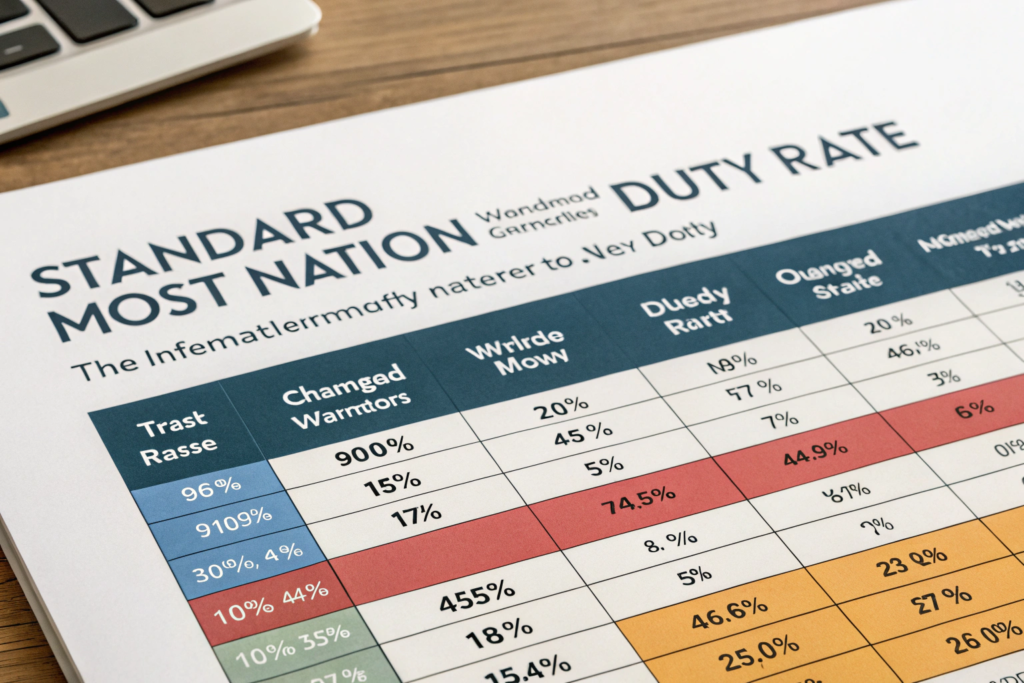
There is no single flat duty rate for clothing. The standard Most Favored Nation (MFN) duty rate for apparel typically ranges from 0% for some baby garments up to 32% for certain synthetic woven items. Cotton knitted shirts usually land around 16.5% to 20%, while wool suits can be charged at a flat rate per kilogram. On top of that, Section 301 tariffs in 2026 continue to add an additional 7.5% to 25% on many clothing categories originating from China.
When I train my new staff, I tell them to forget the word "clothing." It is a useless word for customs. We speak in fibers and constructions. The Harmonized Tariff Schedule of the United States (HTSUS) separates everything by chapter. Clothing is mostly in Chapters 61 and 62. Chapter 61 is for knitted or crocheted items. Chapter 62 is for woven items. The difference between a knit polo shirt and a woven button-down shirt is a completely different code and a different duty rate. You need to know the yarn. Is it cotton? Is it a cotton-polyester blend? The rule is that if the garment is a blend, you classify it based on the single fiber that predominates by weight. Get that wrong, and you have a misclassification penalty.
Then you hit the China layer. In 2026, the Section 301 investigation is still active on apparel imports. Most clothing from China does not escape the additional tariff. The current rate on many consumer-ready garments sits at an additional 7.5%, but some product lines remain at the 25% punitive rate if they fall under the specific tariff lines that were never granted an exclusion. We also watch the de minimis rule closely. In 2026, the US has tightened the loophole for e-commerce shipments. You can no longer split a bulk shipment into fifty small packages and expect them all to slip through duty-free. CBP’s automated targeting system now flags split shipments from the same shipper.
How Do You Read the HTSUS Code for Your Specific Garment?
You look at a legal document from your broker and see a number like 6204.62.8011. It might as well be a phone number from Mars. But if you learn to read it, you can catch a costly error before the entry is filed. The first four digits are the heading: 6204 is "Women’s or girls’ suits, ensembles, suit-type jackets, dresses, skirts… not knitted." The next two digits, 62, are the subheading for the material: "Of cotton." The final four digits break it down to the exact product.
We teach our clients to focus on the fiber at the six-digit level. That is the global standard. The US adds more numbers for its own statistical purposes. But if your factory sends you a shipment of "women’s cotton woven trousers" and your broker files it under a synthetic fiber code, the rate could be 28% instead of the correct 16.6%. The US Harmonized Tariff Schedule website lets you search these codes. We always recommend you cross-check the code we suggest against the official database. We even give our clients a visual guide: we cut a small piece of the fabric and do a burn test. Cotton burns clean. Polyester melts into a hard bead. It is a simple factory-floor test that confirms you are paying the right tax.
What Are the Exact Section 301 Tariff Rates for Apparel in 2026?
You might remember the tariff rollercoaster of 2019. In 2026, it is more stable but no less costly. The Biden administration largely kept the Section 301 tariffs in place, and the current administration has adjusted them through a statutory review. The tariff is not going away. It is now a permanent layer of cost for importing from China.
Most apparel items sit in List 4A, which is currently subject to a 7.5% additional duty. However, items on List 3 are still subject to the full 25%. Some protective medical apparel got exclusions, but standard fashion does not. We check every product code against the current USTR Section 301 exclusion list when we file your entry. If your product has an exclusion, we apply it aggressively and file the post-summary correction to reclaim any duties you overpaid. Last month, we found an active exclusion for a specific type of flame-resistant workwear for one of our clients. It saved them $12,000 on a single container. These exclusions are time-limited, so we also put a reminder on your calendar 30 days before they expire.
How Does GeeseCargo Use Binding Rulings to Lock in Your Duty Rate?
You are shipping a new hybrid jacket. The outside is a woven nylon shell, but the inside has a knitted fleece lining. Your factory says it is a woven jacket. Your gut says it could be classified as knit. If you pick the wrong heading, you could underpay duty, and a CBP audit two years from now will hit you with back taxes, interest, and a negligence penalty.
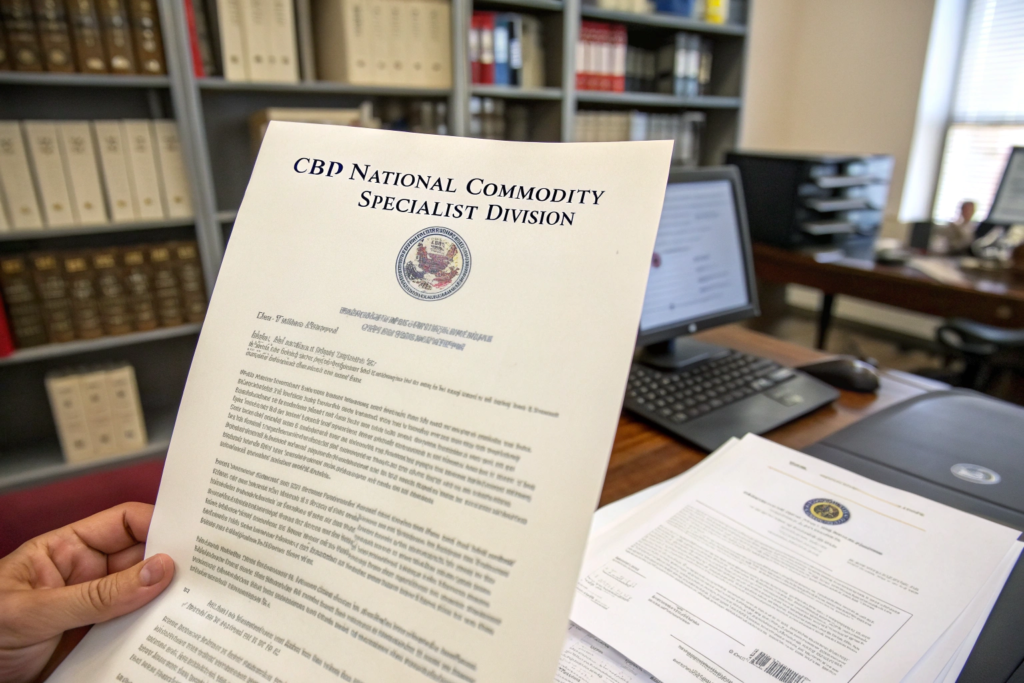
We do not gamble on complex classifications. We submit a physical sample and a detailed description to the CBP National Commodity Specialist Division and get a legally binding ruling. This letter legally binds every single customs officer at every US port. They cannot challenge the classification if we present that ruling letter. It turns a grey area into a black-and-white fixed cost for your business.
I remember a client named Ron, a brand owner who imported a travel vest with twelve pockets. It was made of cotton but had a lot of plastic zippers and nylon webbing. Was it a cotton vest? Or did the plastic features change the essential character? Three different brokers gave him three different codes. We asked him for a sample. We stripped the vest down and weighed the components. The cotton fabric was still the dominant material by weight. We sent the sample to CBP with a technical diagram and a detailed material breakdown. Four weeks later, we received the binding ruling confirming the cotton code. That piece of paper is stored in our digital file and attached to every entry we file for him. He can now sleep knowing his cost is locked.
The process takes time, but it is free to apply through the CBP Rulings Program. Many importers avoid it because the form looks bureaucratic. We handle the paperwork from start to finish. We write the legal justification using the General Rules of Interpretation (GRI). We argue why heading A applies and why heading B does not. The CBP specialist reviews the physical sample and our reasoning and issues a formal decision. If you ever get audited, you simply show the ruling letter and the audit is instantly resolved for that product. You cannot put a price on that certainty.
What Is the Process to Get a CBP Binding Ruling for Your Product?
You might think you need an expensive lawyer in Washington DC to do this. You do not. You need a detailed technical package and patience. The application is a written letter submitted electronically. You must include the full name and address of the importer, which in our DDP service is GeeseCargo acting as the Importer of Record.
We prepare a document that covers every legal test. We state the fiber content percentage, the weave pattern, the weight per square meter, and the component breakdown. We attach photos of the front, back, inside, and label. We also include the factory spec sheet. We then write the legal argument. We use the chapter notes and the Explanatory Notes to the Harmonized System. We mail the actual garment sample to the CBP laboratory if required. The whole process takes 30 to 60 days. Once we have the ruling letter number, we input it into your entry documentation in the Automated Commercial Environment (ACE) system. Every time the container hits the port, the system recognizes the ruling and automatically applies the correct rate. No human delay. No debate.
How Can an Incorrect Tariff Code Trigger a Costly Audit?
You tell your factory to use a generic code to save time. They clear a cotton sweater as a "textile article" with a blanket code. Three years later, you receive a CBP Form 28 Request for Information. They are looking at your last 36 months of entries. They find you paid 10% when you should have paid 16.5%. They now bill you for the 6.5% difference plus interest compounded quarterly.
An audit is a forensic investigation of your business. We prevent it by doing a self-audit before CBP does. When you sign up with us, we review your last 12 months of entry summaries. If we find a weak classification, we file a prior disclosure. This is a voluntary notification to CBP that you made an error. It limits your penalty. It shows good faith. It protects your import bond. We use the binding ruling process to correct the error going forward. The cost of a ruling is zero; the cost of an audit is potentially tens of thousands of dollars in back duties. We build your compliance file so that if a CBP auditor walks in, we can hand them a binder of binding rulings that answers every question about your classification logic.
How Can You Legally Reduce the Import Duty on Your Clothing Shipments?
You might be thinking the only way to pay less duty is to ask your factory to lie on the commercial invoice. That is a fast track to having your goods seized and your name put on a blacklist. Legal duty reduction exists, but it is not a secret loophole. It is about engineering the product and the supply chain exactly to the letter of the law.
You can legally reduce your duty burden by re-engineering the fiber blend, shifting the country of origin for certain production steps, or using specific tariff engineering techniques. We work with your design team and factory to adjust the product composition so it falls under a lower rate legally. We also use free trade agreements and the First Sale for Export rule to lower the dutiable value.
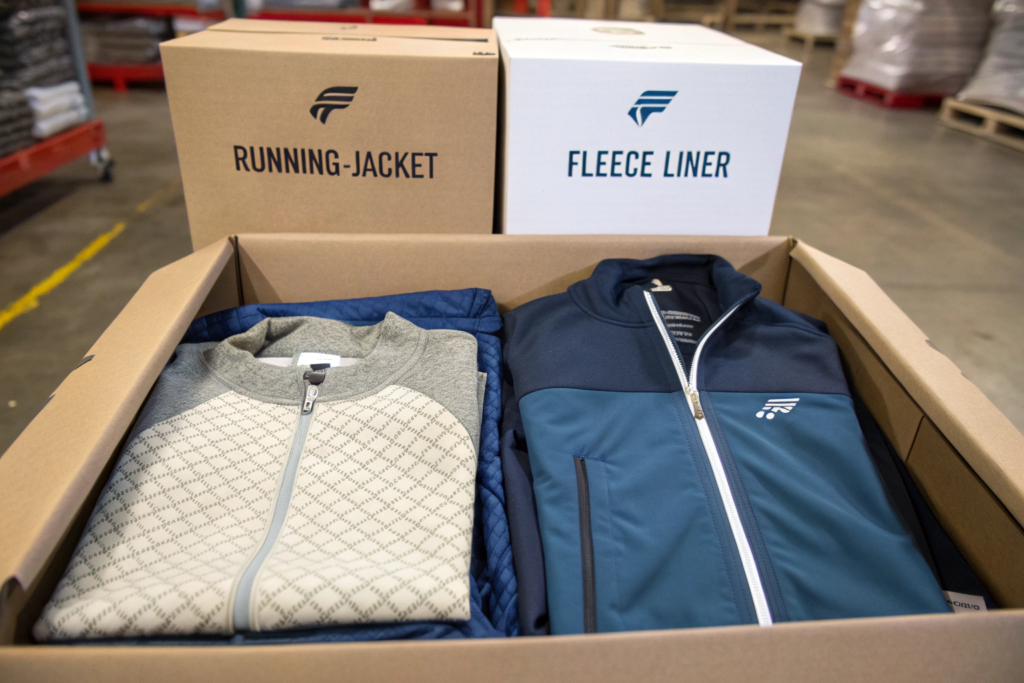
I worked with a sportswear brand that imported a running jacket. The outer shell was a woven polyester, taxed at 28%. The zip-out inner fleece liner was a knitted polyester, taxed at 32%. When they shipped the jacket with the liner zipped in, the entire garment was classified as a knitted jacket at the high rate. We suggested a small design change. We asked them to ship the outer shell and the inner fleece liner as separate pieces in the same carton. They were now two separate items. The shell was classified as a woven jacket. The liner was classified as an un-finished knit accessory. The overall duty bill dropped because the items were now assessed individually at their own rates, which were lower than the "composite good" rate. This is perfectly legal tariff engineering. The product function is the same. The box just has two items inside.
Another strategy we use is the First Sale Rule. If your supply chain involves an intermediary, such as a trading company, you might be paying duty on the inflated price you paid the trading company, rather than the original factory price. The First Sale rule lets you use the lower factory price as the transaction value, provided the sale is clearly documented as an arm’s length sale for export to the US. This requires rigorous documentation. We help structure the invoices correctly. The customs duty is calculated on the price paid for the goods when they were first sold for export to the United States. A lower declared value means a lower tax bill, legally. The savings here can cover our freight fees entirely.
How Does Tariff Engineering Change Your Product’s Duty Rate?
You add a small pocket to the waistband of a pair of shorts. That pocket is made of nylon mesh. The shorts are cotton. Does the nylon pocket change the essential character? No. But what if you make the entire waistband out of a visible nylon elastic band? The garment might now be considered a composite good with a different classification.
This is the art of tariff engineering. We sit down with your design team and look at the subheading notes. For example, in women’s blouses, a blouse with a full-front opening with buttons is classified differently than a pullover. If you add a functional button closure that runs the full length, you might shift from one tariff subheading to another with a lower rate. We also look at the concept of "essential character." If you make the garment’s visible surface from cotton but the lining from silk, the item is likely classified as cotton because the outer surface gives the garment its character. We advise you on the borderlines. We give you a checklist of features to tweak to legally land in a lower tariff bucket. The change adds no cost to production but saves a percentage on every unit for the life of the product.
Can You Use Free Trade Agreements to Avoid China Tariffs?
China does not have a free trade agreement with the US. So, if your goods are fully made in China, you must pay the China rate. But what if the fabric is cut and sewn in a country that does have an FTA, like a CAFTA-DR nation or a USMCA partner like Mexico?
This is a supply chain restructuring move. It is not quick, but for high-volume, long-running products, it is the ultimate solution. We have helped clients source fabric from China, ship it to a factory in Guatemala, and do the final cut-and-sew operation there. The product transforms. The origin shifts to Guatemala under the substantial transformation rule. The garment enters the US duty-free under the CAFTA-DR agreement. We handle the logistics of the raw material export from China and the finished goods import into the US. We verify the regional value content and maintain the origin certificates. It is a complex process, but it completely removes the China tariff problem and the Section 301 risk. It is not right for everyone, but it is a legitimate legal strategy we discuss with brands doing north of $2 million in annual import volume.
How Do We Handle Customs Bonds and Duty Payment for You?
You just want to pay the tax and get your goods released. But then the broker asks you what kind of bond you want. A single entry bond or a continuous bond? A cash deposit? They mention liquidated damages and sureties. It is a wall of jargon that feels like a trap designed to extract extra fees.
We eliminate this complexity by using our annual continuous customs bond and paying the duties directly to CBP on your behalf. As your Importer of Record on DDP shipments, we do not ask you to secure your own bond or open a customs account. We calculate the exact duty, pay it from our duty account within 10 days of entry, and invoice you the exact amount with no markup or hidden fee.
The system is designed for big importers who have their own legal teams. If you are a mid-sized brand, setting up your own continuous bond can be a headache. You need to provide financial statements to a surety company. You need to pay an annual premium. And worst of all, you need to maintain a customs account and ensure there is always enough cash in it to cover the duties when they automatically debit. If a duty payment fails, your future shipments get flagged and held.
We solve this by letting you piggyback on our infrastructure. We hold a very large continuous customs bond with a top-tier surety. Your shipment is covered under our bond. We calculate the duty using the binding ruling we already obtained. We pay it directly. You see a single line item on our freight invoice: "Duty and Tax." The amount matches the CBP entry summary exactly. You pay us, and we pay the government. You never have to wire money to a customs account or wonder if your payment cleared. This is standard in our DDP service. It turns a regulatory hurdle into a simple line item.
What Is the Difference Between Formal and Informal Entry for Clothing?
You might have heard you can bring in shipments under $2,500 as an "informal entry" and skip the bond. That is true, but it is a trap for clothing importers. Informal entry is for non-commercial, low-value shipments. But if you ship clothing regularly, even small batches, you are clearly a commercial entity. CBP can reclassify your informal entries as formal and demand back duties and penalties.
We file all clothing shipments as formal entries unless they are genuine non-sale samples. A formal entry requires a bond, a valid HTSUS code, and a full commercial invoice. It also allows us to claim preferential tariff treatment if we have a ruling or an FTA certificate. Informal entries are closed immediately and cannot be protested or corrected. If you overpaid duty on an informal entry, you cannot get it back. With a formal entry, we can file a Post-Entry Amendment (PEA) and get you a refund if a tariff exclusion is granted retroactively. Formal entry gives you legal rights and protections that informal entry does not. We always use formal entry for your inventory.
How Does Duty Drawback Work on Returned or Re-Exported Garments?
You import 1,000 dresses. 200 are defective and must be sent back to the factory in China. You already paid 16.5% duty and the 7.5% Section 301 tax on those 200 pieces. That is money you might assume is gone forever. It is not.
We file a duty drawback claim for you. If you export the damaged goods back to China within a set timeframe, or if you destroy them under CBP supervision, you can claim back 99% of the duties paid. We document the original entry and the export bill of lading to prove the goods left the country. We fill out the CBP Form 7553 and track the refund. Many small brands never file for drawback because the paperwork is complex, and their forwarder does not offer the service. We include it as part of our after-sales support. It is your money. We help you get it back.
Conclusion
Importing clothing from China in 2026 is a game of precision, not guesswork. The duties are not hidden; they are written down in the HTSUS. The exclusions are not secret; they are published in the Federal Register. The rules are not unknowable; they are testable with a binding ruling. You just need a partner who will treat your tariff spend like a fixed cost to be engineered, not a surprise bill to be feared.
My team at GeeseCargo spends every day in the HTSUS database, on the CBP ruling portal, and on calls with USTR policy analysts. We do this so you do not have to. We turn the chaotic world of trade policy into a simple, predictable line item on your landed cost spreadsheet. Whether it is a classic cotton t-shirt facing 16.5% plus 7.5% Section 301, or a complex hybrid jacket that needs a binding ruling, we have a process for it.
You should not be the one waking up at 3 AM worried about a CBP audit or a tariff hike. You should be designing your next collection. Let us carry the regulatory weight. If you want a full duty projection on your next product line, reach out to me through our website at GeeseCargo.com. Send me your product specs, and I will send you back a locked-in duty calculation and a logistics plan. Let’s get your goods into the country cleanly and cost-effectively.