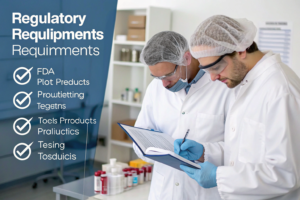
When one of our clients had a $75,000 skincare shipment detained by FDA for improper ingredient listing, I realized how many importers underestimate US cosmetic regulations. As founder of GeeseCargo with extensive FDA experience, I've learned that cosmetic imports face unique regulatory challenges that blend consumer safety, labeling accuracy, and manufacturing compliance. Understanding these requirements isn't just about avoiding penalties—it's essential for successful market entry.
The FDA regulates cosmetic imports under the Federal Food, Drug, and Cosmetic Act and Fair Packaging and Labeling Act. Key requirements include facility registration, ingredient labeling, safety substantiation, and voluntary product listing. While FDA approval isn't required before marketing, compliance is mandatory and violations can lead to detention, refusal, or seizure of products.
Cosmetics represent one of the most regulated import categories despite not requiring pre-market approval. The regulatory framework focuses on safety, labeling accuracy, and manufacturing integrity rather than pre-clearance, placing significant responsibility on importers.
What Are the FDA Registration and Facility Requirements?
While cosmetic facility registration is voluntary, several related requirements impact import operations and compliance.
How Does Voluntary Facility Registration Work?
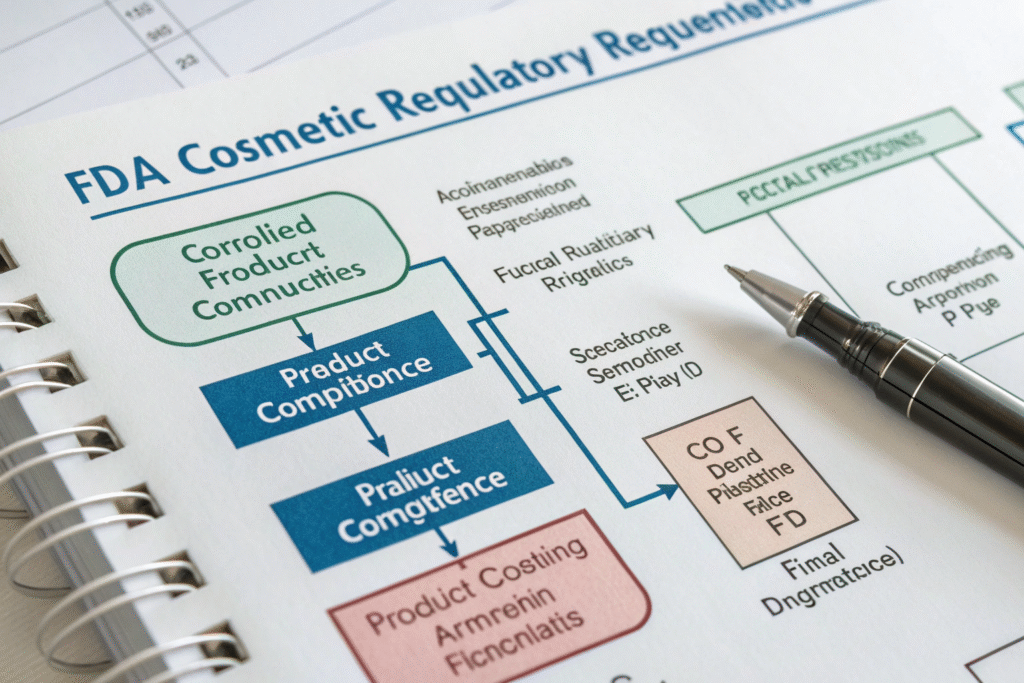
Cosmetic facility registration through FDA's Voluntary Cosmetic Registration Program (VCRP) provides important benefits. Although not mandatory, registration facilitates FDA communication during recalls, inspections, or safety issues and demonstrates commitment to compliance.
Foreign facility identification requires US agent designation. Non-US manufacturing facilities must identify a US agent for FDA communications, creating important coordination requirements for importers.
Product formulation filing through VCRP supports safety monitoring. While voluntary, submitting product ingredient statements helps FDA monitor safety patterns and provides manufacturers with ingredient feedback.
What Are the Implications of the Modernization of Cosmetics Regulation Act (MoCRA)?
Mandatory facility registration becomes effective December 2023. MoCRA transforms previously voluntary registration into a mandatory requirement for all cosmetic facilities marketing products in the US.
Safety substantiation requirements now mandate documented evidence. Companies must maintain records demonstrating adequate safety substantiation for each finished product.
Serious adverse event reporting becomes mandatory. Manufacturers must report serious adverse events to FDA within 15 business days and maintain related records for six years.
What Labeling Requirements Must Cosmetics Meet?
Labeling compliance represents the most common reason for cosmetic detention, with specific requirements for content, placement, and language.
What Information Must Appear on Cosmetic Labels?
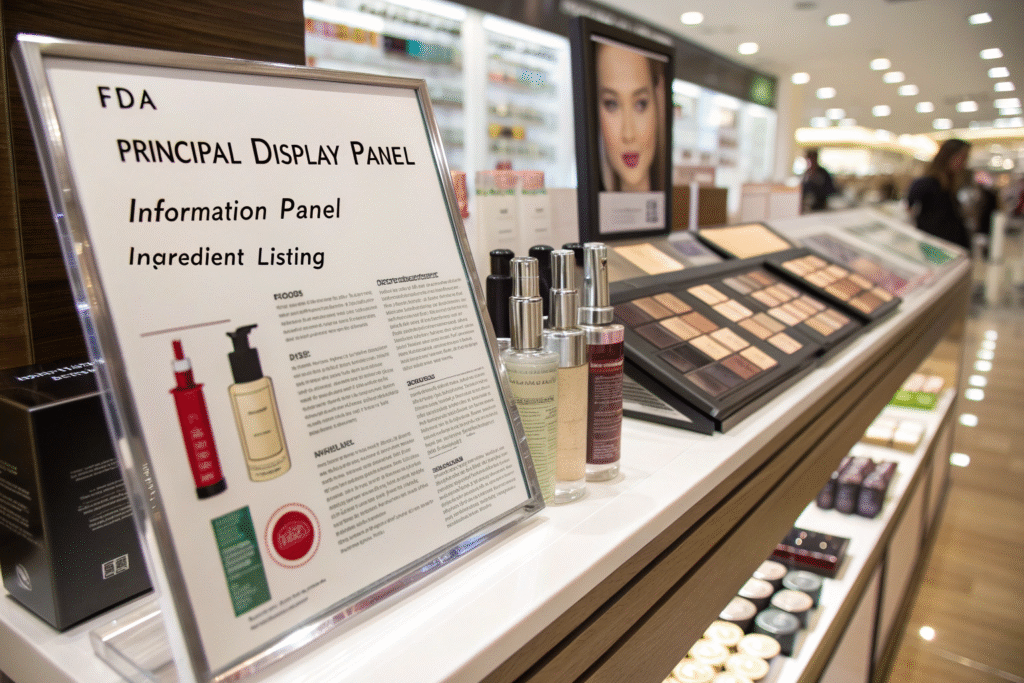
Identity declaration and net quantity of contents on principal display panel. The product name and amount must appear on the front label in specific type sizes based on package size.
Ingredient declaration in descending order of predominance. All ingredients must be listed using International Nomenclature of Cosmetic Ingredients (INCI) names, with exceptions for trade secret ingredients.
Name and place of business identification enables consumer communication. The label must include the manufacturer, packer, or distributor's name and address for consumer correspondence.
What Are the Specific Formatting and Language Requirements?
English language requirement applies to all mandatory label information. While additional languages may appear, all required information must be in English for US sales.
Type size requirements ensure readability. Net quantity statements must meet minimum type size requirements based on package area, with specific calculations for different container shapes.
Contrast and placement requirements maintain visibility. Label information must appear in a conspicuous place and contrast sufficiently with background for easy reading.
What Safety and Substantiation Requirements Apply?
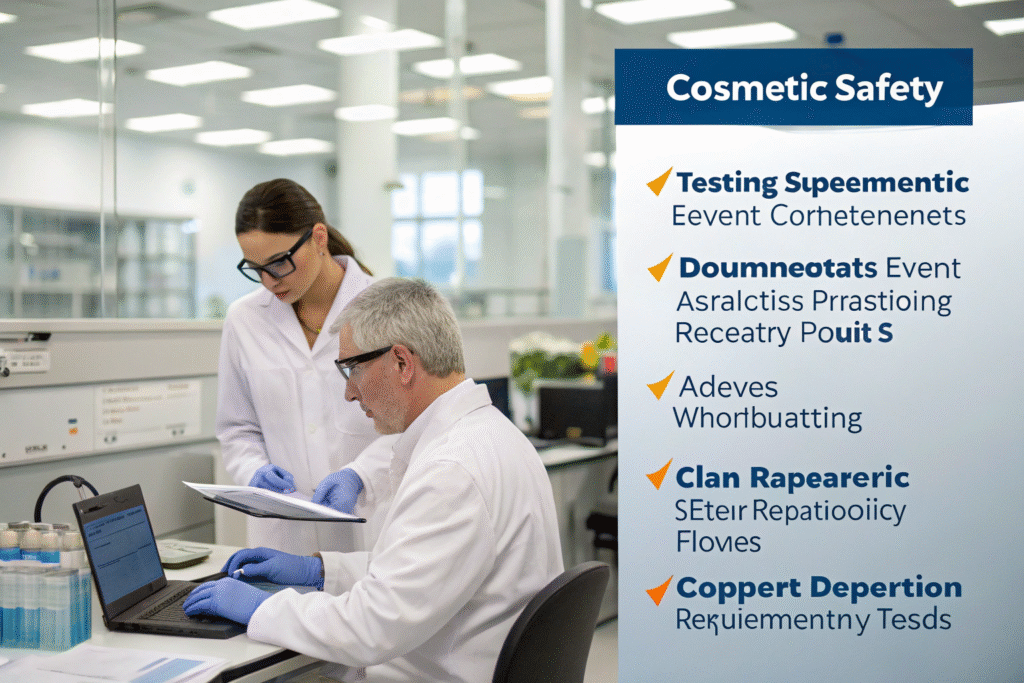
Cosmetic safety remains the manufacturer's responsibility, with specific substantiation and documentation requirements.
What Constitutes Adequate Safety Substantiation?
Toxicological risk assessment considers ingredient safety and product use. Manufacturers must evaluate each ingredient's safety profile, concentration, and exposure patterns under normal use conditions.
Clinical testing may be necessary for certain product types. Leave-on products, products used near eyes, and products for sensitive skin may require specific safety testing beyond ingredient review.
Usage instructions and warnings mitigate identified risks. Where specific risks exist, appropriate warnings and usage instructions must accompany products to ensure safe use.
How Should Adverse Event Documentation Be Maintained?
Serious adverse event files must be maintained for six years. Records of all serious adverse events, including consumer complaints and medical reports, require systematic documentation and retention.
Safety substantiation records support regulatory compliance. Documentation demonstrating adequate safety assessment must be maintained and available for FDA inspection upon request.
Manufacturing process documentation ensures consistent quality. Batch records, quality control testing, and manufacturing specifications help demonstrate consistent safety and quality.
What Are the Ingredient Restrictions and Prohibitions?
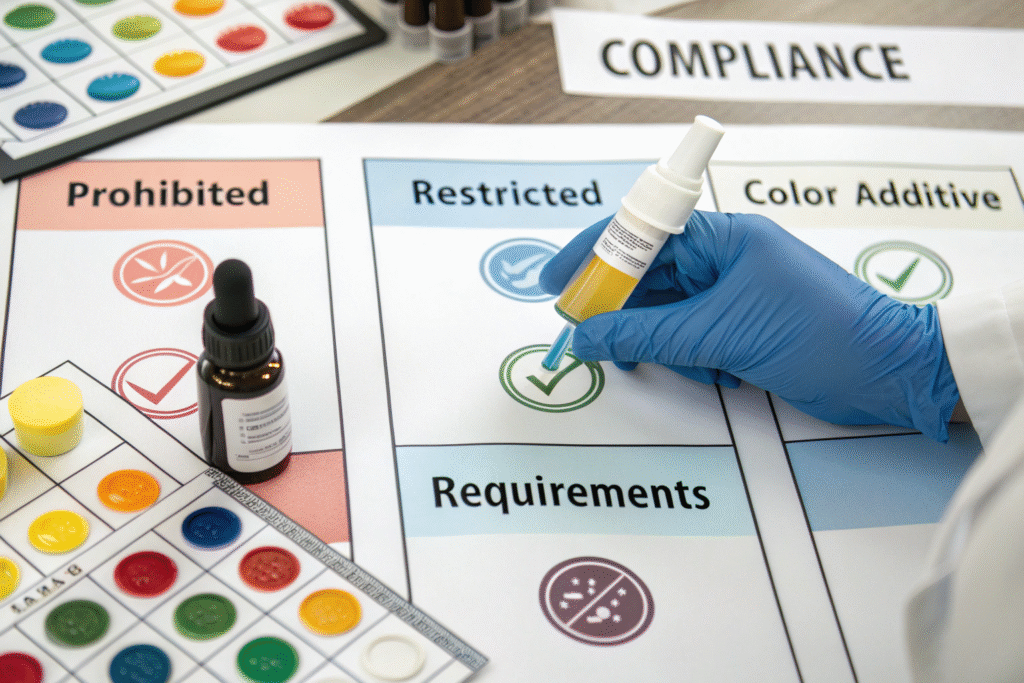
Certain ingredients face restrictions or prohibitions in cosmetic products, with ongoing regulatory updates.
Which Ingredients Are Prohibited or Restricted in Cosmetics?
Banned ingredients list includes specific substances with safety concerns. Mercury compounds, vinyl chloride, certain halogenated salicylanilides, and other specific ingredients are prohibited in cosmetic formulations.
Restricted ingredients have specific use limitations. Ingredients like hexachlorophene, sunscreen actives in non-sunscreen products, and certain colors have specific concentration or use restrictions.
Color additive requirements mandate FDA certification for most colors. Unlike other ingredients, most color additives require batch certification by FDA before use in cosmetics.
How Do International Formulations Require Adjustment for US Markets?
EU-banned ingredients often differ from US restrictions. Products formulated for European markets may contain ingredients prohibited in the US, requiring reformulation for American distribution.
Ingredient nomenclature must use INCI names. While other markets may use different naming conventions, US labels must primarily use International Nomenclature of Cosmetic Ingredients names.
Concentration limitations vary between markets. Ingredients permitted in other countries may have different concentration limits in the US, requiring formulation adjustments.
How Does the Import Process Work for Cosmetics?
Cosmetic imports face specific examination, documentation, and release procedures through FDA and Customs.

What Documentation Supports Cosmetic Import Clearance?
FDA prior notice submission is required before arrival. Cosmetic shipments require prior notice submission through FDA's Prior Notice System Interface at least 4 hours before air/rail arrival or 8 hours before ocean arrival.
Customs entry filing includes specific cosmetic data elements. The customs entry must accurately classify cosmetics under appropriate HTS codes and include required FDA information.
Supporting documentation should be readily available. Ingredient statements, safety substantiation, and manufacturing information should be available for FDA review if examination occurs.
What Happens During FDA Examination and Detention?
Physical examination may occur based on risk assessment. FDA may examine shipments based on manufacturer history, product type, or random selection for compliance verification.
Sample collection for laboratory analysis checks for violations. FDA may collect samples to verify ingredient compliance, check for contaminants, or validate label claims.
Detention notices specify violations and response requirements. When FDA detains products, they issue a notice detailing violations and timeframes for responding or requesting re-export.
What Are the Consequences of Non-Compliance?
Regulatory violations can lead to significant business impacts beyond simple product detention.

What Operational Impacts Result from Compliance Failures?
Import detention stops distribution until resolution. Products detained for violations cannot enter US commerce until violations are corrected or products are re-exported or destroyed.
Refusal of admission prevents US market entry. When violations cannot be corrected, FDA may refuse admission, requiring destruction or re-export at importer expense.
Seizure and condemnation remove products from commerce. For serious or repeated violations, FDA may seek seizure through federal court, resulting in product destruction.
What Financial and Business Impacts Occur?
Destruction costs and lost product value represent direct costs. The value of destroyed products plus destruction expenses creates immediate financial impact.
Supply chain disruptions affect customer relationships. Stockouts resulting from detained products damage customer relationships and sales performance.
Reputational damage from regulatory actions affects brand perception. FDA import alerts, warning letters, or public notices can significantly damage brand reputation and consumer trust.
How Can Importers Ensure Ongoing Compliance?
Systematic compliance management prevents problems and facilitates rapid resolution when issues arise.

What Proactive Compliance Strategies Work Best?
Pre-import compliance review identifies potential issues. Having formulations, labels, and documentation reviewed before shipment prevents most detention scenarios.
Supplier qualification and monitoring ensures upstream compliance. Evaluating manufacturers' compliance capabilities and conducting regular audits maintains supply chain integrity.
Regulatory monitoring tracks evolving requirements. Cosmetics regulation continues evolving, particularly under MoCRA, requiring ongoing attention to new requirements.
What Documentation and Process Controls Support Compliance?
Technical documentation files organize compliance evidence. Maintaining complete files with formulations, safety substantiation, and manufacturing information supports rapid response to FDA inquiries.
Label approval processes prevent packaging errors. Implementing systematic label review against current requirements prevents the most common compliance failure.
Import process controls ensure proper filing and examination readiness. Standardized procedures for prior notice, customs entry, and examination response maintain consistent compliance.
Conclusion
US cosmetic regulations create a comprehensive framework that prioritizes consumer safety while placing significant responsibility on importers and manufacturers. The most successful companies treat regulatory compliance as an integral business function rather than a legal afterthought, building systems that ensure ongoing compliance while maintaining market agility.
At GeeseCargo, we've helped cosmetic importers achieve 95%+ first-time release rates through systematic compliance programs that address both FDA requirements and operational realities. The key is recognizing that cosmetic compliance requires continuous attention to formulation, labeling, documentation, and regulatory updates rather than one-time implementation.
Begin your compliance journey by conducting a thorough assessment of your current products and processes against FDA requirements, then implement systematic controls that prevent common compliance failures. Remember that in cosmetic imports, prevention is dramatically more efficient than correction—the modest investment in compliance infrastructure typically returns many times over in avoided detentions, destroyed products, and reputational damage.