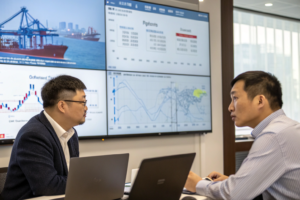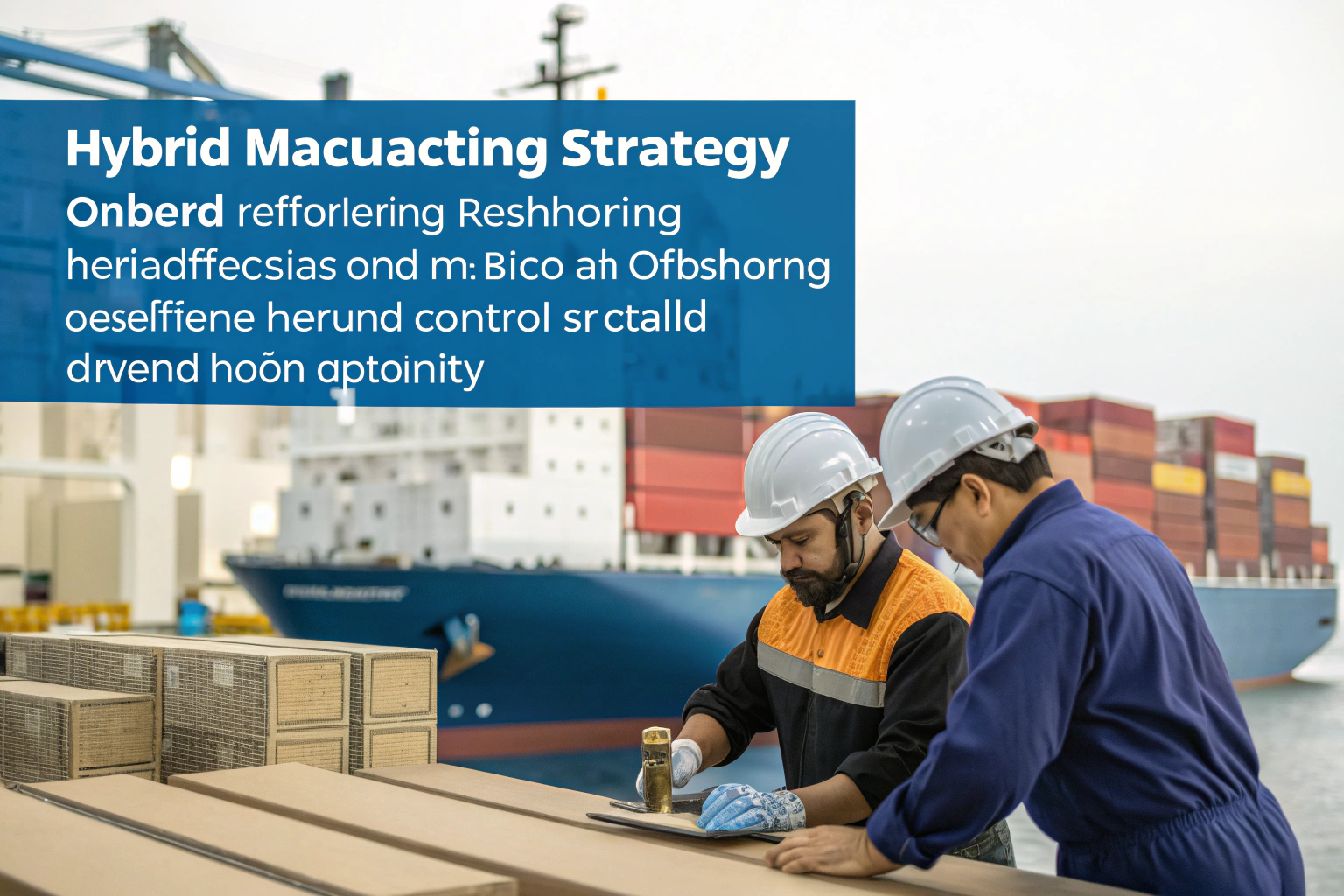
When one of our manufacturing clients moved 30% of their production from China back to Mexico last year, they discovered the decision wasn't about choosing one over the other—but finding the right balance. As founder of GeeseCargo with extensive experience in both models, I've witnessed how the optimal manufacturing strategy involves nuanced decisions that go far beyond simple labor cost comparisons.
Reshoring offers supply chain resilience, quality control, and faster time-to-market but typically increases production costs by 15-40%. Offshoring provides significant labor savings and manufacturing scalability but introduces geopolitical risks, longer lead times, and quality management challenges. Most successful companies now employ hybrid approaches that balance both strategies.
The decision between reshoring and offshoring has evolved from a binary choice to a strategic portfolio approach. Companies are increasingly distributing manufacturing across multiple regions to optimize for different product characteristics, risk profiles, and market requirements.
What Are the Concrete Advantages of Reshoring?
Reshoring brings production closer to end markets, offering specific benefits that extend beyond simple proximity.
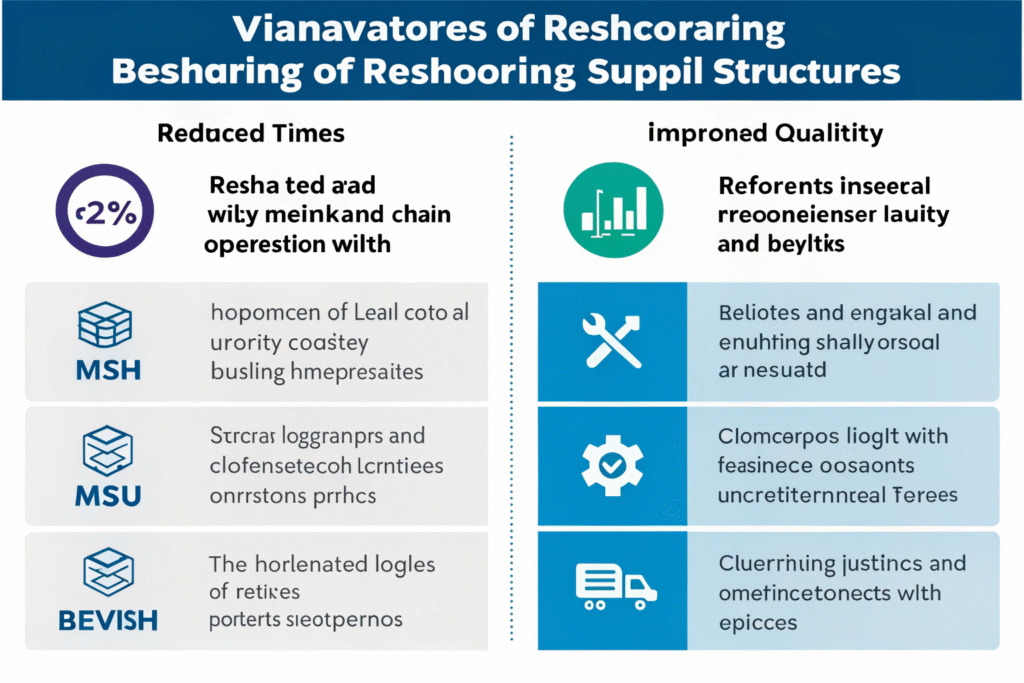
How Does Reshoring Enhance Supply Chain Control?
Reduced lead times from weeks to days enable responsive operations. Where offshore manufacturing typically requires 30-60 day order cycles, reshoring can reduce this to 5-15 days, dramatically decreasing inventory requirements and improving cash flow.
Quality control and compliance oversight become significantly easier. Physical proximity allows frequent facility visits, real-time quality monitoring, and immediate issue resolution that's challenging with 12-hour time differences and language barriers.
Intellectual property protection improves with domestic legal frameworks. Manufacturing within countries with robust IP protection reduces the risk of design theft and unauthorized production that plagues some offshore manufacturing relationships.
What Operational Benefits Does Reshoring Provide?
Simplified logistics reduce coordination complexity and hidden costs. Domestic shipping involves fewer customs procedures, documentation requirements, and intermediary handoffs than international logistics.
Sustainability advantages emerge from reduced transportation emissions. Local manufacturing typically generates 20-40% lower carbon emissions from transportation, supporting corporate sustainability goals and potentially qualifying for environmental certifications.
Customization and small batch production become economically feasible. The flexibility to produce smaller quantities with faster turnaround enables better response to market trends and reduced obsolescence risk.
What Significant Savings Does Offshoring Continue to Offer?
Despite rising costs, offshore manufacturing still provides compelling economic advantages for many product categories.

Where Do Labor and Production Cost Advantages Persist?
Labor cost differentials remain substantial despite wage inflation. Manufacturing wages in China, Vietnam, and other Asian countries are typically 70-85% lower than in the United States or Western Europe, creating significant savings for labor-intensive products.
Specialized manufacturing clusters offer unparalleled expertise and efficiency. Regions like China's Pearl River Delta for electronics or Bangladesh for textiles provide concentrated expertise, supplier networks, and infrastructure that reduce production costs and improve quality.
Economies of scale in established manufacturing hubs drive down component costs. The concentration of suppliers and manufacturers in offshore hubs creates competitive pricing for components and materials that domestic manufacturers struggle to match.
What Strategic Advantages Does Offshoring Provide?
Manufacturing scalability accommodates rapid growth more easily. Established offshore manufacturers typically have larger facilities and more flexible labor pools that can quickly scale production up or down based on demand fluctuations.
Access to specialized capabilities unavailable domestically. Certain manufacturing processes, particularly in electronics and precision engineering, have largely migrated offshore, making domestic options limited or nonexistent.
Global market access can be enhanced through regional manufacturing. Producing in Asia can facilitate market entry into other Asian countries through trade agreements and regional expertise.
What Are the Hidden Costs and Risks of Each Approach?
Both strategies involve significant hidden costs that companies often underestimate during initial decision-making.
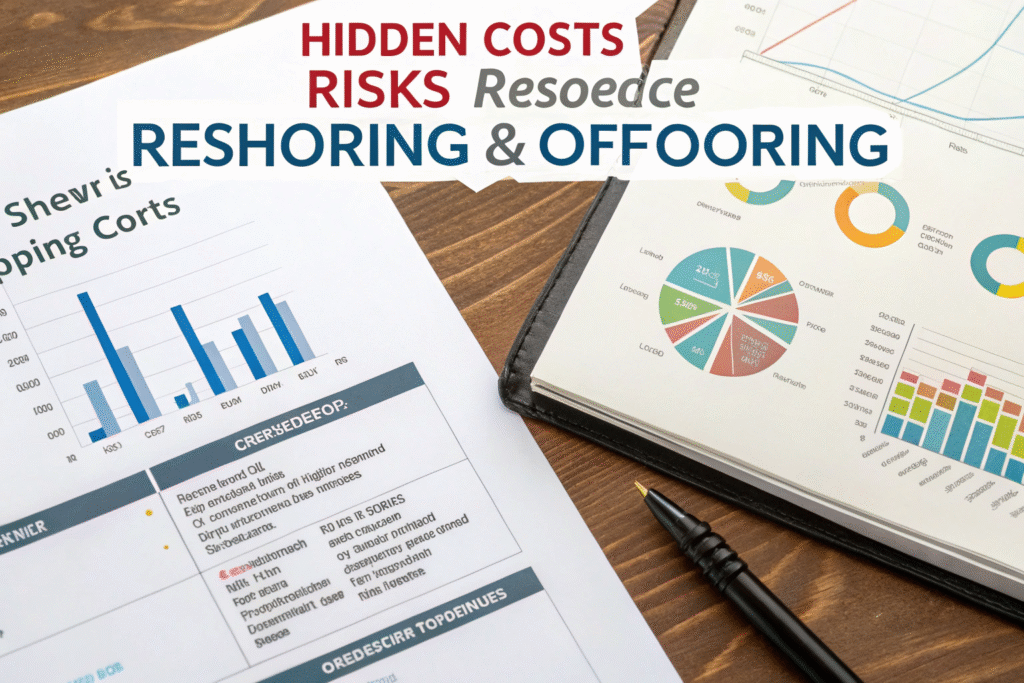
What Hidden Costs Diminish Offshoring Savings?
Supply chain disruption risks create significant financial exposure. Geopolitical tensions, natural disasters, and pandemic-related shutdowns can paralyze offshore operations, with single incidents often costing millions in lost sales and expedited shipping.
Inventory carrying costs offset some labor savings. The longer cash-to-cash cycles and higher safety stock requirements of offshore manufacturing tie up working capital that could otherwise be deployed more productively.
Quality failure costs can erase initial price advantages. The distance and communication challenges of offshore manufacturing often lead to higher defect rates, returns, and brand damage that aren't reflected in initial cost calculations.
What Unexpected Challenges Arise with Reshoring?
Workforce availability constraints limit growth and increase costs. Many regions lack sufficient skilled manufacturing labor, leading to wage inflation, training expenses, and recruitment challenges that increase total costs.
Regulatory compliance costs can be surprisingly high. Domestic manufacturing often involves stricter environmental, safety, and labor regulations than some offshore locations, requiring significant compliance investments.
Infrastructure and utility costs vary significantly by region. Locations with attractive labor markets may have higher energy costs, transportation expenses, or tax structures that reduce the overall cost advantage.
How Should Companies Evaluate Their Specific Situation?
A systematic evaluation framework helps companies make data-driven decisions rather than emotional or reactive choices.

What Product Characteristics Favor Each Approach?
Labor-intensive products with stable designs typically favor offshoring. Items requiring significant hand assembly, detailed craftsmanship, or repetitive processes benefit most from lower labor costs.
High-value, low-volume products often justify reshoring. Products with high value density, rapid innovation cycles, or customization requirements typically benefit from proximity and control.
Bulky or heavy products with high shipping costs may favor reshoring. When transportation represents a significant percentage of total cost, local manufacturing often becomes economically attractive.
How Do Business Priorities Influence the Decision?
Time-to-market requirements increasingly favor reshoring. Companies in fast-moving consumer goods, fashion, or technology often prioritize speed and flexibility over absolute cost minimization.
Risk management priorities are shifting calculations toward reshoring. Companies with past supply chain disruptions, quality issues, or IP concerns increasingly value control and resilience over marginal cost savings.
Brand positioning and sustainability goals influence manufacturing location. Companies marketing "locally made" or emphasizing environmental responsibility may choose reshoring despite higher costs for brand alignment.
What Hybrid Approaches Deliver the Best of Both Worlds?
The most successful companies are moving beyond either/or decisions to integrated global manufacturing strategies.
How Can Companies Implement Effective Hybrid Strategies?
Product segmentation based on characteristics and priorities. Companies can offshore price-sensitive, stable products while reshoring innovative, time-sensitive, or high-value items.
Dual sourcing for critical components provides supply chain resilience. Maintaining production capacity for key components in both domestic and offshore locations protects against regional disruptions.
Phased approaches gradually shift manufacturing based on performance. Starting with limited reshoring as a pilot allows companies to validate costs and capabilities before larger commitments.
What Operational Models Support Hybrid Manufacturing?
Regional hubs serve adjacent markets with optimized cost structures. Manufacturing in Mexico for North America, Eastern Europe for the EU, or Vietnam for Asia provides balance between cost and proximity.
Postponement strategies perform final assembly locally after offshore component manufacturing. This approach captures offshore cost advantages while maintaining flexibility and responsiveness for final configuration.
Variable cost structures through contract manufacturing provide flexibility. Using contract manufacturers in different regions allows companies to scale production up or down without fixed asset commitments.
What Are the Implementation Challenges for Each Approach?
Both strategies face significant implementation hurdles that require careful planning and management.

What Hurdles Complicate Reshoring Implementation?
Supply chain development requires significant time and investment. While labor might be available locally, component suppliers and sub-assemblers may need to be developed or attracted to the region.
Workforce training and development represent substantial upfront investment. The skills gap in many developed countries requires extensive training programs before manufacturing quality meets requirements.
Cost structure alignment with customer expectations challenges pricing. Companies often struggle to communicate why reshored products command premium pricing after years of offshore cost structures.
What Ongoing Management Challenges Does Offshoring Present?
Cultural and communication barriers create operational friction. Language differences, business practice variations, and communication styles continue to challenge offshore operations despite years of experience.
Geopolitical volatility requires constant monitoring and adaptation. Trade wars, political tensions, and regulatory changes demand flexible strategies and contingency planning for offshore operations.
Quality consistency remains an ongoing battle. Despite improvements, maintaining consistent quality across cultures, distances, and time zones requires robust systems and continuous oversight.
Conclusion
The reshoring versus offshoring decision has evolved from a simple cost calculation to a complex strategic choice balancing cost, risk, responsiveness, and resilience. The most successful companies are those that recognize this isn't a binary decision but rather a portfolio approach that allocates different products and processes to optimal locations based on their specific characteristics.
At GeeseCargo, we've helped clients develop manufacturing strategies that typically involve 20-40% reshoring of critical products while maintaining offshore production for price-sensitive items. The most effective approaches begin with thorough analysis of total cost of ownership rather than simple piece-price comparisons, then build graduated implementation plans that manage risk while capturing opportunities.
Begin your evaluation by conducting a comprehensive analysis of your product portfolio, then develop a segmented manufacturing strategy that matches products to optimal locations. Remember that in today's volatile global environment, manufacturing flexibility and resilience are increasingly valuable competitive advantages that often justify premium costs for strategic production.