Shipping to the United Kingdom post-Brexit has fundamentally transformed from a relatively seamless intra-EU movement to a complex international trade operation with distinct regulatory, customs, and logistical requirements. As a freight forwarder who has managed thousands of shipments both pre- and post-Brexit, I've witnessed firsthand how these changes have created new complexities that businesses must navigate to maintain efficient UK supply chains. The differences extend far beyond simple customs declarations to impact everything from product compliance to VAT treatment and border procedures.
The key differences in shipping to the UK post-Brexit include mandatory customs declarations for all goods, new UKCA marking requirements replacing CE marking for many products, changed VAT procedures including postponed VAT accounting, border controls with physical checks, and distinct rules of origin requirements. These changes have added administrative burden, increased transit times, and created new compliance risks that businesses must systematically address.
Understanding these differences is crucial not just for compliance but for maintaining cost-effective and reliable supply chains to the UK market. Let's examine the specific changes that have redefined UK shipping since Brexit took full effect.
What Are the Fundamental Customs and Border Changes?
The most significant post-Brexit shift is the treatment of UK-EU trade as international rather than internal market movements.
How Have Customs Declaration Requirements Changed?
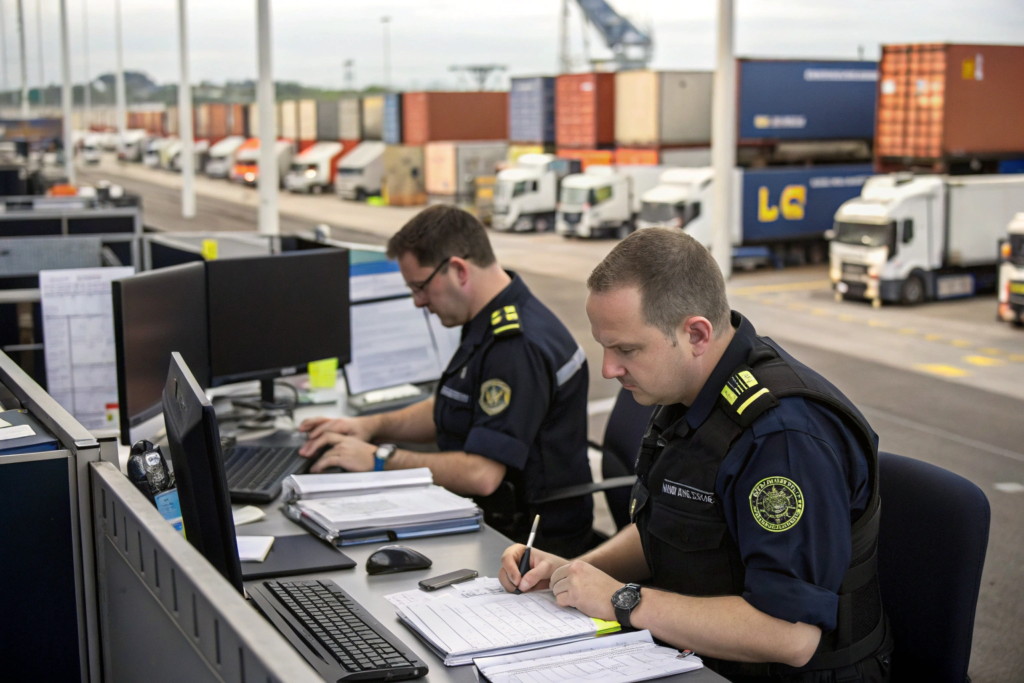
Mandatory declarations for all goods regardless of value or origin. Unlike intra-EU trade where no declarations were required, all goods entering the UK now require full customs declarations, including those from the EU. The UK's Customs Declaration Service (CDS) has replaced the previous CHIEF system for most declarations.
Three border models apply based on goods type. The UK has implemented: 1) The standard model (full customs controls), 2) The temporary simplified model for some EU goods (delayed declarations), and 3) The trusted trader model (simplified procedures for authorized operators).
What About Border Control Points and Physical Checks?
Border Control Posts (BCPs) conduct physical and documentary checks. Goods subject to sanitary and phytosanitary (SPS) controls (food, plants, animals) undergo checks at designated BCPs, with the new Border Target Operating Model phasing in increasingly stringent controls.
Pre-notification requirements for certain commodities. Products of animal origin, animal by-products, high-risk food and feed, and plants/plant products require advance notification through the UK's Import of Products, Animals, Food and Feed System (IPAFFS) before arrival.
How Have Product Compliance and Standards Changed?
The UK has begun diverging from EU product regulations, creating parallel compliance requirements.
What About UKCA Marking Versus CE Marking?
UKCA (UK Conformity Assessed) marking replaces CE marking for most goods. While CE marking is still accepted for many products until December 31, 2024, UKCA marking is now required for goods placed on the Great Britain market (England, Scotland, Wales) under most UK product safety regulations.
Separate technical documentation and conformity assessment requirements apply. Products may need separate UK technical files, UK-based responsible persons, and in some cases, conformity assessments by UK-approved bodies rather than EU-notified bodies.
How Do Northern Ireland Requirements Differ?
The Northern Ireland Protocol creates unique compliance requirements. Goods placed on the Northern Ireland market generally still require CE marking and EU compliance, while UKCA marking applies for Great Britain, creating dual compliance needs for businesses serving both markets.
UKNI marking for certain products in Northern Ireland. When using UK-based conformity assessment bodies for products requiring third-party assessment, a UKNI mark combined with CE marking is required for Northern Ireland, though this combination cannot be used for the EU market.
What VAT and Tax Changes Impact Shipping Costs?
VAT treatment for imports has undergone significant changes affecting cash flow and administrative processes.

How Has Import VAT Treatment Changed?
Postponed VAT accounting provides cash flow benefits. UK VAT-registered businesses can account for import VAT on their VAT returns rather than paying at the border, improving cash flow though requiring careful accounting to ensure correct reporting.
End of Low Value Consignment Relief increases costs for small shipments. Previously, goods valued under £15 were exempt from VAT; now all commercial goods are subject to VAT regardless of value, though simplified mechanisms exist for goods under £135.
What About Duty Treatment and Rules of Origin?
UK Global Tariff applies to non-preferential trade. Goods from countries without trade agreements face the UK's own tariff schedule, which differs in some rates and classifications from the EU's Common External Tariff.
Rules of origin requirements for preferential treatment. To qualify for zero tariffs under the UK-EU Trade and Cooperation Agreement or other UK trade deals, products must meet specific rules of origin with proper documentation (origin declarations or certificates).
How Have Logistics and Supply Chain Operations Changed?
Operational aspects of UK shipping have been fundamentally reshaped by border formalities and regulatory divergence.

What Routing and Transit Time Impacts Exist?
Increased transit times due to border formalities. Crossing the UK border now adds 24-72 hours for most shipments compared to pre-Brexit movements, with occasional longer delays during system implementations or peak periods.
Changed routing patterns to avoid bottlenecks. Some shippers now use alternative routes (direct to UK ports rather than via EU land bridges) or different port pairs to minimize border delays, though often at increased transportation costs.
How Have Documentation and Administration Requirements Grown?
Significantly increased paperwork for each shipment. A standard EU-UK shipment now requires: commercial invoice, packing list, customs declaration, safety data sheets (if applicable), certificates of origin (if claiming preference), and potentially additional product-specific documentation.
New systems and processes require staff training. Businesses must train personnel on: UK customs systems, commodity code classifications specific to UK tariffs, origin declaration procedures, and new regulatory compliance requirements.
What Are the Ongoing Changes and Future Developments?
The post-Brexit landscape continues evolving as the UK implements new systems and potentially diverges further from EU regulations.

What Implementation Timelines Should You Monitor?
Border Target Operating Model (BTOM) phased implementation. The UK is implementing enhanced border controls in phases: January 2024 (health certification), April 2024 (documentary and risk-based checks), October 2024 (safety and security declarations for EU goods).
UKCA marking transition deadlines vary by sector. While general goods have until December 2024, some sectors (medical devices, construction products, marine equipment) have different transition timelines that businesses must track specific to their products.
How Should Businesses Prepare for Future Changes?
Regulatory divergence monitoring identifies new requirements. As the UK potentially develops its own regulations diverging from EU standards, businesses must monitor developments in their specific sectors to maintain compliance.
Supply chain redesign considerations for long-term efficiency. Some businesses are reconsidering their UK distribution models, potentially establishing UK distribution centers, local assembly operations, or revised inventory strategies to manage border complexities.
Conclusion
Shipping to the UK post-Brexit involves fundamentally different procedures across customs, product compliance, VAT treatment, and logistics operations compared to pre-Brexit EU trade. The changes have increased administrative burdens, added costs, extended transit times, and created new compliance risks that require systematic management. Businesses maintaining efficient UK supply chains must adapt their processes, train their teams, and potentially redesign their distribution strategies to navigate this new trade environment successfully.
At GeeseCargo, we've helped clients adapt to post-Brexit requirements, typically reducing border delays by 40-60% and compliance issues by 70-85% compared to businesses attempting to navigate these changes independently. Our experience shows that companies implementing systematic post-Brexit adaptations typically maintain their UK market competitiveness, while those slow to adapt face increasing costs and service deterioration. Remember that the post-Brexit landscape continues evolving—ongoing monitoring and adaptation will be essential for maintaining efficient UK supply chains as new systems and requirements are implemented.