
When one of our clients faced $125,000 in penalties for improper classification and undervaluation, they discovered that ignorance of import regulations is never a valid defense. As founder of GeeseCargo with extensive customs compliance experience, I’ve learned that understanding your legal responsibilities isn’t just about avoiding penalties—it’s about building a sustainable, compliant import business that can scale without regulatory obstacles.
Importers have extensive legal responsibilities including proper product classification, accurate valuation, correct origin declaration, adherence to partner government agency requirements, maintaining complete records, and exercising reasonable care. Violations can result in substantial penalties, shipment seizures, loss of import privileges, and even criminal prosecution in severe cases.
The concept of "informed compliance" means Customs expects importers to know and follow all applicable laws and regulations. Your responsibilities extend far beyond simply paying duties to encompass comprehensive regulatory adherence across multiple government agencies.
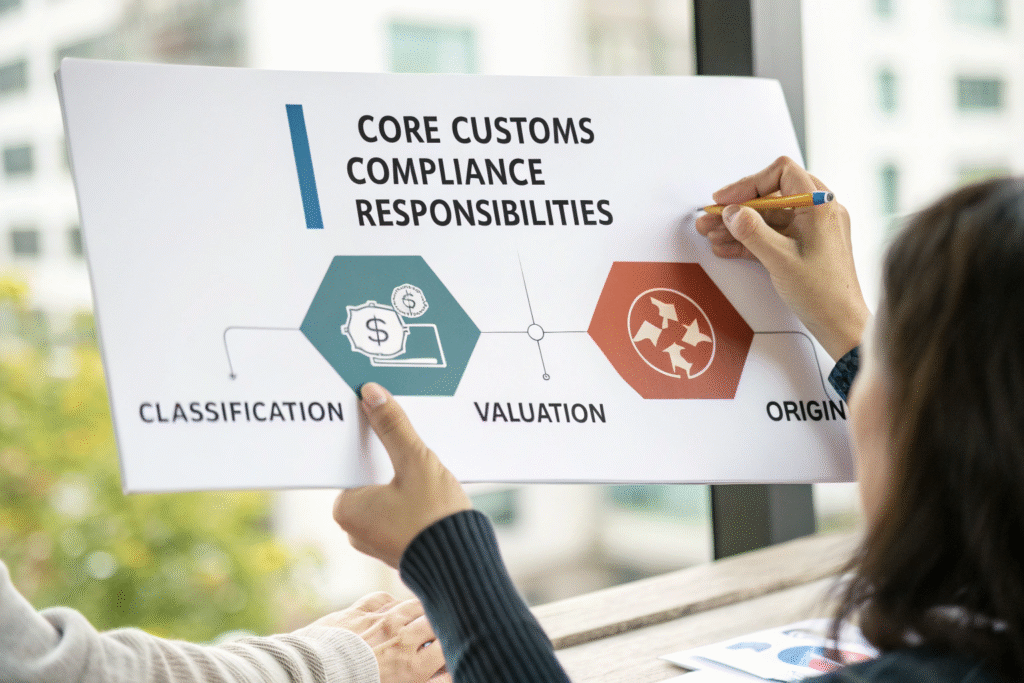
What Are the Core Customs Compliance Responsibilities?
The fundamental legal obligations every importer must fulfill regardless of product type or volume.
How Does the "Reasonable Care" Standard Apply?
The reasonable care doctrine requires importers to exercise due diligence in their import operations. This means taking proactive steps to ensure compliance rather than waiting for Customs to identify problems.
Due diligence includes establishing internal compliance procedures and training. Companies must develop processes for classification, valuation, and other compliance areas, plus train staff to implement them consistently.
Documentation of compliance efforts demonstrates reasonable care. Maintaining records of classification decisions, valuation methodologies, and compliance reviews shows Customs you’re taking your responsibilities seriously.
What Are the Specific Tariff Act Requirements?
Proper classification using the Harmonized Tariff System is mandatory. Importers must correctly classify products using the current HTSUS, which determines duty rates, eligibility for trade programs, and statistical tracking.
Accurate valuation according to transaction value principles is required. The price actually paid or payable for goods must be declared, with proper adjustments for assists, royalties, and subsequent proceeds.
Correct country of origin determination affects duty rates and admissibility. Importers must accurately declare where goods were substantially transformed, which impacts duty rates under various trade agreements.
What Recordkeeping and Documentation Obligations Exist?
Importers must maintain comprehensive records and provide accurate documentation to Customs and other government agencies.
What Documents Must Be Maintained and for How Long?
Commercial documentation includes invoices, contracts, and payment records. These documents support valuation declarations and must be maintained for five years from date of entry.
Customs entry documentation encompasses all filing documents and communications. Entry summaries, classification decisions, correspondence with Customs, and broker communications require five-year retention.
Product documentation supports classification and admissibility decisions. Technical specifications, manufacturing information, and laboratory reports help demonstrate reasonable care in compliance determinations.
How Should Recordkeeping Systems Be Structured?
Organized, accessible records facilitate audit responses and compliance verification. Records should be organized by entry, readily available for inspection, and include all supporting documentation.
Electronic recordkeeping is acceptable but must meet specific requirements. Digital records must be legible, accessible, and contain all information from original documents without alteration.
Systematic retention policies ensure compliance with legal requirements. Formal procedures for document retention, destruction, and retrieval prevent accidental destruction of required records.
What Are the Partner Government Agency Responsibilities?
Multiple federal agencies regulate specific products, creating additional compliance layers beyond basic Customs requirements.

Which Agencies Have the Most Significant Import Requirements?
FDA regulates food, drugs, medical devices, and cosmetics. Importers must ensure products meet FDA standards, provide prior notice for food shipments, and maintain proper labeling and safety compliance.
USDA oversees agricultural products, plants, and animal materials. Depending on the product, importers may need permits, phytosanitary certificates, or specific treatment documentation.
CPSC enforces safety standards for consumer products. Importers must ensure products meet applicable safety standards, maintain testing documentation, and report safety issues promptly.
How Do PGA Requirements Intersect with Customs Obligations?
Single window filing through ACE integrates PGA documentation. Importers must submit required PGA information electronically through Customs’ ACE system for coordinated release decisions.
PGA holds prevent release until requirements are met. Customs will not release goods subject to PGA regulation until the relevant agency provides clearance based on submitted documentation.
Separate enforcement actions can occur beyond Customs penalties. PGAs can pursue independent enforcement including seizures, injunctions, and civil penalties for regulatory violations.
What Financial Responsibilities Do Importers Bear?
Importers assume significant financial obligations that extend far beyond simple duty payments.

What Are the Duty and Tax Payment Requirements?
Timely payment of all applicable duties, taxes, and fees is mandatory. Importers must pay calculated duties within specified timeframes, typically 10 days from entry summary filing.
Anti-dumping and countervailing duties require special attention. These additional duties apply to specific products from certain countries and can substantially increase import costs.
Other taxes and fees may apply depending on product and state. Harbor maintenance fees, merchandise processing fees, and various state taxes create additional financial obligations.
What Bonding and Security Requirements Exist?
Continuous bonds secure overall import compliance. Most commercial importers must maintain continuous bonds that guarantee payment of duties, taxes, and potential penalties.
Single transaction bonds serve specific entries. For infrequent imports or special circumstances, single transaction bonds may be used instead of continuous bonds.
Bond sufficiency must be maintained as import volume changes. Importers must ensure bond amounts adequately cover potential liabilities as their import volume and value changes.
What Are the Consequences of Compliance Failures?
Understanding potential penalties helps importers appreciate the importance of robust compliance programs.
What Monetary Penalties Might Importers Face?
Substantial violations can trigger penalties up to the domestic value of the goods. For fraud, gross negligence, or negligence cases, penalties can reach the full value of the imported merchandise.
Liquidated damages claims can be made against import bonds. When import requirements aren’t met, Customs can make claims against the import bond for financial damages.
Prior disclosure may mitigate penalties for voluntarily disclosed violations. Self-reporting violations before Customs investigation can significantly reduce potential penalties.
What Operational Consequences Can Occur?
Shipment seizures and forfeitures remove goods from commerce. Non-compliant or prohibited merchandise may be seized, with redemption requiring payment of penalties and meeting compliance requirements.
Increased scrutiny and examinations disrupt supply chains. Companies with compliance issues often face more frequent examinations, detailed reviews, and slower processing.
Loss of import privileges effectively ends importing capability. In severe cases, Customs can revoke import privileges, preventing companies from conducting import operations.
How Can Importers Build Effective Compliance Programs?
Proactive compliance management transforms legal obligations from burdens into competitive advantages.

What Elements Constitute an Effective Compliance Program?
Risk assessment identifies vulnerability areas. Systematic evaluation of products, countries, and transactions helps focus compliance resources where risks are highest.
Written procedures ensure consistent compliance processes. Documented classification methodologies, valuation procedures, and recordkeeping processes create consistency and demonstrate reasonable care.
Training programs build internal compliance capability. Regular training for staff involved in importing ensures understanding of responsibilities and procedures.
How Should Compliance Be Monitored and Maintained?
Regular internal audits identify compliance gaps before Customs does. Systematic reviews of import transactions, documentation, and processes catch errors proactively.
Continuous improvement adapts to regulatory changes. Compliance programs should evolve based on audit findings, regulatory updates, and business changes.
Third-party expertise supplements internal capabilities. Using customs brokers, consultants, and attorneys with specialized knowledge enhances compliance without requiring full internal expertise.
Conclusion
Your legal responsibilities as an importer are extensive but manageable with proper knowledge, processes, and diligence. The most successful importers treat compliance as an integral business function rather than a regulatory burden, recognizing that proper import management contributes to operational efficiency and competitive advantage.
At GeeseCargo, we’ve helped clients transform their compliance approaches, reducing penalties by 85% while improving supply chain reliability. The key is moving from reactive compliance to proactive management, where understanding and fulfilling your responsibilities becomes part of your business culture rather than just a legal requirement.
Begin your compliance journey by conducting a thorough assessment of your current practices against legal requirements, then develop a phased improvement plan that addresses your highest-risk areas first. Remember that in importing, compliance isn’t a cost center—it’s an essential investment in your business’s sustainability and reputation.