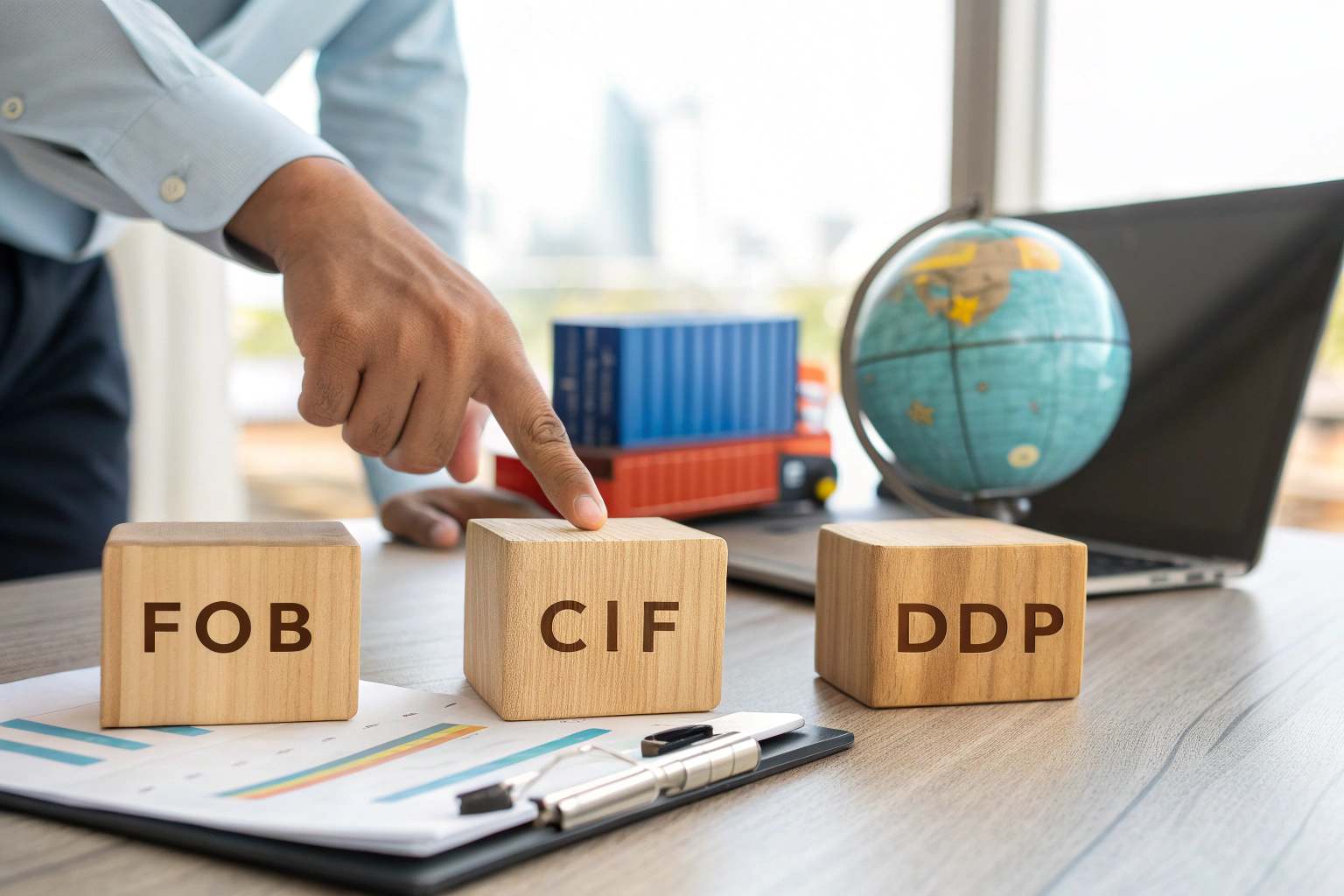
You negotiated a great unit price with a supplier on Alibaba. You are ready to pay. Then the supplier sends the proforma invoice with a term you have never seen before: "FOB Shenzhen." You Google it and fall into a rabbit hole of acronyms. EXW. FCA. CFR. DAT. The more you read, the more confused you get. You just want to know one thing: "How much will it cost to get this product to my door, and who is responsible if something goes wrong?"
Incoterms, short for International Commercial Terms, are eleven standardized three-letter rules published by the International Chamber of Commerce. They define exactly who pays for each leg of the shipping journey and, critically, where the risk of loss or damage transfers from the seller to the buyer. At GeeseCargo, we help first-time and experienced importers choose between the three most common terms for China-to-USA shipments: FOB, CIF, and DDP. We explain each term in plain English, show you the real cost difference with your actual shipment data, and then execute the logistics so the term you choose works exactly as intended.
You do not need to memorize all eleven Incoterms. You need to understand the three that matter for your business. The wrong choice can cost you thousands in hidden fees or leave you legally responsible for a damaged shipment that you thought was the supplier’s problem. Let me walk you through exactly what these terms mean, how they change your risk and your cost, and how we help you pick the right one for every shipment.
What Exactly Are Incoterms and Why Do They Matter to You?
You think the price you negotiated with the supplier is the price you pay. Then the supplier’s forwarder sends you an invoice for "local charges" at the Chinese port. You have no idea what these are. You ask the supplier, and they say, "These are your costs under FOB." You feel blindsided. You did not budget for this.
Incoterms are a contract between you and the seller about who pays for what and who bears the risk at each stage of the shipment. They prevent exactly this kind of surprise. The term defines three critical things: where the goods are delivered by the seller, who pays for each transportation segment, and where the risk of loss transfers. Without an Incoterm on your contract, you have no legal clarity on these points. With the right Incoterm, every cost and every responsibility is pre-defined and enforceable.
Imagine you are buying a product from a factory in Guangzhou. The factory is responsible for making the product and packing it. You are responsible for getting it to your warehouse in Chicago. But where exactly does the factory’s responsibility end and yours begin? At the factory door? At the Chinese port? On the ship? At the US port? At your warehouse door? Each of these handover points is a different Incoterm, and the choice determines thousands of dollars of freight cost and the point at which you need insurance.
The International Chamber of Commerce updates the Incoterms every ten years. The current version is Incoterms 2020. The eleven terms are divided into two groups: seven terms for any mode of transport, and four terms specifically for sea and inland waterway transport. The terms you will encounter most frequently as a US importer are FOB, CIF, and DDP. FOB and CIF are marine-only terms. DDP is a multimodal term. Each one places the handover point at a different location. I want to explain each of these three in detail because they are the ones we help our clients navigate every single day. The other terms, like EXW and FCA, exist on the edges of the negotiation, but for China-to-USA container shipping, FOB, CIF, and DDP cover the vast majority of transactions.

Where Do Incoterms Come From, and Who Enforces Them?
You think Incoterms are a law passed by the government. You worry that if the supplier breaks the term, you need to sue them in a Chinese court under a Chinese law you do not understand.
Incoterms are not a law. They are a set of contractual standards published by the International Chamber of Commerce (ICC). They become legally binding only when you and the supplier both agree to them in the sales contract. The contract states: "This sale is governed by Incoterms 2020, FOB Shenzhen." This clause incorporates the ICC’s standard definition of FOB into your contract. If a dispute arises, an arbitrator or a court will refer to the ICC’s official text to interpret what FOB meant at the time of the contract. The Incoterms are globally recognized and enforceable. You do not need to understand Chinese contract law. You just need to reference the ICC standard correctly in your purchase agreement. We advise our clients on the exact wording to use with suppliers to ensure the Incoterm is legally incorporated.
What Do the Three Letters Actually Stand For?
You see FOB and you think it is a random code. You cannot remember what the letters mean, so you cannot remember the concept. The acronyms are abbreviations of the English phrases that describe the core obligation.
FOB stands for Free On Board. It means the seller is free of obligation once the goods are on board the vessel. CIF stands for Cost, Insurance, and Freight. It means the seller pays the cost of the goods, the insurance, and the freight to the destination port. DDP stands for Delivered Duty Paid. It means the seller delivers the goods to the buyer’s premises with all duties paid. The letter tells you the basic structure. "F" terms mean the main carriage is unpaid by the seller. "C" terms mean the main carriage is paid by the seller but risk transfers earlier. "D" terms mean the seller delivers all the way to the named destination. Understanding these three families of terms makes the eleven individual terms much easier to parse.
How Does FOB Work, and When Is It the Right Choice?
Your supplier quoted you "FOB Shanghai, $5.00 per unit." You said yes because it was cheaper than the DDP quote they also offered. Now the goods are ready, and the supplier tells you they need your forwarder’s details. You have no forwarder. You scramble to find one. The supplier’s designated forwarder offers to handle everything, but the price is high and you have no control.
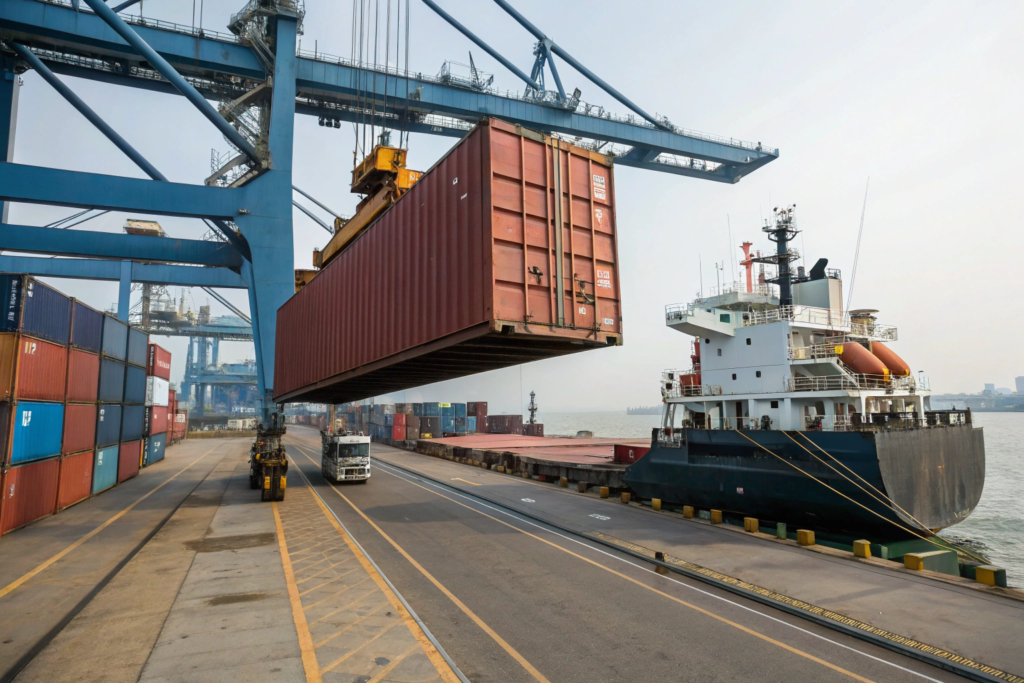
Under FOB, the seller is responsible for getting the goods to the named Chinese port and loading them onto the vessel you designate. The seller handles the Chinese export clearance. The moment the goods cross the ship’s rail at the port, the risk transfers to you. From that point, you pay the ocean freight, the insurance, the US customs clearance, the duties, and the destination delivery. FOB is the right choice if you want to control the ocean freight and customs brokerage by using your own forwarder, like GeeseCargo, to get better rates and more transparency.
FOB is the most common Incoterm for experienced importers. It gives you control over the shipping because you nominate the forwarder. You negotiate the ocean freight rate directly with us, not through the supplier’s markup. You choose the sailing schedule and the carrier. You control the customs clearance and the delivery. The supplier’s job is done once the container is on the ship. This clean handover is why importers who ship regularly almost always prefer FOB.
However, FOB comes with responsibilities. You must be ready to arrange the freight before the goods are ready. You must have a freight forwarder who can coordinate the pickup, the booking, and the documentation. You must understand that the risk transfers at the ship’s rail. If the container falls off the ship during loading, it is your loss, not the supplier’s. You need cargo insurance from the moment of loading. FOB also means you are responsible for all destination charges: the terminal handling, the customs exam fees, the duty, and the trucking. You need a forwarder who quotes these transparently. At GeeseCargo, we provide FOB-to-door quotes that bundle all these costs into a single number. You see the full picture before you commit to the FOB purchase.
What Are the Hidden Costs of FOB That First-Time Importers Miss?
You look at the FOB unit price and think, "This is a great deal." You budget an estimated $2,000 for freight. The final cost is $4,500. You missed the origin terminal handling charge, the documentation fee, the customs bond fee, the ISF filing fee, the destination terminal handling, the chassis fee, and the delivery appointment fee.
We provide an FOB cost breakdown that lists every charge from the port of loading to your door. Our FOB-to-door quote includes the ocean freight, the BAF and CAF surcharges, the origin handling, the export documentation, the ISF filing, the US customs clearance, the continuous bond usage, the duty and tax (if you choose DDP service), the destination terminal handling, and the trucking. We do not quote the ocean freight in isolation and then surprise you with the mandatory accessorials. The true cost of FOB shipping is the ocean freight plus approximately ten other line items. We show you all of them upfront. This transparency allows you to accurately compare the FOB supplier price plus our freight cost against a DDP price from the supplier. The comparison is often eye-opening. The supplier’s DDP markup is frequently much higher than our transparent FOB-to-door cost.
How Does the Risk Transfer Point in FOB Affect Your Insurance?
You assume the supplier has insurance that covers the goods until they reach you. Under FOB, the supplier’s responsibility ends at the ship’s rail. If the container is damaged during loading, or falls overboard, or is lost in a ship fire, the supplier is not liable. You own the risk from the moment the goods are on the vessel.
We explain this risk transfer clearly and recommend cargo insurance coverage starting from the FOB loading point. Our marine cargo insurance policy can be structured to attach at the moment the goods are loaded onto the vessel at the Chinese port. This covers the ocean transit, the destination handling, and the final delivery. The premium is a small fraction of the cargo value. For a $20,000 shipment, the insurance might cost $80. That $80 protects you against a total loss that the supplier is legally not responsible for. We never let a first-time importer ship FOB without understanding this risk. You sign a waiver acknowledging the risk if you decline insurance. Most clients take the insurance once they understand the gap between the FOB risk transfer and their expectation of supplier responsibility.
How Does CIF Work, and What Are Its Pitfalls?
Your supplier offers you a "CIF Los Angeles" price. It seems perfect. The price includes the product, the freight to Los Angeles, and the insurance. You do not have to arrange anything. The supplier handles the shipping. You just wait for the goods to arrive. What could go wrong?
Under CIF, the seller pays the cost of the goods, the insurance, and the ocean freight to the named US port. However, the risk transfers to you at the same point as FOB: when the goods are loaded onto the vessel in China. The seller arranges the shipping, but you bear the risk of loss during the voyage. When the goods arrive at Los Angeles, you are responsible for the US customs clearance, the duties, and the delivery from the port to your door. CIF is convenient because the seller handles the ocean freight, but it is often more expensive and gives you less control over the carrier and the schedule.
CIF is a seductive option for first-time importers because it feels like a package deal. The supplier says, "I will handle everything, just pay me this price." The psychological relief of not having to arrange freight is powerful. But this convenience comes with three significant costs.
First, the supplier almost always marks up the freight. They get a quote from their forwarder for $3,000, and they charge you $4,500. The difference is pure profit for them, hidden inside the CIF price. You cannot see the freight line item to know the markup. Second, the supplier chooses the carrier. They will pick the cheapest, slowest option to maximize their margin. Your goods might go on a 28-day consolidation service instead of a 14-day direct vessel because the slower service is cheaper for them. You have no say in the schedule. Third, when the goods arrive, you still need a customs broker and a trucker. The CIF term ends at the destination port. You must arrange the clearance and delivery yourself, often while the goods are already sitting at the port accruing storage charges. You are in a mad scramble to find a broker and a trucker for a shipment you thought was fully managed.
Why Is the Insurance in CIF Often Inadequate?
The "I" in CIF stands for Insurance. You assume this means your goods are fully covered. But the ICC rules only require the seller to provide minimum cover insurance, which is typically 110% of the invoice value with limited perils.
The minimum insurance required under CIF is what is called "Institute Cargo Clauses (C)." This is the narrowest coverage. It covers total losses and specific major casualties like fire, sinking, and collision. It does not cover partial losses, theft, water damage from container sweat, or rough handling damage. If your cartons arrive crushed and the goods inside are broken, a Clause C policy will likely not pay. You need an "Institute Cargo Clauses (A)" all-risk policy for comprehensive coverage. Under CIF, if you want better insurance, you must purchase it yourself. But you might not even know the vessel name or the sailing date because the supplier controls the shipping. We recommend that importers using CIF purchase their own supplemental all-risk cargo insurance directly through us. We can insure the shipment from the FOB loading point, filling the coverage gap left by the supplier’s minimal CIF insurance.
How Do We Help You Transition from CIF to a More Controlled Model?
You used CIF on your first shipment. It worked, but it was expensive, slow, and the customs clearance at the port was a panic. You want more control on your second shipment, but you are not sure how to approach the supplier.
We help you transition from CIF to FOB with a simple supplier communication. We draft an email for you to send to the supplier. It says: "For our next order, we prefer to use FOB terms. Please quote the FOB price. Our nominated forwarder, GeeseCargo, will handle the shipping." We provide our contact details. The supplier responds with the FOB price, which is lower than the CIF price because it excludes their freight markup. We then quote you the freight from FOB to your door. The combined FOB product cost plus our transparent freight cost is almost always lower than the supplier’s CIF price. You save money and gain control. This is a permanent improvement to your supply chain economics.
How Does DDP Work, and Why Is It the Simplest Option for Beginners?
You have read about FOB and CIF, and both sound like they require you to manage parts of the logistics you do not understand. You just want to pay one price and have the goods arrive at your warehouse. You do not want to think about customs bonds, ISF filings, or port truckers. You want the simplest possible transaction.
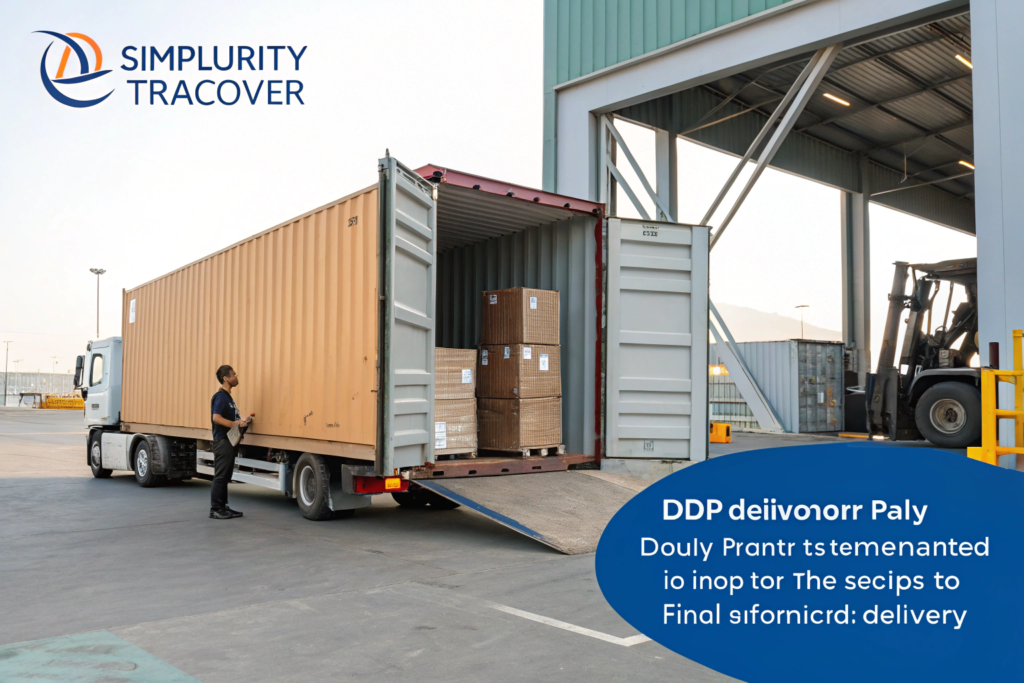
Under DDP, the seller assumes all responsibility and cost for delivering the goods to your named destination. The seller handles the export clearance, the ocean freight, the import customs clearance, the duty payment, and the final delivery. You receive the goods at your door as if you bought them domestically. DDP is the maximum obligation for the seller and the minimum stress for you. At GeeseCargo, we act as the importer of record on DDP shipments and handle every step on your behalf, delivering a door-to-door service with a single all-inclusive price.
DDP is the ultimate hand-holding Incoterm for a first-time importer. You pay a single price. You receive the goods at your address. Everything in between is handled by the seller and their logistics partners. The seller pays the freight, the insurance, the customs clearance, and the duties. You do not file a single customs form. You do not hire a trucker. You do not even see a customs bill. The transaction is as simple as buying inventory from a US-based wholesaler.
However, there is a critical distinction between a supplier-offered DDP and a GeeseCargo-arranged DDP. When the supplier offers DDP, they control the entire logistics chain. They mark up the freight, they choose the carrier, they declare the customs value, and they often under-declare it to save on duties, which puts you at legal risk as the beneficial owner of the goods. When we arrange the DDP, we are the transparent logistics partner. We act as the Importer of Record using our own customs bond. We declare the true transaction value. We pay the correct duties. We deliver to your door. You pay us a single transparent invoice. The supplier does not touch the logistics. This model gives you the simplicity of DDP without the opacity and risk of a supplier-controlled DDP. We recommend this model for first-time importers and for experienced importers who simply do not want to manage the logistics function.
What Is the Difference Between Supplier DDP and Forwarder DDP?
You see "DDP" on two different quotes. One is from the supplier. One is from us. They are both called DDP, but they are legally and practically different. The supplier DDP means the supplier is the importer of record into the USA. The forwarder DDP means we are the importer of record.
Supplier DDP is a service where the supplier uses their own forwarder and customs broker to import the goods into the US. The supplier, or their agent, is listed as the Importer of Record on the CBP entry. You are simply the receiver. This arrangement works, but you have no visibility into the customs entry, no control over the declared value, and no access to the customs records if you are audited. If the supplier under-declares the value, you are the one who will be questioned by CBP, because the goods are destined for your address. Our forwarder DDP is different. We are a licensed US customs broker. We are the IOR. We declare your goods correctly. We provide you with the CBP entry summary for your records. You have full transparency and full compliance. You also have a US-based partner to call if there is a customs issue. The price might be slightly higher than a supplier DDP quote, but the legal protection and peace of mind are worth far more.
How Does Our DDP Service Handle the Import Duty?
You worry that the DDP price does not really include the duty, or that the duty amount is an estimate that will be adjusted upward later. You have heard stories of DDP shipments where the forwarder sends a surprise duty bill weeks after delivery.
Our DDP duty is fixed and included in the quote. Before we quote, we classify your product under the correct HTSUS code. We look up the exact duty rate, including any Section 301 tariffs. We calculate the duty on your declared transaction value. We include this exact duty amount in our door-to-door price. We do not estimate. We do not adjust the duty bill after delivery unless the declared value changes on your end. You pay the full DDP price before the goods ship. We pay CBP the duty when we file the entry. The transaction is closed. There is no follow-up bill. This fixed-duty guarantee is a core part of our DDP service promise. You budget the landed cost with certainty.
How Does GeeseCargo Help You Choose the Right Incoterm for Your Situation?
You have read about FOB, CIF, and DDP. You understand the differences in theory. But you still do not know which one to pick for your specific order. Your order size, your supplier relationship, your budget, and your appetite for logistics involvement all matter. You need a recommendation based on your reality.
We guide you to the right Incoterm through a simple decision framework based on three questions. Do you want to control the shipping and save money, or do you want to pay more for convenience? Do you have a trusted freight forwarder already, or are you still building your logistics team? Are you comfortable with US customs procedures, or do you want them completely handled for you? Based on your answers, we recommend FOB, CIF, or DDP and then execute the logistics to make that term work for you.
The conversation usually goes something like this. I ask the client: "On a scale of one to ten, how involved do you want to be in the shipping process? Ten is you want to control every detail. One is you want to pay one price and never think about it again." If the answer is eight or above, we recommend FOB with our transparent freight management. If the answer is three or below, we recommend our forwarder-managed DDP. If the client has a pre-existing CIF quote from a supplier and wants to compare, we show them the FOB equivalent so they can see the savings and the control they would gain.
We also consider the shipment size and frequency. A one-time, small LCL shipment might be perfectly suited for DDP because the management effort is disproportionate to the freight spend. A recurring, high-volume FCL shipment is almost always better on FOB because the freight cost is a major budget line item that you should control directly. The right Incoterm for you today might not be the right Incoterm for you in a year. We adjust with you as your business grows and your logistics confidence increases.
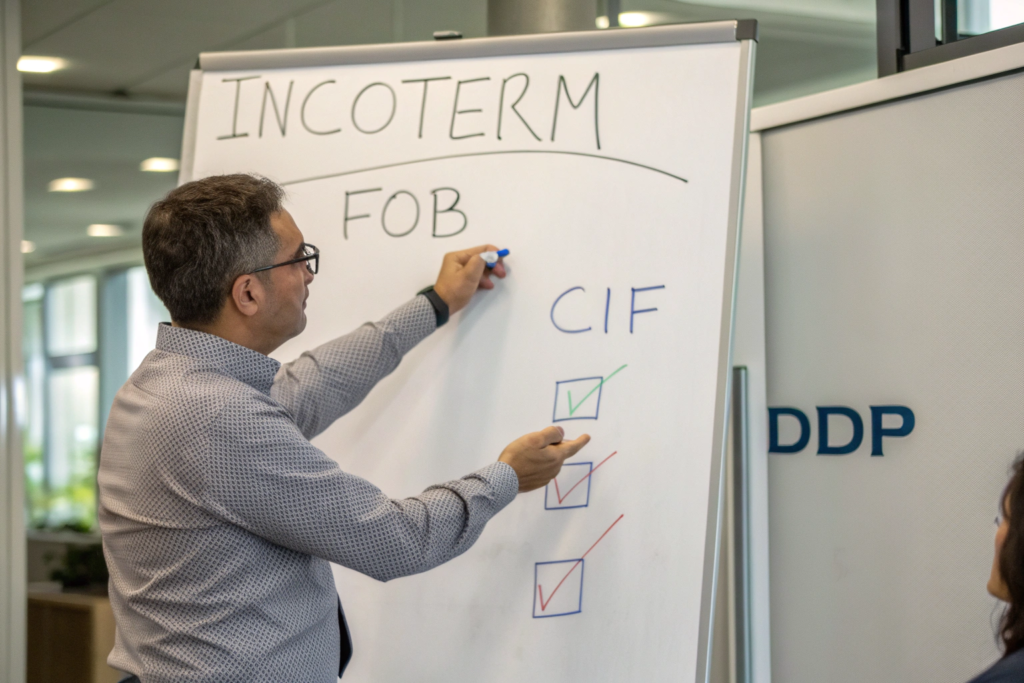
What Questions Should You Ask Yourself Before Choosing an Incoterm?
You are staring at the proforma invoice with a blank space where the Incoterm should be. The supplier is waiting for your answer. You do not know what factors to weigh.
Ask yourself these five questions. One: Do I have a freight forwarder I trust? If yes, FOB or our DDP are good options. If no, start by finding one, or choose our DDP where we are the forwarder. Two: Do I understand the US customs process, or do I want it completely handled? If you want it handled, DDP. If you want to learn, FOB with our guidance. Three: Is this a one-time shipment or a recurring purchase? For recurring, FOB is better because the control pays off over time. Four: How tight is my budget, and how important is transparency of the freight cost? For maximum transparency, FOB with our line-item quote. Five: How reliable is my supplier? If the supplier is new and untested, FOB gives you more control if something goes wrong. If the supplier is a long-term trusted partner, their DDP offer might be worth considering, but compare it against our FOB plus freight cost first.
How Do We Help You Negotiate the Incoterm with Your Supplier?
You want to ask for FOB, but you are worried the supplier will push back. They told you they "only do CIF for new customers." You do not want to jeopardize the product deal by being difficult about the shipping terms.
We coach you through the negotiation. The supplier’s preference for CIF is financial, not logistical. They make extra margin on the freight markup. When you ask for FOB, you are asking them to give up that hidden profit. The key is to frame the request as a standard business practice, not a lack of trust. We suggest language like: "For our import compliance, we need to use our own US-based customs broker. Please quote the FOB price so we can proceed with our order." This makes it about compliance, not about money. Most suppliers accept this without argument. If the supplier insists on CIF, ask them to provide a FOB price alongside the CIF price. Compare the two. The difference is their freight markup. Knowing this number gives you negotiating leverage. You can either accept the CIF if the markup is small, or push harder for FOB with the numbers in hand. We often speak to the supplier directly, in Mandarin, to explain the logistics arrangement. A local-language conversation from a logistics professional often resolves the hesitation.
Conclusion
Incoterms are not a secret code designed to confuse new importers. They are a practical tool that defines who pays for what and who bears the risk at each stage of your product’s journey. Understanding FOB, CIF, and DDP is not about mastering all eleven terms. It is about understanding where the handover point is and what responsibilities you are accepting.
FOB puts you in control of the ocean freight and customs clearance. It is the preferred term for importers who want cost transparency and who trust their forwarder to deliver a better service than the supplier’s designated carrier. CIF is convenient on the surface but often hides high freight markups, slow transit, and inadequate insurance. It ends at the port, leaving you to scramble for customs clearance and delivery. DDP is the simplest option. You pay one price and receive the goods at your door. Our forwarder-managed DDP adds the compliance and transparency that a supplier DDP often lacks.
At GeeseCargo, our job is not just to move your goods. It is to help you understand the rules of international trade so you can make informed, profitable decisions. We sit with you, ask the right questions, and recommend the Incoterm that fits your business today. If you start with DDP, we will teach you along the way so that you can confidently move to FOB when you are ready. If you are already on FOB, we provide the transparent, all-inclusive pricing and the reliable service that makes FOB the cost-effective choice it should be.
If you have a proforma invoice on your desk and you are not sure which Incoterm to choose, go to GeeseCargo.com and send it to me. I will explain the terms you are being offered, show you the cost comparison with our freight rates, and recommend the best option for your situation. The right Incoterm is the one that protects your money and your peace of mind. Let’s find it together.