I had a fascinating conversation with Ron last month. He has been shipping clothing from China to Los Angeles for years. The Trans-Pacific route is his lifeline. But he just signed a new supplier in Turkey for a premium leather accessories line. He called me and asked, "John, I know the Pacific route. But I’ve never shipped across the Atlantic. Is it the same? Is it reliable? Which route should I trust more?" This is a smart question. Many importers get comfortable with one ocean and feel lost when their sourcing diversifies. You need a partner who understands both oceans equally well.
The Trans-Pacific route from China to North America is the faster, higher-frequency option with transit times of 14 to 18 days to the West Coast. The Trans-Atlantic route from Europe to North America offers slower transit times of 8 to 12 days but serves a completely different sourcing geography. GeeseCargo does not recommend one over the other universally. We recommend the route that matches your sourcing location. If your goods are in China or Southeast Asia, Trans-Pacific is your route. If your goods are in Europe, Turkey, or North Africa, Trans-Atlantic is your route. We provide the same level of space guarantee, customs expertise, and door-to-door precision on both trade lanes.
The ocean does not care about your loyalty. Each route has its own personality, its own challenges, and its own rhythm. The Pacific is a busy highway with massive ships and frequent sailings. The Atlantic is a more traditional, steady route with a different set of ports and players. You do not need to choose a favorite. You need to understand both so you can make the right call for each specific shipment. I want to break down the hard numbers on transit times and costs. I want to explain the carrier options on each lane. Most importantly, I want to show you how we manage both routes with the same level of care and control.
Transit Time and Cost Comparison: Pacific vs Atlantic
Time and money are the two pillars of every shipping decision. The Pacific and the Atlantic are not just different bodies of water. They are different economic equations. The distance from Shanghai to Los Angeles is roughly 10,500 kilometers. The distance from Rotterdam to New York is roughly 5,800 kilometers. The Atlantic is physically shorter. But the total logistics cost is not just a function of distance. It is a function of vessel capacity, port fees, fuel costs, and market demand. You need to understand the math on both lanes before you commit your cargo.
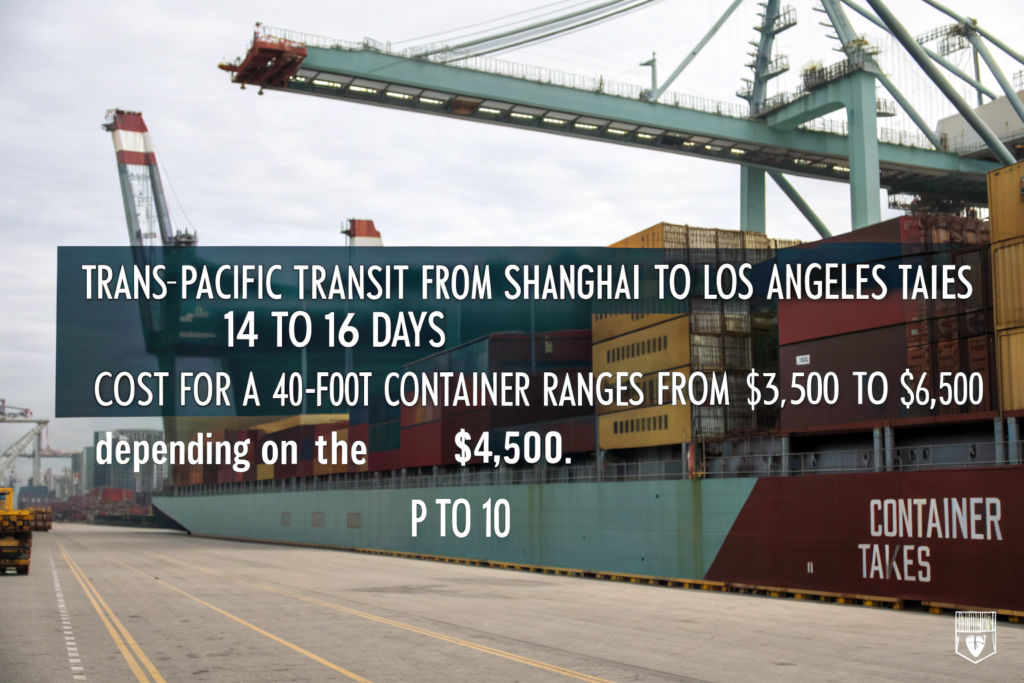
Trans-Pacific transit from Shanghai to Los Angeles takes 14 to 16 days. The cost for a 40-foot container typically ranges from $3,500 to $6,500 depending on the season. Trans-Atlantic transit from Rotterdam to New York takes 8 to 10 days. The cost for the same container typically ranges from $2,500 to $4,500. The Atlantic is both faster and often cheaper on the core ocean leg. However, the total door-to-door equation depends on where your factory is located and where your customer is waiting.
These headline numbers are useful. But they hide the full story. The Trans-Pacific rate swings violently during peak season. The Trans-Atlantic rate is more stable, but the sailing frequency is lower. You might wait longer for the next available vessel. The choice is not simply "Atlantic is cheaper, so I will source from Europe." The choice depends on your product, your supplier relationships, and your delivery deadlines. Let me put some real numbers on the table for a typical shipment of clothing and accessories. Then I want to examine the carrier alliances that control each ocean. The carrier landscape determines your reliability as much as the water itself.
What are the exact transit time differences for a typical 40-foot container on both routes?
Let’s use concrete examples from your world. You ship clothing and accessories. A 40-foot container of dresses from Shanghai to Los Angeles on the Trans-Pacific route. The direct ocean transit is 14 to 16 days. Add 2 days for Chinese export clearance and port handling. Add 2 days for US import clearance and truck delivery in the LA basin. Total door-to-door: 18 to 20 days. This is our standard DDP timeline. The frequency is excellent. There are 30 to 40 direct sailings per week from major Chinese ports to LA. You almost never wait more than 2 days for the next ship.
Now imagine you sourced a container of leather bags from a supplier in Florence, Italy. The factory trucks the goods to the Port of Genoa or Livorno. The container is loaded onto a Trans-Atlantic vessel bound for New York. The direct ocean transit is 10 to 12 days. Add 2 days for European export handling. Add 2 days for US import clearance and truck delivery to your New Jersey warehouse. Total door-to-door: 14 to 16 days. The Trans-Atlantic door-to-door is actually 4 to 6 days faster than the Trans-Pacific to the East Coast. This is a critical point. If your US distribution is on the East Coast, European sourcing offers a speed advantage. The Trans-Pacific route to New York, via the Panama Canal, takes 30 to 35 days. That is twice as long as the Trans-Atlantic alternative. The Trans-Pacific transit times versus Trans-Atlantic transit times reveal a simple geographic truth. Match your sourcing continent to your closest receiving port whenever possible. We help you make this calculation for every supplier you consider.
How do the spot rate fluctuations compare between the two trade lanes?
The Trans-Pacific is a rollercoaster. The spot rate for a 40-foot container from China to the US West Coast can double or even triple during the peak season from August to October. The lane is driven by the massive volume of US consumer goods imports. When demand spikes, carriers restrict capacity to keep rates high. You can see a $3,000 container become a $7,000 container within two months. This volatility is the biggest risk on the Pacific. We mitigate it with our long-term block space agreements. We lock in a stable rate for our committed clients. You avoid the spot market chaos.
The Trans-Atlantic is calmer. The volume is lower. The trade is more balanced. Europe exports machinery, pharmaceuticals, and luxury goods to the US. The US exports energy, agricultural products, and aircraft to Europe. This two-way flow means carriers are less likely to manipulate capacity to create artificial shortages. The spot rate from Northern Europe to the US East Coast is relatively stable. It fluctuates within a $1,500 to $3,000 band. The wild 300% spikes are rare. This stability is attractive for a business like yours. You can forecast your landed cost more accurately with a European supplier on the Trans-Atlantic lane.
However, the lower volume means lower sailing frequency. If you miss a sailing, the next one might be a full week away. On the Pacific, you miss a sailing and the next one leaves tomorrow. The cost of a missed sailing is higher on the Atlantic. We manage this by tracking your production schedule meticulously. We confirm the vessel booking the moment your factory confirms the completion date. We do not let the lower frequency catch you out. Our ocean freight rate analysis covers both lanes. We see the trends developing. We advise you when to lock in a rate on the Pacific before the peak. We advise you when the Atlantic stability allows you to wait. This dual-lane intelligence gives you a strategic edge over competitors who only know one ocean.
Port Infrastructure and Carrier Options on Each Route
The ocean is the road. The port is the garage. The carrier is the driver. If the garage is too small or the driver is unreliable, the road quality does not matter. The Trans-Pacific and Trans-Atlantic routes are served by fundamentally different port infrastructures and carrier alliances. The Pacific is dominated by mega-ports and mega-vessels. The Atlantic is a mix of high-efficiency hubs and specialized regional ports. You need to know the players on each field. The carrier you trust on the Pacific might not even operate on the Atlantic. Your port choice in Europe is very different from your port choice in China.
Trans-Pacific cargo is dominated by the three global carrier alliances: Ocean Alliance, 2M, and THE Alliance. They deploy the world’s largest ships, up to 24,000 TEU capacity. Trans-Atlantic cargo is served by these same alliances but with smaller vessels, plus strong regional carriers like Atlantic Container Line and independent European lines. Port infrastructure on the Pacific is built for extreme volume. Port infrastructure on the Atlantic is built for speed and flexibility. GeeseCargo has contracted space with key carriers on both lanes, ensuring you have the same guaranteed capacity regardless of which ocean your cargo crosses.
You cannot just pick a carrier out of a hat. The carrier determines the port rotation. The port rotation determines the transit time. The transit time determines your shelf date. We have spent years building relationships with the right carriers on the right lanes. On the Pacific, we prioritize the express loops that skip intermediate Asian stops. On the Atlantic, we prioritize the direct port pairs that avoid unnecessary transshipment hubs. Let me introduce you to the specific carrier networks on each route. And I want to show you how the major ports differ in their handling of your specific commodity, clothing and accessories.
Which carrier alliances dominate the Trans-Pacific and what are their express service options?
The Trans-Pacific is the biggest prize in container shipping. The Ocean Alliance, which includes COSCO, CMA CGM, and Evergreen, operates the largest fleet on this lane. They offer a service called the "Central China Express" from Shanghai and Ningbo to Los Angeles. The transit time is a lightning-fast 12 to 13 days. This is the service we use for our Dedicated Express Ocean product. The 2M Alliance, which includes Maersk and MSC, operates the "TP6/Pearl" service with similar speed. THE Alliance, with Hapag-Lloyd, ONE, and Yang Ming, operates the "PS3" loop. All three alliances offer frequent, direct, and fast options.
The competition is fierce. This benefits you. The carriers are constantly trying to shave a day off the transit time to win market share. The Ocean Alliance service network is particularly strong for US West Coast and intermodal connections to the Midwest. We have block space agreements with carriers in all three alliances. This means we are not tied to one carrier’s schedule. We can book your cargo on the specific vessel that matches your deadline. If the COSCO express is full, we can switch to the Maersk express. You get the speed without the risk of carrier dependency. This multi-carrier strategy is unique. It requires significant volume and relationship management. We have both. The result for you is a guaranteed 14-day Pacific transit window, even during peak season.
What are the key European and US East Coast ports for efficient Trans-Atlantic shipping?
The Trans-Atlantic port landscape is different. The major European export hubs are Rotterdam, Antwerp, and Hamburg in the North Continent. For Mediterranean goods like your potential Italian leather bags, the key ports are Genoa, La Spezia, and Barcelona. These ports are not as massive as Shanghai, but they are highly automated. Rotterdam operates with almost fully automated terminals. The truck turn times are under 30 minutes. The barge connections to the European interior are excellent. This efficiency shaves days off the pre-carriage time.
On the US side, the major Trans-Atlantic gateways are New York/Newark, Norfolk, and Savannah. New York is the premier destination. It has a dense network of local trucking and rail connections to the entire Northeast market. The Port of Rotterdam to the Port of New York is the signature Trans-Atlantic lane. The service is frequent. The vessels are in the 8,000 to 14,000 TEU range. Smaller than the Pacific giants, but perfectly sized for the volume. The transit time is a reliable 8 to 10 days.
We also use secondary ports for flexibility. On the European side, Zeebrugge in Belgium is a fast, uncongested alternative to Antwerp. On the US side, Philadelphia is a strong alternative to New York for certain cargo types. The customs clearance in these smaller ports is often faster because the volume is lower. For your clothing and accessories, these ports handle the cargo gently. The terminals are equipped with covered storage areas. The risk of weather damage is lower than in a chaotic mega-hub. Our Atlantic port network is designed to give you speed and safety. We match the port to the specific needs of your shipment, not the other way around.
GeeseCargo’s Route Optimization: Combining Both Oceans for Your Supply Chain
You are not a "Pacific importer" or an "Atlantic importer." You are a business owner building a global brand. Your supply chain might span both oceans simultaneously. You might have a core clothing line from China crossing the Pacific. You might have a premium accessories line from Italy crossing the Atlantic. You might have a promotional gifts line from Vietnam crossing the Pacific to Europe. These flows are not separate. They are part of one integrated inventory strategy. Treating them as separate forces you to manage two logistics relationships, two sets of rules, and two sources of stress. It does not have to be that way.
GeeseCargo recommends an integrated route strategy. We manage both the Trans-Pacific and Trans-Atlantic flows for you under a single operational umbrella. This gives you consolidated reporting, unified customs management, and the ability to shift volume between lanes based on cost and capacity. If the Pacific rates spike, we can explore accelerating your European production. If the Atlantic has a port strike, we can route your goods through an alternative gateway. You get one logistics brain managing your entire global freight map.
This integrated approach is the real answer to the question "which route do you recommend." I recommend both. I recommend a flexible, diversified supply chain that does not put all your eggs on one ocean. The world is volatile. Trade lanes get disrupted. Having an active presence on both oceans is an insurance policy against regional shocks. The Suez Canal blockage paralyzed the Asia-Europe route. The Panama Canal drought restricted Trans-Pacific capacity. You cannot predict these events. But you can be positioned to pivot when they happen. Let me explain how we build this dual-lane resilience for you. And I want to show you the consolidated technology layer that makes managing two oceans as simple as managing one.
How does a dual-ocean sourcing strategy protect against regional disruptions?
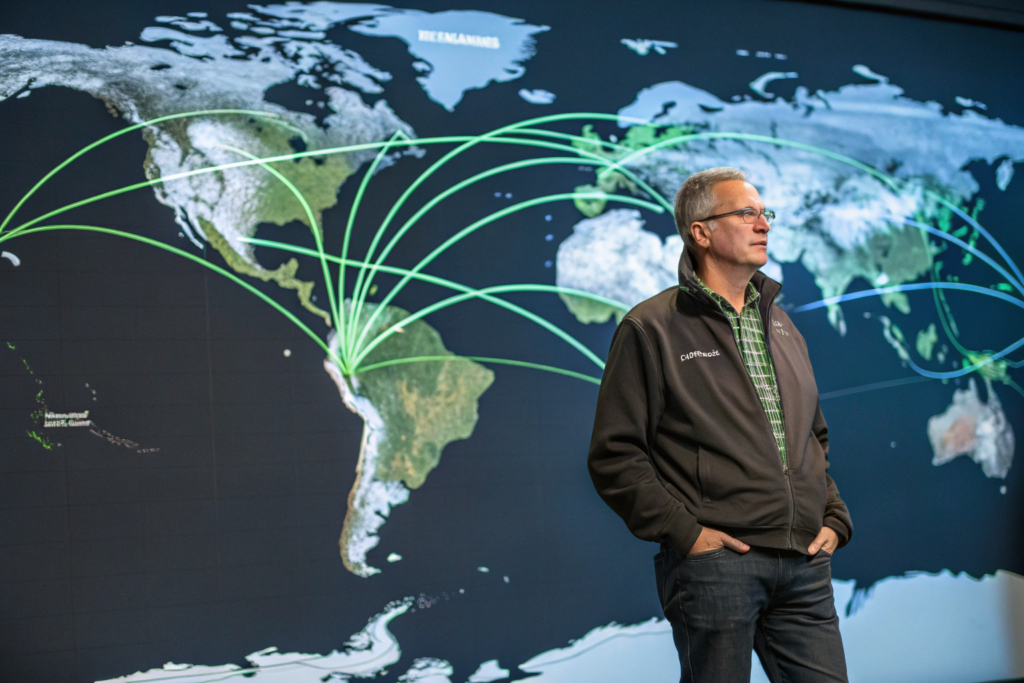
A regional disruption is a localized disaster that affects an entire trade lane. A labor strike at the US West Coast ports paralyzes the Trans-Pacific. A geopolitical closure of the Red Sea disrupts the Asia-Europe Suez route, forcing carriers to go around Africa. If all your goods are on the affected lane, your business stops. There is no workaround. The goods are stuck. Your inventory dries up. This is a single point of failure. The solution is dual-ocean sourcing. You maintain active supplier relationships and shipping contracts on both the Pacific and the Atlantic.
When the Pacific is disrupted, you increase your European production volume. The goods cross the calm Atlantic instead. The transit time might be slightly different. The cost might be slightly different. But the goods move. Your shelves stay full. This is supply chain resilience. We help you set this up. We identify product categories that can be sourced from both China and Europe. We qualify factories in both regions. We negotiate freight contracts on both lanes. We do the preparatory work so that when you say "switch," the alternative supply line is already hot. This dual sourcing strategy is not theoretical. We have executed it for clients during the LA port congestion and the Red Sea crisis. The clients who had an active Atlantic option barely felt the disruption. The clients who were 100% Pacific suffered significant losses. We want you in the first group.
What integrated technology and reporting do we provide across both trade lanes?
Managing two oceans sounds complex. But technology collapses the complexity. We provide a single online dashboard. You log in. You see all your shipments. The container on the Pacific from Shanghai to LA is right there. The container on the Atlantic from Genoa to New York is right next to it. Same interface. Same tracking format. Same document library. You do not toggle between two different systems. You do not email two different account managers. You have one point of contact at GeeseCargo who understands both lanes.
The reporting is unified. You receive a monthly summary of all your freight spend. Trans-Pacific costs and Trans-Atlantic costs are in the same spreadsheet. You see the total landed cost per unit, regardless of which ocean the goods crossed. This allows you to make true apples-to-apples sourcing decisions. You can see that the Chinese dress costs $5.00 landed via the Pacific, while the Turkish dress costs $5.50 landed via the Atlantic. You make the decision based on margin, quality, and lead time, not based on messy, separate spreadsheets.
The document management is also unified. Your commercial invoices, packing lists, and certificates of origin are stored in one cloud folder. The customs process is standardized. We use the same precise HS code classification methodology for both Chinese and European goods. Your US customs broker sees a consistent, compliant data stream from GeeseCargo, regardless of the origin. This consistency reduces the exam rate. It speeds up clearance. It simplifies your accounting. Our integrated logistics platform turns a dual-ocean supply chain into a single-screen management experience. You get the resilience of diversification without the administrative headache. This is what it means to have a true global freight partner.
Conclusion
The Trans-Pacific route is the fast, high-frequency artery from China to America. It delivers your bulk clothing orders from Shanghai to Los Angeles in 14 days. The Trans-Atlantic route is the shorter, steadier bridge from Europe to America. It delivers your premium accessories from Italy to New York in 10 days. Neither route is inherently superior. They are different tools for different sourcing maps. The right question is not "which route is better." The right question is "which route matches my factory location and my warehouse location." We help you answer that question shipment by shipment.
The real power is in using both routes together. A dual-ocean strategy protects you from regional disasters. A Pacific port strike does not stop your Atlantic goods. A Suez Canal blockage does not stop your Pacific goods. You have options. You have flexibility. You have the confidence that comes from knowing you are not dependent on a single choke point. GeeseCargo provides this dual-lane capability under one roof. One contract. One team. One dashboard. Two oceans of capacity.
I encourage you to think globally about your logistics. Do not limit yourself to the route you already know. Explore European sourcing for some product lines. Explore using the Atlantic as a strategic alternative to the congested Pacific. Let us show you the numbers. We will compare the total landed cost and transit time for a Pacific shipment versus an Atlantic shipment of the same product category. We will build a routing plan that matches your growth ambitions. Whether your cargo crosses the vast Pacific or the historic Atlantic, we have the space, the customs expertise, and the final mile network to deliver it to your door. Let’s navigate both oceans together.