You pay the invoice every month. You do not question it. The number looks similar to last month. But something feels wrong. Your product margins are shrinking. Your landed cost keeps creeping up. You ask your forwarder for an explanation. They send you a vague email about "market conditions" and "carrier increases." You are left frustrated. You suspect you are overpaying, but you cannot prove it. You do not have the time to audit every line. You just want a partner who charges fairly.
Yes, your freight forwarder is likely overcharging you. They do it through inflated accessorial fees, hidden currency markups, bundled charges with no breakdown, and loyalty penalties where old clients pay more than new ones. GeeseCargo eliminates these tricks by offering transparent, fixed-rate DDP quotes with every line item explained.
I have been on the inside of this industry for many years. I know where the profit traps are set. I am going to reveal seven specific reasons why your current logistics provider is costing you more than you realize. I will show you the exact line items to check on your last invoice. And I will explain how we built GeeseCargo to be the honest alternative that treats your money like our own.
Reason 1: You Are Paying a Loyalty Penalty Without Knowing It
This is the ugliest secret in freight forwarding. New clients get aggressive discount rates to win their business. Existing clients get annual increases that have nothing to do with the market. The forwarder assumes you are comfortable. They assume you will not leave. They slowly raise your rates, hoping you will not notice the extra $200 here and $300 there.
You might have started with a very competitive rate two years ago. But since then, the market rate for ocean freight from China to the US has actually dropped. Did your forwarder lower your price? Probably not. They kept the difference as extra profit. They are banking on your inertia. I see this happen with clients who ship regularly but never benchmark their costs. They just keep paying, year after year, while the forwarder’s margin quietly doubles.

How Do Forwarders Hide Annual Increases in Routine Shipments?
They do not send an announcement letter saying "we are raising your rates." They just adjust the small fees. The documentation fee goes from $65 to $85. The handling fee goes from $45 to $65. These look small individually. But on a year’s worth of shipments, they add up to thousands of dollars. You are looking at the big ocean freight number. You are not checking the small fees.
We do not play this game at GeeseCargo. When we give you a DDP quote, we commit to it. If the market rate drops significantly, we proactively lower your rate on the next shipment. I do not want you to find out from a competitor that you are overpaying. I want you to know that we are always giving you our best price. This is how you build a partnership that lasts a decade, not just a season.
Why Do New Clients Sometimes Get Better Rates Than Yours?
Forwarders have sales targets. To hit those targets, they offer loss-leader rates to new accounts. They take a small loss or break even on the first few shipments to capture your business. Then they make up for it by charging you higher rates later. The old client subsidizes the new client’s discount. You are literally paying for your forwarder’s sales strategy.
I do not believe in this. Our pricing is based on volume and contract commitments. If you ship more, you get a better rate. It is that simple. A new client with one container and an old client with one container get the same fair price from us. We do not have a two-tier system. Ask your current forwarder when they last benchmarked your rate against the spot market index. If they cannot answer, they are probably charging you above market.
Reason 2: The Accessorial Fees on Your Invoice Are Completely Made Up
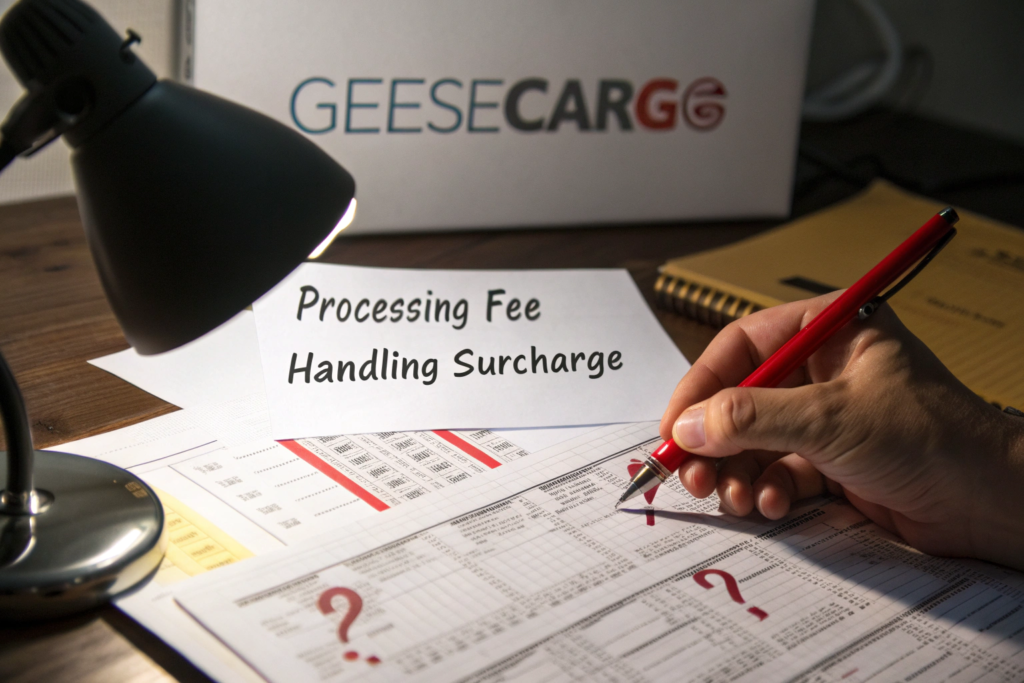
Look at your last freight invoice. Look at the line items below the ocean freight. Do you see a "Processing Fee"? A "Handling Surcharge"? A "Management Fee"? These are not carrier charges. These are not government charges. These are internal fees your forwarder invented to increase their margin. They sound official, but they are pure profit.
I once audited a competitor’s invoice for a client. There was a $150 "Port Security Fee." The actual port security fee charged by the terminal was $25. The forwarder pocketed $125. The client had paid this fee twelve times in a year. That is $1,500 stolen through a fake fee. The forwarder counted on the client not knowing the real cost of port security. This is theft by confusion.
What Is a “Miscellaneous Charge” and Why Should You Reject It?
If you see a line that says "Misc." or "Administrative Fee," you should stop payment and demand an explanation. There is no such thing as a miscellaneous charge in legitimate shipping. Every service has a name. Every cost has a recipient. The terminal handling fee goes to the terminal. The Bill of Lading fee goes to the carrier. The customs entry fee goes to the broker.
"Miscellaneous" means "extra profit for us." I refuse to put that on a GeeseCargo invoice. Our quotes list the exact destination charges before the ship sails. You see the terminal handling fee, the chassis fee, the customs bond, and the trucking. There is no catch-all category. If I have to pay a new fee to the port that I did not anticipate, I call you. I explain it. I show you the port’s published tariff. I never just slip it onto an invoice and hope you miss it.
How Do You Verify If a Port Charge Is Real or Inflated?
The major US ports publish their tariff schedules online. You can look up the wharfage fee and the terminal handling charge yourself. The Port of Los Angeles tariff is a public document. It takes some effort to read, but it exists. Your forwarder should be willing to provide the original carrier invoice as backup for any charge you question.
We offer to show our clients the raw carrier bills. I believe in radical transparency. If we pay a $75 chassis fee, I will show you the receipt. If the trucker charges a $50 congestion surcharge, I will forward you their invoice. I have nothing to hide. My profit is in the service fee we agree on upfront. It is not buried in fake accessorials. This is the standard you should demand from any logistics partner.
Reason 3: Your Forwarder Makes a Hidden Profit on the Currency Exchange
This one is invisible unless you know where to look. The ocean freight is quoted in US Dollars. But the origin charges in China are paid in Chinese Yuan. Your forwarder pays the trucker, the customs broker, and the terminal in RMB. Then they bill you in USD. How do they decide the exchange rate?
Most forwarders use an exchange rate that is 3% to 5% worse than the official bank rate. They pay the Chinese trucker at the real rate of 7.20 RMB per dollar. They bill you at 7.50. That 0.30 difference is pure profit. On a $3,000 origin charge, that is a $125 hidden markup. You never see it on the invoice. It is baked into the USD number they show you. This is a massive revenue stream for unscrupulous forwarders.
How Does GeeseCargo Set the Exchange Rate for Origin Charges?
We use the daily mid-market rate from the Bank of China plus a small, disclosed administrative fee. I tell you what the fee is. Usually it is 1% to 1.5%. This covers our bank wire costs and the risk of holding RMB. It is not a secret profit center. It is a transaction cost recovery.
Better yet, we encourage clients to switch to an all-inclusive DDP model where the currency risk is ours. We quote a fixed USD price that covers everything, including the China-side origin charges. You do not see the exchange rate at all. You know the final cost. You do not care if the Yuan moved up or down that week. We take the volatility so you can have a stable budget. This is the professional way to handle international logistics.
Can Paying in RMB Directly Save You Money?
If you have a Chinese bank account and can pay the origin charges directly in RMB, you can save the exchange markup entirely. But most American importers do not have this capability. Their forwarder knows this and exploits it. They charge you in USD and profit from the conversion.
I ask every new client if they have a Chinese entity. If they do, I give them the option to pay the China charges directly. We separate the invoices. I am happy to help you save money even if it means we make less on the exchange. My goal is your long-term success, not short-term profit. A client who trusts you stays with you and grows their volume. That volume is where the real money is made.
Reason 4: The “Lowest Freight Rate” Trick Is Costing You a Fortune in Delays
Everyone wants the cheapest rate. Forwarders know this. So they quote you the rock-bottom price to win your business. They put your container on the slowest vessel with the worst transshipment connections. They book with a carrier known for rolling cargo. Your goods sit in a hub port for a week waiting for a connection. You got a cheap rate, but you lost ten days.
The true cost of that cheap rate is the inventory holding cost. If your $80,000 container of clothing sits on the water an extra 14 days, you are paying interest on that money. You are losing sales because you are out of stock. The $400 you saved on freight is nothing compared to the margin you lost on missed sales. Cheap freight is the most expensive freight when you factor in time.
How Does Cargo Rolling Affect Your Retail Delivery Windows?
Cargo rolling happens when a vessel is overbooked. The carrier decides which containers get left behind on the dock. Guess which containers get rolled first? The ones with the lowest freight rates. Your cheap booking has the lowest priority. Your container sits on the terminal in Shanghai for another week until the next vessel.
We book with carrier contracts that include "no-roll" guarantees for our premium clients. We pay a slightly higher base rate to secure priority boarding. If a vessel is overbooked, our container stays on and someone else gets rolled. This is critical for fashion and seasonal gift shipments. A one-week roll at origin plus a one-week delay at the destination kills your entire season. The slightly higher freight cost is insurance against that disaster.
What Is the Real Cost Per Day of a Slow Transshipment Connection?
Some cheap routings connect through Busan or Tokyo with a five-day layover. The vessel arrives at the hub port. Your container gets unloaded. It sits in the transshipment yard. It waits for the feeder vessel to the US. Five days is common. A direct vessel takes 14 days. A connecting vessel takes 25 days.
Those 11 extra days are not free. Your $50,000 shipment has a daily capital cost. At a 12% annual cost of capital, that is about $16 per day in interest. Eleven days is $176. Add in the warehouse waiting to receive the goods. Add in the potential retail chargeback. The cheap connection cost you $500 in real money. Always ask for the transit time, not just the price. At GeeseCargo, we show both numbers on every quote.
Reason 5: Your Forwarder Does Not Fight for Lower Customs Duty
Your forwarder asks you for the HTS code. You give them whatever code the factory gave you. They file it. That is the end of their job. But is it the right code? Is it the code with the lowest legal duty rate? They do not care. The duty is your cost, not theirs. They have no incentive to help you pay less tax.
At GeeseCargo, we actively look for legal ways to reduce your duty. We call this tariff engineering. We ask for your product specifications in detail. We look at the fabric content, the construction, and the function. We search the USITC HTS database for a subheading that accurately describes your product but carries a lower rate. This is not evasion. This is informed classification. It can save you 5% to 10% on the product value. On a $100,000 shipment, that is $5,000 back in your pocket.
Can a Simple Product Description Change Save You Thousands?
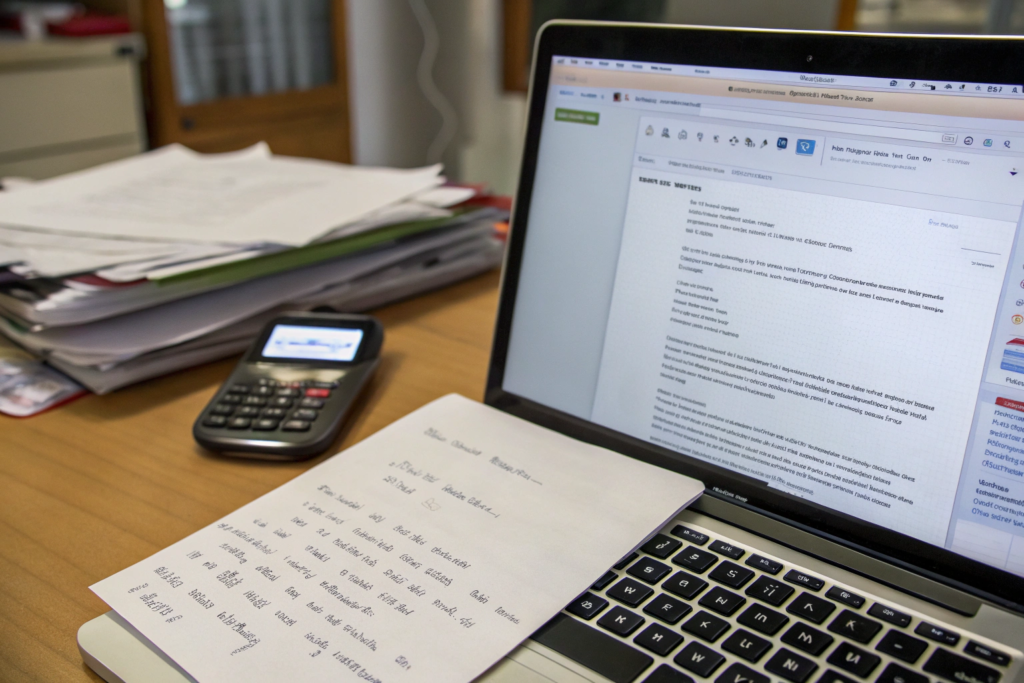
Yes. A "decorative pillow" and a "pillow sham" might have different duty rates. A "safety vest" and a "reflective garment" might be classified differently. The exact language on the commercial invoice matters. Customs reads the description and the HTS code together. If they do not match, you get audited.
We review your commercial invoice before filing. We suggest description changes that are truthful but optimized. "Men’s 100% Cotton Woven Shirt" is better than "Men’s Shirt." The specificity reduces the chance of a random exam and ensures you pay the correct, often lower, rate. Factories use vague descriptions. We fix them. This is a service most forwarders never offer because it requires deep trade knowledge that they do not have.
How Do Free Trade Agreements Impact Your Duty Bottom Line?
Some products sourced from China do not qualify for free trade agreements with the US. But we check. If a portion of your supply chain moves to a country with a trade agreement, we can advise on the duty savings. We also track the Section 301 tariff exclusions. Some clothing and accessory items are temporarily excluded from the extra 7.5% tariff.
We flag these exclusions for our clients. We file for retroactive refunds when an exclusion is granted. Your old forwarder probably never mentioned a tariff exclusion. We do because it is your money. We treat your customs bill like our own. Saving you duty builds trust, and trust builds a lasting business relationship.
Reason 6: You Have No Single Point of Accountability for Your Shipment
You email a booking request. A salesperson replies. The shipment gets assigned to an operations person you have never met. When there is a problem, you call the salesperson. They say they will talk to operations. Operations says the trucker is at fault. The trucker says the port is delayed. You are on an endless loop of finger-pointing.
We assign a named account manager to every client. This person is responsible for your entire shipment from origin to destination. If the trucker is late, my account manager calls the trucker directly. If the customs entry has a flag, my account manager resolves it. You do not navigate our internal structure. You have one phone number and one email address. That person owns the outcome.

Why Does a Dedicated Account Manager Matter During a Crisis?
When a crisis hits, you need decisions in minutes, not hours. A vessel diverts due to a storm. A port goes on strike. A container gets damaged. If you have a general customer service email, your urgent request goes into a queue. With a dedicated manager, you get their direct line.
I give my cell phone number to key clients. I answer on weekends. Last year, a client’s container was caught in a hurricane diversion. Their old forwarder sent an automated notification. I called the client within ten minutes of the vessel alert. I had already located the container and scheduled a new truck appointment. The client did not lift a finger. That is the difference between a vendor and a partner.
How Does One-Point Contact Speed Up Customs Resolution?
Customs asks a question about your classification. They send a CF-28 form to the broker. The clock is ticking. If the broker does not respond within the deadline, the shipment defaults to a higher duty rate. A fragmented team might miss this email. My account manager monitors the broker’s inbox. They ensure the response is filed on day one.
We use a shared platform where the broker, the trucker, and my team all communicate. You are copied on everything or nothing, depending on your preference. But my team sees every message. There is no gap where a task falls between two departments. Accountability is clear. If something goes wrong, I know exactly who is responsible. And I make it right immediately.
Reason 7: The Safety of Your Cargo Is Not Their Priority
Your forwarder books space on a cheap carrier. The vessel is old. The containers are poorly maintained. Your boxes arrive wet, crushed, or torn open. You file a claim. The forwarder says it is the carrier’s responsibility. The carrier says the packing was insufficient. You are stuck with damaged inventory that you cannot sell.
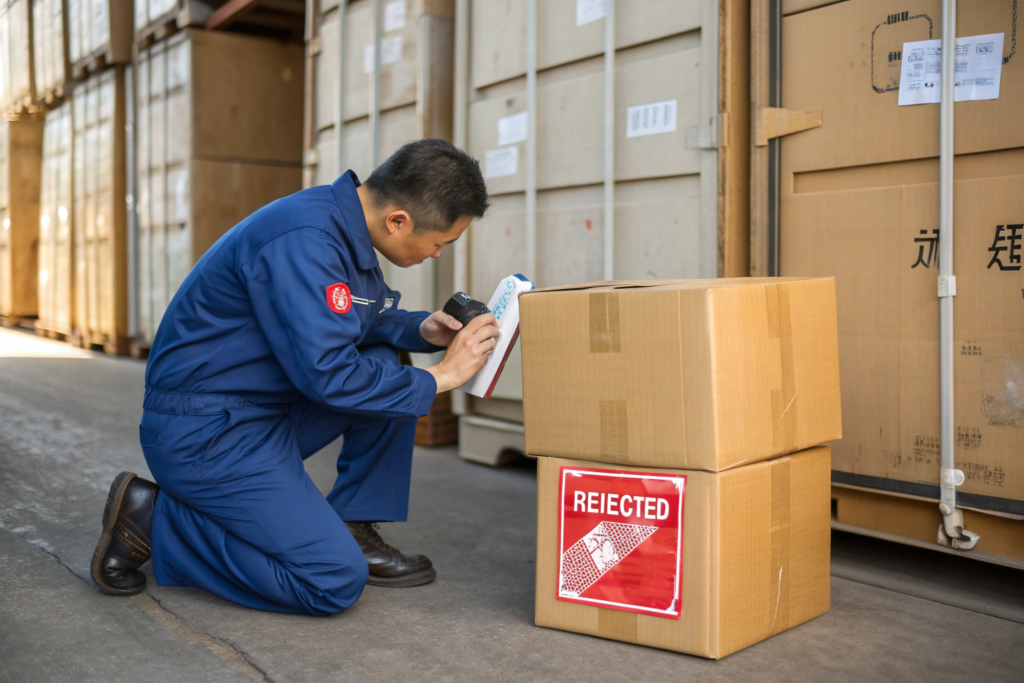
We inspect our containers before loading. We check the door seals, the floor, and the walls. We reject containers with holes or rust. We also inspect the factory packing. If the cartons are too thin, we demand repacking before the goods enter our container. This adds time at origin, but it saves heartbreak at destination. You cannot sell crushed gift boxes or wrinkled clothing.
What Container Seals Does GeeseCargo Use to Prevent Tampering?
We use high-security bolt seals that meet the ISO 17712 standard. Each seal has a unique serial number. The number is recorded on the Bill of Lading and our internal tracking system. When the container arrives at your warehouse, you check the seal number before cutting it.
If the seal number does not match, the container may have been opened in transit. You refuse the delivery and call me immediately. We have never had a seal mismatch, but the process protects you from cargo theft and smuggling. Cheap forwarders use plastic seals that can be cut and replaced with a hairdryer. We invest in security because your brand reputation depends on the integrity of your goods.
How Does GeeseCargo Handle a Container That Arrives Damaged?
If a container is damaged at sea, the carrier has limited liability. The standard coverage is only $500 per package. That is a joke if your package is a carton of leather jackets worth $5,000. You need cargo insurance. We offer full-value cargo insurance through our partnerships with marine underwriters.
We also fight the carrier on your behalf for the container damage itself. We demand the survey report. We argue that the carrier’s negligence caused the damage. If the container was stowed below deck and a hatch cover leaked, the carrier is responsible for the clean-up costs and the container repair. Most forwarders do not bother with this. They tell you to claim your own insurance. We do the claims fighting for you. We treat your loss as our loss.
Conclusion
You work too hard to build your business. You source the right products. You build the brand. You sell the orders. You should not have to watch your profit disappear into the pockets of a freight forwarder who treats you like an ATM. The loyalty penalty, the fake accessorials, the currency markups, the slow routings, the lazy customs filing, the finger-pointing, and the damaged cargo are all symptoms of the same disease. Your forwarder does not respect your money.
At GeeseCargo, we built a company that aligns our incentives with yours. We make money when you save money and ship more. We give you a single point of contact who owns your outcome. We lock your rates and show you every line item. We actively search for lower duty codes and faster transit times. We protect your cargo like it belongs to our own family. This is not a marketing slogan. This is how I run my company every day.
If any of these seven reasons hit close to home, it is time for a change. Go find your last three freight invoices. Look for the "miscellaneous" fee. Check the exchange rate math. Call your current forwarder and ask them to justify every line. If they stumble, you have your answer. Then reach out to GeeseCargo. Send us those same invoices. We will give you a free comparison quote within 24 hours. I will show you exactly how much money you should be saving and how much stress you can leave behind.