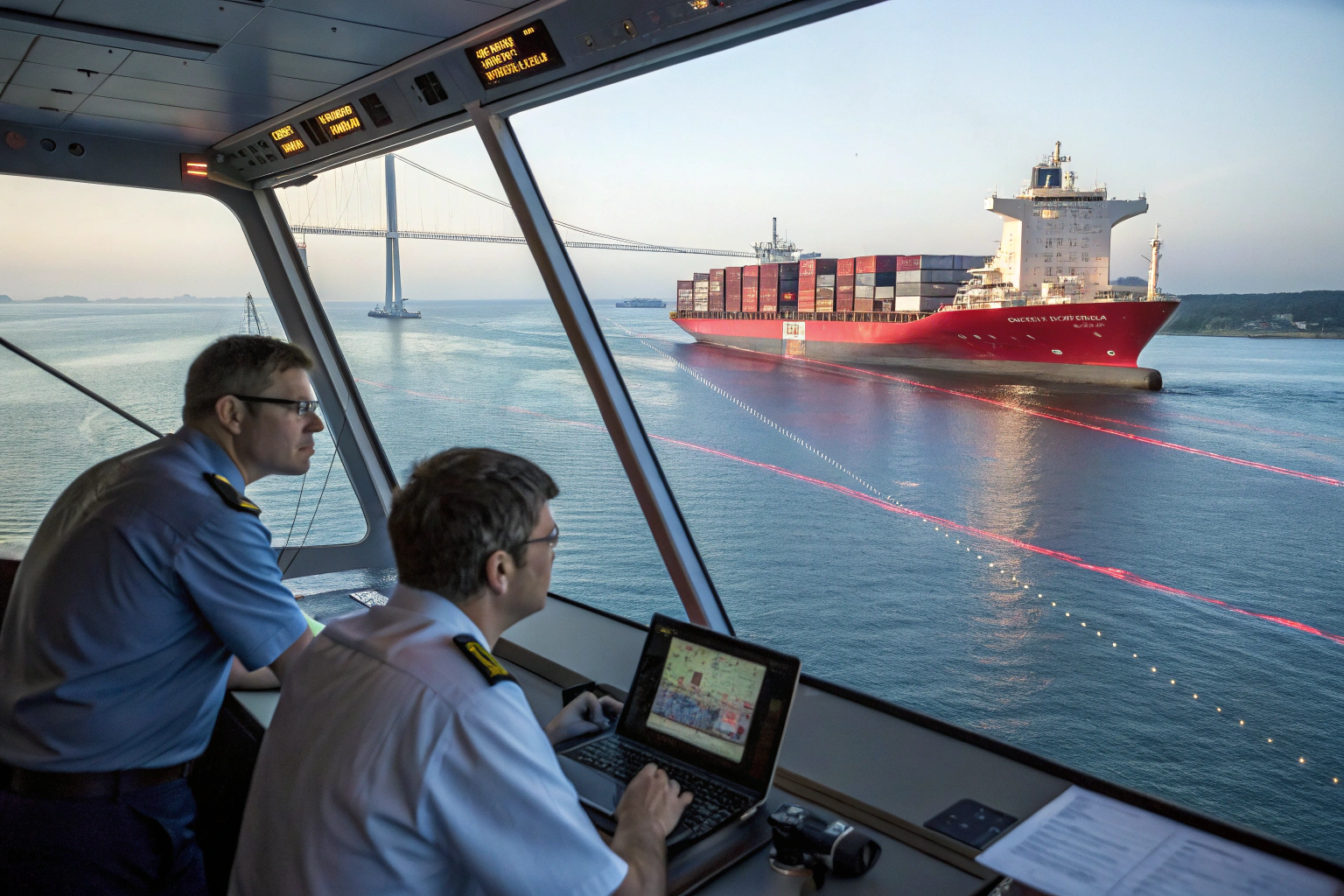
You might think the Red Sea crisis is old news. The headlines have faded. But your freight invoice tells a different story. The costs haven’t returned to normal. Transit times are still stretched. You’re paying for a conflict that happened thousands of miles from your supply chain. You ship from China to the US. Why does a problem near Yemen affect your Los Angeles delivery? It feels unfair. It feels like a hidden tax you can’t control.
The Red Sea crisis is still impacting shipping in 2026 by permanently absorbing global vessel capacity, sustaining elevated insurance premiums, and creating persistent schedule unreliability. GeeseCargo navigates this by rerouting critical cargo through secure multimodal corridors and locking in capacity on unaffected vessel alliances long before the spot market inflates.
You shouldn’t have to become a geopolitical expert to import clothing and gifts. But you do need a partner who understands that a detour around Africa doesn’t just hurt the ship taking that detour. It hurts the entire global fleet. I’ve spent the last year restructuring our network to make sure my clients feel zero operational pain from a crisis that refuses to end. Let me show you exactly how the crisis still bites, and how we keep your cargo safe.
Why Are Ocean Freight Rates Still Inflated Long After the Red Sea Crisis Began?
You’d expect rates to normalize after the initial shock. They haven’t. The reason is structural. When carriers diverted vessels away from the Suez Canal, they didn’t just take a different path. They completely rewired the global vessel rotation schedules. The rerouting absorbed about 10% of the world’s container ship capacity. That 10% deficit never really came back.
We counteract this permanent capacity absorption by securing Transpacific space directly with carrier executives, bypassing the spot market entirely. Our rates reflect the actual cost of the China-to-US loop, not the inflated global average dragged up by the Africa diversion.
I don’t rely on online rate boards to price your shipments. Those boards reflect panic. I call the line managers directly. I remind them of our volume commitments. Because we ship significant TEUs annually on the Pacific route, we negotiate from a position of strength. When the spot market pushes a rate to $7,000 per container, our clients often pay closer to $4,000. That’s the power of real relationships.
How Does the "Effective Capacity" Decrease Keep Shipping Costs High?
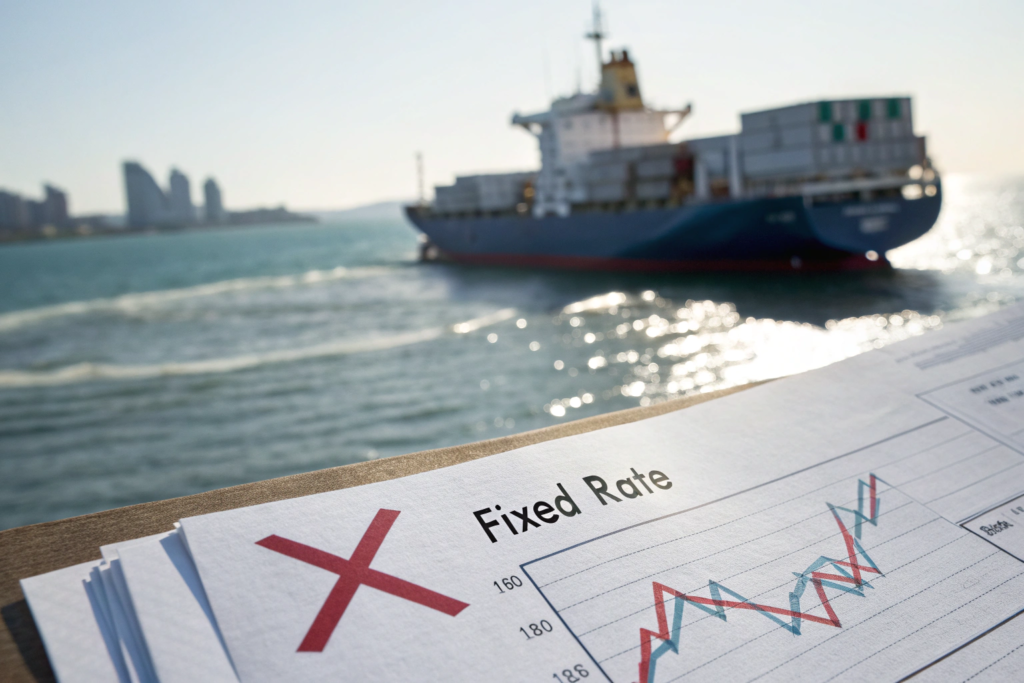
A ship that used to do a 60-day round trip now takes 75 days because it sails around Africa. That means it carries fewer loads per year. Global shipping capacity effectively shrinks. Supply drops. Demand stays the same. Prices rise. It’s basic economics.
This isn’t a temporary glitch. The shipping alliances have adjusted their schedules permanently. They’ve removed ships from other routes to cover the extended Africa loop. The Transpacific route lost backup vessels. When a ship breaks down or a port congests, there’s no slack. The tight capacity keeps rates inflated. We track ocean freight capacity utilization monthly. We see the squeeze coming and lock your allocation before the crunch hits.
Why Haven’t Insurance Premiums Returned to Pre-Crisis Levels?
Marine war risk insurance is a major hidden cost. Even ships that avoid the Red Sea pay higher premiums. The insurance market treats global shipping as an interconnected risk pool. A threat in one zone raises the baseline for everyone. These premiums add hundreds of dollars per container.
We advocate for you by challenging these surcharges directly. We demand transparency from the carriers on their insurance cost breakdown. If a vessel is sailing the Pacific only, we argue against Red Sea surcharge inclusion. Our logistics team audits every surcharge line item. You shouldn’t pay a war risk premium for a peaceful ocean crossing.
How Does the Cape of Good Hope Rerouting Affect China-to-US Schedules?
You ship from Shenzhen to Los Angeles. The ship doesn’t go near Africa. So your schedule should be fine, right? Wrong. The global fleet is interconnected. A vessel that should be feeding empty containers back to Shanghai is stuck rounding the Cape. The ripple effect delays everything. Vessel arrival predictability has dropped significantly.
We restore schedule certainty by building "buffer inventory" logic into your supply chain. We calculate the exact transit delay risk and ship your goods earlier, or via a premium express loop, so your shelf date remains intact.
I won’t let your seasonal launch fail because of a mathematical delay that we can see coming months in advance. We sit down with our clients and map their critical selling windows. If a shipment absolutely must arrive by October 1st, we work backwards with the new, extended transit reality. We don’t use the old "pre-crisis" calendar. We use the "2026 reality" calendar.
Why Does "Vessel Bunching" Happen After a Major Rerouting?
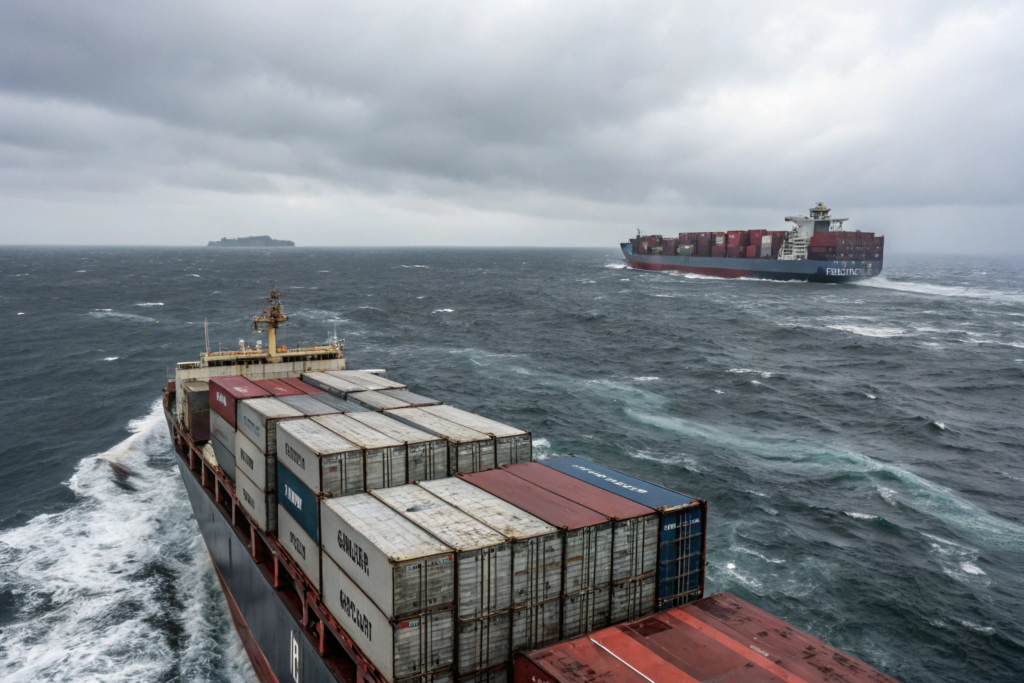
When ships divert, they arrive at ports in unpredictable clusters. Five ships may arrive at Long Beach on the same day, even though they were supposed to be spaced out. This is vessel bunching. It overwhelms the terminal. Cranes can’t work fast enough. Your container sits on the water waiting for a berth.
We counter this by using smaller, less congested ports when bunching is predicted. We also pay for "priority discharge" on critical shipments. This doesn’t mean we bribe anyone. It means we book a premium service tier where the carrier commits to offloading your box within 24 hours of arrival. It costs a bit more. Waiting a week costs much more in lost sales.
Can Predictive Analytics Actually Forecast Your Revised Cargo Arrival?
A generic tracking link just shows the vessel’s GPS position. That’s useless for planning. You need to know when the container hits your dock. We use predictive analytics that ingest port congestion data, terminal productivity rates, and trucker availability.
We provide a "delivery window" instead of a vague ETA. If the window shows a delay, we alert your warehouse immediately. You adjust the labor schedule. You don’t get a surprise phone call from a driver. This digital forecasting is essential now because historical transit averages are meaningless in the post-crisis world. Real-time, predictive supply chain data is your only reliable decision-making tool.
How Can Multimodal Transport Mitigate the Disruption on the Asia-to-US Lane?
When the ocean route becomes unreliable or expensive, you don’t have to accept it. There are other paths from China to America. They aren’t simple. They involve combining modes of transport. But the combination often beats the broken ocean route on both speed and cost.
We build custom multimodal solutions that combine China-Europe rail with transatlantic ocean freight, or air-sea bridges, bypassing the congested Pacific and the dangerous Red Sea entirely, to hit your delivery date with surgical precision.
I’ve always believed that a freight forwarder should be a problem solver, not a rate-quoting machine. When the Pacific route became too volatile for a client’s holiday launch, we split the shipment. Half went the standard Pacific route as a gamble. Half went rail to Europe, then sea to New York. The multimodal half arrived first and saved the launch. The Pacific half was late. That’s the power of not putting all your containers in one basket.
How Does the China-Europe Rail Link Create a Safety Valve for US Importers?
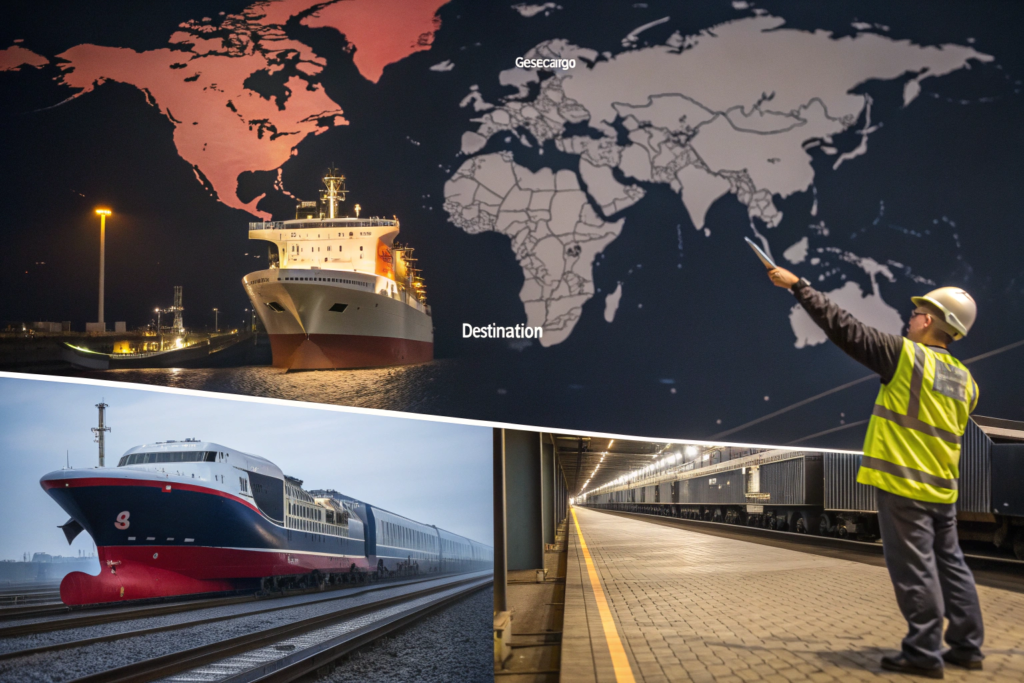
This sounds counterintuitive. Why send US-bound cargo to Europe? Because the rail from China to Europe is fast and reliable. Once in Europe, you have a short ocean hop or even air freight across the Atlantic. This completely sidesteps the Panama Canal and the congested Pacific.
We use this for East Coast deliveries. A rail freight departure from Xi’an reaches a European hub in 12 days. An express vessel crosses the Atlantic in 7 days. Total transit: about 21 days, with high reliability. You avoid the Pacific’s 45-day uncertainty. The cost is often comparable to premium ocean freight, but with far less risk.
Is Transloading Through Southeast Asia a Viable Strategy to Avoid Direct Bottlenecks?
Sometimes the bottleneck isn’t the sea lane. It’s the origin port itself. Shanghai or Ningbo might be congested. We can truck or feeder-vessel your cargo to a less busy Southeast Asian port like Haiphong or Laem Chabang. From there, we book a direct vessel to the US.
This "transloading" strategy adds a few days to the origin leg. But it often saves weeks on the destination end because the ship sails from a port with no queue. We handle the in-bond movement seamlessly. Your cargo stays under one customs bond. You just see a smooth journey. This flexibility is only possible with a forwarder that has boots on the ground in multiple Asian countries.
How Does DDP Service Offer a Financial Safe Harbor During Geopolitical Chaos?
Geopolitical chaos creates financial uncertainty. Surcharges appear without warning. Customs holds increase. Tariff classifications get challenged. If you’re the importer of record, every one of these variables hits your bank account directly. Your profit margin becomes a casualty of war.
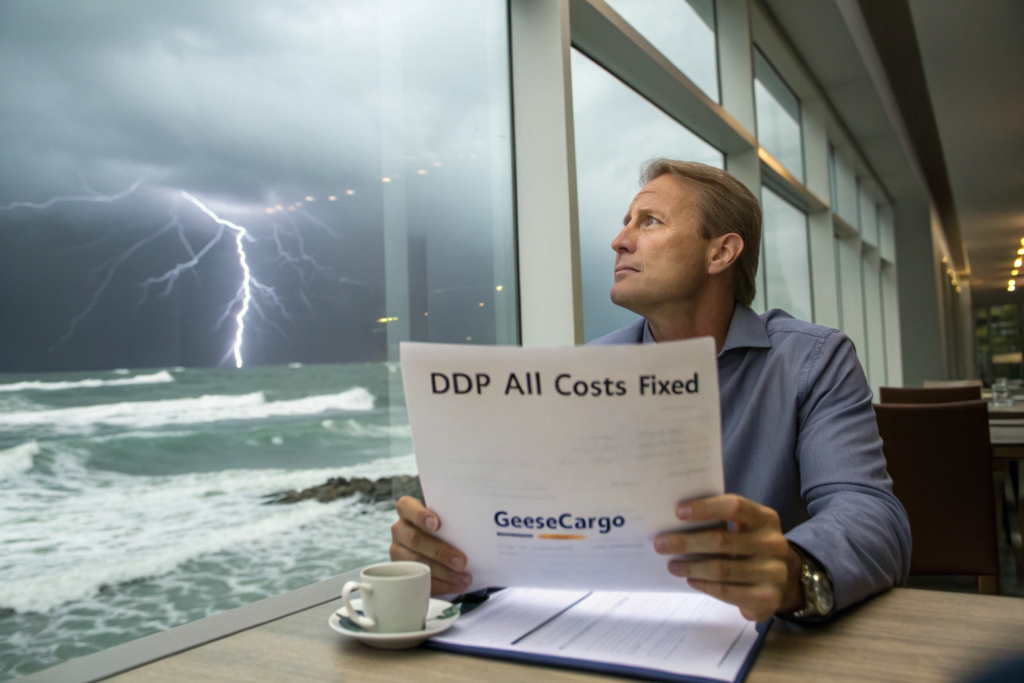
Our Delivered Duty Paid (DDP) service creates a financial firewall. We take full legal and fiscal responsibility for the shipment from China to your US door. You pay one fixed price per unit, regardless of how many surcharges or delays the crisis generates.
This is the ultimate peace of mind. I had a client last year who was terrified of a potential tariff hike on his electronics gifts. He didn’t sleep for weeks. We converted his shipment to a DDP term. We became the importer of record. He paid exactly what we quoted, before the crisis worsened. The tariff did go up. We absorbed it within our risk pricing. He made his margin. That’s a shield, not just a service.
How Does an IOR Shift Reduce Your Exposure to Compliance Penalties?
When you import under FOB terms, you are the Importer of Record. If a sanction list changes, you are liable. If CBP questions the labor practices in the supply chain, you receive the fine. Shifting this to GeeseCargo means shifting the liability.
We hold the customs bond. We file the ISF. We answer the CBP queries. Our compliance team is staffed by experts who do nothing but monitor regulatory changes. A mid-size clothing brand cannot afford this expertise in-house. Our DDP door-to-door service gives you access to enterprise-level compliance protection for a fraction of the cost.
Can a Fixed All-In Price Really Protect Against Fuel and Security Surcharge Hikes?
Yes, it can. A DDP quote from us includes all surcharges for the duration of the contract. If the Bunker Adjustment Factor (fuel surcharge) spikes due to a crisis, we pay it. If a security surcharge is added, we pay it. You are not exposed to the cost.
This transfers the risk from you to us. We manage this risk through our volume scale and futures hedging. We also build small actuarial buffers into our pricing to cover black swan events. For you, the price is fixed. For us, the management of the variable costs is our core competency. You buy certainty. We sell logistics expertise.
Conclusion
The Red Sea crisis is not a chapter that has closed. It has permanently altered the physics of global shipping. We’ve seen how it has vacuumed up vessel capacity, keeping freight rates artificially high on routes that are thousands of miles away from the conflict. We’ve examined how the Cape of Good Hope detour has rewritten the calendar, turning vessel bunching and missed berths into a regular occurrence at US ports. You’ve also seen how surcharges and insurance premiums have become a silent drain on your profits.
But you don’t have to be a victim of geography. We’ve walked through the escape hatches. Multimodal strategies that use rail to bypass the ocean chaos. Predictive analytics that give you a real delivery window instead of a false promise. And most importantly, a DDP financial structure that makes the cost of the crisis our problem, not yours.
I built GeeseCargo to navigate exactly this kind of prolonged disruption. Your job is to design great products and sell them. My job is to move them through a chaotic world safely, affordably, and predictably. The Red Sea may remain unstable, but your supply chain doesn’t have to be. Let’s talk about securing your 2026 shipments today.