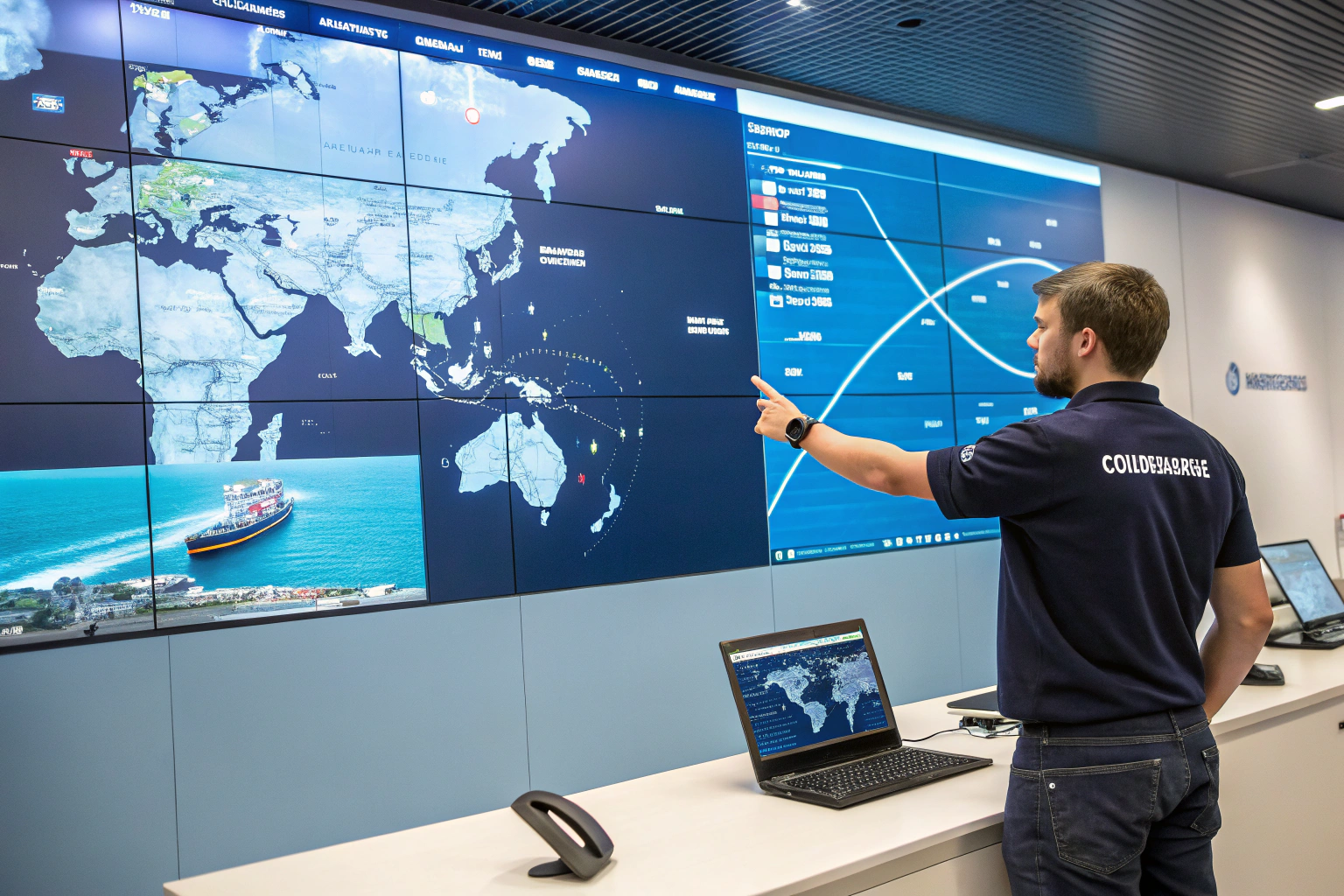
You are tracking five different shipments across three different carriers. You have ten browser tabs open. A vessel is delayed, but you do not know yet. A customs entry has a data mismatch, but no one has flagged it. Your container is accruing demurrage at the port, and you will not find out until the invoice arrives. You are managing a complex global supply chain with email and spreadsheets. It feels like piloting a jet with a bicycle’s handlebars.
In 2026, GeeseCargo uses artificial intelligence not as a marketing buzzword, but as a practical tool integrated into our core operations. Our AI systems predict vessel delays before the carrier announces them, flag customs documentation errors before filing, optimize container loading plans for maximum cube utilization, and provide you with a conversational AI assistant that answers your shipment questions in seconds. We combine our team’s decades of logistics experience with machine learning models that process millions of data points daily. The result is faster decisions, fewer errors, and real-time visibility that was impossible five years ago.
AI does not replace our people. It empowers them. Our logistics coordinators no longer spend hours manually checking vessel schedules across multiple carrier websites. Our customs brokers no longer manually cross-reference HTS codes against exclusion lists. The AI handles the repetitive, data-heavy tasks. The humans handle the relationships, the exceptions, and the strategic decisions. This partnership between human expertise and machine intelligence is how we deliver a freight forwarding service that is faster, more accurate, and more transparent than the traditional model. Let me show you exactly how we use AI at each stage of your shipment journey.
How Does AI Improve Our Ocean and Air Freight Rate Management?
You request a freight quote. A traditional forwarder takes 24 to 48 hours to respond because they are manually checking rates from multiple carriers, calculating surcharges, and building a quote in a spreadsheet. During that waiting period, you are in the dark, and the market rate might change. The quote you eventually receive is already stale.
We use an AI-powered rate management system that aggregates real-time rates from our contracted carriers, analyzes historical pricing trends, and generates an optimized door-to-door quote in under two minutes. The system considers your shipment volume, weight, origin, destination, and required transit time. It compares the spot market rate against our contract allocations and selects the best option. It also predicts short-term rate movements based on capacity data and seasonal patterns. You receive a fast, accurate, market-aware quote that is executable, not just an estimate.
The traditional freight rate process is broken. Rates change weekly, sometimes daily. A forwarder who manually builds quotes is always playing catch-up. Our AI system is connected via API to the rate sheets of our major ocean and air carriers. When you submit a quote request through our website, the system instantly pulls the applicable base rate, calculates the BAF, CAF, and any peak season surcharges, adds the origin and destination handling, and generates a line-item quote. The quote is based on live, not cached, data.
The AI also learns from historical shipment data. If you regularly ship 12 cubic meters of kitchenware from Ningbo to Dallas, the system knows your typical carton dimensions, your preferred service level, and your delivery requirements. It pre-fills the quote request and suggests the most cost-effective mode based on your history. This learning capability means that the more you ship with us, the faster and more personalized the quoting becomes. The AI does not just quote a rate; it learns your business.
How Does Predictive Rate Analysis Help You Budget Better?
You are planning your inventory purchasing for the next quarter. You need to budget the freight cost, but you know that ocean rates spike during peak season and drop during the slack season. You do not know what the rate will be in three months.
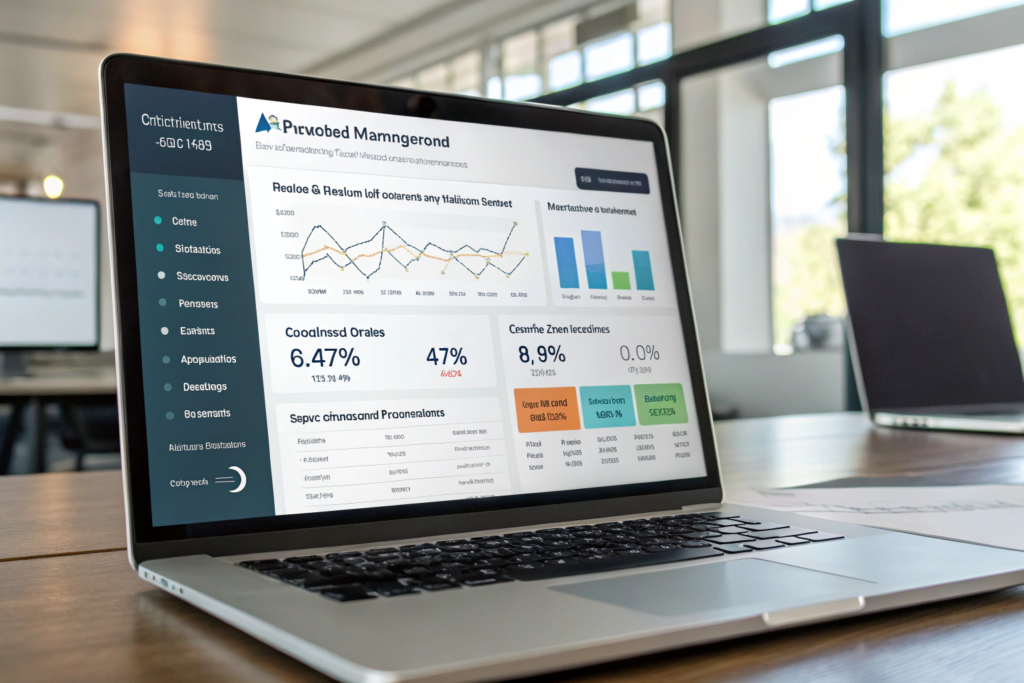
Our AI analyzes historical rate data, carrier capacity announcements, and macroeconomic indicators to generate a rate forecast for your specific trade lane. The forecast is not a guarantee, but it is a data-driven estimate that is far more accurate than guessing or using last year’s rate. The system shows you the predicted rate range for the next 90 days. You can use this to decide whether to ship now or delay a shipment by a few weeks to capture a seasonal dip. This predictive capability turns freight rate volatility from a budget risk into a manageable variable. You make purchasing decisions with better information.
Can AI Automatically Select the Best Carrier for Your Shipment?
You assume all carriers are the same. A vessel is a vessel. But carriers have different transit times, different reliability scores, and different equipment availability at different ports. Choosing the wrong carrier can add a week to your transit.
Our AI ranks carrier options for each shipment based on a multi-factor score. The score includes the quoted rate, the historical on-time performance of that carrier on that specific route, the transit time, and the current equipment availability at the origin port. The system recommends the top two or three options with a clear explanation of the trade-offs. Option A is the cheapest but has a 75% on-time reliability. Option B is $150 more but has a 92% on-time reliability and a faster transit. You choose based on your priorities. The AI does the data aggregation and comparison that a human would need an hour to complete.
How Does AI Predict and Prevent Supply Chain Disruptions?
A typhoon hits the South China Sea. A port labor action in Long Beach slows all terminal operations. A vessel has a mechanical failure and goes out of service for two weeks. These disruptions happen. The question is whether you find out when the carrier sends a delay notice three days later, or whether your forwarder alerts you before the disruption impacts your delivery date.
Our AI disruption prediction engine monitors thousands of data streams in real time: weather systems, port congestion sensors, vessel AIS positions, carrier schedule changes, and news feeds. It identifies potential disruptions and predicts their impact on your specific shipments. If a typhoon is projected to close the port of Ningbo for 48 hours, and your container is scheduled to gate in during that window, the system alerts your account manager before the port closure is officially announced. We can then re-route your trucker to an alternative port or adjust the vessel booking. You know about the problem before it becomes a delayed delivery.
The traditional model is reactive. The carrier tells the forwarder about a delay. The forwarder tells you. You adjust. Each communication step adds hours or days. The AI model is proactive. The system detects the signal of a disruption before the official notification. Our operations team receives an alert and can act immediately. For example, port congestion at Los Angeles is detectable by monitoring the number of vessels at anchor. When the anchorage count spikes above a threshold, our system flags it. We know that a vessel scheduled to arrive in three days will likely wait two extra days for a berth. We adjust the delivery ETA in your portal immediately. You are not waiting for the official delay notice from the carrier, which often comes after the vessel has already been waiting for a day.

How Does Port Congestion Prediction Work?
You see on the news that LA ports are congested. You assume your shipment is delayed. You email us asking for an update. We already adjusted your ETA two days ago based on the AI prediction. You did not need to ask.
Our system integrates data from the Marine Exchange of Southern California, which tracks vessel arrivals, berth occupancy, and anchorage queues. It also ingests terminal gate camera data and truck turn times. The AI correlates this data with your vessel’s scheduled arrival time and predicts the likely waiting time before a berth is available. The prediction is updated daily as the vessel gets closer. Four days out, the prediction might have a margin of error of plus or minus one day. One day out, the prediction is highly accurate. We push the updated ETA to your portal automatically. You see a data-driven estimate, not a guess. This allows you to adjust your warehouse staffing and inventory planning with real information.
Can AI Predict Customs Exam Risk?
Your shipment is flagged for a customs exam. You think it is random. You wonder if you did something wrong. The exam causes a 4-day delay you did not plan for.
Customs exams are partly random and partly risk-based. CBP’s automated targeting system scores every entry. The scoring algorithm is not public, but certain factors are known to increase exam probability: the importer’s compliance history, the product type, the country of origin, and the data quality of the entry. Our AI analyzes your shipment data against a database of historical exam outcomes. It identifies patterns. A first-time importer shipping a high-risk product category from a new supplier has a higher exam probability. The system flags this to our customs broker. The broker reviews the entry with extra scrutiny, ensures the documentation is flawless, and proactively provides additional product information to CBP. The AI does not prevent the exam, but it predicts the risk and allows us to prepare the entry to minimize the chance and to plan the timeline buffer if an exam is likely.
How Does AI Streamline Customs Documentation and Compliance?
Your customs broker emails you a form with 20 fields to fill out. You type the product description, the HTS code, the value, the country of origin. You make a typo in the HTS code. The entry is filed. CBP flags it for a documentation error. The clearance is delayed. A single typo cost you three days.
Our AI-powered documentation system extracts data from your commercial invoice and packing list automatically using optical character recognition and natural language processing. It classifies your product, suggests the correct HTS code, checks the declared value against historical data for reasonableness, and identifies any missing partner government agency requirements. The human customs broker reviews the AI-prepared entry, makes any necessary adjustments, and files it. The process reduces manual data entry errors by over 90% and cuts the documentation preparation time from hours to minutes.
The commercial invoice you receive from a Chinese supplier is often a scanned PDF or even a photo of a paper document. The product descriptions are sometimes vague, like "kitchen items" or "gifts." The traditional process requires a human to manually type this data into the customs entry software. Every manual keystroke is an opportunity for error.
Our AI reads the invoice directly. It identifies the seller, the buyer, the product descriptions, the quantities, the unit prices, and the total value. It cross-references the product description against a database of historical classifications to suggest the most likely HTS code. If the description is "ceramic mug," the AI suggests 6912.00.4400. The human broker reviews the suggestion, confirms it, and the entry is filed. If the AI detects an anomaly, such as a declared value that is 50% lower than the typical value for that product category, it flags it for broker review. This might be a legitimate lower price, or it might be an undervaluation attempt. The broker investigates and resolves the flag. The AI acts as a safety net that catches errors and anomalies before they become customs problems.

How Does Automated HTS Classification Work?
You have a new product: a bamboo fiber travel mug with a stainless steel inner liner and a silicone lid. Is it classified as bamboo, as stainless steel, or as a composite good? The HTS classification is not obvious.
Our AI classification tool analyzes the product description against the Harmonized Tariff Schedule, the Explanatory Notes, and the CBP binding rulings database. It identifies the essential character of the product based on the material that predominates by weight, value, or function. For the travel mug, the AI might determine that the stainless steel inner liner provides the essential character of a thermal vessel and suggest the corresponding HTS code. It presents the suggestion with a confidence score and links to the relevant binding rulings. The human customs broker reviews the analysis and makes the final determination. The AI dramatically speeds up the research process. What used to take a broker 30 minutes of manual database searching now takes the AI 30 seconds.
How Does AI Check for Partner Government Agency Requirements?
You import a shipment of wooden cutting boards. Customs clearance is delayed because the broker did not realize that wooden food-contact articles require an FDA facility registration and a prior notice. The goods are held until the documentation is provided.
Our AI cross-references your product description against a database of PGA requirements maintained by CBP. It knows that "wood" plus "food contact" triggers FDA. It knows that "children’s" plus "textile" triggers CPSC. It knows that "laser" plus "pointer" triggers FDA radiation safety. The AI flags the requirement before the entry is filed. The broker requests the necessary certificate or registration from you. The documentation is included in the entry package. The clearance proceeds without a PGA hold. This automated compliance check prevents the delays that occur when a PGA requirement is discovered after the entry is filed.
How Does AI Optimize Container Loading and Route Planning?
Your container is loaded at the factory. The workers fill it from back to front, tossing cartons in until it is full. The container is "full" but with large void spaces between irregularly shaped boxes. You are paying to ship air. The container utilization is 82%. That 18% void space is pure waste.
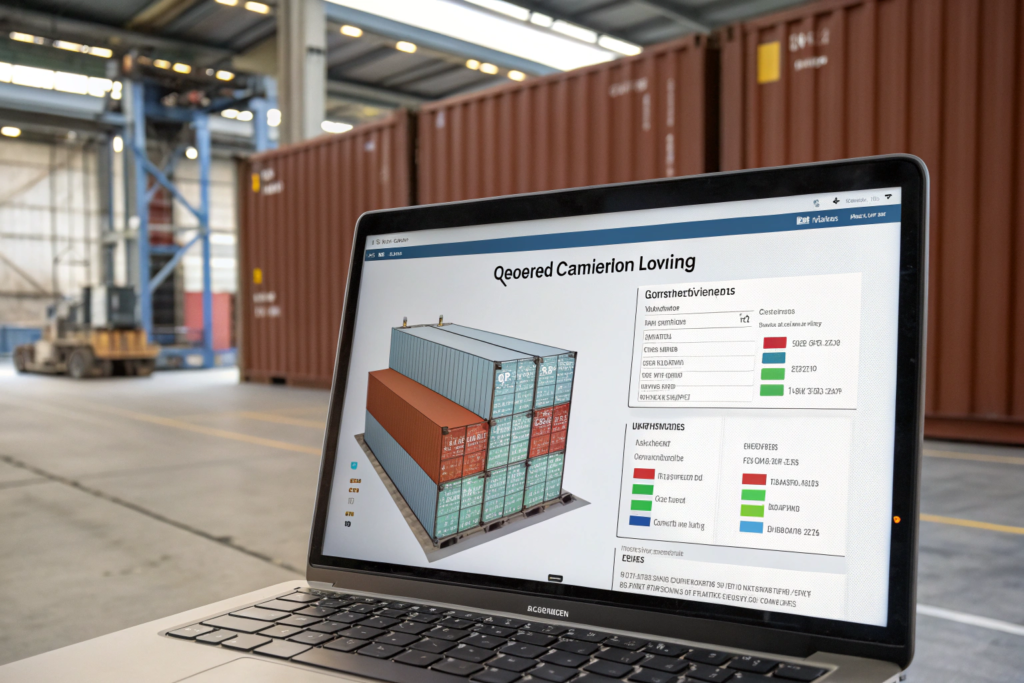
Our AI load planning software creates an optimal container loading diagram based on the exact carton dimensions of your shipment. The software uses 3D bin-packing algorithms to calculate the arrangement that maximizes cube utilization. It considers weight distribution, carton crush strength, and accessibility for unloading. The output is a visual load plan that our warehouse team follows precisely. The AI also optimizes multi-modal routing, comparing pure ocean, ocean-rail, and ocean-truck combinations to find the fastest or cheapest door-to-door path. Container utilization improvements of 10% to 15% are typical.
The 3D bin-packing problem is mathematically complex. A human trying to figure out the best way to pack 500 cartons of 15 different sizes into a 68-cubic-meter container will get a good result but rarely the best result. The AI tests thousands of permutations in seconds. It finds arrangements that a human would not intuitively consider. For one client shipping a mix of large, lightweight gift boxes and small, heavy ceramic items, the AI generated a load plan that achieved 96% utilization. The previous factory-loaded containers were at 82%. The 14% improvement meant the client shipped 14% more product per container, reducing their per-unit freight cost by a similar percentage. The load plan pays for itself in the first shipment.
How Does AI-Powered Route Optimization Work?
Your goods are destined for Chicago. The obvious route is ocean to Los Angeles, then truck to Chicago. But a rail intermodal route through the Pacific Northwest might be faster and cheaper during a specific week when LA port congestion is high.
Our AI route optimizer evaluates all viable origin port, destination port, and inland mode combinations for your shipment. It considers the current ocean transit times, the port congestion levels, the rail and truck transit times, and the total cost of each combination. It presents the top three routes ranked by your chosen priority: fastest, cheapest, or most reliable. A route that is optimal one week might be suboptimal the next due to a temporary port congestion event. The AI re-evaluates at the time of booking. This dynamic routing capability ensures your shipment takes the smartest path, not just the default path.
Can AI Reduce the Risk of Cargo Damage During Loading?
Your goods are loaded in a pattern that puts heavy cartons on top of light, crushable cartons. During the ocean voyage, the bottom cartons collapse. The products inside are damaged.
Our AI load plan considers carton crush strength. It assigns a crush rating to each carton type based on the board grade and the carton dimensions. The algorithm places high-crush-strength cartons at the bottom of the stack and low-crush-strength cartons at the top. It also calculates the total weight bearing down on each carton in the stack and ensures it does not exceed the carton’s rated capacity. This physics-based loading prevents the container collapses that result from improper weight distribution.
How Does Our AI Assistant Answer Your Shipment Questions Instantly?
It is 11 PM on a Saturday. You are checking your phone and wondering where your container is. You email your forwarder. You get an auto-reply: "We will respond during business hours." You wait until Monday morning for a simple status update that should be available instantly.
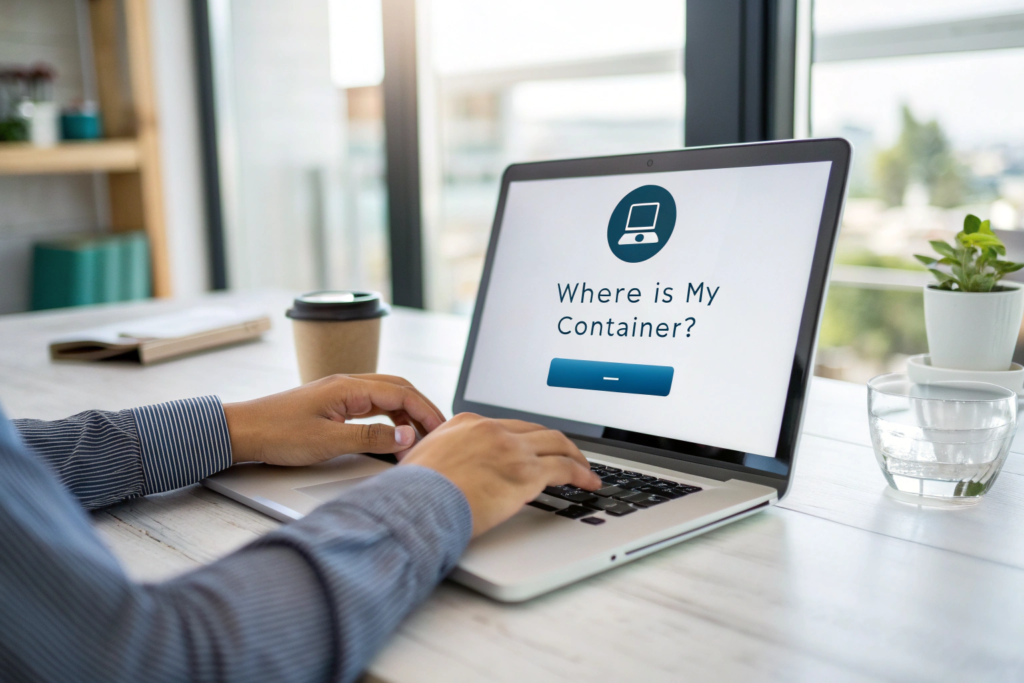
We deployed an AI-powered shipment assistant on our website and in your client portal. You type a question in plain English: "Where is my container?" or "What is the ETA for shipment GSE2307?" or "Has customs cleared yet?" The AI assistant pulls the real-time status from our shipment management system and responds instantly, 24 hours a day, seven days a week. It understands conversational questions and provides specific, actionable answers. You are not waiting for a human to come online for routine status inquiries.
The AI assistant is trained on our full operations knowledge base. It understands freight terminology, shipment statuses, and common customer questions. It handles about 70% of routine inquiries without human intervention. For complex questions or exception situations, it escalates to a human account manager with a full context summary. The human picks up the conversation where the AI left off. The result is faster answers for simple questions and more available human time for complex problem-solving.
What Questions Can the AI Assistant Answer?
You think a chatbot can only answer basic FAQs. Our assistant is integrated with your live shipment data and our operational knowledge base. It is not a generic FAQ bot.
You can ask: "What is the current location of my container?" The AI accesses the latest AIS data and responds with the vessel’s position and the estimated arrival time. You can ask: "How many free days do I have left on my container?" The AI checks the discharge date and the carrier’s free time allowance and tells you the last free day. You can ask: "What documents do I need to provide for my next shipment?" The AI reviews your shipment type and provides the specific document checklist. You can ask: "What is the duty rate for ceramic mugs from China?" The AI looks up the current HTS rate and the applicable Section 301 tariff and gives you the total rate. The assistant is a knowledge worker that never sleeps.
How Does the AI Assistant Improve Over Time?
You use the assistant and it gives you an answer. You want to ensure it learns from any mistakes and gets better.
The AI assistant logs every interaction. When a question is escalated to a human, the system records the human’s response. The AI learns from these escalations. If customers frequently ask a question the AI cannot answer, our operations team reviews the interaction and updates the AI’s knowledge base. The assistant becomes more capable each month. It also learns your specific preferences. If you always ask for status updates in a particular format, it adapts to your style. The AI is not static. It is a learning system that improves with every conversation.
Conclusion
AI in freight forwarding is not about replacing people with robots. It is about giving our people superhuman tools to serve you better. Our logistics coordinators use AI rate management to quote you faster and more accurately. Our operations team uses AI disruption prediction to alert you before a delay happens. Our customs brokers use AI documentation tools to catch errors before they are filed. Our warehouse team uses AI load planning to maximize your container utilization. And our AI assistant answers your questions instantly, any time of day.
The freight forwarding industry has been slow to adopt technology. Many forwarders still run on phone calls, emails, and spreadsheets. At GeeseCargo, we invested early in AI because we saw that the future of logistics is data-driven, transparent, and automated where automation adds speed and accuracy. We do not use AI to cut costs by reducing human interaction. We use AI to make our human interaction more informed, more proactive, and more valuable to you.
You do not need to understand the machine learning models or the API integrations. You just need to know that when you ship with GeeseCargo in 2026, you are shipping with a forwarder whose technology is as modern as your e-commerce platform, your inventory software, and your customer expectations.
If you want to experience what AI-powered freight forwarding feels like, go to GeeseCargo.com and try our quote tool or ask our AI assistant a question. You will get a response in seconds, not days. That is the standard we believe our clients deserve. Let’s bring your supply chain into the future, together.