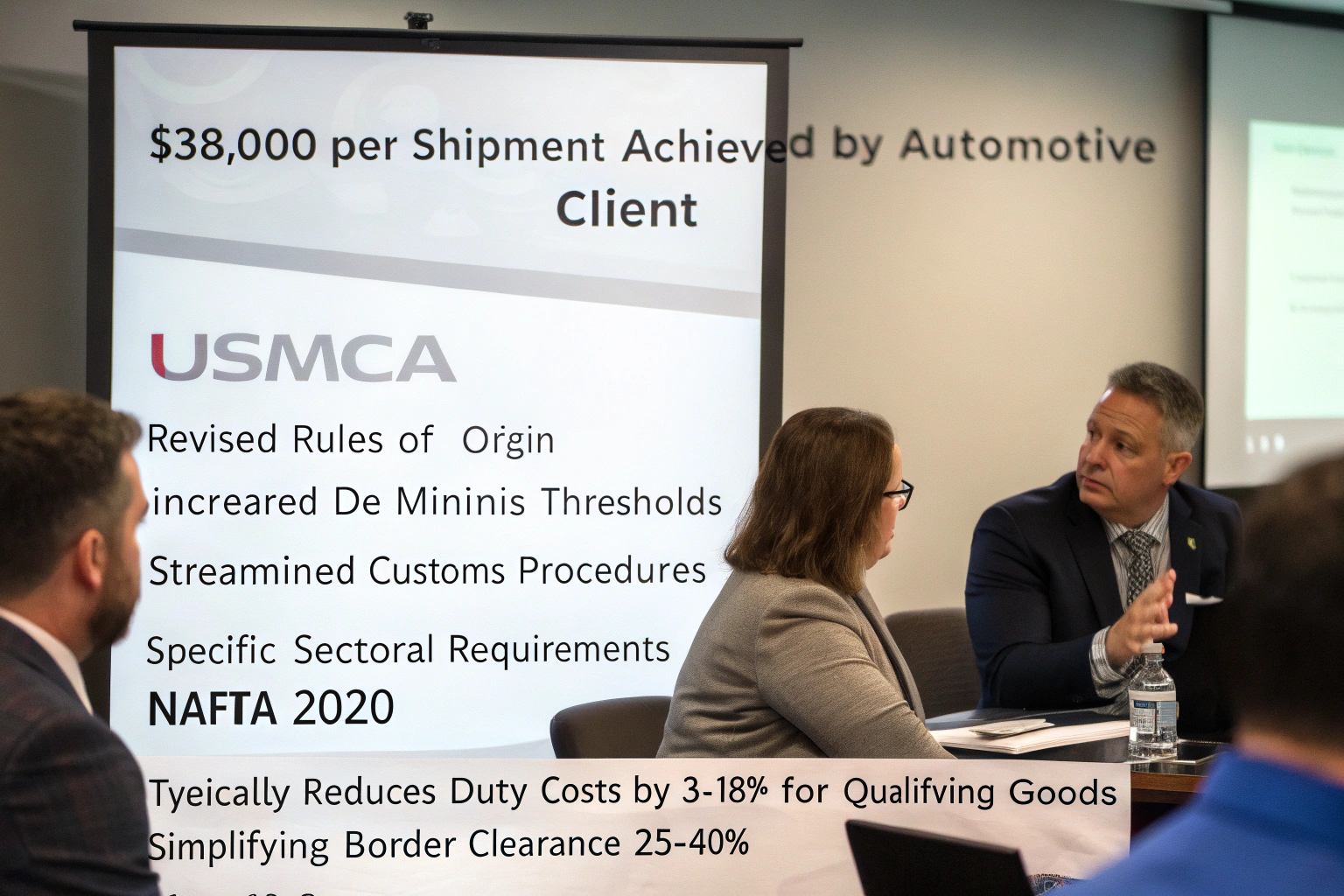
When one of our automotive clients discovered they could save $38,000 per shipment by properly leveraging USMCA certification, I realized how many businesses underestimate this trade agreement's impact. As founder of GeeseCargo with extensive North American trade experience, I've witnessed USMCA transform from a legal requirement to a strategic advantage for informed shippers.
The USMCA (United States-Mexico-Canada Agreement) affects shipments through revised rules of origin, increased de minimis thresholds, streamlined customs procedures, and specific sectoral requirements. Properly utilized, USMCA typically reduces duty costs by 3-18% for qualifying goods while simplifying border clearance by 25-40% compared to non-preferential treatment.
USMCA replaced NAFTA in 2020, maintaining tariff-free access for most goods but introducing significant changes that impact documentation, sourcing decisions, and supply chain strategies. Understanding these changes is essential for maximizing benefits and maintaining compliance.
What Are the Key Changes from NAFTA to USMCA?
The transition from NAFTA to USMCA introduced specific modifications that directly impact how businesses approach North American trade.
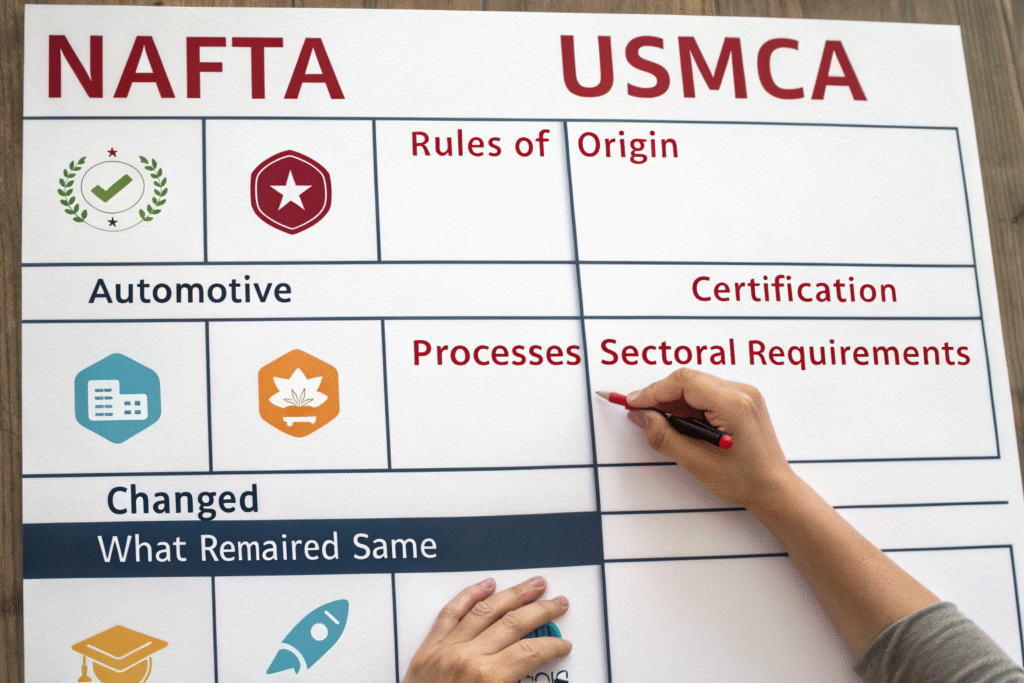
How Have Rules of Origin Evolved Under USMCA?
Automotive rules became significantly more restrictive. The regional value content requirement increased to 75% (from 62.5% under NAFTA), and 70% of steel and aluminum must originate in North America.
Labor value content requirements were introduced for vehicles. 40-45% of automotive content must be made by workers earning at least $16 per hour, affecting sourcing decisions for labor-intensive components.
Product-specific rules were updated across multiple sectors. Textiles, chemicals, and agricultural products face revised rules that impact qualification for preferential treatment.
What Certification and Documentation Changes Matter?
USMCA allows more flexible certification options. Importers, exporters, or producers can complete certifications, and a single certification can cover multiple shipments over a 12-month period.
Certification format requirements were simplified but content requirements increased. While no prescribed format exists, certifications must contain specific data elements proving originating status.
Recordkeeping requirements expanded to support origin claims. Businesses must maintain supporting documentation for five years and provide it upon request by customs authorities.
How Do You Qualify Goods Under USMCA?
Understanding the qualification process is essential for claiming preferential treatment and avoiding compliance issues.

What Are the Main Rules of Origin Criteria?
Tariff shift method requires goods to be classified differently from non-originating materials. Most products qualify if manufacturing processes result in sufficient classification changes under the Harmonized System.
Regional value content (RVC) calculation measures North American content. The transaction value method (based on price) or net cost method (based on production cost) determines whether goods meet required percentage thresholds.
Automotive products face additional labor value requirements. Beyond RVC thresholds, vehicles and parts must meet wage requirements that impact manufacturing location decisions.
How Should You Document USMCA Compliance?
Certifications must contain nine specific data elements. These include importer/exporter details, description of originating criteria, blanket period for multiple shipments, and authorized signature.
Supporting documentation must verify origin claims. Bills of material, cost statements, supplier declarations, and manufacturing records demonstrate compliance with rules of origin.
Record retention for five years is mandatory. All documentation supporting origin claims must be maintained and producible within five business days if requested by customs authorities.
What Are the Practical Impacts on Shipping Operations?
USMCA implementation affects daily logistics operations, documentation preparation, and supply chain decisions.

How Does USMCA Change Customs Clearance Processes?
Simplified entry procedures are available for low-value shipments. The de minimis threshold increased to $800 for the US ($117 for Canada, $50 for Mexico), allowing expedited clearance for qualifying shipments.
Advance data requirements help customs risk assessment. While not USMCA-specific, the agreement encourages electronic data exchange that can speed clearance for compliant shippers.
Uniform regulations standardize interpretation across countries. The three countries developed consistent implementation guidelines that reduce interpretation variations at different borders.
What Documentation Preparation Changes Are Required?
USMCA certifications replace NAFTA certificates of origin. Businesses must develop new certification templates and processes that meet USMCA requirements while maintaining necessary supporting documentation.
Product-specific analysis determines qualification pathways. Each product requires individual analysis against specific rules of origin, necessitating updated product classification and sourcing reviews.
Supply chain documentation must track origin throughout manufacturing. Companies need systems to capture and maintain origin information for all components and manufacturing processes.
What Sector-Specific Requirements Matter Most?
Certain industries face unique USMCA provisions that significantly impact their operations and sourcing decisions.
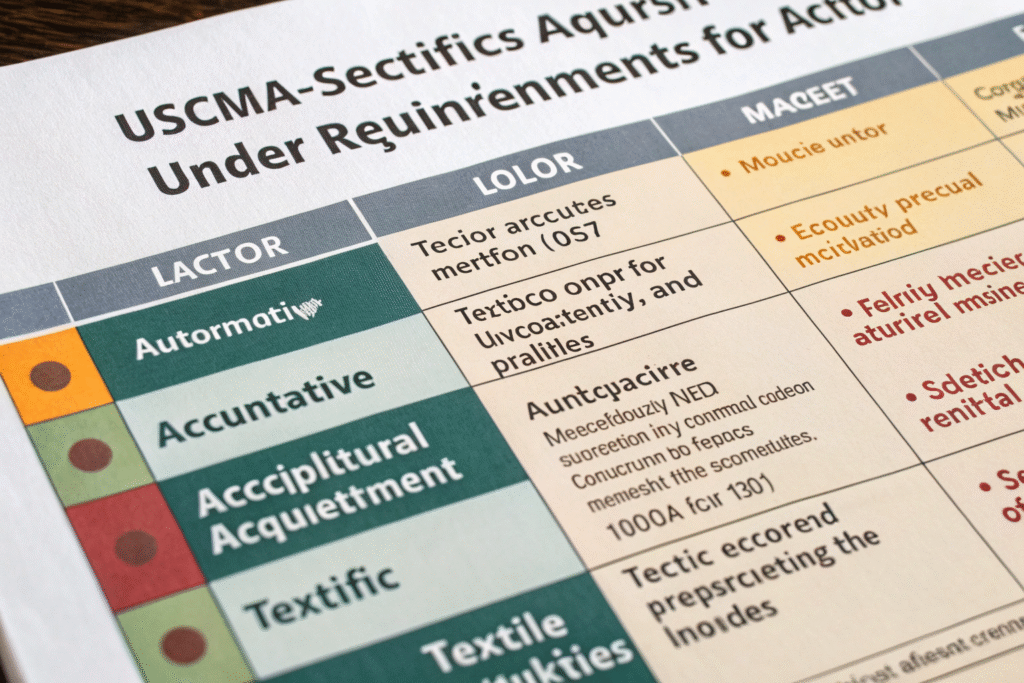
How Does USMCA Affect Automotive Shipments?
Stricter regional value content requires supply chain adjustments. The 75% RVC requirement (up from 62.5%) forces many manufacturers to reshore components previously sourced from Asia.
Labor value content requirements impact manufacturing location decisions. The $16 per hour wage requirement affects labor-intensive operations, potentially shifting production between US, Canadian, and Mexican facilities.
Core parts list expands coverage of critical components. Engines, transmissions, and other core parts face even higher 75-85% regional value requirements.
What Changes Impact Agricultural and Textile Shipments?
Dairy market access provisions affect US-Canada trade. Canada provided new tariff-rate quotas for US dairy products, creating opportunities but also complex quota management requirements.
Textile rules favor North American yarn and fabric production. The "yarn-forward" rule requires spinning, weaving, and finishing in North America for preferential treatment, impacting sourcing decisions.
Seasonal produce protections address perishable goods concerns. New mechanisms allow faster relief from import surges that could damage domestic seasonal producers.
How Can You Leverage USMCA for Competitive Advantage?
Strategic USMCA utilization creates cost savings and operational benefits beyond simple compliance.

What Cost Savings Opportunities Does USMCA Provide?
Duty elimination on qualifying goods provides direct savings. Most originating goods trade duty-free, though some sectors face phase-outs or tariff-rate quotas that still require management.
Reduced compliance costs come from streamlined processes. The flexible certification approach and uniform regulations decrease administrative burdens compared to non-preferential trade.
Supply chain optimization can leverage regional advantages. Understanding USMCA rules enables strategic sourcing decisions that minimize costs while maintaining preferential treatment.
How Does USMCA Enhance Supply Chain Resilience?
Regional sourcing incentives reduce dependency on distant suppliers. The rules of origin encourage North American supply chains that are less vulnerable to global disruptions.
Predictable trade rules support long-term planning. Unlike temporary trade programs, USMCA provides certainty through scheduled reviews rather than arbitrary expiration.
Dispute resolution mechanisms protect against arbitrary changes. The agreement includes processes for resolving interpretation differences and addressing implementation issues.
What Common USMCA Mistakes Should You Avoid?
Understanding frequent errors helps businesses maximize benefits while maintaining compliance.
What Certification and Documentation Errors Cause Problems?
Incomplete certifications missing required data elements. All nine mandatory elements must be present, including specific description of originating criteria and authorized signature.
Inadequate supporting documentation for origin claims. Certifications must be backed by records proving originating status, not just good faith beliefs.
Poor record retention risking compliance verification. Five-year documentation retention is mandatory, with significant penalties for inability to produce supporting records.
What Strategic Errors Reduce USMCA Benefits?
Failing to review supply chains for optimization opportunities. Many companies continue pre-USMCA sourcing without analyzing potential duty savings from minor adjustments.
Overlooking gradual implementation provisions for some sectors. Some rules phase in over time, requiring ongoing review rather than one-time compliance efforts.
Underestimating labor value content requirements for automotive. The wage provisions impact costing and sourcing in ways many companies initially overlook.
Conclusion
The USMCA agreement represents both a compliance requirement and a strategic opportunity for businesses trading within North America. The most successful companies treat USMCA not as a paperwork exercise but as an integral component of their supply chain strategy, leveraging its provisions for cost reduction, operational efficiency, and competitive advantage.
At GeeseCargo, we've helped clients achieve 15-40% duty savings through strategic USMCA implementation, with the best results coming from companies that integrate agreement requirements into their sourcing decisions and operational processes rather than treating them as after-the-fact compliance activities.
Begin your USMCA optimization by conducting a comprehensive review of your products against the new rules of origin, then develop certification processes that balance compliance with operational practicality. Remember that in North American trade, USMCA proficiency isn't just about avoiding problems—it's about capturing opportunities that strengthen your competitive position while building more resilient supply chains.